Engine
Pratt & Whitney PW4000
Pratt & WhitneyUnited States
- Type
- High-bypass turbofan
- Introduced
- 1987
4.8–5:1
Bypass ratio
435.9kN
Peak thrust
Figures for the PW4000-94 series (EASA type certificate data sheet IM.E.050); the thrust ratings below cover all three fan sizes
General
- Type
- High-bypass turbofan
- Status
- In service
Programme
- Introduced
- 1987
- Produced
- 1984 to present
- Built
- 2,500 (as of June 2017)
Architecture
- Configuration
- Twin-spool, axial-flow: single-stage fan, high-pressure compressor and turbine on the inner shaft, low-pressure turbine driving the fan. Single-crystal turbine blades, powder-metallurgy discs, full-authority digital engine control.
Weight and size
- Fan diameter
- 94.02 in
- Dry weight
- 9,420 lb
- Length
- 153.54 in
- Height
- 97.64 in
Performance
- Thrust
- 275.8 kN
- Bypass ratio
- 4.8–5:1
- Overall pressure ratio
- 27.5–32.3:1
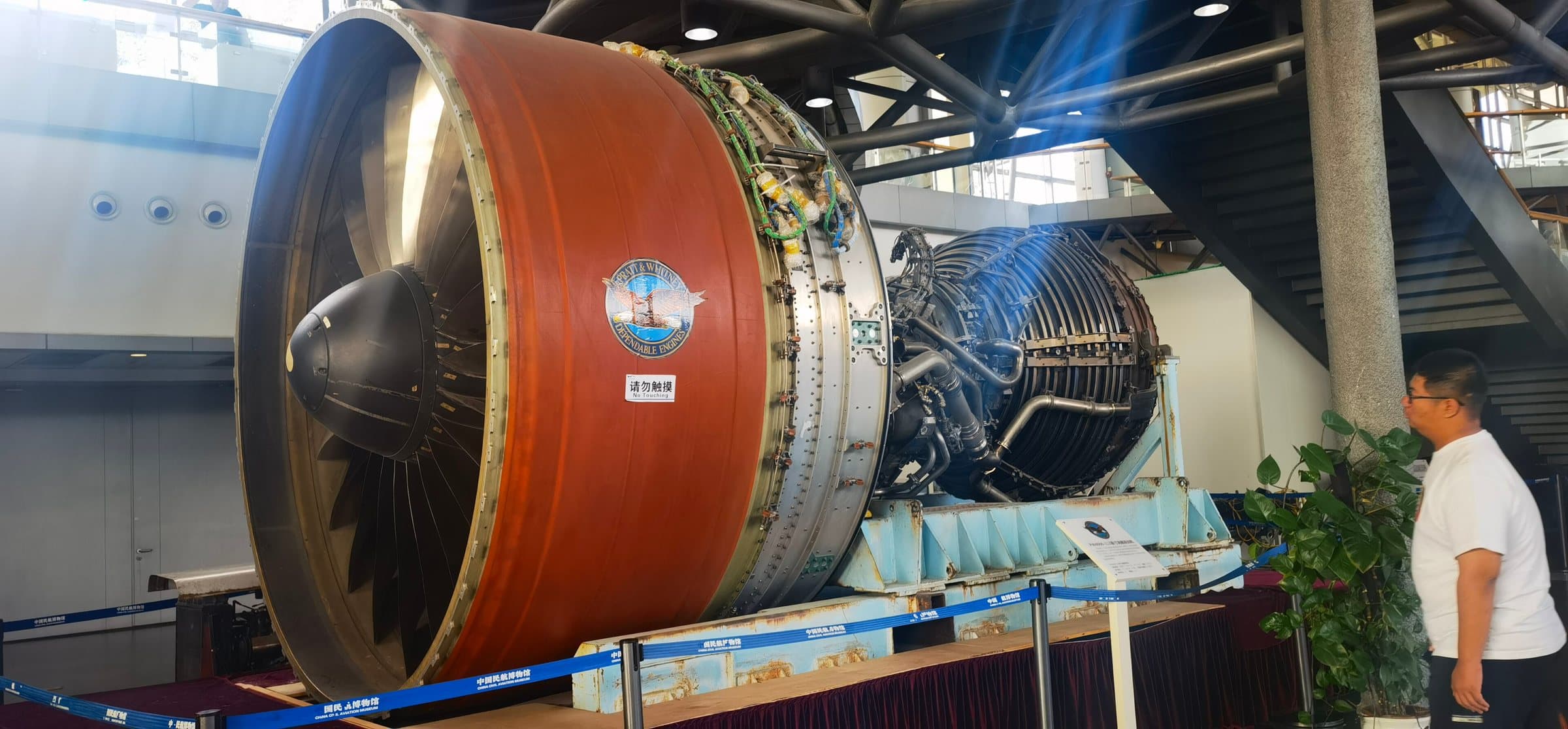
The Pratt & Whitney PW4000 is not one engine but three, sharing a name, a core concept and very little else. It is a family of twin-spool high-bypass turbofans built around three different fan sizes (94, 100 and 112 inches) each developed for a different class of aircraft, each with its own type certificate, and each separated from the next by enough thrust to belong to a different generation. Together they have powered the Boeing 747-400, 767 and 777, the Airbus A300-600, A310 and A330, and the McDonnell Douglas MD-11.
The name is therefore less useful than it looks. A PW4056 on a Boeing 767 and a PW4090 on a Boeing 777 share a design philosophy, a manufacturer and four digits; they do not share a fan, a certificate, a thrust class or, in any practical sense, a spare parts bin. Treating the PW4000 as one engine is convenient shorthand and a reliable way to be wrong about it.
The engine succeeded the JT9D, the turbofan that had made the 747 possible and had given Pratt & Whitney the widebody market in the 1970s. The PW4000 was the answer to what General Electric and Rolls-Royce had learned in the intervening decade, and to an operating environment that had begun to judge engines on fuel burn and maintenance cost rather than on thrust alone. It first ran in April 1984, was certified in July 1986 and entered service in June 1987.
The three families diverge sharply in size. The 94-inch engine is rated between 52,000 and 62,000 lb of take-off thrust, weighs 9,420 lb dry and measures 13 ft overall. The 100-inch, built for the A330, covers 64,500 to 70,000 lb and weighs 12,900 lb. The 112-inch, built for the 777, occupies what Pratt & Whitney calls "the 74,000 to 90,000 pound-thrust class": an engine of a different order, and the one that has drawn the most attention, not all of it welcome.
More than 2,500 PW4000s had been delivered by mid-2017, by which point the family had passed 135 million flight hours. It remains in service across three continents and in production for the Boeing KC-46 tanker, four decades after the first one ran.
Aircraft fitted with this engine
Year each aircraft entered service with this engine.
Boeing 747-400
94-inch fan.
Boeing 767
94-inch fan, and still in production for the KC-46 tanker.
Airbus A300-600 and A310
94-inch fan.
McDonnell Douglas MD-11
94-inch fan, as the PW4460 and PW4462.
Airbus A330
100-inch fan, supplied as a complete propulsion system.
Boeing 777
112-inch fan, on the 777-200, 777-200ER and 777-300 only.
Scaled Composites Stratolaunch
Six PW4056s salvaged from retired Boeing 747-400s.
7 aircraft
Development
The PW4000 began as a replacement for a success. The JT9D had launched the widebody era on the 747 in 1970 and had gone on to the DC-10, the L-1011 and the early 767, but by the early 1980s it was being outsold. General Electric's CF6 had taken ground on every airframe they shared, and the fuel prices of the 1970s had permanently changed what airlines asked an engine to do. Pratt & Whitney needed a new engine that looked like the JT9D to a maintenance department and nothing like it on a fuel sheet.
The first PW4000 ran in April 1984 with a 94-inch fan, was certified by the Federal Aviation Administration in July 1986, and entered service in June 1987. It retained the JT9D's twin-spool layout, a low-pressure spool carrying the fan and a low-pressure turbine, a high-pressure spool carrying the compressor and its turbine, rather than following Rolls-Royce into three shafts. What changed was everything inside: single-crystal turbine blades, powder-metallurgy discs, and a full-authority digital engine control in place of the hydromechanical fuel control the JT9D had used.
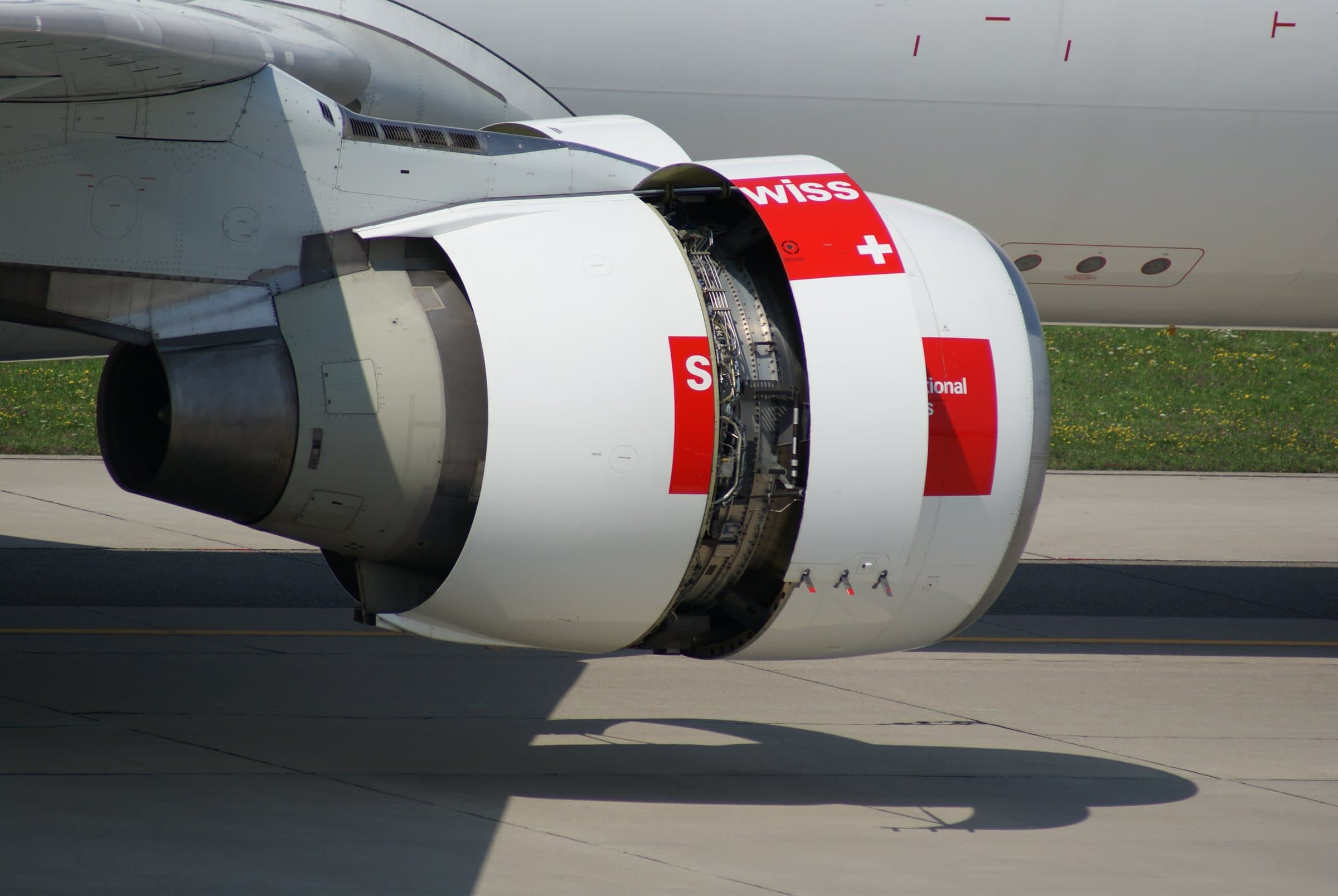
The 94-inch engine went on to a remarkably wide set of airframes for a single certificate. Its type certificate covers fifteen models, the PW4050, 4052, 4056, 4060, 4060A, 4060C, 4062 and 4062A, together with the PW4152, 4156, 4156A, 4158, 4160, 4460 and 4462, spread across the Boeing 747 and 767, the MD-11, and the Airbus A300-600 and A310. The numbering is transparent once seen: the digits after the 4 give the thrust in thousands of pounds, so a PW4056 is a 56,000 lb engine and a PW4062 a 62,000 lb one.
A second family followed for the Airbus A330, with the fan opened out to 100 inches and thrust raised to between 64,500 and 70,000 lb. Introduced in 1994, it was, in Pratt & Whitney's words, "the first in aviation history to qualify for Extended-range Twin-engine Operations (ETOPS) prior to entering service": an unusual claim to be able to make, because ETOPS approval had traditionally been earned by accumulating service experience rather than granted in advance of it. The engine is now approved for 180-minute ETOPS.
The third family was the largest. Development of the 112-inch engine for the Boeing 777 began in October 1990, reached 100,000 lb of thrust on test in May 1993, and was approved for 180-minute ETOPS at entry into service in June 1995. Pratt & Whitney supplied it against General Electric's GE90 and the Rolls-Royce Trent 800 in the only three-way engine competition of its size, and the 112-inch PW4000 took a substantial share of the early 777 fleet.
The family has kept moving since. The PW4170 Advantage70 programme, certified for the A330, is offered both as a new engine and as an upgrade kit for engines already in service, and Pratt & Whitney credits it with "a 2 percent thrust increase, more than 1 percent reduction in fuel consumption, increased durability, and reduced maintenance costs". It is the pattern the industry has settled into: a mature engine improved in packages rather than replaced.
Design
The PW4000 is a twin-spool axial turbofan, which is to say it divides the work between two concentric shafts rather than the three Rolls-Royce prefers. The low-pressure spool carries the fan and the low-pressure turbine that drives it; the high-pressure spool carries the high-pressure compressor and its turbine. It is the simpler arrangement, with fewer bearings and fewer things to balance, at the cost of asking each compressor stage to work over a wider range of conditions than a three-shaft engine asks of its own.
What Pratt & Whitney brought to it was materials. The company lists "single-crystal super alloy materials, powdered metal disks, and Full-Authority Digital Electronic Control (FADEC)" as the engine's defining technologies. A single-crystal turbine blade is cast with no grain boundaries at all, which removes the paths along which creep and fatigue cracks normally travel at temperature; a powder-metallurgy disc achieves a uniformity of structure that a forging from cast billet cannot. Both were expensive and relatively new in 1984, and both are now unremarkable: which is a measure of what the generation achieved rather than of what it was.
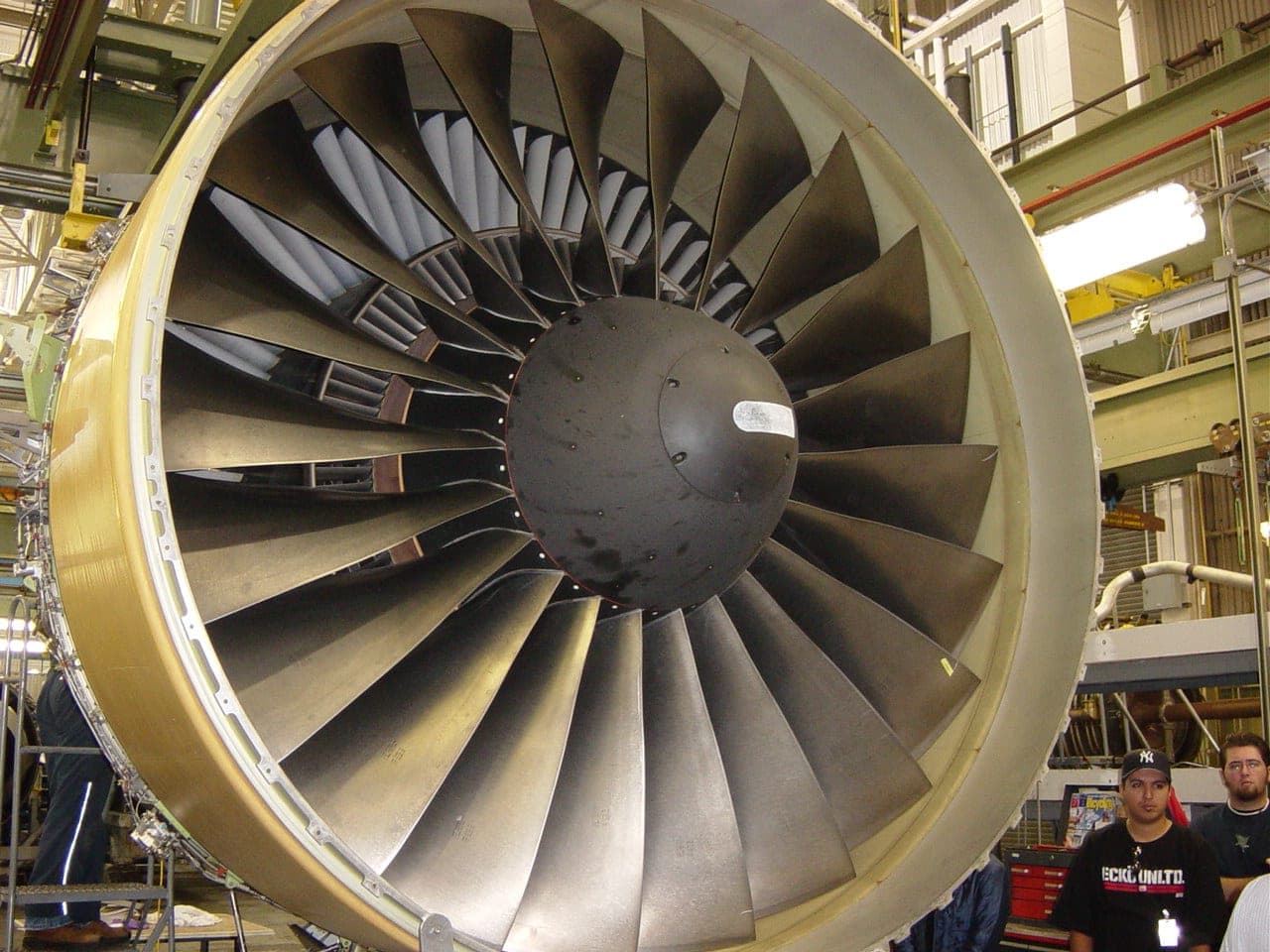
The fan is the visible difference between the three families, and the reason each needed its own certificate. At 94 inches it turns a bypass ratio of 4.8 to 5.0 and an overall pressure ratio between 27.5 and 32.3 at take-off. At 100 inches those become 5.0 and 32.0 to 35.4. The fan pressure ratio, how much the fan alone compresses the air it moves, runs from 1.65 to 1.80 on the 94-inch engine and sits at 1.75 on the 100-inch. These are small numbers describing large machines: most of the thrust comes from moving a great deal of air a little faster, not a little air a great deal faster.
The 112-inch fan on the 777 engine is built from titanium, hollow, and large enough that its blades are individually serialised and tracked through their working lives. It is also, as the next section describes, the part of the engine that has defined its safety record. Pratt & Whitney notes that the fan case can be separated from the core for split shipment "without disturbing the bearing compartments", and that a complete engine fits inside a 747 freighter: logistics that matter more than they sound when a spare has to reach an aircraft on the far side of an ocean.
Modularity was a design goal in its own right, and Pratt & Whitney still advertises it: the 112-inch engine "retains the outstanding accessibility and component modularity of other PW4000 family members to reduce maintenance time and cost". For an engine that spends its life being taken apart and put back together in shops on several continents, how it comes apart is as much a part of the specification as how much thrust it makes: and it is the part an airline's accountants notice.
Flat rating is published as a temperature rather than an altitude. The 94-inch engine holds its rated take-off thrust to 86 or 92 °F depending on model; the 100-inch holds it to 86 °F. Beyond that the engine begins to lose thrust as the air thins with heat, which is why an airline's choice between two models a few thousand pounds apart is often really a choice about which summer afternoons it intends to operate on.
The certificates also record something easy to overlook: what the published ratings assume. Both type certificate data sheets state that the figures are "ideal and based on ICAO Standard Atmosphere conditions, a Pratt & Whitney hardwall bellmouth inlet, no fan or compressor air bleed or load on accessory drives, an exhaust system having no internal pressure or external scrubbing losses, and fan duct and primary nozzle velocity coefficients equal to 1.0". No engine on a wing ever sees any of that. The rating is a reference condition, not a promise about Tuesday.
Fuel and carburation
Both PW4000 type certificates devote a note to fuel that says more about how engines are operated than about how they work. Fuel and additives conforming to the current issue of an FAA-approved Pratt & Whitney service bulletin "may be used separately or mixed in any proportions without adversely affecting the engine operation or power output". That sentence exists because an aircraft uplifts fuel wherever it lands, and an engine certified only on one specification would be an engine that could not be dispatched from half the world's airports.
Metering is electronic, and has been from the start: the PW4000 was among the first large civil engines to arrive with full-authority digital control rather than acquire it later. The digital controller sets fuel flow against thrust demand, ambient conditions and the engine's own measured state, and it is the reason the published ratings can be flat rated to a temperature: the control holds the commanded thrust as the air warms, trading turbine temperature margin for it, until there is no margin left to trade.
The certificates make the consequence explicit in an unexpected place. On the 100-inch engine the maximum permissible exhaust gas temperature depends on which version of the electronic engine control software is installed. The hottest the turbine may legally run is therefore a property of the software standard, not of the hardware: which means an engine can be given a different limit by loading a different build, and that the paperwork governing a modern turbofan has as much to say about code as about castings.
Production
The PW4000 is built by Pratt & Whitney at East Hartford, Connecticut, which both type certificates name as the address of the manufacturer and, at the time they were issued, of the certificate holder, then the Pratt & Whitney Division of United Technologies Corporation. The corporate parent has changed twice since: United Technologies merged with Raytheon in 2020, and the combined company renamed itself RTX in 2023. The engine's paperwork has outlived two company names.
Production of the 94-inch engine has never entirely stopped, because the Boeing 767 airframe has not. The KC-46 Pegasus tanker, which the United States Air Force ordered as a 767 derivative, uses PW4062s, and that programme has kept a line running for an engine whose commercial orders had otherwise dried up decades after its introduction.
Manufacture has been distributed from early on. The PW4000 was built with risk-sharing partners taking defined modules rather than by one company making every part, an arrangement that was becoming standard for large civil engines during the 1980s and that spread the enormous development cost of a new widebody powerplant across several balance sheets. It is one reason the family could support three fan sizes at all.
The European approvals arrived by an unusual route, and the certificates record it. The 100-inch engine's EASA type certificate rests on a French DGAC engine type certificate, number M-IM 37, issued before September 2003 following a Joint Aviation Authorities recommendation dated 18 May 1994, a chain of three regulators across three decades, preserved in a document that most readers will never open.
In service
The 94-inch PW4000 entered service on the Boeing 747-400 and 767 and spread from there. The type certificate distinguishes models not only by thrust but by airframe: the PW4056 is rated at 56,750 lb for take-off on both the 747 and the 767, but its maximum continuous rating is 47,970 lb on the 747 and 49,530 lb on the 767. The same engine, certified twice, because what the installation asks of it differs.
On the A300-600 and A310 the PW4152, 4156A and 4158 competed against the CF6-80C2, and on the MD-11 the PW4460 and 4462 against the same engine again. The pattern of the 1980s and 1990s widebody market was of two engines meeting on every airframe, and the PW4000's commercial history is largely the history of that duel. Where Pratt & Whitney won outright was the A330's launch and a substantial share of the early 777.
A detail in the 94-inch certificate shows how finely those ratings were cut. The take-off rating may normally be held for five minutes, but the certificate notes that "the normal 5 minute takeoff limit may be extended to 10 minutes for engine out contingency", the allowance that lets a twin climb away on one engine without exceeding a published limit. It is a single sentence, and it is the difference between a certificate that describes an engine and one that describes an engine in trouble.
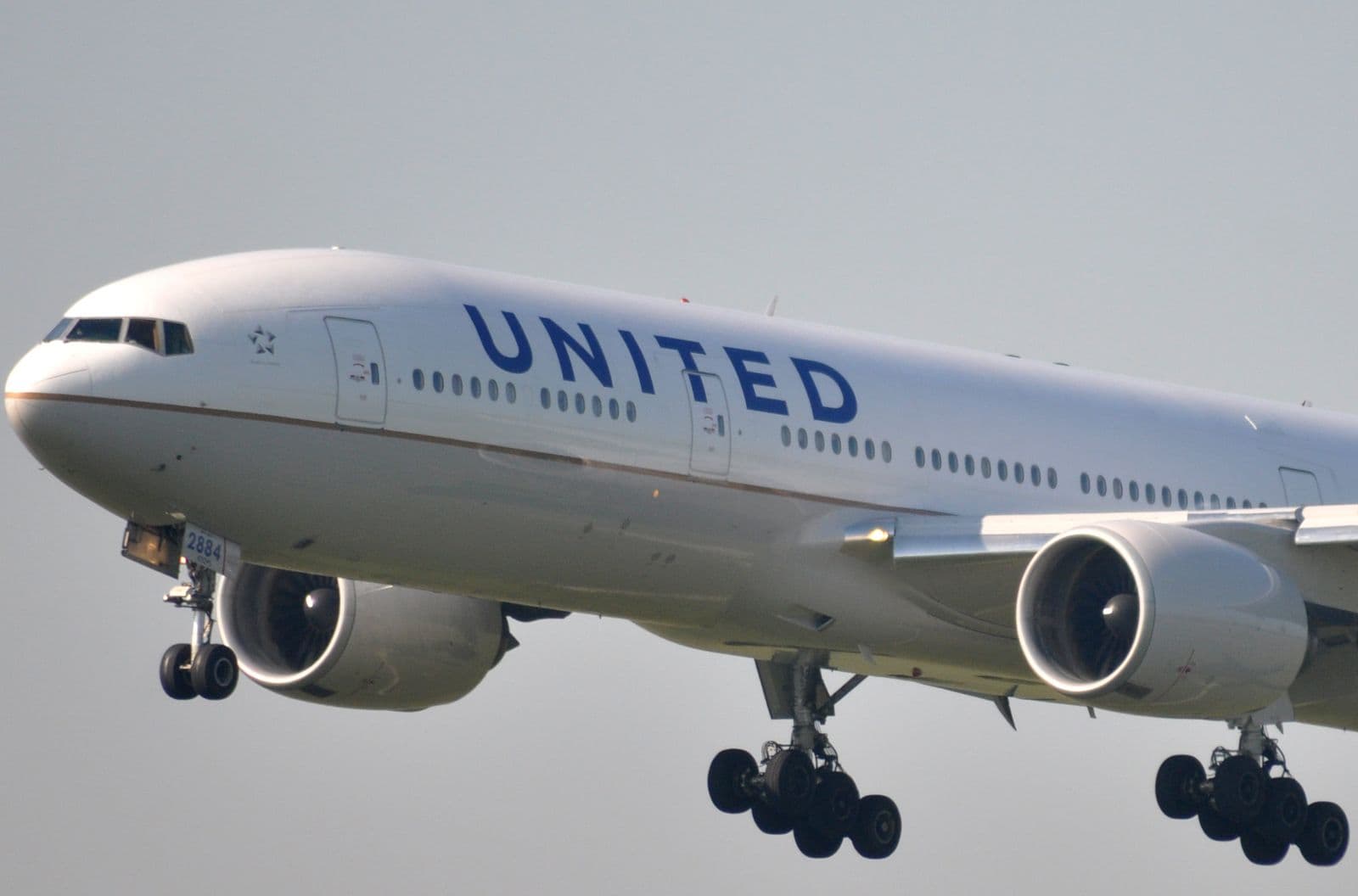
The 112-inch engine's 777 career has been long and, for most of it, unremarkable in the way an airline wants. Pratt & Whitney describes it as "the reliability, experience and Extended-range Twin-engine Operations (ETOPS) leader for the 777 aircraft", and it powered 777-200, 777-200ER and 777-300 aircraft for operators including United, All Nippon Airways, Japan Airlines and Korean Air. Its current model list is short (the PW4074, 4074D, 4077, 4077D, 4084D, 4090 and 4090-3) and notably does not include the PW4098, the highest-rated member of the family, which is absent from both the manufacturer's catalogue and the 2021 airworthiness directive that swept the rest of it.
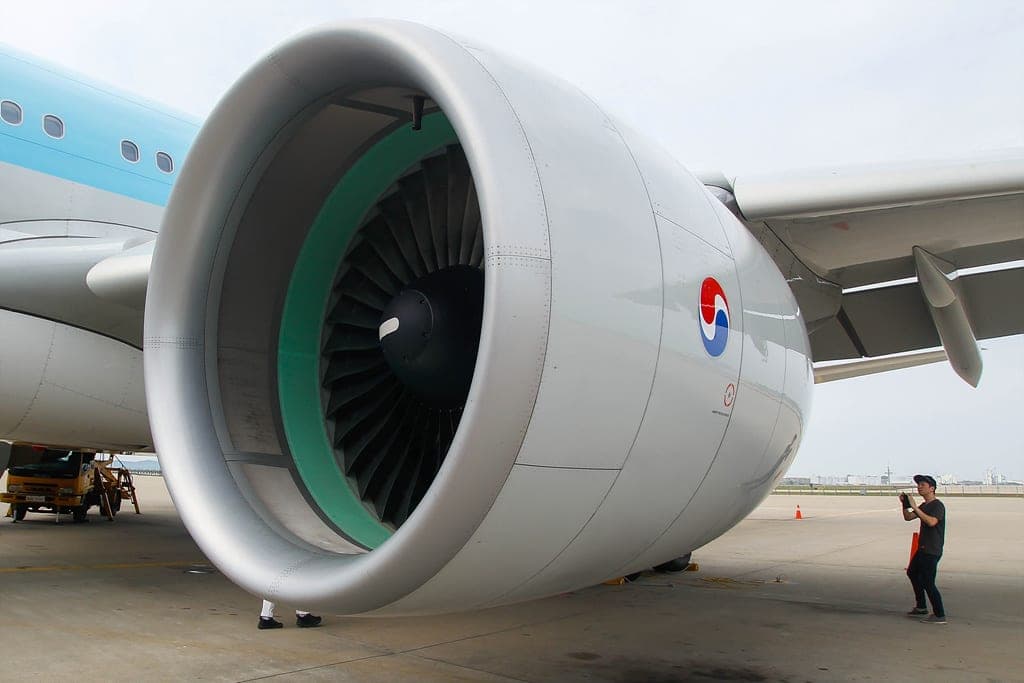
By 2000 more than 2,000 PW4000s had logged over 40 million hours with 75 operators. The thirty years to 2017 took the family past 135 million flight hours and more than 2,500 deliveries: numbers that describe an engine which has spent most of its life being unremarkable, which is the only kind of remarkable an engine gets.
It is not finished. The 94-inch engine is in production for the Boeing KC-46 Pegasus tanker, the military derivative of the 767, and the A330 fleet running the 100-inch engine has years of life in it. Four decades after the first run, the PW4000 is one of a very small number of engines still being manufactured that were designed before the FADEC was standard equipment.
Reliability and maintenance
For most of its life the PW4000's reliability record was ordinary. What changed that was a specific and repeated failure in one family: the fracture of a first-stage low-pressure compressor blade, the fan blade, on the 112-inch engine, in flight, on a Boeing 777.
On 13 February 2018, United Airlines flight 1175, a Boeing 777-222 registered N773UA with 374 people aboard, was in level cruise at 36,000 feet over the Pacific en route to Honolulu when the crew heard a loud bang followed by violent shaking. A fan blade had separated from the right engine, a PW4077, taking portions of the inlet and fan cowl with it. The crew shut the engine down, declared an emergency and landed at Honolulu. Nobody was hurt and the aircraft was only lightly damaged.
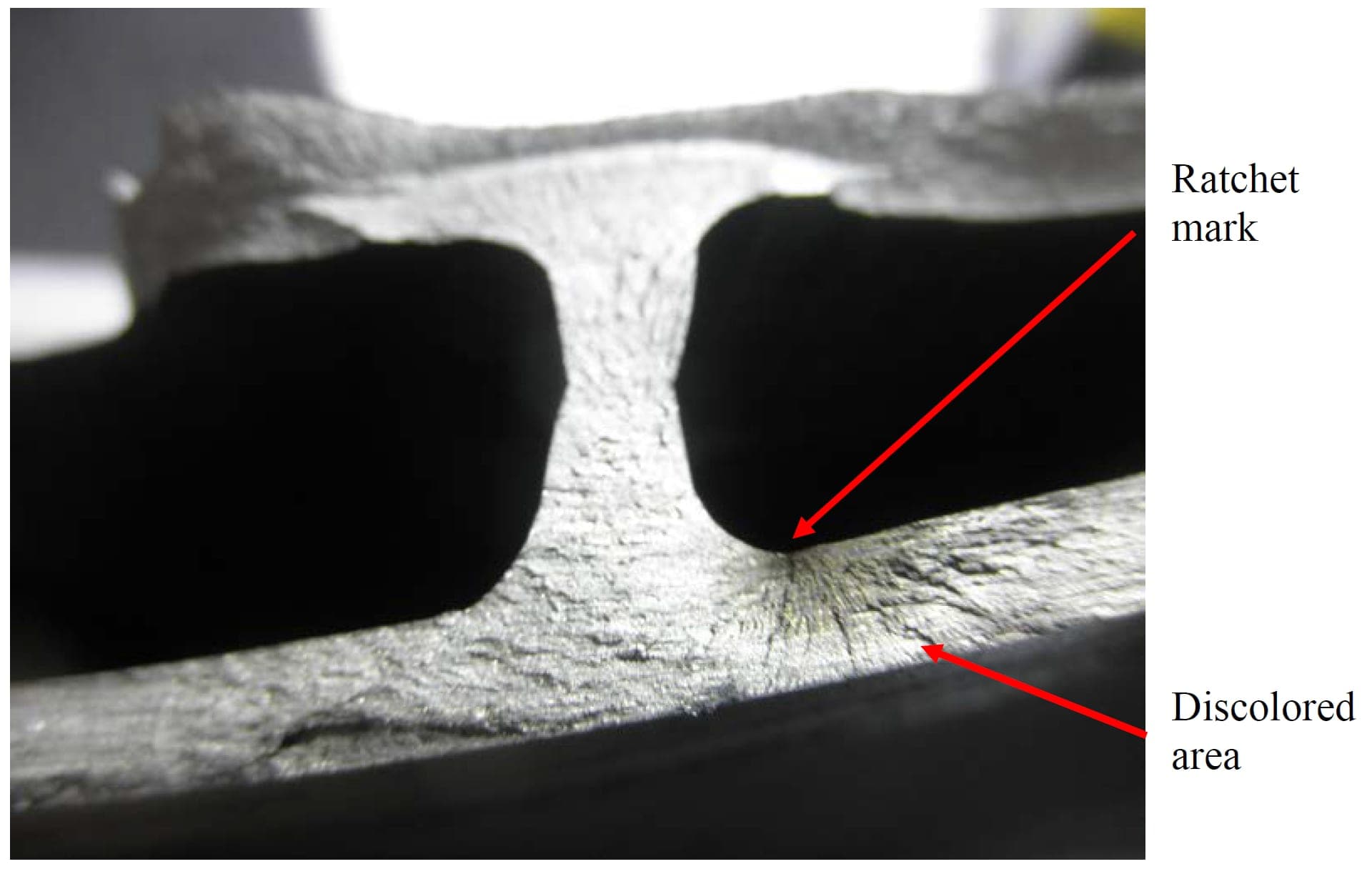
The National Transportation Safety Board's finding was not about metal. The blade had been inspected twice by thermal acoustic imaging, a technique that excites a component ultrasonically and photographs the heat a crack generates as its faces rub, once in 2010 and again in July 2015. On both occasions an indication appeared at precisely the location where the crack later originated. On both occasions the inspector recorded it as a defect in the paint used during the process, and returned the blade to service.
The NTSB traced that to a training failure with a specific administrative cause. Pratt & Whitney had continued to classify thermal acoustic imaging as "a new and emerging technology", a designation that permitted the company to keep using it without developing a formal initial and recurrent training programme or an inspector certification programme, this despite having inspected more than 9,000 fan blades by that point. An inspector told investigators the training had "never provided any reference material on what to look at" and had included "fuzzy images of what the indications were supposed to look like". A comparable established technique, eddy current inspection, requires more than 1,200 hours of practical experience to qualify.
Three years later it happened again. On 20 February 2021, United Airlines flight 328, a Boeing 777-222 registered N772UA with 239 people aboard, suffered a fan blade separation, engine structural failure and an in-flight fire in the right engine, another PW4077, while climbing through about 12,500 feet out of Denver. Debris fell across the suburb of Broomfield. The aircraft returned and landed without injury to anyone aboard or on the ground.
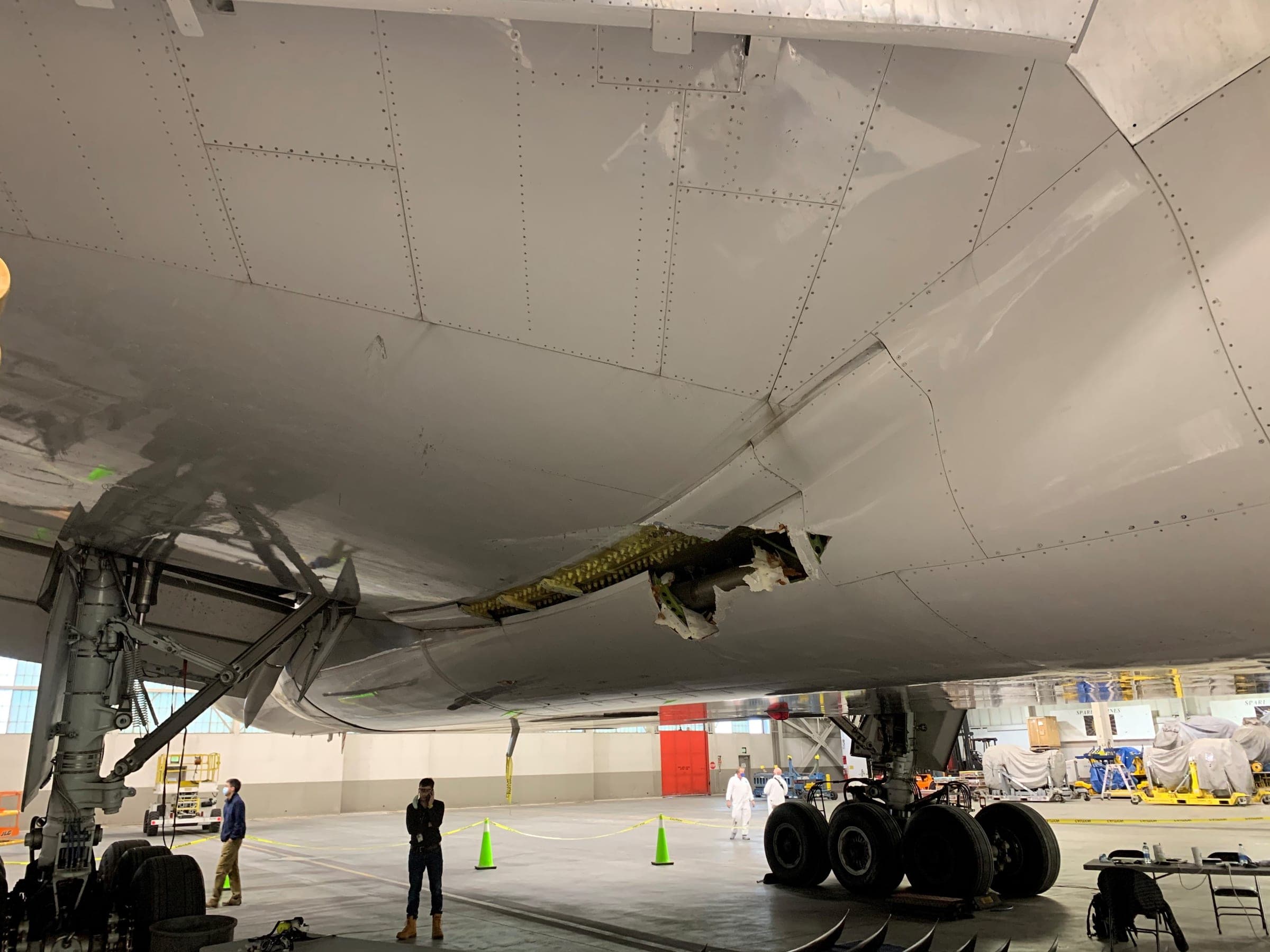
The NTSB found one blade fractured 7.5 inches above its base at the trailing edge, with a fracture surface "consistent with fatigue" and, on metallurgical examination, "multiple fatigue fracture origins on the interior surface of a cavity within the blade". A second blade showed overload failure consistent with secondary damage. The fractured blade had accumulated 2,979 cycles since its last inspection and had been through thermal acoustic imaging in 2014 and 2016.
The regulatory response was immediate. On 23 February 2021 the Federal Aviation Administration issued Emergency Airworthiness Directive 2021-05-51, effective with actual notice, requiring a thermal acoustic image inspection for cracks in certain first-stage low-pressure compressor blades and removal of any that failed. The directive named the PW4074, 4074D, 4077, 4077D, 4084D, 4090 and 4090-3 and covered 104 engines on United States registered aircraft. The FAA's own summary of the cause is terse: "the in-flight failure of a 1st-stage low-pressure compressor (LPC) blade on a PW4077 model turbofan engine resulting in an engine fire during flight".
Japan's aviation authority and others grounded their PW4000-powered 777s in parallel, and the type stayed out of service for a year or more in several fleets while blades were shipped to Pratt & Whitney for inspection. The engine returned, but the episode is the clearest modern illustration of a failure mode that is not a design fault at all: an inspection process that worked, applied by people who had not been taught to read what it produced.
Upgrades
The PW4000's improvement programmes have followed the shape of its three families rather than the engine as a whole. The most substantial is Advantage70 for the 100-inch A330 engine, which Pratt & Whitney offers both as a new-build PW4170 and as a retrofit kit, and to which it attributes a two per cent thrust increase and better than one per cent lower fuel consumption alongside durability and maintenance-cost gains.
The engine has also been improved through its control system rather than its hardware. The 100-inch certificate records that particular electronic engine control software versions carry their own maximum permissible exhaust gas temperatures, which is to say the limit an engine runs to is set partly by the code in the box rather than only by the metal in the turbine. Both families are approved to dispatch with defined faults present in the control system, under criteria set out in a Pratt & Whitney report rather than in the certificate itself.
The 112-inch family's most significant change was not an upgrade but a mandated inspection regime. Following the 2021 directive, the alert service bulletin governing thermal acoustic imaging of first-stage blades became the document that determines when a 777 PW4000 may fly: a reminder that for a mature engine the maintenance manual is a more active document than the type certificate.
Applications
The 94-inch engine is the widest-ranging of the three. It powers the Boeing 747-400 and the 767, the McDonnell Douglas MD-11, and the Airbus A300-600 and A310: a list that spans two manufacturers, three continents of assembly and both three- and four-engined layouts, which is unusual for one certificate.
The 100-inch engine has a single application: the Airbus A330. Pratt & Whitney supplies A330 operators with the complete propulsion system (engine, nacelle, thrust reverser and accessories) rather than the bare engine, an arrangement that is more common now than it was when the A330 was launched.
The 112-inch engine powers the Boeing 777-200, 777-200ER and 777-300. It does not power the 777-300ER, the -200LR or the 777F, all of which are GE90 aircraft exclusively: which means the PW4000's 777 career is confined to the first generation of the type and has a natural end date as those aircraft retire.
One further application sits outside all three categories. The Scaled Composites Stratolaunch, the twin-fuselage carrier aircraft with the largest wingspan ever flown, uses PW4056s salvaged from retired Boeing 747-400s: six of them, which is more PW4000s on one airframe than on any aeroplane ever built for the purpose.
Records
The PW4000's clearest first belongs to the 100-inch engine. Pratt & Whitney states that it was "the first in aviation history to qualify for Extended-range Twin-engine Operations (ETOPS) prior to entering service": a genuine reversal of how the approval had always worked. ETOPS had been earned retrospectively, by flying an engine on shorter routes until the in-flight shutdown rate justified letting it go further from a diversion airport. Qualifying in advance meant persuading a regulator that analysis and test could substitute for service history, and the practice has been normal ever since.
The 112-inch engine set the family's outright thrust record on test rather than in service, reaching 100,000 lb in May 1993 during the 777 development programme. No certificated PW4000 is rated that high; the demonstration existed to show margin, which is what a thrust record usually is.
The strangest entry in the record is not Pratt & Whitney's doing. The Scaled Composites Stratolaunch, the twin-fuselage carrier aircraft with the largest wingspan ever flown, is powered by six PW4056s taken from retired Boeing 747-400s. It is the greatest number of PW4000s ever fitted to a single airframe, and all six had already completed one working life on somebody else's aeroplane before beginning a second.
Legacy
The PW4000's place in the record is as the last of a kind. It was designed when a large civil engine was still expected to serve every widebody on the market, and its 94-inch family very nearly did. The engines that followed it (the GE90, the Trent 800, the GEnx, the Trent XWB) were each aimed at one or two airframes, because by then the airframes were large enough and few enough that a bespoke engine paid for itself. Nothing built since has been asked to fit a 747, a 767, an MD-11, an A300 and an A310.
Its technical legacy is in the materials. Single-crystal blades and powder-metallurgy discs were a commercial gamble when the PW4000 took them on at scale; they are now the baseline for every large turbofan in production, including those of Pratt & Whitney's competitors. The FADEC is the same story, remarkable in 1984, mandatory by 1995.
Its safety legacy is more uncomfortable and more useful. The 2018 and 2021 fan blade failures were not caused by a weakness in the engine but by an inspection programme that had been allowed to run for years on an informal footing, and the NTSB said so in terms that named a classification decision rather than a part. It is one of the clearest published cases of a modern failure whose root cause lies in how an organisation manages its own inspectors, and the reason it is well documented is that nobody was killed in either event.
Four decades on it is still running, still being built, and still being inspected against a service bulletin written in response to a blade that let go over the Pacific. That is not a graceful ending, but it is a working one, and very few engines of its generation are still working at all.
Output by altitude
A piston engine has no single power figure. Each rating below is what the sources publish for one mark under one set of conditions, at the altitude it was measured at.
| Mark and conditions | Altitude | Output |
|---|---|---|
| PW4052 (94-inch), take-offtake-off, ISA sea-level static, 5 minutes | Sea level | 232.19kN |
| PW4056 (94-inch), take-offtake-off, ISA sea-level static, 5 minutes | Sea level | 252.44kN |
| PW4062 (94-inch), take-offtake-off, ISA sea-level static, 5 minutes | Sea level | 275.79kN |
| PW4062 (94-inch), maximum continuousmaximum continuous, ISA sea-level static | Sea level | 223.52kN |
| PW4164 (100-inch), take-offtake-off, ISA sea-level static, 5 minutes | Sea level | 286.91kN |
| PW4168 (100-inch), take-offtake-off, ISA sea-level static, 5 minutes | Sea level | 305.14kN |
| PW4170 (100-inch), take-offtake-off, ISA sea-level static, 5 minutes | Sea level | 311.37kN |
| PW4170 (100-inch), maximum continuousmaximum continuous, ISA sea-level static | Sea level | 264.03kN |
| PW4090 (112-inch), take-offtake-off, ISA sea-level static, 5 minutes | Sea level | 400.3kN |
| PW4098 (112-inch), take-offtake-off, ISA sea-level static, 5 minutes | Sea level | 435.9kN |
Mark evolution
PW4000, 94-inch fan
1987275.79 kNThe original family: fifteen certified models spanning the Boeing 747 and 767, the MD-11 and the Airbus A300-600 and A310.
Bypass ratio 4.8 to 5.0, overall pressure ratio 27.5 to 32.3, flat rated to 86 or 92 °F depending on model.
PW4000, 100-inch fan
1994311.37 kNBuilt for the Airbus A330 and supplied as a complete propulsion system. The first engine qualified for ETOPS before entering service.
Bypass ratio 5.0, overall pressure ratio 32.0 to 35.4. The PW4170 Advantage70 adds two per cent thrust and better than one per cent fuel burn.
PW4000, 112-inch fan
1995400.3 kNThe Boeing 777 engine, covering what Pratt & Whitney calls the 74,000 to 90,000 pound-thrust class, and the family whose fan blades drew the 2021 emergency directive.
Reached 100,000 lb on test in May 1993 and was approved for 180-minute ETOPS at entry into service.
- PW4000-94 Engine, Pratt & Whitney
- PW4000-100 Engine, Pratt & Whitney
- PW4000-112 Engine, Pratt & Whitney
- Type-Certificate Data Sheet IM.E.050, Pratt & Whitney PW4000-94 Series Engines, Issue 01, European Union Aviation Safety Agency
- Type-Certificate Data Sheet IM.E.043, Pratt & Whitney PW4000-100 Series Engines, Issue 02, European Union Aviation Safety Agency
- Airworthiness Directives; Pratt & Whitney Division Turbofan Engines (Emergency AD 2021-05-51), Federal Aviation Administration
- NTSB Issues Investigative Update for United Airlines Flight 328 Engine Failure Event, National Transportation Safety Board
- NDI Process Failures Preceded B777 PW4077 Engine Fan Blade Off, Aerossurance
- Pratt & Whitney PW4000, Wikipedia
Checked September 28, 2026