$89.5B
Revenue
financial year 2025
600
Commercial deliveries
financial year 2025
Company
- Country
- United States
- Headquarters
- Arlington, Virginia
- Listing
- NYSE: BA
Founding
- Founded
- July 15, 1916Seattle, Washington
- Founded as
- Pacific Aero Products Co.
- Founders
- William E. Boeing · George Conrad Westervelt
- Former names
- Pacific Aero Products Co. (1916–1917)Boeing Airplane Company (1917–1961)
Scale
- Employees
- 182,000as of 2025
- Backlog
- $682.2Bas of December 31, 2025
American aerospace manufacturer: airliners, military aircraft, satellites and spacecraft, founded in Seattle in 1916.
Boeing is the company that decided, more often than any other, what flying would feel like for everybody else. It began in 1916 as a Seattle boat-builder's side project (two men, a wooden floatplane and a shed on Lake Union) and grew into the manufacturer of the aeroplane that carried the world's mail, the bomber that flew over Germany, the jet that made transatlantic travel ordinary and the jumbo that made it cheap. For most of the second half of the twentieth century, the phrase "if it isn't Boeing, I'm not going" was said as a joke by people who half meant it.
The company that exists today is not that company alone. It absorbed North American Aviation's space business, Rockwell's defence work and, in 1997, McDonnell Douglas itself, its only remaining American rival. What emerged was a corporation of three roughly equal halves: Boeing Commercial Airplanes, which builds airliners in Washington State and South Carolina; Boeing Defense, Space & Security, which builds fighters, tankers, satellites and the crew capsule that flies to the International Space Station; and Boeing Global Services, which keeps the rest flying.
It is also a company that spent the past decade in the worst crisis of its history. Two 737 MAX crashes in 2018 and 2019 killed 346 people and grounded the type worldwide for twenty months. A door plug left the side of a nearly-new 737 over Portland in January 2024, and the investigation that followed found four bolts that had never been reinstalled at the factory. The regulator capped production; the chief executive left; the company borrowed heavily and, in 2025, bought back the fuselage supplier it had spun off two decades earlier.
The figures below are the shape of the recovery rather than its conclusion. In the 2025 financial year Boeing reported revenue of $89.5 billion, delivered 600 commercial aeroplanes, the most since 2018, and closed the year with a backlog of $682 billion, the largest in its history. It employed about 182,000 people. Free cash flow was still negative.
Origins
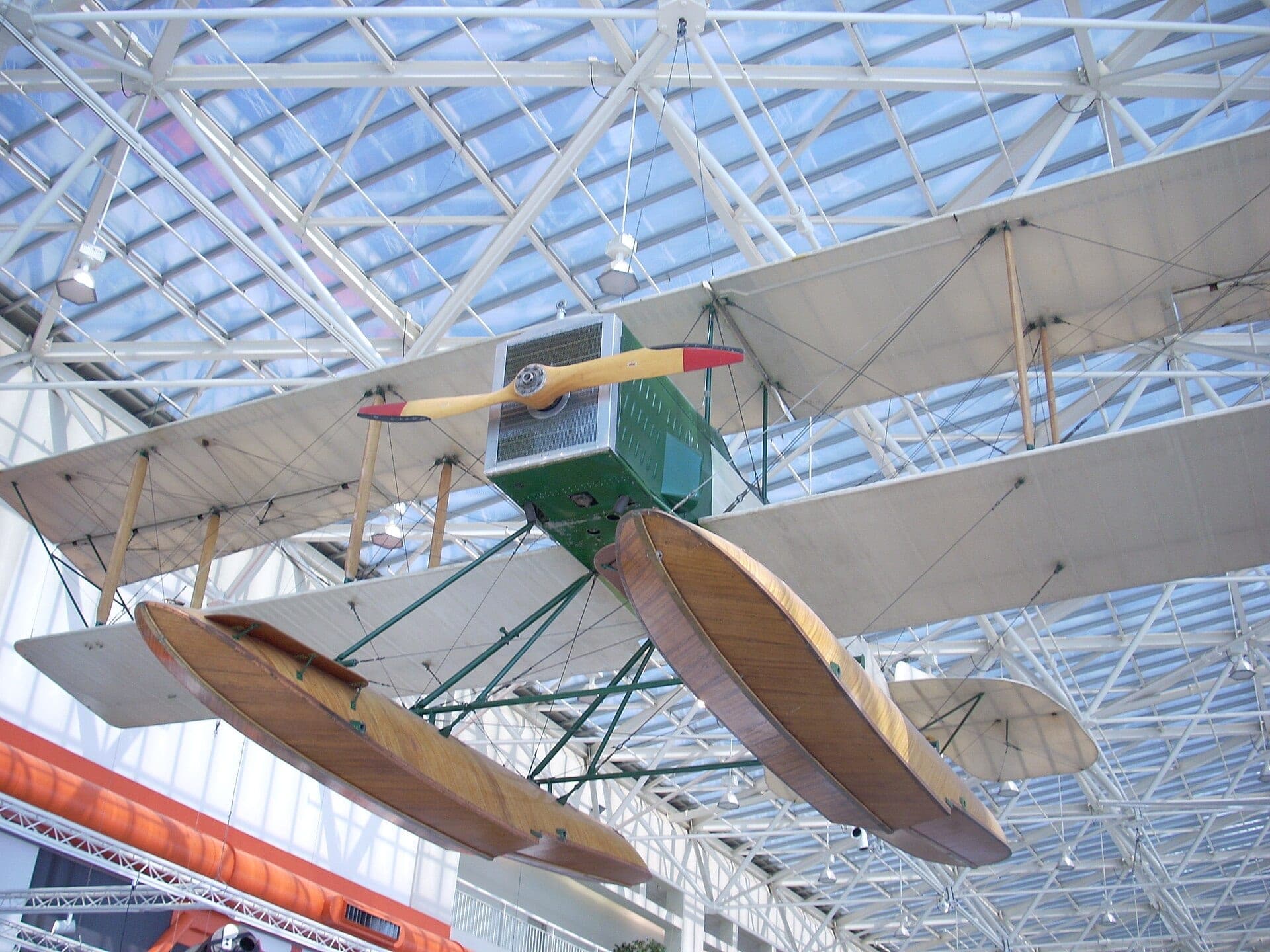
William Edward Boeing was a timber man. He had studied at Yale, made money in Washington State forests, and bought a Seattle boatyard mainly because he liked boats. In 1914 he paid for a ride in a Curtiss floatplane at a Fourth of July fair, decided the machine was badly made, and concluded that he and a friend could build a better one. The friend was Conrad Westervelt, a naval officer and engineer; the aeroplane they built was a twin-float biplane they called the B&W, after their initials.
The B&W flew for the first time on 15 June 1916 from Lake Union, with Boeing himself at the controls after the hired pilot was late. A month later, on 15 July 1916, he incorporated the venture as Pacific Aero Products Co. The name lasted less than a year: Westervelt had been posted east, and in April 1917 the company was renamed the Boeing Airplane Company. It kept that name until 1961.
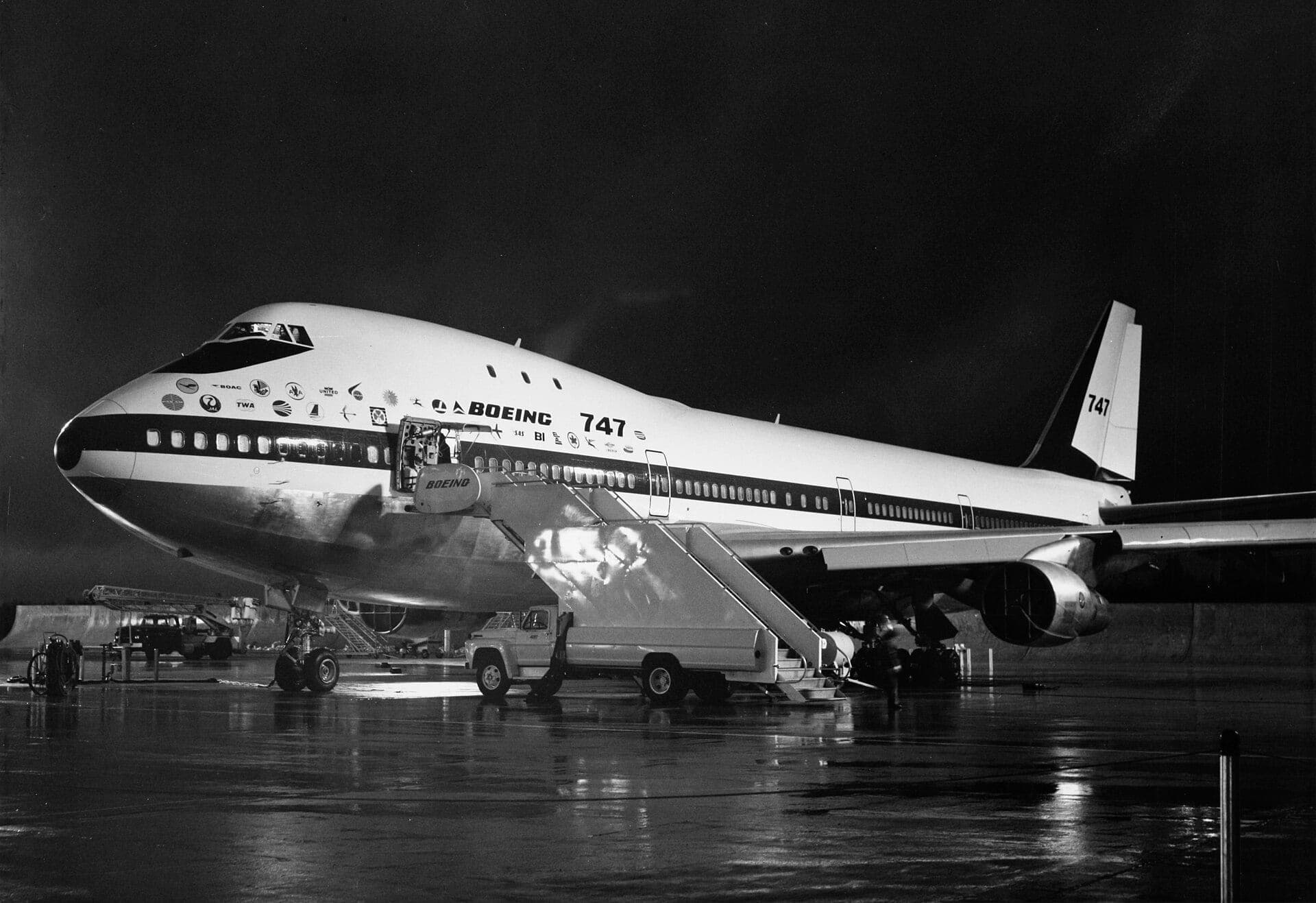
The First World War made it a real business. The U.S. Navy ordered fifty Model C trainers, and the boatyard on the Duwamish River, a red-painted wooden building the company still calls the Red Barn, became an aircraft factory. When the war ended and the orders stopped, Boeing kept the workforce alive building furniture and boats until aviation could pay for itself again.
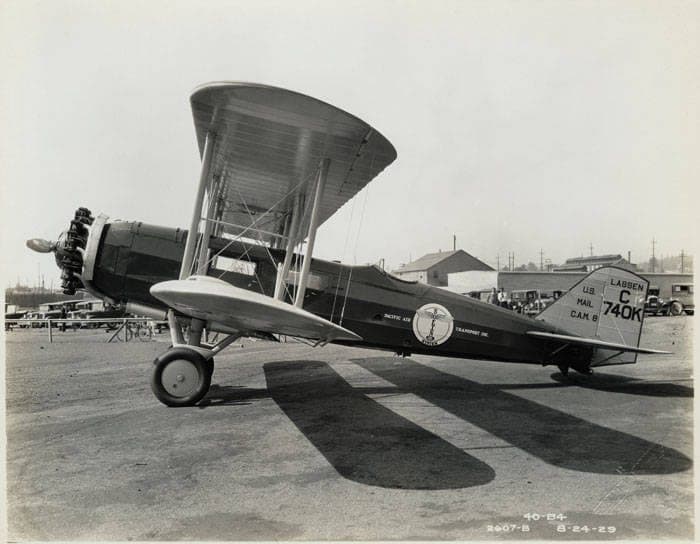
What actually paid was mail. The Air Mail Act of 1925 handed government routes to private operators, and Boeing won the Chicago to San Francisco contract with the Model 40A, an aeroplane designed around the economics of the job rather than around the aeroplane. He then did something more consequential than designing it: he flew it himself, as an operator. Boeing Air Transport, founded in 1927, was an airline owned by an aircraft manufacturer, and it was the seed of everything that followed: including the political fight that would eventually take it away from him.
Expansion
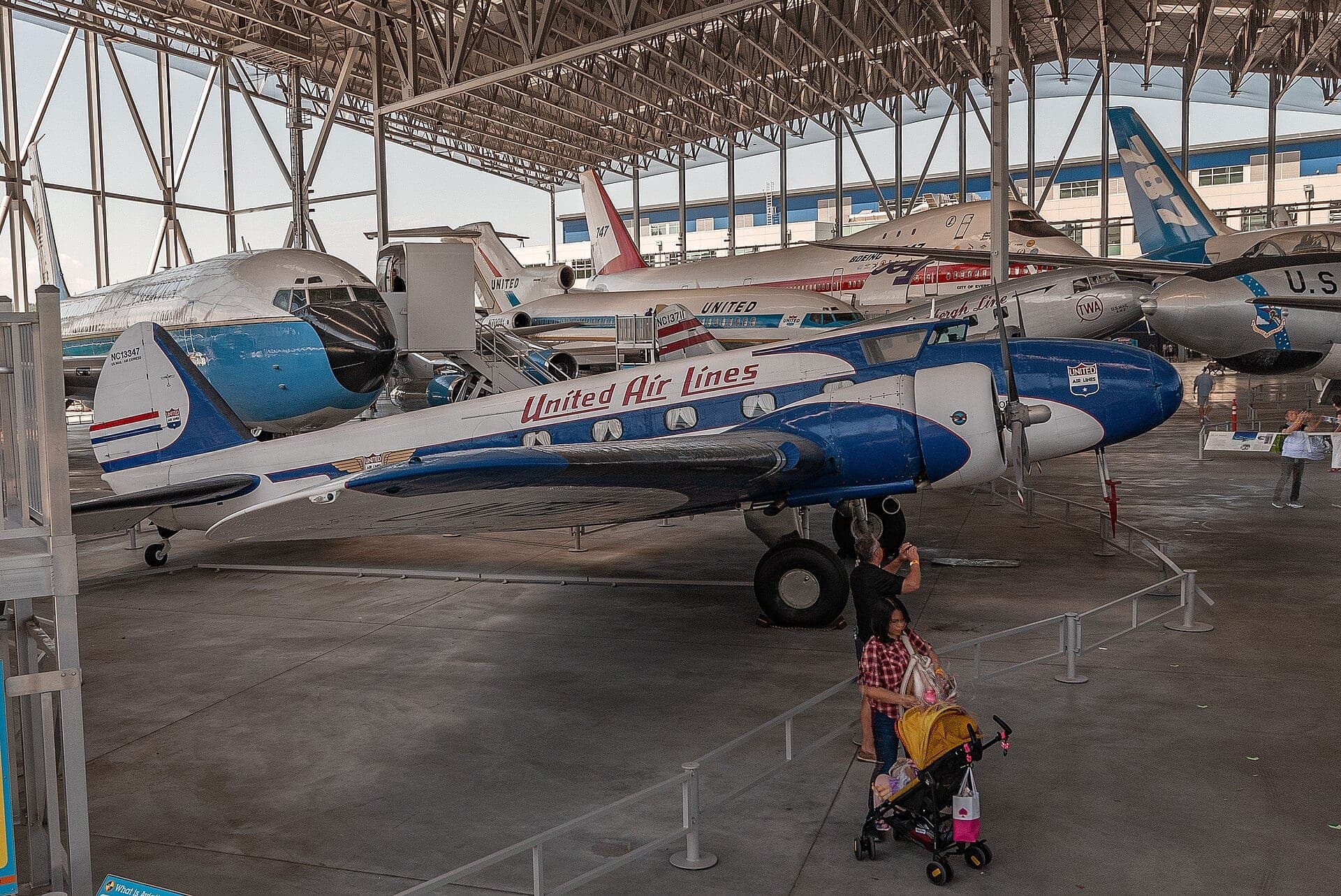
Between 1928 and 1934 Boeing built something no American aircraft company has been allowed to build since: a company that made the aeroplane, made its engine, made its propeller, and then flew it for money. The United Aircraft and Transport Corporation, assembled from 1929, brought together Boeing, Pratt & Whitney, Hamilton Standard propellers, Chance Vought, Sikorsky and a group of airlines that would become United Air Lines. William Boeing was its chairman.
The engineering that came out of it was extraordinary. The Boeing 247 of 1933 was the first genuinely modern airliner, an all-metal, low-wing monoplane with retractable undercarriage, cowled engines and de-icing boots, faster than the fighters of a few years earlier. Its one flaw was ownership: United took the entire first production run, so Trans World Airlines went to Douglas instead and got the DC-2, and then the DC-3, which was larger, and won.
The political flaw was worse. A Senate investigation into how airmail contracts had been awarded produced a scandal, and the Air Mail Act of 1934 made it illegal for one corporation to both build aircraft and carry mail. United Aircraft and Transport was broken into three: Boeing Airplane Company kept manufacturing west of the Mississippi; United Aircraft Corporation, later United Technologies, kept the eastern engine and propeller businesses; United Air Lines flew.
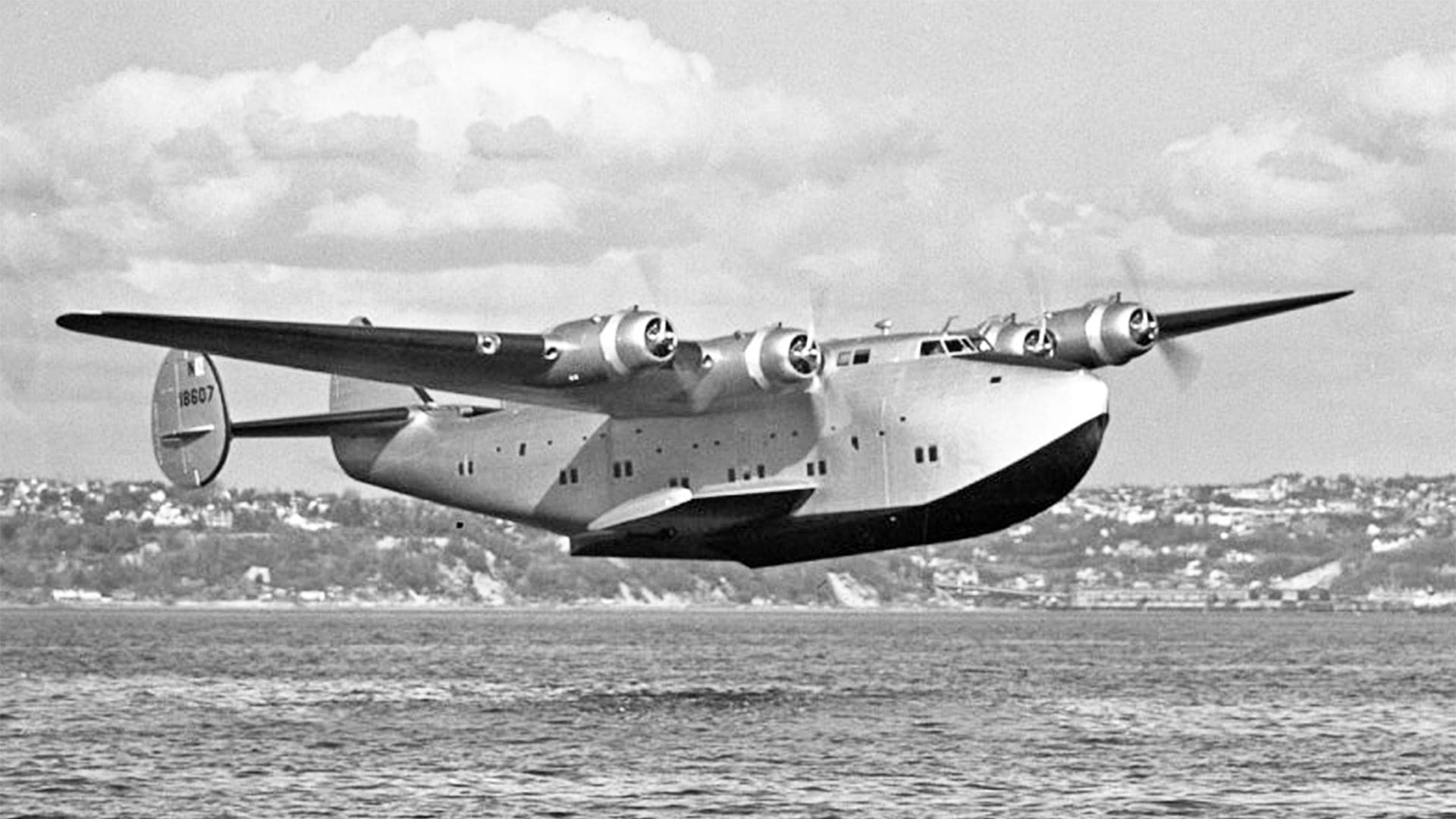
William Boeing, then 52, was awarded the Daniel Guggenheim Medal and left aviation altogether. He sold his stock, went back to timber, horses and property, and never ran an aircraft company again. The firm that carried his name spent the rest of the decade as an ordinary manufacturer of moderate size, keeping itself in business with flying boats, the Model 314 Clipper that opened the Pacific for Pan American, and with the pressurised Model 307 Stratoliner, the first airliner that could fly above the weather.
Wartime production
The aeroplane that changed Boeing's scale was designed for a competition it lost. The Model 299, flown in 1935, was a four-engined bomber entered against twin-engined designs; a Seattle reporter looking at its gun positions called it a flying fortress, and the name stuck. The prototype crashed on a test flight because the crew took off with the control locks engaged: an accident that killed two men and, indirectly, produced the pre-flight checklist as a standard piece of aviation practice.
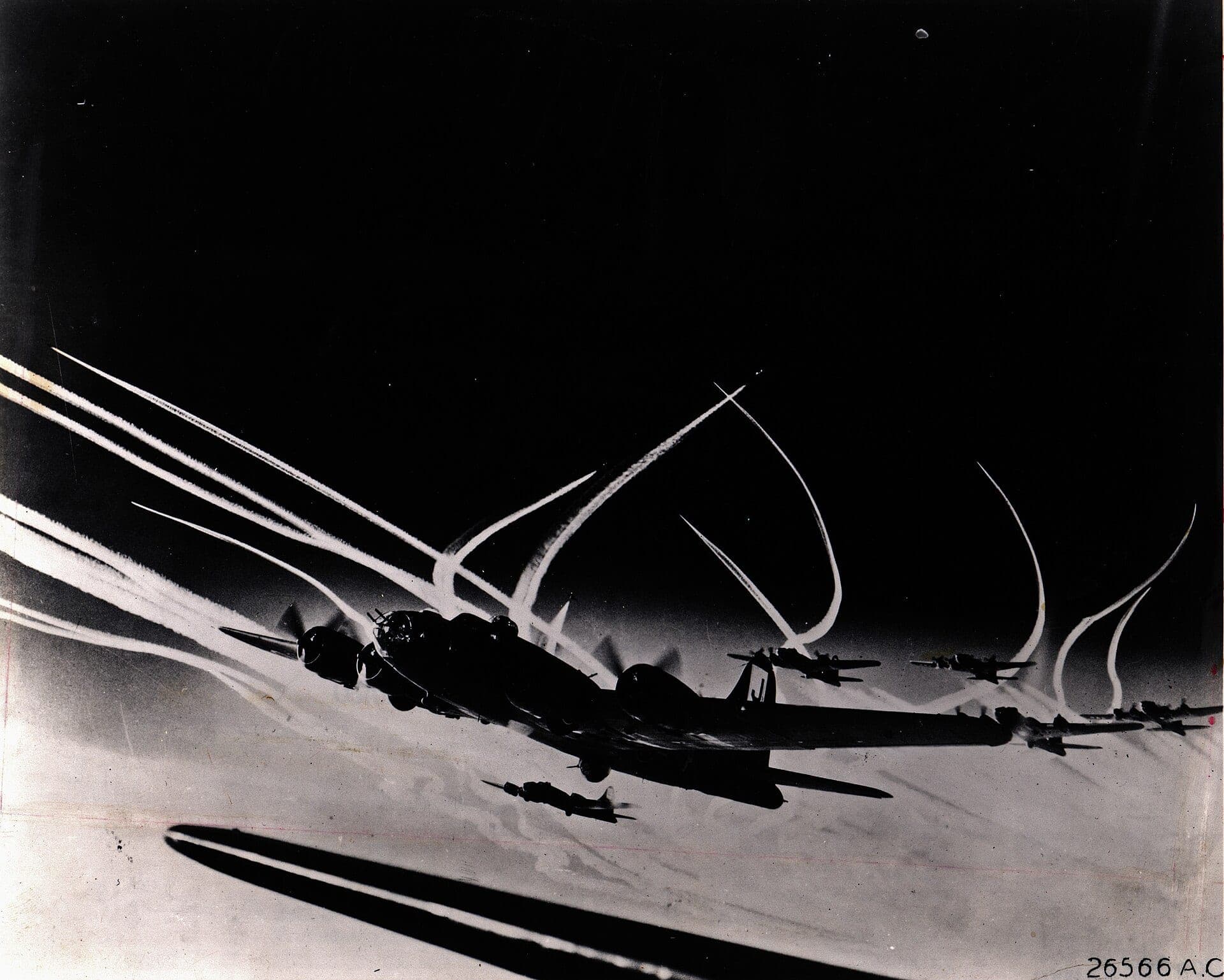
The Army bought the aircraft anyway, in small numbers at first. Then the war came. B-17 production ran to 12,731 aircraft, built not only in Seattle but by Douglas at Long Beach and by Vega at Burbank, under a pooling arrangement between competitors that would be unthinkable in peacetime. Boeing's own Plant 2 was camouflaged from the air with a false suburb of fabric houses and painted streets.
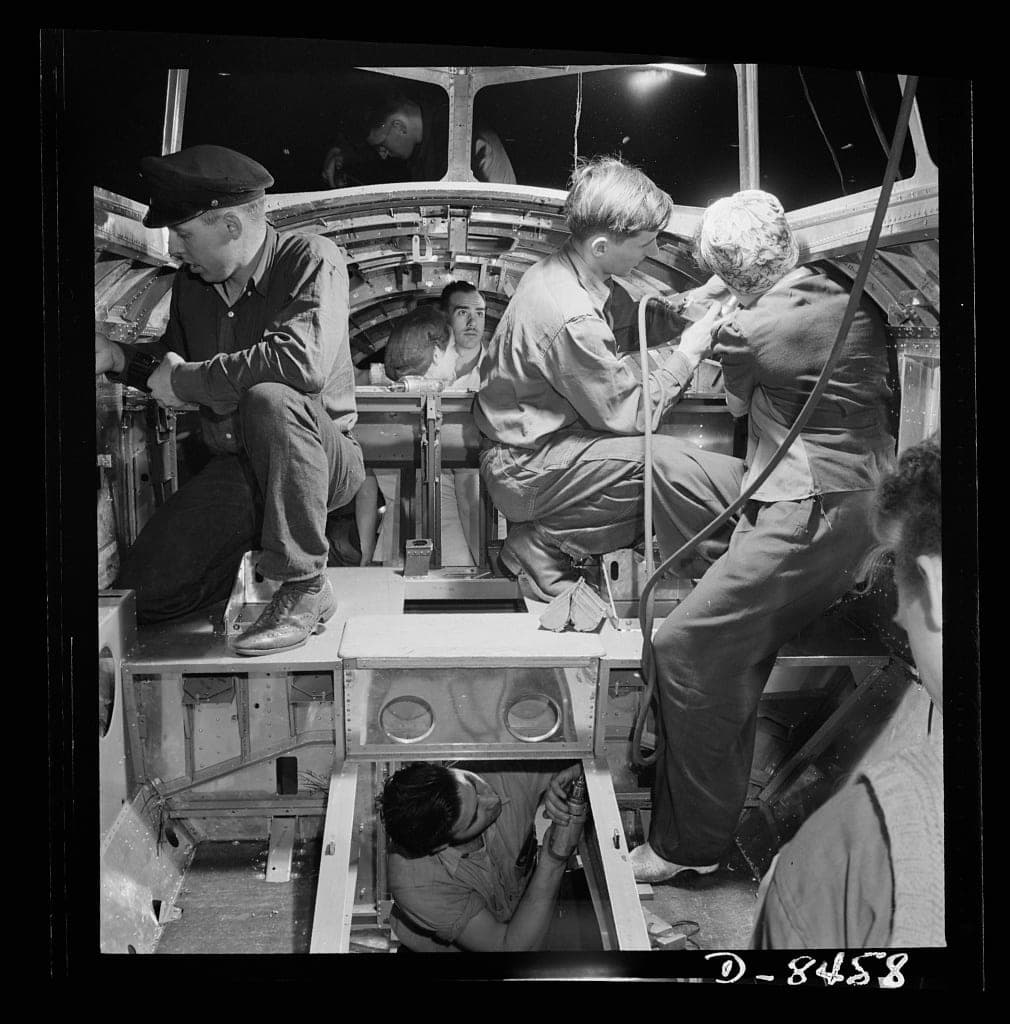
The workforce that built them was not the pre-war one. Tens of thousands of women entered the plants; at its wartime peak Boeing employed around 45,000 people in the Seattle area alone, in a company that had employed under 2,000 a few years before. The pictures of B-17 fuselages being fitted out in Seattle are pictures of a manufacturing culture being invented in real time.
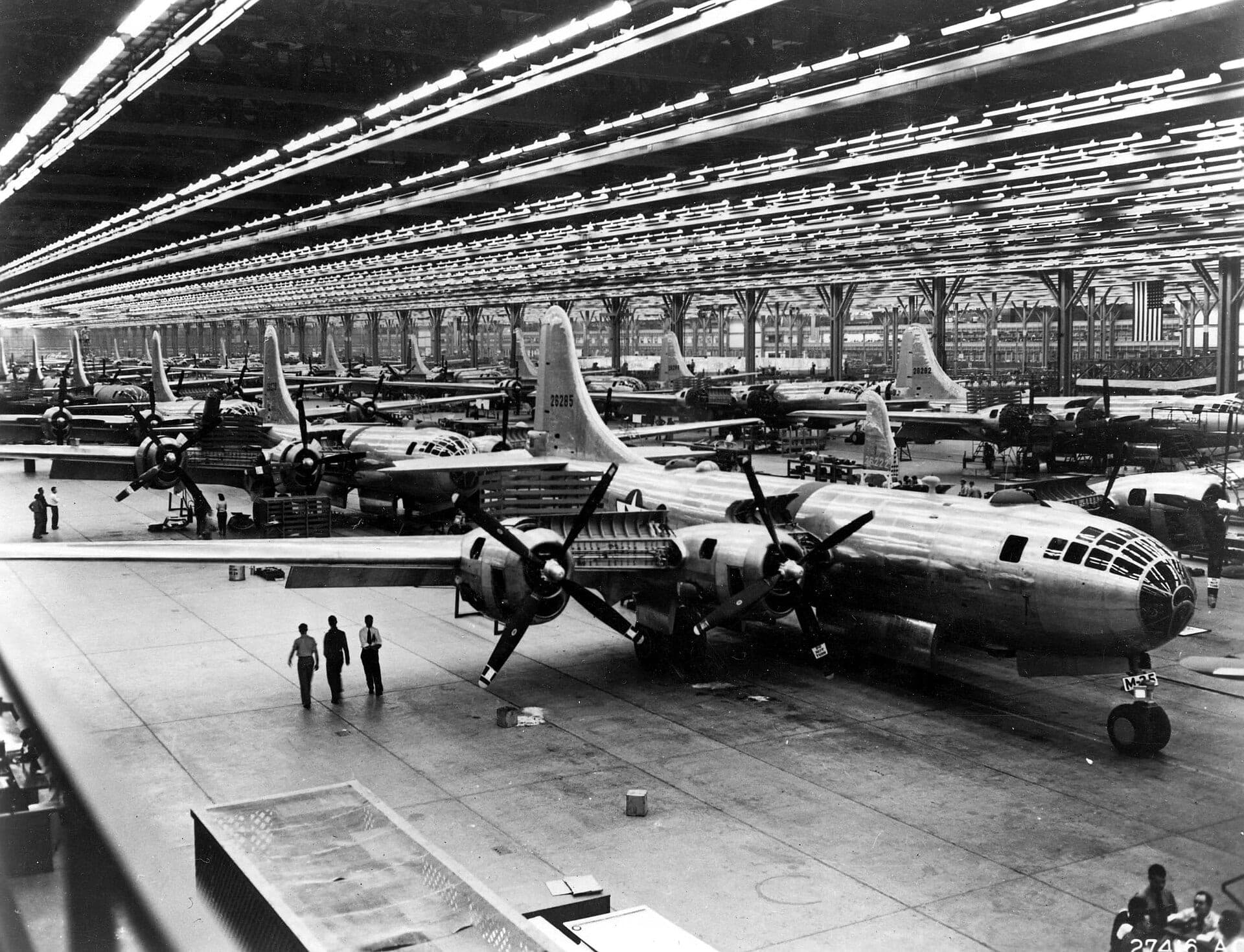
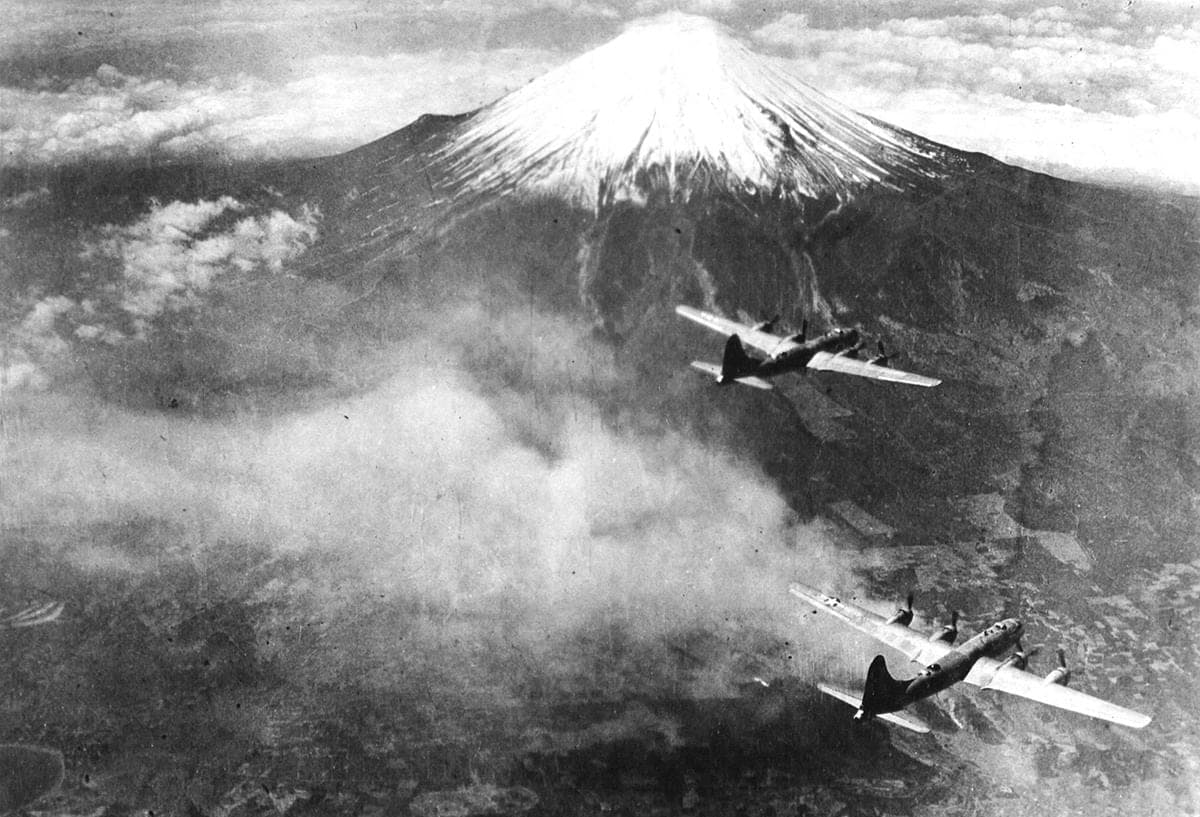
The B-29 Superfortress that followed was a far harder machine: pressurised, remotely-controlled gun turrets, an enormous wing loading, and an engine that caught fire often enough to kill crews in training. It was the most expensive American programme of the war, more costly than the Manhattan Project, and it was a B-29 that carried the atomic bombs to Hiroshima and Nagasaki. Boeing built the aircraft that ended the war and, within weeks, had almost nothing to build at all: the orders were cancelled outright, and the company let go the majority of its workers.
The jet age
Boeing learned to build jets on the government's money. The B-47 Stratojet of 1947 introduced the configuration that every large jet aircraft has used since, a thin swept wing with the engines slung ahead of it on pylons, and the B-52 that followed in 1952 is still in United States Air Force service seventy years later. The KC-97 tanker fleet, meanwhile, was piston-powered and could not keep up with the aircraft it refuelled.
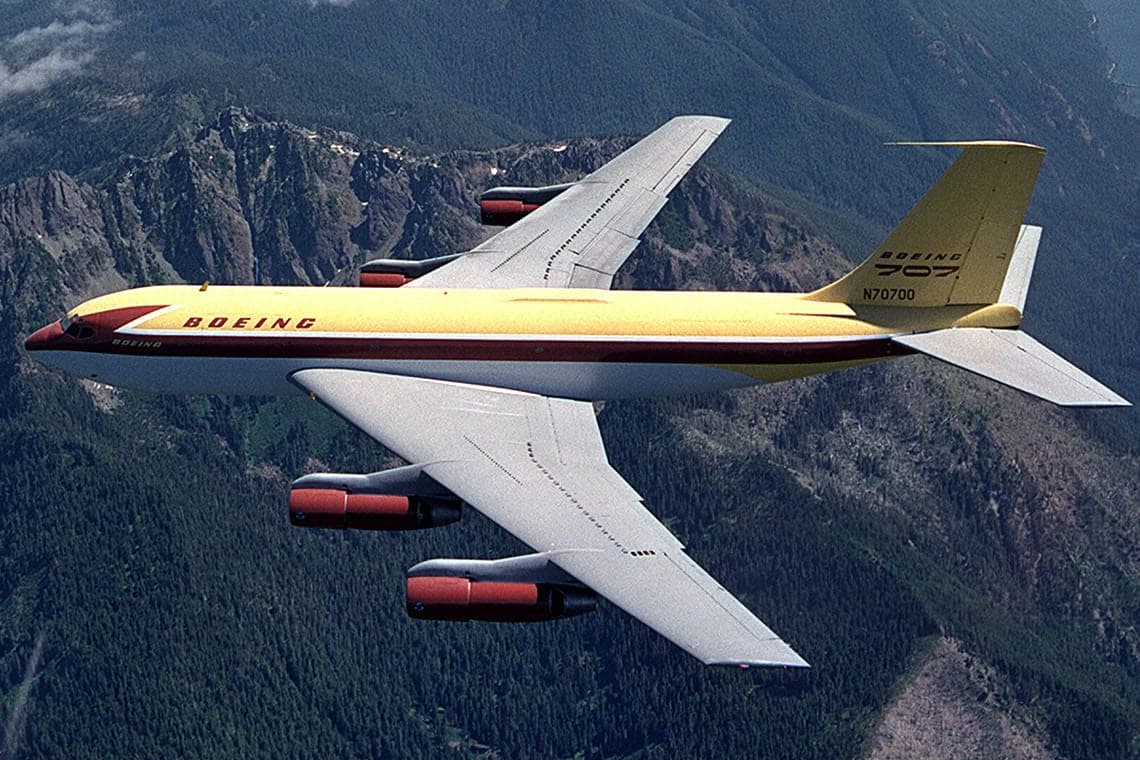
That gap was the opening. In 1952 Boeing's board committed $16 million, roughly a quarter of the company's net worth, to a prototype with no customer for it: a swept-wing jet transport designated Model 367-80, so numbered to suggest to competitors that it was another KC-97 derivative. The Dash 80 first flew on 15 July 1954, thirty-eight years to the day after the company was founded. In August 1955 Boeing's chief test pilot Tex Johnston barrel-rolled it over Lake Washington in front of the assembled airline industry, having been told to do a flypast.
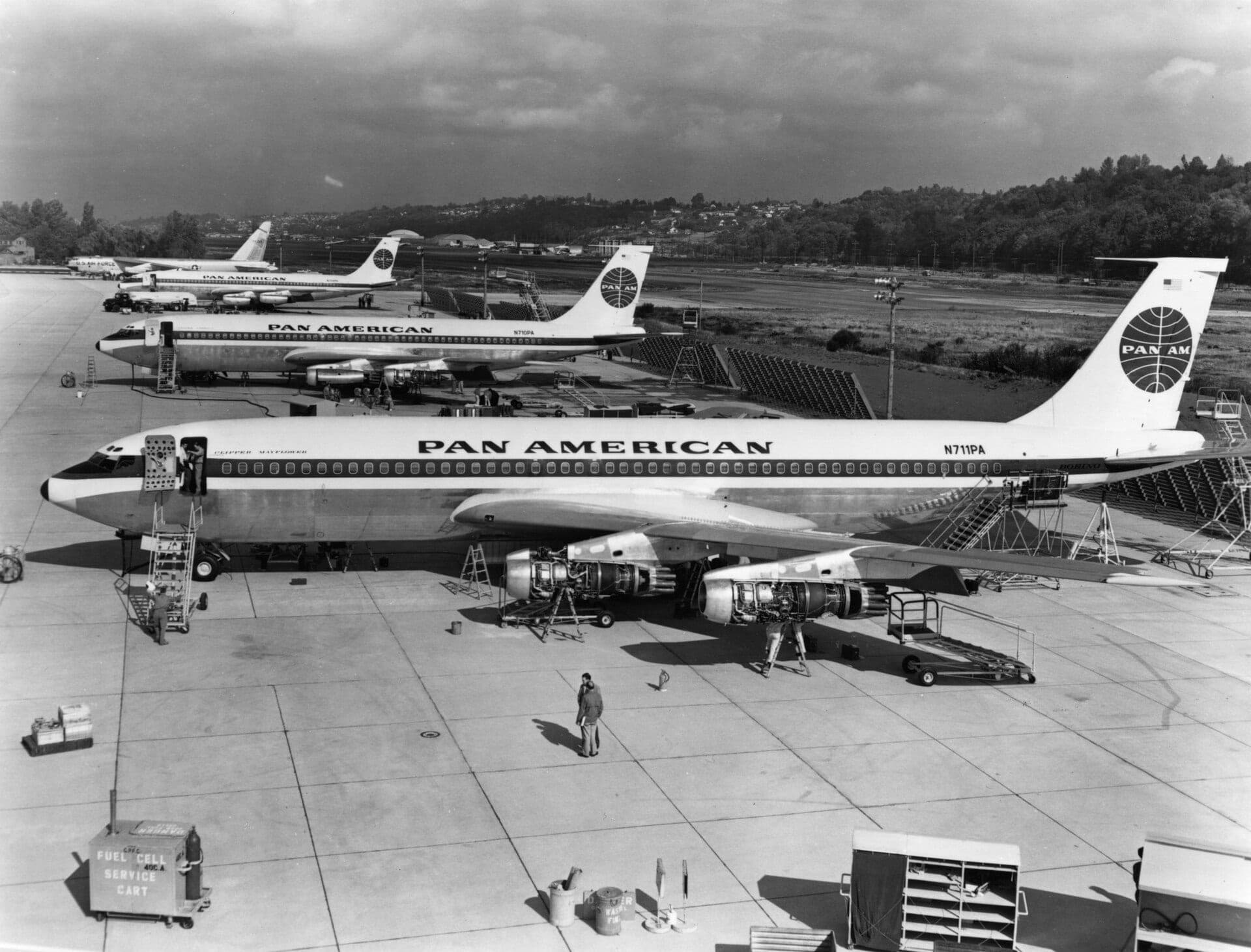
The gamble paid twice. The Air Force ordered the tanker version as the KC-135, which funded the tooling; the airlines ordered the wider-bodied civil derivative as the 707, which first flew on 20 December 1957 and entered service with Pan American in October 1958. Within five years the piston airliner was obsolete, and Boeing, a company that had built almost no successful airliners since 1933, had the leading one.
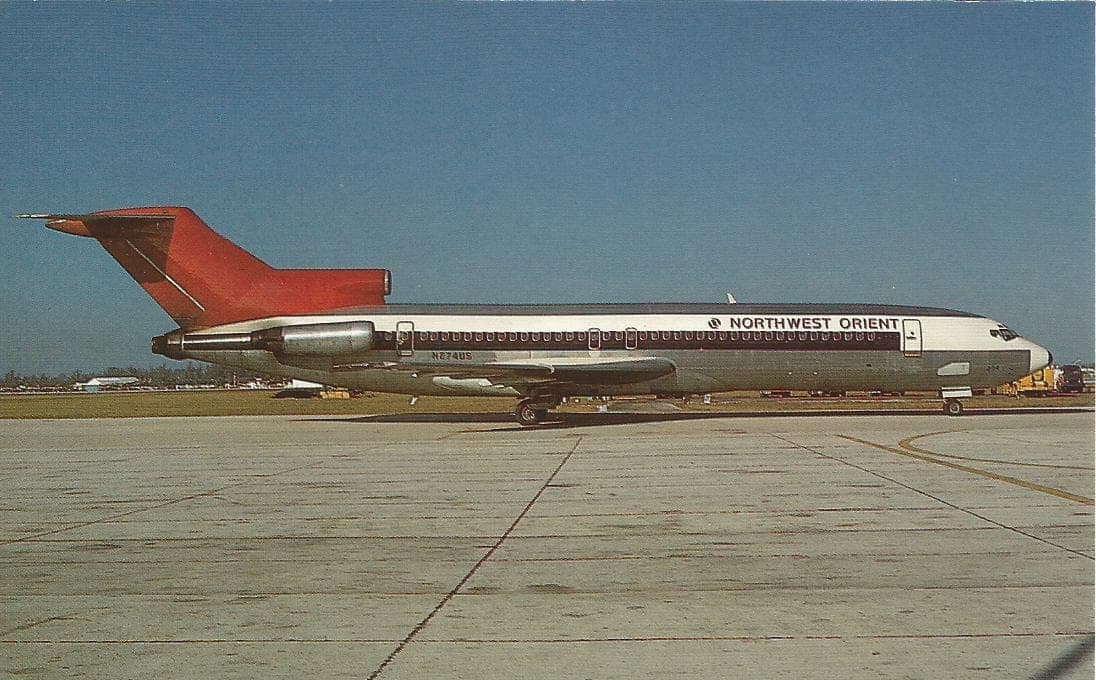
Then it built the family. The 727, with three tail-mounted engines and elaborate high-lift devices, could work short runways that the 707 could not, and sold 1,832 aircraft. The 737 of 1967 put two engines under the wing of the same fuselage cross-section and became, eventually, the most-produced airliner in history. The 757 and 767 arrived together in the early 1980s with a shared flight deck, so a pilot could be rated on both. The 777 of 1994 was the first Boeing airliner designed entirely on computer and the first with fly-by-wire controls. The 787 Dreamliner of 2009 replaced aluminium with carbon-fibre composite for the fuselage and wing.
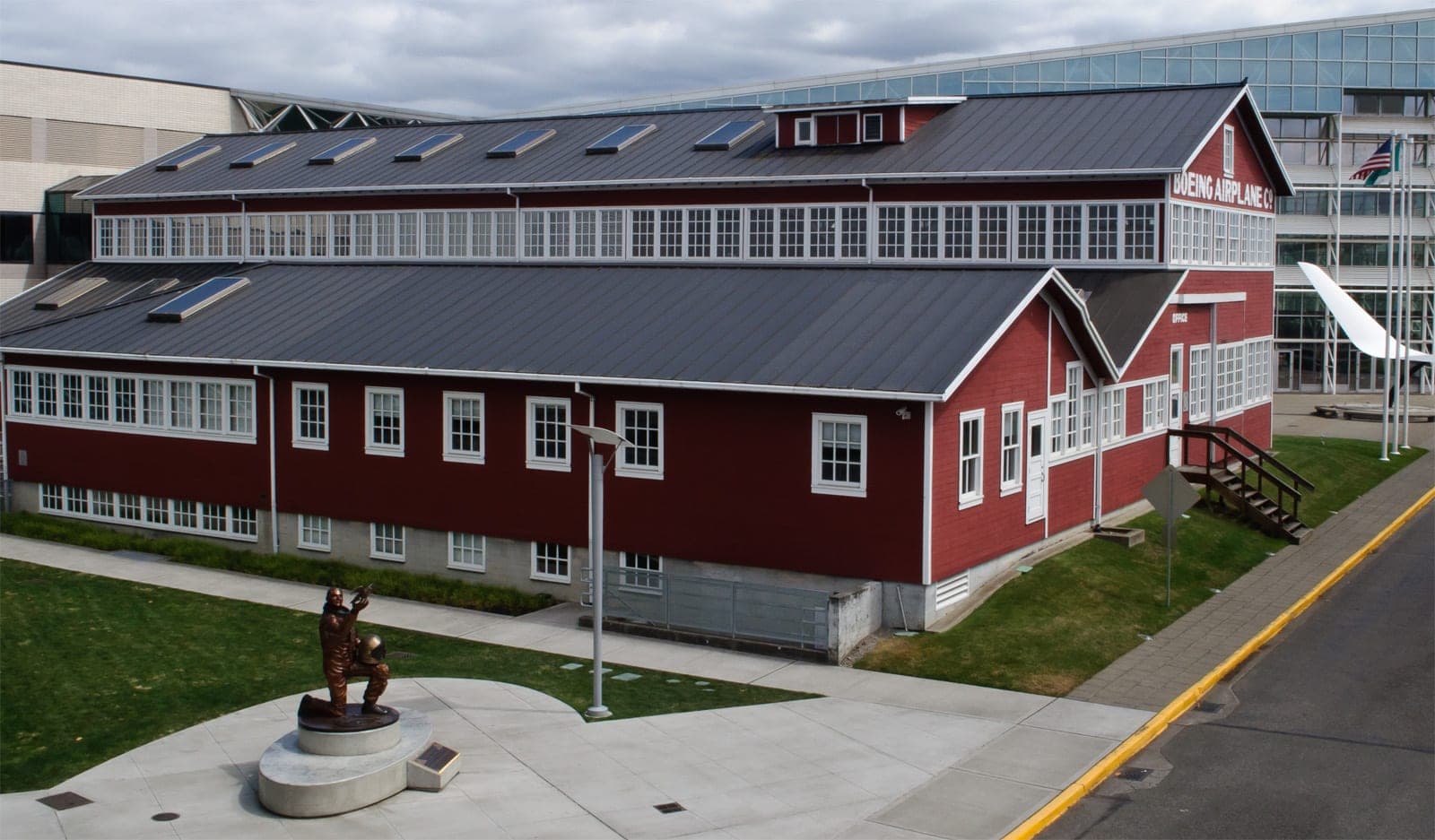
And then there was the 747. Boeing built a factory at Everett to hold it, because no building large enough existed, and bet the company on an aeroplane whose passenger career it privately expected to be short: supersonic airliners were coming, so the 747 was shaped with a raised cockpit and a hinged nose so that it could end its life as a freighter. Supersonic travel never came for the many. The 747 carried them instead, for fifty-four years and 1,574 aircraft, until the last one was delivered in January 2023.
Defence
Boeing Defense, Space & Security is not a sideline. In the 2025 financial year it reported revenue of $27.2 billion against the commercial division's $41.5 billion, and it carries a backlog of its own worth close to $85 billion. Its products are less visible than an airliner in an airline's colours, and rather more varied.
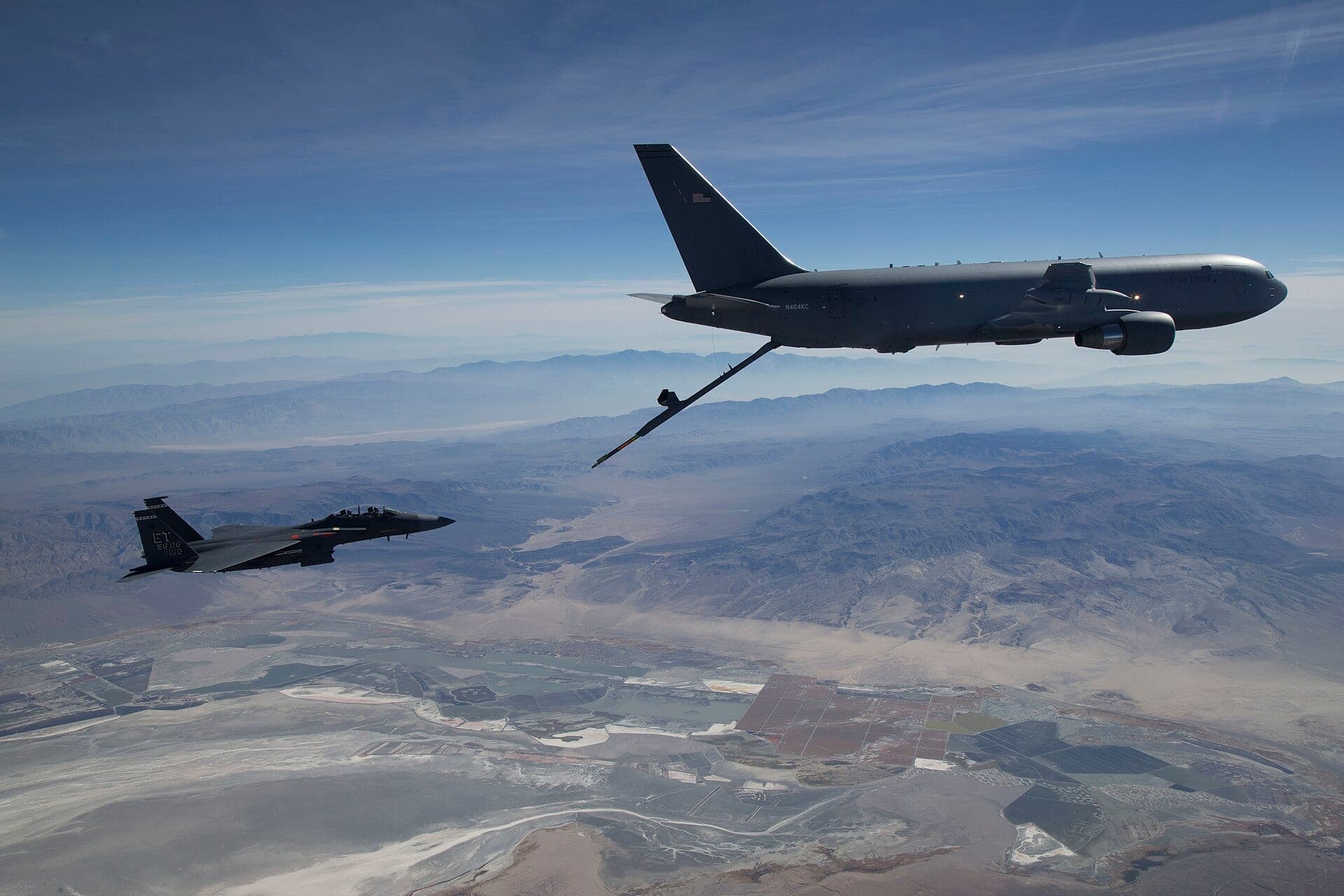
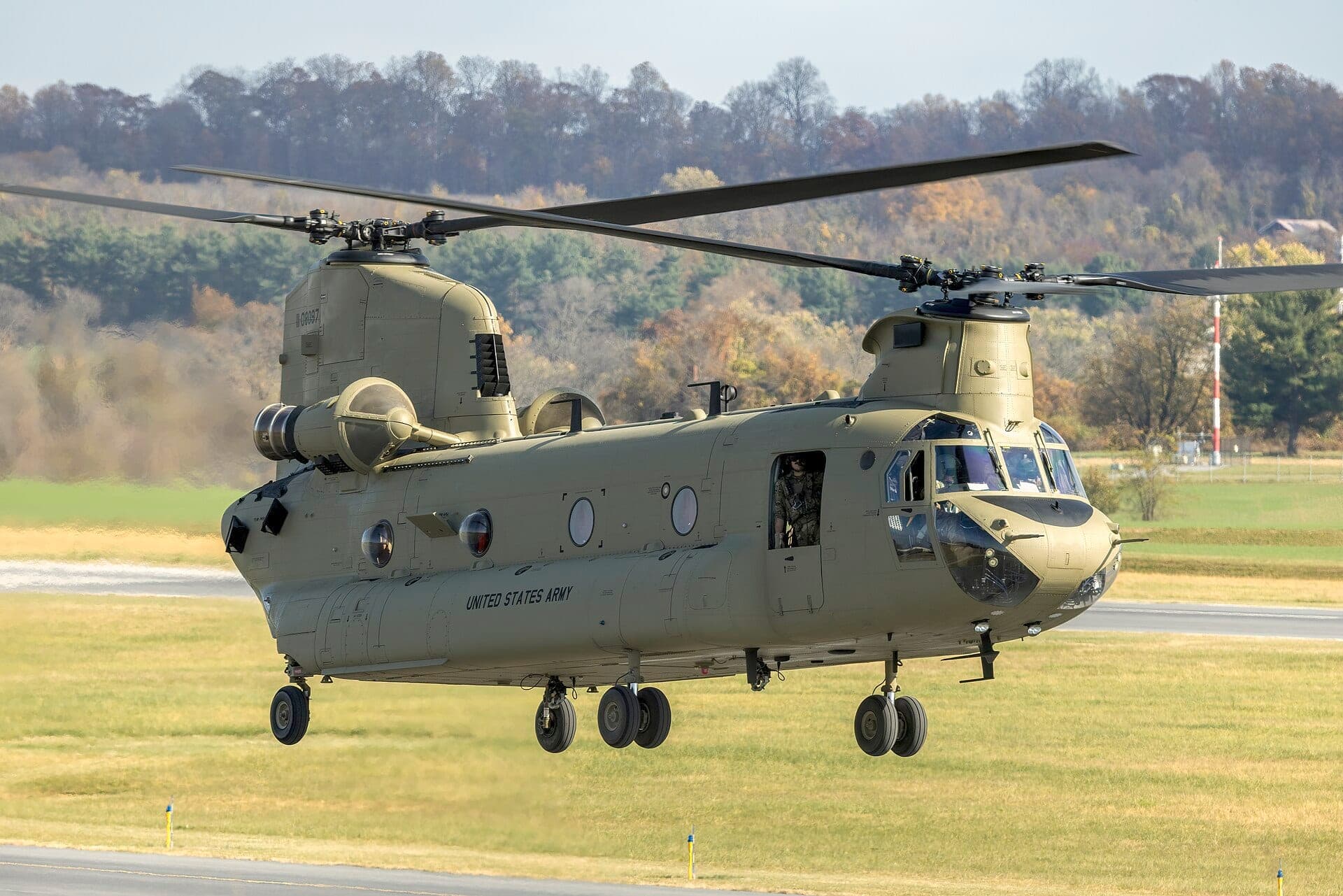
Much of the portfolio arrived by acquisition rather than by design office. The F/A-18 Super Hornet and the AH-64 Apache came with McDonnell Douglas in 1997; the F-15, still in production for export and for the U.S. Air Force as the F-15EX, came from the same place. The CH-47 Chinook, in service since 1962, came from the Vertol company Boeing bought in 1960. What Boeing itself contributed to the mix, and still does, is the ability to turn an airliner into a military aircraft: the KC-46 Pegasus tanker is a 767, the P-8 Poseidon maritime patrol aircraft is a 737, and the E-7 Wedgetail airborne early warning aircraft is a 737 with a radar beam on its back.
The division's difficulty is that many of these are fixed-price development contracts. The KC-46 has cost Boeing more than $7 billion in charges above the contract value; the two VC-25B aircraft that will become Air Force One and the T-7A trainer have both run late and over. A fixed-price contract transfers development risk from the customer to the manufacturer, and defence programmes with novel systems in them have a long history of costing more than anyone predicted.
Space
Boeing's space business is largely inherited, and its inheritance is the Apollo programme. North American Aviation built the Saturn V's second stage and the Apollo command and service module; Rockwell, its successor, built the Space Shuttle orbiters. Boeing bought Rockwell's aerospace and defence businesses in 1996, and with them the industrial history of American human spaceflight, along with its own contribution, the Saturn V first stage.
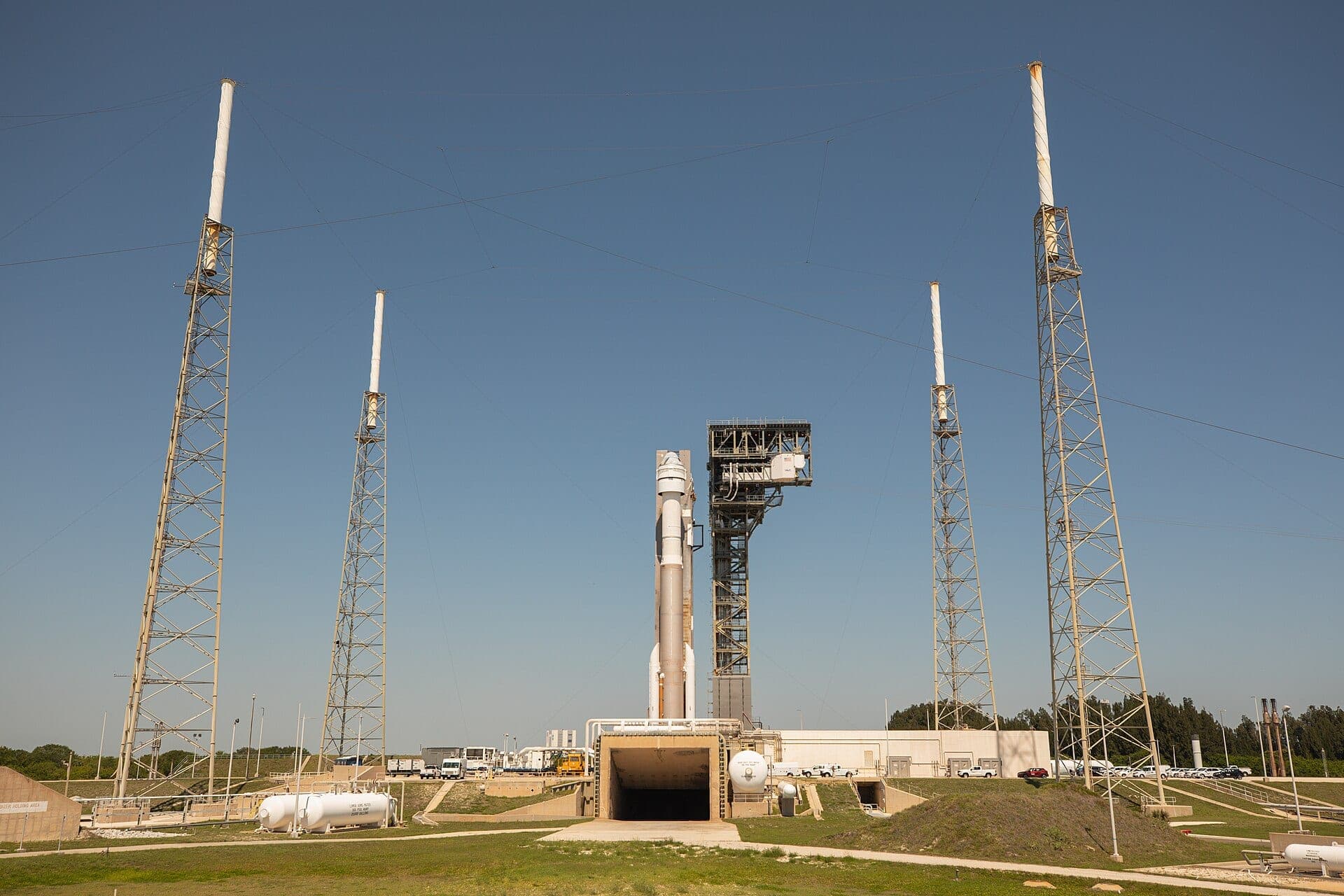
Today the company is the prime contractor for the International Space Station, builds the core stage of NASA's Space Launch System, and is half of United Launch Alliance, the joint venture with Lockheed Martin that flies the Atlas and Vulcan rockets. It also builds satellites, having absorbed Hughes Space and Communications in 2000.
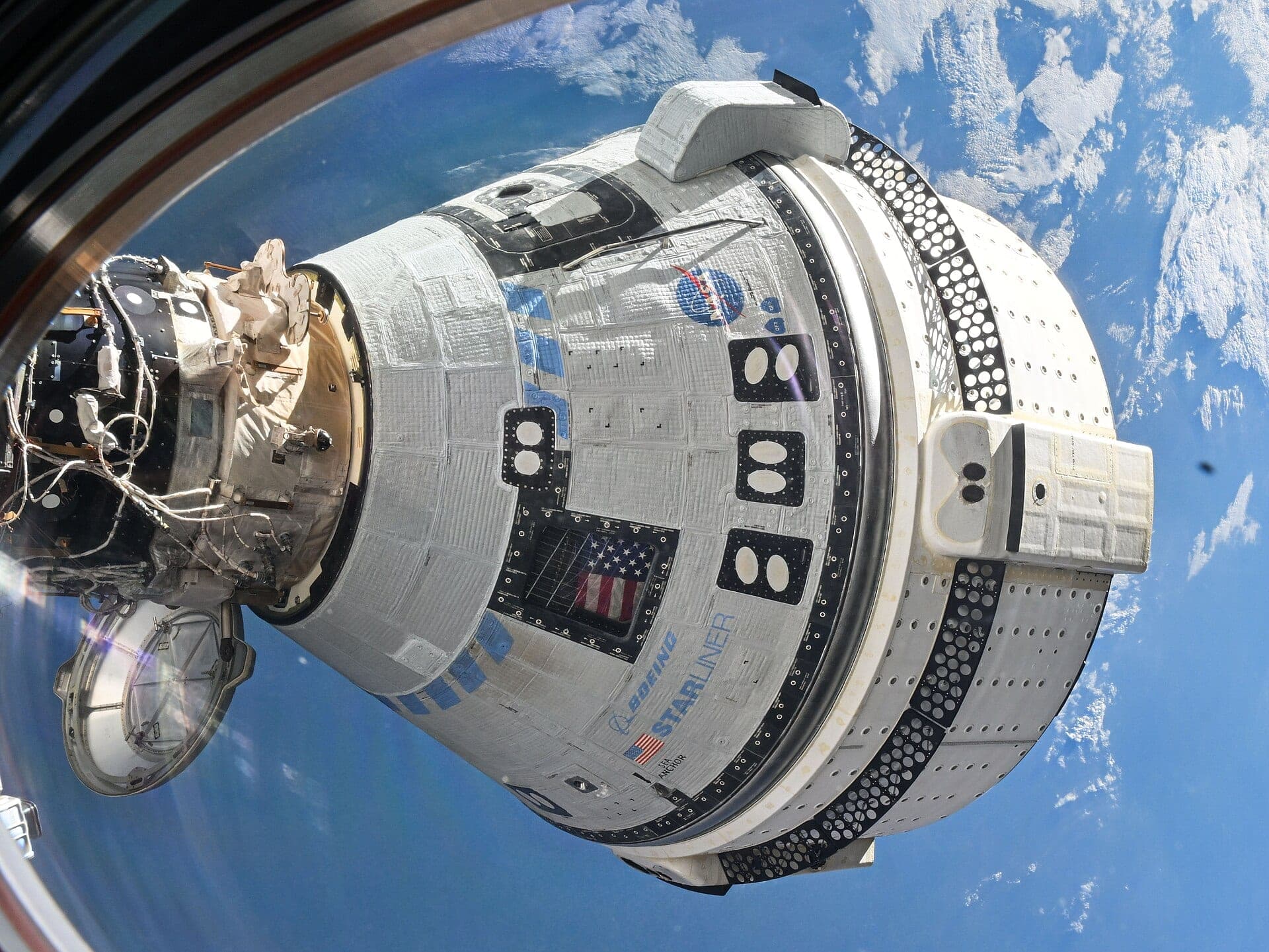
The programme that has drawn the most attention is Starliner, the crew capsule built under NASA's Commercial Crew contract alongside SpaceX's Dragon. Its first uncrewed flight in 2019 failed to reach the station; the crewed flight test in June 2024 carried two astronauts to the ISS but suffered helium leaks and thruster failures, and NASA decided to bring the spacecraft home empty. The astronauts returned on a SpaceX capsule in March 2025, after nine months in orbit rather than the eight days planned. Boeing has taken well over $2 billion in charges on the programme.
Manufacturing
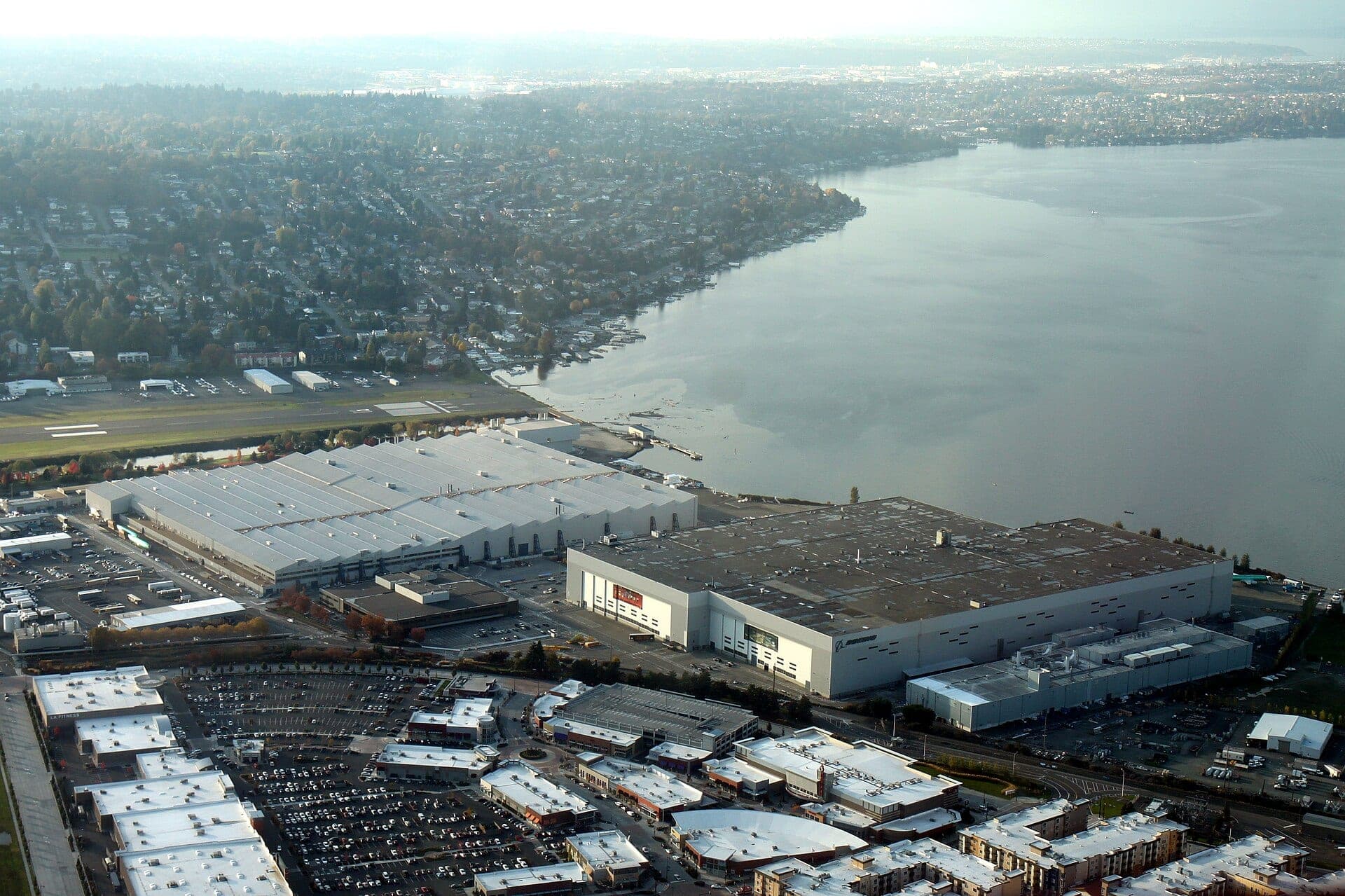
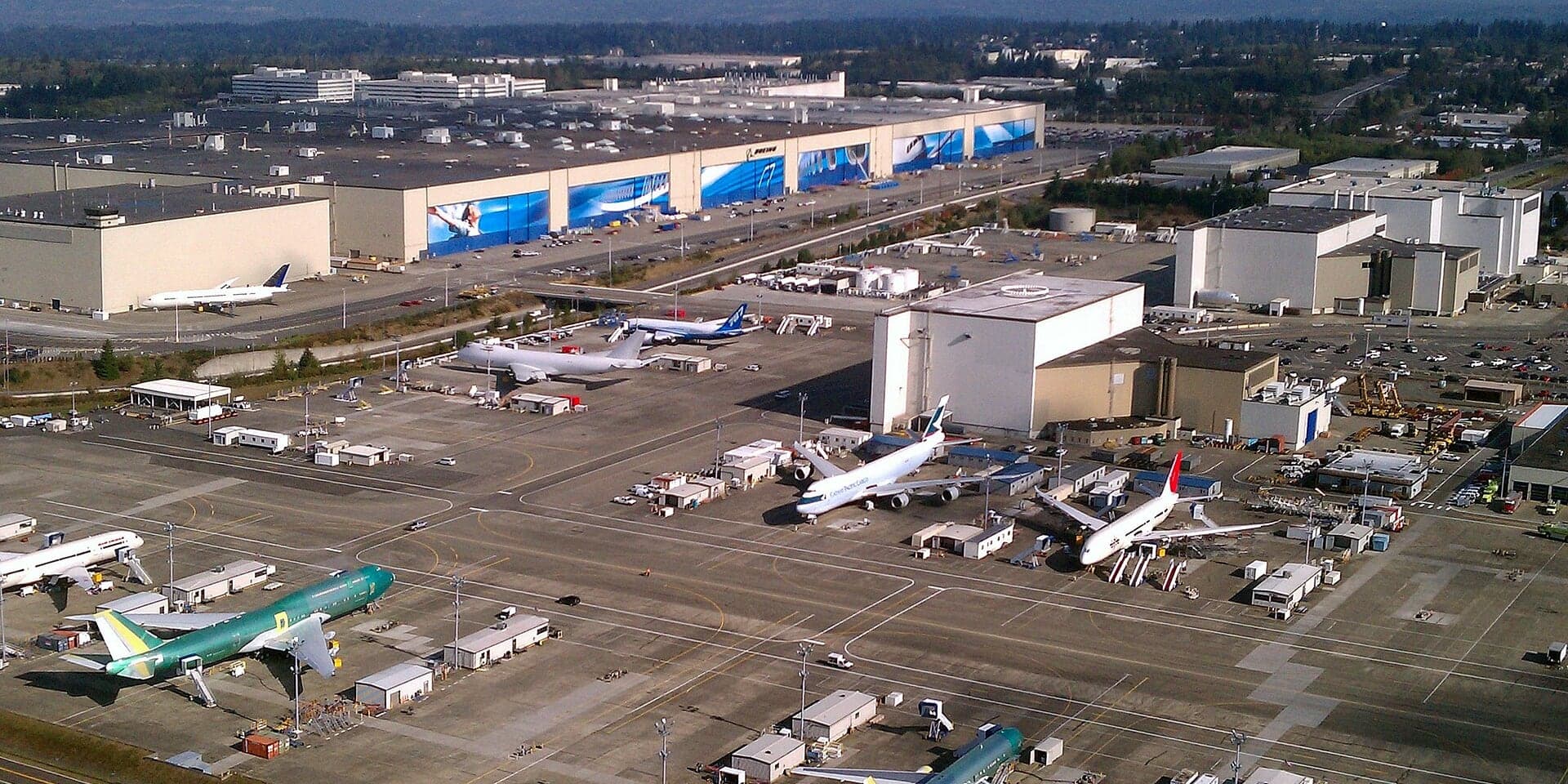
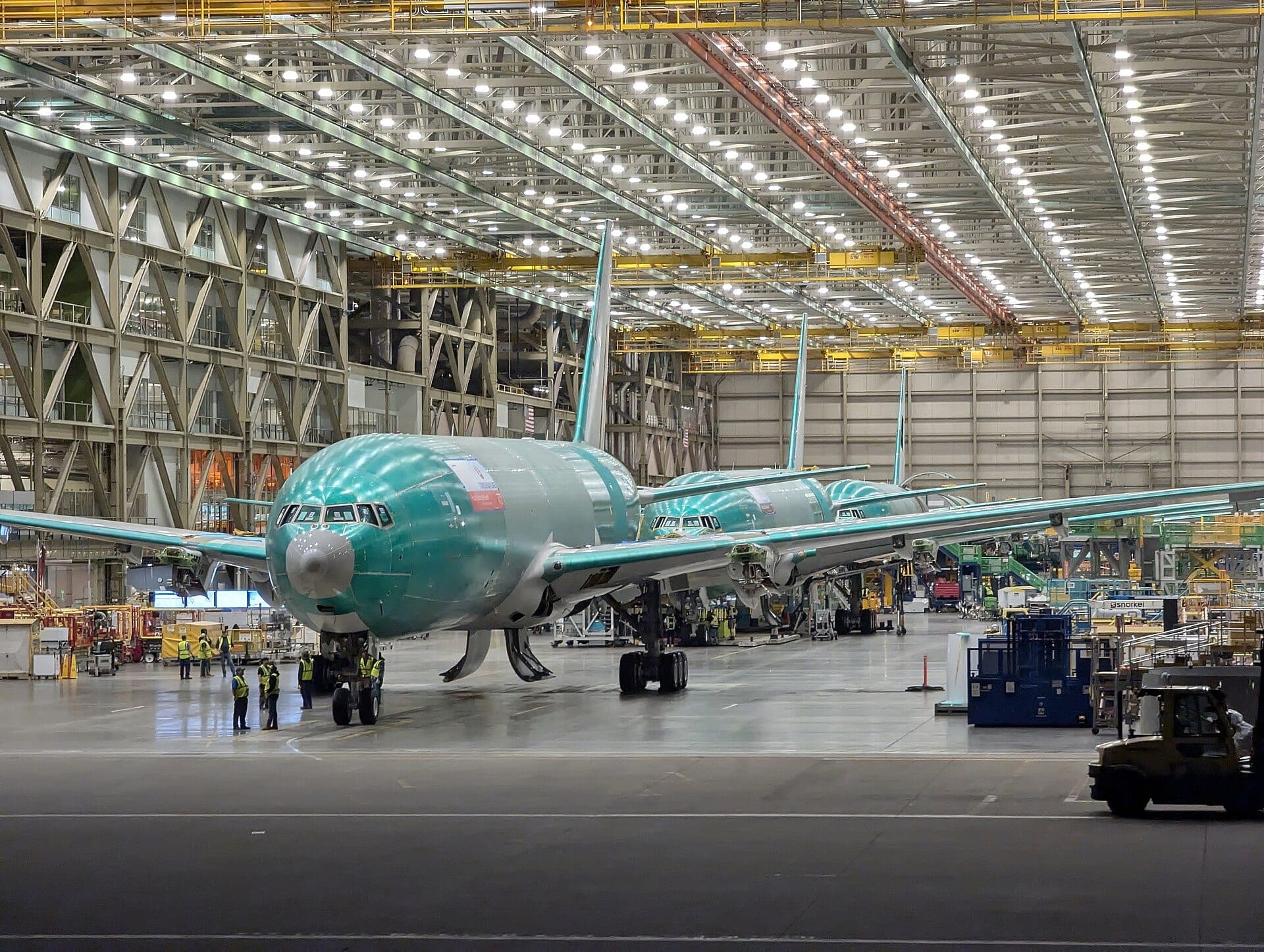
Boeing's commercial aeroplanes are built in two places, and the difference between them is the difference between the company's two halves. Renton, on the southern shore of Lake Washington, builds single-aisle 737s on a moving assembly line, at rates measured in aircraft per month. Everett, forty miles north, builds widebodies (the 767, the 777 and the 777X) inside the largest building in the world by volume, a hall of roughly 13.3 million cubic metres put up in 1967 for the 747 and extended twice since.
A third line matters as much as either. The 787 is assembled at North Charleston, South Carolina, on a site opened in 2011, and since 2021 every Dreamliner has been built there rather than in Washington State: the first time Boeing has assembled an airliner outside the Pacific Northwest.
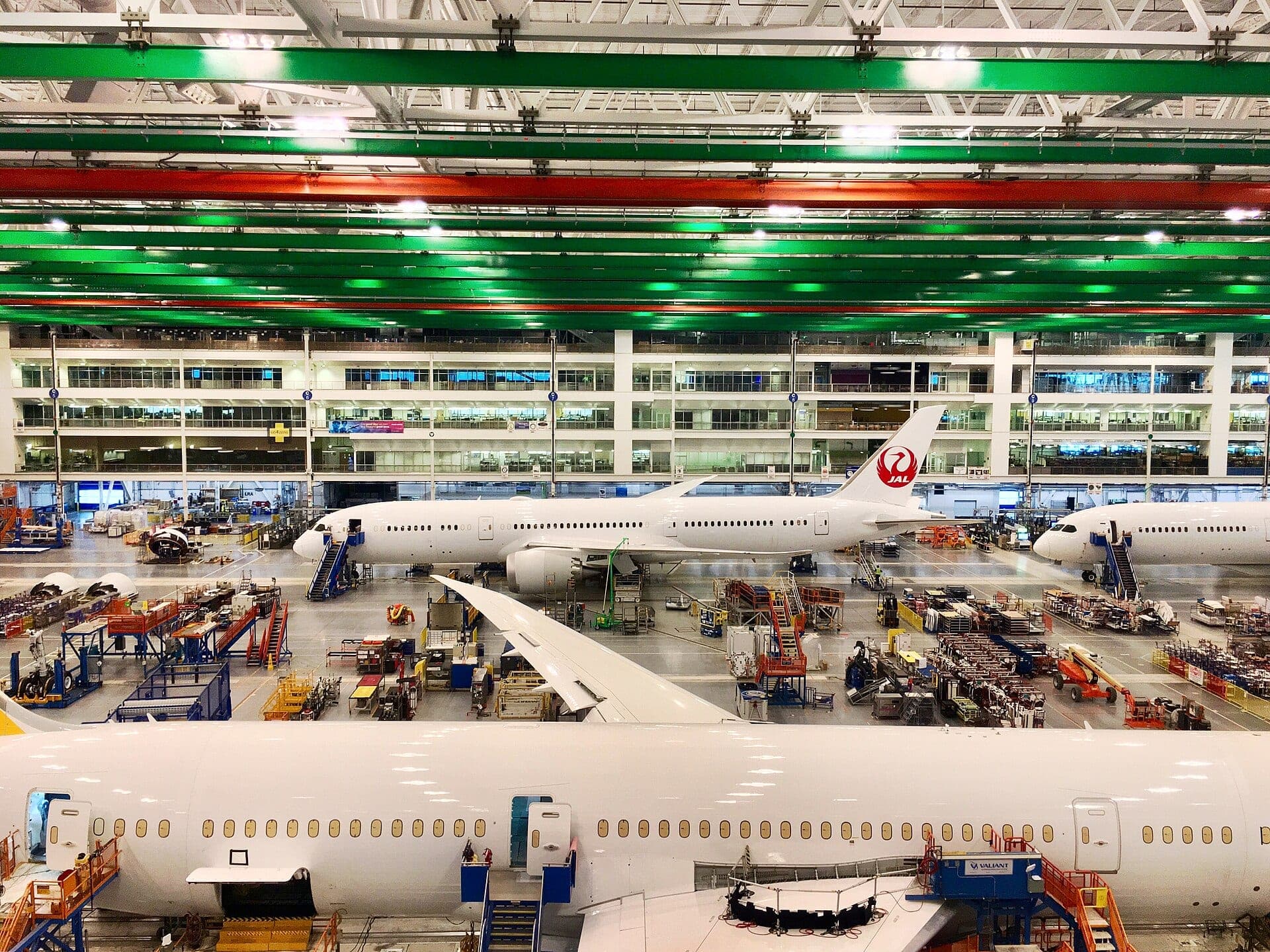
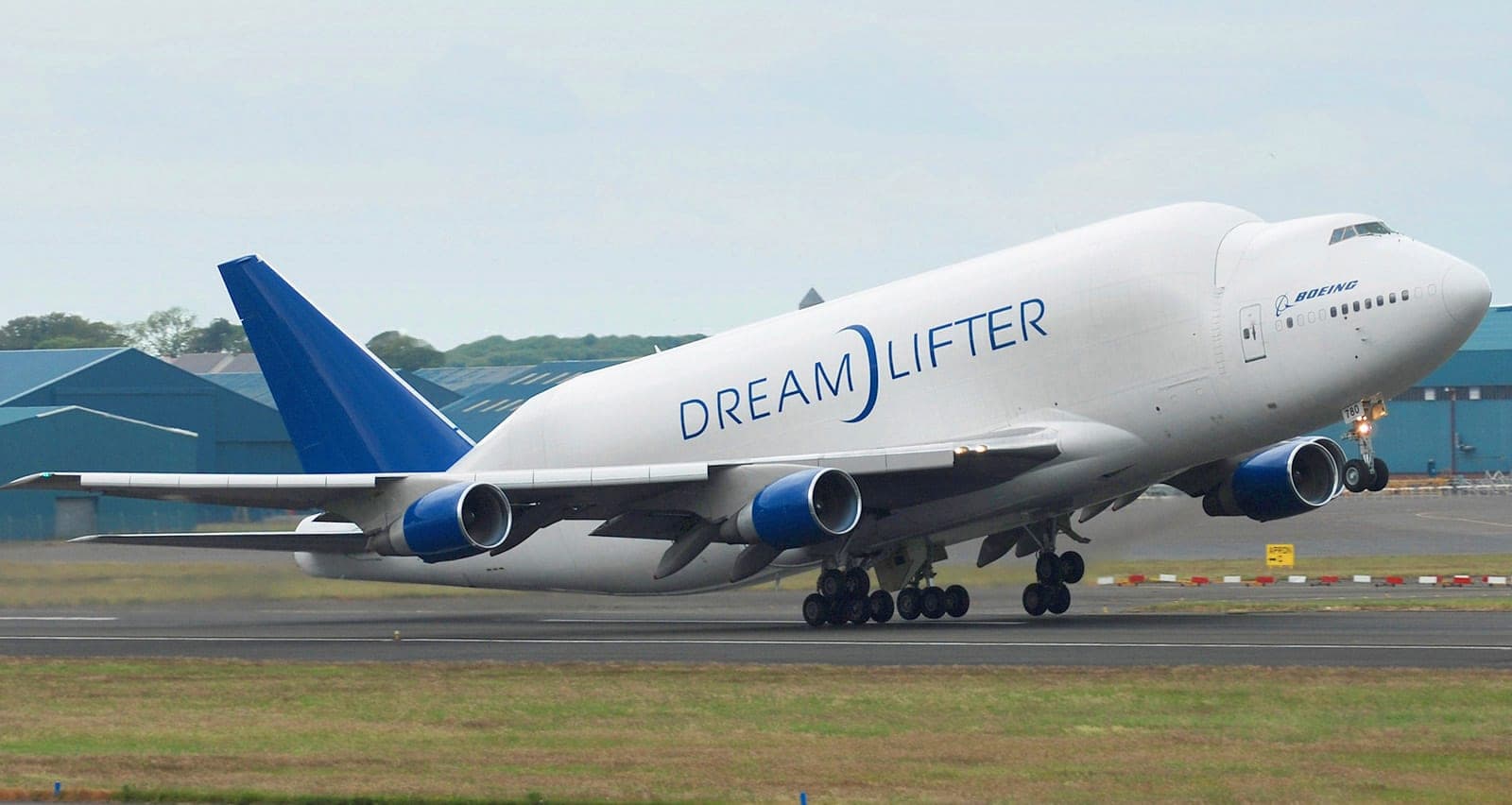
The way those aircraft are put together changed in the 2000s, and not entirely for the better. To spread the cost and risk of the 787, Boeing moved from building most of the aeroplane itself to integrating large sections shipped in from partners across three continents, flown to the assembly line inside converted 747 Dreamlifters. The programme ran three years late and billions over, and the lesson drawn inside the industry was that an aircraft manufacturer cannot outsource the part of the job that is knowing how the aeroplane goes together.
The clearest admission of that came in 2025. Spirit AeroSystems: the Wichita operation Boeing had sold in 2005, and the supplier of the 737 fuselage whose door plug failed in 2024: was bought back for about $4.7 billion in stock, a transaction that with assumed debt was valued at roughly $8.3 billion and closed on 8 December 2025. After twenty years of separation, the fuselage line is Boeing's again.
Workforce
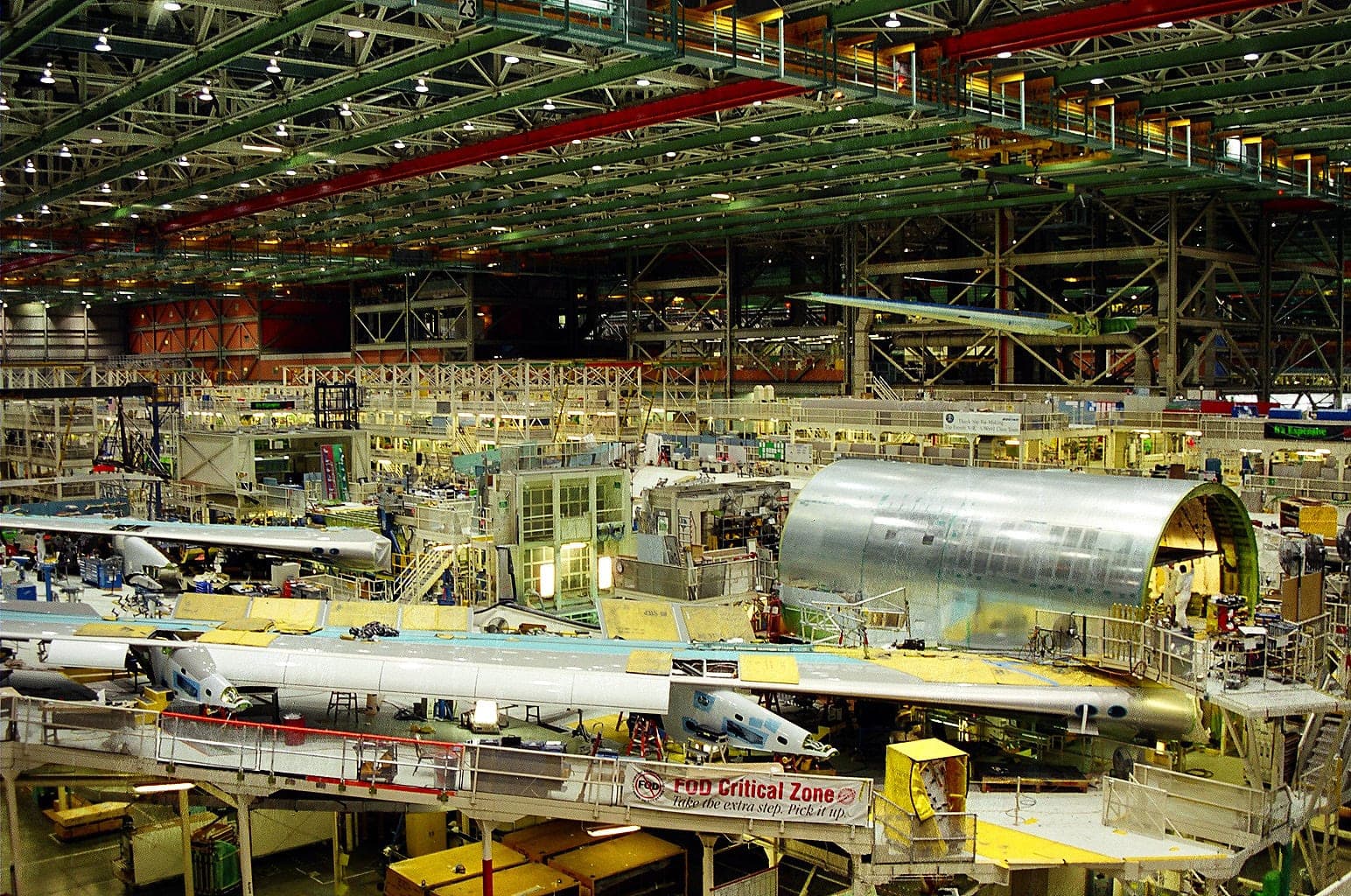
Boeing employed about 182,000 people at the end of the 2025 financial year. Roughly a third of them work in Washington State, where the company remains the largest private employer, and the two unions that matter: the International Association of Machinists and the Society of Professional Engineering Employees in Aerospace: have shaped its industrial history as much as any programme.
The most consequential recent event was the strike of autumn 2024. About 33,000 machinists in the Pacific Northwest walked out on 13 September, the first Boeing strike since 2008, and stayed out for seven weeks; the 737, 767 and 777 lines stopped. The settlement ratified on 4 November included a 38 per cent general wage increase over four years. It cost the company several billion dollars in a year it could not afford them, and it happened five weeks after a new chief executive, Kelly Ortberg, took office.
Ortberg's appointment in August 2024 was itself a statement: an engineer from Rockwell Collins rather than a Boeing insider, who moved to Seattle rather than run the company from Arlington. The recovery he has overseen is real and incomplete. Deliveries have roughly doubled, the backlog is at a record, and the company returned to an operating profit in 2025: but free cash flow remained negative at $1.9 billion, and the debt taken on during the pandemic and the MAX grounding has not gone away.
Competition
For a large civil aircraft there are two manufacturers on earth, and they have been two since 1997. Airbus was created in 1970 as a European consortium that few in Seattle took seriously; it took the A300 to prove a widebody twin could work, the A320 of 1987 to prove fly-by-wire and a common cockpit could sell, and roughly thirty years to reach parity. It first delivered more aircraft than Boeing in 2003, and has led every year since 2019.
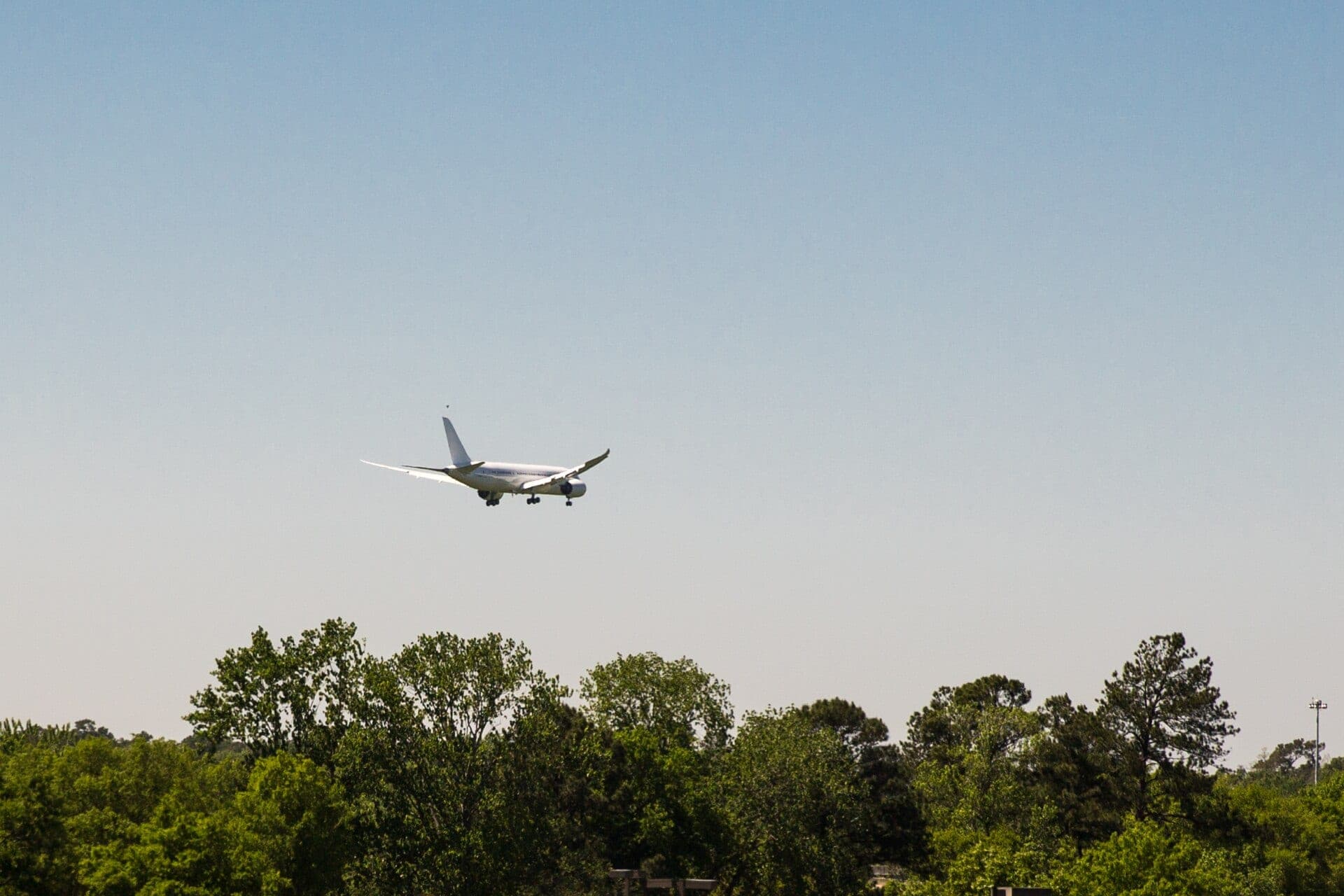
The competition is not symmetrical, because the two companies chose different answers to the same question. Asked what should replace the long-haul hub-and-spoke aeroplane, Airbus built the A380: very large, betting that congestion would force airlines to move more people per slot. Boeing built the 787, mid-sized, composite, efficient enough to fly thin long-haul routes directly. Boeing was right: the A380 ended production in 2021 after 251 aircraft, while the 787 has passed 1,200 deliveries and continues.
Asked the same question about short-haul, the answers reversed. Airbus re-engined the A320 as the A320neo and Boeing, rather than design a new single-aisle, re-engined the 737 once more as the MAX: a decision taken under commercial pressure in 2011, on an airframe first flown in 1967, whose low-slung wing left no room for a modern high-bypass engine without moving it forward and up. That change altered the aircraft's handling at high angles of attack, and the software written to compensate for it is the reason the next section exists.
The rivalry has also stopped being a duopoly of two continents. China's COMAC has flown the C919 in domestic service since 2023, and while its production rate remains small, it is the first credible third entrant since the 1990s.
Mergers and ownership
In the middle of the 1990s the American aerospace industry consolidated from a dozen firms into three. Boeing bought Rockwell's aerospace and defence divisions in December 1996, and eight months later, on 1 August 1997, completed a stock merger with McDonnell Douglas valued at around $13 billion. The transaction was described at the time as a merger of equals; in practice Boeing's name survived, McDonnell Douglas's commercial products did not, and the MD-11 line closed in 2000.
What did survive was McDonnell Douglas's management. Harry Stonecipher, its chief executive, became Boeing's president and later its chief executive, and brought with him a financial discipline that the engineering culture in Seattle found alien. One anonymous but often-quoted line from the period, that Boeing was now "a great engineering firm run by people who count beans", has hardened over the years into the standard explanation for everything that went wrong afterwards. It is too neat to be the whole truth, but the direction of travel is not in dispute: shareholder return became an explicit objective in a way it had not been.
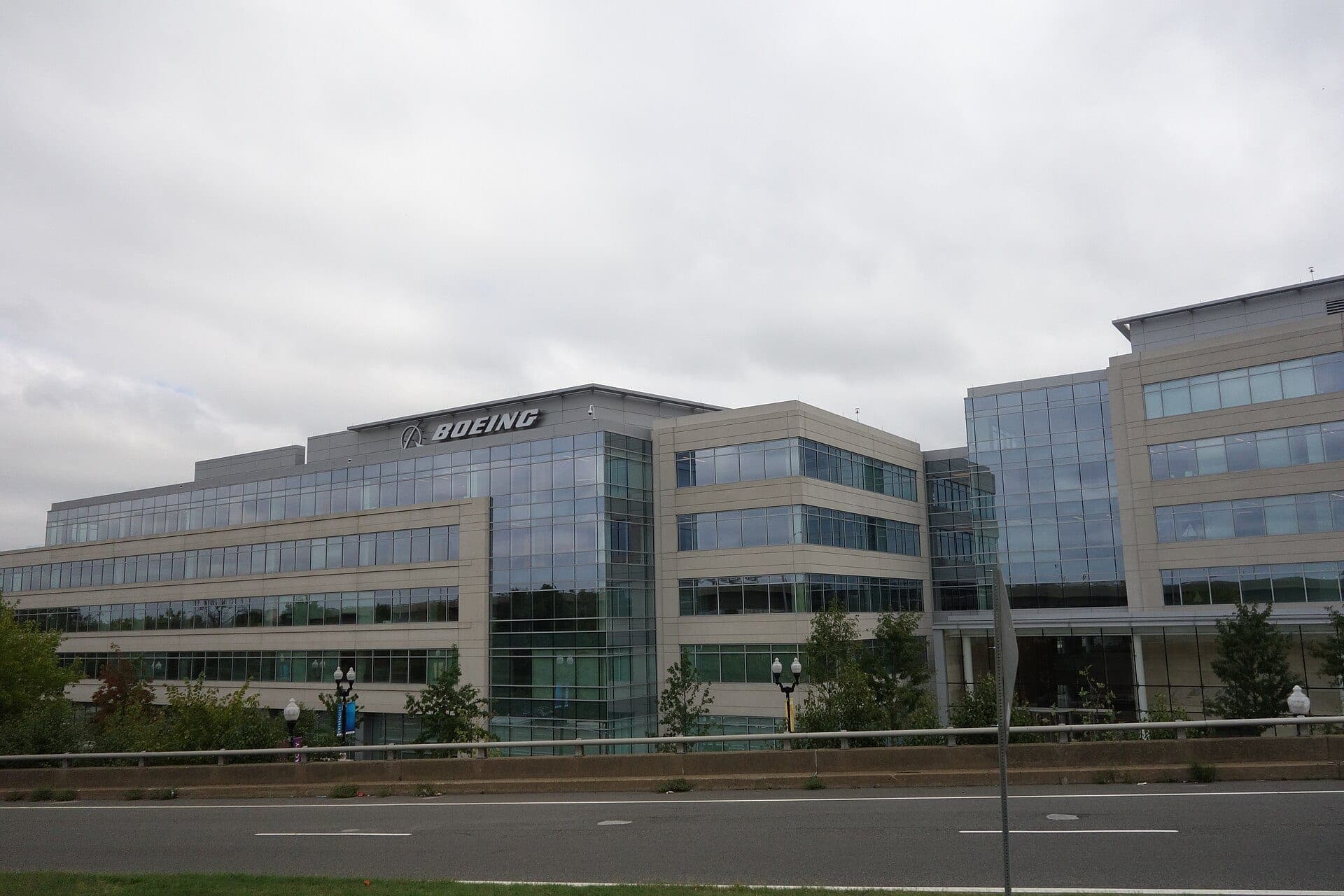
The clearest symbol was the head office. In 2001 Boeing moved its corporate headquarters from Seattle, where it had been for eighty-five years, to Chicago: deliberately away from any of its factories, so that the executive would not be captured by one business. In May 2022 it moved again, to Arlington, Virginia, minutes from the Pentagon and the Federal Aviation Administration.
Since then the pendulum has swung back a little. In 2025 the company completed the purchase of Spirit AeroSystems, reversing the 2005 decision to sell its own fuselage plants, and the executives appointed after 2024 have talked less about capital returns and more about the factory floor.
Crisis
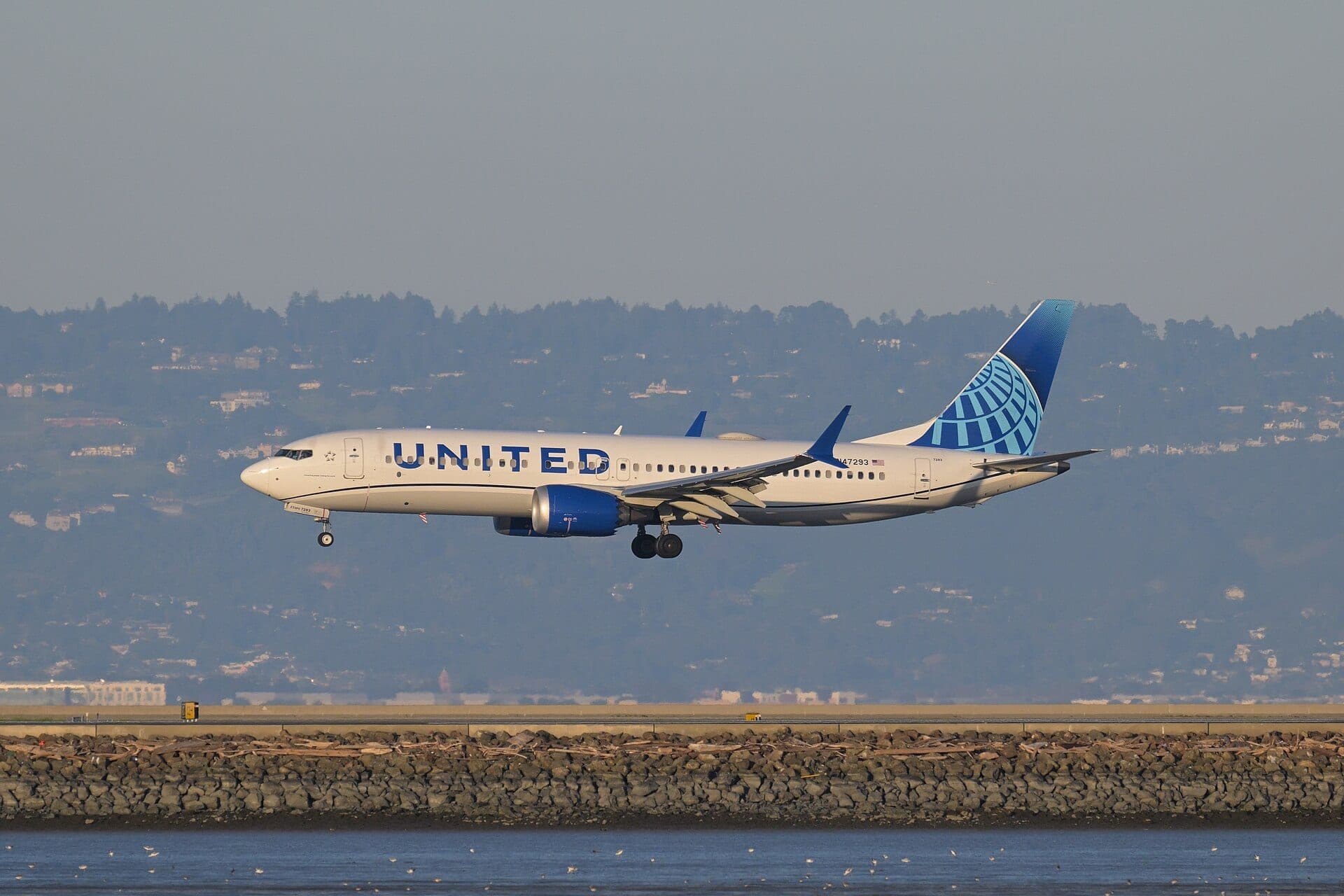
On 29 October 2018 Lion Air Flight 610, a five-month-old 737 MAX 8, crashed into the Java Sea twelve minutes after take-off from Jakarta, killing 189 people. On 10 March 2019 Ethiopian Airlines Flight 302 crashed six minutes after take-off from Addis Ababa, killing 157. Both aircraft had been forced into a dive by a system the crews had not been told existed.
The system was MCAS, the Manoeuvring Characteristics Augmentation System, written to make the MAX handle like earlier 737s at high angles of attack, so that airlines would not have to retrain pilots on a simulator. In service it took its input from a single angle-of-attack vane, and when that vane failed it commanded the aircraft nose-down repeatedly against the pilots' inputs. It appeared in no flight manual. The commercial logic that had kept it out of the manual: that a MAX must not require new pilot training, because that was the aeroplane's selling point against the A320neo: was the same logic that had produced it.
Regulators grounded the type worldwide on 13 March 2019; it flew for passengers again only on 18 November 2020, twenty months later, after the software was rewritten to use both sensors and could be overridden. Boeing's chief executive was dismissed. In January 2021 the company entered a deferred prosecution agreement over a charge of conspiracy to defraud the FAA, paying $2.5 billion in total, of which $500 million went to a fund for the families of the 346 dead.
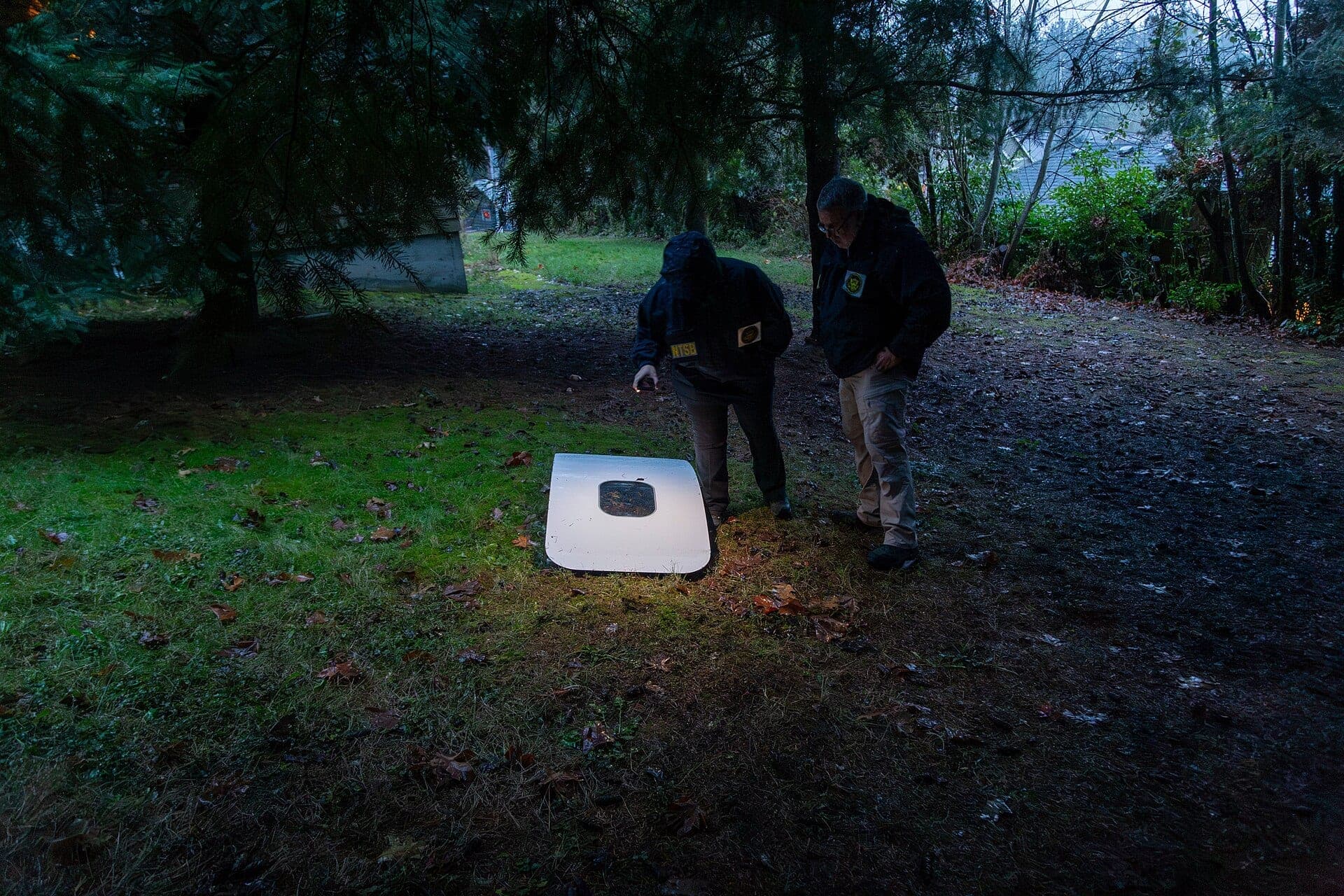
It did not end there. On 5 January 2024 a door plug detached from a two-month-old 737 MAX 9 climbing out of Portland; the cabin depressurised, and the aircraft returned with a hole in its side and no fatalities only because the two seats beside the plug were empty. The National Transportation Safety Board's final report, adopted on 24 June 2025, found that four bolts securing the plug had never been reinstalled after the panel was opened at the factory, and named as probable cause Boeing's manufacturing process and ineffective FAA oversight of it. The FAA capped 737 production at 38 aircraft a month, a limit that stood until October 2025, when it was raised to 42.
The legal end was quieter than the failure. In May 2025 the Department of Justice moved to drop the criminal case in return for a non-prosecution agreement worth about $1.1 billion in penalties and compensation; on 6 November 2025 Judge Reed O'Connor dismissed the charge, writing that the agreement failed to secure the accountability the flying public needed, while holding that he lacked authority to refuse it. Families of the victims have appealed.
Legacy
Count what Boeing has actually done and the scale is hard to hold in one thought. More than 12,000 737s have been delivered, more than any other airliner in history. The 747 opened long-haul travel to ordinary incomes and then spent its old age carrying freight, the space shuttle and two presidents. A B-52 designed under Truman is expected to fly under presidents not yet born. The company built the first stage of the rocket that went to the Moon and the laboratory module that has been in orbit for a quarter of a century.
Set against that is a decade in which the same company killed 346 people with a piece of undocumented software, lost a door in flight because four bolts were not fitted, and was found by an American federal judge to have escaped the accountability its victims were owed. Both records belong to one firm, and an encyclopedia is obliged to print them on the same page.
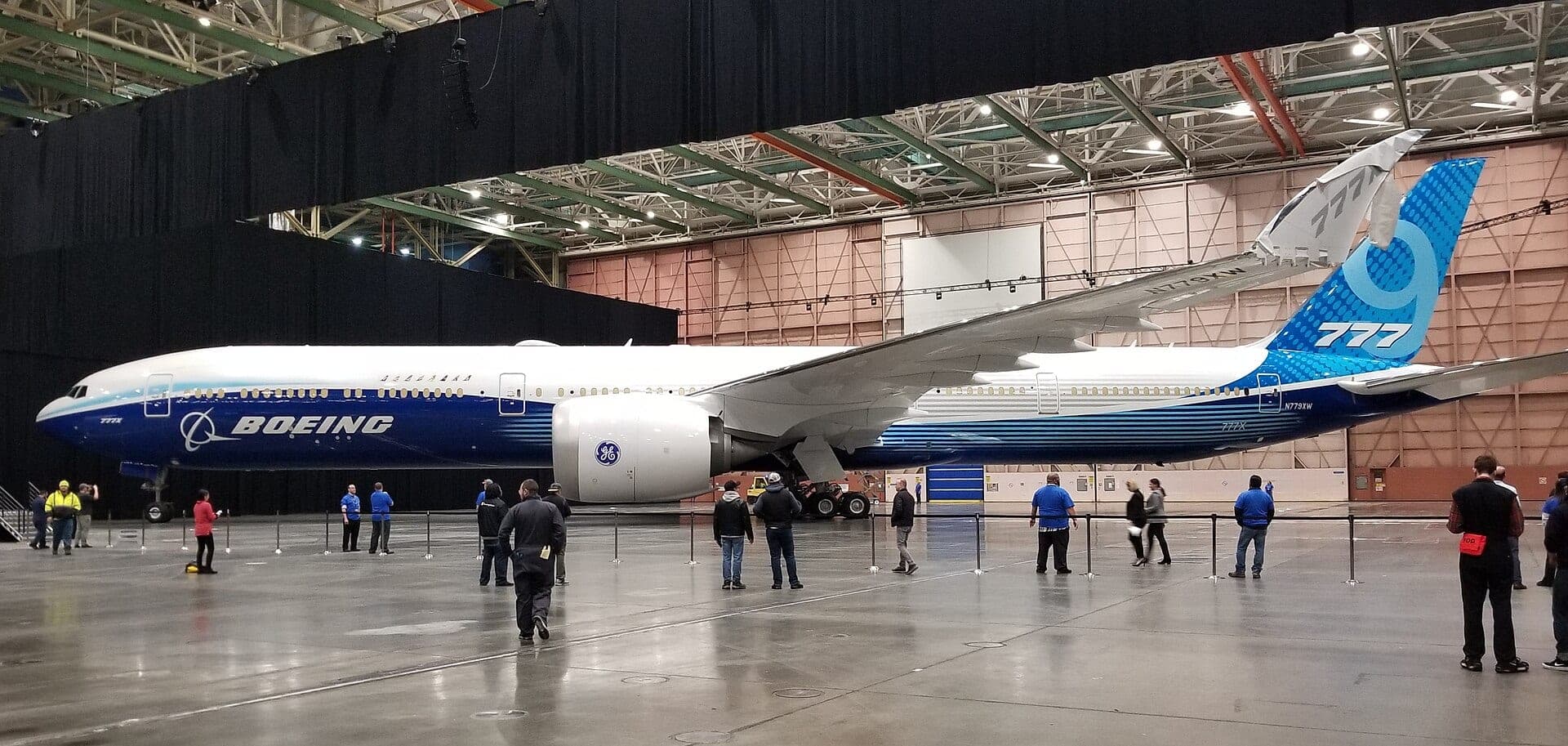
What FLYPEDIA can say plainly is that Boeing is no longer the company that could bet its net worth on the Dash 80 and be right. It is a company under a regulator's production cap, rebuilding a supply chain it dismantled, with an order book so large that its problem is not demand but the ability to build what has been asked for. The 777X, rolled out in 2019 and still not certified, is the test of whether it can.
Read the aeroplanes alongside this entry: FLYPEDIA's Boeing 737 and Boeing 747 entries carry the type histories in full.
Products
Programmes the company has built or is building. Entries that exist elsewhere in FLYPEDIA are linked.
Airliners
The most-produced jet airliner in history, in four generations from the Original to the MAX.
The first widebody airliner; built for fifty-four years and delivered until January 2023.
- Boeing 707Out of productionFirst flight 1957
The aircraft that made the jet airliner ordinary, derived from the 367-80 prototype.
- Boeing 727Out of productionFirst flight 1963
Three-engined short-haul jet for runways the 707 could not use.
- Boeing 767In productionFirst flight 1981
Widebody twin, now built mainly as a freighter and as the KC-46 tanker.
- Boeing 777In productionFirst flight 1994
The first Boeing airliner designed entirely on computer and flown by wire.
- Boeing 777XIn developmentFirst flight 2020
Re-winged 777 with folding wingtips; rolled out in 2019 and not yet certified.
- Boeing 787 DreamlinerIn productionFirst flight 2009
Composite-fuselage widebody built for long thin routes.
- Boeing Model 247Out of productionFirst flight 1933
The first modern airliner: all-metal, retractable gear, cowled engines.
Military aircraft
- Boeing B-17 Flying FortressOut of productionFirst flight 1935 · 12,731 built (1945)
Four-engined heavy bomber; built by Boeing, Douglas and Vega together.
- Boeing B-29 SuperfortressOut of productionFirst flight 1942
Pressurised long-range bomber; the most expensive American programme of the Second World War.
- Boeing B-52 StratofortressOut of productionFirst flight 1952
Eight-engined strategic bomber, in USAF service since 1955 and being re-engined for decades more.
- Boeing KC-46 PegasusIn productionFirst flight 2015
Aerial refuelling tanker derived from the 767.
- Boeing P-8 PoseidonIn productionFirst flight 2009
Maritime patrol and anti-submarine aircraft on a 737 airframe.
- Boeing F/A-18 Super HornetOut of productionFirst flight 1995
Carrier-borne multirole fighter inherited from McDonnell Douglas.
Rotorcraft
- Boeing CH-47 ChinookIn productionFirst flight 1961
Tandem-rotor heavy-lift helicopter, in production since 1962.
- Boeing AH-64 ApacheIn productionFirst flight 1975
Attack helicopter built at Mesa, Arizona.
Space
- CST-100 StarlinerIn developmentFirst flight 2019
Crew capsule for NASA's Commercial Crew Program; its 2024 crewed test returned uncrewed.
- Space Launch System core stageIn productionFirst flight 2022
The core stage of NASA's heavy launch vehicle for the Artemis programme.
Prototypes
- Boeing 367-80Out of productionFirst flight 1954 · 1 built (1954)
The single company-funded prototype behind both the KC-135 and the 707.
Divisions
- Boeing Commercial Airplanes
$41.5B
financial year 2025
Airliners and freighters, the 737, 767, 777, 777X and 787 families, and the services attached to selling them.
- Boeing Defense, Space & Security
$27.2B
financial year 2025
Combat aircraft, tankers, rotorcraft, satellites, launch systems and the Starliner crew spacecraft.
- Boeing Global Services
$20.9B
financial year 2025
Parts, modifications, training and digital services for commercial and government fleets.
Sites
- Everett
Everett, WashingtonSince 1967
Widebody final assembly, 767, 777 and 777X. The largest building in the world by volume.
- Renton
Renton, WashingtonSince 1941
Single-aisle final assembly: every 737 built since 1970, on a moving line.
- North Charleston
North Charleston, South CarolinaSince 2011
787 Dreamliner final assembly, and the sole 787 line since 2021.
- Wichita
Wichita, KansasSince 1929
Fuselage manufacture. Sold in 2005 and reacquired with Spirit AeroSystems in 2025.
- St. Louis
Berkeley, Missouri
Combat aircraft, F/A-18 Super Hornet, F-15EX and T-7A. Inherited from McDonnell Douglas.
- Mesa
Mesa, Arizona
AH-64 Apache attack helicopter assembly.
Genealogy
The Boeing Company's line, from William Boeing's Pacific Aero Products of 1916. Boeing was folded into United Aircraft and Transport in 1929 and re-emerged as its own company when that combine was broken up in 1934, the same split that created United Air Lines. It took in Vertol in 1960, took its present name in 1961, bought Rockwell's aerospace and defence business and merged with McDonnell Douglas in 1996 to 97, and in 2025 bought back Spirit AeroSystems, the Wichita works it had sold in 2005.
Scroll to see the full diagram
Timeline
July 15, 1916
Incorporated as Pacific Aero Products Co.
William Boeing incorporates the venture in Seattle, a month after the B&W floatplane's first flight.
April 1917
Renamed the Boeing Airplane Company
1927
Boeing Air Transport begins carrying mail
The Model 40A wins the Chicago to San Francisco air mail route, and the manufacturer becomes an operator.
1934
United Aircraft and Transport is broken up
The Air Mail Act separates manufacturing from airline operation. William Boeing sells his stock and leaves aviation.
1942
Wartime production at full scale
B-17 output rises toward a total of 12,731 aircraft across three manufacturers; the Seattle workforce multiplies more than twentyfold.
July 15, 1954
First flight of the 367-80
The company-funded jet prototype that becomes the KC-135 tanker and the 707 airliner.
October 1958
The 707 enters service with Pan American
September 30, 1968
The first 747 is rolled out at Everett
Built in a factory raised for the purpose, on a bet that nearly ended the company before the aircraft sold.
August 1, 1997
Merger with McDonnell Douglas completed
Boeing becomes the only American manufacturer of large civil aircraft, and inherits a defence portfolio and a management culture.
2001
Headquarters moves to Chicago
After eighty-five years in Seattle, the executive is deliberately separated from the factories. It moves again to Arlington, Virginia, in 2022.
December 2011
787 Dreamliner enters service
Three years late, and the first airliner with a composite fuselage and wing.
March 13, 2019
The 737 MAX is grounded worldwide
After 346 deaths in two crashes caused by the MCAS flight-control system. The type returns to service on 18 November 2020.
January 5, 2024
Door plug departs Alaska Airlines Flight 1282
Four bolts had never been reinstalled at the factory. The FAA caps 737 production at 38 aircraft a month.
September 13, 2024
33,000 machinists strike for seven weeks
The first Boeing strike since 2008 halts the 737, 767 and 777 lines; it ends on 4 November with a 38 per cent wage increase over four years.
June 24, 2025
NTSB adopts its final report on Flight 1282
Probable cause: Boeing's manufacturing process and ineffective FAA oversight of it.
October 17, 2025
FAA raises the 737 production cap to 42 a month
November 6, 2025
The MAX criminal charge is dismissed
A federal judge grants the Department of Justice's motion to drop the case under a non-prosecution agreement, while criticising it.
December 8, 2025
Spirit AeroSystems is bought back
The fuselage supplier spun off in 2005 returns to Boeing in a transaction valued at about $8.3 billion including debt.
- Boeing Reports Fourth Quarter and Full-Year 2025 Results, Boeing
- Boeing: Our History, Boeing
- Boeing Completes Acquisition of Spirit AeroSystems, Boeing
- Boeing 367-80 Jet Transport, Smithsonian National Air and Space Museum
- International Space Station, NASA
- Form 10-K for the fiscal year ended 31 December 2025, The Boeing Company, filed with the U.S. Securities and Exchange Commission
- Board Meeting Summary, DCA24MA063 — Alaska Airlines Flight 1282 in-flight door plug departure, National Transportation Safety Board
- Final Committee Report: The Design, Development & Certification of the Boeing 737 MAX, U.S. House Committee on Transportation and Infrastructure
- FAA raises Boeing 737 MAX production cap to 42 a month, CNBC
- Judge dismisses Boeing criminal case over 737 MAX crashes at DOJ request, CNBC
Checked September 3, 2026