Aircraft
Aeronca Champ
Aeronca Aircraft CorporationUnited States
- Role:
- Light trainer
- First flight:
- 1944
74kt
Cruise speed
189nm
Range
General
- Role:
- Light trainer
- Status:
- Retired
Programme
- First flight:
- January 1, 1944
- Introduction:
- 1945
- Produced:
- 1945 to 1951
- Number built:
- 7,285
Crew & capacity
- Crew:
- 1
- Capacity:
- 1 passengers
Dimensions
- Length:
- 21 ft
- Height:
- 7 ft
- Wingspan:
- 35 ft
- Wing area:
- 170 ft²
Weights
- Empty weight:
- 741 lb
- Maximum takeoff weight:
- 1,219 lb
- Fuel capacity:
- 13 US gal
Powerplant
- Engine:
- 1 × Continental A-65 (65 hp)
- Power:
- 65 hp (48 kW)
Performance
- Maximum speed:
- 78 kt
- Stall speed:
- 33 kt
- Rate of climb:
- 413 ft/min
- Ceiling:
- 12,402 ft
Price
- New in 1946:
- about $2,095
- Used market:
- $18,000 – $42,000
As of 2026-09. See references.
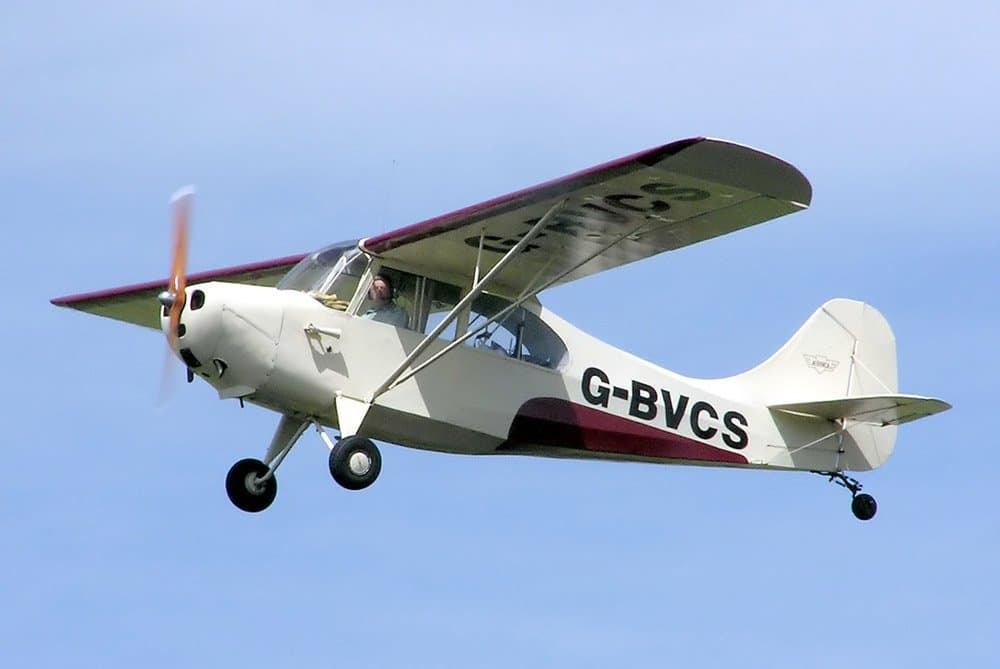
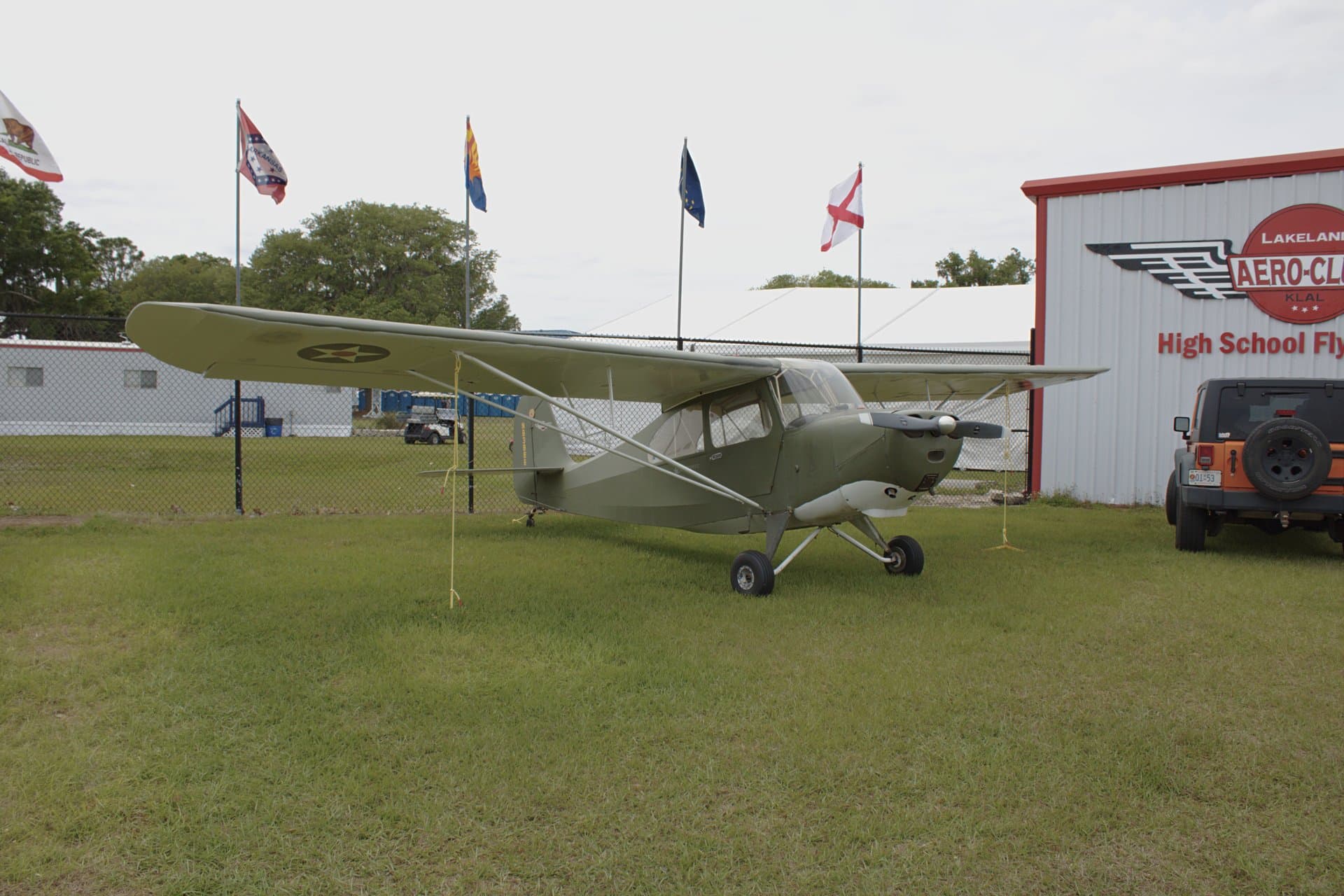
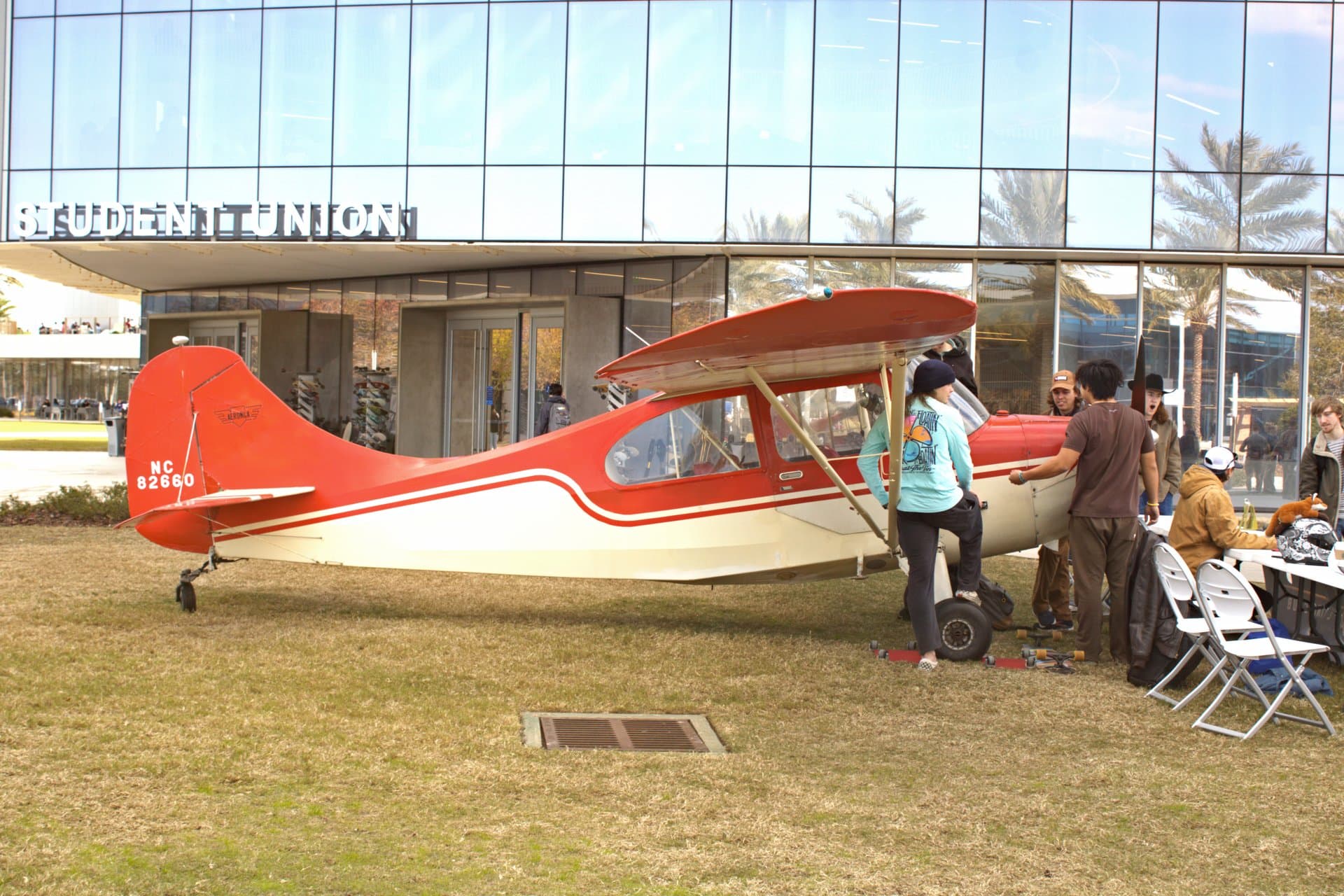
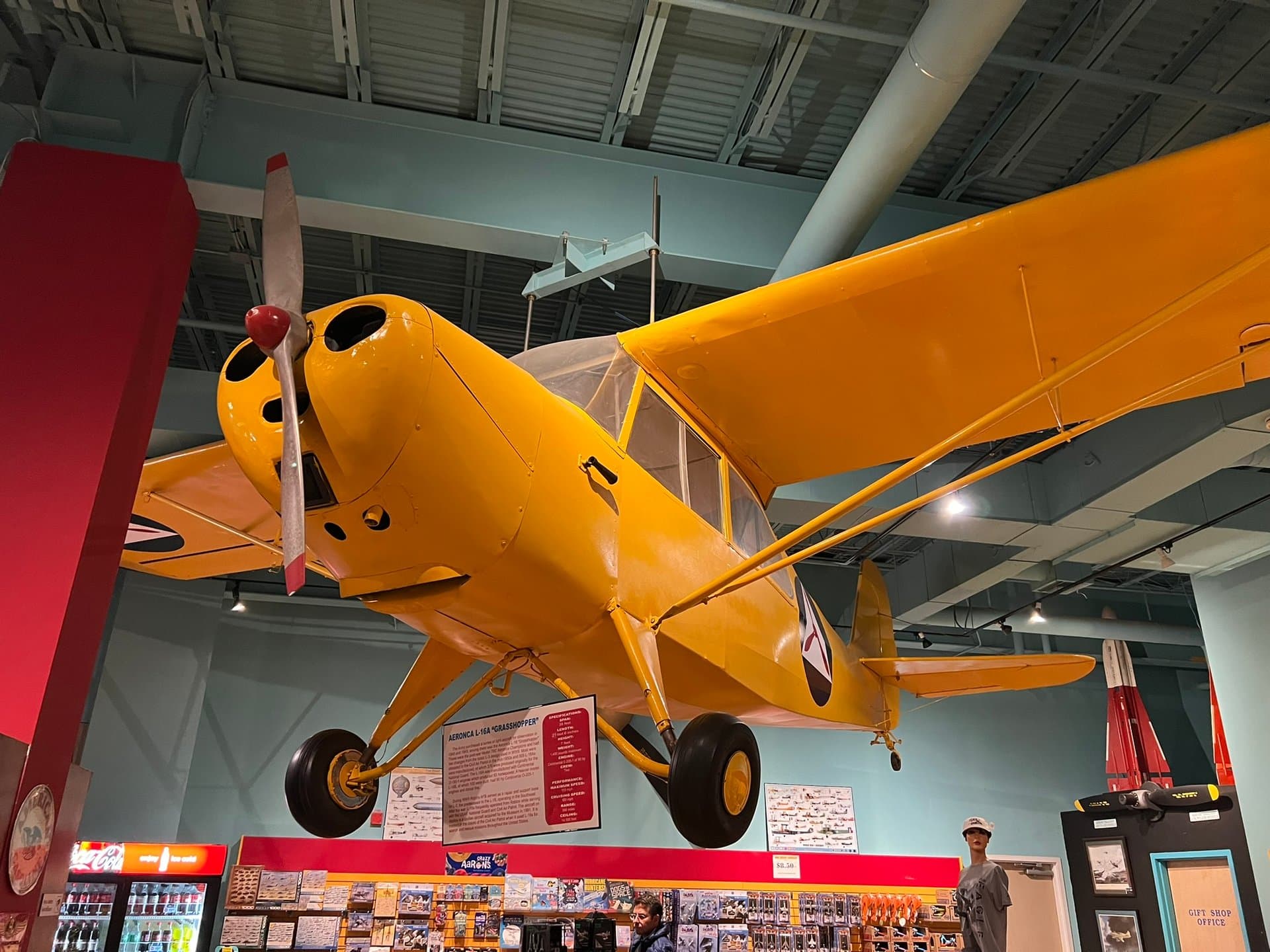
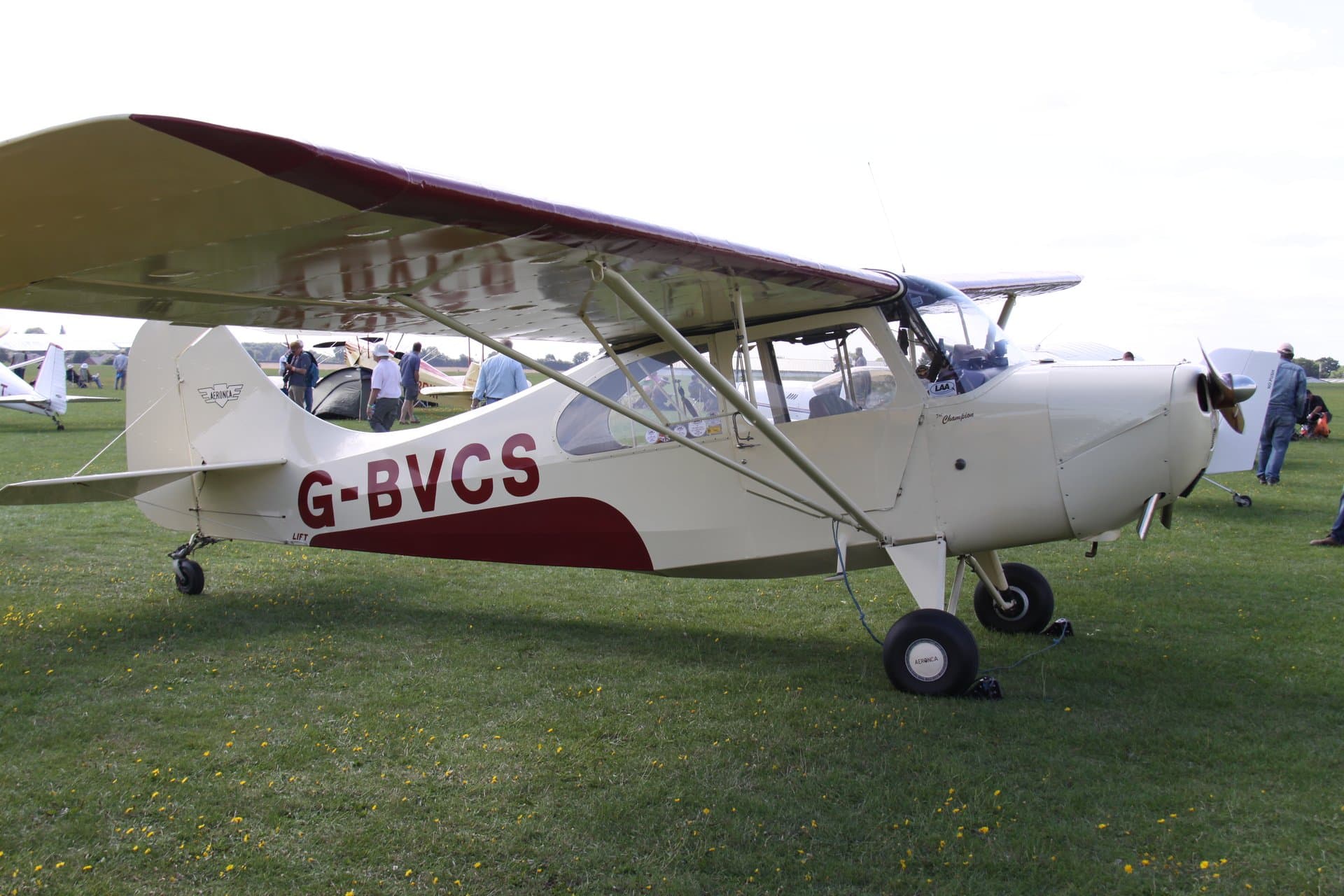
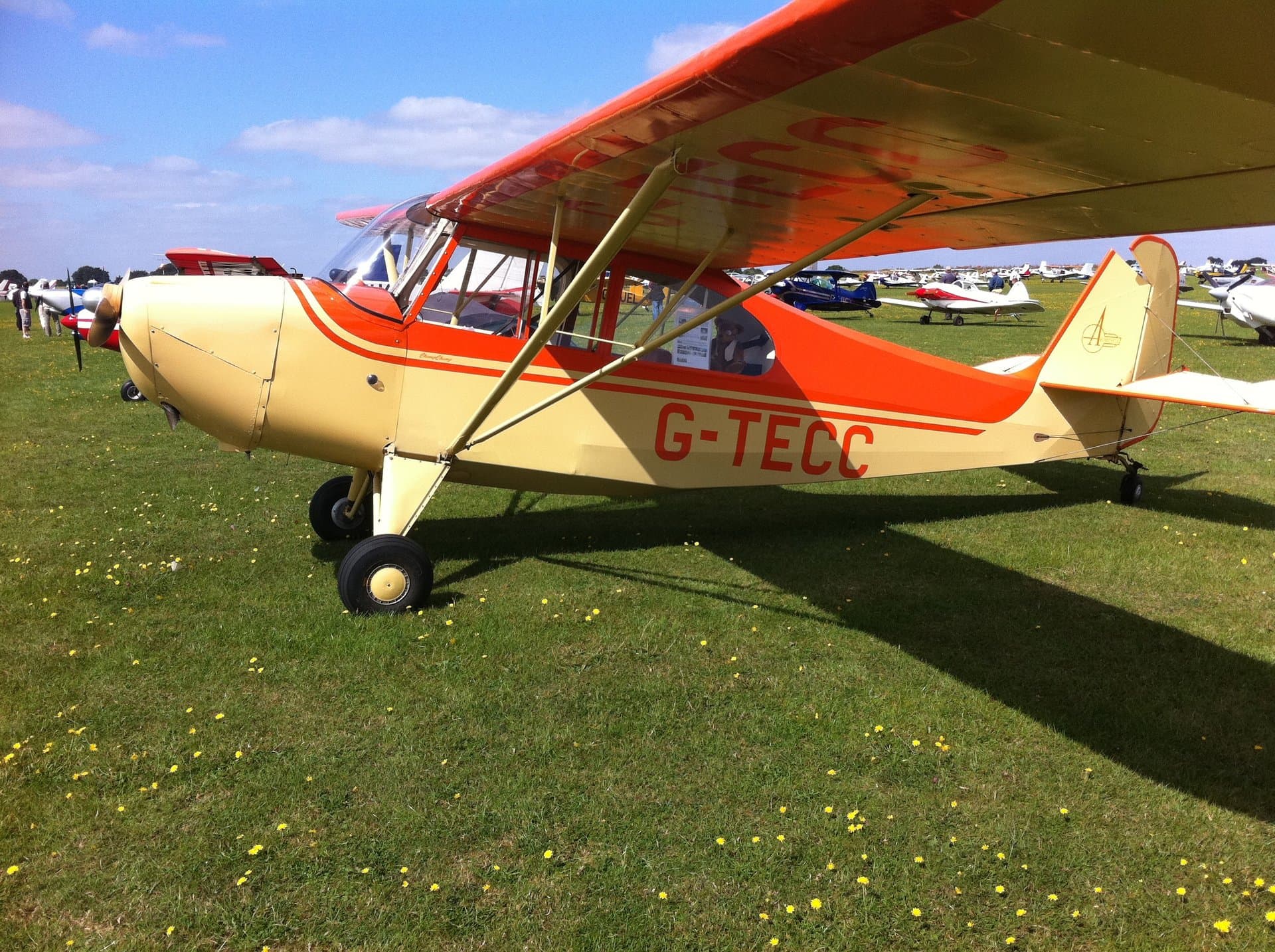
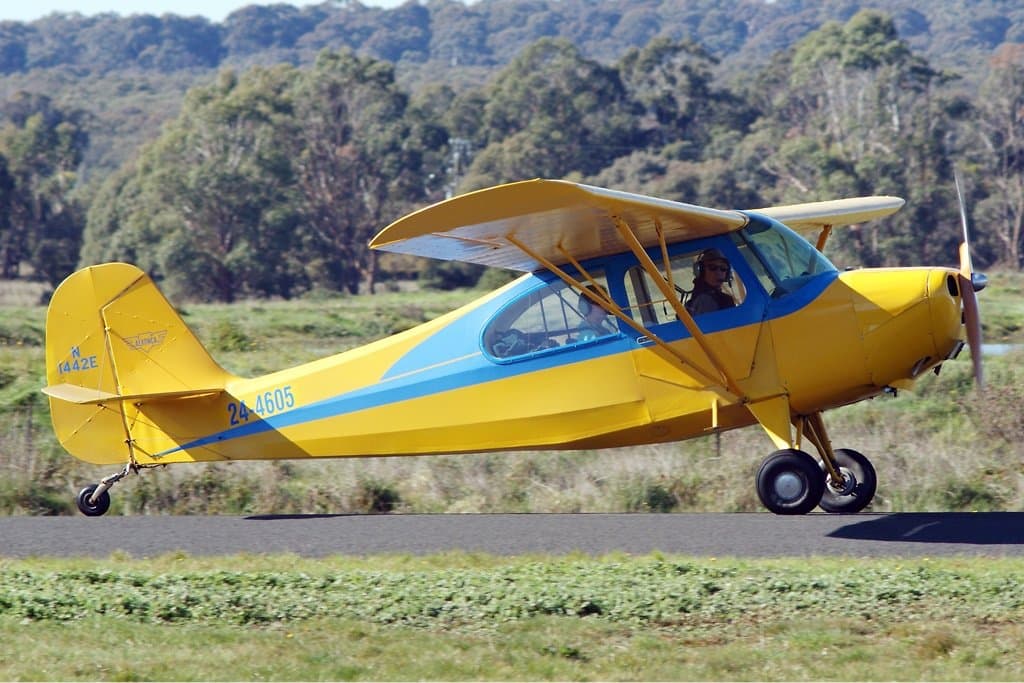
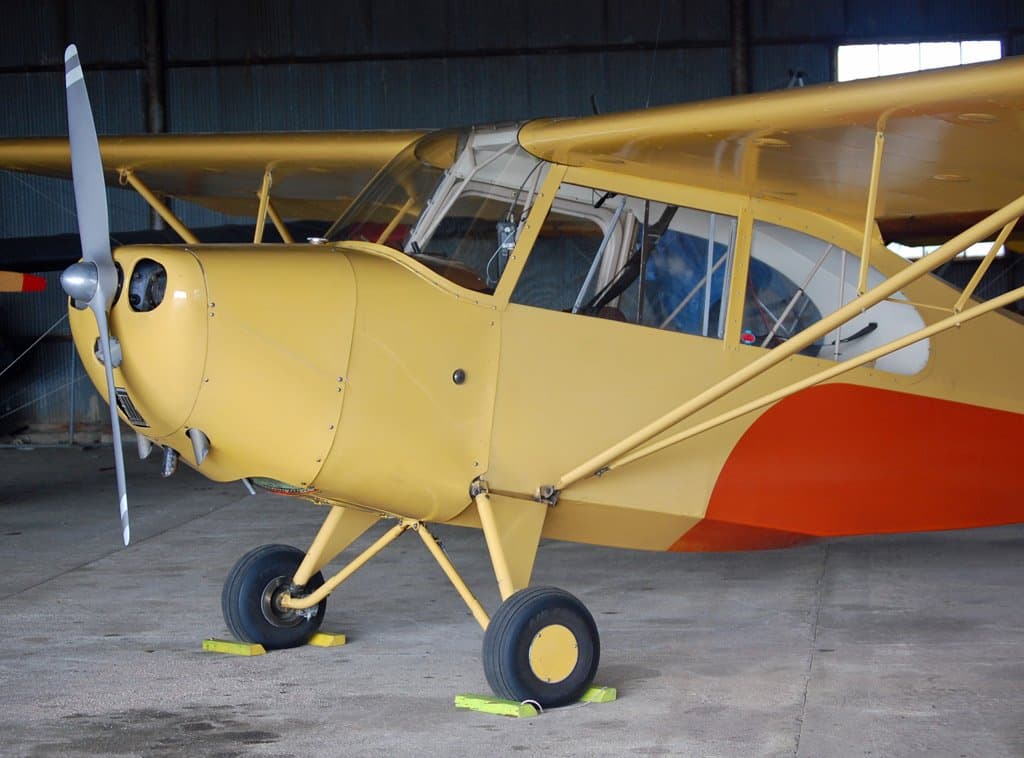
The Aeronca 7AC Champion, the "Champ", is a two-seat, high-wing, fabric-covered light aircraft built to compete directly against the Piper J-3 Cub in the light-trainer market that reopened as soon as the Second World War ended. It shares the Cub's era, its 65-horsepower Continental engine, its tandem seating and its role as a first aeroplane for a generation of American pilots. It does not share the Cub's cockpit arrangement, and that single difference is the Champ's whole reason for existing.
Where the Cub must be flown solo from the rear seat, trimmed forward by an empty front cockpit, the Champ solos from the front: the seat a lone pilot actually occupies is the forward one, with the aircraft correctly balanced and the view ahead unobstructed by a second, empty seat. Aeronca's engineers designed the 7AC after watching a decade of Cub instruction and built the correction directly into the airframe: a wider cabin, a raised rear seat that gives the instructor a sightline over the student's shoulder rather than around it, and a steerable, not merely castoring, tailwheel that makes ground handling noticeably more predictable.
None of that made the Champ faster, cheaper, or more capable than the Cub; the two aircraft are close to interchangeable on a spec sheet. What it made the Champ was, in the judgment of many who flew both, the better-mannered aeroplane to learn on, an argument that flying schools and individual pilots have been having for eighty years without a clear winner. It is also, unusually for an aircraft that first flew in 1944, still in production in spirit: the type certificate has passed through four different companies since Aeronca stopped building it, and Champ-descended airframes were still rolling off a factory floor deep into the 2000s.
History
The Champ was not Aeronca's first aeroplane, which is part of why it flew as well as it did. The company had built light aircraft since 1928: the Aeronca C-2 and C-3 of the early 1930s among the first successful American light aircraft of any kind, followed by the Model K and the pre-war Chief: giving its engineers a decade and a half of experience in exactly the structural idiom the 7AC would use: welded steel-tube fuselage, wood or metal wing structure, and fabric covering, built light and built cheap. The Champion was designed in 1944 to 45, while the war in Europe was still being fought, on the confident industry assumption that peace would bring a boom in private flying driven by returning servicemen who already knew how to fly, or wanted to learn.
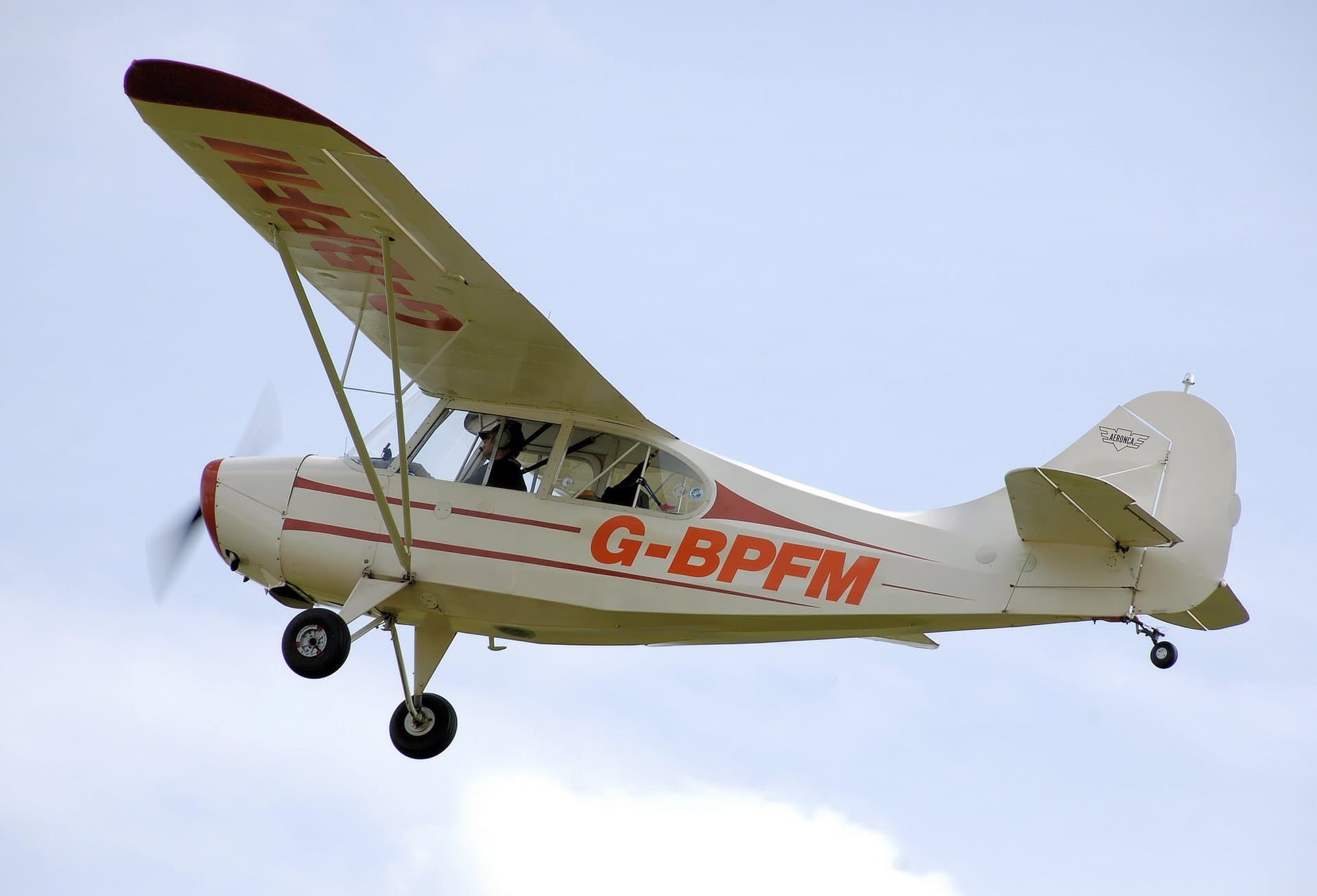 Aeronca 7AC Champion
Aeronca certificated the 7AC and began civilian deliveries in 1945, timed almost exactly with Piper's own postwar resumption of J-3 production, and the two companies fought for the same buyers with aircraft that were mechanically near-twins. The Champ's launch rode the same wave that lifted the entire American light-aircraft industry in 1946: manufacturers built airframes on the assumption of a market that, in the end, did not exist at anything like the forecast size. By 1947 the boom had collapsed. Aeronca, more exposed than most because light trainers were nearly its whole business, was hit hard; the company scaled back sharply and never again matched its 1946 production volumes.
Aeronca kept building Champs and their derivatives through the early postwar years, but the 1947 crash marked the beginning of the end for Aeronca as an airframe manufacturer. In 1951 the company left the aircraft-building business entirely, selling the Champion design and tooling to a group of investors who continued it as the Champion Aircraft Corporation: the first of several ownership changes the type certificate would pass through over the following decades. Aeronca itself continued as a components and subcontracting business, a common fate for light-aircraft makers who had bet everything on a boom that lasted about eighteen months.
What happened next is where the Champ's story diverges sharply from the Cub's. Piper's J-3 died in 1947 and was replaced by Piper's own new designs; the Cub as a production aircraft simply ended. The Champion's basic airframe, by contrast, kept being built: first by Champion Aircraft through the 1950s and 1960s, developed into the aerobatic 7ECA Citabria in 1964; then, after Champion itself went bankrupt in 1970, by the Bellanca Aircraft Corporation, which bought the design and continued Citabria and Decathlon production; and finally, after Bellanca's own 1980 collapse, by American Champion Aircraft Corporation, founded in 1988 specifically to keep the lineage alive. American Champion was still building Citabrias, Scouts and Explorers, direct structural descendants of the 1945 Champ, deep into the 2000s, an eighty-year production run distributed across five different corporate owners that has no real parallel among the Champ's 1940s rivals.
Design
Structurally the Champ is close kin to every other light trainer of its generation: a welded steel-tube fuselage, wood or aluminum-spar wings, and the whole airframe covered in fabric, all built to keep weight and cost down on an aircraft with only 65 horsepower to work with. Empty, it weighs around 741 lb, light enough that, like its rivals, it can be turned by hand on the ramp.
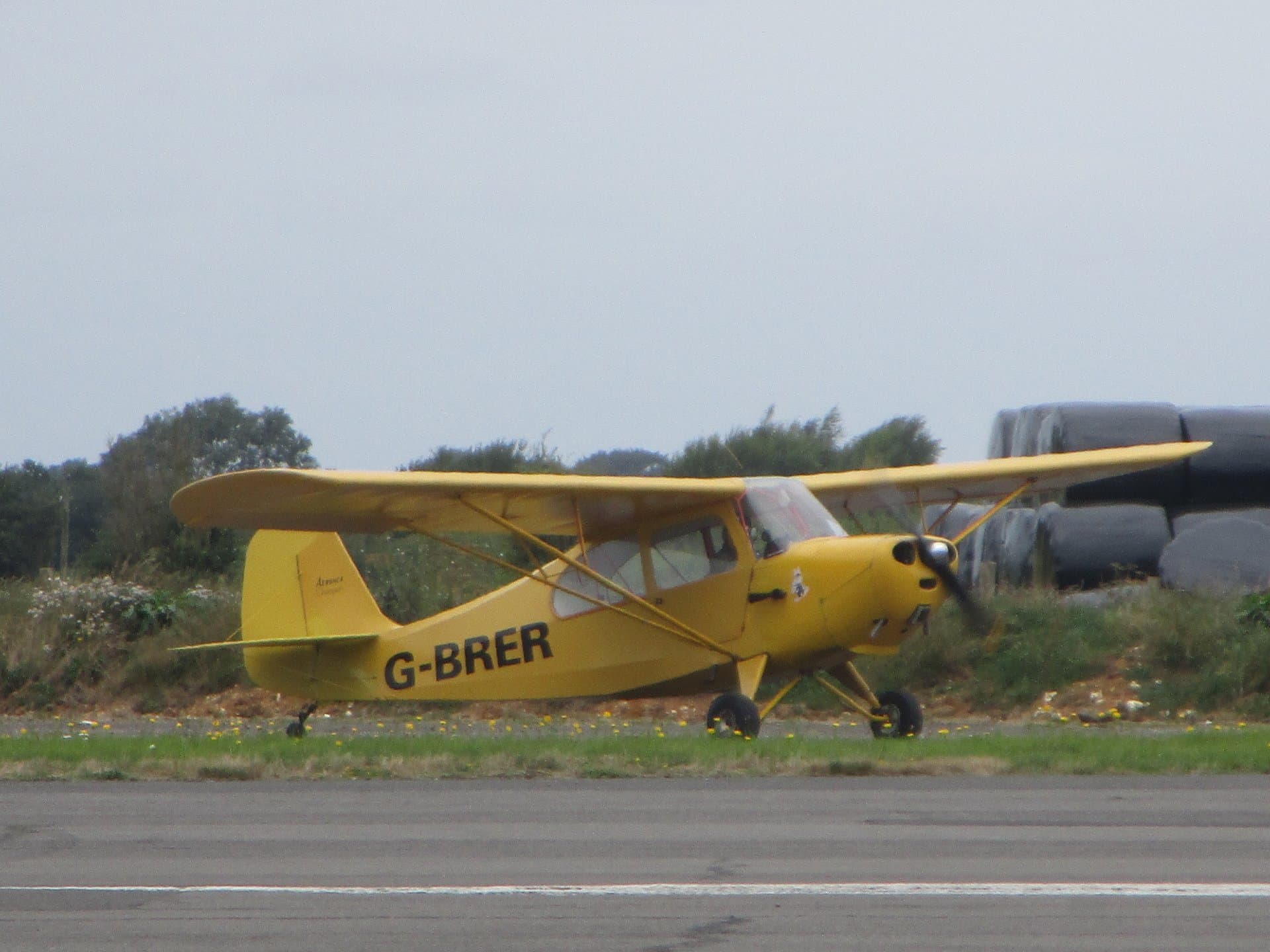 Aeronca 7AC Champion
The design decisions that separate it from the Cub are concentrated entirely in the cabin. The Champ's cabin is wider than the Cub's tandem cockpit, and, the detail that matters most, a lone pilot flies it from the front seat, not the back. That is possible because Aeronca balanced the airframe around a front-seat solo pilot from the start, rather than around a rear seat as Piper had. The practical result is a forward view unobstructed by an empty seat ahead, and an aircraft that a first-time student sees correctly from the position they will actually solo it from.
The rear seat sits noticeably higher than the front, a deliberate stadium-style stagger that gives an instructor in the back a sightline over the student's shoulder rather than around it, a small change with a real effect on how closely an instructor can actually watch a student's hands and eyes during a lesson. The tailwheel is steerable, linked to the rudder pedals, rather than the free-castoring wheel fitted to many contemporaries; it does not eliminate the taildragger's demand for active rudder work, but it makes the aircraft noticeably easier to track straight during taxi, takeoff roll and landing rollout, one less variable for a nervous student to manage.
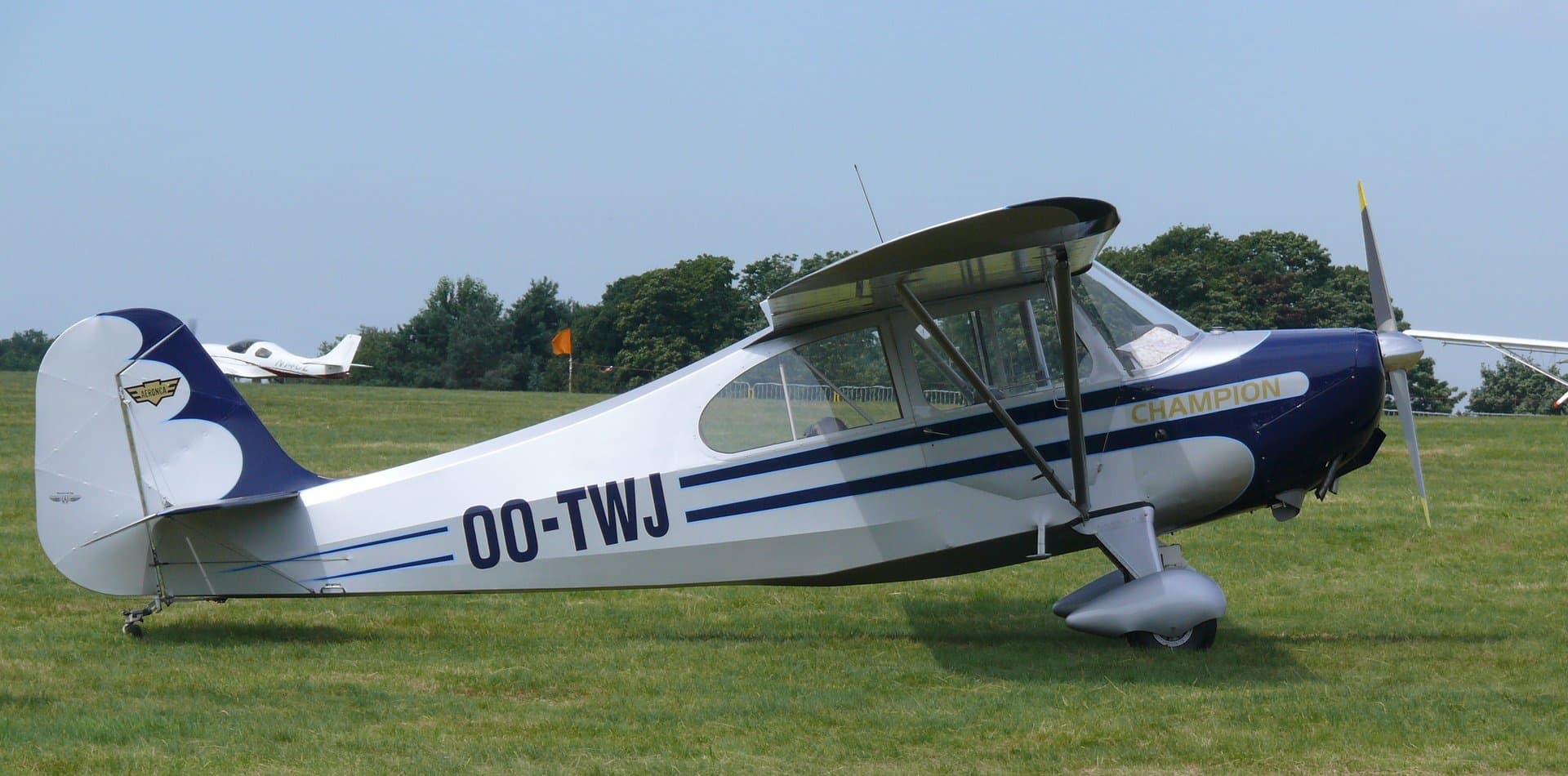 Aeronca 7AC Champion
The cockpit itself is as austere as the era demanded: an airspeed indicator, altimeter, oil temperature and pressure gauges, a compass, a stick and rudder pedals, and, on the original 7AC, no electrical system, no radio and no starter. The engine is swung by hand, exactly as on the Cub. The Champ's paint scheme became almost as recognizable as its rival's: a similar bright yellow, close enough that the two types are still routinely mistaken for one another at a glance, distinguishable up close mainly by the Champ's flatter, more angular tail and its wider, more squared-off cabin windows.
Flight characteristics
In the air the Champ behaves much as the Cub does: slow, light on the controls, and forgiving at speeds where a mistake leaves time to correct it. Cruise is barely above 70 kt, stall arrives near 32 kt, and there is nothing electrical to manage and no flaps to configure: the workload is almost entirely airspeed, attitude and wind, exactly as it is in every other light taildragger of the era.
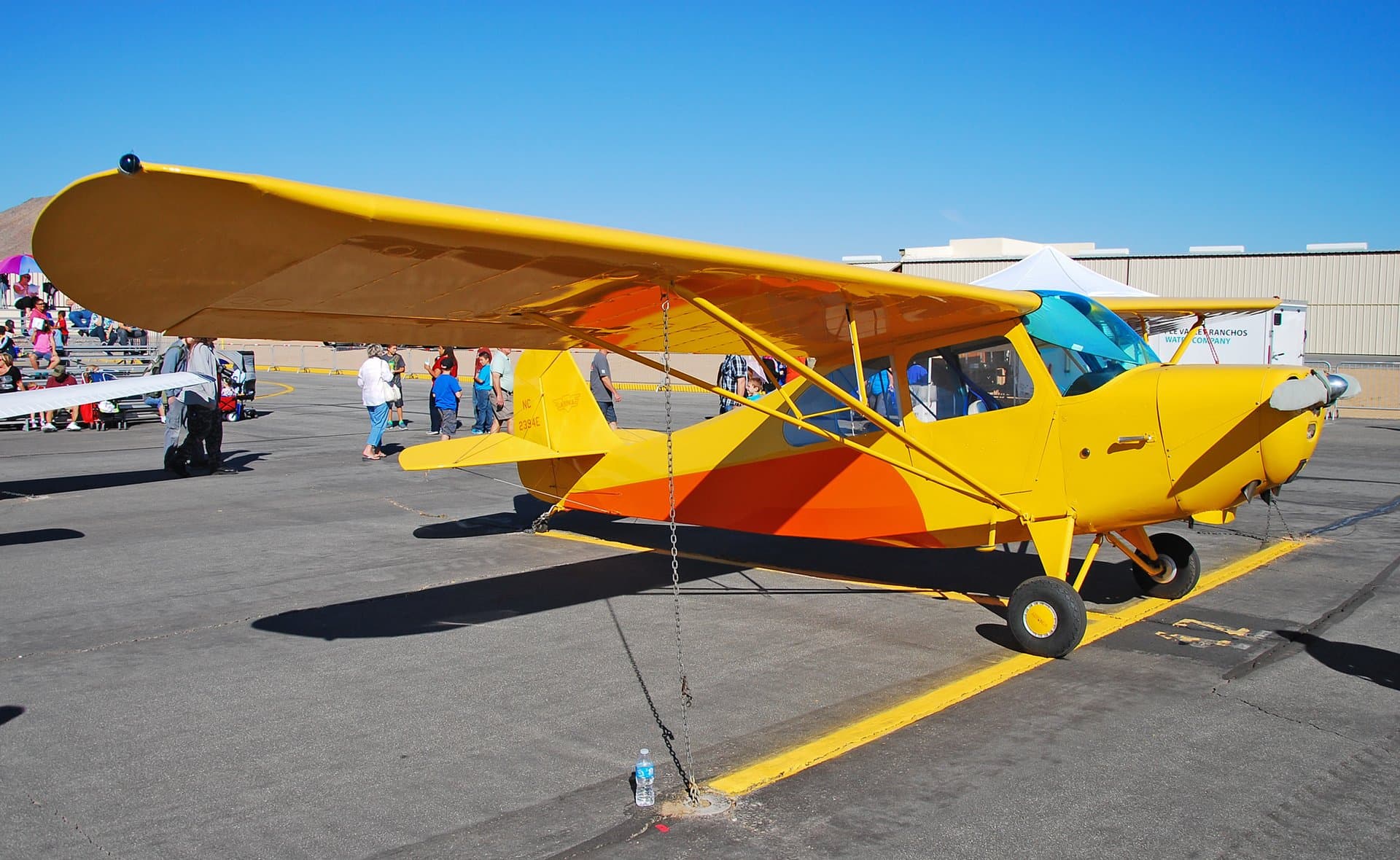 Aeronca 7AC Champion
What pilots who have flown both consistently report is a difference on the ground and at the margins of the flight envelope rather than in cruise. Soloing from the front seat means the aircraft looks and feels correct from the position a lone pilot actually occupies, rather than requiring the mental adjustment the Cub demands of a pilot who has only ever sat in front. The steerable tailwheel gives noticeably better directional authority during taxi and the takeoff and landing roll, the exact phase of flight where a taildragger most readily punishes an inattentive pilot with a ground loop. Neither difference makes the Champ meaningfully faster or more capable, it does not, but both make it, in the judgment of many instructors, a slightly kinder aeroplane to learn taildragger discipline on.
That is a genuinely contested claim rather than a settled one; plenty of Cub loyalists would put the comparison the other way, and eighty years of flying-club argument have not resolved it. What is not contested is that both aircraft demand the same fundamental skill a nosewheel trainer does not: full attention on the rudder from the moment power goes in until the aircraft stops rolling, the discipline that made taildraggers a shrinking fraction of primary training as tricycle-gear aircraft like the Cessna 172 took over the market from the 1950s onward.
Military service
The Champ's military service came a decade after the Cub's, and in a different war. The U.S. Army and Air Force adopted militarized Champion airframes as the L-16, built in two main batches: the L-16A, based closely on the 7AC and delivered from 1947, and the more powerful L-16B, based on the 90-horsepower 7BCM and delivered from 1949. Both retained the tandem seating and fabric-over-tube construction of the civilian Champ, with military radio and equipment fits added.
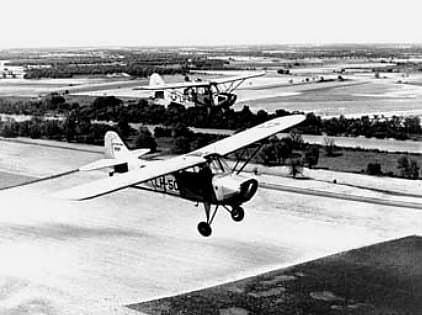 Aeronca L-16
L-16s flew liaison, observation and forward air control duties during the Korean War, the same category of work the Cub's L-4 Grasshopper had performed in the Second World War a decade earlier: flying low and slow over the front line, directing artillery and providing commanders with an eye in the air that needed no paved runway. After Korea, many L-16s passed into the hands of the newly organized Civil Air Patrol, which used them for search-and-rescue and disaster-relief flying for years afterward, and a meaningful number remain in private hands today, restored in their original olive drab.
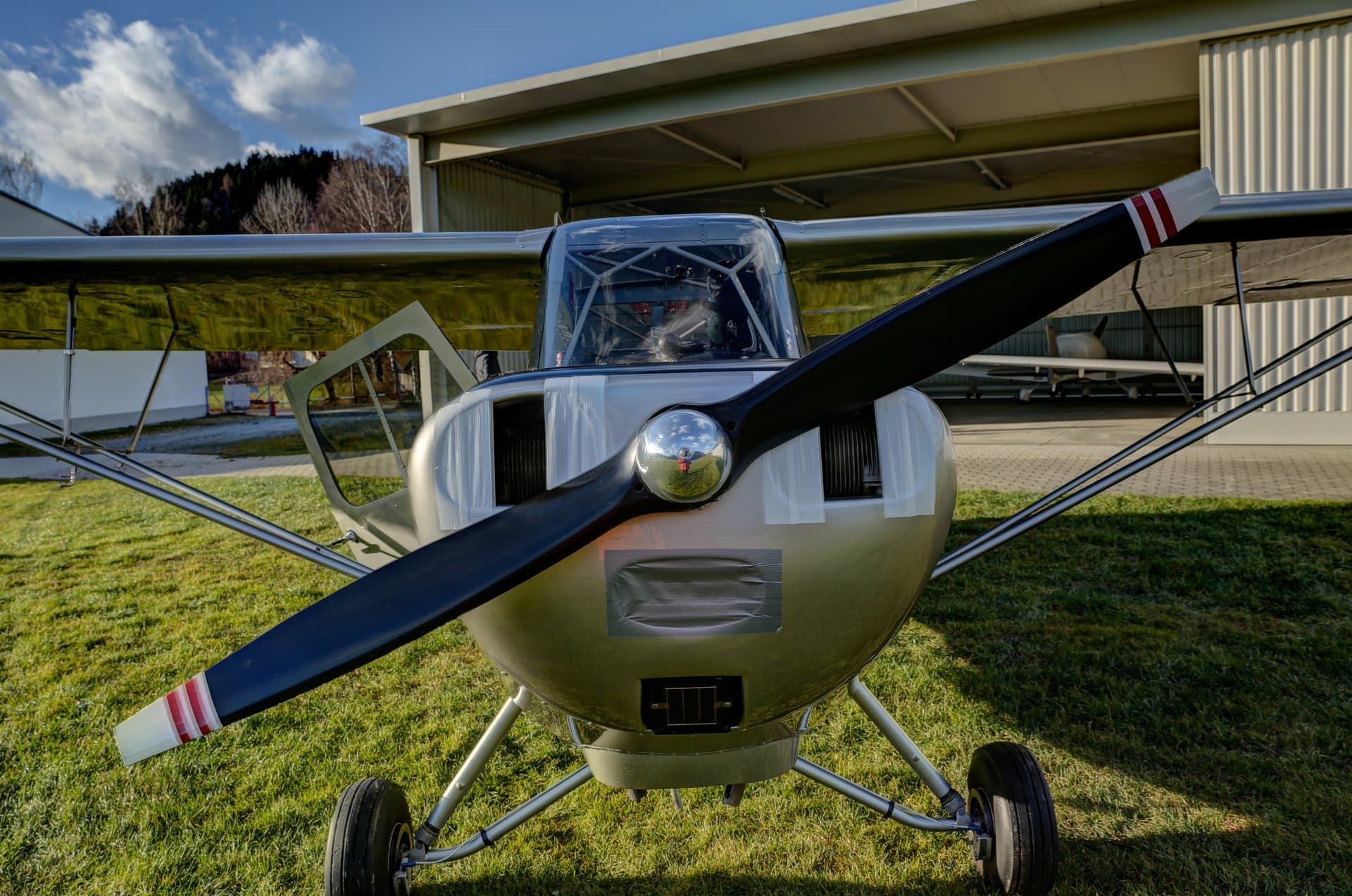 Aeronca 7BCM / L-16
The Champ's Korean War service is one of the clearest points of contrast with the Cub in this encyclopedia's coverage: where the Cub's combat record belongs to 1942 to 45, the Champ's belongs to 1950 to 53, a full aircraft generation later, flown in a different war on a different continent by a different generation of American pilots.
Production
Aeronca built 7,285 Champions between 1945 and the early 1950s, concentrated overwhelmingly in the immediate postwar boom years before the 1947 market collapse throttled the industry's output. Production was based at Aeronca's longtime home in Middletown, Ohio, a facility the company had used since the 1930s and continued to occupy for its post-aircraft components business after 1951.
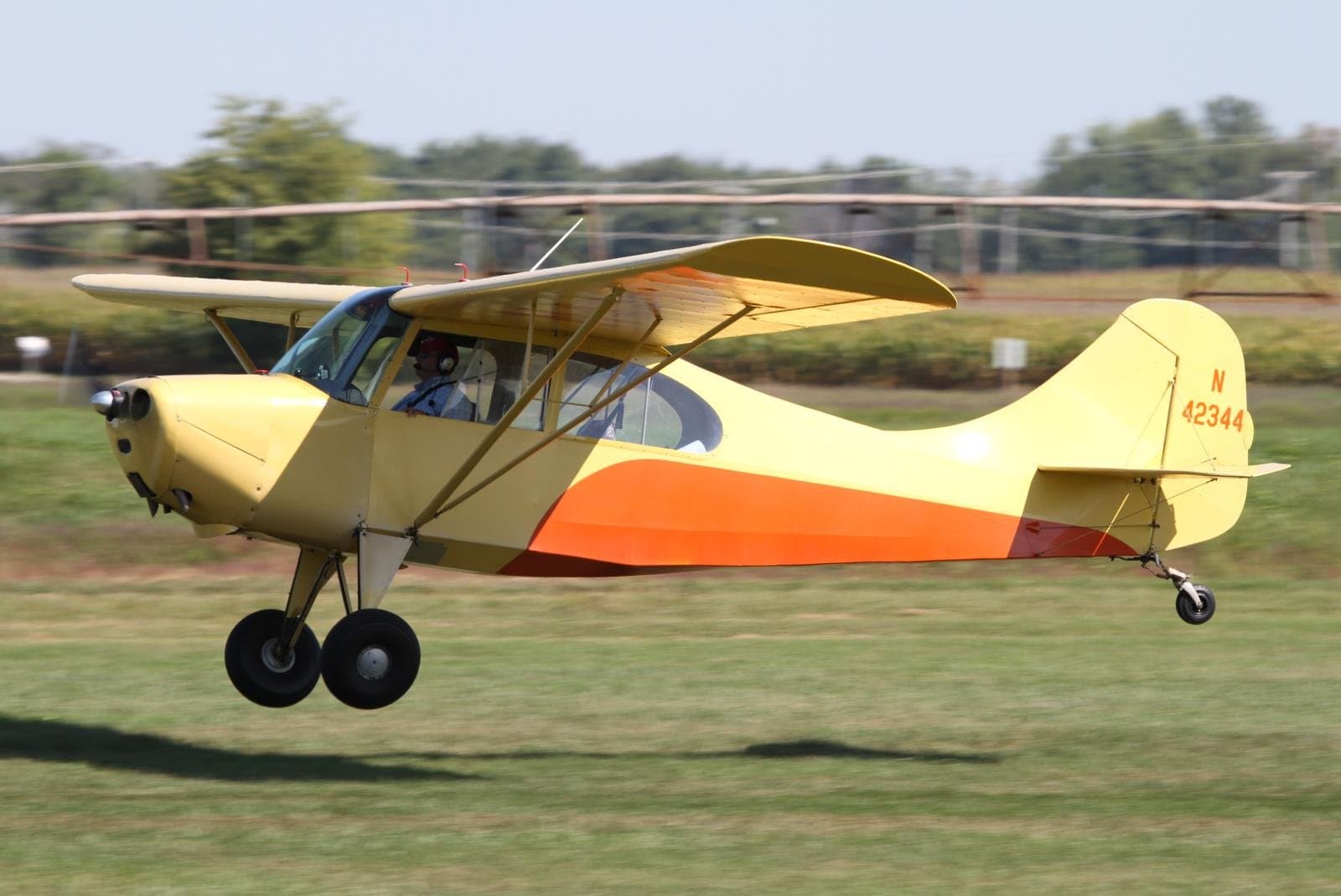 Aeronca 7DC
Unlike the Cub, whose production simply stopped when Piper moved on to new designs, the Champ's manufacturing lineage never actually ended, it changed hands. Champion Aircraft Corporation continued building Champion-derived aircraft through the 1950s and 1960s at Osceola, Wisconsin; Bellanca Aircraft Corporation took over the design in 1970 and kept building Citabrias and Decathlons at the same plant through the 1970s; and American Champion Aircraft Corporation, formed in 1988 specifically to keep the certificate alive after Bellanca's collapse, has built Citabrias, Scouts, Explorers and related types at Rochester, Wisconsin, into the 21st century. Counted end to end, airframes carrying some version of the original 1945 Champion type certificate were still coming off a production line more than sixty years after the last Aeronca-built 7AC left Middletown.
Legacy
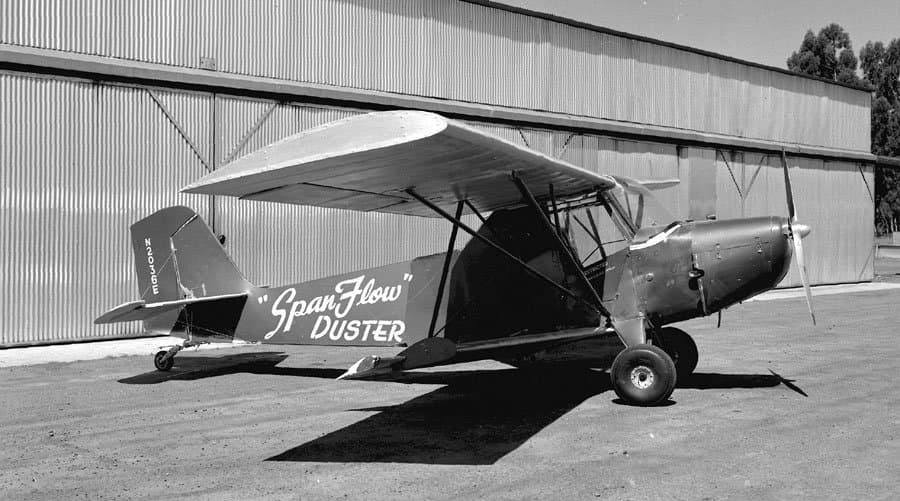 Agricultural conversion
The Champ's afterlife runs almost exactly opposite to the Cub's. The Cub's production died in 1947 and Piper moved on, leaving the J-3 as a fixed historical object even as it stayed popular; the Champ's basic design instead kept mutating in the hands of successive owners, most consequentially into the Champion 7ECA Citabria of 1964, the name an anagram of "airbatic", which took the same fabric-over-tube airframe and strengthened it for genuine aerobatics, a role the docile original 7AC was never built for. Later Bellanca and American Champion developments, including the Decathlon, Scout and Explorer, pushed the same lineage further into aerobatic and utility-bush territory.
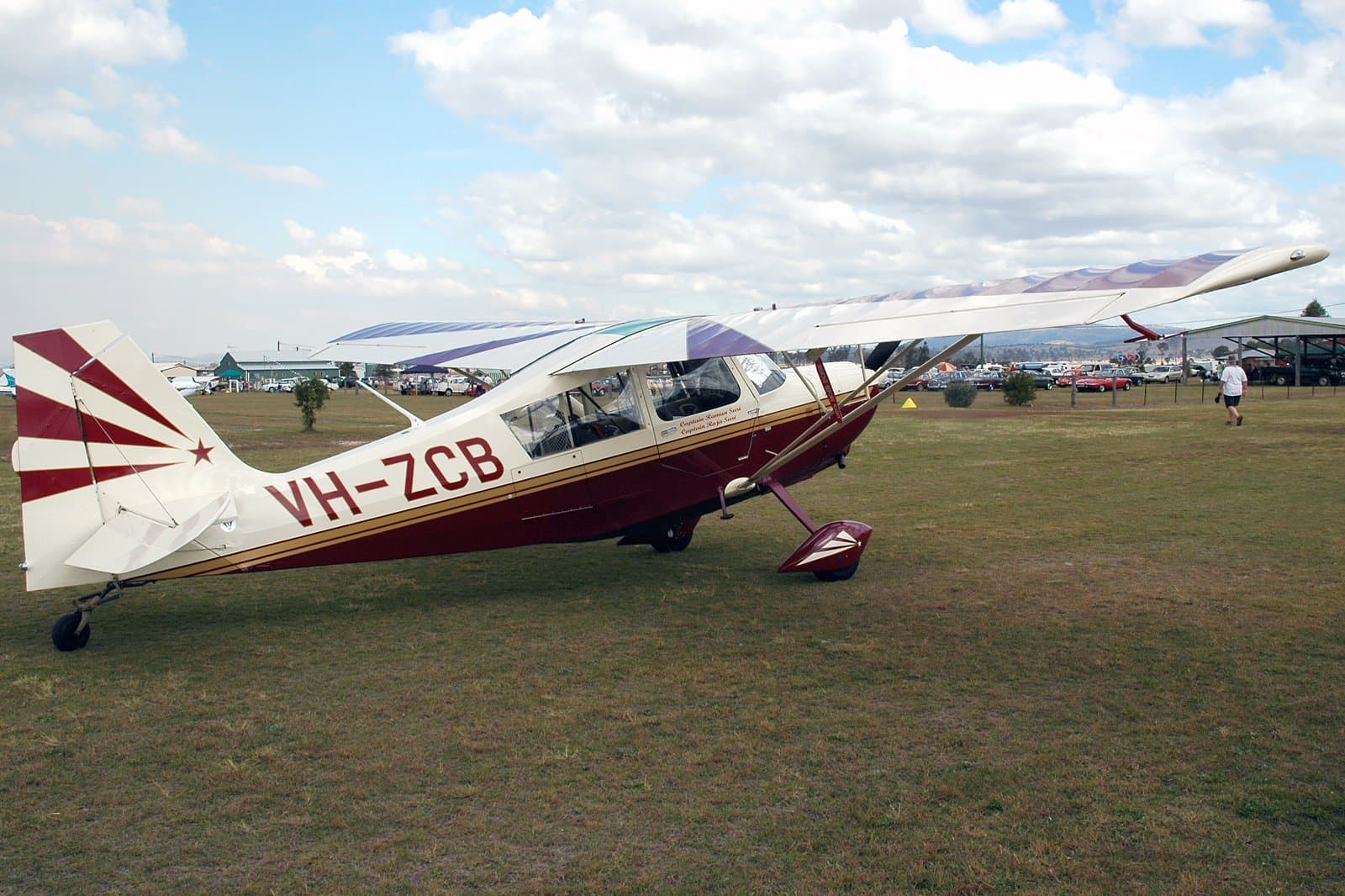 Champion 7ECA Citabria
Surviving 7ACs themselves settled into a role much like the Cub's: tailwheel training, personal flying, gentle aerobatics within the original airframe's limits, and a scattering of agricultural conversions with the rear seat replaced by a chemical tank. It shares the Cub's paradox almost exactly: an aircraft designed and sold as the cheap, no-frills entry point into aviation that has become, decades later, a genuinely expensive thing to own, with well-kept examples now trading for many times their original list price.
Set against the Cub, the Champ's story is less about which trainer was better and more about what happened after each company stopped selling them. Piper let the J-3 become a fixed point in aviation history. Aeronca, forced out of the aircraft business by the same 1947 crash that nearly ended everyone, let the Champ's basic idea keep evolving under other names (Citabria, Decathlon, Scout) for another sixty years, an afterlife the Cub, for all its fame, never had.
Model evolution
Aeronca 7AC Champion
1945The original production Champion: a 65-horsepower Continental A-65, tandem two-seat cabin flown solo from the front, and a steerable tailwheel. Aeronca's direct answer to the Piper J-3 Cub, sharing its power, weight and mission but not its cockpit balance.
Front-seat solo balance, a wider cabin than the Cub's, a raised rear seat for instructor sightlines, and a steerable rather than free-castoring tailwheel. Aeronca had watched the Cub train a generation of pilots and judged its rear-seat-solo layout an avoidable compromise. The 7AC's cabin was built around the pilot position a lone flyer would actually use.
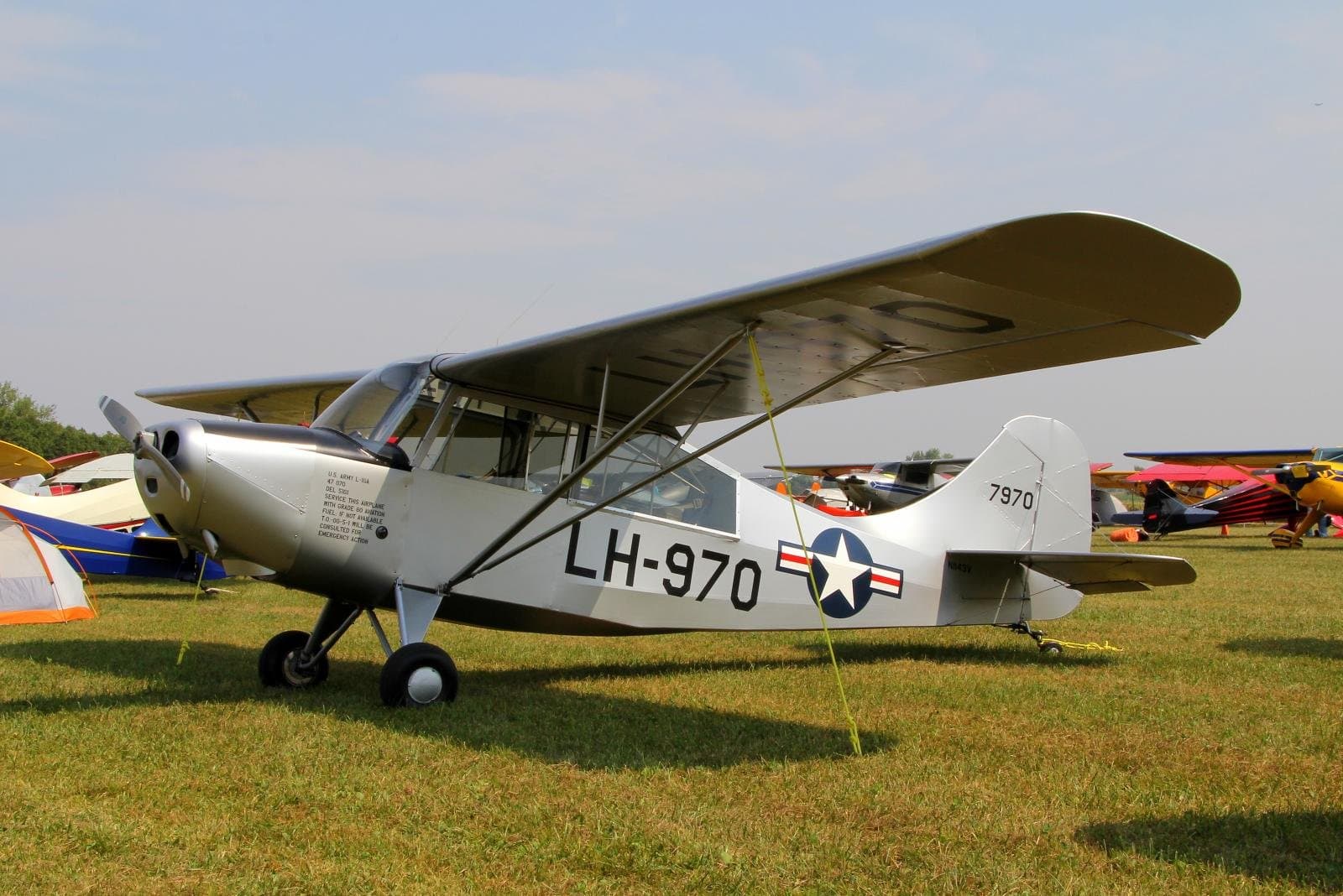
Aeronca 7BCM / L-16
1947Militarized Champion airframes adopted by the U.S. Army and Air Force. The L-16A closely followed the civilian 7AC; the later L-16B used the more powerful 90-horsepower 7BCM. Both flew liaison and artillery-spotting duty in the Korean War.
Military radio and equipment fits, and, on the L-16B, the 90-horsepower Continental C90 in place of the 65-horsepower A-65. Korea's front-line liaison and spotting work demanded the same short-field, low-cost aircraft the L-4 Grasshopper had provided a decade earlier, and the more powerful C90 gave the L-16B useful load the wartime Cub derivative never had.
Aeronca 7DC Champion
1946A parallel-production Champion variant fitted with a 65-horsepower Continental C65 in place of the 7AC's A-65, offered alongside the standard model to broaden Aeronca's engine sourcing during the peak postwar production years.
Continental C65 engine in place of the A-65, with minor cowling and mount changes; performance was essentially unchanged from the 7AC. Like Piper with the Cub, Aeronca was building faster than any single engine supplier could reliably keep pace with during the 1946 boom, and certifying a second engine fit hedged against a bottleneck that could stall the production line.
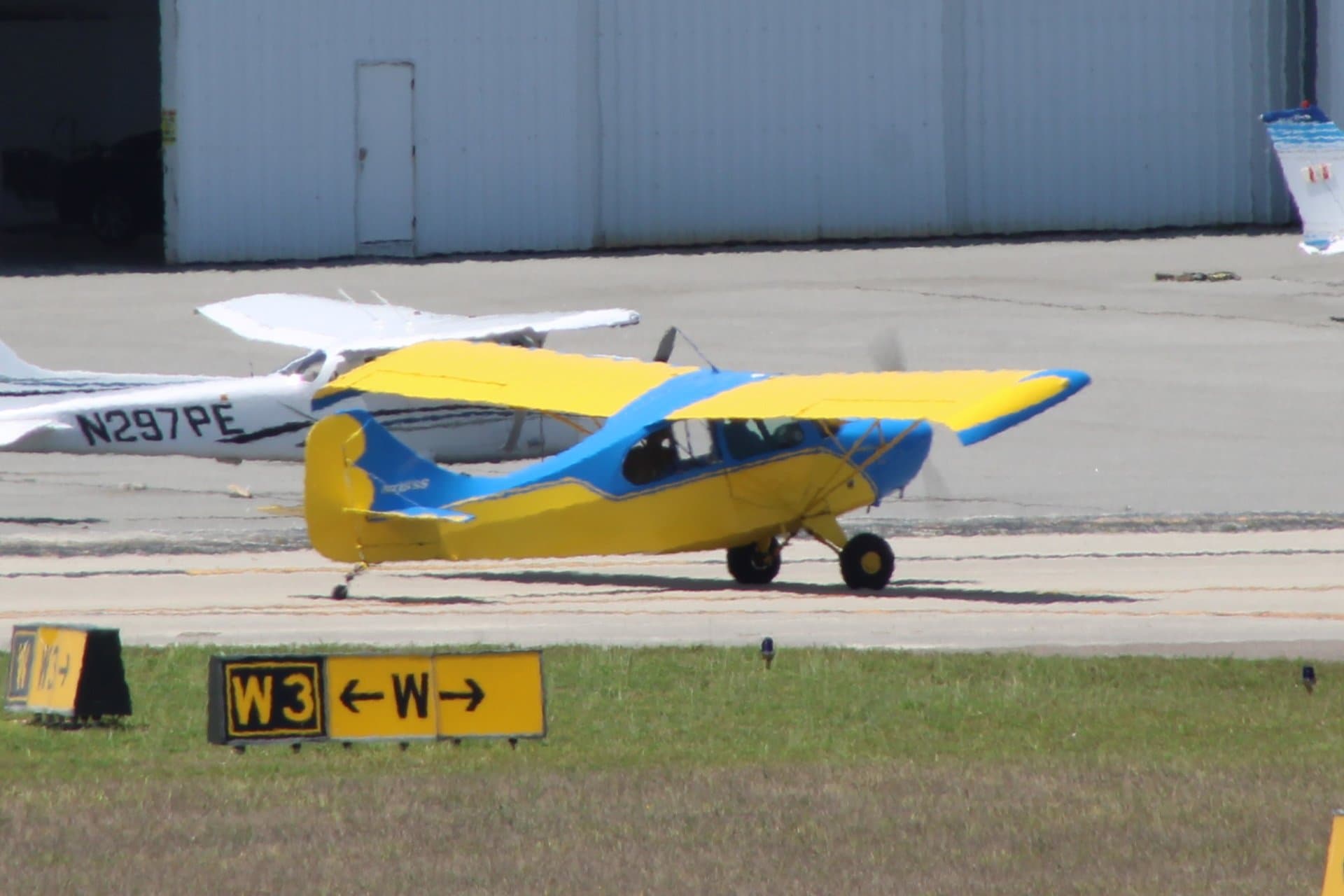
Aeronca 7EC Traveler
1955A postwar redevelopment of the Champion line with a more powerful 90-horsepower Continental C90, a metal-spar wing, and updated instrumentation and electrics, sold as a step up from primary training toward genuine personal and cross-country flying.
Continental C90 engine, an all-metal wing spar in place of wood, and an electrical system with starter, lighting and radio provisions absent from the original 7AC. By the mid-1950s Aeronca's remaining postwar customers wanted more than a primary trainer: genuine two-up cross-country capability and modern conveniences a starter-less 65-horsepower Champ could not offer.
Champion 7ECA Citabria
1964The aerobatic reinvention of the Champion airframe, built by Champion Aircraft Corporation after Aeronca left the aircraft business. Strengthened for sustained inverted flight and named, famously, "Citabria", "airbatic" spelled backward.
A strengthened fuselage and wing structure rated for aerobatic and limited inverted flight, an inverted fuel and oil system on later versions, and a more powerful engine than the original 7AC. By the 1960s the primary-trainer market the Champ had been built for was shrinking fast as tricycle-gear aircraft took over flight schools, and Champion Aircraft judged the airframe's real remaining future lay in sport and aerobatic flying rather than basic instruction.
Successful enough to outlive its own manufacturer twice over: Champion Aircraft, Bellanca and American Champion each kept building Citabrias and its Decathlon and Scout derivatives, sustaining the basic Champion airframe in production for decades after Aeronca stopped.
American Champion Scout / Explorer / Denali
1990Modern American Champion developments of the same basic airframe, built for backcountry and utility flying rather than aerobatics or training, the Scout with a bigger engine and utility fittings, later models extending the lineage further from the 1945 original.
Larger engines up to 180 horsepower and a structure strengthened for utility loads and rough-field operation: changes that would have been unrecognizable to the original 65-horsepower 7AC. By the time American Champion took over the certificate in 1988, the surviving market for this airframe was backcountry flying rather than primary instruction, and the company developed the design accordingly rather than chasing a trainer market long lost to nosewheel designs.
Blueprints
- American Champion Aircraft, American Champion Aircraft Corporation
- Aeronca L-16, National Museum of the United States Air Force
- Aeronca 7AC Champion: A Cub Competitor, EAA (Experimental Aircraft Association)
- Aeronca 7AC Champion, AOPA (Aircraft Owners and Pilots Association)
- Aeronca 7AC Champion, Wikipedia
Checked September 2, 2026