Aircraft
DH.106 Comet
The de Havilland Aircraft Company LimitedUnited Kingdom
- Role:
- Jet airliner
- First flight:
- 1949
437kt
Cruise speed
2,802nm
Range
General
- Role:
- Jet airliner
- Status:
- Retired
Programme
- First flight:
- July 27, 1949
- Introduction:
- 1952
- Produced:
- 1949 to 1964
- Number built:
- 114
Crew & capacity
- Crew:
- 4
- Capacity:
- 81 passengers
Dimensions
- Length:
- 118 ft
- Height:
- 29 ft
- Wingspan:
- 115 ft
- Wing area:
- 2,121 ft²
Weights
- Empty weight:
- 75,277 lb
- Maximum takeoff weight:
- 161,996 lb
Powerplant
- Engine:
- 4 × Rolls-Royce Avon 524 turbojets, 46.7 kN (10,500 lbf) thrust each (Comet 4)
Performance
- Ceiling:
- 41,995 ft

The de Havilland DH.106 Comet was the world's first jet airliner to enter scheduled service. It opened BOAC's London to Johannesburg route on 2 May 1952 and, for a little over a year, gave Britain a commercial aviation lead no other country could match: an aeroplane that cruised above the weather at 40,000 ft, cut the journey from London to Johannesburg from thirty-six hours to twenty-three, and did it without the drumming vibration every airline passenger had learned to expect.
That lead did not survive. Three Comet 1s were lost in thirteen months, two of them to a structural failure nobody had anticipated: fatigue cracking in a pressurised fuselage whose real life turned out to be roughly a thousand flights rather than the sixteen thousand de Havilland's own testing had indicated. The type's certificate of airworthiness was withdrawn in April 1954, and the investigation that followed, including the deliberate destruction of a complete fuselage in a water tank at Farnborough, became the most consequential structural engineering inquiry in the history of civil aviation.
What it found was not carelessness. De Havilland had tested the Comet harder than the regulations of the day required. The flaw was subtler and more frightening: the company had run its fatigue test on a fuselage it had already proof-loaded to twice cabin pressure, and that overload had quietly strengthened the very corners where cracks would later start, so the test reported a life the production aircraft did not have.
De Havilland rebuilt the aeroplane around that finding. The Comet 4 opened the first transatlantic jet service on 4 October 1958, three weeks ahead of Pan American's Boeing 707, and Comets went on flying commercially into 1980. Their maritime-patrol descendant, the Hawker Siddeley Nimrod, stayed in front-line RAF service until 2011: sixty-two years after the prototype first left the ground at Hatfield.
History
The Comet began as a line in a committee report. On 11 March 1943, with the war's end still two years away, the British Cabinet formed a committee under Lord Brabazon of Tara to decide what airliners the country should build once it was over. Britain had spent the war building bombers and fighters while the United States built transports, and the Brabazon Committee existed to make sure that decision did not cost the country its postwar airline industry.
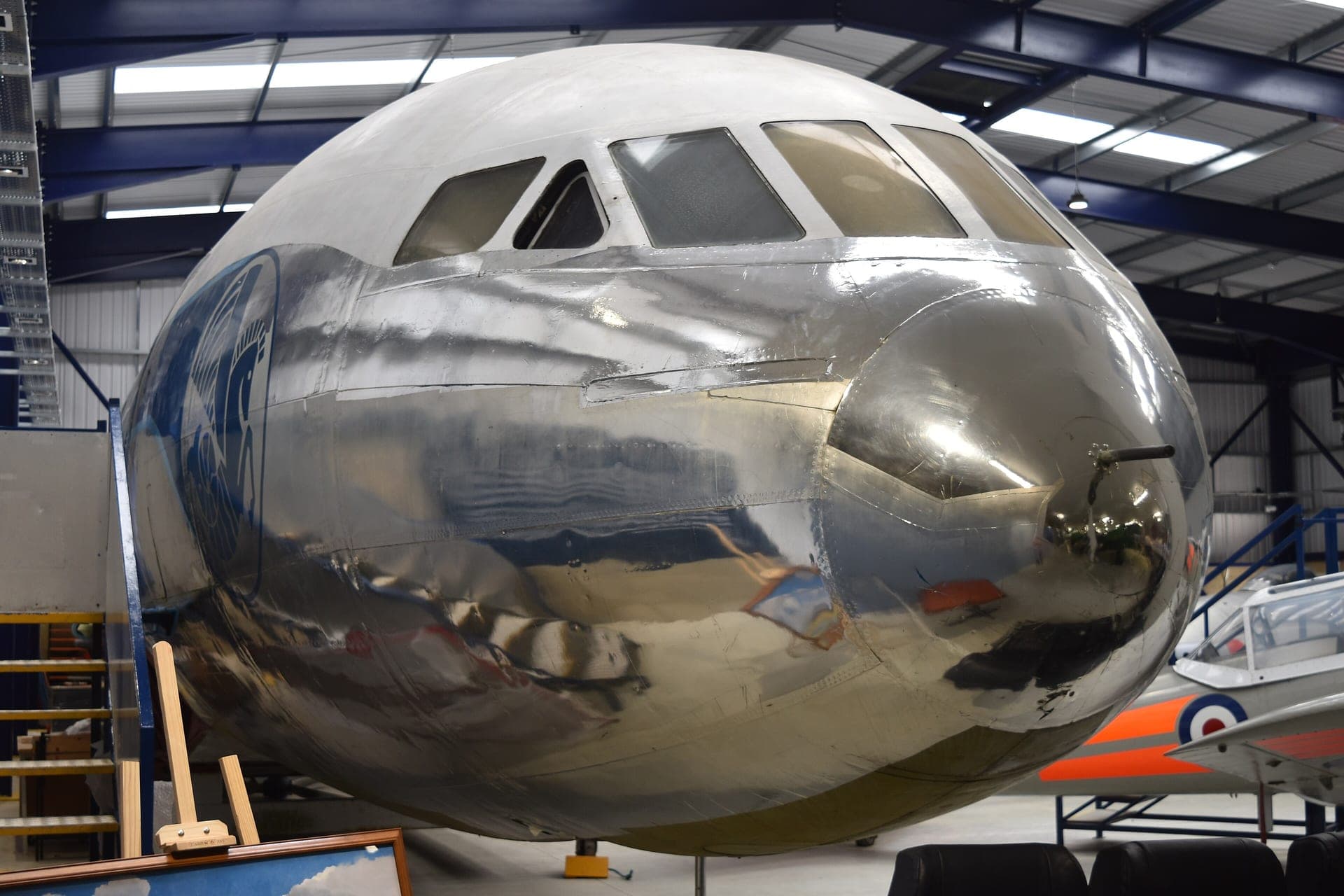 de Havilland Comet 1A
The committee drew up five outline types. The fourth, the Type IV, called for a pressurised transatlantic mailplane carrying a ton of payload at around 350 kt. That specification was not an accident of open competition. Sir Geoffrey de Havilland sat on the committee, his company had the most advanced jet-engine work in Britain outside Rolls-Royce, and he argued for a jet-powered aircraft where others expected propellers. The committee accepted it, and the contract went to de Havilland's DH.106.
What made the Type IV remarkable was how little evidence supported it. No pressurised jet airliner existed anywhere. Jet engines of the mid-1940s were thirsty enough that a jet transport looked, to most engineers, like a way of running out of fuel faster than a piston aircraft. De Havilland's answer was that a jet would fly high enough and fast enough for the fuel burn per passenger-mile to come out in its favour, a bet on altitude rather than on efficiency at any given height. BOAC found the specification attractive enough to propose buying twenty-five; when a firm contract was signed in December 1945 the number had settled at ten, which was the more honest measure of how speculative the aircraft still was.
The ten-aircraft contract also settled something about how the Comet would be paid for. Britain in 1945 had the engineering to build a jet airliner and very little money to do it with, and the programme leaned on a national airline buying a national aeroplane rather than on an open market that did not yet exist. That arrangement gave de Havilland a guaranteed launch customer and a powerful incentive to deliver quickly: and it meant that when the aircraft failed, it failed with the state, the flag carrier and the manufacturer bound together in the same public disaster.
Development
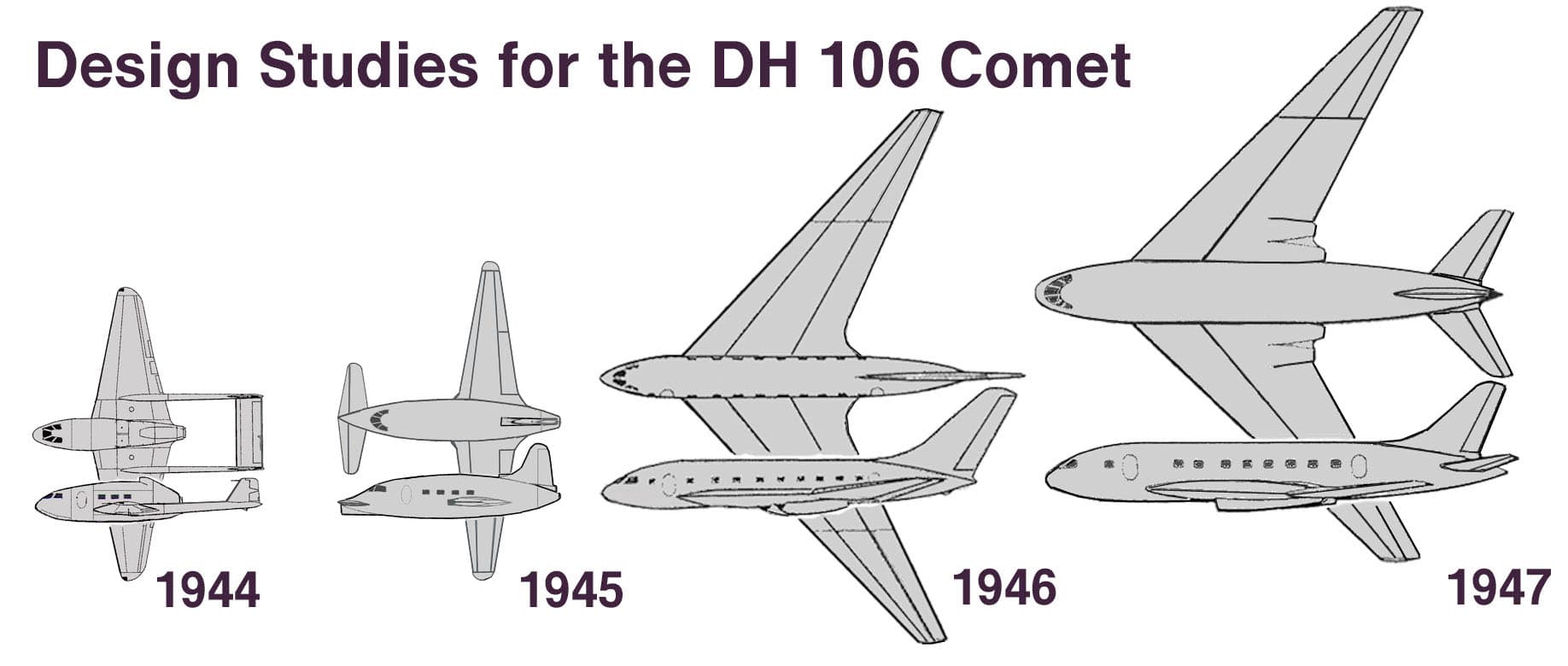
Design work proper began in September 1946 under R. E. Bishop, whose previous aircraft was the wooden, twin-piston DH.98 Mosquito: about as different a machine as the era could offer. The configuration took three years to settle. Early studies ran through a twin-boom tailless canard and a tailless swept-wing layout before the team arrived at something conventional in silhouette: a low-wing monoplane with a modest sweep, a normal fin and tailplane, and four engines buried in the wing roots.
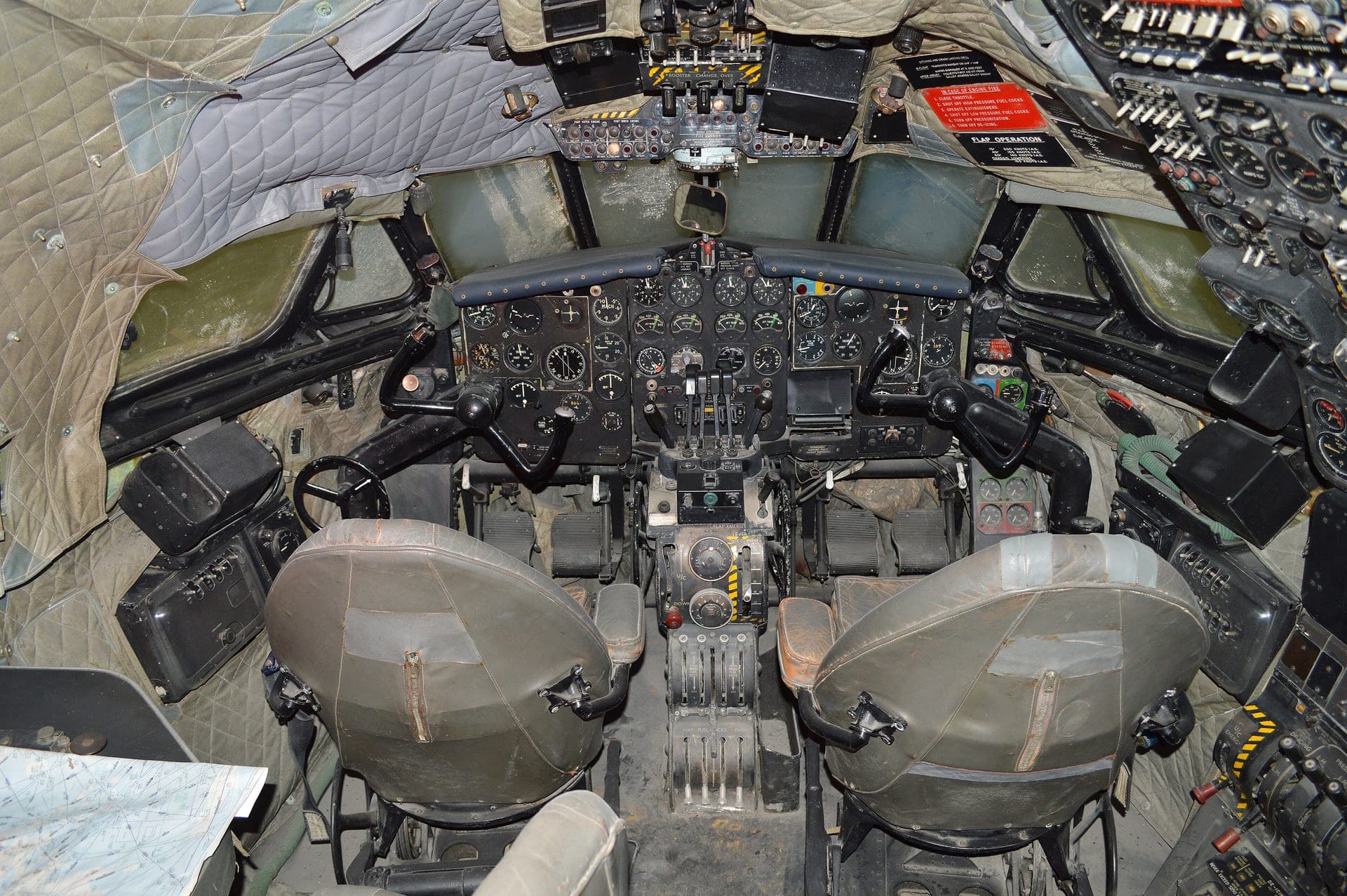
The prototype, G-ALVG, first flew from Hatfield on 27 July 1949 in the hands of John Cunningham, de Havilland's chief test pilot, a date that happened to be both Sir Geoffrey de Havilland's sixty-seventh birthday and Cunningham's thirty-third. A second prototype followed in 1950, and between them they flew over five hundred hours of testing before the first production aircraft was delivered.
The structural test programme deserves attention, because it was later blamed for a disaster it was actually designed to prevent. Both the International Civil Aviation Organization and the British Civil Airworthiness Requirements of the day demanded that a pressure cabin be designed to twice its working pressure and proof-tested to 1.33 times it. For the Comet, working pressure was about 8.25 pounds per square inch. De Havilland went well beyond the requirement: it designed the fuselage to 2.5 times working pressure and proof-tested it to twice, a deliberate decision to exceed the rules on an aircraft the company knew was venturing into unknown territory.
 de Havilland Comet 2
Fatigue was the gap, and it was a gap in the regulations as much as in the company. The rules of 1949 treated pressurised and unpressurised aircraft alike for fatigue purposes, and full-scale fatigue testing of a pressure cabin was not required at all. When requirements calling for it began to appear in the summer of 1953, Comets were by then already carrying passengers, de Havilland went back to its prototype fuselage and cycled it another 16,000 times between zero and working pressure. It failed at 16,000 cycles, comfortably beyond the 10,000-cycle life the Comet was designed for. The figure was reassuring, and it was wrong, for a reason nobody would understand for another year.
Design
The Comet 1 was an all-metal low-wing monoplane with four de Havilland Ghost turbojets buried in pairs in the wing roots. Burying the engines kept the wing aerodynamically clean and put the thrust line close to the aircraft's centreline, so an engine failure produced far less yaw than a podded installation; the price was paid in maintenance access and, later, in how hard it became to fit a different engine. The wing carried only a modest sweep, because the Comet was designed to cruise high rather than fast, and the sharper sweep angles of the American jets that followed were a response to a transonic cruise the Comet never attempted.
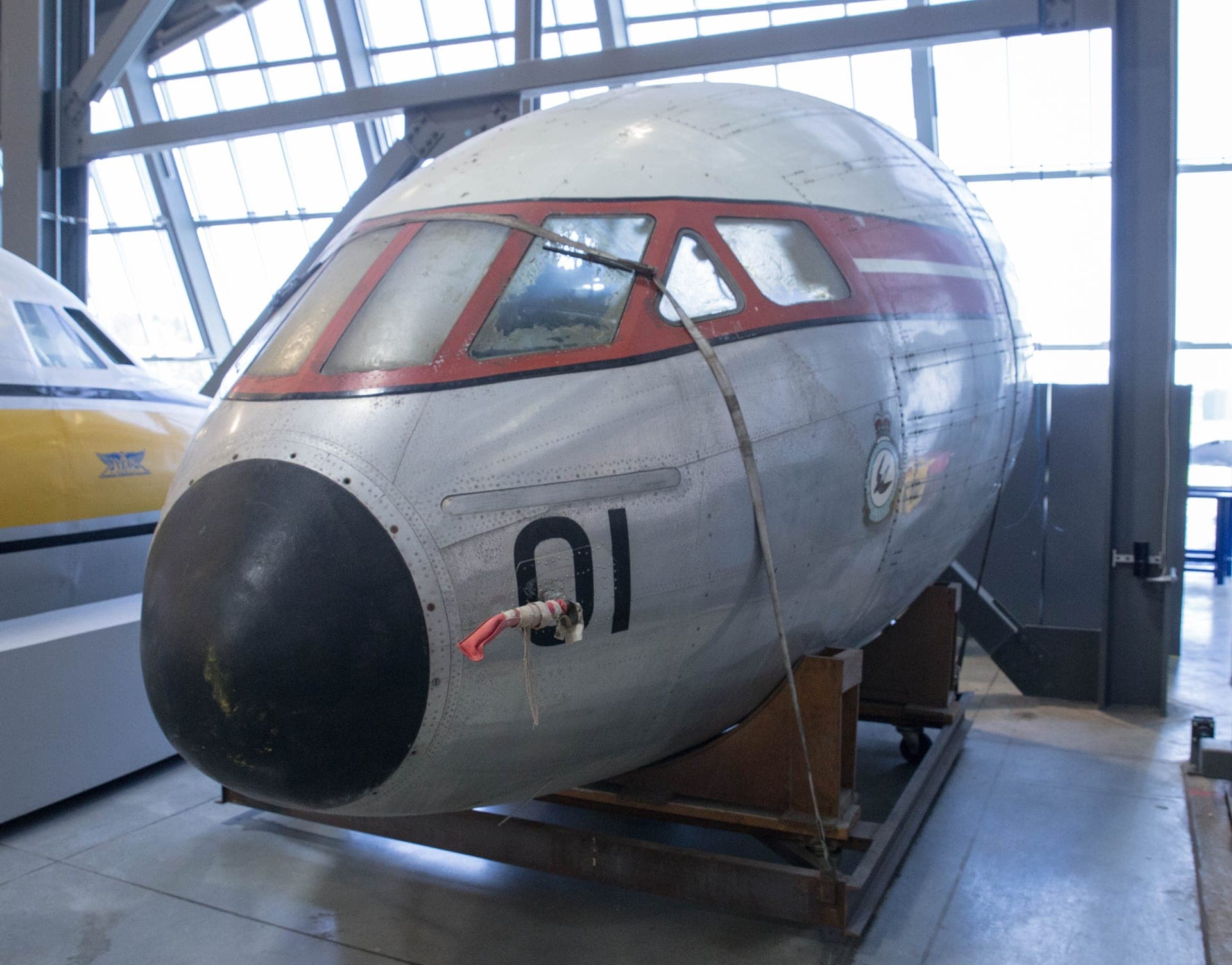 de Havilland Comet 1A
The pressure cabin was the aircraft's defining structure and its undoing. It held a cabin altitude of about 8,000 ft while the aeroplane cruised at 40,000 ft, a pressure differential roughly twice what contemporary piston airliners imposed on their structures, sustained for hours, and cycled once per flight. The skin was a relatively thin aluminium alloy, sized by the static strength rules of the day.
Cut into that skin were a number of apertures with squarish corners: the passenger windows, the forward escape hatch, and, on the crown of the fuselage just ahead of the wing, two windows for the automatic direction finding aerials. In 1949 the shape looked unremarkable. Calculations had put the average stress near the corners at less than half the material's ultimate strength, and de Havilland, reasonably by the standards of the time, trusted its test results over further analysis. What no one had appreciated was how sharply stress peaks in the immediate corner of a squarish cutout in a skin that breathes once per flight.
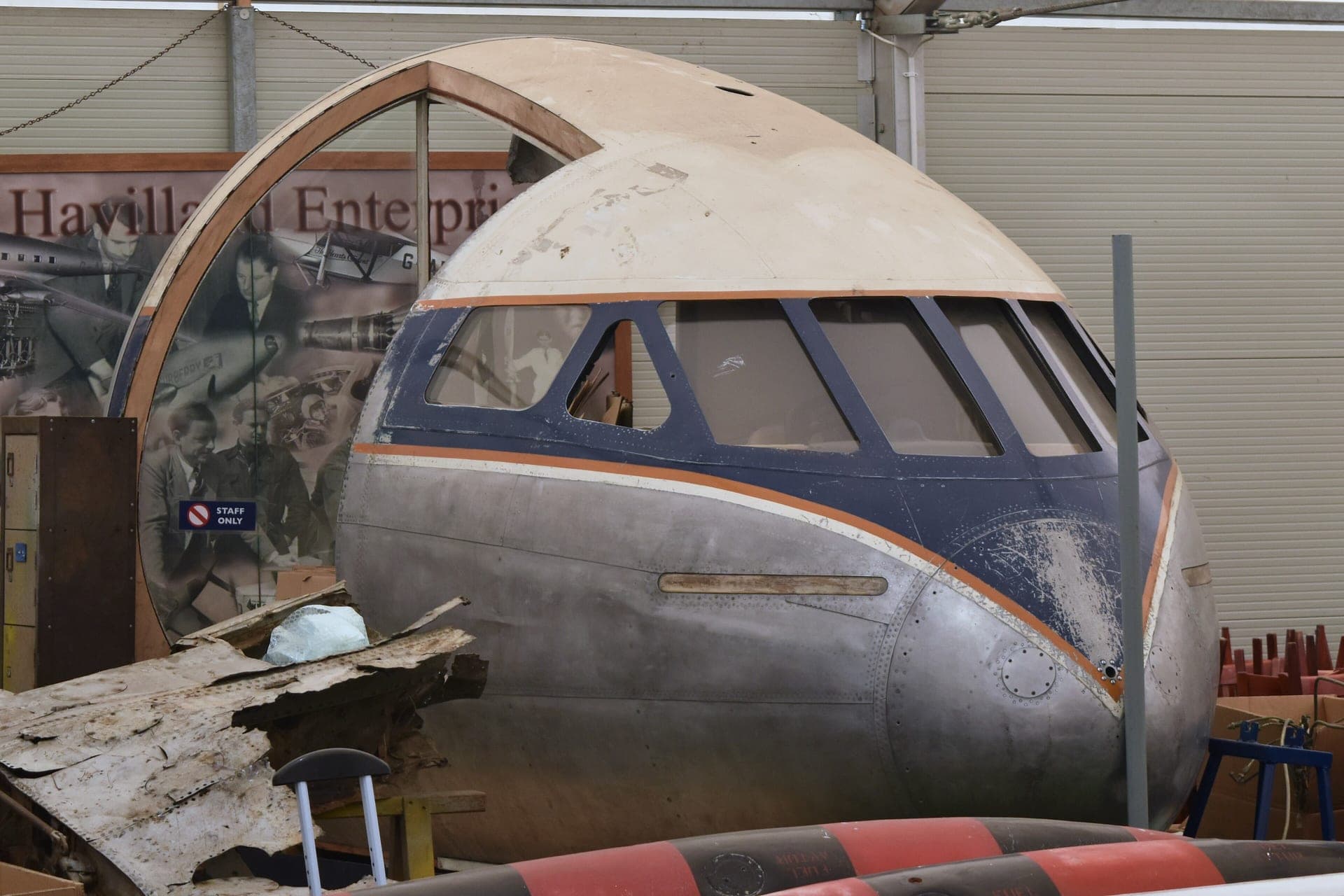 de Havilland Comet 1
Inside, the Comet 1 seated about thirty-six to forty-four passengers four abreast. Contemporary accounts describe a cabin closer to a railway carriage than to an aeroplane: no propeller drumming, no vibration through the floor, conversation at normal volume. The comfort was real and it was the product of the same two design choices, a high cruise and buried engines, that made the aircraft so hard to replace once its reputation was gone.
The wing did more than lift. It carried the fuel, housed the main undercarriage and swallowed four engines and their intakes, and every later stretch of the Comet was constrained by what could still be fitted into it. The Comet 4 eventually gained external pinion tanks on the wing leading edge, a visible admission that the internal volume had run out, and the clearest external difference between a Comet 1 and the aircraft that finally crossed the Atlantic.
Technical characteristics
Power came from four de Havilland Ghost 50 centrifugal-flow turbojets of about 5,000 lbf thrust each. The Ghost was a development of the Goblin that powered the Vampire fighter, and its centrifugal compressor was already an older idea than the axial-flow engines coming into service elsewhere, reliable, comparatively wide, and well suited to burying in a wing root, but with limited scope for growth. That ceiling shaped the programme: almost every later Comet development was, at bottom, an argument about getting more thrust into the same aeroplane.
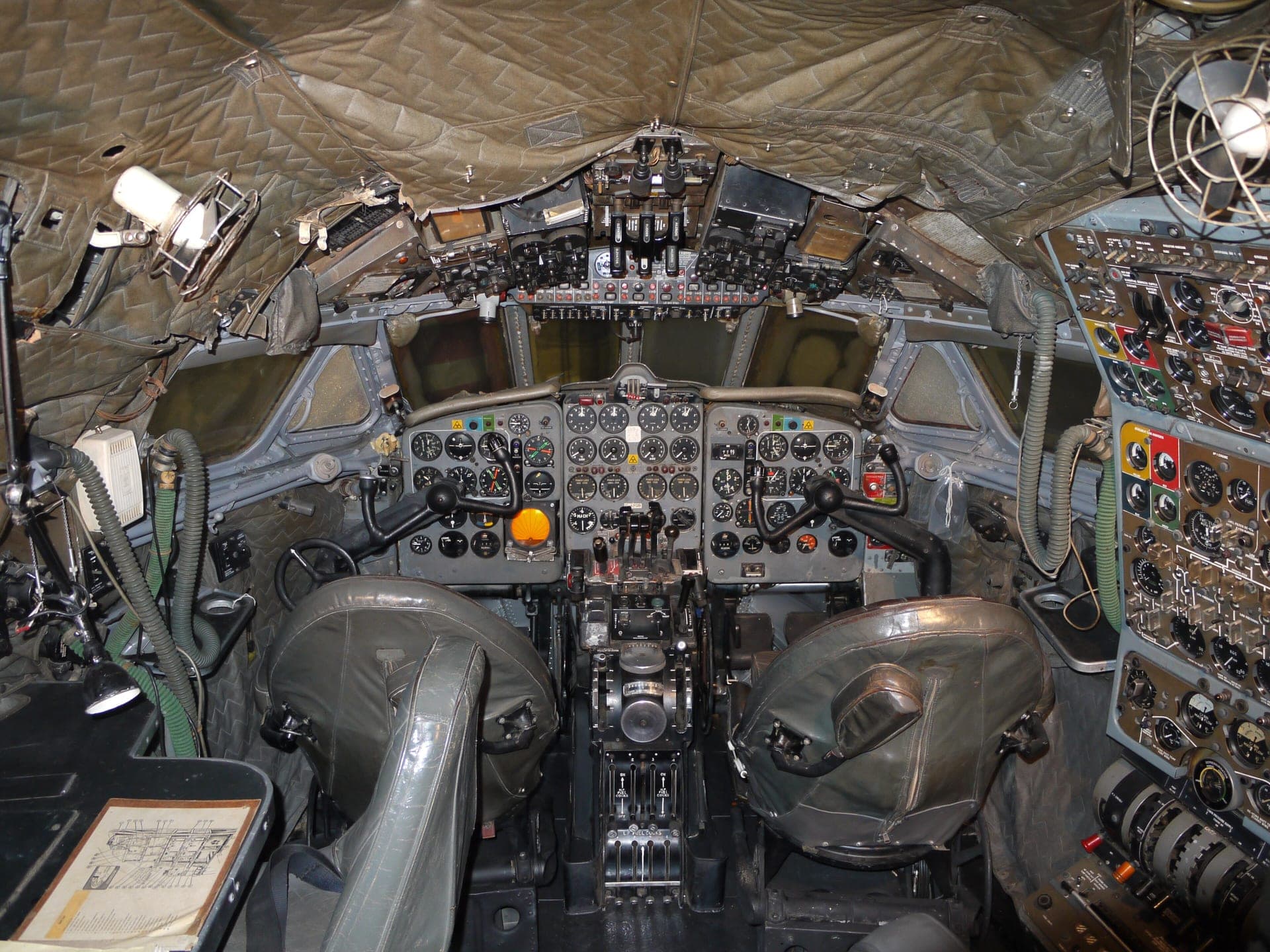 de Havilland Comet 4
The answer was the Rolls-Royce Avon, an axial-flow engine of far greater potential, fitted to the Comet 2 and carried through to the definitive Comet 4 in its Avon 524 form. The Comet 4 cruised at about 437 kt with a range of roughly 2,800 nm and a service ceiling of 42,000 ft, carrying up to eighty-one passengers at a maximum take-off weight of 162,000 lb, a substantially larger and longer-legged aeroplane than the Comet 1, on the same basic layout.
The Comet 1's own numbers explain both its appeal and its limits. It cruised at around 413 kt over a range of about 1,520 nm: fast enough to halve piston-airliner journey times, but short-legged enough that its Empire routes were flown in a series of hops. The Comet 4 roughly tripled that range, which is what finally made the North Atlantic possible; the intervening variants, the stretched Comet 3 and the short-span Comet 4B built for BEA's dense European sectors, were all attempts to trade range against payload around the same wing.
The difference between the two engines is the difference between the two halves of the Comet's life. A centrifugal compressor throws air outward through an impeller: robust, tolerant, and wide, which is exactly what a wing root can accommodate and exactly what limits how much air the engine can swallow. An axial compressor passes air straight through successive stages of blades, so it can be made slimmer and, more importantly, longer, more stages, more compression, more thrust from the same frontal area. The Ghost was near the end of what its architecture could give; the Avon was at the start of what its own could.
That is why the Comet 2 mattered even though almost none of them carried a fare-paying passenger. Re-engining the aircraft proved that the buried-engine layout could take a fundamentally different and much more powerful powerplant, which is what made the Comet 4 possible at all. It is also why the layout became a dead end for everyone else: fitting a new engine to a podded airliner means designing a new pylon, while fitting one to a Comet meant rebuilding the wing root. Every large jet airliner since has hung its engines where they can be changed.
Flight characteristics
For passengers the Comet was a revelation, and the reasons were structural rather than cosmetic. Cruising at 40,000 ft put the aircraft above most weather instead of in it, so the turbulence that defined piston-airliner travel largely disappeared. The buried turbojets produced none of the low-frequency beat that propellers transmit through an airframe. The cabin held about 8,000 ft of pressure altitude, which is roughly what airliners hold today. Journey times collapsed: London to Johannesburg fell from thirty-six hours to twenty-three.
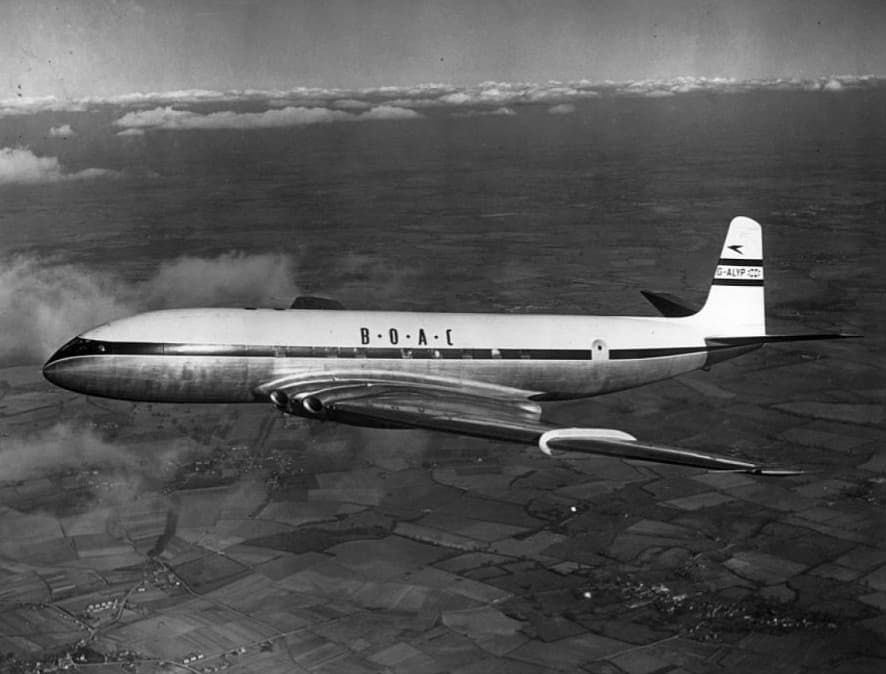 de Havilland Comet 1
For pilots the aircraft had a harder edge, and it cost lives before it was understood. On 26 October 1952 a BOAC Comet, G-ALYZ, failed to get airborne from Rome's Ciampino airport, overran into rough ground and was destroyed; two passengers were injured. In March 1953 a Canadian Pacific Comet 1A, CF-CUN, failed to lift off at Karachi on a delivery flight, struck an embankment and burned, killing all eleven on board. Both were initially put down to the crews holding the nose too high.
Blaming the pilots was, as one de Havilland history puts it, hardly satisfactory. The real problem was that the Comet's wing lost lift at high angles of attack more abruptly than its crews had been led to expect, and the wing-root intakes recovered pressure poorly in the same attitude, so an over-rotated Comet could sit on the runway accelerating very slowly behind a partially stalled wing. De Havilland ran take-off trials and Bishop modified the wing with a slight droop to the leading edge. The fix worked well enough that a fully laden Comet could be rotated until its tail bumper dragged along the runway and still refuse to stall. It was a genuine aerodynamic lesson in an era learning what jet wings did at low speed, and it is largely forgotten because of what happened next.
The two kinds of experience were connected. The same high cruise that made the cabin so smooth also meant the aircraft spent every flight cycling a large pressure differential through its skin, and the same clean buried installation that kept the cabin quiet also produced the wing-root intakes that behaved badly at high angles of attack. Almost everything remarkable about flying in a Comet and almost everything difficult about flying one came from the same short list of design decisions.
Military service
The Comet's military career began as salvage. By the time the Avon-engined Comet 2 was ready, the Comet 1 groundings had destroyed civil confidence in the type and BOAC's order was cancelled. Rather than scrap the airframes, the RAF took them: the Comet C.2 entered service with Transport Command in 1956, giving Britain a fast, pressurised long-range transport at a moment when no other air force had one, and a handful were converted to C.2(R) standard for 51 Squadron's electronic reconnaissance work. Comet C.4 transports followed on the later airframe.
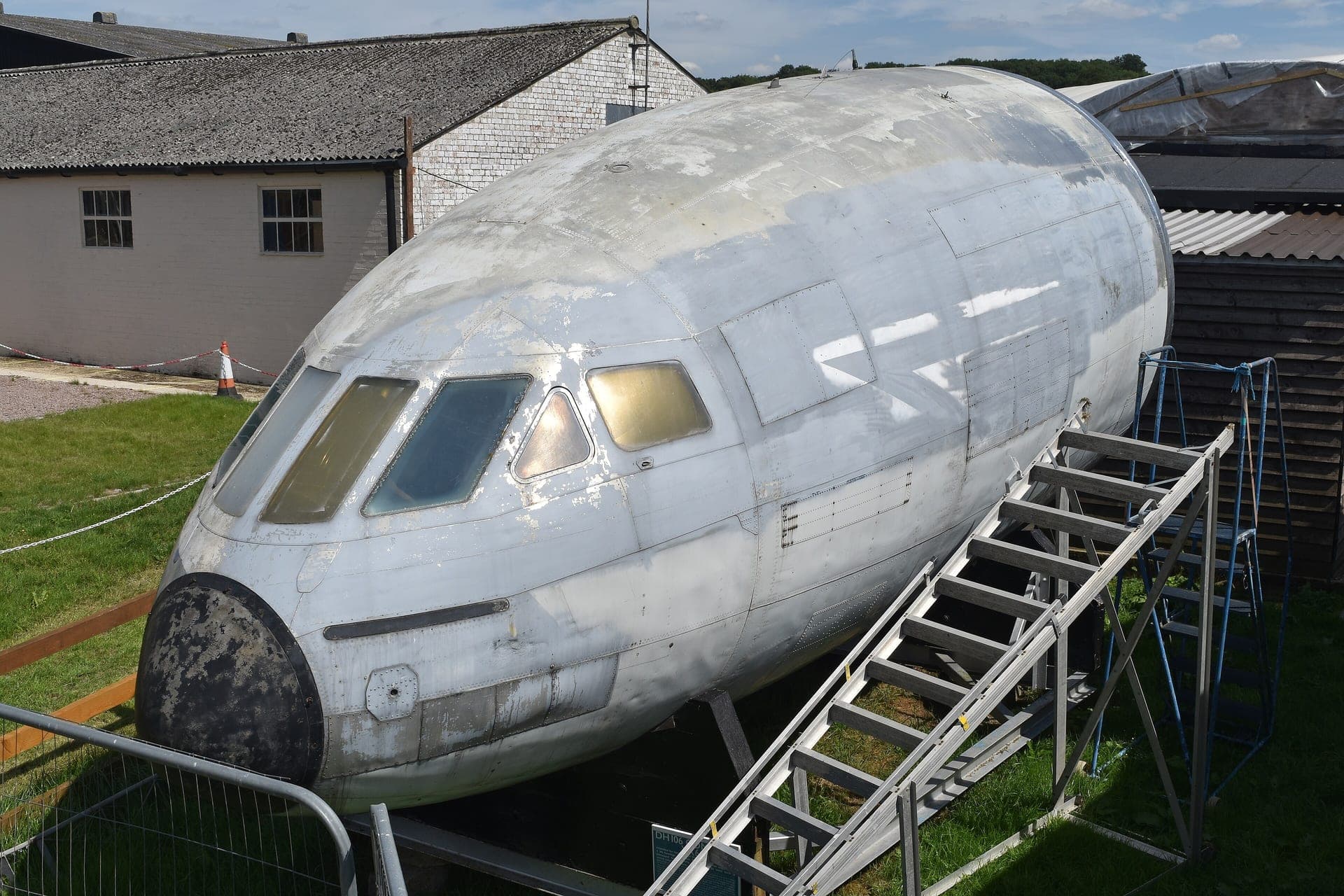 de Havilland Comet C.2
The far more significant descendant was the Hawker Siddeley Nimrod. The RAF needed a jet-speed replacement for the piston-engined Avro Shackleton in the maritime patrol role, and Hawker Siddeley, which had absorbed de Havilland in 1960, reached for the Comet 4C rather than a clean sheet. Two prototypes, XV147 and XV148, were built from unsold Comet 4C airframes at Chester, and the first flew on 23 May 1967.
The conversion was deep. A second, lower fuselage lobe was grafted beneath the original cabin floor to carry a weapons bay for torpedoes, depth charges and sonobuoys, giving the aircraft its distinctive double-bubble cross-section; the Avon turbojets gave way to four Rolls-Royce Spey turbofans of 12,160 lbf, which burned far less fuel at the low altitudes maritime patrol demands. Forty-six MR.1s were ordered in 1967 and the first reached the RAF in October 1969, with thirty-five later converted to MR.2 standard from 1975 and three, later four, built as R.1 signals-intelligence aircraft.
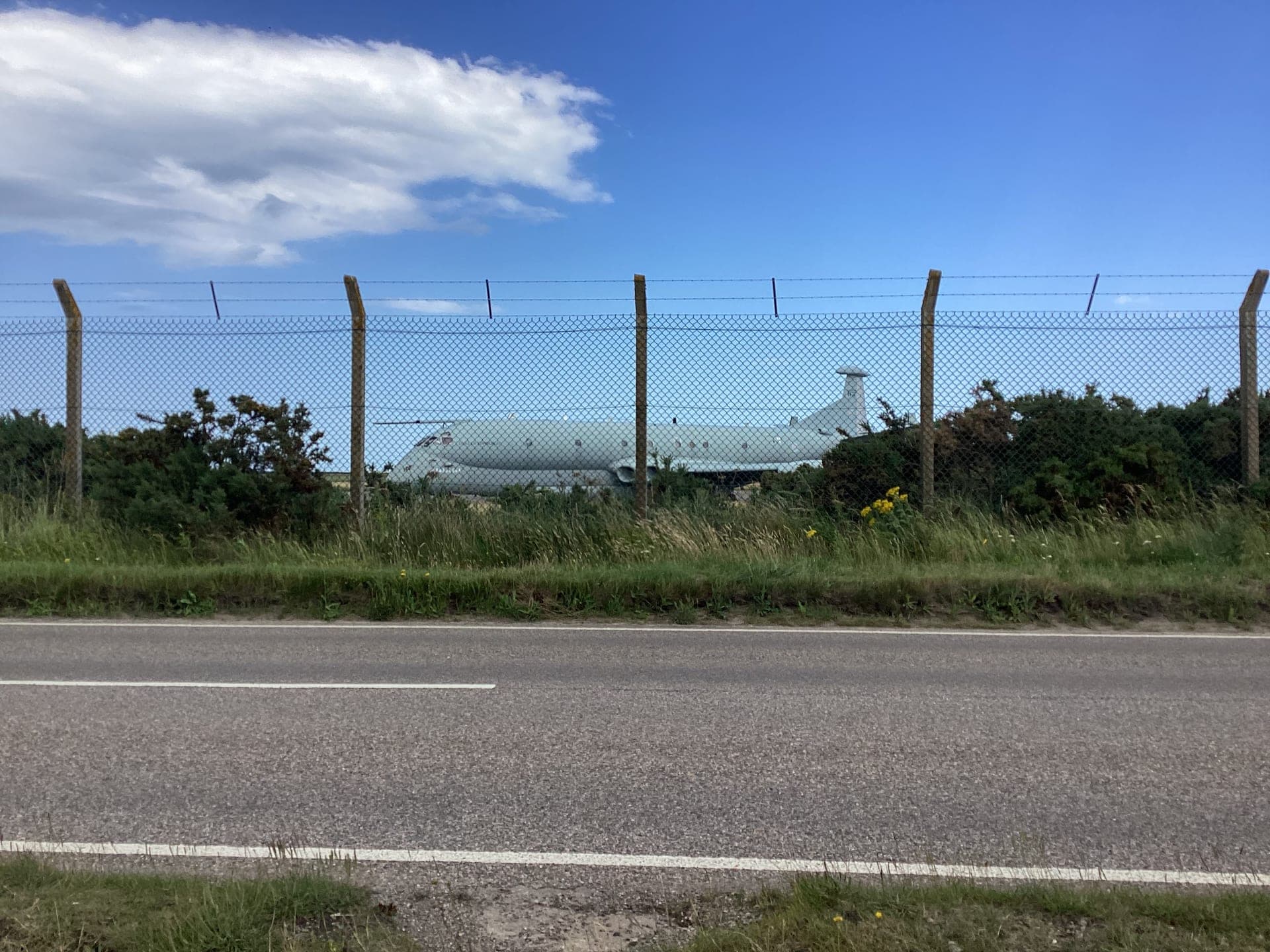 Hawker Siddeley Nimrod
The type outlived almost everything it started with. Nimrods flew armed patrols in the 1982 Falklands conflict. An airborne early warning conversion, the AEW.3, was cancelled in December 1986 after eleven airframes had been committed to it, and the comprehensively rebuilt MRA4 was cancelled on 19 October 2010. The MR2 fleet was withdrawn at the end of March 2010 and made its last official flight on 26 May that year; the R1s followed in 2011.
The signals-intelligence Nimrod R1 deserves separate mention, because it is the strand of the Comet's military career that lasted longest and was discussed least. Operated by 51 Squadron, it carried an intercept and analysis fit in place of the maritime mission equipment and flew electronic reconnaissance for four decades, outliving the maritime patrol fleet it was derived from. When the last R1 was retired in 2011, the aircraft leaving RAF service traced its structure directly to a 1940s airliner designed before anyone knew how to certify a pressurised fuselage.
Production
Comet production ran at de Havilland's Hatfield works and, later, at Chester, from the 1949 prototype to the last Comet 4C deliveries in the mid-1960s. Around 114 aircraft were built in all: a figure that includes the prototypes, the small Comet 1 and 1A batches, the Comet 2s that mostly went to the RAF, the single Comet 3 and the Comet 4 family.
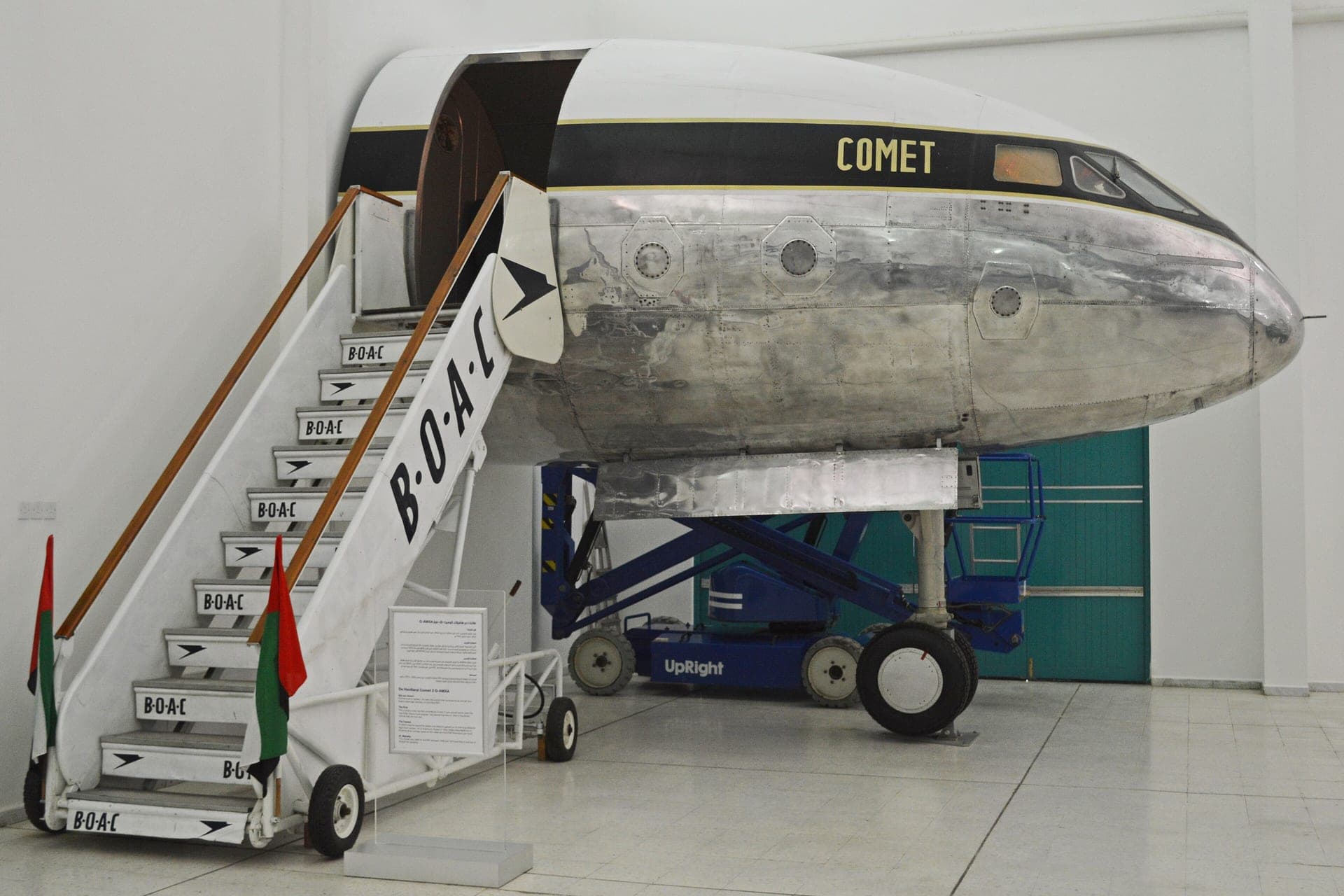 de Havilland Comet 2
The individual batches show how badly the programme was interrupted. Thirteen Comet 1s and eight Comet 1As were built before the groundings; sixteen Comet 2s were completed, of which the great majority were diverted to military use; exactly one Comet 3 was flown, as a development aircraft rather than a product. Only with the Comet 4, 4B and 4C did the programme reach anything resembling normal series production, and by then the market it had created belonged to somebody else. Hawker Siddeley subsequently built a further forty-nine Nimrods on the same basic airframe.
Set against the Boeing 707 and Douglas DC-8, both of which entered service years after the Comet and comfortably outsold it, the Comet's total looks slight. The cause is not mysterious. The grounding and investigation cost the programme roughly four years between the withdrawal of the Comet 1's certificate in April 1954 and the Comet 4's entry into service in October 1958, and the aircraft that emerged was competing against designs that had used those four years to get bigger.
Hatfield built the aircraft that made the Comet's reputation and lost it; Chester built most of what came after, including the unsold Comet 4C airframes that Hawker Siddeley later turned into the first two Nimrods. The physical continuity is worth noting, because it is the reason a design begun for a 1943 committee was still leaving a production line in the 1960s and still flying operationally in 2011.
The four-year gap also changed what the Comet was competing against. In April 1954 the aircraft's rivals were mostly on paper; by October 1958 the Boeing 707 was weeks from service, larger, longer-ranged and built to a different structural philosophy. The Comet 4 was a thoroughly sound aeroplane arriving into a market that had moved, which is a harder commercial problem than being unsound.
Operators
BOAC was the launch operator and the aircraft's principal showcase, opening the Comet 1 service to Johannesburg in May 1952 and, six years later, the Comet 4's transatlantic service. It was also the customer whose cancelled Comet 2 order sent those airframes to the RAF, and whose later switch to Boeing equipment on the premier routes marked the end of the Comet's front-line civil career.
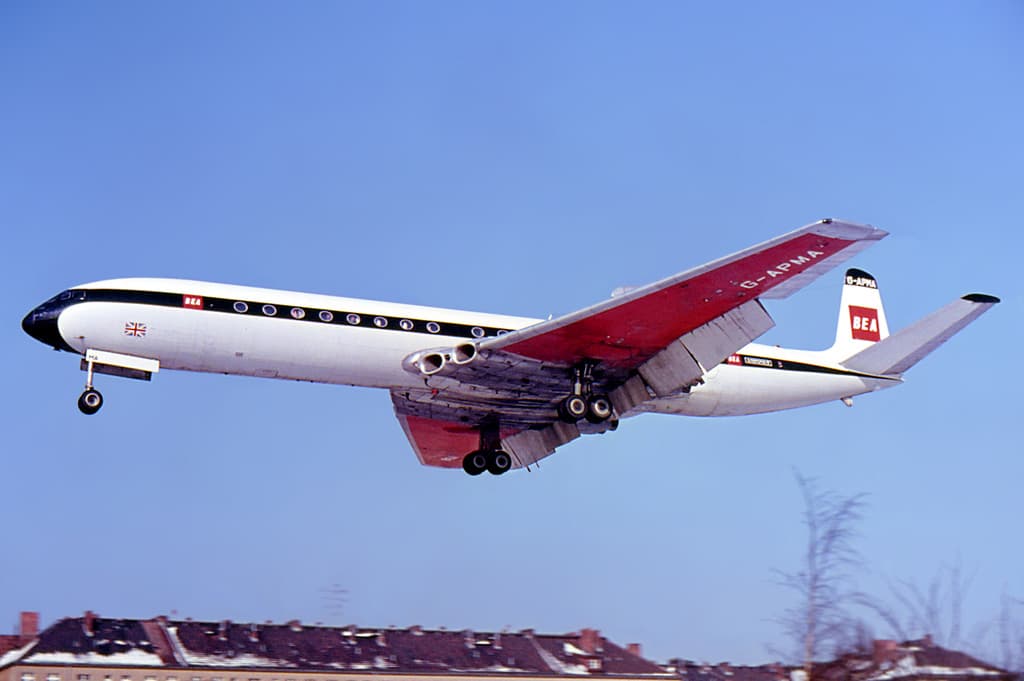 de Havilland Comet 4B
The export Comet 1A went to Air France, Union Aéromaritime de Transport and Canadian Pacific Air Lines, with a further batch to the Royal Canadian Air Force. These were the aircraft that made the Comet look like a genuine world product rather than a national flagship, and they were also the ones with least to show for it: most surviving 1As were withdrawn or scrapped after the 1954 grounding rather than rebuilt, and the airlines that had bought them moved on.
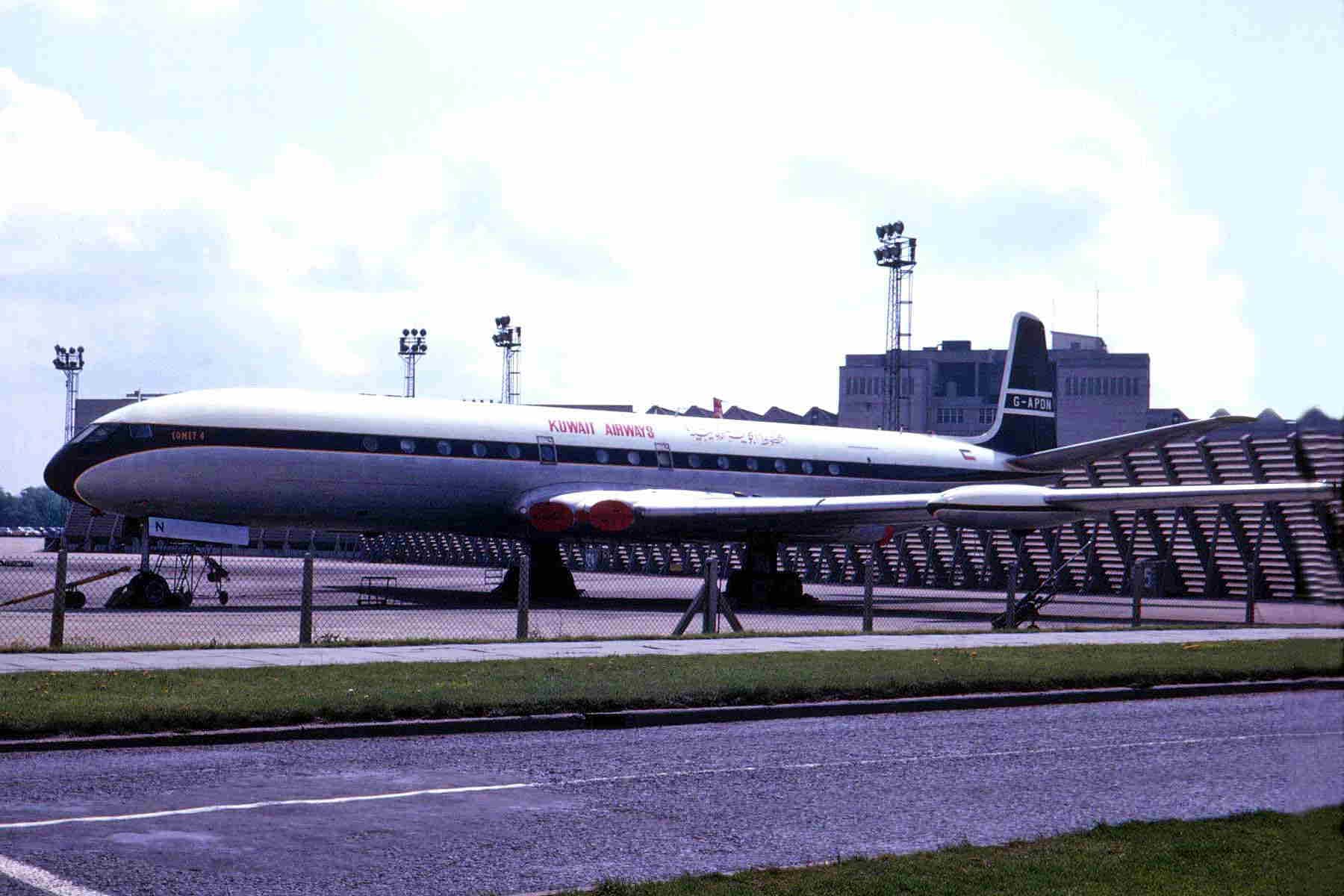
The Comet 4 family found a broader and more durable market. BEA took the short-span, stretched Comet 4B for its dense European routes, where seats mattered more than range. The Comet 4C, the 4B's longer fuselage on the 4's wing and tankage, became the best-selling and longest-lived version, going to Mexicana, Middle East Airlines, Sudan Airways, Kuwait Airways and others for whom a proven, hot-and-high-capable jet was worth more than the latest one.
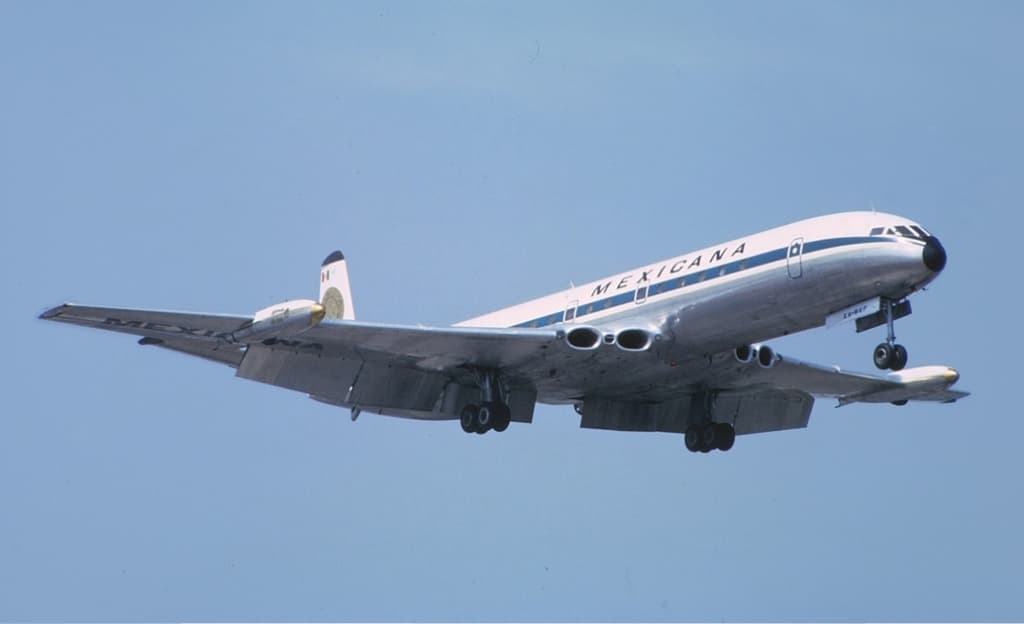 de Havilland Comet 4C
The last chapter belonged to Dan-Air London, which accumulated the largest fleet of second-hand Comets of any operator and flew them long after everyone else had stopped. Its final Comet service, an enthusiasts' charter around southern Britain in G-BDIW, ran on 9 November 1980: twenty-eight years after the type first carried fare-paying passengers.
Military operators mattered more to the Comet than to most airliners, and not only in Britain. A batch of Comet 1As went to the Royal Canadian Air Force, which became the first air force anywhere to operate jet transports, and the RAF's redirected Comet 2s gave Transport Command a capability no other air force had. For an aircraft whose civil career was interrupted for four years, the military customers were what kept the type, the tooling and the accumulated knowledge alive.
In service
BOAC's Comet 1 service opened on 2 May 1952 and, for its first year, was exactly the triumph it appeared to be: full aircraft, admiring press and a commercial lead over every American manufacturer. The two take-off accidents at Rome and Karachi were serious, but they were understood, and the leading-edge modification that answered them worked.
On 2 May 1953, a year to the day after the inaugural service, BOAC Flight 783 left Calcutta for Delhi in severe thunderstorms. Six minutes after take-off, climbing through about 7,500 ft, the aircraft broke up and fell in flames, killing all forty-three on board. The Indian court of inquiry concluded that the airframe had failed through overstress in the storm, either from severe gusts or from over-controlling by the pilot, and that finding has never been revised. Fatigue was not suspected, and on the evidence available there was no particular reason to suspect it.
On 10 January 1954, BOAC Flight 781 left Rome for London. Twenty minutes out, climbing through about 27,000 ft, the crew's transmission stopped mid-sentence. Witnesses on Elba saw G-ALYP fall into the sea in flames; all thirty-five aboard were killed. The fleet was grounded and de Havilland set about modifications intended, in the words of the time, to cover every possibility that imagination had suggested, control-surface flutter, gust failure, the flying controls, explosive decompression, engine fire, turbine blade failure, fatigue of the wing. Fatigue of the fuselage was not among them. The Comets returned to service on 23 March 1954.
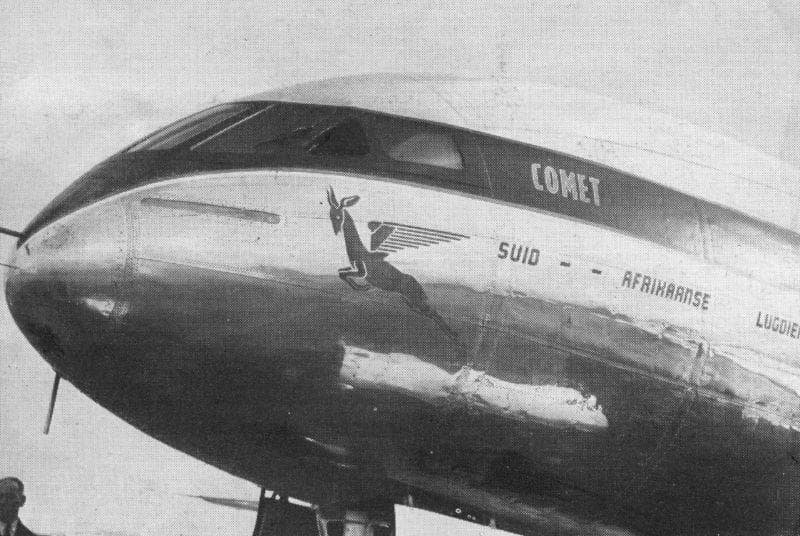
Sixteen days later, on 8 April, South African Airways Flight 201 left the same Rome airport for Cairo. Climbing through about 35,000 ft, G-ALYY broke up and fell into the sea near Naples, killing all twenty-one on board. The certificate of airworthiness was withdrawn and the Comet 1 never flew commercially again.
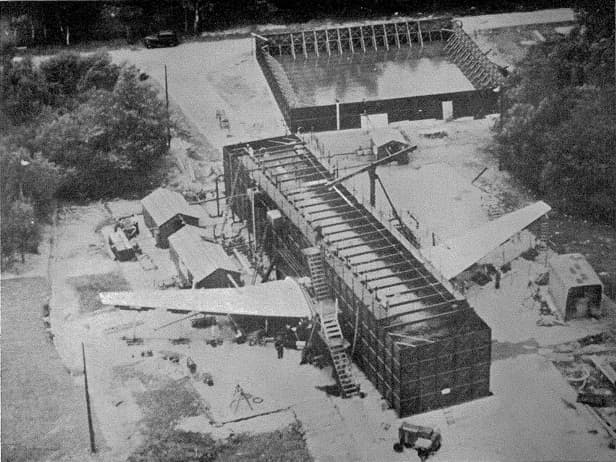
The investigation that followed, directed by the Royal Aircraft Establishment at Farnborough under Sir Arnold Hall, is the reason the Comet matters to engineers. Recovery of the Elba wreckage was renewed using underwater television cameras for the first time, and by the end of August 1954 some seventy per cent of the aircraft had been raised. In parallel, investigators took a second airframe, G-ALYU, built a water tank around its fuselage, and cycled it: water rather than air, because water is nearly incompressible and a failure would therefore split the structure rather than detonate it. G-ALYU had flown 1,230 pressurised flights before the test; after 1,830 more in the tank, about 3,060 cycles in all, the fuselage failed. The crack began at a corner of the squarish forward escape hatch.
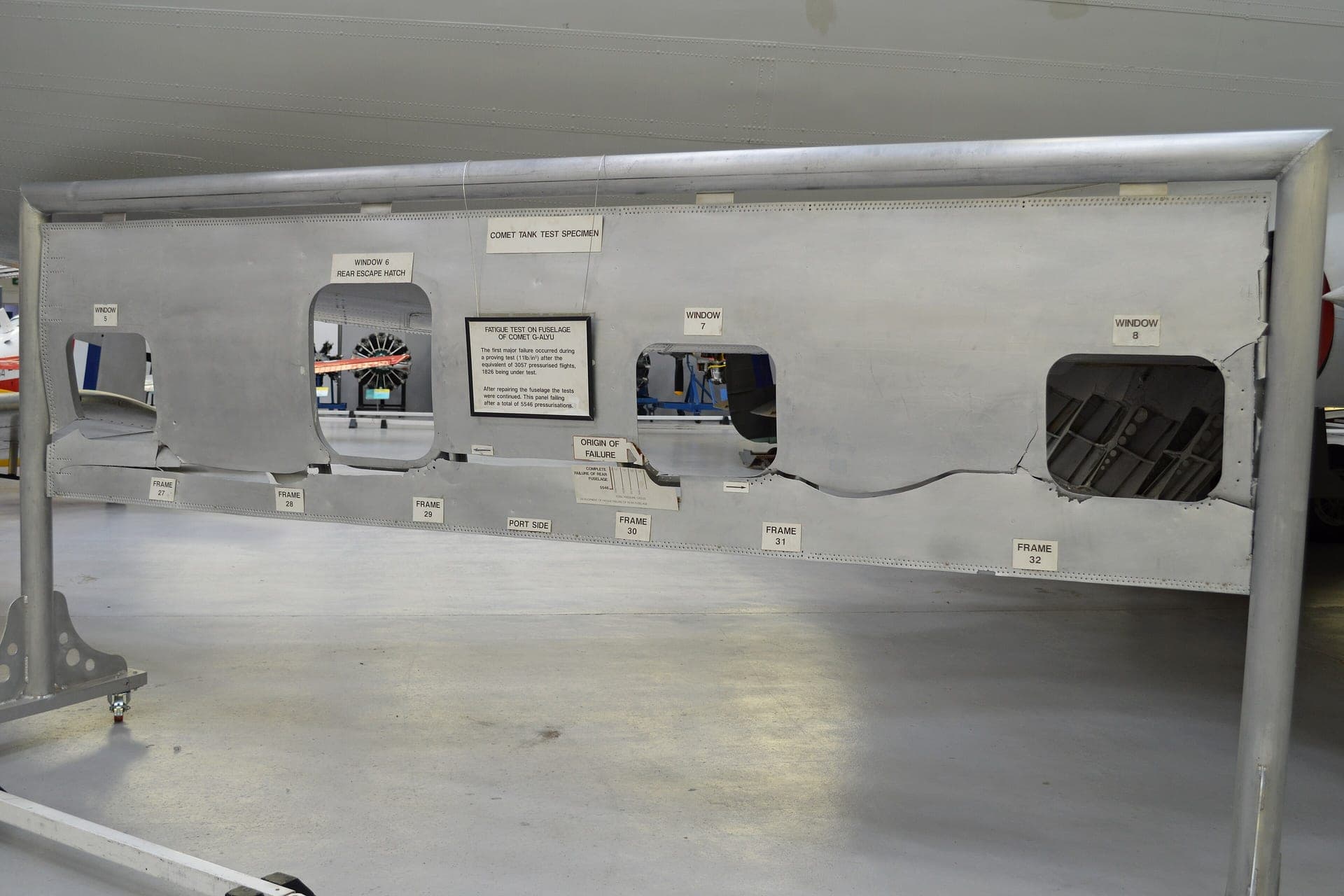
That failure redirected everything. A scale model was used to test the theory, the results were mapped back onto the Elba search area, and within hours of looking in the newly indicated place the recovery teams brought up the section carrying the two ADF windows from the crown of G-ALYP's fuselage. It bore what the investigators called the unmistakable fingerprint of fatigue, and it was the origin of the break-up. The Ministry's report concluded without hesitation that the RAE was right: the Elba accident was caused by fatigue failure of the pressure cabin in the region of the ADF window. Too little of G-ALYY was ever recovered to establish its origin, but the same explanation was held to apply.
The remaining question was why de Havilland's own 16,000-cycle test had not predicted this. The answer was that the test fuselage had first been proof-loaded to twice working pressure. That overload had cold-worked the metal at the cutout corners, altering its properties and improving its fatigue resistance precisely where cracks would otherwise start. No production Comet had ever been so loaded. Where the test article reached 16,000 cycles, the fleet was reaching about a thousand: G-ALYP had made 1,290 pressurised flights, G-ALYY about 900.
Records and notable flights
The Comet's records are of a particular kind: not speed or altitude marks set for their own sake, but firsts that opened categories other aircraft then occupied.
 de Havilland Comet 4
The first and largest is the jet airliner service itself. When G-ALYP left London for Johannesburg on 2 May 1952 carrying thirty-six passengers, it became the first jet-powered aircraft anywhere to fly a scheduled commercial passenger service. Several manufacturers had been racing for it: the Avro Jetliner had flown a fortnight after the Comet prototype in 1949, and gave the English language the word "jetliner" without ever reaching production, but de Havilland got there, and no one can take that first away from the aircraft that later failed.
The second is the North Atlantic. On 4 October 1958 BOAC began the world's first transatlantic jet service, running two Comet 4s in opposite directions on the same day: G-APDC left Heathrow for New York under Captain R. E. Millichap with thirty-one passengers, while G-APDB flew New York to London under Captain Tom Stoney, making the eastbound crossing in 6 hours 12 minutes with the help of the prevailing wind. Pan American began Boeing 707 services on the route three weeks later, on 26 October, and would dominate it; but the first scheduled jet crossing with passengers was the Comet's, by a margin measured in weeks and secured by the aeroplane the industry had written off four years earlier.
Both firsts came with an asterisk that says something about the aircraft. The 1952 service was flown in stages: the Comet 1's range meant the Empire routes were a sequence of hops rather than a single leg: so the record it set was for jet travel rather than for range. The 1958 crossing was flown by an aeroplane that had been comprehensively rebuilt after its predecessor was withdrawn from service, and it was won against a competitor that would take the route within a month and keep it.
Neither qualification diminishes what was achieved, and the second is arguably the more impressive of the two. Reopening a category four years after your own aircraft was grounded for killing its passengers, and doing it before the company that had spent those four years building the aircraft that would win, required the engineering to be not merely fixed but visibly and demonstrably fixed.
Legacy
The Comet's technical legacy is larger than its commercial one by a wide margin, and it is not really a legacy about windows. The durable lesson was about how structures are certified.
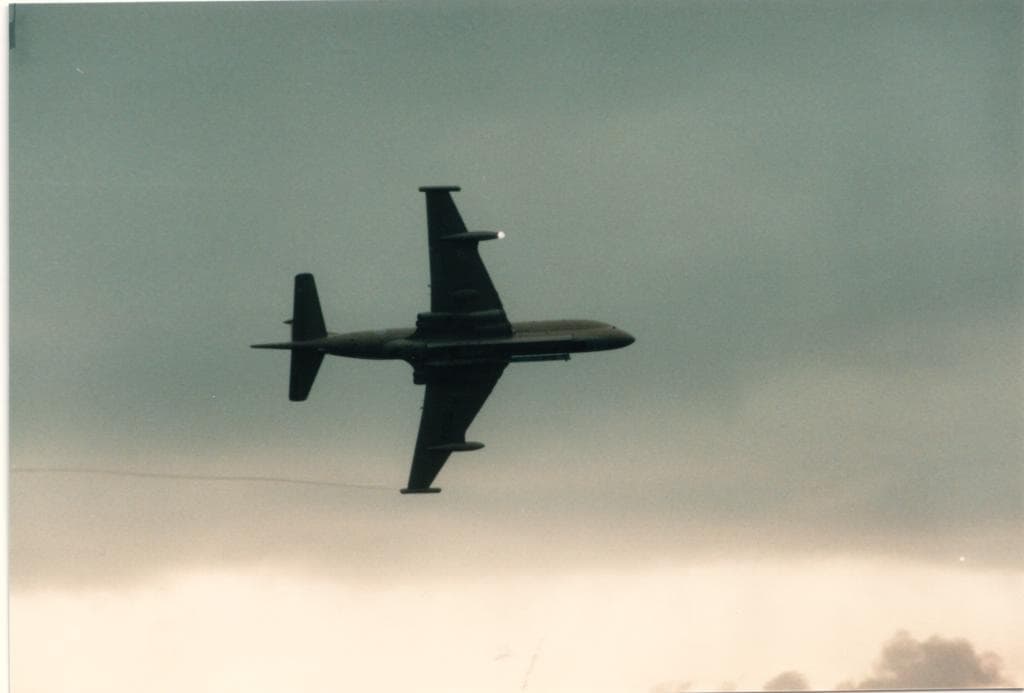 Hawker Siddeley Nimrod
The Comet was designed to a philosophy called safe-life: calculate and test how long a critical structure will last, then retire or rebuild it before that point. Safe-life is only as good as the test that sets the number, and the Comet is the canonical demonstration of what happens when the test flatters the structure. The specific correction was written into the British Civil Airworthiness Requirements: from the revision of 1 July 1956, fatigue testing had to involve a repeated-loading test on a complete pressure cabin that had not previously been used for strength work. Much of that revision came out of the Comet.
The broader correction was a change of philosophy. Boeing and others built their pressurised jets to a fail-safe standard instead, with redundant load paths and structure arranged to stop and turn a crack rather than to avoid cracking altogether, heavier and more complex, but not dependent on a single predicted life being right. Both approaches have since converged into the damage-tolerance standards that govern airliner structures today, in which an aircraft must remain safe with damage present between scheduled inspections. That lineage runs directly back to the reconstruction of G-ALYP on a Farnborough hangar floor.
The airframe itself proved remarkably durable once it was right. Comets flew commercially until 1980 and, as the Nimrod, in front-line military service until 2011. The last flying example, Comet 4C XS235 *Canopus*, was retired from trials work in 1997. Survivors are preserved at the de Havilland Aircraft Museum, IWM Duxford, the RAF Museum and elsewhere; none is airworthy. The aeroplane that lost the jet age it began is now most useful as the reason every pressurised airliner since has been tested the way it is.
The lesson also had to be learned more than once. The FAA's own account files the Comet as the precursor event for the fuselage fatigue accidents that followed decades later, among them the Dan-Air Boeing 707 that lost a stabiliser to fatigue in 1977 and Aloha Airlines Flight 243, which lost eighteen feet of upper fuselage in 1988 and landed anyway. Each of those turned on the same question the Comet raised: whether a structure's real behaviour under repeated load matches the behaviour its certification assumed.
Model evolution
Comet 1
1952The original production version: an all-metal, four-jet airliner powered by de Havilland Ghost turbojets buried in the wing roots, seating around 36 to 44 passengers and cruising above 40,000 ft, well over the weather that piston airliners had to fly through.
First jet airliner in the world to enter scheduled service; squarish cutouts throughout the pressure cabin (windows, escape hatch and the direction-finder apertures on the fuselage crown) and a skin of relatively thin aluminium alloy sized by the static strength rules of the day. De Havilland chose to build a pure jet airliner rather than a safer turboprop, betting that speed and altitude would define the coming generation of air travel.
An initial sensation (quiet, fast and smooth compared with any propeller airliner) until the fatal accidents of 1953 to 54 led to the type's permanent grounding and the loss of its early lead.
Comet 1A
1953An export version of the Comet 1 with increased fuel capacity in the centre section, sold to airlines such as Air France, Union Aéromaritime de Transport and Canadian Pacific alongside BOAC's original Comet 1 fleet.
Extra fuel tankage in the centre section extended range for longer international routes than BOAC's Empire network required. De Havilland needed a version it could sell abroad to recoup the Comet's development cost beyond the initial BOAC order.
Sold well at first, but shared the Comet 1's fatigue-prone pressure cabin; most surviving 1As were withdrawn or scrapped after the 1954 grounding rather than being rebuilt.
Comet 2
1954A redesigned version with more powerful Rolls-Royce Avon turbojets replacing the Ghosts, developed alongside the fatigue investigation and completed too late to enter civil service as originally intended.
Avon engines gave more thrust and better high-altitude performance; production aircraft eventually incorporated the thicker skin and rounded window cutouts that came out of the fatigue findings. By the time the redesign was ready, the Comet 1 grounding had destroyed civil confidence in the type, so BOAC's Comet 2 order was cancelled and the airframes went instead to RAF Transport Command.
Comet C.2
1956The RAF transport and signals-intelligence version of the Comet 2, operated by Transport Command and, in modified C.2(R) form, by 51 Squadron for electronic reconnaissance.
Military avionics and, on the R-standard aircraft, intercept equipment replaced the airliner cabin fit; structurally these were Comet 2 airframes with the post-investigation strengthening. The RAF needed fast, pressurised long-range transport and, separately, a jet-speed signals-intelligence platform, and the redirected Comet 2 order supplied both.
Comet 3
1954A single stretched prototype, first flown in July 1954, built to test a longer fuselage and greater fuel capacity before it was completed and used instead to prove the fixes that became the Comet 4.
A longer fuselage and extra wing fuel tanks anticipated the Comet 4's dimensions; the sole aircraft, G-ANLO, later flew a round-the-world proving tour for BOAC. De Havilland needed a bigger, longer-range Comet to compete with forthcoming American jets, and building on the existing design was faster than starting over.
Never sold: its real value was as the flying testbed that let the definitive Comet 4 reach the market with confidence rather than as a production model in its own right.
Comet 4
1958The definitive production version, structurally overhauled after the fatigue investigation with thicker-gauge skin, rounded window and hatch cutouts, and more powerful Rolls-Royce Avon 524 engines.
Every stress-raising sharp corner identified by the Farnborough investigation was rounded off, and the fuselage skin gauge was increased; the aircraft opened BOAC's transatlantic jet service on 4 October 1958. The Comet 4 existed to prove that the fatigue findings had genuinely fixed the design, and to restore the type's commercial reputation before Boeing's 707 dominated the new jet-airliner market.
Beat Pan Am's Boeing 707 across the Atlantic by a matter of weeks and flew reliably with BOAC and other operators for two decades, though it never recovered the sales lead the 707 and DC-8 took in the meantime.
Comet 4B
1959A short-span, longer-fuselage version built for BEA's dense, shorter European routes, trading range for extra seating capacity.
The fuselage was stretched by over a metre and a half while the wingspan was reduced, since BEA's shorter sectors did not need the Comet 4's full fuel capacity. BEA wanted more seats per flight on its European network rather than the long range BOAC needed, so de Havilland reshaped the airframe around that different mission.
Comet 4C
1960A combined long-range version pairing the Comet 4B's stretched fuselage with the Comet 4's original wing and fuel tankage, sold widely to Middle Eastern, African and Latin American operators.
Merged the two previous derivatives into one airframe, giving operators the 4B's extra cabin space with the 4's range and hot-and-high performance. Smaller operators wanted the Comet 4B's capacity without giving up range, and building one combined version was more economical than continuing to offer two.
Became the best-selling Comet 4 derivative and the longest-lived in commercial service, flying with airlines including Mexicana, Middle East Airlines and Sudan Airways into the 1970s.
Hawker Siddeley Nimrod
1969A deeply modified maritime-patrol derivative of the Comet 4C, developed by Hawker Siddeley with a new lower fuselage lobe for a weapons bay and Rolls-Royce Spey turbofans in place of the Avons.
The pressurised airliner cabin gave way to a mission suite for anti-submarine and maritime-surveillance work, and a distinctive double-bubble fuselage cross-section accommodated the weapons bay beneath the original cabin floor. The Royal Air Force needed a jet-speed replacement for the piston-engined Avro Shackleton, and the Comet 4C's proven, fatigue-tested airframe gave Hawker Siddeley a faster and cheaper starting point than a clean-sheet design.
Served the RAF for over four decades, including armed patrols during the 1982 Falklands conflict, before the MR2 fleet was retired in 2010 and the R1 signals-intelligence variant followed in 2011.
Blueprints
- De Havilland DH.106 Comet 1 and 2, BAE Systems Heritage
- Hawker Siddeley Nimrod, BAE Systems Heritage
- de Havilland DH106 Comet 1A, de Havilland Aircraft Museum
- Comet – The World's First Jet Airliner, Royal Air Force Museum
- Hawker Siddeley Nimrod R Mk 1, Royal Air Force Museum
- Lessons Learned: De Havilland DH-106 Comet 1, Federal Aviation Administration
- First transatlantic jet service, Guinness World Records
- Comet's Tale, Smithsonian Magazine
- The Comet Affair, Smithsonian Air & Space Magazine
- Common Comet Misconceptions and Collaborative Contribution to Safety, Aerossurance
Checked September 29, 2026