Aircraft
DC-3
DC3
Douglas Aircraft CompanyUnited States
- Role:
- Airliner and military transport
- First flight:
- 1935
180kt
Cruise speed
1,296nm
Range
General
- Role:
- Airliner and military transport
- Status:
- In service
Programme
- First flight:
- December 17, 1935
- Introduction:
- 1936
- Produced:
- 1935 to 1950
- Number built:
- 16,079
Crew & capacity
- Crew:
- 2
- Capacity:
- 21 passengers
Dimensions
- Length:
- 65 ft
- Height:
- 17 ft
- Wingspan:
- 95 ft
- Wing area:
- 987 ft²
Weights
- Empty weight:
- 18,298 lb
- Maximum takeoff weight:
- 25,199 lb
- Fuel capacity:
- 899 US gal
Powerplant
- Engine:
- 2 × Pratt & Whitney R-1830 Twin Wasp or Wright R-1820 Cyclone 9 radials, 895 to 900 kW (1,200 hp) each
Performance
- Maximum speed:
- 200 kt
- Ceiling:
- 23,950 ft
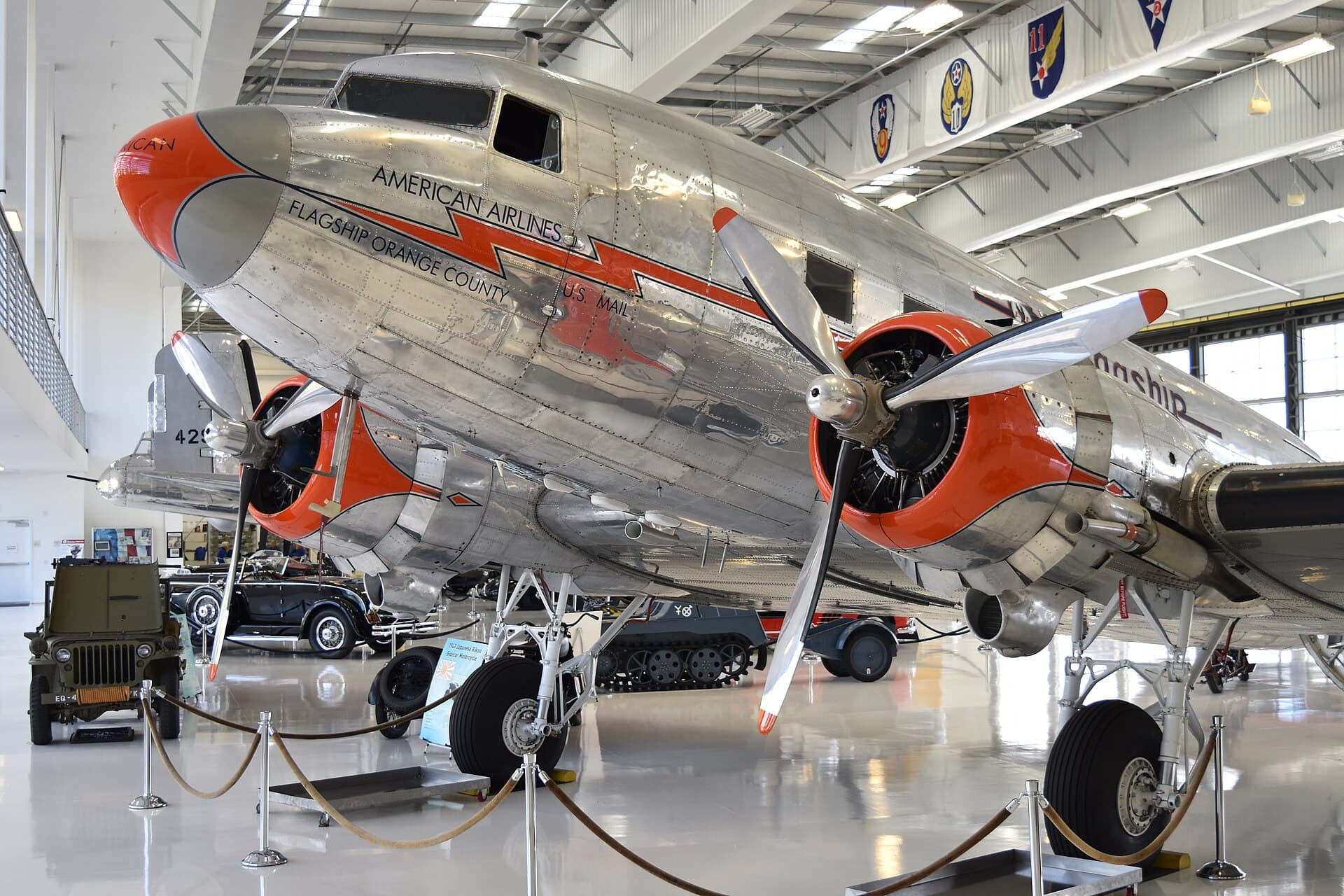
The Douglas DC-3 is the airplane that made flying a business rather than a stunt. Before it, airlines survived on government airmail contracts and carried passengers as an afterthought; a DC-3 filled with paying travelers could cover its own operating costs from fares alone, for the first time in the short history of commercial aviation. That one fact, more than any single number in its logbook, is why the DC-3 is remembered as the aircraft that built the airline industry rather than merely flew in it.
It emerged from a late-night phone call in 1935, when American Airlines' C.R. Smith persuaded Donald Douglas to stretch and reengineer the DC-2 into something that could sleep sixteen passengers overnight between New York and Los Angeles. The sleeper version came first; the twenty-one-seat day plane that followed months later, simply called the DC-3, is the one that changed everything.
A low-wing, all-metal twin with two radial engines, retractable gear and a cabin wide enough to feel like a room rather than a tube, the DC-3 was not radical in any one respect. Its genius was synthesis: Douglas's engineers took the best ideas already circulating in 1930s aviation and combined them into a machine that was simply more reliable, more comfortable and cheaper to operate than anything else flying.
War turned that civil airliner into the aircraft that carried an alliance. As the C-47 Skytrain and Dakota, it dropped paratroopers over Normandy, hauled supplies over the Himalayan Hump, and kept Berlin fed during the blockade. General Eisenhower later named it, alongside the jeep and the bazooka, among the tools that won the war.
Ninety years after its first flight, hundreds of DC-3s and C-47s are still earning their keep, hauling freight in the Arctic, jumping skydivers, flying scheduled routes in parts of Africa and South America where nothing else will do the job as cheaply. It has outlived the airlines that first flew it, the war that reshaped it, and nearly every aircraft built to replace it.
History
The story usually begins with a single overnight phone call. In the spring of 1935, American Airlines' president C.R. Smith told Donald Douglas that his young airline needed something bigger and more comfortable than the fourteen-seat DC-2: an aircraft that could carry sleeping passengers coast to coast the way the railroads' Pullman cars did, so American could compete with the trains rather than just the other airlines. Douglas was reluctant; the DC-2 was already selling well and a stretched derivative meant real engineering risk. Smith reportedly kept him on the phone until Douglas agreed to build it, with American committing to buy twenty aircraft sight unseen.
The result was the Douglas Sleeper Transport, the DST, which first flew on 17 December 1935, the thirty-second anniversary of the Wright brothers' flight at Kitty Hawk. It had a fuselage nine inches wider than the DC-2's to fit upper and lower sleeping berths for fourteen to sixteen passengers, curtained off like a Pullman car, with a proper galley and a separate men's dressing room. American put the DST into transcontinental service in 1936, cutting the New York to Los Angeles crossing to about fifteen hours with stops.
The day-plane version followed within months. Fitted with twenty-one forward-facing seats instead of berths, it was simply called the DC-3, and it is this variant, not the sleeper, that came to define the type. Airlines discovered something the DST alone had not proven: a full DC-3 flying a reasonable stage length could turn a profit on ticket sales without the government airmail subsidy every previous airliner had depended on to stay solvent. That arithmetic: more seats, lower operating cost per seat-mile, comparable speed to anything else in the sky: is what actually built the airline industry of the late 1930s.
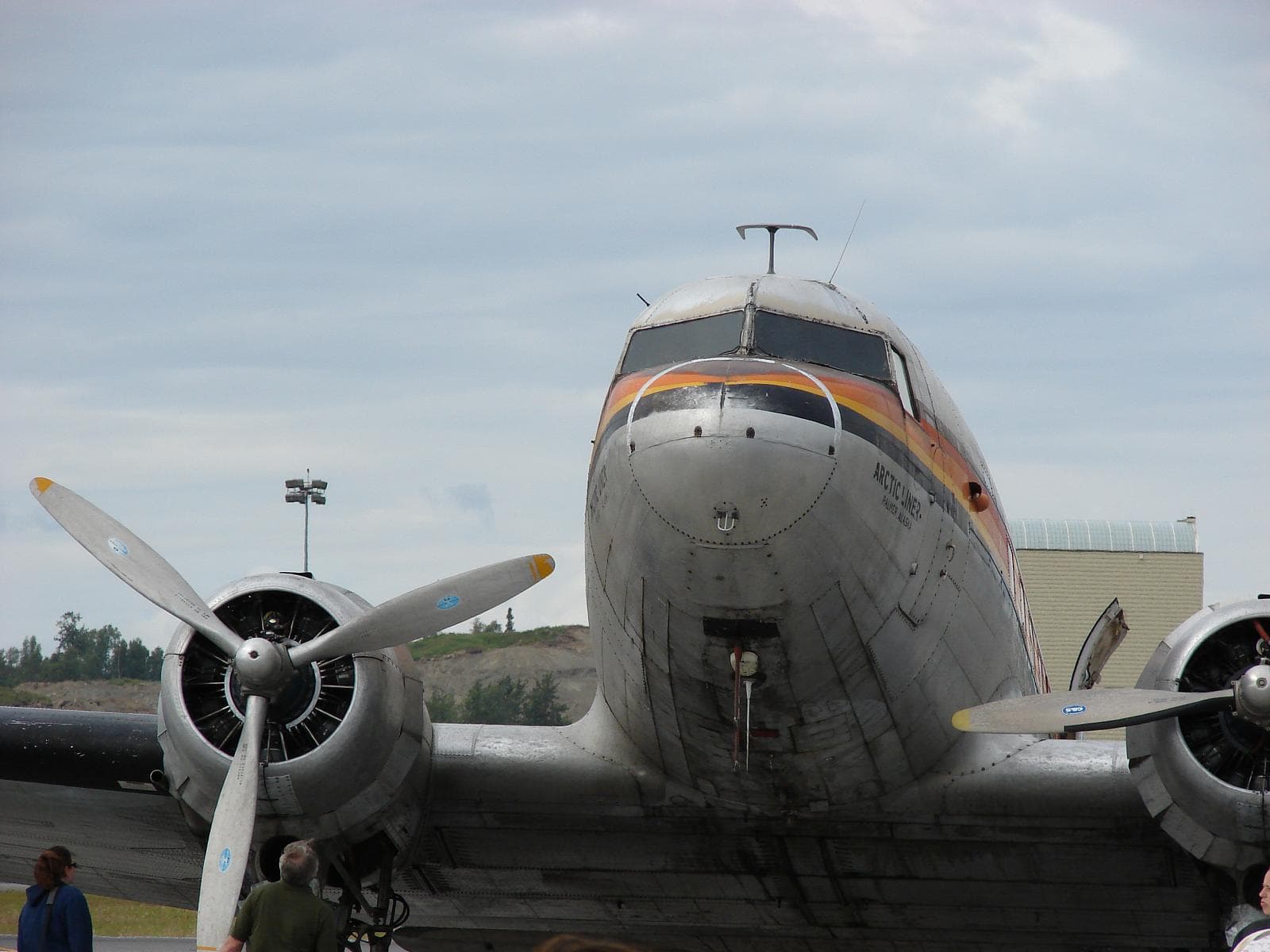
Word spread fast inside an industry that had never seen those numbers before. By 1939, DC-3s were reportedly carrying around ninety percent of the world's airline passengers, an adoption curve almost without precedent for a single aircraft type. Airlines that bought early, like American, United and TWA in the United States, or Swissair and KLM in Europe, found themselves suddenly able to run a real business rather than a subsidized public service.
None of that scale was inevitable in 1935. Douglas had built the DC-1 as a one-off prototype in 1933 to answer a Boeing 247 that TWA could not buy because United's parent company held an exclusive order; the DC-2 that followed sold respectably but unspectacularly. It took C.R. Smith's stubborn phone call, and the specific commercial problem of overnight sleeper service, to push Douglas toward the aircraft that would eclipse everything that came before it.
War arrived for the design faster than its civil career had unfolded. The U.S. Army Air Forces adapted the DC-3 into the C-47 Skytrain, adding a strengthened floor and a wide cargo door, and by the night of 5 to 6 June 1944 more than eight hundred of them were dropping American and British paratroopers over Normandy ahead of the D-Day beach landings, flying low and unarmed through anti-aircraft fire. Two years earlier and thousands of kilometres east, C-47s had already taken on a harder, less celebrated job: flying supplies over the eastern Himalayas on the route crews called the Hump, after the Burma Road was cut, through weather and terrain that grounded almost everything else. The aircraft's last wartime-style mission came after the fighting in Europe had ended, when Soviet forces blockaded ground access to West Berlin in 1948 and American and British C-47s flew round-the-clock relays into Tempelhof and Gatow for nearly a year, helping keep the city fed until the blockade broke in 1949.
Peace produced the largest single change in the type's fortunes, and Douglas had no hand in it. Tens of thousands of C-47s came off military charge after 1945 and were sold off for a fraction of their original cost, sometimes complete with spare parts and demobilized crews looking for work. The resulting flood of cheap, airworthy transports let dozens of new airlines start flying on every continent, years before most of them could otherwise have afforded a fleet: it is difficult to find a national or regional carrier founded anywhere in the late 1940s that did not begin with surplus DC-3s or C-47s on its ramp.
The type's most improbable achievement may simply be that it never fully retired. Hundreds of DC-3s and C-47s remain airworthy today, ninety years after the prototype's first flight, still hauling freight and passengers on the short, rough routes where little built since has matched their economics. Since 1990, Basler Turbo Conversions has remanufactured surplus airframes into the BT-67, stretching the fuselage, reinforcing the structure and replacing the original radial engines with turboprops, for polar research, cargo and firefighting operators who still have not found a cheaper way to do the job.
Development
The DC-3's engineering pedigree runs through two earlier Douglas transports built to chase the same rival. When TWA asked Douglas in 1932 for an all-metal airliner to compete with the Boeing 247: an aircraft TWA itself could not order because Boeing's manufacturer United Aircraft had first claim on production: the resulting DC-1 prototype validated a set of ideas that would carry through a decade of Douglas transports: a stressed-skin aluminium structure, retractable landing gear, wing flaps, and engines mounted to keep the aircraft flying safely on one if the other failed.
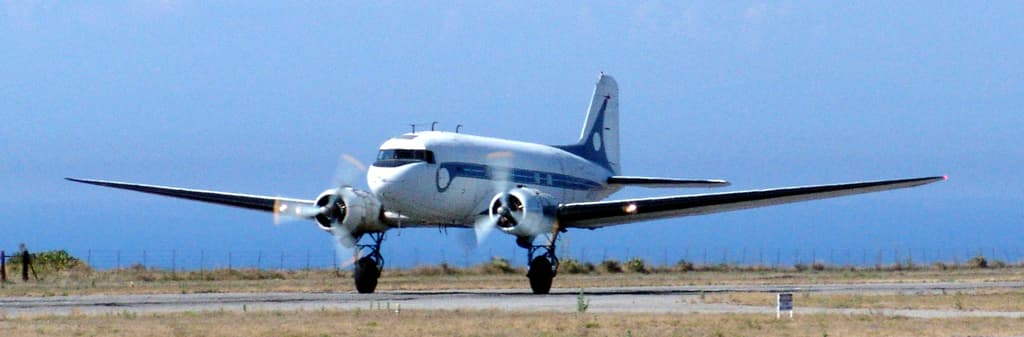
Chief engineer Arthur Raymond and his team refined those ideas into the DC-2, which sold well enough to prove the formula but was too narrow and short-ranged to satisfy American Airlines' sleeper requirement. Stretching it into the DST and DC-3 meant a wider fuselage, a redesigned wing center section, and enough structural margin to carry the added weight of sleeping berths, or later, of paratroopers and cargo, without compromising the docile handling that became the type's signature.
The wing itself is the DC-3's quiet masterpiece: a multi-cellular, stressed-skin structure that distributed loads across many small structural cells rather than a few large spars, giving it exceptional strength for its weight and a fatigue life that let airframes fly for decades under punishing daily use. Pilots and engineers who worked with competing 1930s designs consistently singled out the wing as the reason DC-3s kept flying long after aircraft with more advanced-looking specifications had been retired.
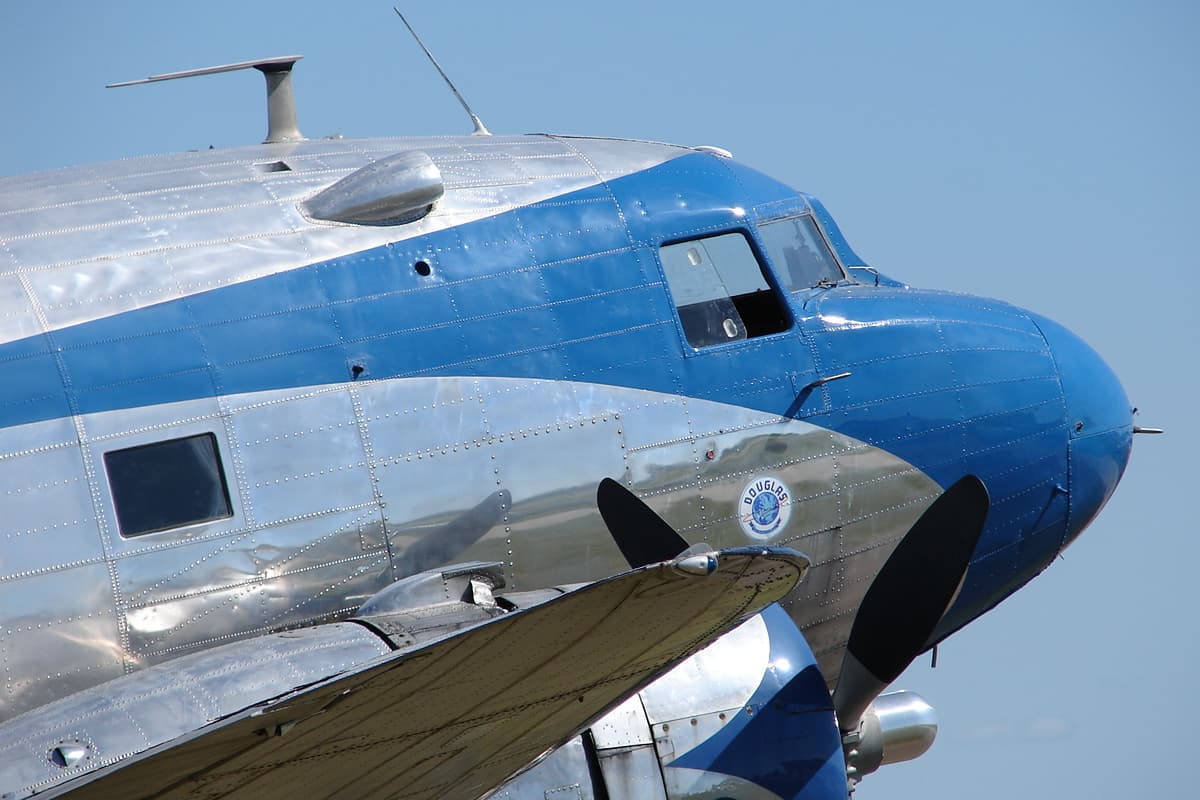
Power came from radial engines in the 1,000 to 1,200 horsepower class (Wright Cyclones in most civil DC-3s, Pratt & Whitney Twin Wasps in most military C-47s) chosen for their reliability and ease of field maintenance rather than for outright performance. That conservatism, engine included, is central to why the aircraft became so durable: almost nothing about the DC-3 was pushed to the technical edge of what 1935 aviation could do, and so almost nothing about it was fragile.
By the time production ended, Douglas had built the type in three main plants (Santa Monica and Long Beach in California, and a wartime plant in Oklahoma City) refining tooling and assembly methods that let output climb from a few aircraft a month in the late 1930s to several per day at the height of wartime C-47 production.
Design
Structurally, the DC-3 is an all-metal, low-wing monoplane of conventional but carefully executed design: a semi-monocoque aluminium fuselage, a tricycle-adjacent but still tailwheel undercarriage with the main gear retracting into the engine nacelles, and control surfaces skinned in fabric over metal frames to keep weight and manufacturing cost down where strength mattered least. Nothing in that description was novel by the mid-1930s; what set the DC-3 apart was how well each element was matched to the others.
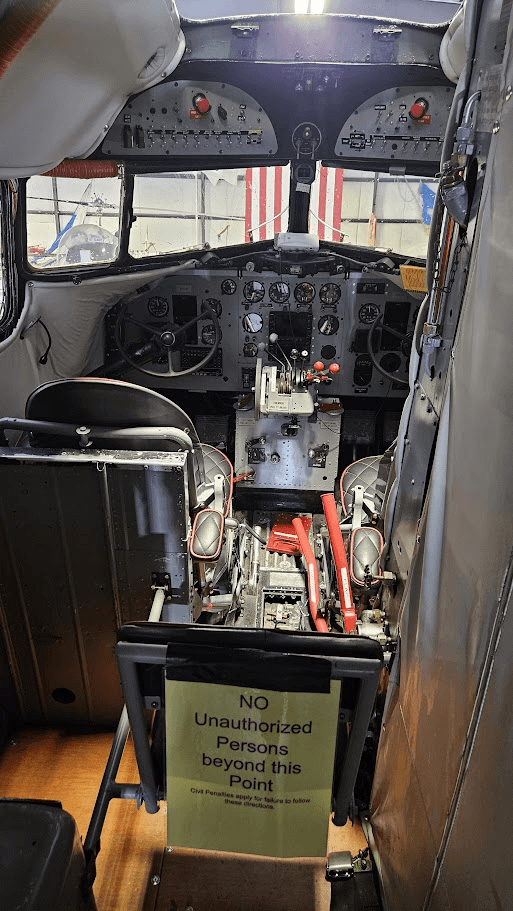
The cockpit seated two, pilot and co-pilot side by side, with a separate compartment further aft for a radio operator on many military and long-range civil examples. Flight controls were entirely mechanical, cables and pulleys running the length of the fuselage to control surfaces that could be moved by muscle alone if hydraulics or trim failed, a simplicity that mattered enormously to wartime maintenance crews working without proper hangars, and later to bush operators thousands of kilometres from a spares depot.
The cabin, roughly two and a third metres wide, was unusually generous for its era: passengers could walk the aisle standing upright, luggage went into a proper hold rather than a net, and even the day-plane version carried enough headroom and legroom that flights of several hours felt tolerable rather than endured. That comfort, as much as the economics behind it, is why passengers began choosing airlines by which one flew the DC-3.
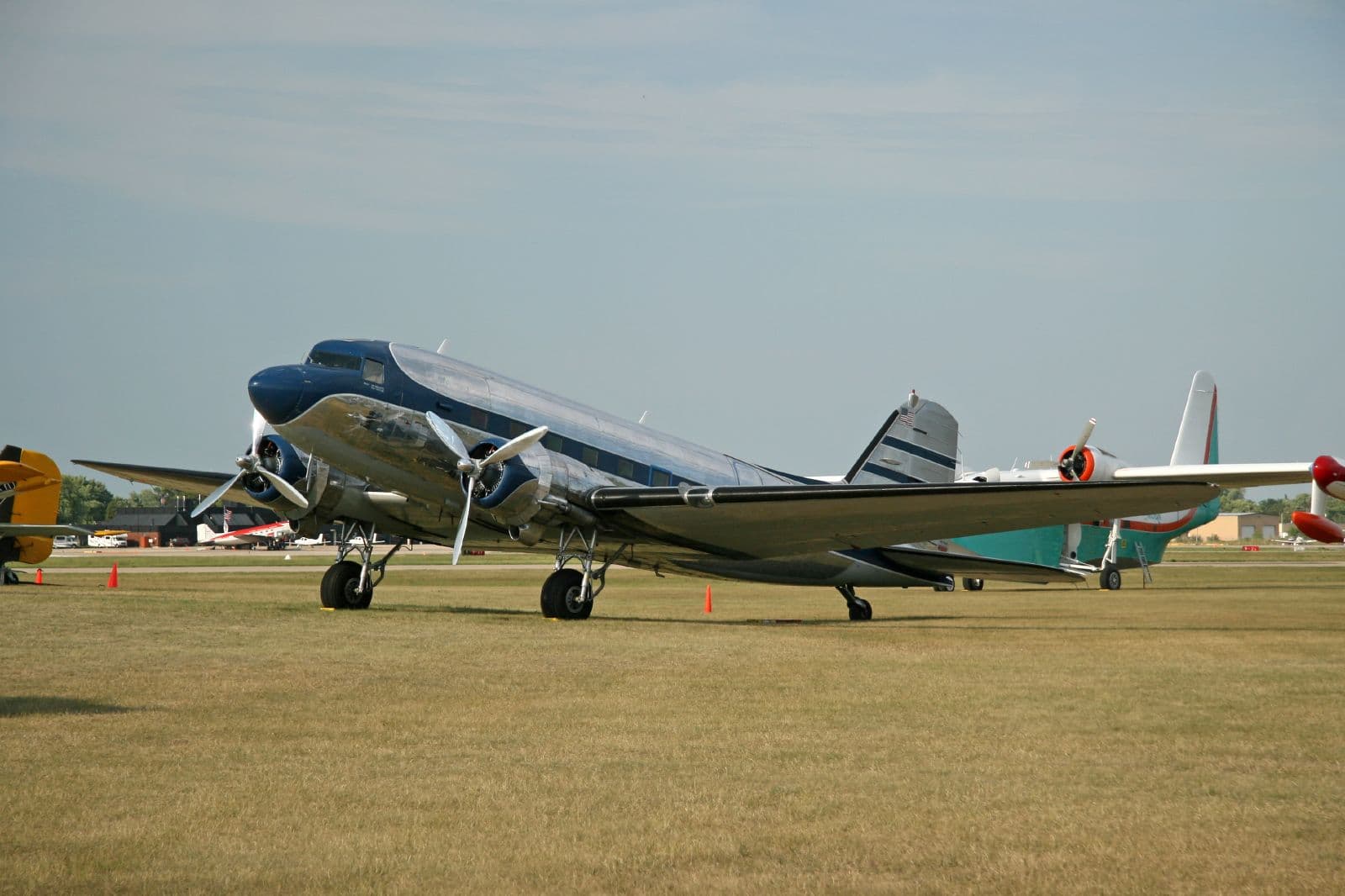
Two Wright or Pratt & Whitney radials, mounted well forward of the wing leading edge on faired nacelles, gave the type enough single-engine performance to complete a flight safely after losing one: a certification requirement airlines took seriously once passengers began paying full fare rather than flying on subsidized mail runs. The undercarriage's habit of sitting the aircraft nose-high on the ground, tail wheel down, is the detail every DC-3 photograph shares, and the one most responsible for its nickname among generations of ramp crews: the Gooney Bird, after the ungainly-looking but supremely capable albatross.
Later military and paramilitary variants added a reinforced cargo floor, a wide cargo door on the port side for loading freight, jeeps or paratroopers, and in some cases a glider-tow hook, modifications that changed almost nothing about the basic airframe and everything about what it could be asked to do.
Flight characteristics
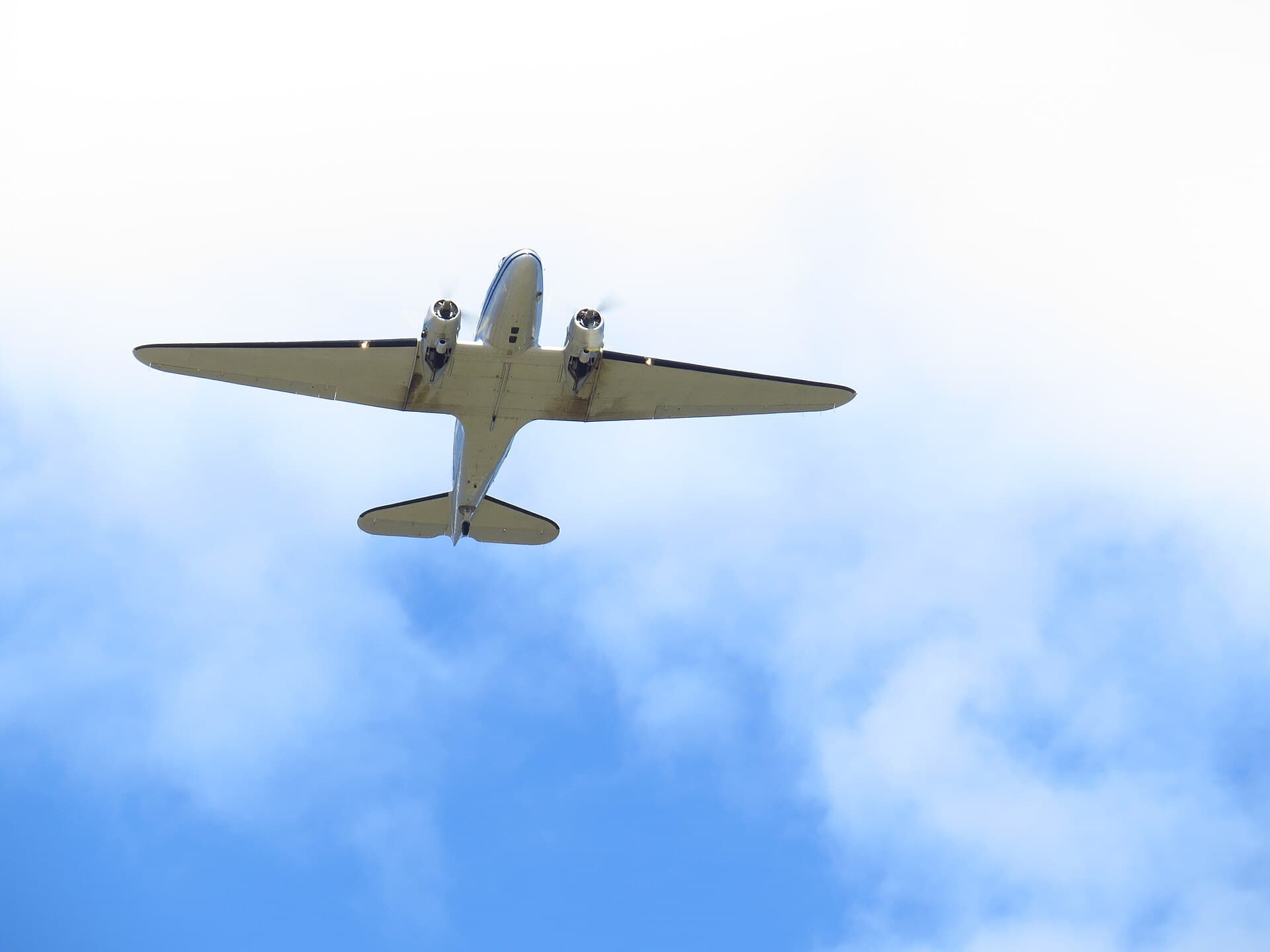
Pilots who trained on the DC-3 tend to describe it less as a machine to be mastered than as a partner that forgave mistakes other aircraft of its era would have punished. Its stall characteristics were famously gentle, its control response predictable rather than sharp, and its single-engine handling, the safety margin airlines actually cared about once passengers were paying full fare, was good enough that losing an engine over open country was a serious problem rather than an immediate emergency.
That forgiving nature had limits, and the DC-3 shared them with every taildragger of its generation. Landing and taking off with the tail wheel down demanded genuine skill in a crosswind, since a swing that got away from the pilot on the ground could turn into a ground loop before the rudder had enough authority to stop it, a hazard experienced instructors drilled into every new DC-3 pilot from the type's earliest years.
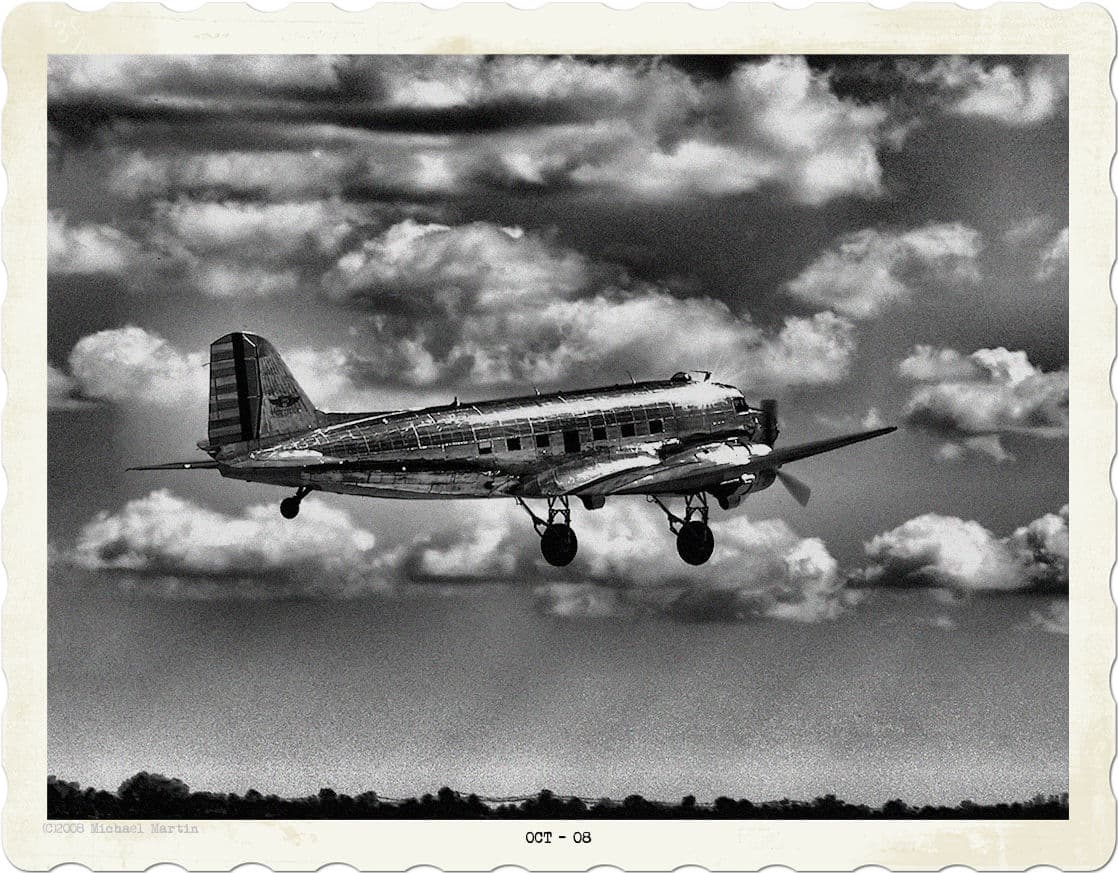
In the air, the aircraft's reputation for honest, communicative handling made it a favorite for the kind of flying that punishes surprises: formation work, instrument approaches into short strips, and cargo runs where a heavily loaded aircraft needed to behave predictably at low speed on final approach. Airshow formations of three or more DC-3s, still flown today by warbird operators and preservation groups, are as much a demonstration of the type's docile handling as of the pilots' skill.
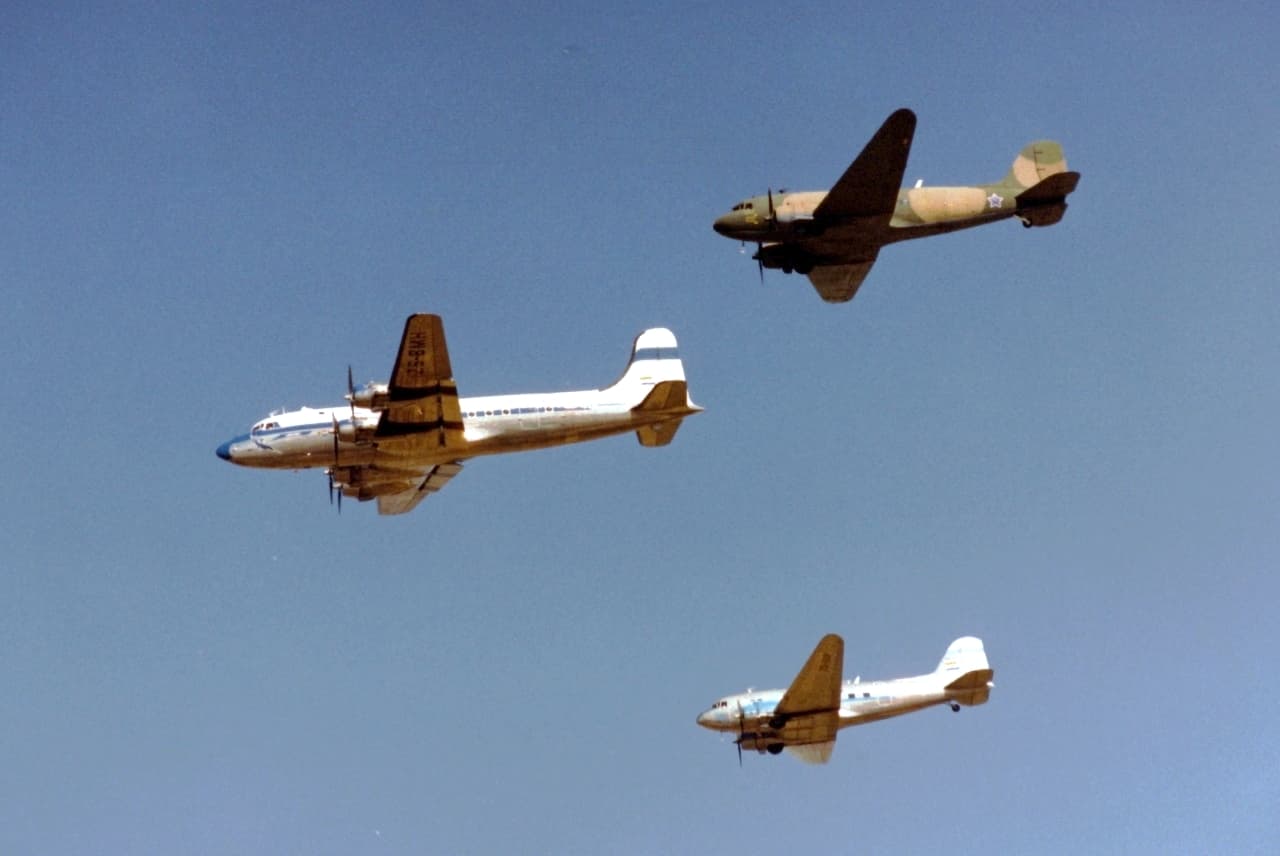
Its low stall speed and modest wing loading also made it genuinely capable from short, rough or unpaved strips: a quality that mattered more to its postwar civil career than any performance figure in its original 1935 specification, and the reason bush operators from Alaska to the Amazon kept choosing it long after faster, more modern aircraft had become available.
Military service
The military transformation began almost as soon as war looked likely. The U.S. Army Air Forces ordered a strengthened, cargo-door version of the DC-3 as the C-47 Skytrain; the Navy took its own variant as the R4D; and the Royal Air Force and Commonwealth air forces, receiving them in large numbers under Lend-Lease, called theirs the Dakota. More than ten thousand were built for American forces alone during the war, on top of the civil DC-3s already flying, making it one of the most numerous transport aircraft in history by the time production ended.
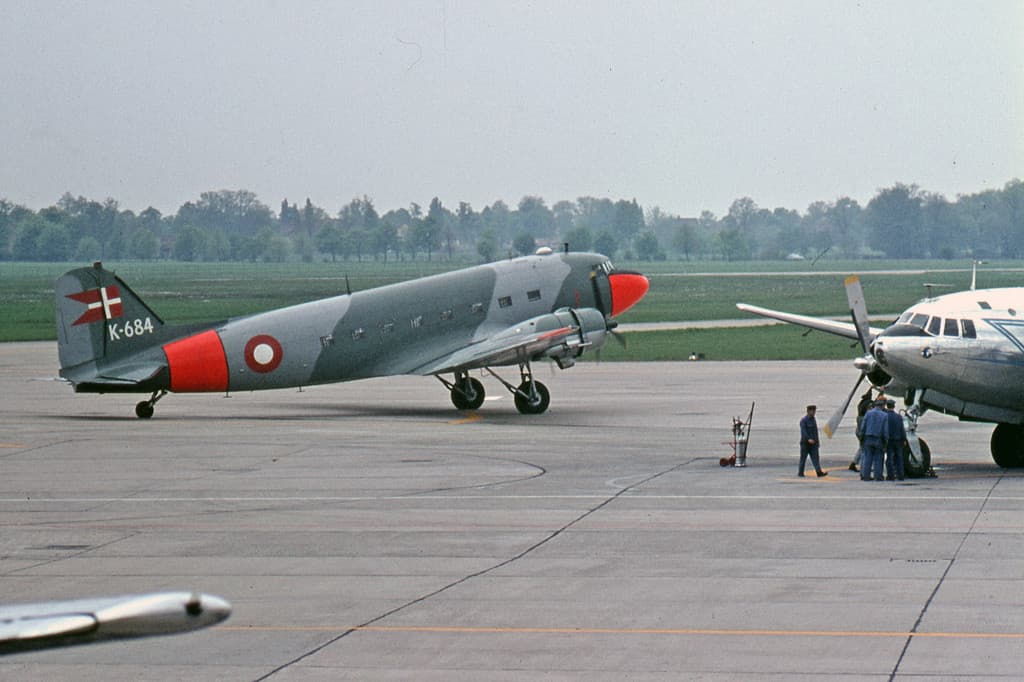
Its combat debut as a paratroop and glider-tug aircraft came in North Africa and Sicily, but its defining moment was Operation Overlord. On the night of 5 June 1944, over eight hundred C-47s and Dakotas dropped paratroopers of the American 82nd and 101st Airborne Divisions and the British 6th Airborne Division over Normandy ahead of the beach landings, flying in tight formation at low altitude through anti-aircraft fire with no armor and no defensive weapons of their own. RAF Dakotas were among the first Allied transport aircraft to land in France a week later, and the type went on to fly the airborne assaults at Arnhem and across the Rhine.
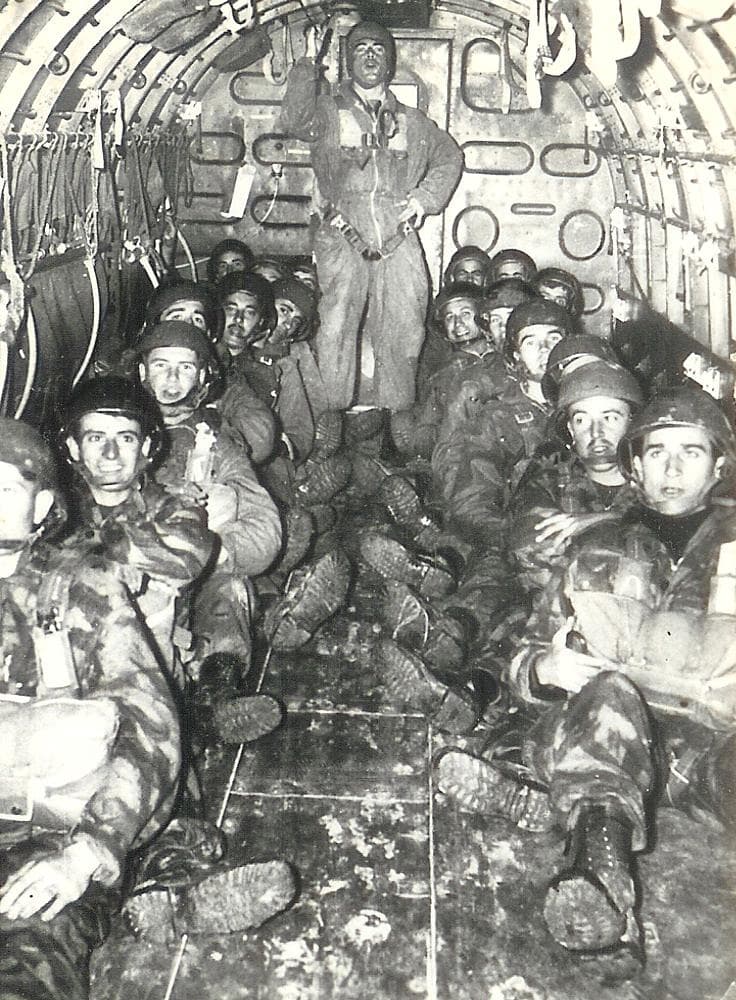
Away from the beaches, the aircraft's less glamorous work arguably mattered more. Over the Hump: the routes across the eastern Himalayas linking India to China after the Burma Road was cut: C-47s and their stretched successor, the C-54, kept a Chinese theatre supplied against terrain and weather that grounded lesser aircraft. In the Pacific and in Africa, the type moved freight, wounded soldiers and reinforcements between airstrips that were often little more than cleared ground, exactly the role its rugged, low-maintenance design had been built for.
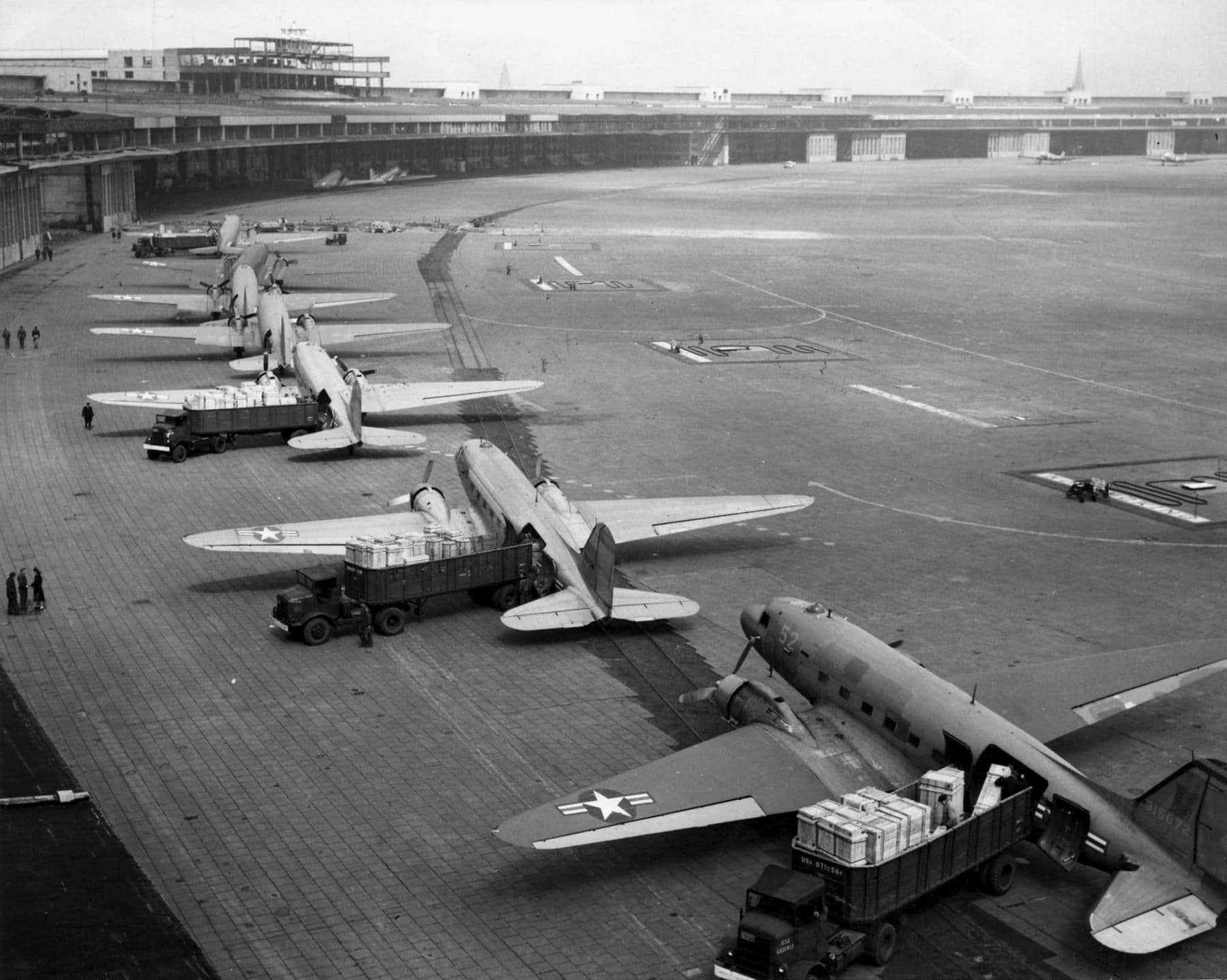
The aircraft's last great wartime-style mission came after the shooting stopped. When the Soviet Union blockaded ground access to West Berlin in 1948, American and British C-47s and their larger C-54 counterparts flew round the clock into Tempelhof and Gatow, at times landing a fully loaded transport every few minutes, keeping over two million Berliners fed and fuelled for nearly a year until the blockade was lifted.
General Dwight Eisenhower later named the C-47, alongside the jeep, the bazooka and the atomic bomb, among the pieces of equipment most vital to Allied victory: an assessment that has held up better than most wartime superlatives, precisely because the aircraft kept working long after the war it was praised for winning had ended.
Production
Total production of the DC-3 and C-47 family is usually put at around sixteen thousand aircraft, though the exact figure depends on how licensed and derivative versions are counted, a reflection of just how far the design traveled beyond Douglas's own factories. Civil DC-3 production at Santa Monica ran into the low thousands before the war absorbed nearly all capacity into military C-47 orders, built primarily at the wartime Long Beach and Oklahoma City plants.
The design was significant enough that both allies and enemies built it without a license, or with one imposed after the fact. The Soviet Union reverse-engineered the DC-3 into the Lisunov Li-2, adapting it for Soviet manufacturing tolerances and cold-weather operation, and built several thousand for both military and civil use into the 1950s. In Japan, Showa and Nakajima built a licensed version as the L2D, used by the Imperial Japanese Navy throughout the Pacific War: meaning DC-3 derivatives flew, and were shot at, on every side of the conflict simultaneously.
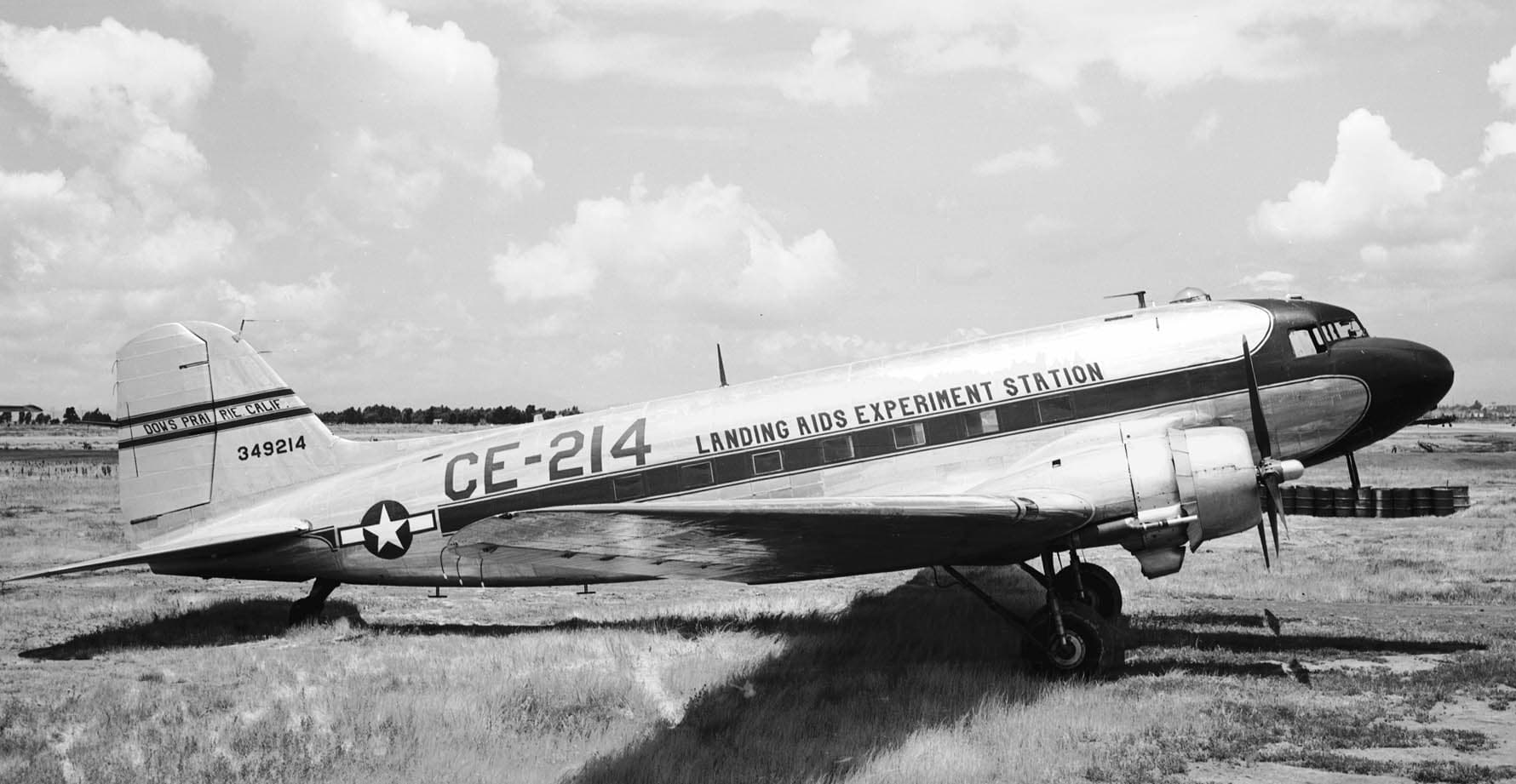
Wartime production discipline also produced oddities that outlived their original purpose. Aircraft like the Landing Aids Experiment Station's C-47D, photographed at Oakland in 1947 fitted with early instrument-approach test equipment, show a type flexible enough to serve as a flying laboratory once its combat usefulness had passed: a role the airframe's generous cargo door and internal volume made easy to fill.
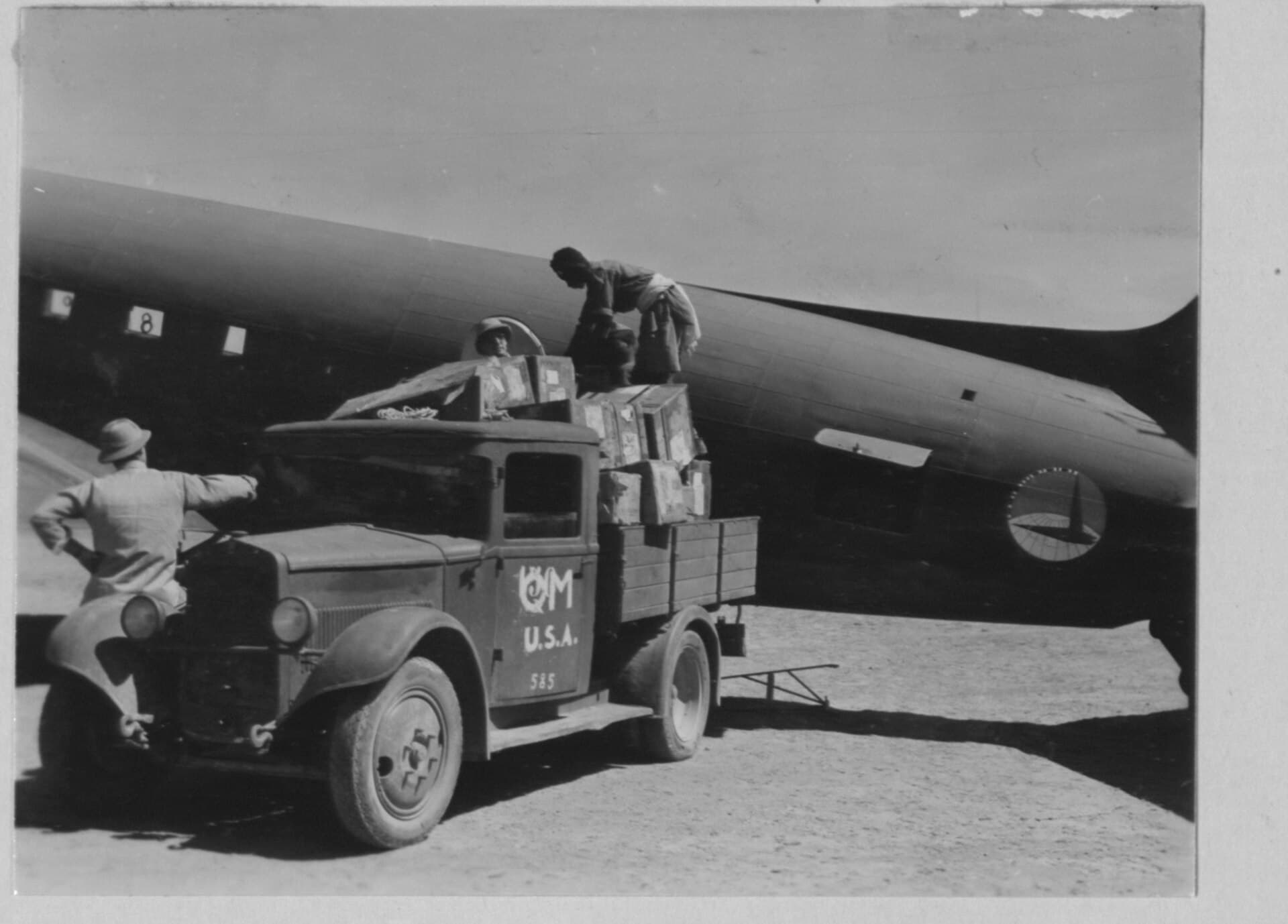
Peacetime brought the largest single production event in the type's history, even though Douglas built none of it: demobilization. Tens of thousands of aircrew trained on the type during the war, and thousands of surplus C-47s were sold off cheaply or simply abandoned on airfields worldwide, creating a supply of airworthy, well-understood transport aircraft that no manufacturer could have matched by building new ones: and that supply, more than any factory output figure, is what put a DC-3 or C-47 within reach of almost anyone who wanted to start an airline.
Operators
The flood of cheap, war-surplus C-47s after 1945 reshaped civil aviation more thoroughly than any single manufacturer's postwar sales campaign could have. Aircraft that had cost tens of thousands of dollars to build could be bought for a few thousand, sometimes less, complete with spare parts and trained mechanics looking for work. Airlines that could never have afforded a fleet of new aircraft built their start-up years around surplus Dakotas and Skytrains instead, and dozens of national and regional carriers around the world trace their earliest routes to exactly that arithmetic.
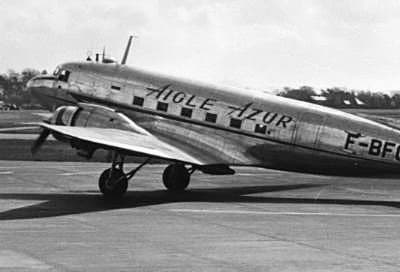
In France, Aigle Azur built early postwar service on a fleet of ex-military DC-3s, flying colonial and Mediterranean routes at a time when few French carriers could access new equipment; other European independents did the same across shorter domestic and regional networks. The type's low operating cost and simple maintenance made it just as suitable for scrappy new entrants as it had been for American Airlines' well-funded prewar network.
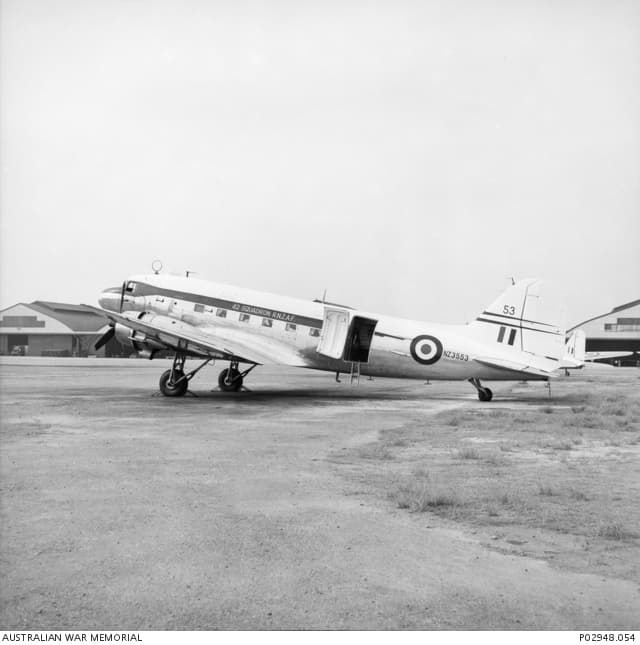
Military use did not simply stop when the shooting did, either. The Royal New Zealand Air Force flew Dakotas on transport and liaison duties across the Pacific and in occupied Japan well into the 1950s, one of many Commonwealth air arms that kept the type in frontline logistics service for decades after the war that had multiplied its numbers.
Cargo, always secondary to the passenger story in most accounts of the DC-3, was in practice a huge part of what kept individual airframes flying commercially for decades. A civil DC-3 loading crates of Florida gladiolus for a domestic flight in the late 1940s was doing exactly the kind of unglamorous, profitable work (flowers, mail, produce, freight of every description) that paid for fuel and maintenance long after the passenger cabins of newer aircraft had made the DC-3 obsolete on the routes it was designed for.
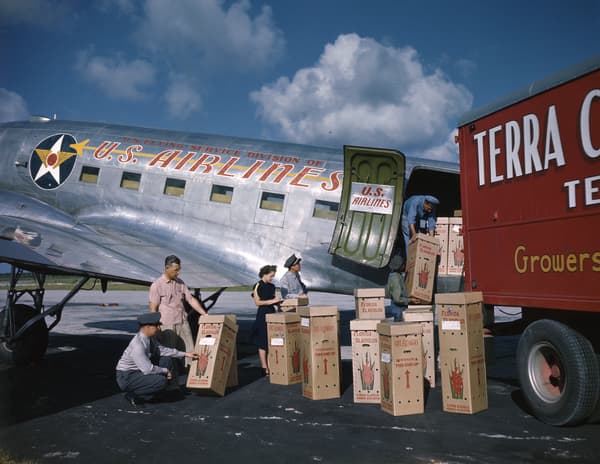
That adaptability is the throughline connecting a Sarasota flower shipment to a bush airline in the Canadian Arctic or a scheduled service in the highlands of Papua New Guinea: wherever runways are short, unpaved, or simply unreliable, and wherever a cargo hold matters more than pressurization or speed, the DC-3 and C-47 kept finding paying work that newer, more specialized aircraft could not do as cheaply.
By the 1950s and 60s, the type had become the default first aircraft for entire national airlines in the developing world, a role that shaped commercial aviation's global expansion as significantly as it had shaped the prewar American airline industry a generation earlier.
Legacy
What keeps a ninety-year-old airliner design in daily commercial use is not nostalgia; airplanes that cost money to operate get retired regardless of how much affection crews feel for them. The DC-3 and C-47 survive in working fleets because nothing else does their specific job (short, rough-field cargo and passenger hauling in low-volume markets) as cheaply, and because an airframe built with that much structural margin in 1935 still has decades of fatigue life left in it if it has been properly maintained.
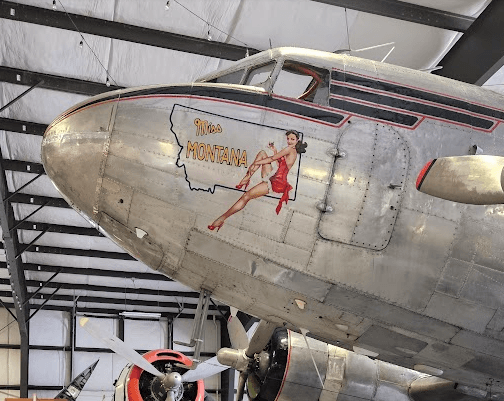
That practical durability sits alongside a more personal kind of survival. Individually named, individually storied aircraft like Miss Montana, restored and flown back to Normandy for the eightieth anniversary of D-Day, carry nose art and cockpit fittings that a generation of volunteers has kept airworthy specifically because the type refuses to become merely historical: it can still do the job it was built for, which is the rarest form of preservation an aircraft can achieve.
Estimates of how many DC-3s and C-47s remain airworthy worldwide vary, but the figure is consistently in the low hundreds, spread across cargo operators in Africa and South America, skydiving clubs, warbird collections, and a handful of scheduled carriers in places where paved runways and pressurized cabins are still not guaranteed. That is an extraordinary number for any aircraft type built before the Second World War, let alone one whose intended replacement (faster, larger, pressurized successors) arrived within a decade of its introduction and never fully managed to retire it.
The comparison that FLYPEDIA's own Cessna 172 entry makes about a much smaller aircraft applies at airline scale to the DC-3: a quiet, well-made tool that does its job so consistently it becomes invisible, valued not for what it represents but for what it still, actually, does. Where the 172 is invisible in flying-club car parks, the DC-3 is invisible on cargo ramps in Nairobi or Yellowknife: still working, still profitable, still exactly as useful as it was the day American Airlines put the first sleeper version into service.
Its longevity has outlasted the war that mass-produced it, the airlines that first flew it, and most of the aircraft designed explicitly to replace it, a record that makes the DC-3 less a museum piece than a standing rebuke to the idea that aviation always moves forward by getting more complicated.
Model evolution
Douglas Sleeper Transport (DST)
1935The original version of the design, a fourteen-to-sixteen-seat overnight sleeper with curtained upper and lower berths, a proper galley and a separate dressing room, built to a fuselage nine inches wider than the DC-2's specifically to fit beds rather than seats.
Built at the specific, reluctant request of American Airlines' C.R. Smith, who wanted an aircraft that could compete directly with the railroads' overnight Pullman sleeper cars on coast-to-coast routes; American committed to twenty aircraft before a single one existed.
First flew on 17 December 1935 and entered transcontinental service in 1936, cutting the New York to Los Angeles crossing to about fifteen hours with stops, a genuine improvement on rail travel that justified the fare premium passengers paid to fly it.
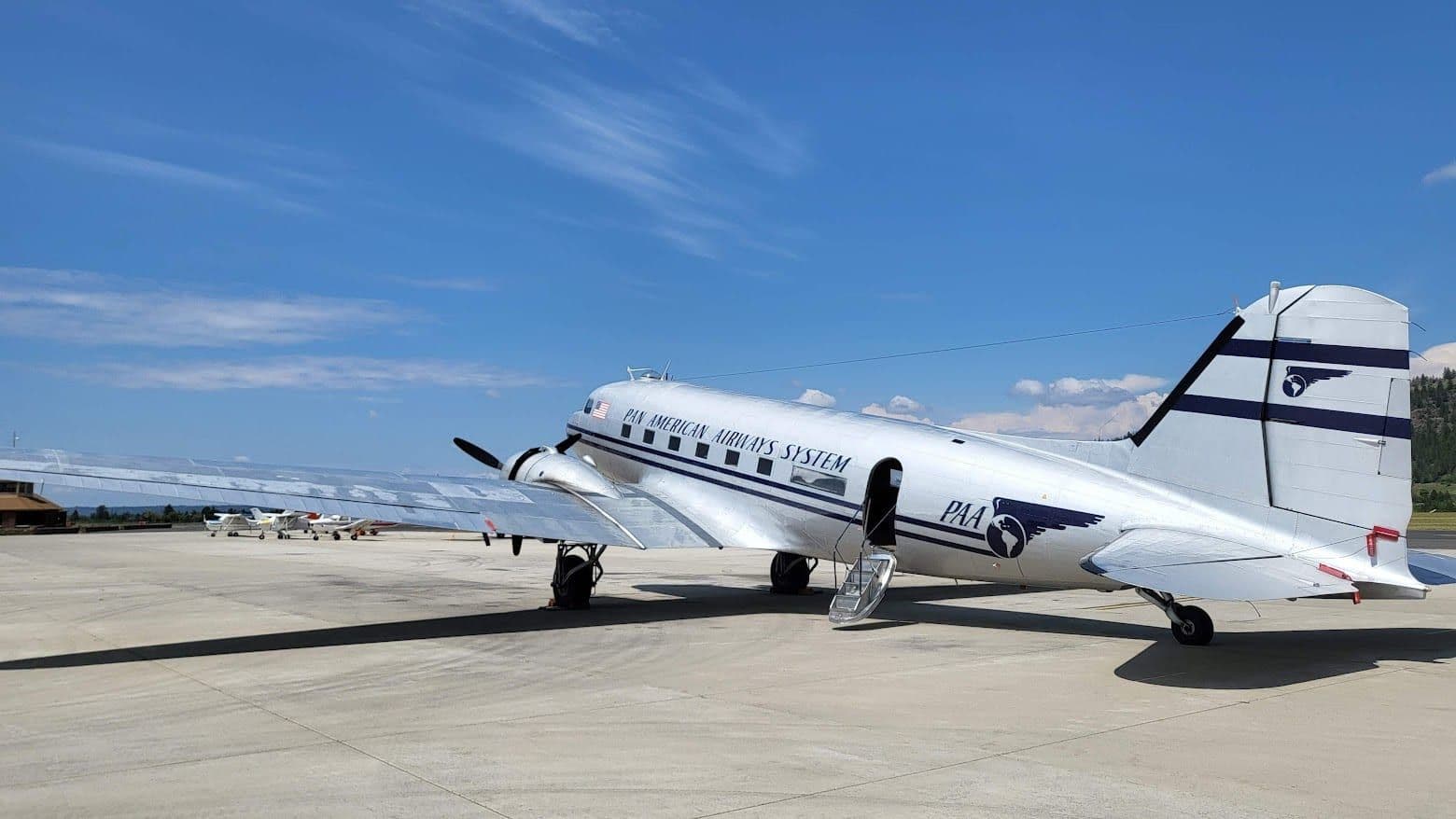
Douglas DC-3
1936The day-plane derivative of the DST, seating twenty-one passengers in forward-facing rows instead of berths, and the variant that gave the whole family its name; it followed the sleeper into production within months rather than years.
Replaced sleeping berths with conventional seating, which raised seat count and cut operating cost per seat-mile enough that a full aircraft could turn a profit on fares alone, without the airmail subsidy every earlier airliner had depended on to stay solvent.
Adopted so widely and so fast that by 1939 it was reported to carry around ninety percent of the world's airline passengers, an adoption curve with almost no precedent for a single aircraft type before or since.
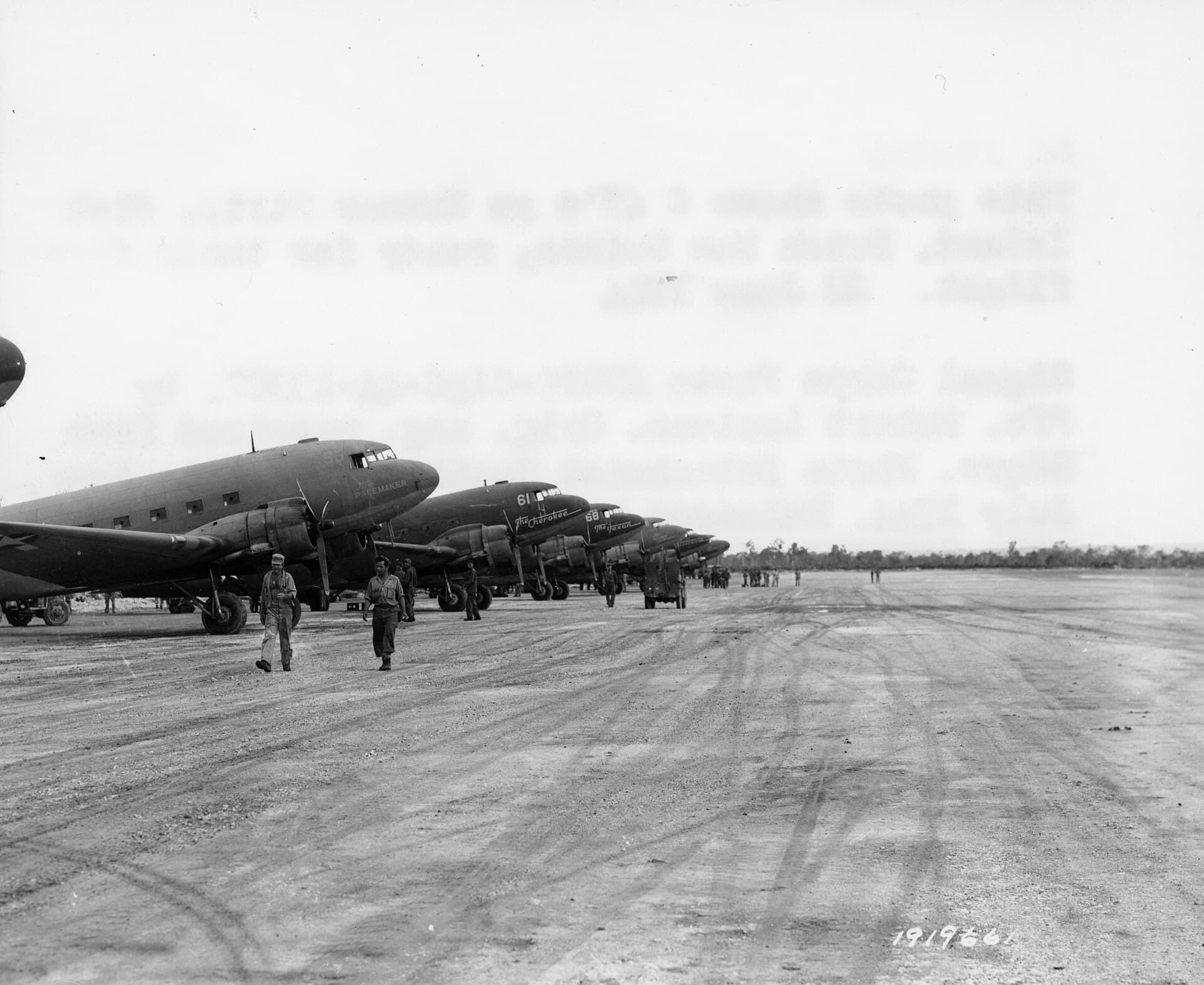
Douglas C-47 Skytrain / Dakota
1941The principal military transport version, built around a strengthened, reinforced cargo floor and a wide port-side cargo door large enough for jeeps, artillery pieces or a stick of fully equipped paratroopers, with a reinforced rear fuselage to carry the added structural loads.
Adapted directly from the civil DC-3 to move troops, paratroopers and freight for the U.S. Army Air Forces, the U.S. Navy under the designation R4D, and Commonwealth air forces receiving them under Lend-Lease as the Dakota; more than ten thousand were built for American forces alone.
Flew the Normandy and Arnhem airborne assaults, the resupply route over the Himalayan Hump and the Berlin Airlift; General Eisenhower later named it, alongside the jeep and the bazooka, among the pieces of equipment most vital to Allied victory.
Lisunov Li-2
1939A Soviet-built derivative, reverse-engineered from a DC-3 supplied under a 1938 technical agreement rather than copied from stolen drawings, and adapted for Soviet manufacturing tolerances, materials and cold-weather operation across the USSR's harshest climates.
Fitted with Soviet-built Shvetsov ASh-62IR radial engines instead of the original American Wright or Pratt & Whitney units, along with different fasteners, instrumentation and some structural details reflecting Soviet industrial practice rather than a licensed copy.
Built by the thousand into the 1950s for both military and civil Soviet use, and remained in front-line Aeroflot and military service years after Western DC-3s had begun moving to secondary routes.
Showa/Nakajima L2D
1940A Japanese licensed version of the DC-3, built under a pre-war agreement by Showa and later Nakajima, and operated by the Imperial Japanese Navy as a transport throughout the Pacific War: meaning DC-3 derivatives flew, and were shot at, on every side of the conflict at once.
Built to Japanese production standards with locally sourced Kinsei radial engines in place of the American originals, requiring extensive retooling since Japan lacked the original manufacturing drawings for several components.
Basler BT-67
1990A modern remanufacture of surplus DC-3/C-47 airframes, stripped to the structure and rebuilt with a fuselage stretched roughly a metre forward of the wing, a strengthened wing structure and modernized flight deck instrumentation.
Replaced the original Wright or Pratt & Whitney radial engines with Pratt & Whitney Canada PT6A-67R turboprops, cutting fuel burn and maintenance cost while adding useful load and hot-and-high performance the piston original never had. Built by Basler Turbo Conversions in Oshkosh, Wisconsin, to keep proven DC-3/C-47 airframes in polar research, cargo and aerial firefighting service, where their short-field ability and cargo volume still have no cheap modern equivalent.
In continuous production in small numbers since 1990, and flown today by polar research operators including the U.S. Antarctic Program, making it one of the few ways a DC-3-derived airframe still enters service new rather than merely surviving.
Blueprints
- Douglas DC-3, Smithsonian National Air and Space Museum
- Douglas Dakota, Royal Air Force Museum
- Douglas C-47 Skytrain, The National WWII Museum
- Triumph of the Gooney Bird, Air & Space Quarterly, Smithsonian
- The Immortal Douglas DC-3, HistoryNet
- Douglas DC-3, Wikipedia
Checked September 2, 2026