Terminal 1
Opened 1981
At the northern end; opened with the airport on 1 July 1981.
Airport
SIN · WSSS
SingaporeSingapore
Singapore Changi Airport
69,980,000a year
Passengers
374,000a year
Aircraft movements
2,080,000t
Cargo
Figures for 2025
Ownership as of 2026
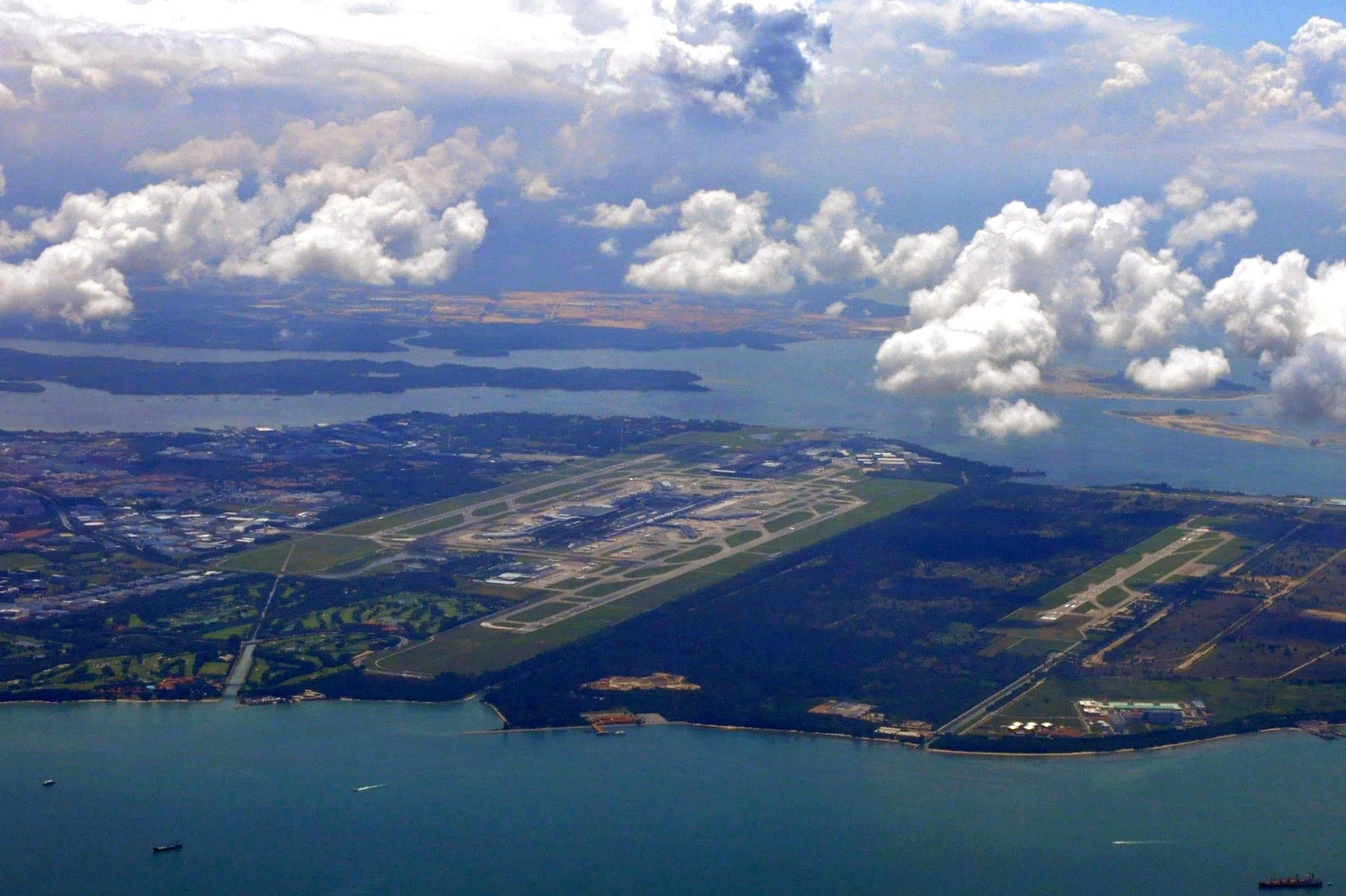
Singapore Changi Airport stands on the eastern tip of the island, on ground that was partly taken from the sea. It is the international gateway of a city-state with no domestic network to feed it, and it has answered that fact by making the journey itself the attraction: more than a hundred airlines fly from Changi to about 170 cities in roughly a hundred countries and territories, and some 7,000 flights arrive or leave each week, one every eighty seconds.
In 2025 the airport handled 69,980,000 passengers, 3.4 per cent more than in 2024 and the highest figure in its forty-four years. That made it the fourth busiest international airport in the world and the seventh busiest in the Asia-Pacific region. December alone brought 6.3 million passengers, and on 20 December, the busiest day of the year, 223,000 people passed through its terminals. Aircraft movements rose 2.2 per cent to 374,000, and the airport handled 2.08 million tonnes of freight.
It is also the most decorated airport in the world. Changi has won more than 700 awards since it opened, 28 of them for "best airport" in 2025 alone, and Skytrax has named it the world's best thirteen times, including eight years in a row from 2013 to 2020. Four terminals are arranged around Jewel, a glass-domed complex of gardens and shops with the tallest indoor waterfall on earth at its centre.
Behind the awards is a plain commercial logic. A hub with no home market must be chosen by passengers who could just as easily change planes elsewhere, so Changi competes on the quality of the two hours between flights.
Changi is Singapore's third international airport. Kallang opened in 1937; Paya Lebar replaced it in 1955 with a single runway and a small terminal. Traffic then grew faster than anyone had planned for: 300,000 passengers in 1955, 1.7 million in 1970, 4 million in 1975. By the early 1970s Paya Lebar was congested, and the government had to choose between enlarging it and starting again somewhere else.
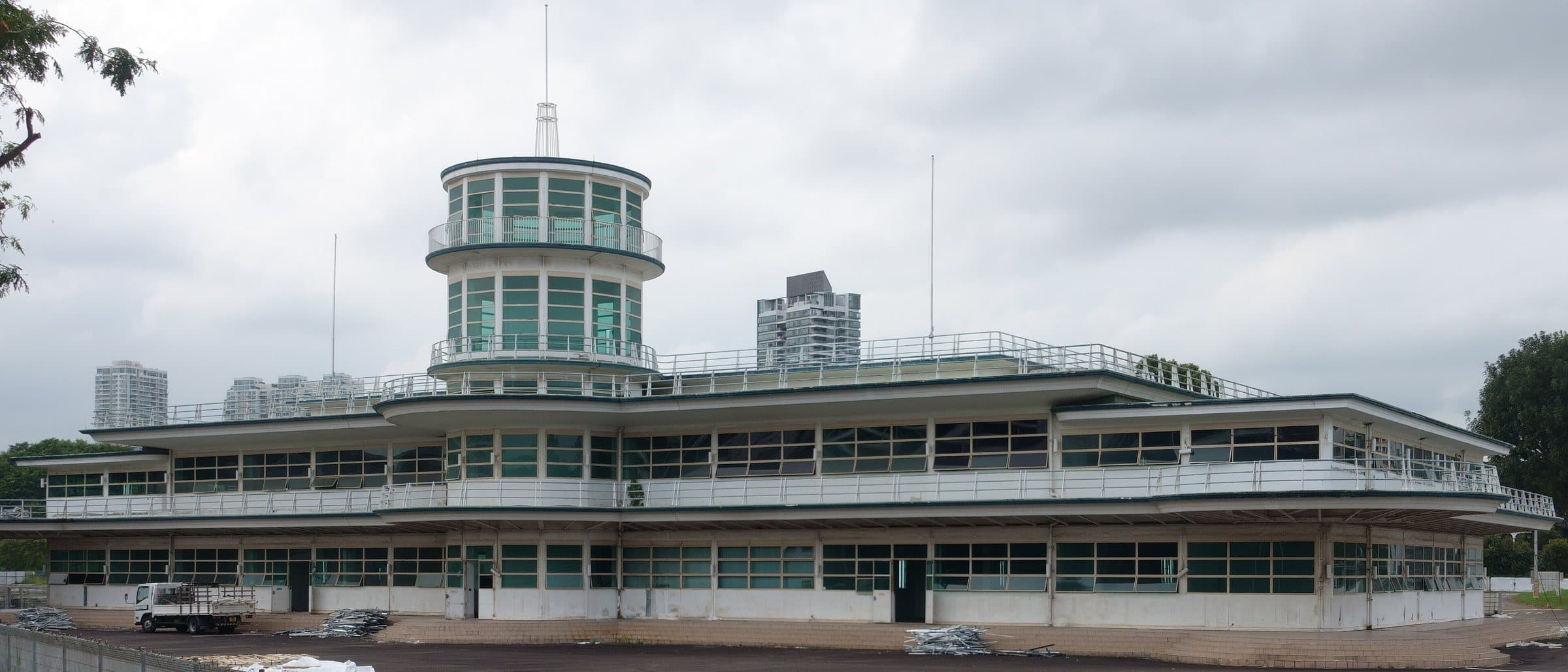
It chose, at first, to stay. After extensive study, consultants recommended in 1972 that the airport remain at Paya Lebar, with a second runway and a rebuilt terminal. A year later the plans were reopened, because the oil crisis of 1973 had taken the pressure off.
The decisive argument was not traffic but geography. Paya Lebar sat where the city would grow, and a city growing around an airport hems it in on every side: the problem that would later force Dubai to plan its own airport's closure. In 1975 the government decided instead to build at Changi, on the eastern tip of the island, on the site of the existing Changi Air Base. The new position had a second advantage: aircraft would approach and depart over the sea, which spared residential districts the noise and put an accident's likely path over water.
The master plan set out two terminals and two runways in two phases, with room for two more terminals later. Phase 1 covered the first passenger terminal; the first runway, which reused and upgraded the main runway of the air base; 45 parking stands; a large maintenance hangar, a fire station, workshops and offices; an airfreight complex, two cargo agents' buildings and in-flight catering kitchens; and a control tower 260 ft high. Phase 2, to begin the moment Phase 1 finished, added the second runway, 23 more stands, a second fire station and a third cargo building.
Changi opened to traffic on 1 July 1981. The first arrival, Singapore Airlines SQ101 from Kuala Lumpur, touched down at 7:10 that morning with 140 passengers aboard, and the airport was formally opened five months later, on 29 December 1981. Its first year brought 12.1 million passengers, nearly 200,000 tonnes of freight and 63,100 aircraft movements. Paya Lebar, once Singapore International Airport, became an air force base.
Changi works three parallel runways, each 13,000 ft long: 02L/20R, 02C/20C and 02R/20L. All three point north-north-east and south-south-west, so that arrivals and departures run out over the Singapore Strait.
The third runway is the old military one. It was part of Changi Air Base (East), used by the Republic of Singapore Air Force under its own ICAO code, and is being converted and extended for civil use; it is not due to open to airline traffic until the last quarter of 2027. Converting it, rather than building a fourth, is what allows the airport to grow without taking more land than the island can spare.
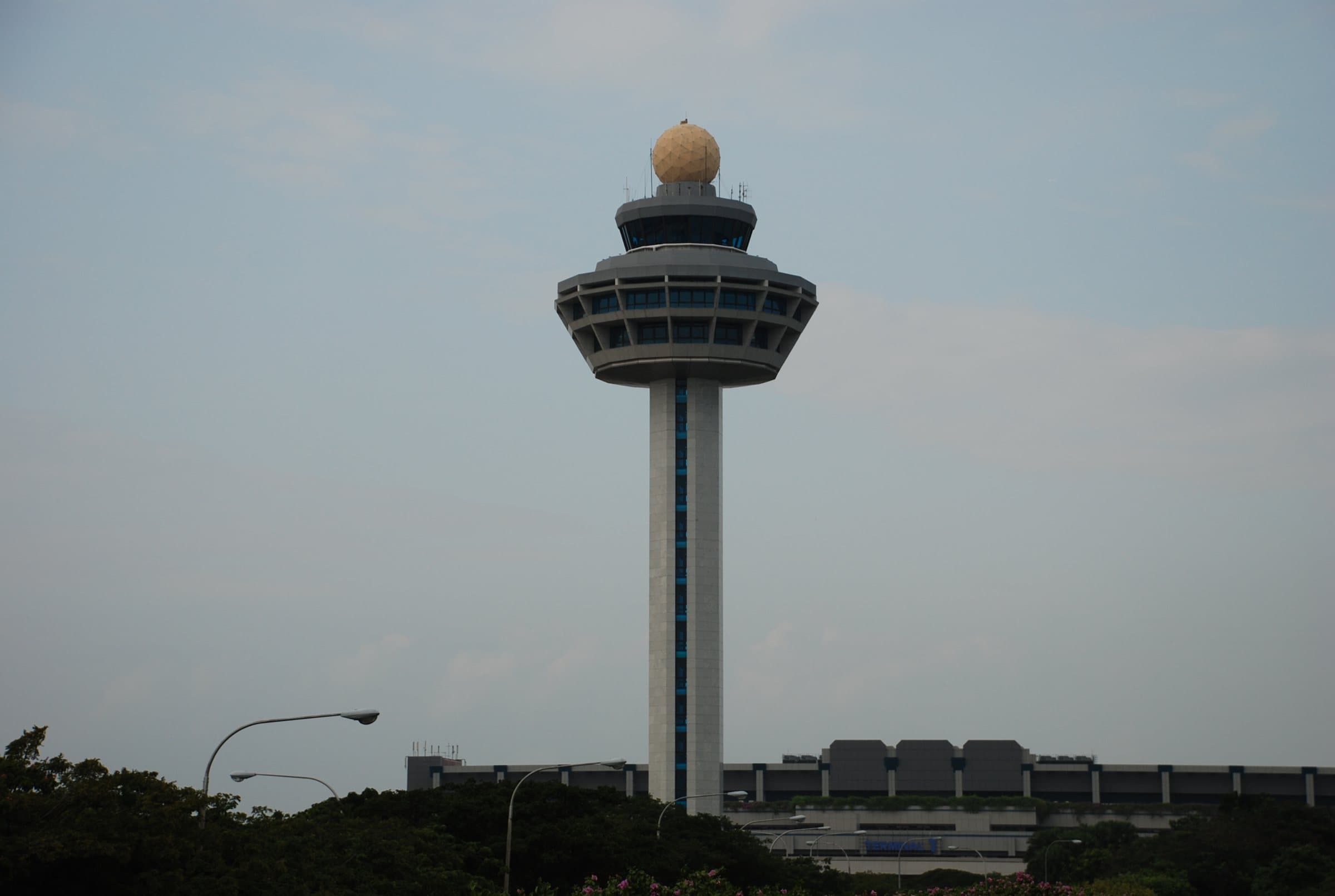
The control tower of 1981 stands 260 ft above the field. Fire cover is arranged around the runways: three main stations, one beside each runway, a domestic sub-station, and a sea rescue base on the water nearby, a reminder that at an airport whose approaches lie over the strait, rescue may mean boats rather than trucks.
Safety and security are divided between several organisations. Changi Airport Group manages safety overall, with the Airport Emergency Service handling rescue and firefighting on the airport and in the surrounding waters. Policing falls to the Airport Police Division of the Singapore Police Force, with day-to-day work done by auxiliary forces, Certis, Aetos and SATS Security Services. In April 2008 the civil aviation authority signed its largest single security contract, putting some 2,600 Certis officers, armed and unarmed, into Changi, Seletar, the airfreight centre and the air traffic control centre. Security was tightened after the September 11 attacks, when the airport was named as a target by Jemaah Islamiyah.
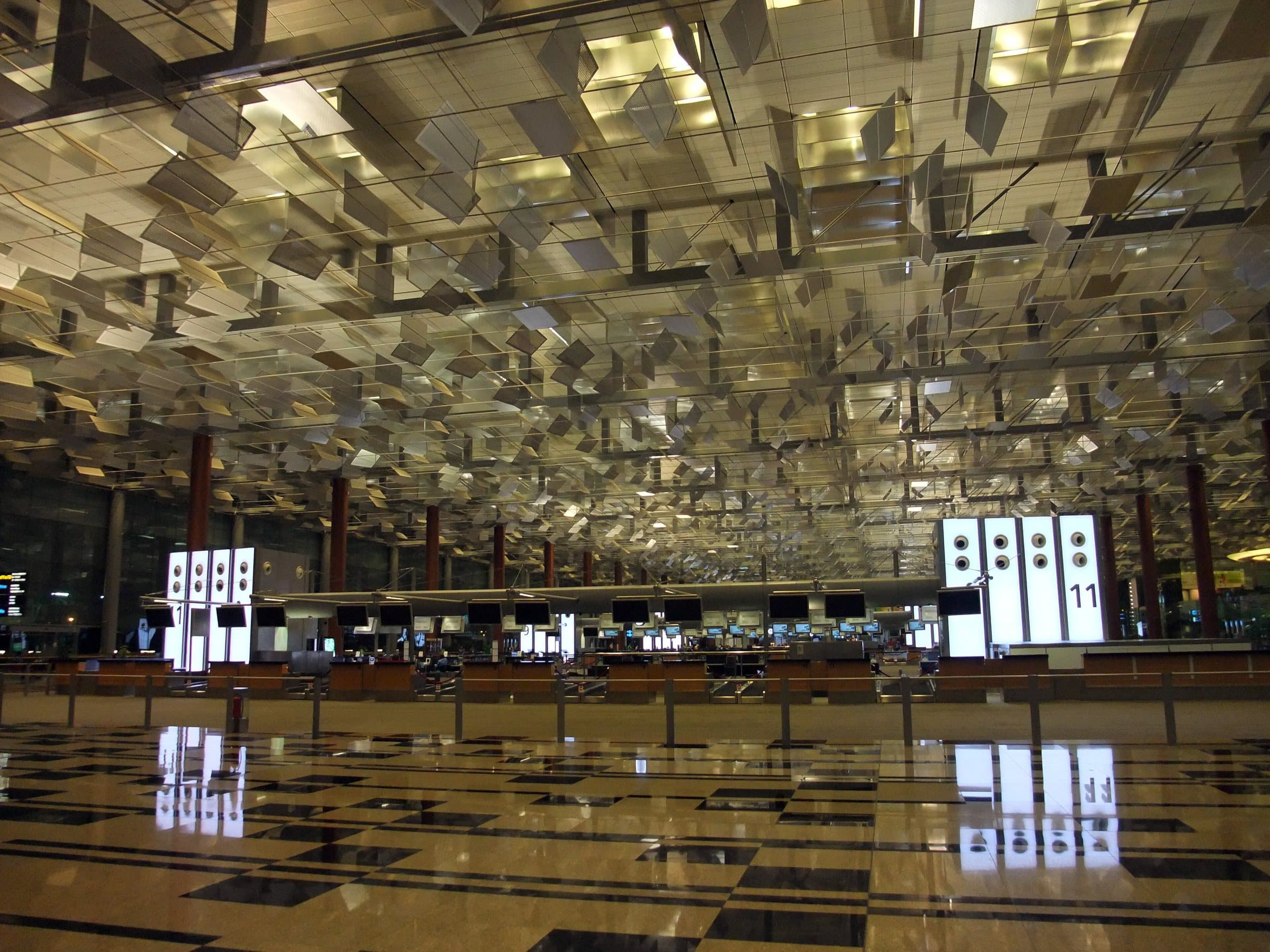
The four terminals opened one at a time around the airfield, each at a different end of it: Terminal 1 in the north on 1 July 1981, Terminal 2 in the east on 22 November 1990, Terminal 3 in the west on 9 January 2008, and Terminal 4 in the south on 31 October 2017. Together they can handle 90 million passengers a year.
Because Singapore has no domestic flights, every terminal is an international one: each has full immigration facilities, and there is no separation between domestic and international sides of the building.
Terminal 4 stands where the Budget Terminal used to be. That building, opened on 26 March 2006 for low-fare airlines, was a deliberately plain shed with no air bridges, and it closed on 25 September 2012 to make room for its far grander successor.
Terminal 2 has been rebuilt in place. It closed for upgrading during the pandemic and reopened fully on 1 November 2023 after three and a half years, with nature-themed interiors and a digital waterfall 46 ft high called the Wonderfall, an indoor spectacle in the same spirit as Jewel's.
The airport also serves the top of the market. The former JetQuay CIP Terminal is being rebuilt as a new private terminal, expected to open in mid-2027.
Freight has its own quarter. The Changi Airfreight Centre, north of the passenger terminals, is run by the Air Hub and Cargo Development department of Changi Airport Group. In 2025 it handled 2,080,000 tonnes, one of its strongest years, with China, the United States, Australia, Hong Kong and India its five largest markets, and recent volumes driven by semiconductors, artificial-intelligence hardware, electric vehicles and clean technology. Changi has been voted best airport in Asia at the Asian Freight, Logistics and Supply Chain awards for more than twenty-seven consecutive years, and has been inducted into the Cargonews Asia hall of fame.
Changi Airport Group was formed on 16 June 2009, when the Civil Aviation Authority of Singapore corporatised the airport and became its regulator rather than its operator. The company is owned by the government through the Ministry of Finance.
Traffic has grown in steps, interrupted twice by events beyond the airport's control and once by a pandemic. Numbers fell after the September 11 attacks in 2001 and again during the SARS epidemic of 2003, then rose quickly: 30 million passengers for the first time in 2004. In March 2008 the airport was predicted to reach 50 million by 2012, thanks to the opening of casinos in Singapore and the gradual liberalisation of aviation within ASEAN, and it passed that mark on schedule. It crossed 60 million on 18 December 2017 and set a record of 65.6 million in 2018, 5.5 per cent up on the year before.
The COVID-19 pandemic emptied it. Traffic collapsed in 2020 and 2021; Terminals 2 and 4 closed temporarily in May 2020, and although Terminals 1 and 3 stayed open for passengers, they were closed to the general public, along with Jewel, on 12 May 2021, reopening on 1 September that year. In 2019 Firefly, the last turboprop operator at Changi, had already moved to Seletar to make way for jet operations.
The recovery has been complete. The 69.98 million passengers of 2025 are the most in the airport's history, and its 374,000 aircraft movements and 2.08 million tonnes of cargo both exceeded the year before.
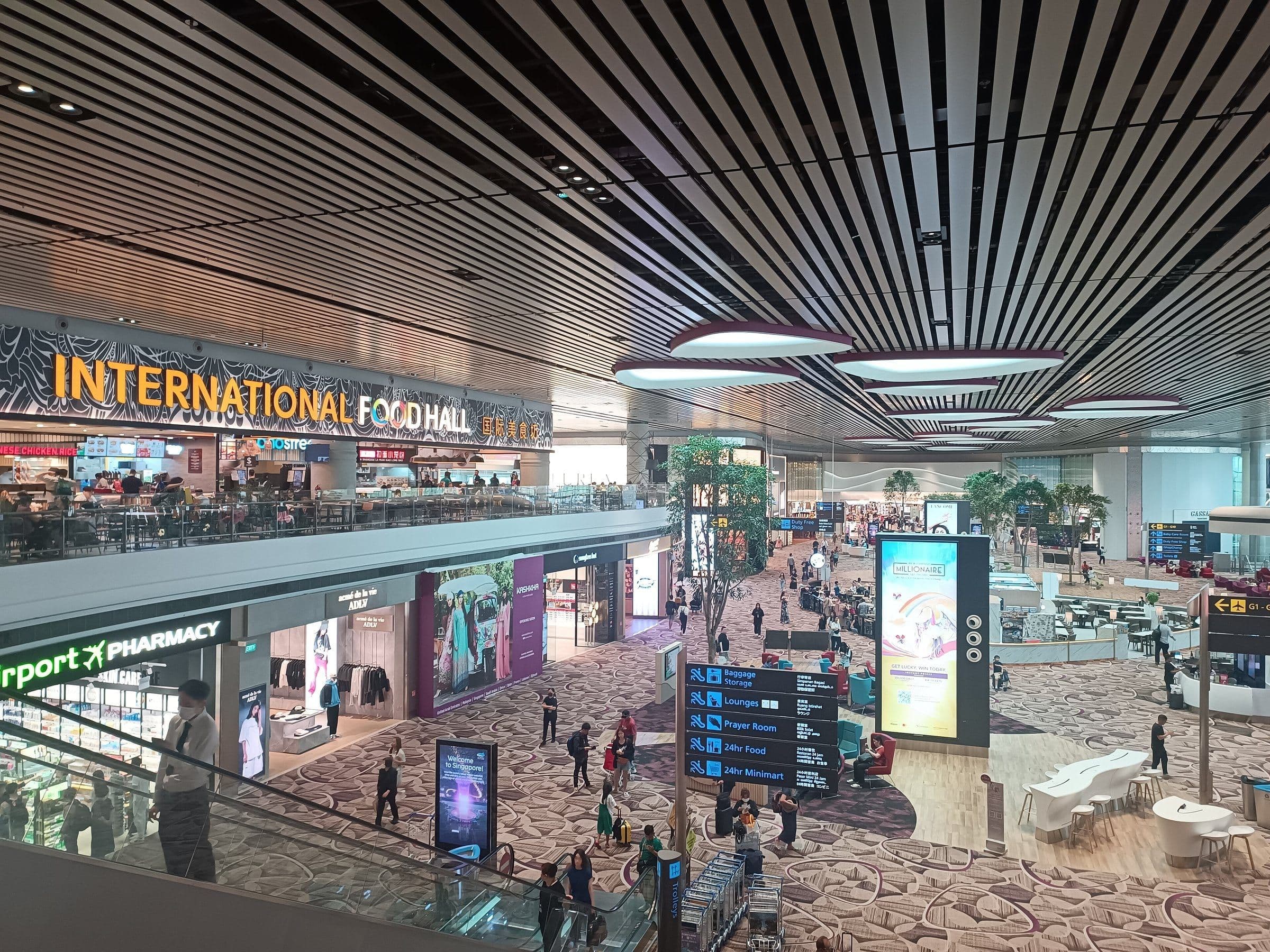
Inside the airport, Terminals 1, 2 and 3 are joined by the free Skytrain, which runs from 05:00 to 02:00. When it stops, passengers airside can walk between terminals on travelators, and those landside can use the link bridges on the mezzanine between Terminals 2 and 3 and the bridge from Terminal 1. Terminal 4, apart from the others, is reached by free shuttle bus: about ten minutes landside, ten to eighteen minutes airside.
The city is reached by rail on a branch of the East West MRT line from Tanah Merah, calling at Expo and then at Changi Airport station, which lies underground between Terminals 2 and 3. Under the Land Transport Authority's master plan, the Thomson-East Coast line will be extended to serve both Terminal 5 and the existing station, and the East West branch will be folded into it. On 25 July 2025 the authority announced a Cross Island Line interchange, CR1 Changi Terminal 5, which will connect the new terminal directly with the city centre.
Eight bus services run by four operators loop through Terminals 1, 2 and 3, with five of them continuing to Terminal 4; the stops are in the basement bus bays of the main terminals, and beside Car Park 4B at Terminal 4. Taxis are taken from ranks in the arrival halls, with an airport surcharge on every journey that starts there, and limousines and other transport can be arranged at the ground transport concierge. Car hire desks sit in each arrival hall.
Two links are unusual. The Changi Airport Connector, opened in October 2020, carries walkers and cyclists to East Coast Park, and Tanah Merah Ferry Terminal, for boats to the Indonesian islands, is joined to the airport by shuttle bus.
Changi's next act is Terminal 5, the largest project in its history. Lawrence Wong, Prime Minister and Minister of Finance, broke ground on 14 May 2025, and the terminal is expected to be ready in the mid-2030s, at least two years later than planned, a delay the former transport minister Khaw Boon Wan attributed to the pandemic.
It is designed for 50 million passengers a year, which would take the airport past 140 million in total, and it will stand on reclaimed land east of the present terminals, in the area known as Changi East. Part of the cost will be met by an increased levy on passengers.
The architects are KPF Singapore with Heatherwick Studio and Architects 61; Arup Singapore, Mott MacDonald Singapore and Surbana Jurong are the engineers, and DP Architects is designing the retail. Around the terminal, the third runway is being converted for civil use, and new rail lines are being planned to reach it.
The airport is also renewing what it has. Terminal 2 reopened in November 2023 after three and a half years of rebuilding; the private terminal on the JetQuay site is due in mid-2027; and the airport describes its approach to ageing infrastructure as continual upgrading rather than replacement, the reason a building opened in 1981 is still the front door of a hub that wins awards every year.
Jewel Changi Airport, opened on 17 April 2019, is the clearest statement of what the airport is trying to be. Announced in 2013 and built on the 3.5-hectare site of Terminal 1's old car park, which went underground, it is a terminal-shaped building that is not a terminal at all, but a nature-themed complex of gardens, shops and restaurants that ties Terminals 1, 2 and 3 together. It was developed by a joint venture of Changi Airport Group and CapitaLand, and cost S$1.7 billion.
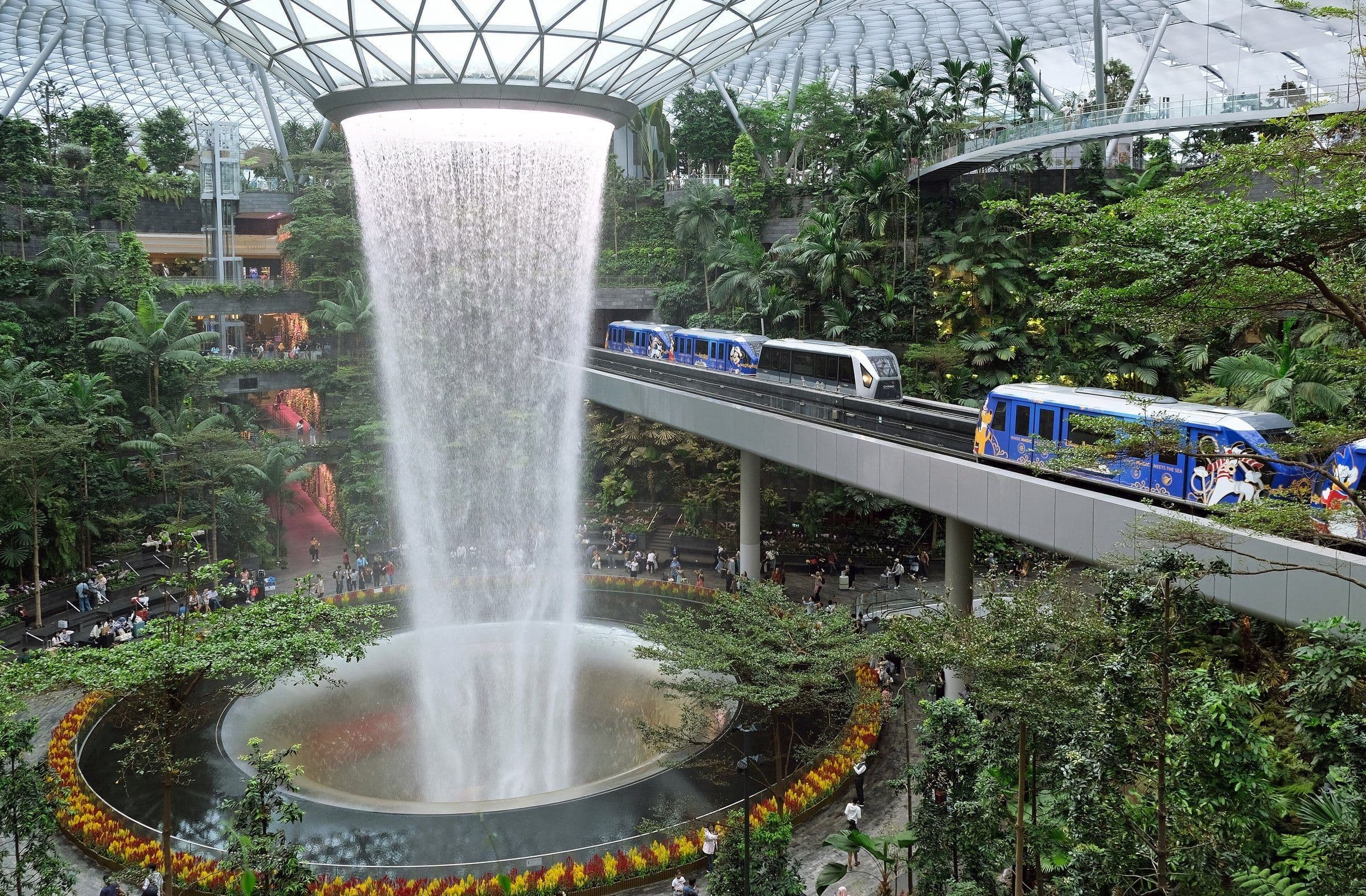
At its centre falls the Rain Vortex, 130 ft from the roof through seven storeys to a basin below, the tallest indoor waterfall in the world; the Skytrain between terminals runs through the glass beside it. Around the waterfall climbs the Shiseido Forest Valley, and the project also enlarged Terminal 1 to handle 24 million passengers a year, with its own check-in facilities and lounges.
The gardens are not an ornament grafted onto the airport; they are how Changi presents itself. The same idea runs through the butterfly garden, the orchid displays and the rooftop pools inside the terminals, and through the Changi Airport Connector opened in October 2020, which links the airport on foot and by bicycle to East Coast Park and includes the Changi Jurassic Mile, a trail lined with life-sized dinosaur sculptures.
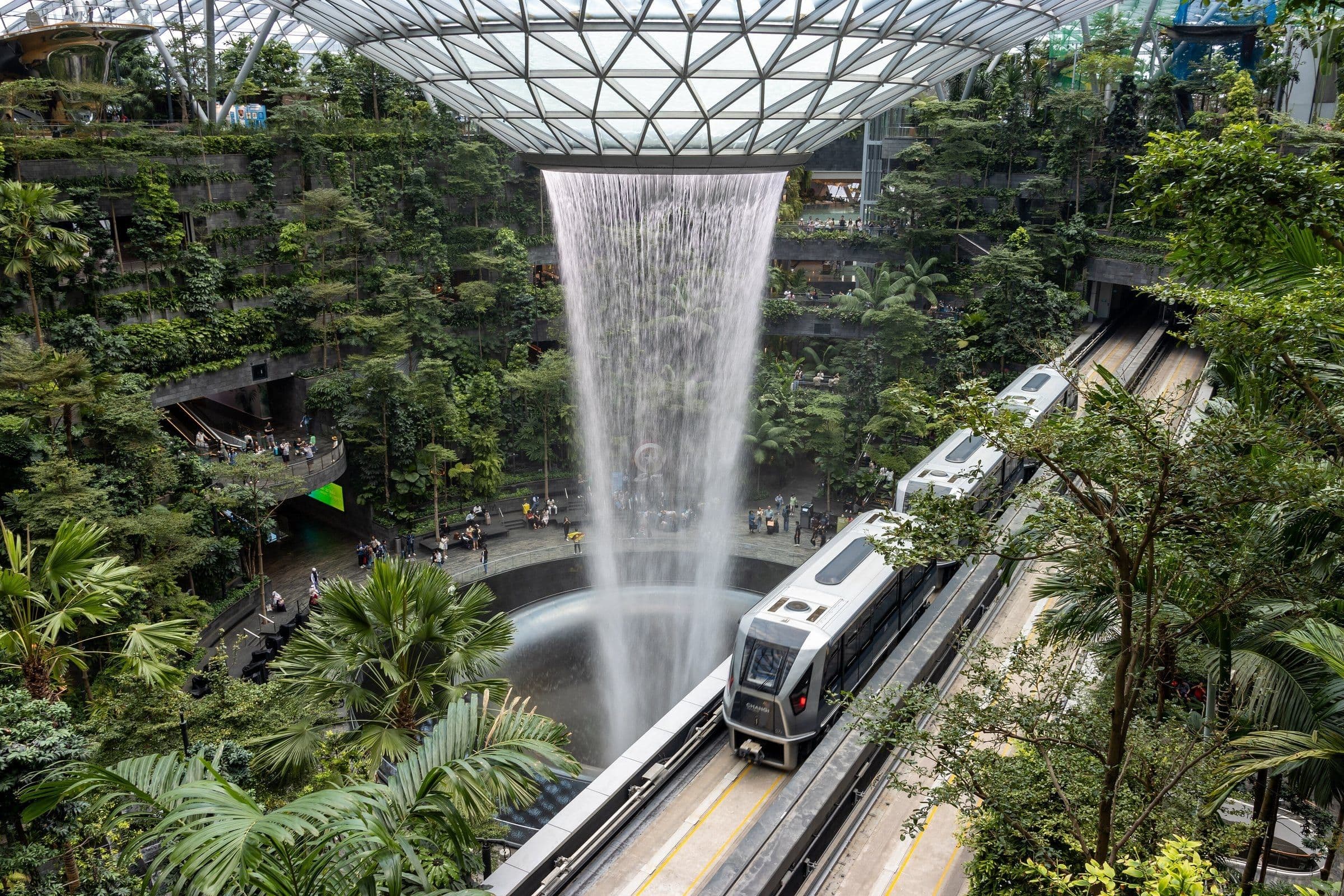
It also answers the problem of a hub with no home market. A passenger with a long connection is a captive customer with time to spend, and Changi has built the airport so that time is worth spending there: which is why the waterfall, the gardens and the shops sit where other airports put corridors.
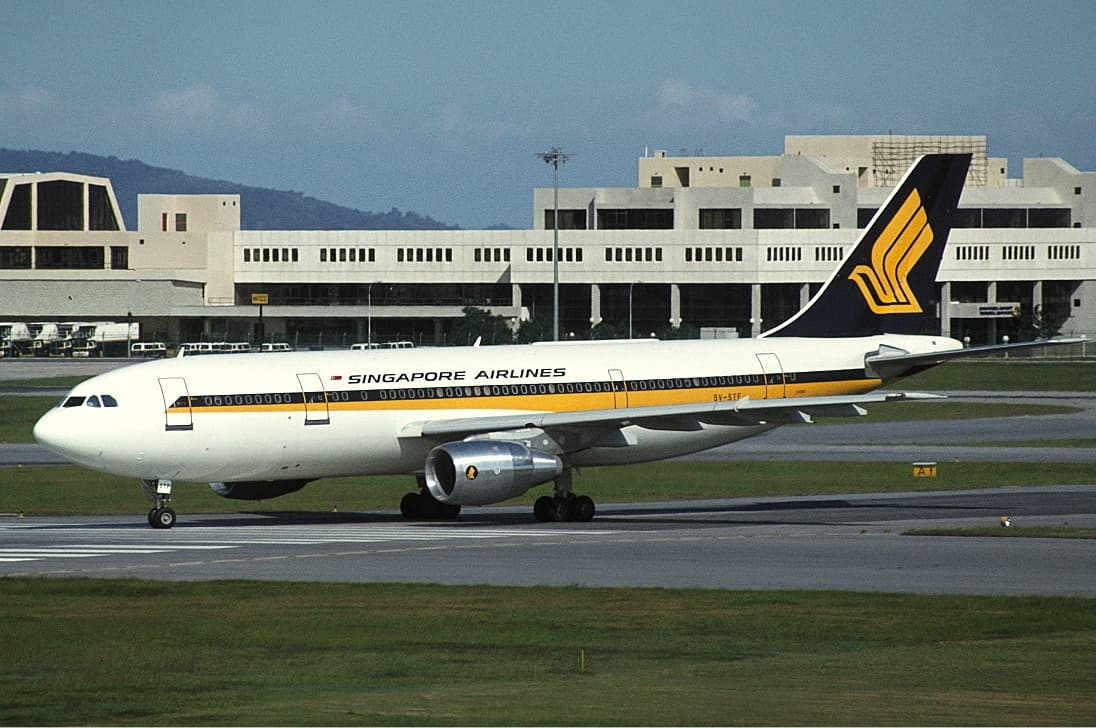
On 26 March 1991 four hijackers took Singapore Airlines Flight 117, an Airbus A310, and brought it to Changi, landing at 22:15. After more than eight hours, commandos of the Singapore Special Operations Force stormed the aircraft on the morning of 27 March. All four hijackers were killed; the 123 passengers and crew survived with minor injuries.
On 4 November 2010 Qantas Flight 32, an Airbus A380 with Rolls-Royce Trent 900 engines, suffered an uncontained engine failure after leaving Changi and returned to land. One engine could not be shut down because its control cables had been severed, and airport firefighters had to douse it for three hours to stop it. None of the 469 people aboard was hurt, and the aircraft was repaired.
On 27 June 2016 Singapore Airlines Flight 368, a Boeing 777 bound for Milan with 241 aboard, turned back about three hours out with an engine oil warning. It landed safely, but the right engine and wing caught fire; nobody was injured, and the aircraft returned to service after repair.
Three smaller events followed. A fire in the Terminal 2 departure hall on 16 May 2017 closed the building from 17:30 to 22:45 and sent forty flights to Terminal 3. On 29 November 2017 a tow tug caught fire while moving a Singapore Airlines Boeing 777-200; the crew member in the cockpit escaped down the slides, but the aircraft was damaged beyond repair. On 6 February 2018 a KAI T-50 of the Black Eagles display team, at the Singapore Airshow, veered off the runway on take-off and caught fire; the pilot suffered minor injuries, and the closure of runway 02L/20R delayed traffic.
Changi has been voted the world's best airport by Skytrax thirteen times (in 2000, 2006, 2010, every year from 2013 to 2020, in 2023 and again in 2025) and its eight consecutive wins have not been matched. It is praised as much for the dull virtues as the spectacular ones: cleanliness, efficiency, the ease of transit, the staff and the immigration service, in all three of which it placed second in the world in 2024. The Crowne Plaza inside the airport has been voted the world's best airport hotel ten times.
The awards matter commercially because Singapore is small. A hub with five million people behind it cannot rely on local demand; it has to be chosen by travellers going somewhere else. Everything from the waterfall to the free Skytrain is part of that argument.
What other airports have taken from Changi is the idea that an airport is a destination rather than a corridor: gardens, art, shops and hotels placed where a passenger actually is, rather than beyond the exit. Jewel in particular has been copied and studied since it opened, and the 40-metre Rain Vortex has become the best-known image of any airport in the world.
The rest of the story is Singaporean rather than aviation: a decision taken in 1975 to move an airport across the island before the city could grow around it, a military runway reused rather than replaced, and a fifth terminal being built on ground reclaimed from the sea because the island has no other space to give.
Not open until the last quarter of 2027.
Opened 1981
At the northern end; opened with the airport on 1 July 1981.
Opened 1990
At the eastern end; opened on 22 November 1990.
Opened 2008
At the western end; opened on 9 January 2008.
Opened 2017
At the southern end; opened on 31 October 2017.
Opened 2019
Gardens, shops and the Rain Vortex under a glass dome, linking Terminals 1, 2 and 3.
1937
1955
1972
1975
July 1, 1981
December 29, 1981
November 22, 1990
2004
March 26, 2006
January 9, 2008
June 16, 2009
2012
October 31, 2017
April 17, 2019
May 2020
November 1, 2023
May 14, 2025
2027
Types whose story is bound up with this airport.
Checked September 19, 2026