Aircraft
Concorde
Aérospatiale / British Aircraft CorporationFrance and United Kingdom
- Role:
- Supersonic airliner
- First flight:
- 1969
1,156kt
Cruise speed
3,348nm
Range
General
- Role:
- Supersonic airliner
- Status:
- Retired
Programme
- First flight:
- March 2, 1969
- Introduction:
- 1976
- Produced:
- 1966 to 1979
- Number built:
- 20
Crew & capacity
- Crew:
- 3
- Capacity:
- 100 passengers
Dimensions
- Length:
- 204 ft
- Height:
- 40 ft
- Wingspan:
- 84 ft
- Wing area:
- 3,856 ft²
Weights
- Empty weight:
- 174,749 lb
- Maximum takeoff weight:
- 407,998 lb
Powerplant
- Engine:
- 4 × Rolls-Royce/SNECMA Olympus 593 Mk 610 turbojets with afterburners, 14,700 kg dry and 17,260 kg with reheat each
Performance
- Maximum speed:
- 1,177 kt
- Ceiling:
- 60,039 ft
Price
- New in 1977:
- ≈ $31.1M
- Used market:
- No second-hand market: every surviving airframe is museum property. The five aircraft no airline would buy were handed to British Airways and Air France for £1 and one French franc each in 1979 to 80.
As of 2026-09. See references.
Converted at European Central Bank reference rates of 2026-09-01.
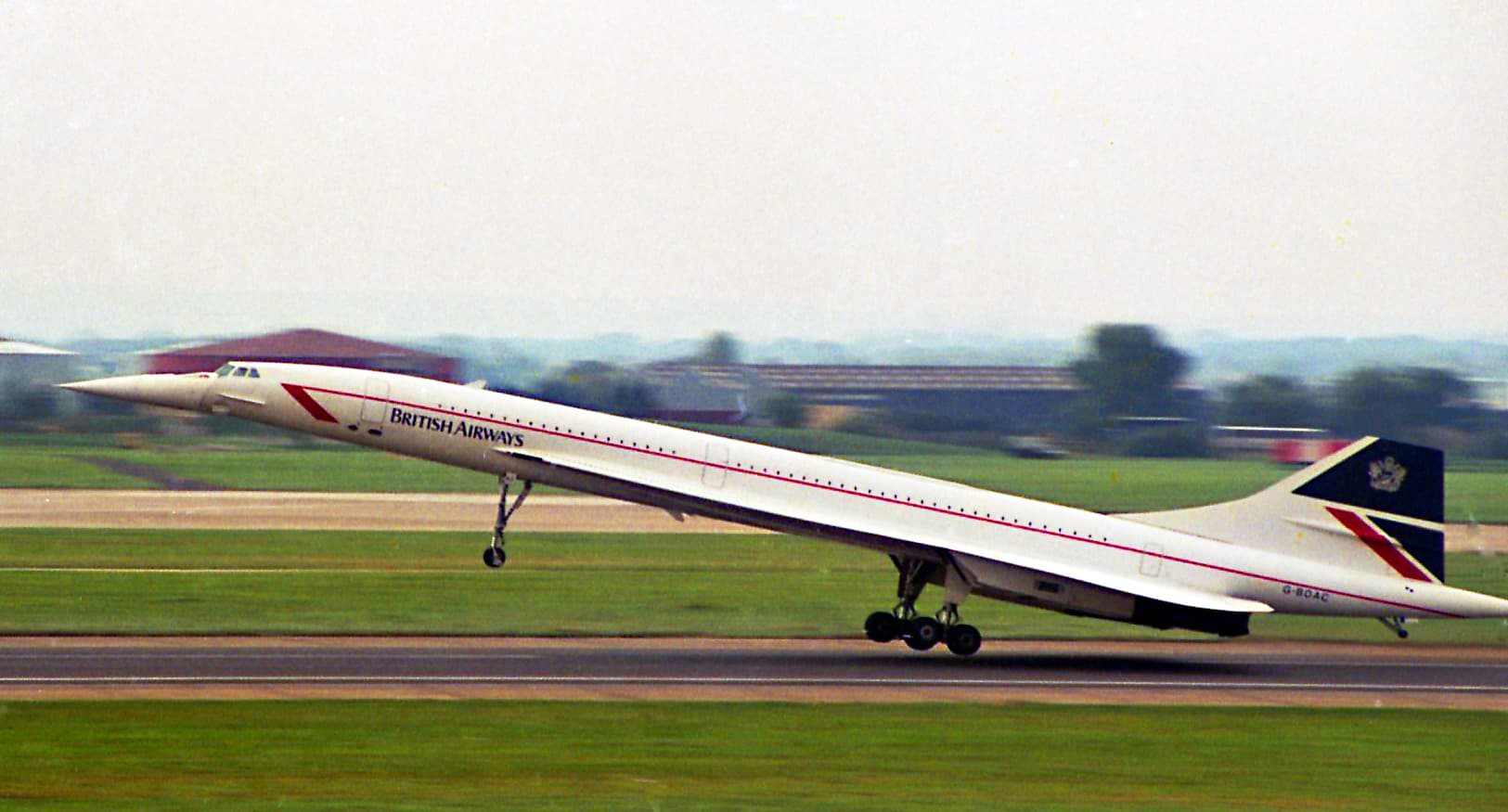
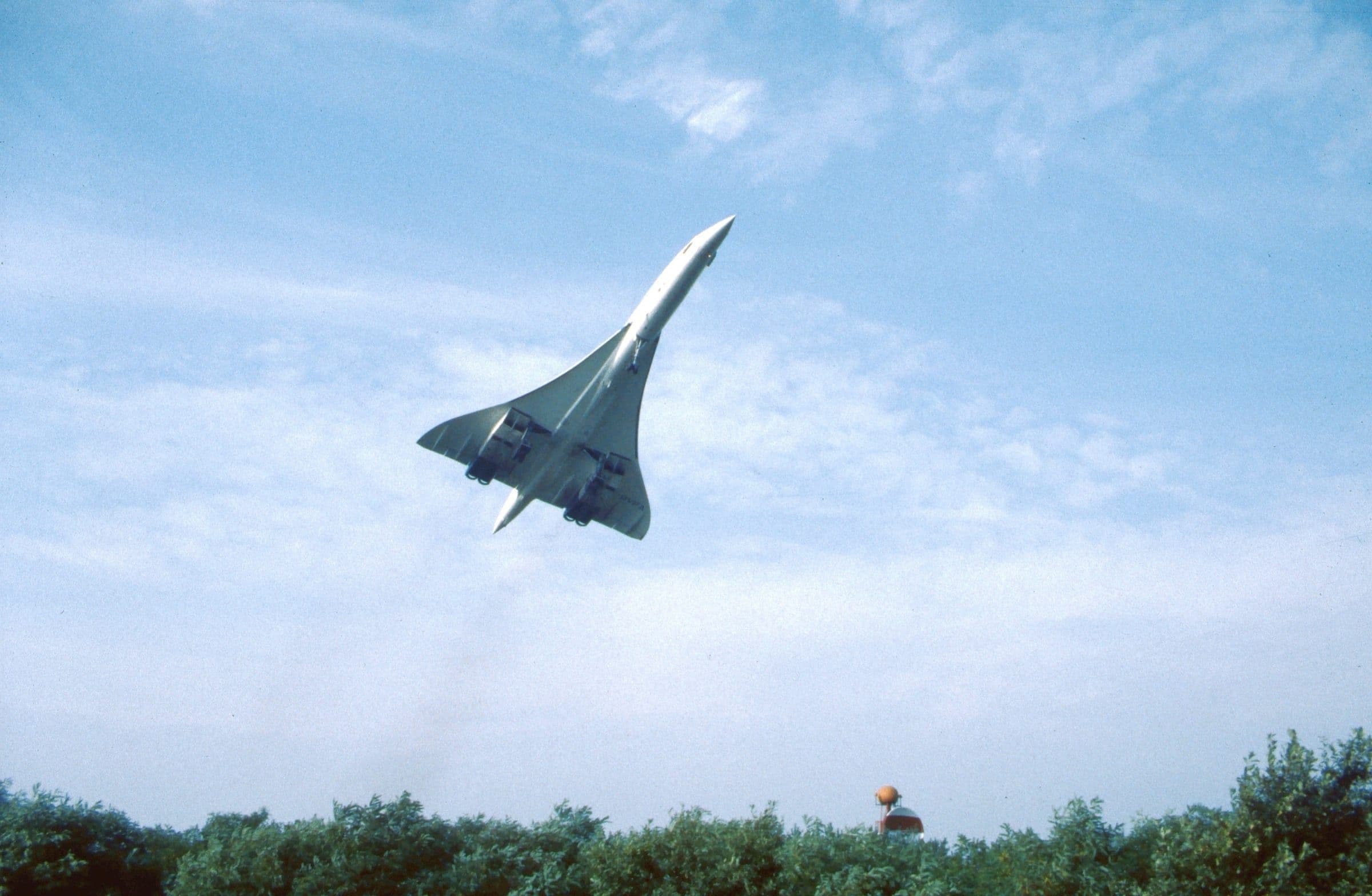
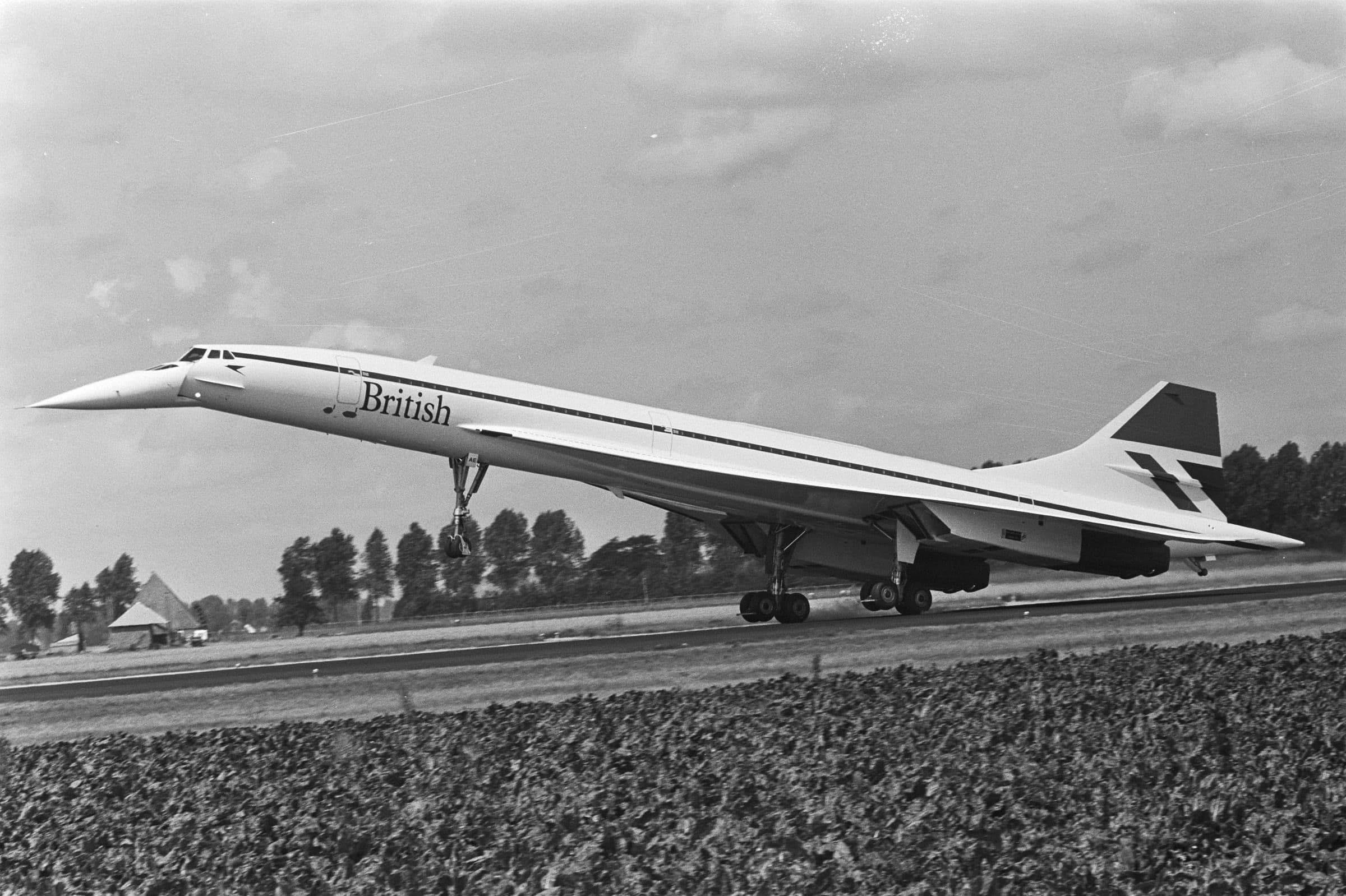
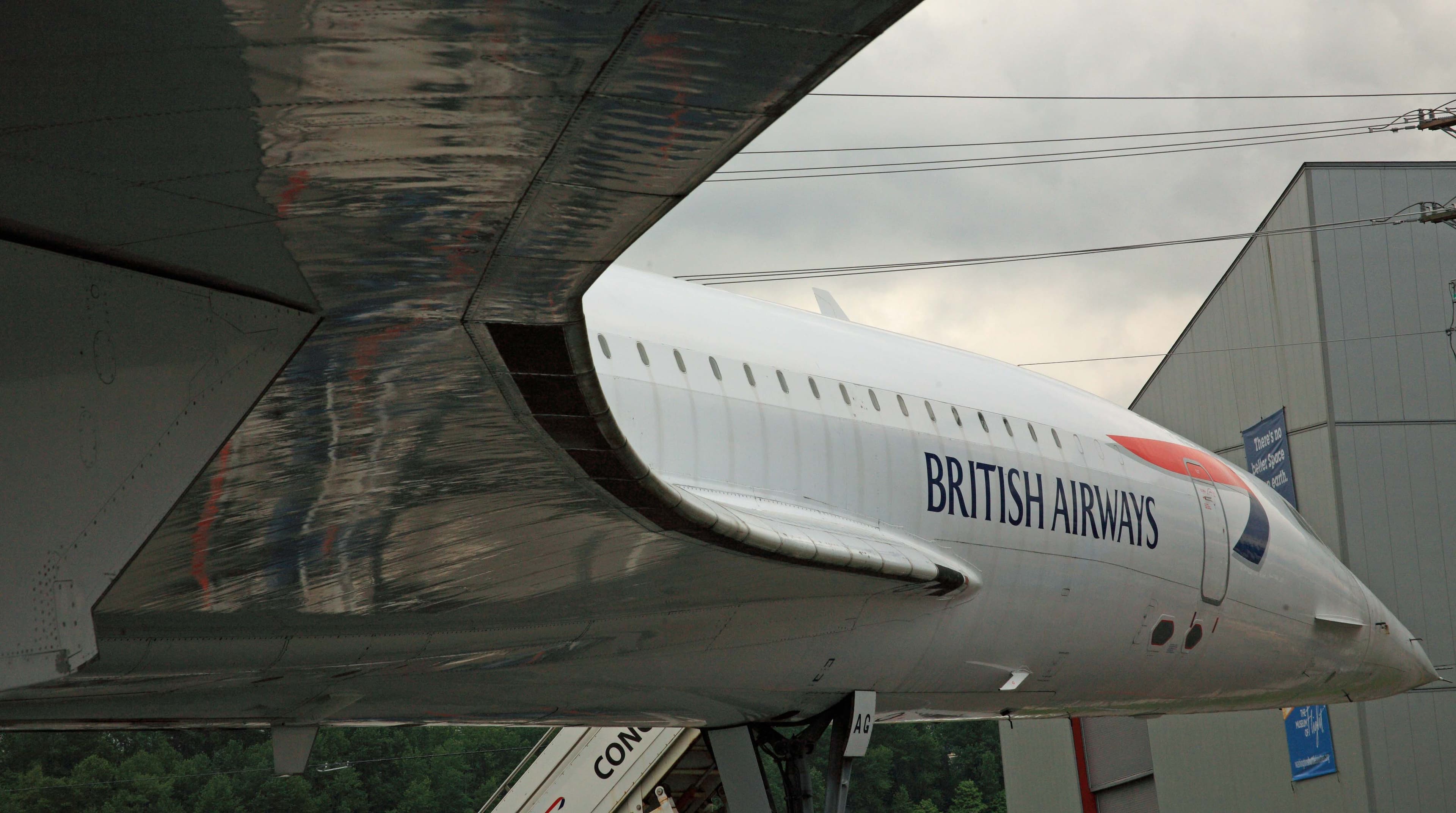
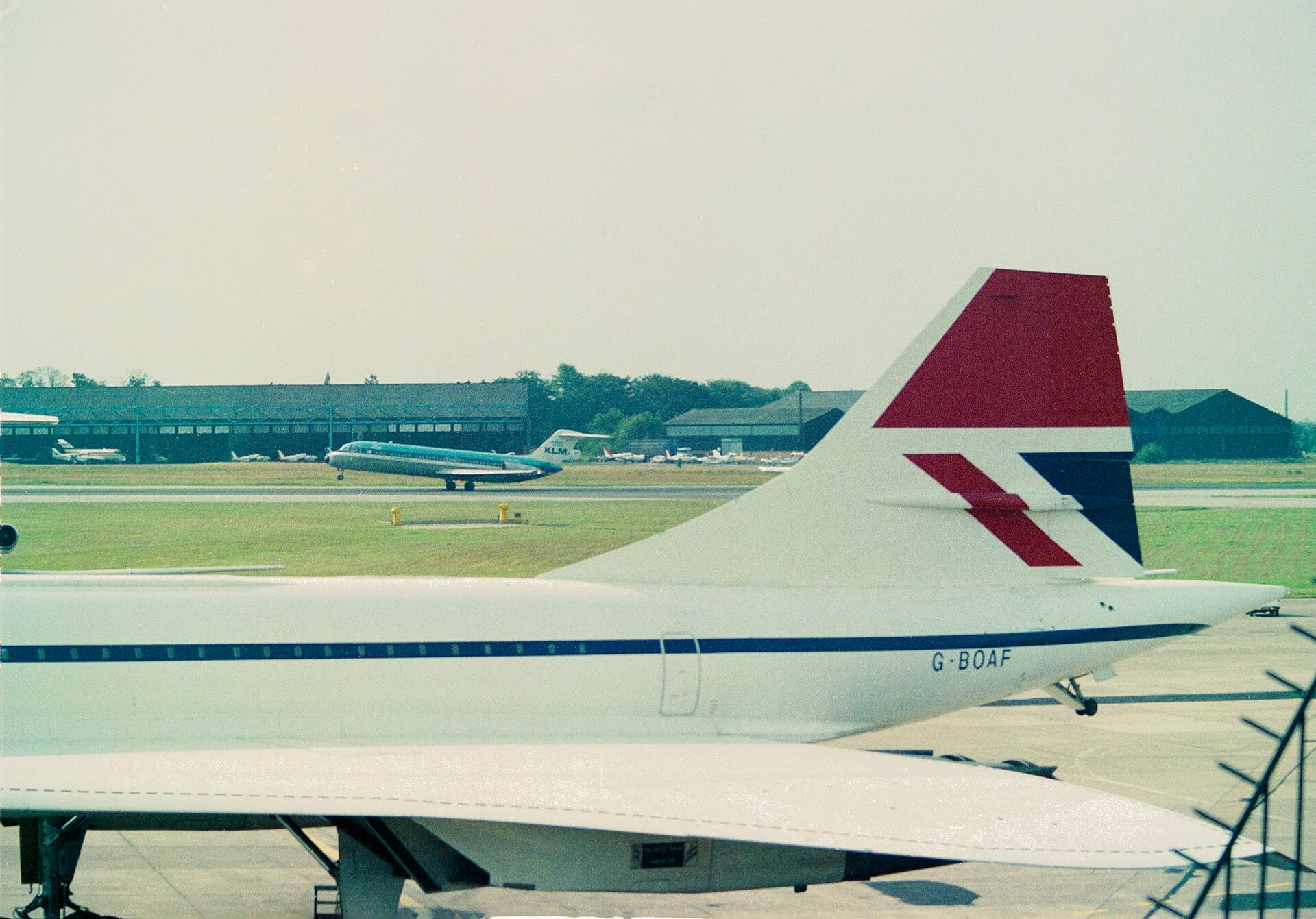
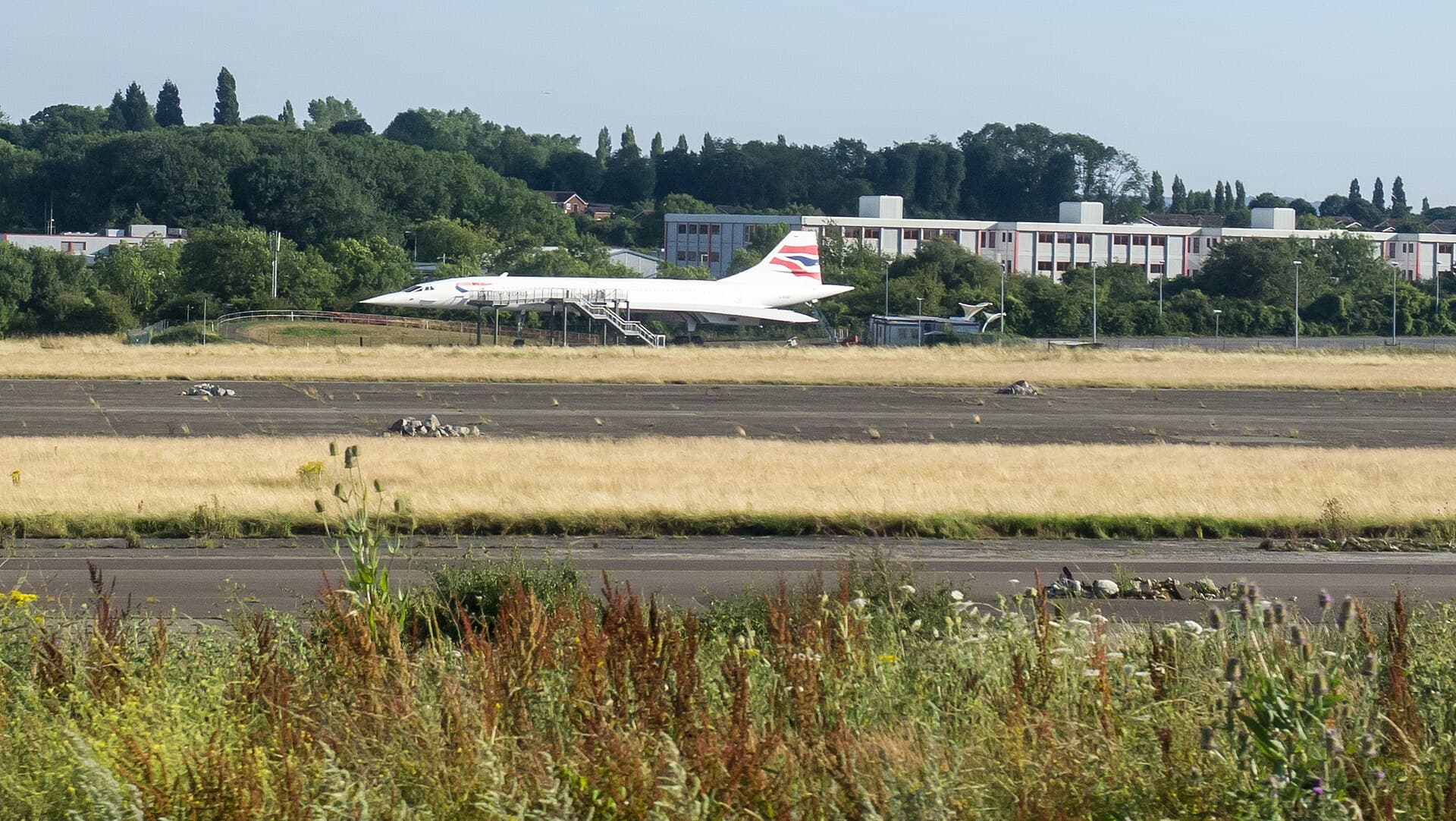
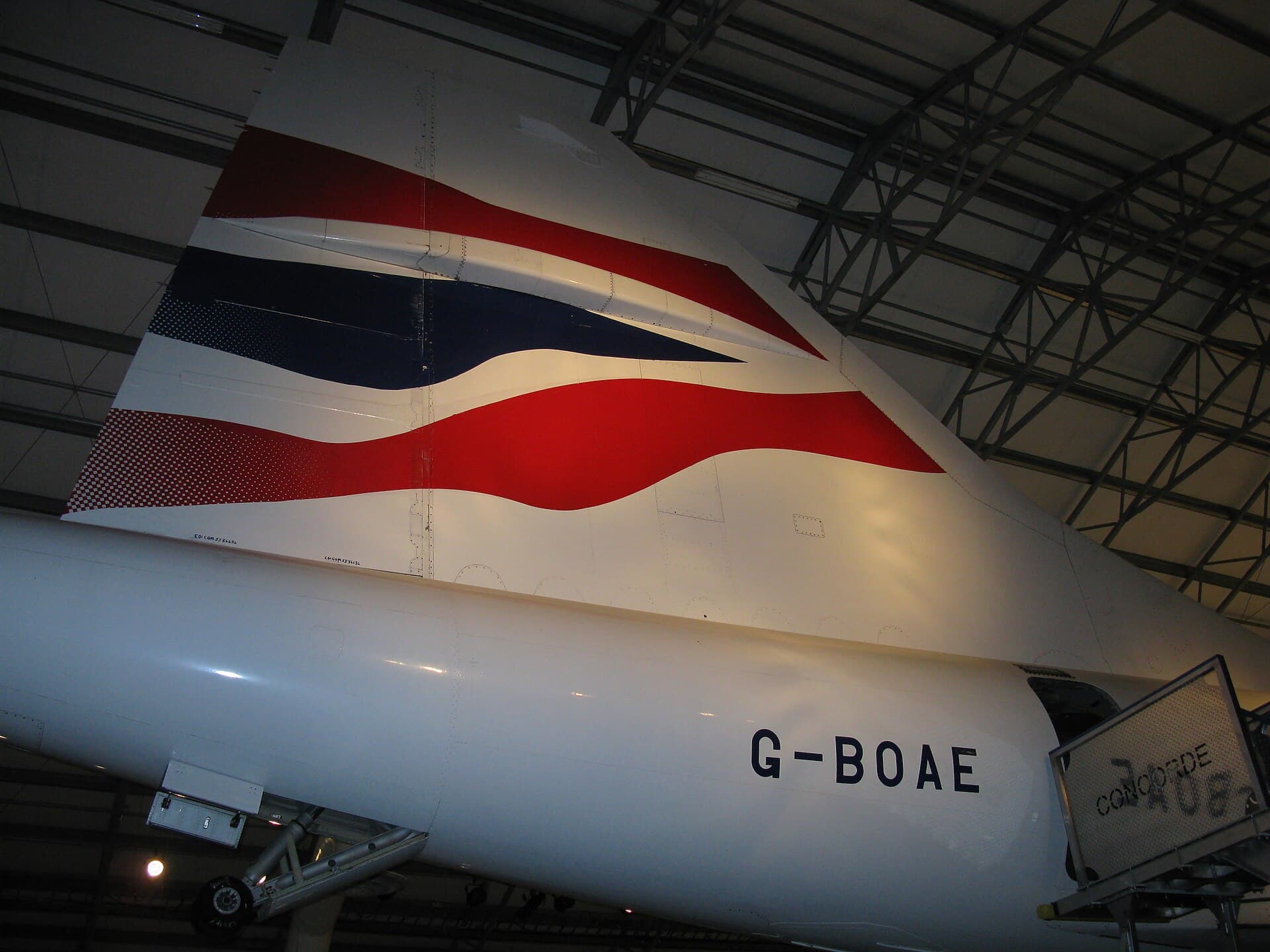
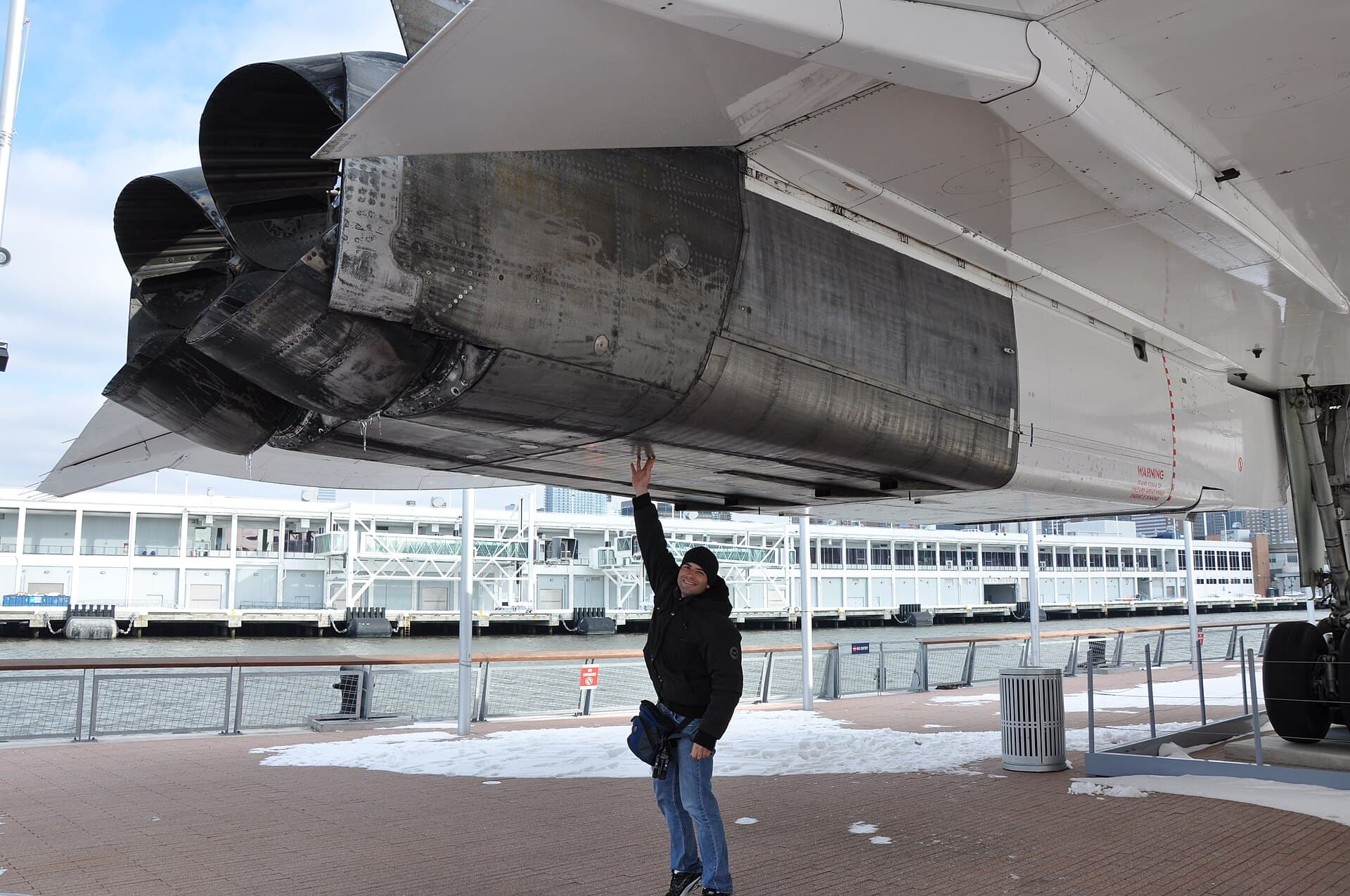

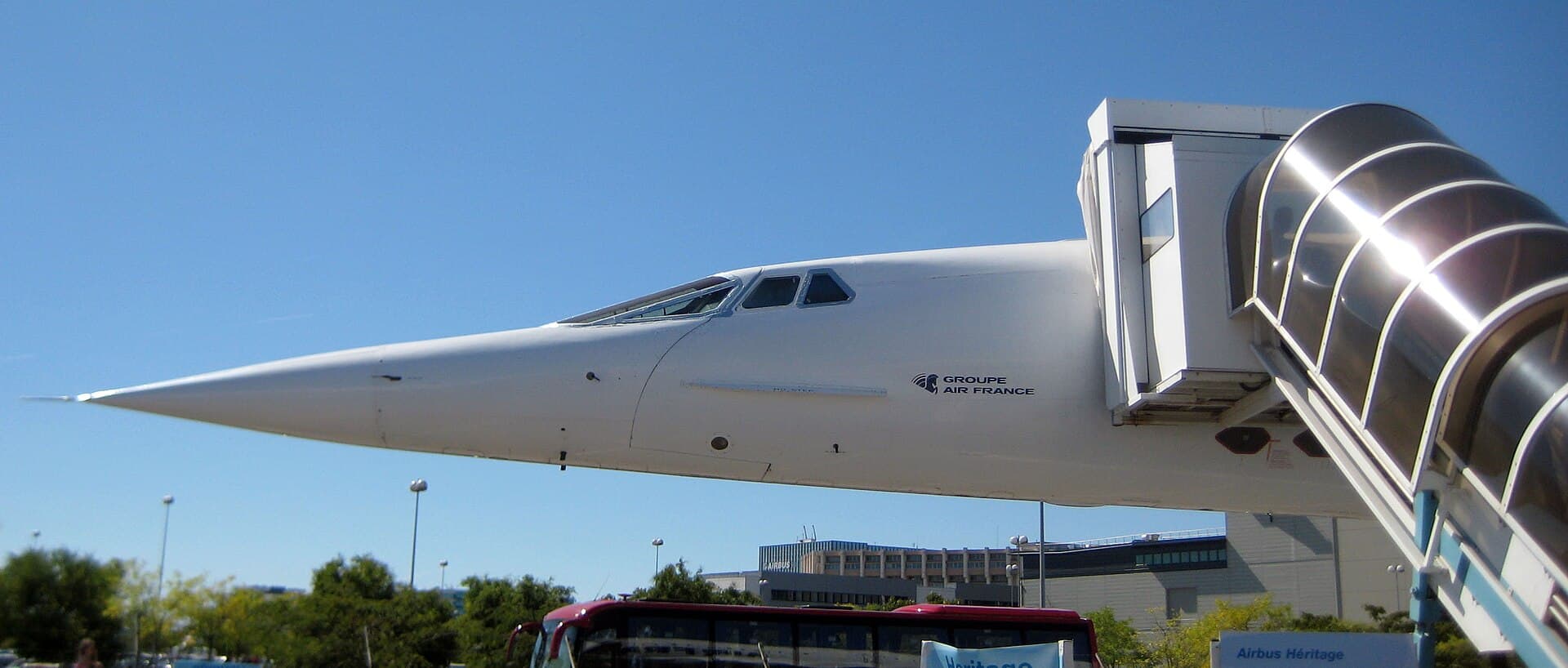
Concorde was a supersonic airliner developed jointly by France and the United Kingdom, and one of only two ever to carry fare-paying passengers. It cruised at about Mach 2.02, roughly 1,160 kt, at up to 60,000 ft, an altitude at which the sky darkens and the curvature of the Earth becomes visible from the cabin windows.
The programme began as separate national studies in the late 1950s and became a single Anglo-French project under a government treaty signed in 1962. Sud Aviation, later Aérospatiale, and the British Aircraft Corporation shared the airframe; Rolls-Royce and SNECMA shared the engines. The French prototype flew first, from Toulouse on 2 March 1969, and commercial service began in January 1976.
Twenty aircraft were built between 1966 and 1979: two prototypes, two pre-production aircraft and sixteen production airframes. Only fourteen ever entered airline service, and only with British Airways and Air France: the flag carriers of the two countries that had paid for it. Every other airline that had taken options abandoned them.
Concorde flew commercially for twenty-seven years, until 2003. What separated it from every other airliner was not merely speed but the fact that supersonic cruise was its normal condition rather than a brief demonstration: it spent most of a transatlantic crossing above Mach 2, sustained by engines and an airframe designed for nothing else. No supersonic airliner has flown a scheduled passenger service since.
Development

Both Britain and France began studying supersonic transports in the 1950s, and both reached the same conclusion independently: the aircraft was technically achievable and nationally unaffordable. The development cost of an airliner that had to cruise for hours at twice the speed of sound, with an engine, structure and control system unlike anything in airline service, exceeded what either country was willing to spend alone.
The answer was political. In November 1962 the two governments signed a treaty committing them jointly to the project, an agreement between states rather than between companies, and deliberately drafted without a straightforward exit clause. Work was divided across the Channel: Sud Aviation (later Aérospatiale) and the British Aircraft Corporation shared the airframe, while Bristol Siddeley, absorbed into Rolls-Royce, and SNECMA shared the Olympus engine, which was derived from a military powerplant and progressively developed for sustained supersonic cruise.
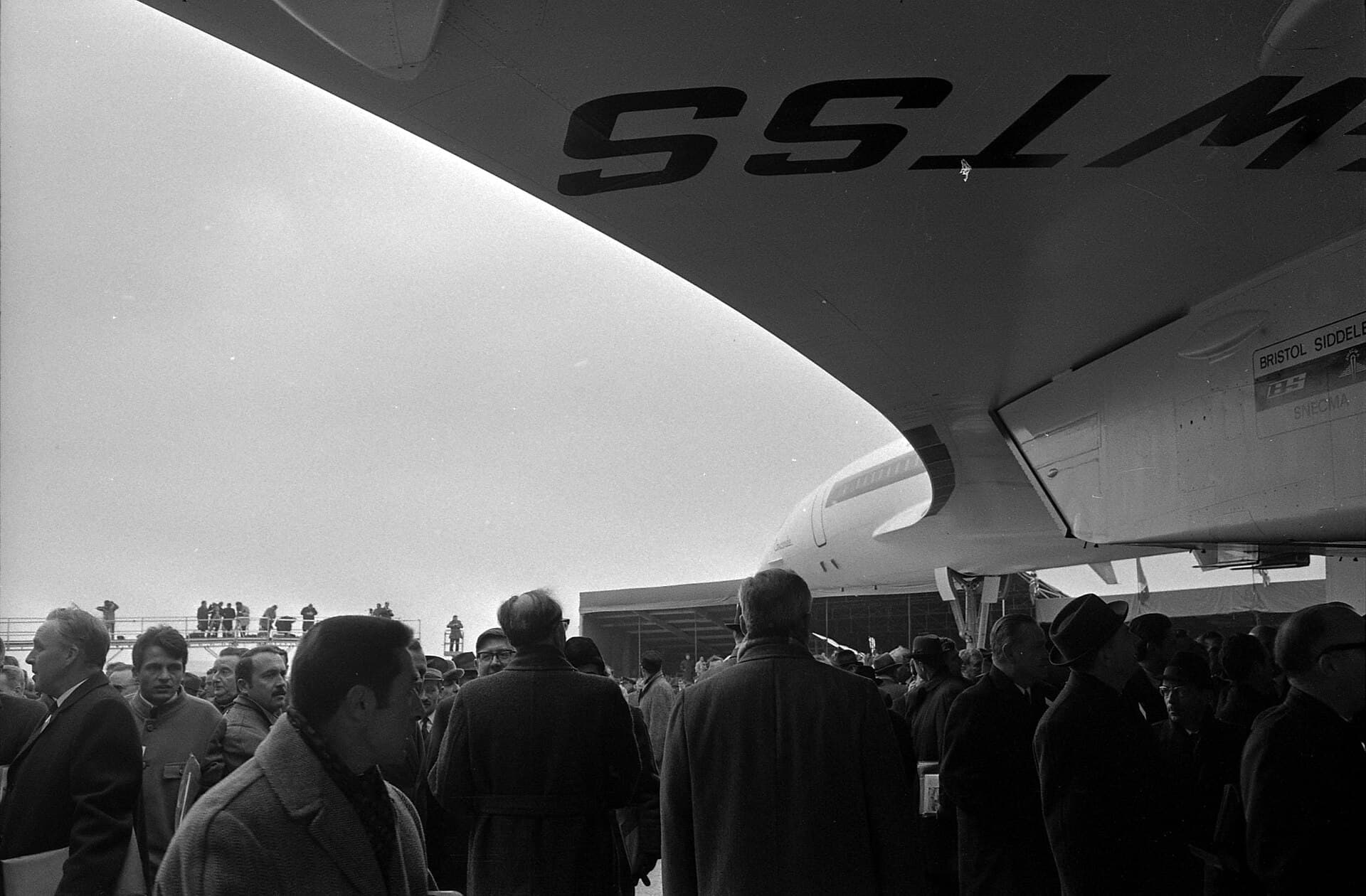
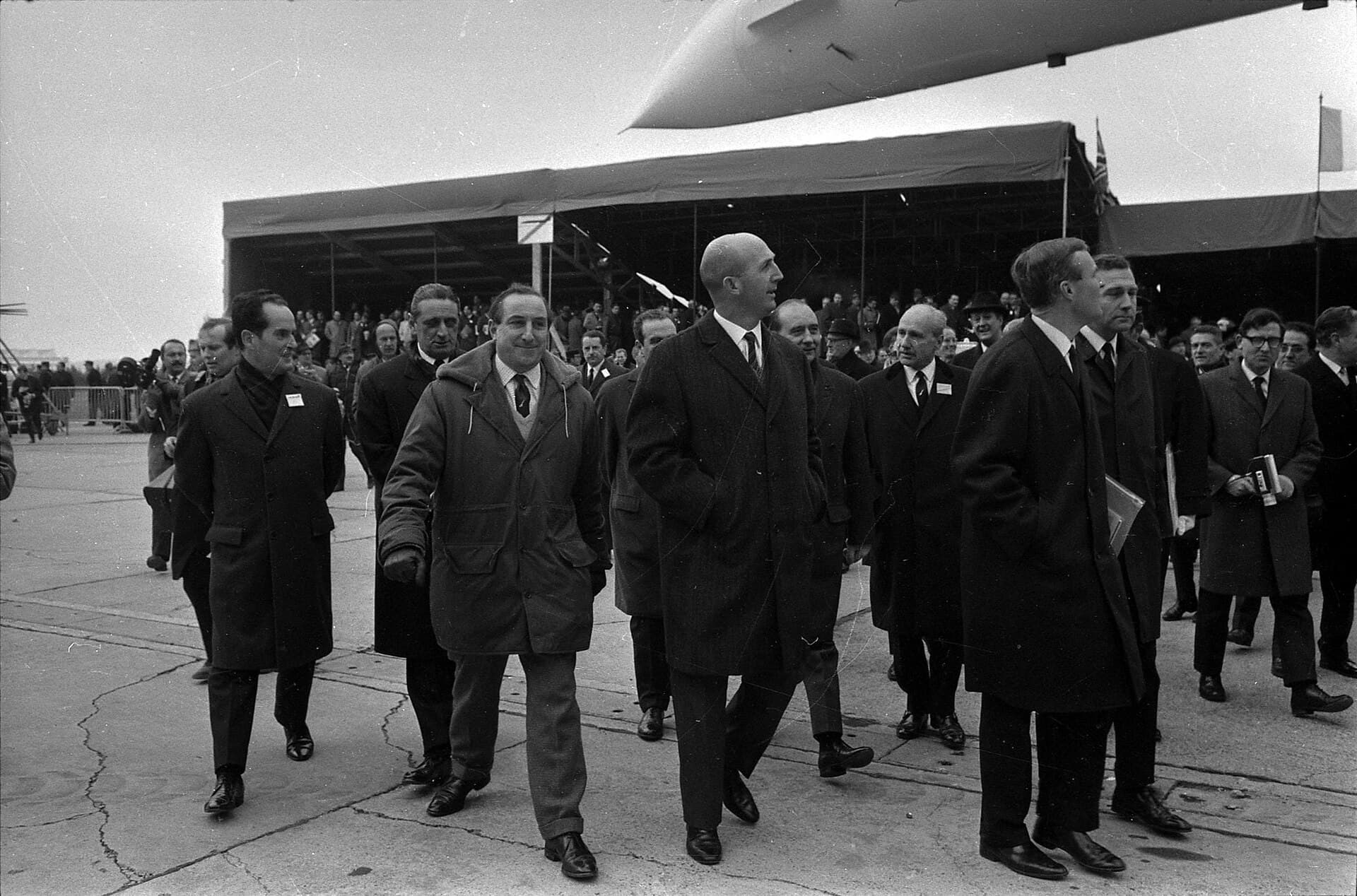
Two prototypes were built, one in each country, to the same design. Concorde 001 flew from Toulouse on 2 March 1969 with André Turcat in command; 002 followed from Filton on 9 April, flown by Brian Trubshaw. Two pre-production aircraft, 101 and 102, came next, incorporating changes learned in flight testing, a longer fuselage and a revised tail among them, and then sixteen production airframes, the last completed in 1979.
The flight-test programme was long by the standards of the time, because much of what needed proving had no precedent. Certification required demonstrating not only handling and performance but the behaviour of an airframe that heated substantially in cruise, an intake system that had to slow supersonic air before it reached the engines, and a fuel system doubling as a trim system. Concorde was certified in 1975, thirteen years after the treaty and six years after the first flight, and entered service on 21 January 1976.
Design
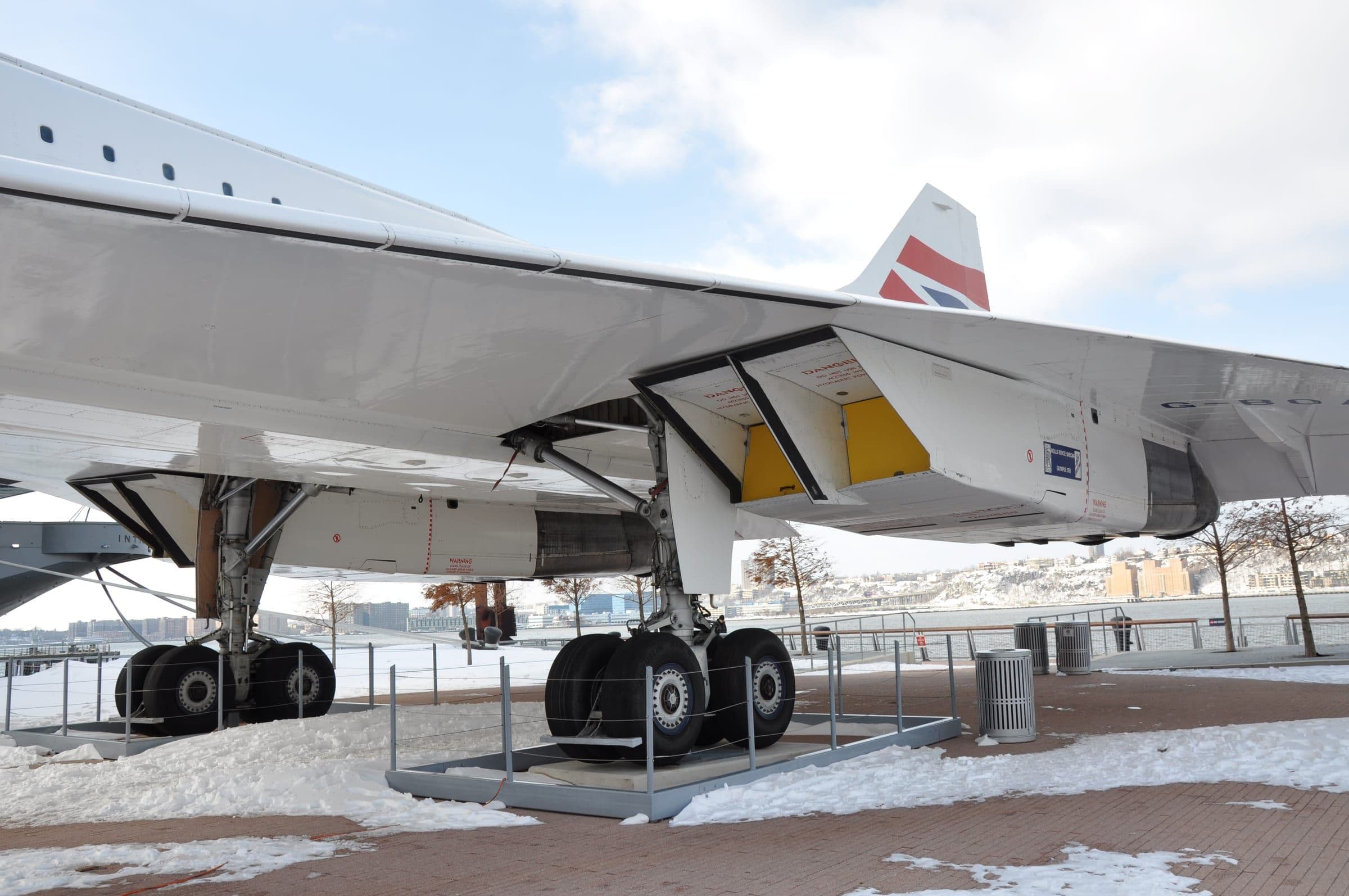
Every visible feature of Concorde follows from one requirement: to cruise efficiently at twice the speed of sound for several hours, and still be able to approach an ordinary runway at an ordinary airport.
The wing is a slender ogival delta, a continuously curved planform rather than a straight-edged triangle. At Mach 2 it presents very little frontal area and keeps its leading edge behind the shock cone, minimising wave drag. The problem with such a wing is low speed: it is thin, highly swept and generates little conventional lift below about 220 kt. Concorde solved this with vortex lift. At high angles of attack the sharp leading edge sheds two powerful vortices that sit over the upper surface, and the low pressure in their cores produces the lift the wing cannot otherwise make. This is why Concorde approached nose-high and why it needed no flaps or slats at all, an unusual absence on an airliner.
That nose-high attitude blinded the crew, which produced the feature everyone remembers. The entire nose hinged downward hydraulically: fully drooped for landing, partially for taxi and take-off, and raised in cruise behind a retractable visor that streamlined the windscreen. It is a mechanical solution to a purely aerodynamic problem.
The intakes were arguably the harder engineering. An Olympus turbojet cannot ingest air at Mach 2; the flow must be slowed to subsonic before it reaches the compressor face. Each intake used moveable ramps and a spill door to position a system of shock waves precisely, decelerating the air and recovering pressure from it. The intake was therefore not a duct but a control system, and it contributed a substantial share of the total thrust at cruise. Afterburners, the only ones ever fitted to a commercial airliner, were used for take-off and for the transonic acceleration, then shut down, because Concorde cruised supersonically on dry thrust alone.
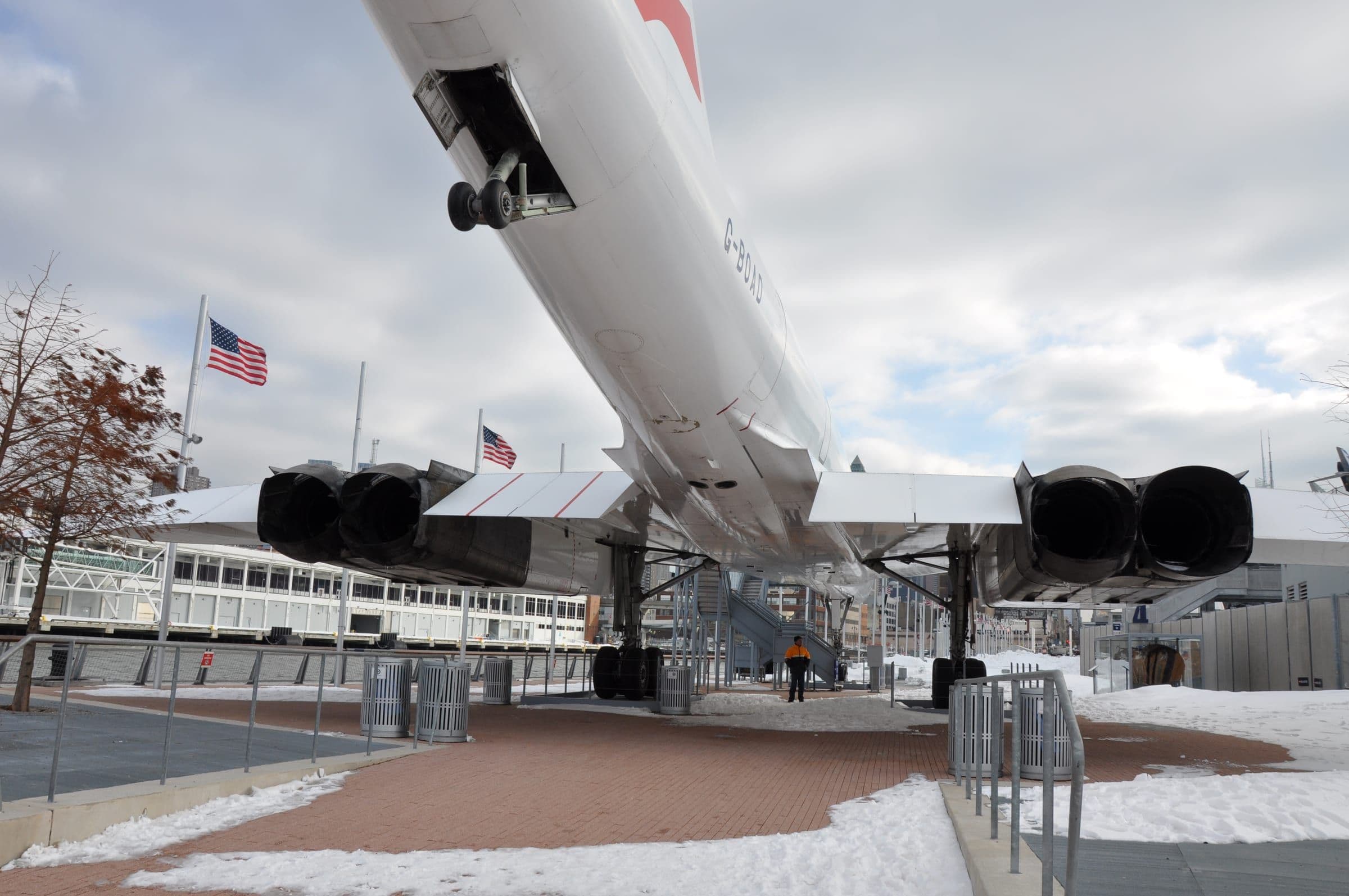
Sustained Mach 2 also heats an aeroplane. Kinetic heating raised skin temperatures well above ambient, the nose hottest of all, and the airframe grew measurably in flight, by enough that a gap opened at the flight engineer's console and closed again on cooling. The structure was conventional aluminium alloy rather than titanium, which constrained the cruise speed: the airframe was limited by what its material could tolerate over thousands of cycles, not by available thrust.
Fuel did double duty. As the aircraft accelerated through the transonic region its centre of lift moved rearward, and rather than trimming with control surfaces, which would have cost drag for the whole cruise, fuel was pumped between trim tanks to move the centre of gravity to match. Balance was managed by moving weight, continuously, for the duration of the flight.
Technical characteristics
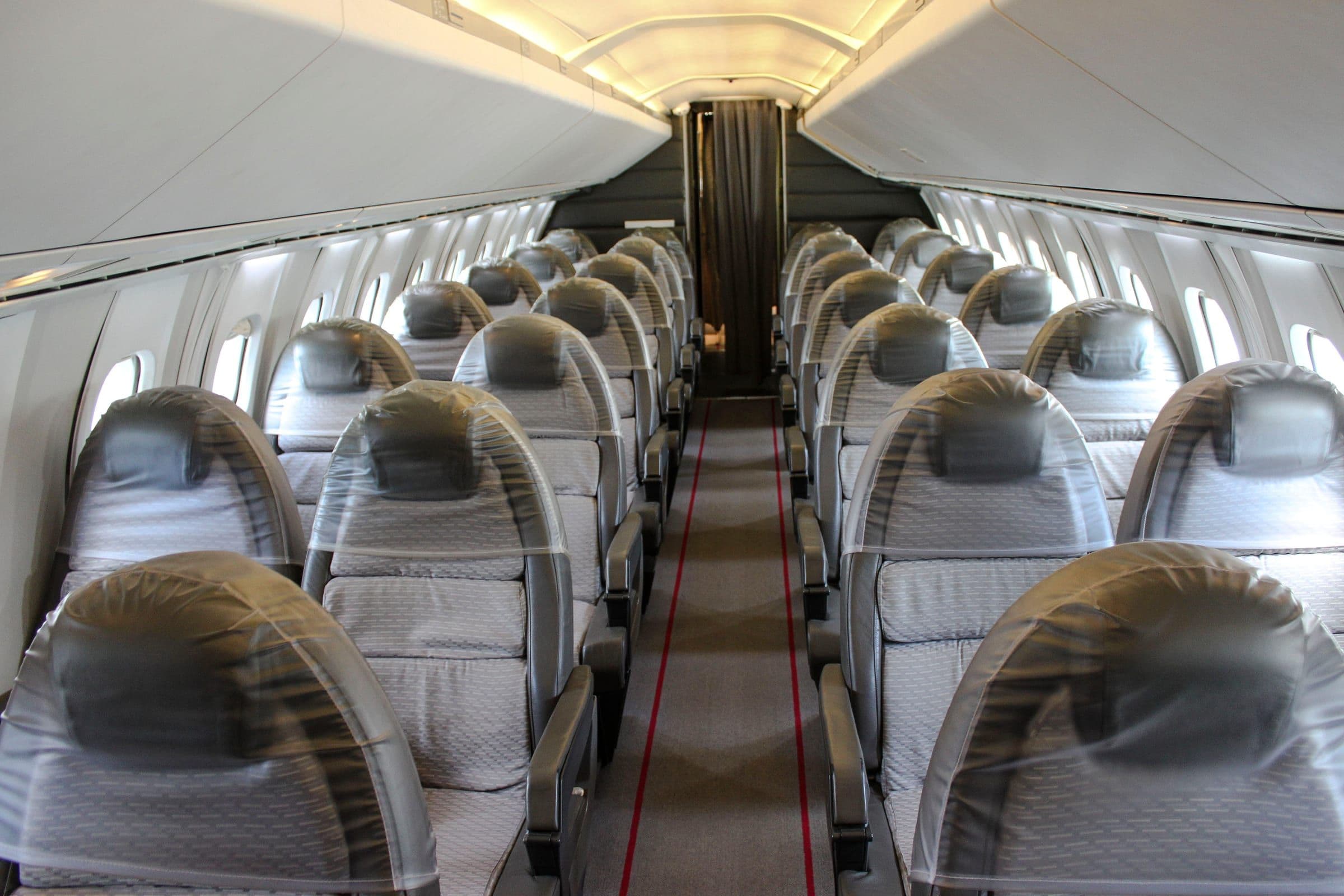
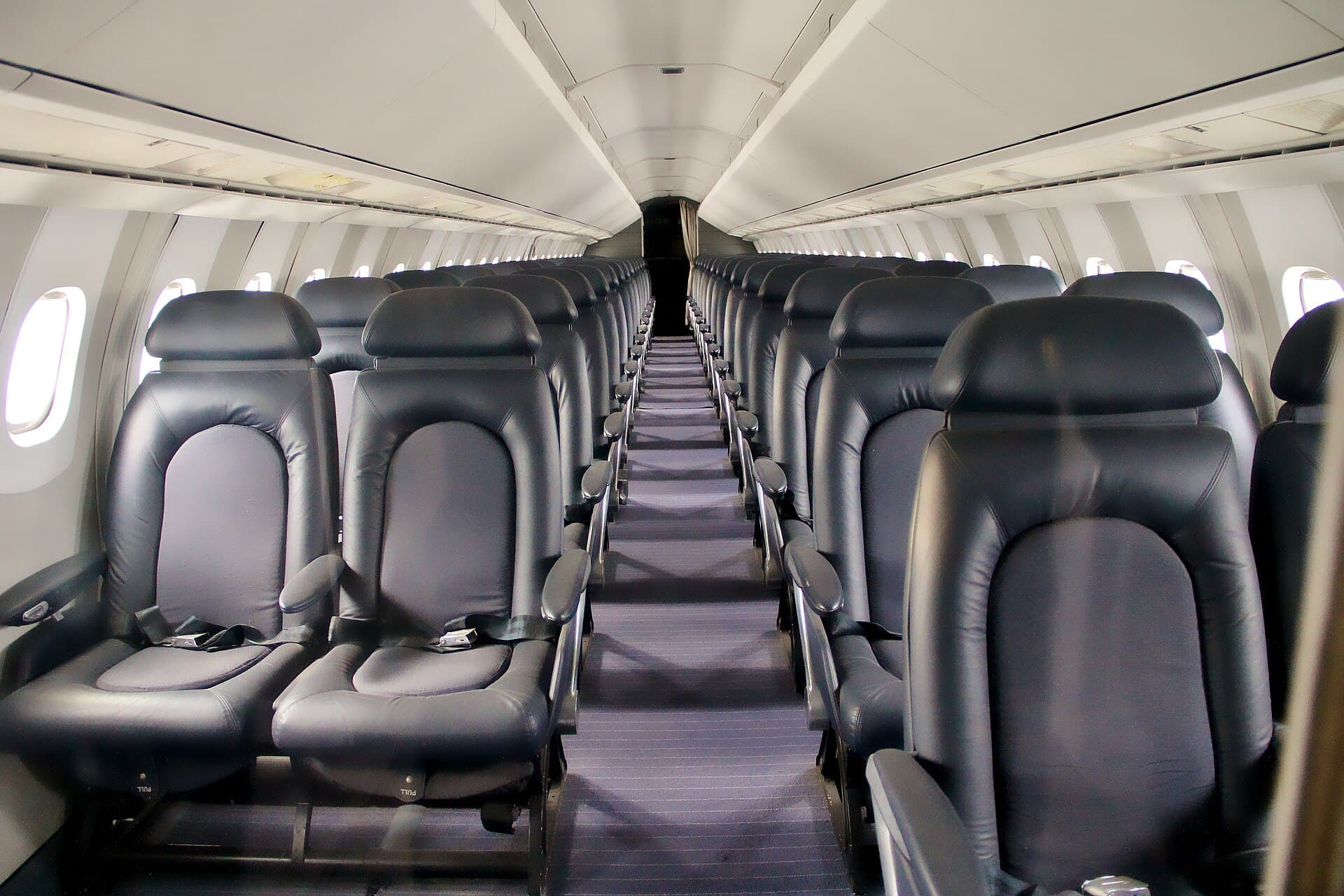
Concorde was flown by three: a pilot, a co-pilot and a flight engineer, supported by six cabin crew. Airline aircraft typically carried a hundred passengers in a single narrow cabin, four abreast, a fuselage 204 ft long but only 8.63 ft wide internally, closer to a business jet in cross-section than to a wide-body.
The wing spans 83.86 ft over a gross area of 3,856.2 ft². Empty weight was about 174,750 lb and maximum take-off weight about 407,998 lb, which means fuel and payload together accounted for well over half the aircraft leaving the ground: a fraction far higher than a subsonic airliner of comparable size, and a direct consequence of the fuel needed for supersonic cruise.
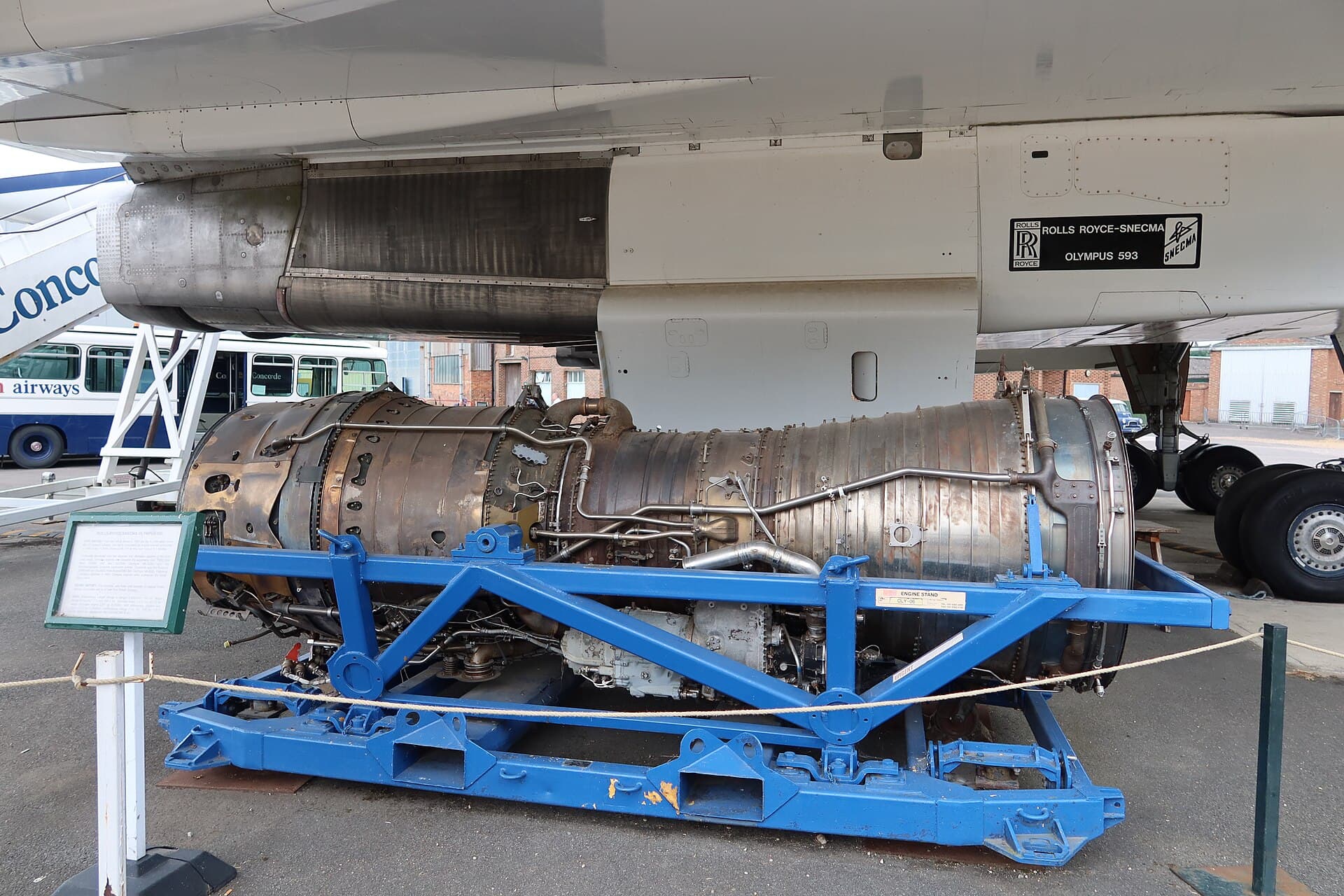
Power came from four Rolls-Royce/SNECMA Olympus 593 Mk 610 turbojets, each rated at about 32,400 lb of thrust dry and 38,050 lb with reheat. Reheat was used only for take-off and for pushing through the transonic drag rise; the cruise itself was flown dry, which is the single most important fact about the engine installation and the reason sustained Mach 2 was economically conceivable at all.
The published performance figures are a cruise of about Mach 2.02, roughly 1,160 kt, a maximum around 1,177 kt, and a maximum cruise altitude of 60,000 ft. Range is quoted at about 3,300 nm, sufficient for the North Atlantic and very little else, which shaped the aircraft's entire commercial history.
Sources differ on several of these numbers, and the differences are usually explicable rather than careless: prototypes were shorter than production aircraft, some weights are quoted as rounded imperial figures, and museums record the specific airframe they hold rather than the type in general. Where figures here conflict with another authority, the reference cited is the one that documents that particular value.
Flight characteristics
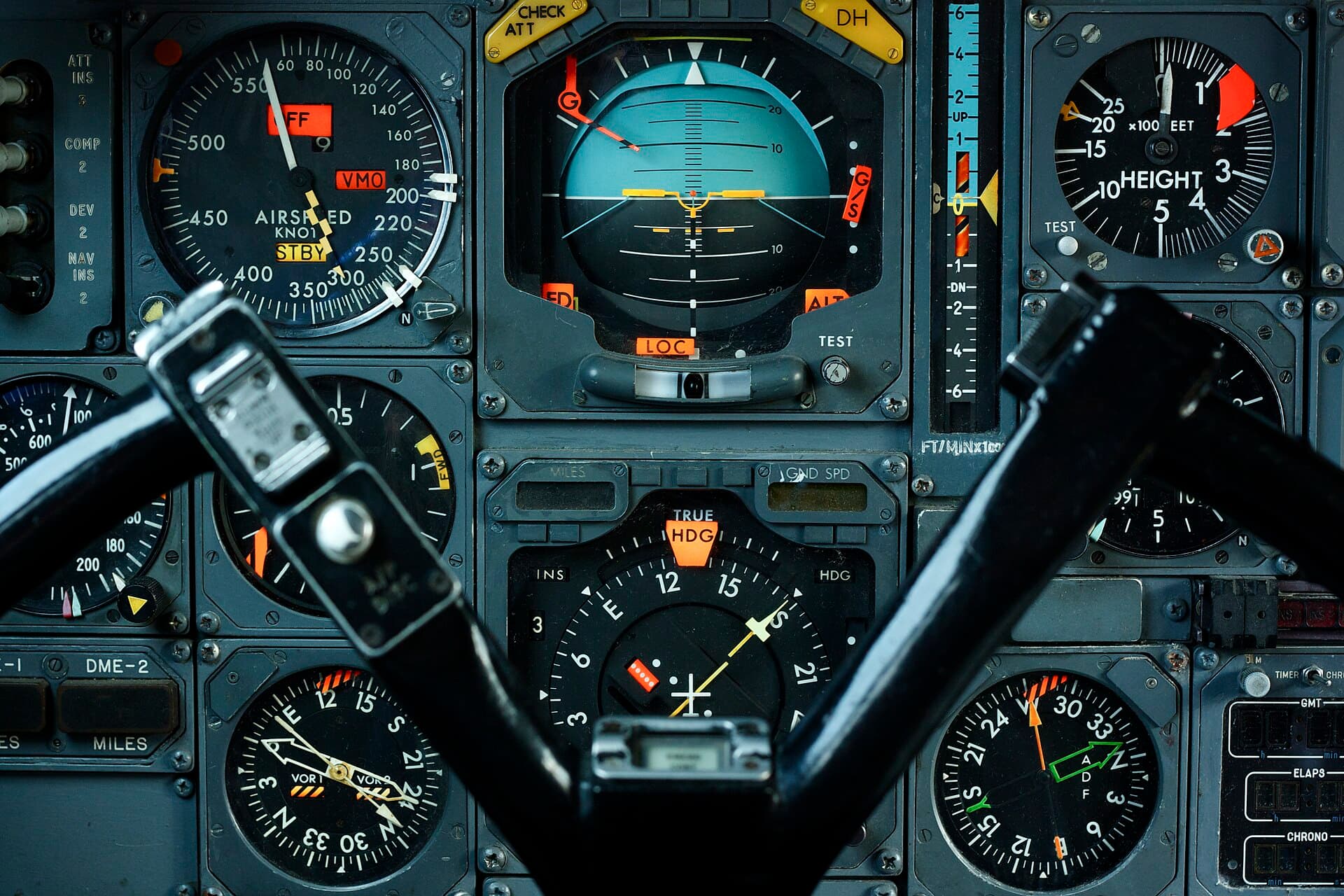
A transatlantic Concorde crossing was flown to a profile unlike any other airline operation. After a take-off on reheat at around 220 kt, the aircraft climbed subsonically until it was clear of populated coastline, because the sonic boom made overland supersonic flight unacceptable almost everywhere.
Over water the crew re-engaged reheat and accelerated through Mach 1. The transition itself was undramatic from the cabin, there is no bump to be felt inside an aircraft passing through its own shock system, and passengers generally noticed it only from the machmeter in the cabin. Behind the scenes it was the busiest phase of the flight: as the centre of lift moved aft, fuel was transferred rearward to follow it, and the intake ramps were continuously repositioning to hold the shock system where it belonged.
Cruise was then a long, quiet climb. Concorde did not hold a fixed altitude; as fuel burned off and the aircraft grew lighter it drifted upward, typically from around 49,000 ft to 60,000 ft by the end of the cruise, staying at the most efficient altitude for its current weight. Passengers saw a visibly dark sky and a curved horizon, and the cabin windows were warm to the touch.
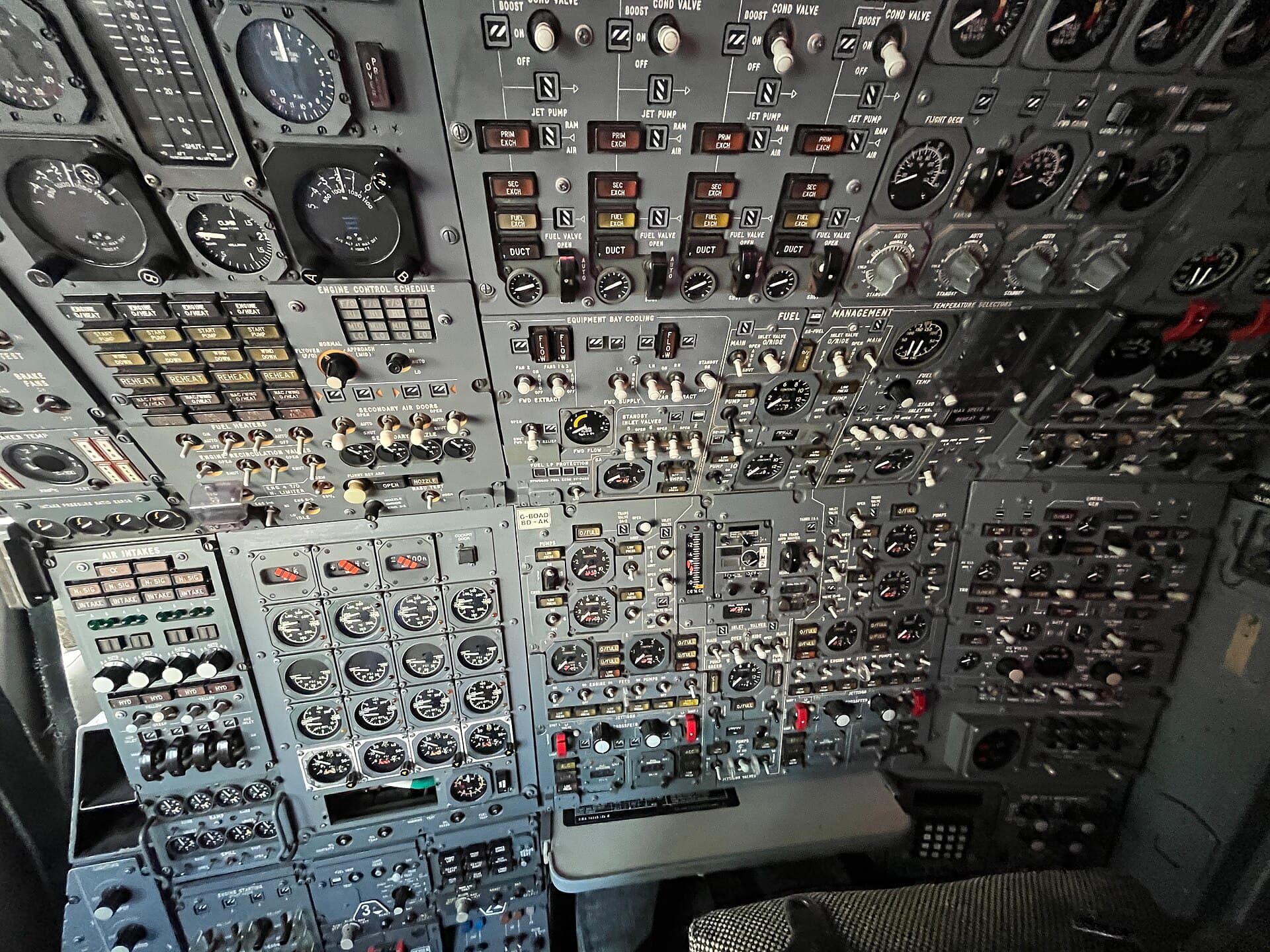
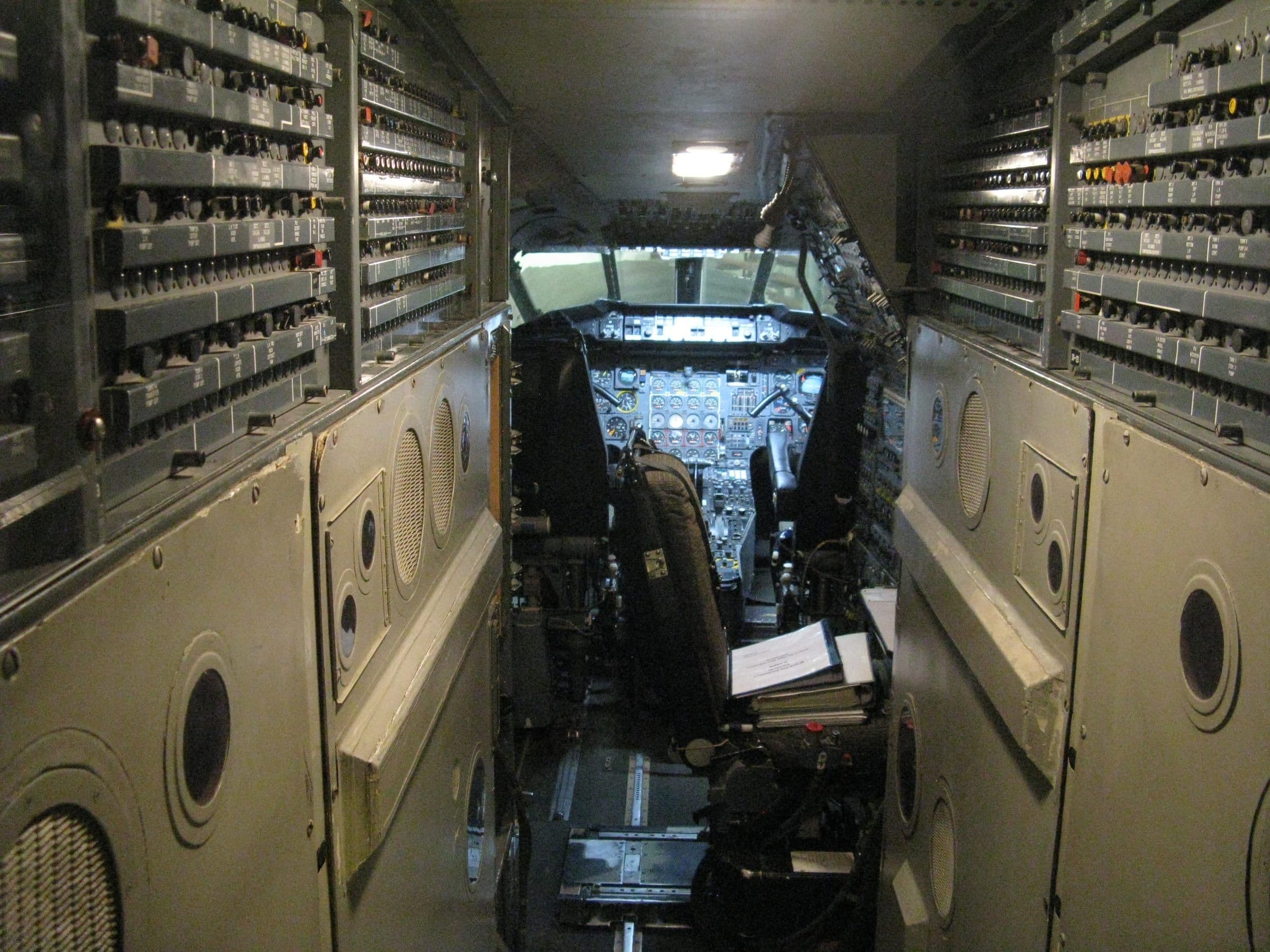
The flight engineer's station occupied an entire wall of the flight deck, carrying the fuel, engine, electrical, hydraulic and air conditioning systems as banks of analogue switches and gauges. Fuel management was not a housekeeping task but continuous flight control by other means: the centre of gravity had to be held within limits that moved with speed, and it was managed by pumping tonnes of fuel fore and aft throughout the flight.
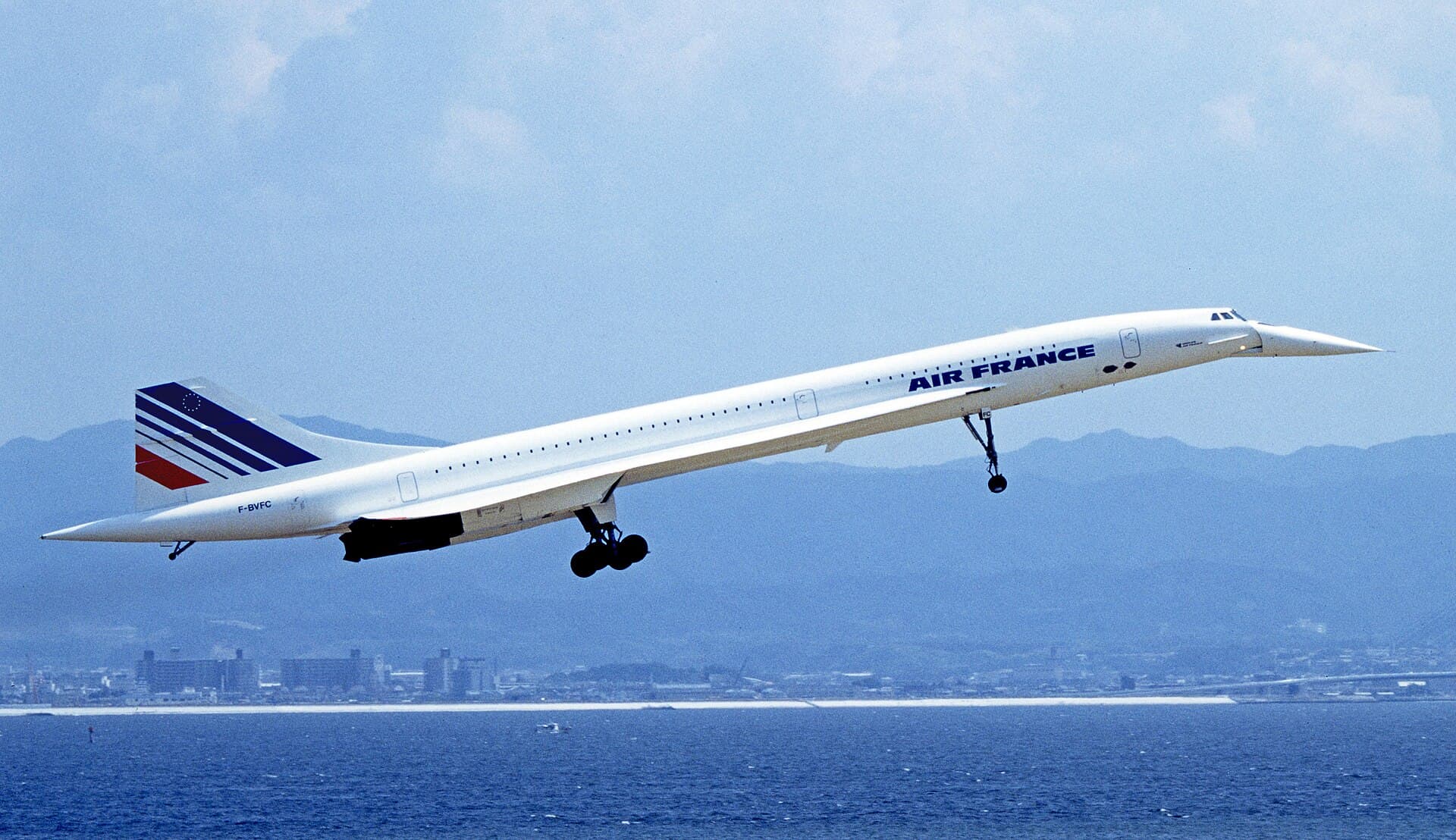
Descent and approach reversed the process (fuel forward, deceleration, nose drooped) and the aircraft came over the threshold at about 161 kt, a notably high approach speed that flowed directly from the delta wing's need for angle of attack rather than flap area. The total scheduled crossing was just under three and a half hours, against roughly seven for a subsonic aircraft.
Production

Twenty airframes were built between 1966 and 1979, ten in France and ten in Britain, and they fall into three groups that are frequently conflated in published figures.
The two prototypes, 001 (F-WTSS) and 002 (G-BSST), were the aircraft that proved the concept could fly. They were shorter than the aircraft that followed, differently engined, and never intended for service. Both survive: 001 at the Musée de l'Air et de l'Espace at Le Bourget, 002 at the Fleet Air Arm Museum at Yeovilton.
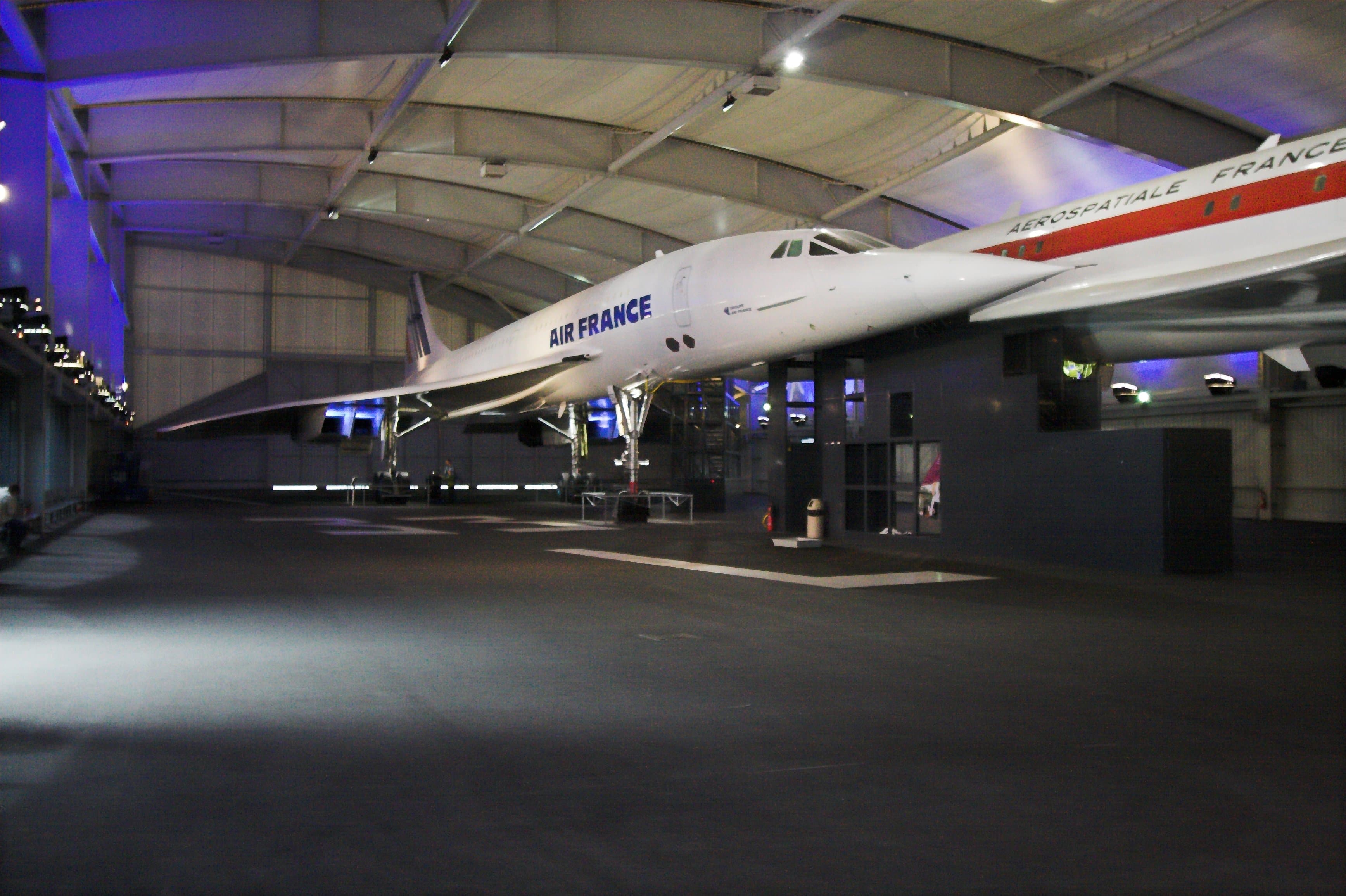
The two pre-production aircraft, 101 (G-AXDN) and 102 (F-WTSA), incorporated what flight testing had taught (a lengthened fuselage, a revised tail and reworked systems) and were used to develop the definitive configuration rather than to carry passengers.
Sixteen production airframes followed, numbered 201 to 216. Of these, the first two remained with the manufacturers as development and certification aircraft, and fourteen were delivered to British Airways and Air France, seven each. This is the source of the discrepancy between the twenty aircraft built and the fourteen that flew in airline service, and it is worth stating explicitly, because published totals often give one number without saying which it is.
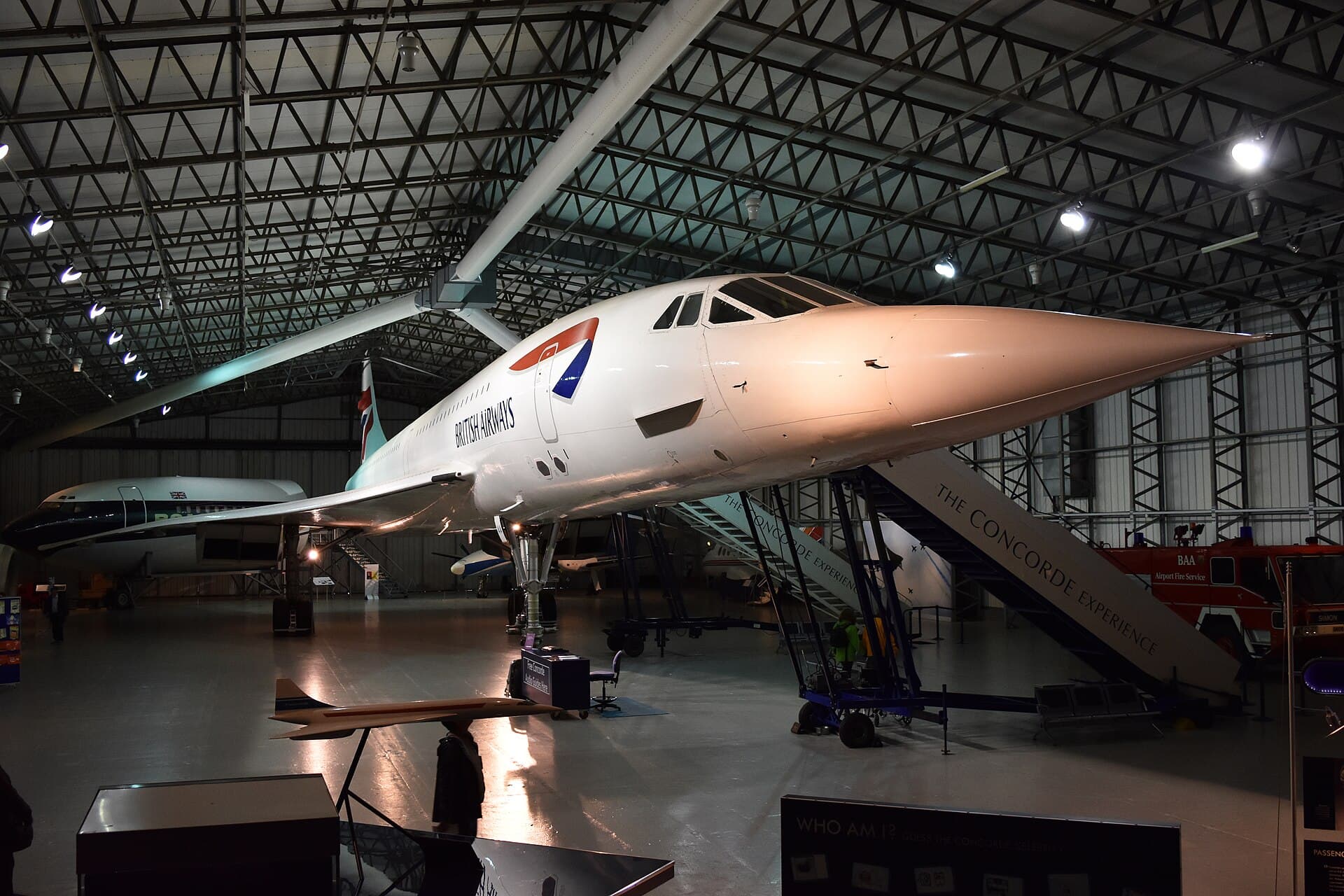
Individual airframes acquired their own histories over twenty-seven years of service. G-BOAD, delivered to British Airways, was still setting records in its final months of operation.
Operators
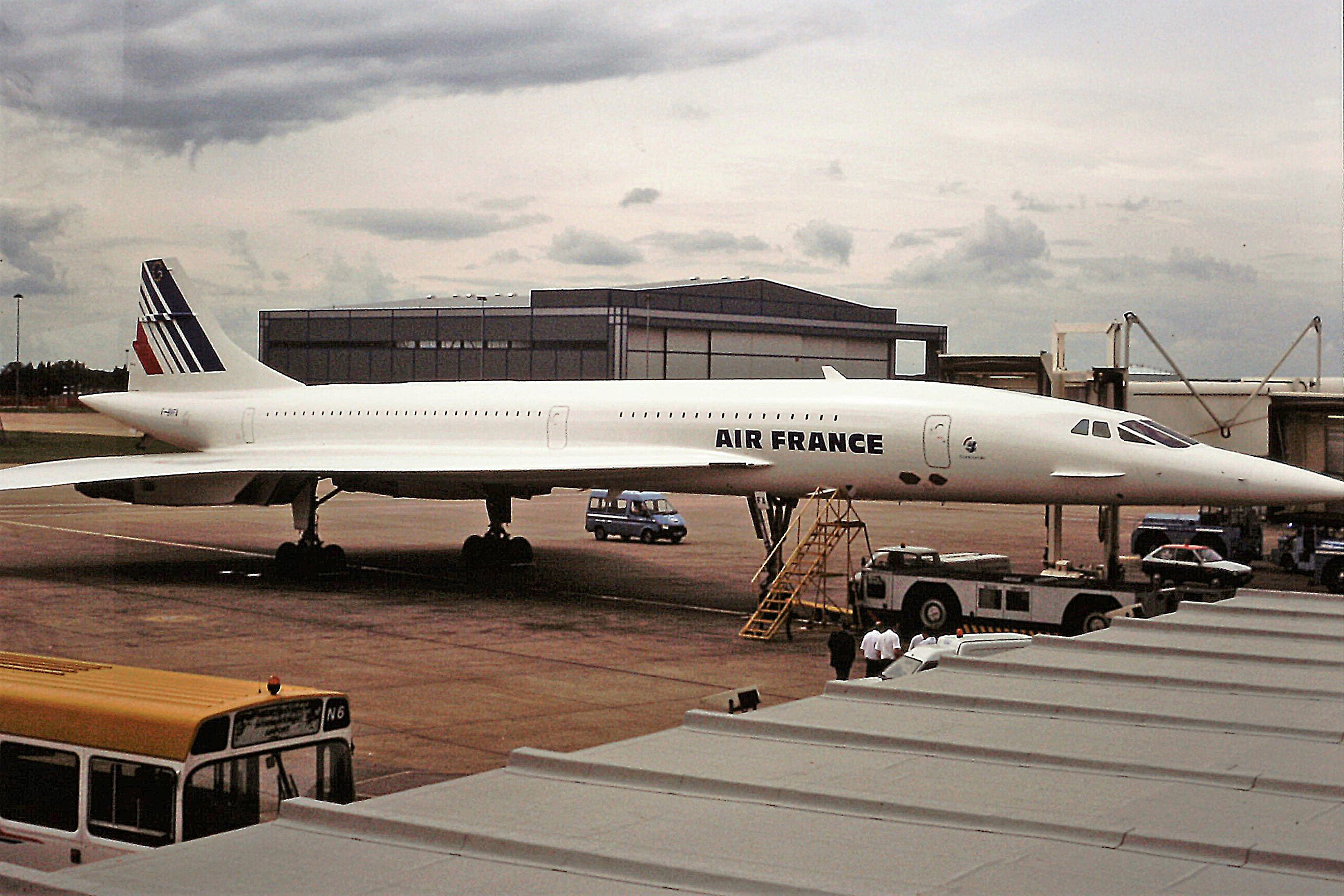
Concorde was designed for a world market that never materialised. At the height of optimism, airlines around the world held options on the aircraft; every one of those options was eventually abandoned, and the aircraft was flown in service only by British Airways and Air France.
Several forces converged. The oil shock of 1973 multiplied the cost of the fuel that a supersonic airliner consumes in unusual quantity. Sonic boom restrictions closed overland supersonic routes across most of the world, which eliminated at a stroke the long transcontinental sectors on which the time saving would have been most valuable and confined Concorde essentially to oceanic routes. The aircraft's range of about 3,300 nm ruled out the Pacific. And a hundred seats, sold at a premium, was a small revenue base against four thirsty engines.
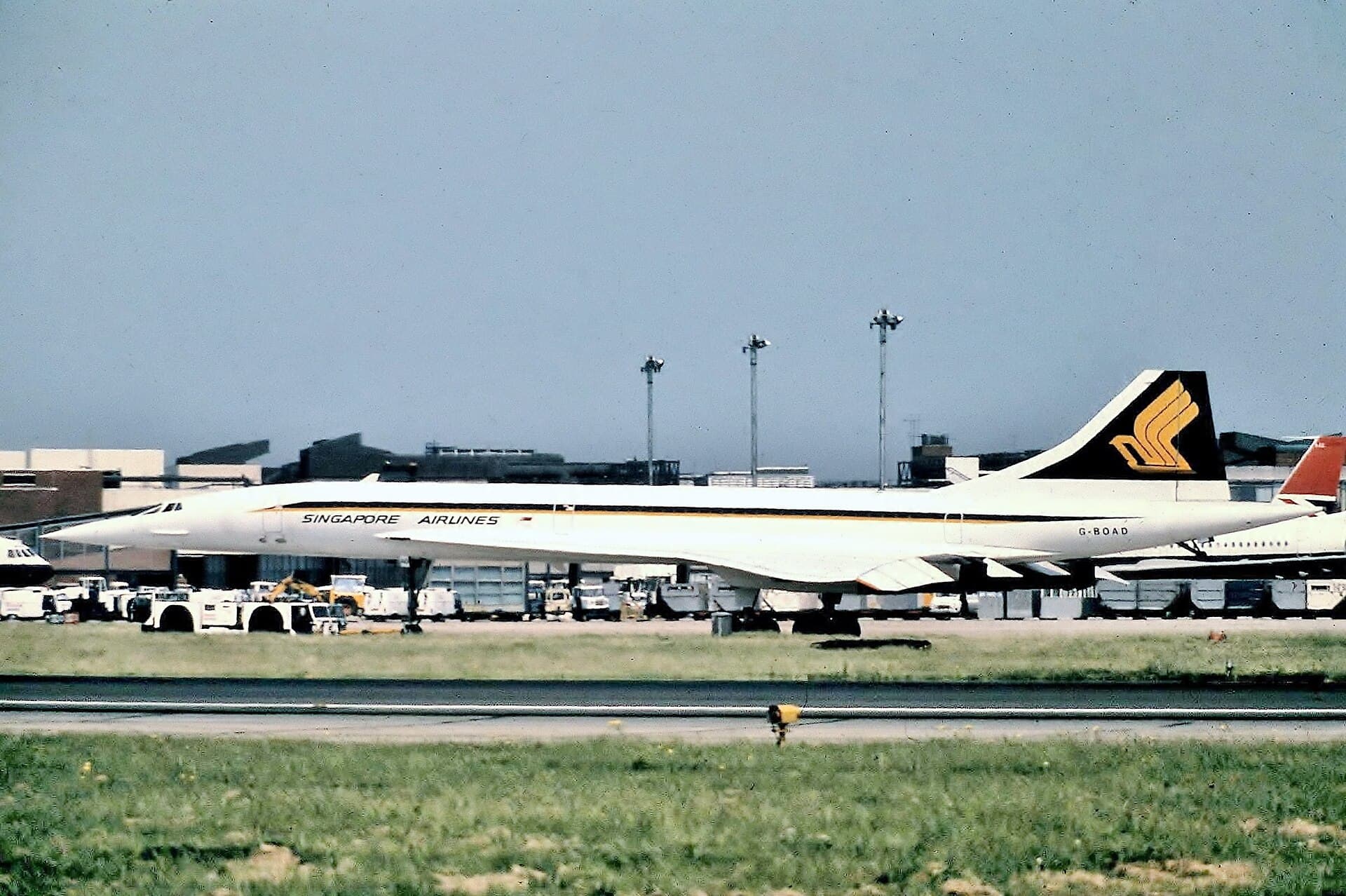
What remained was the North Atlantic, and there Concorde worked. British Airways flew principally London to New York, Air France Paris to New York, alongside seasonal services, charters and occasional routes elsewhere. The economics on those sectors could be favourable: British Airways reported profits from the operation in its better years, with a standard return fare quoted at £6,636, and carried more than 2.5 million passengers supersonically over the fleet's life.
But a profitable route is not a market. The contrast that decided the era was not Concorde against slower aircraft, it was Concorde against the Boeing 747, which appeared at almost the same moment and answered a different question: not how fast one hundred passengers could cross the Atlantic, but how cheaply four hundred could. The airline industry chose capacity, and the supersonic fleet stopped at twenty aircraft.
In service
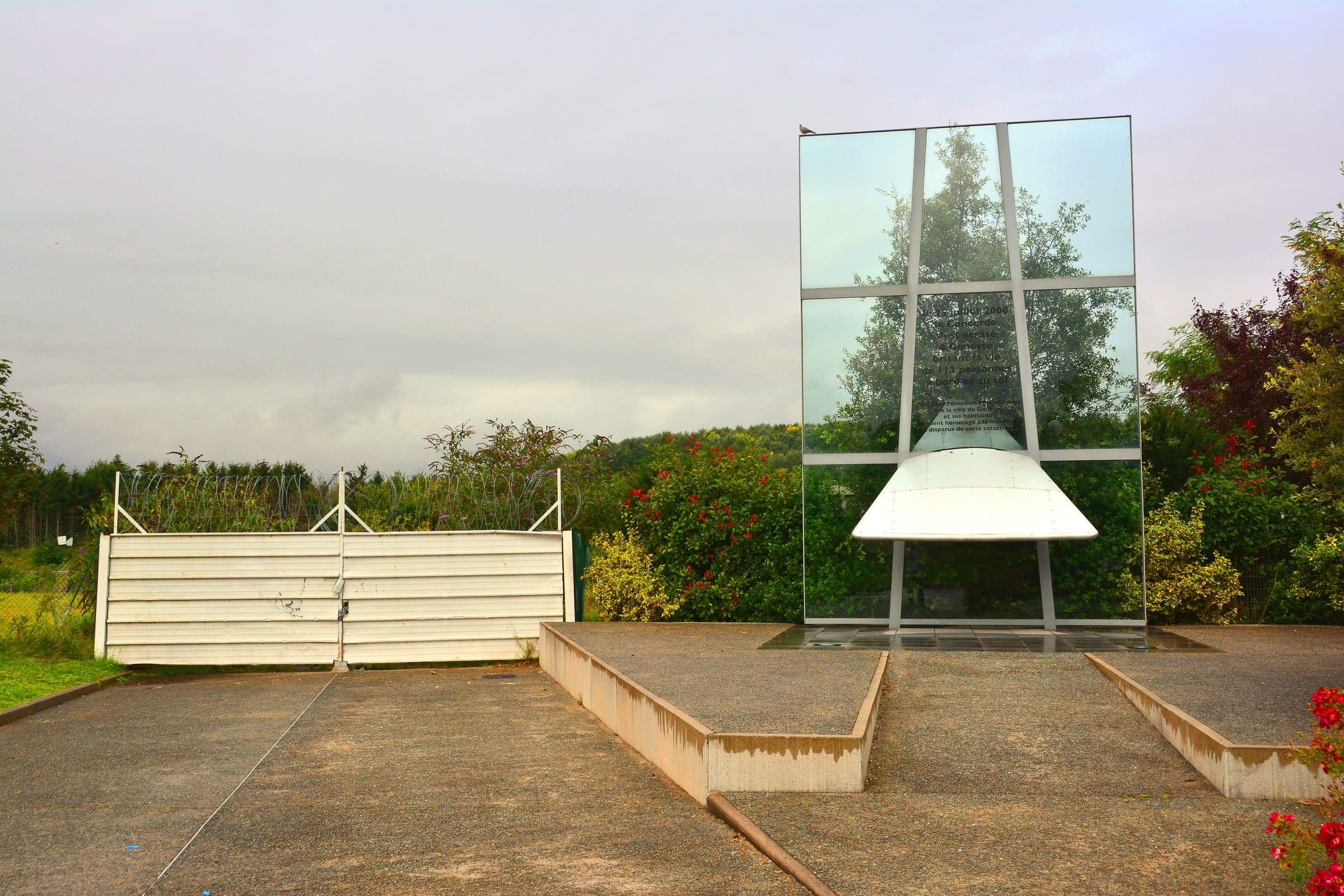
For its first twenty-four years Concorde had no fatal accident. That ended on 25 July 2000, when Air France flight AFR 4590, a charter to New York flown by F-BTSC, crashed at Gonesse shortly after take-off from Paris Charles de Gaulle. All one hundred passengers and nine crew were killed, along with four people on the ground.
The French Bureau d'Enquêtes et d'Analyses conducted the technical investigation and published its final report on 16 January 2002. The investigation established that the aircraft ran over debris on the runway, that a tyre failed as a result, and that the resulting impact caused a fuel tank rupture and a major fire that led to loss of engine power during the take-off.
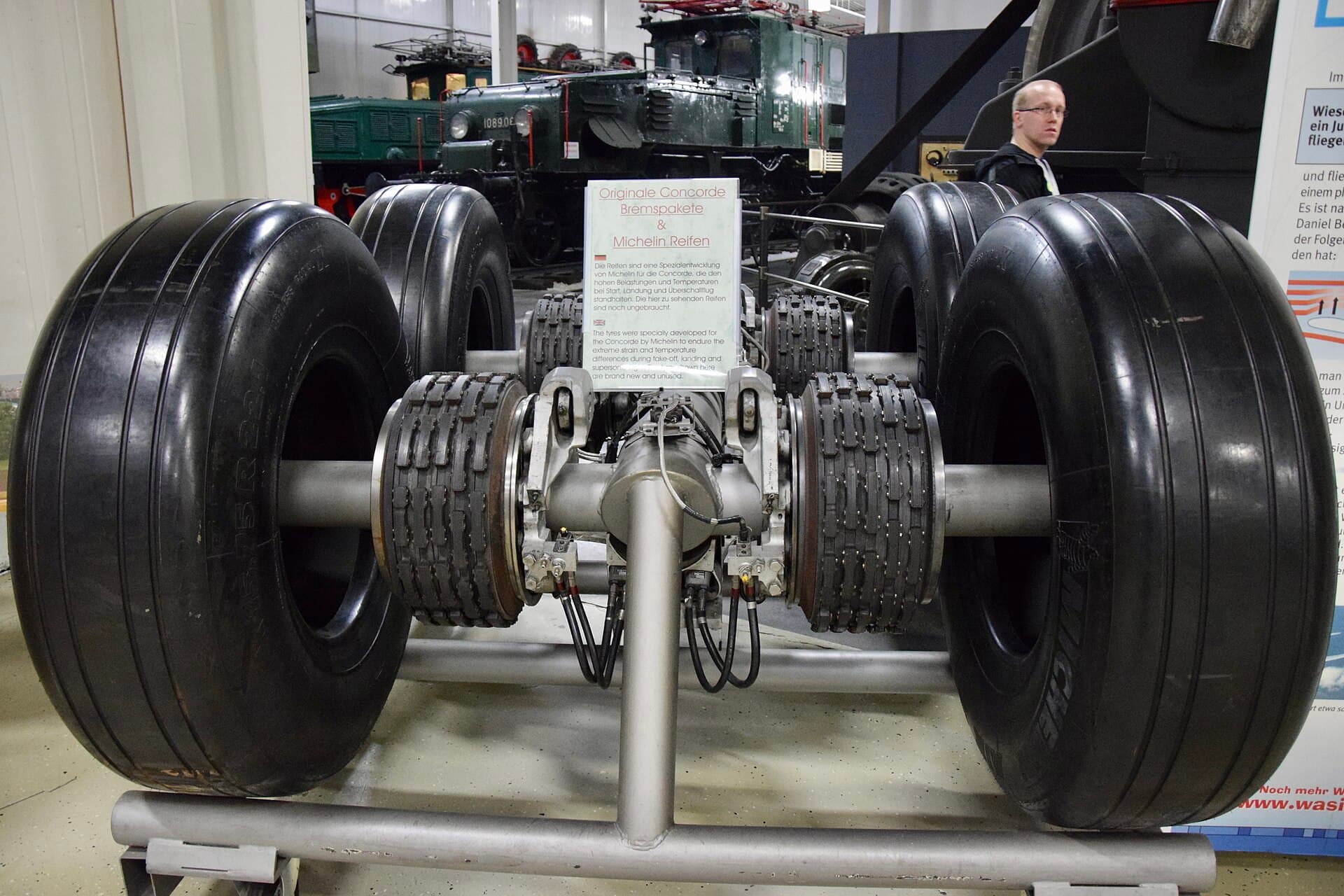
The consequences for the type were immediate. The fleet was grounded, and modifications followed before flying resumed: work directed at the specific failure chain the investigation had identified. Concorde returned to service in November 2001.
It returned, however, into a different world. Premium transatlantic demand had fallen sharply, and by 2003 British Airways was selling just under half its Concorde seats and Air France barely a fifth. Maintenance costs on a small fleet of ageing and unique aircraft were rising, and Airbus, by then responsible for supporting the type, quoted a substantial sum for continued airworthiness support and made clear it was not willing to sustain the programme indefinitely.
On 10 April 2003 both airlines announced retirement. Air France flew its last commercial service on 31 May 2003; British Airways followed on 24 October. The final flight of any Concorde was made by G-BOAF from Heathrow to Filton on 26 November 2003, returning the aircraft to the airfield where British production had taken place.
Records and notable flights
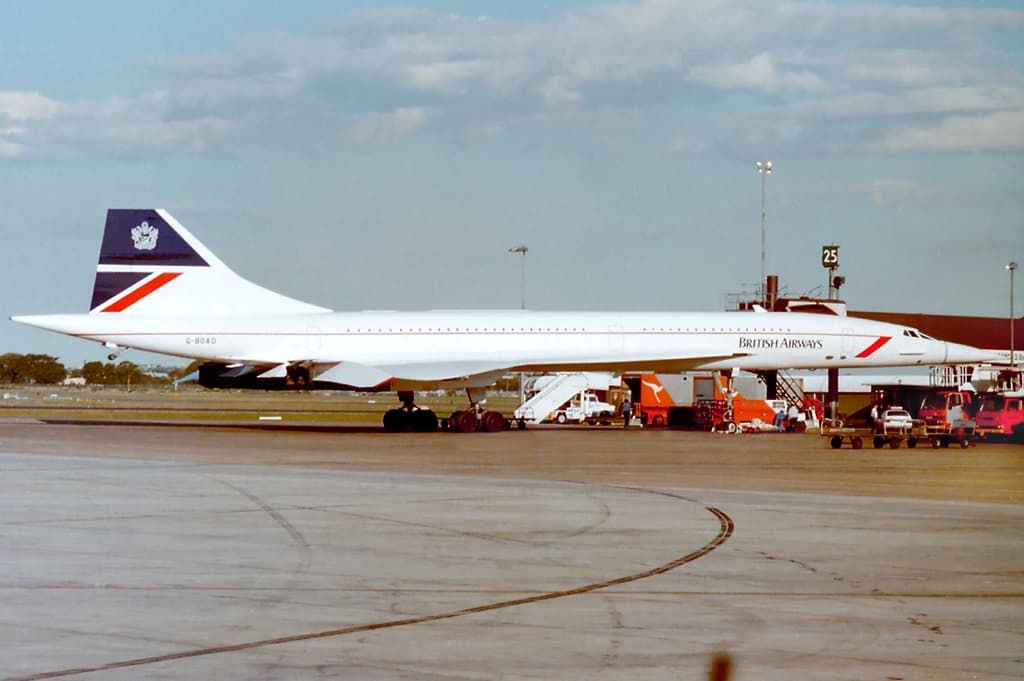
Concorde's routine performance was itself exceptional, so its formal records tend to be refinements of what it did every day rather than departures from it.
The most substantial is the east-to-west Atlantic crossing record, set by British Airways' G-BOAD on 8 October 2003 in 3 hours 5 minutes and 34 seconds, with the airline's chief Concorde pilot in command. It was set during the aircraft's farewell tour, in the last weeks of Concorde operations: a record established by a type that was already being withdrawn.
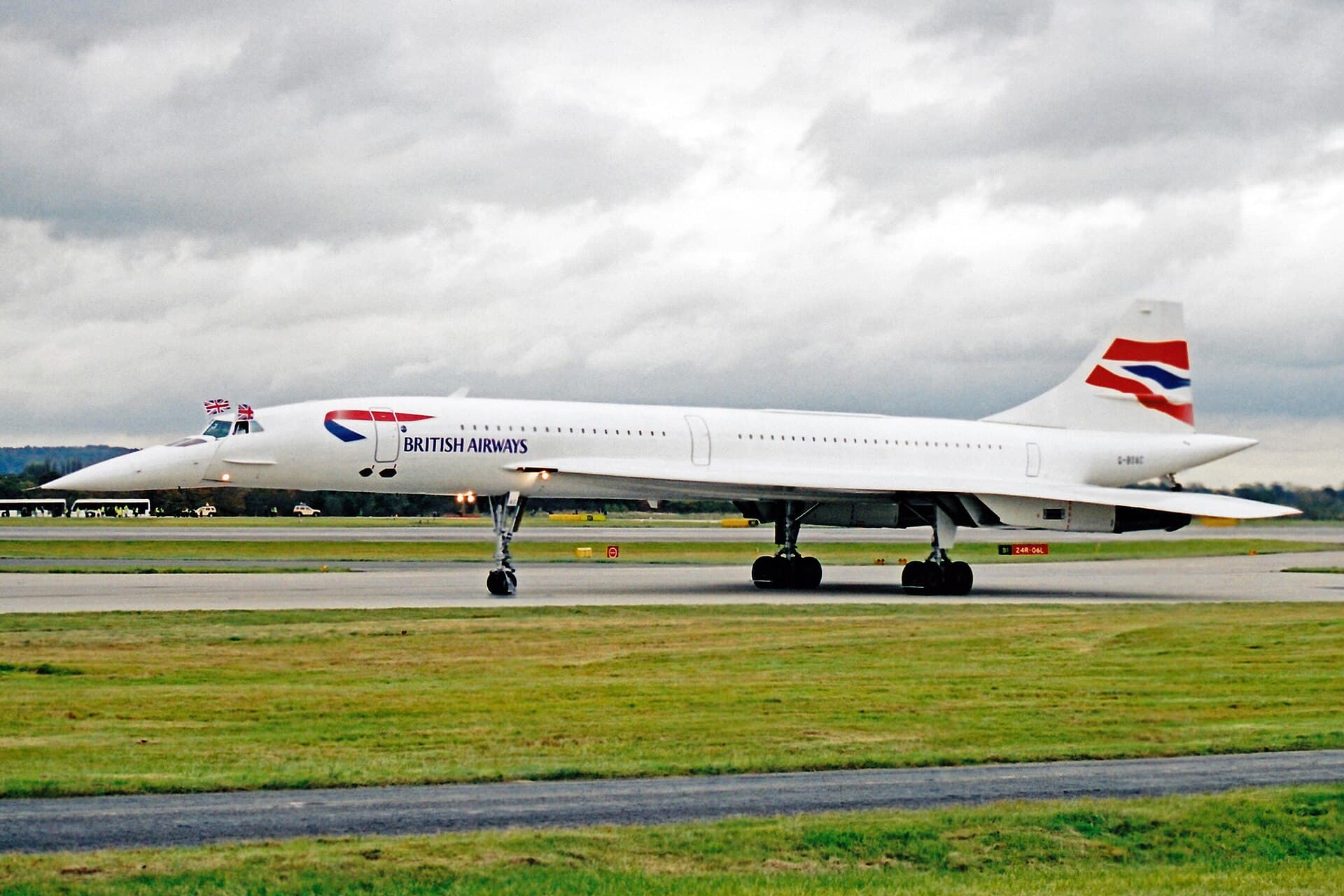
Records in the other direction are quoted variously in published sources, with different times attributed to different dates and airframes, and no single authoritative figure is reproduced here for that reason.
The aggregate figures give a better sense of the operation than any single flight. British Airways carried more than 2.5 million passengers supersonically across the fleet's working life, on an aircraft that never carried more than about a hundred at a time.
Legacy
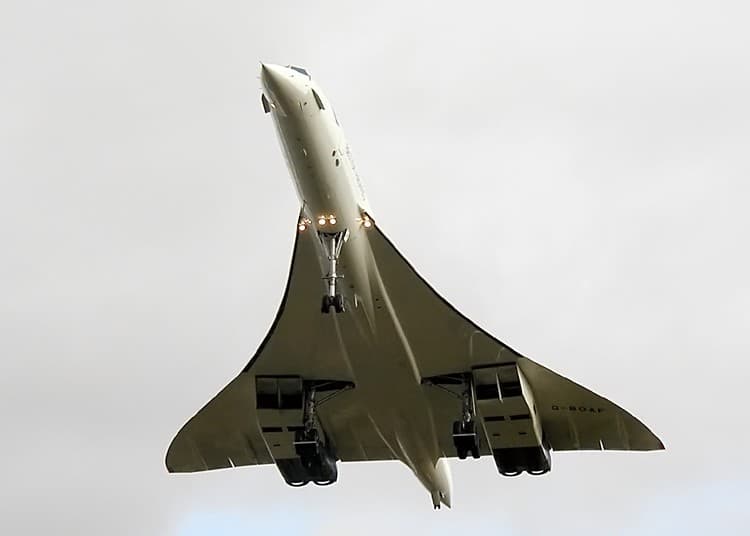
It is tempting to say that the 2000 accident ended Concorde, and the sequence of events does not support it. The aircraft was modified, recertified and returned to commercial service, and flew for a further two years. What ended the programme was the combination that followed: a collapse in premium demand, rising maintenance costs on a tiny fleet of ageing aircraft, and a manufacturer unwilling to underwrite support indefinitely. The accident weakened an operation that was already commercially marginal; it did not on its own close it.
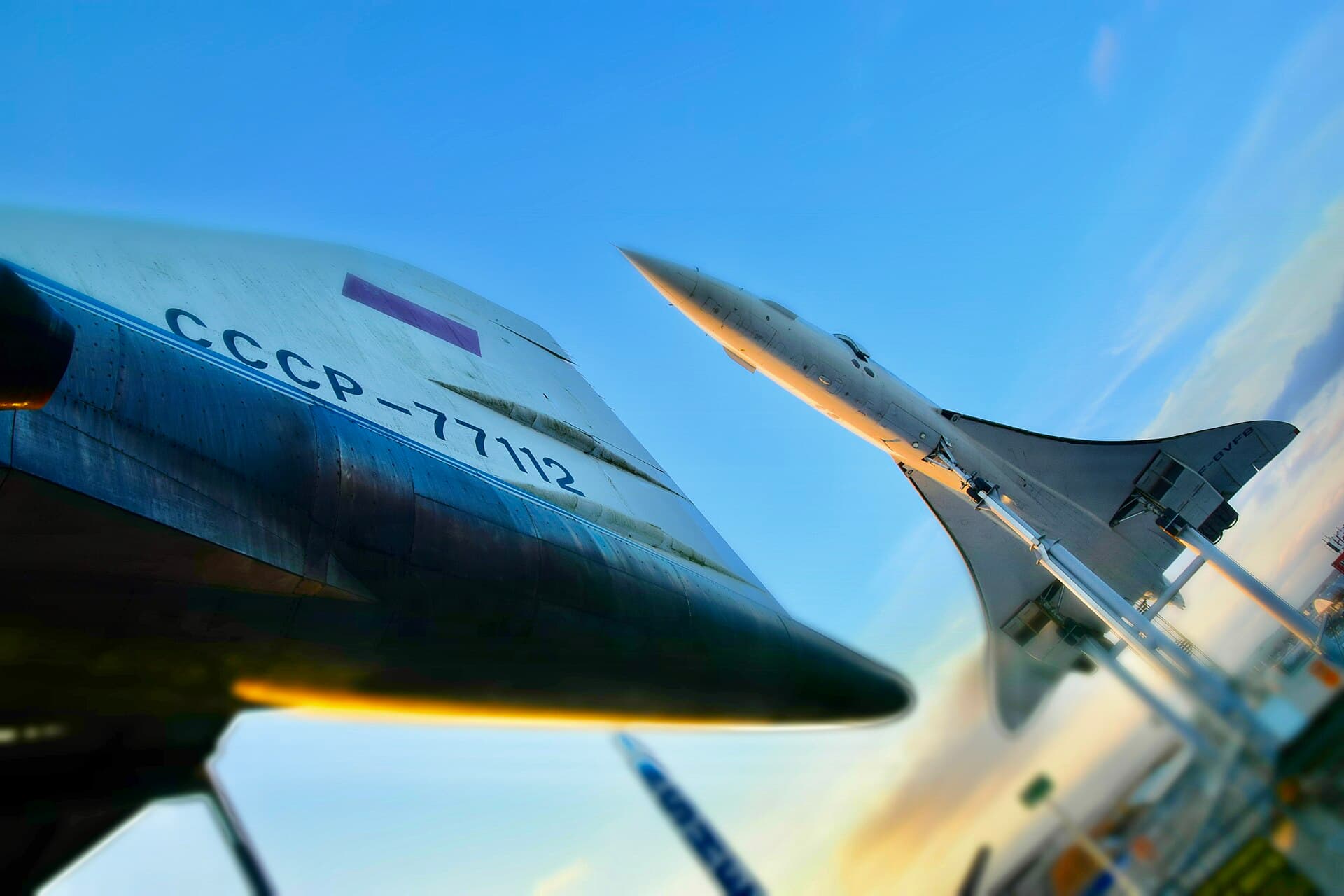
Most of the surviving airframes were preserved rather than scrapped, and are displayed in France, the United Kingdom and the United States. Both prototypes survive (001 at Le Bourget, 002 at Yeovilton) as does F-BVFA, the first Air France aircraft to enter service, now at the Smithsonian National Air and Space Museum. It is an unusually complete survival rate for a retired airliner, and it reflects how the type was regarded at the end.
Concorde's technical legacy is harder to trace than its cultural one. It produced no successor and founded no lineage: the variable intakes, the ogival delta and the fuel-trim system were solutions to problems that no subsequent airliner has been built to face. What it demonstrated instead was that sustained supersonic passenger flight was possible, not as a research programme but as a scheduled service, certified, insured and operated to a timetable for twenty-seven years.
That is the reason it still matters. Concorde is not remarkable because it was fast; it is remarkable because it was fast, routinely, commercially, and then stopped. More than two decades after its retirement no supersonic airliner has replaced it, and the fastest way for a paying passenger to cross the Atlantic is slower today than it was in 1976.
Model evolution
Concorde 001 / 002 (prototypes)
1969The two prototypes, one assembled at Toulouse and one at Filton to an identical design, which first proved the aircraft could fly and sustain supersonic cruise. 001 made its maiden flight on 2 March 1969 from Toulouse with André Turcat at the controls; 002 followed on 9 April 1969 from Filton, flown by Brian Trubshaw.
A shorter fuselage than the later aircraft, Olympus 593 engines at an earlier and lower rating, and test instrumentation in place of a passenger cabin. The distinctive droop nose carried a simple metal visor with no windows, raised for supersonic cruise and lowered for landing, later replaced once the definitive transparent visor was developed on the pre-production aircraft. Built to demonstrate that sustained supersonic cruise was achievable before the definitive configuration was frozen, and to gather the flight data needed to refine the design that followed.
Concorde 101 / 102 (pre-production)
1971Two aircraft built to develop and prove the definitive configuration ahead of the production standard, never intended to carry fare-paying passengers. 101, registered G-AXDN, went on to fly faster than any other Concorde built.
A lengthened fuselage over the prototypes, the definitive transparent visor replacing the prototypes' windowless metal one, a revised tail and reworked systems, and higher-rated Olympus 593 engines incorporating the lessons of prototype flight testing. To close the gap between what the prototypes had proved and what a certifiable airline aircraft would need to be, developing the production configuration rather than operating it.
Concorde 201 to 216 (production)
1976The sixteen production airframes, the definitive full-length Concorde, of which fourteen entered airline service, seven each with British Airways and Air France. 201 and 202 stayed with the manufacturers rather than joining the airlines, used to complete development and certification work.
The definitive airline configuration: full-length fuselage, production-standard Olympus 593 Mk 610 engines, a fuel-trim system that shifted fuel fore and aft to manage the centre of gravity through the transition to and from supersonic flight, and the certified hundred-seat cabin. The first two airframes remained with the manufacturers for development and certification work; the rest were built to enter commercial airline service.
Fourteen of the sixteen production aircraft entered airline service with British Airways and Air France, who operated Concorde on transatlantic and other supersonic routes for over a quarter of a century.
Blueprints
- Aérospatiale-BAe Concorde Sierra Delta 213 F-BTSD, Musée de l'Air et de l'Espace
- Concorde, Fox Alpha, Air France, Smithsonian National Air and Space Museum
- BAC-Sud Aviation Concorde prototype 001 F-WTSS, Musée de l'Air et de l'Espace
- Accident on 25 July 2000 at La Patte d'Oie in Gonesse to Concorde F-BTSC — final report, Bureau d'Enquêtes et d'Analyses (BEA)
- Concorde Airframe — dimensions, Heritage Concorde
- Concorde fleet breakdown, Heritage Concorde
- Concorde facts, Heritage Concorde
- Concorde retirement 2003, Heritage Concorde
- G-BOAD (210), Heritage Concorde
- Concorde History — programme cost and unit price, Aerospaceweb.org