Aircraft
Spitfire
Supermarine Aviation Works (Vickers) LimitedUnited Kingdom
- Role:
- Single-seat fighter
- First flight:
- 1936
229kt
Cruise speed
988nm
Range
General
- Role:
- Single-seat fighter
- Status:
- Retired
Programme
- First flight:
- March 5, 1936
- Introduction:
- 1938
- Produced:
- 1938 to 1948
- Number built:
- 20,300
Crew & capacity
- Crew:
- 1
Dimensions
- Length:
- 30 ft
- Height:
- 13 ft
- Wingspan:
- 37 ft
- Wing area:
- 242 ft²
Weights
- Empty weight:
- 6,393 lb
- Maximum takeoff weight:
- 7,496 lb
Powerplant
- Engine:
- 1 × Rolls-Royce Merlin or Griffon liquid-cooled V12, 1,030 to 2,375 hp depending on mark
Performance
- Maximum speed:
- 389 kt
- Ceiling:
- 42,979 ft
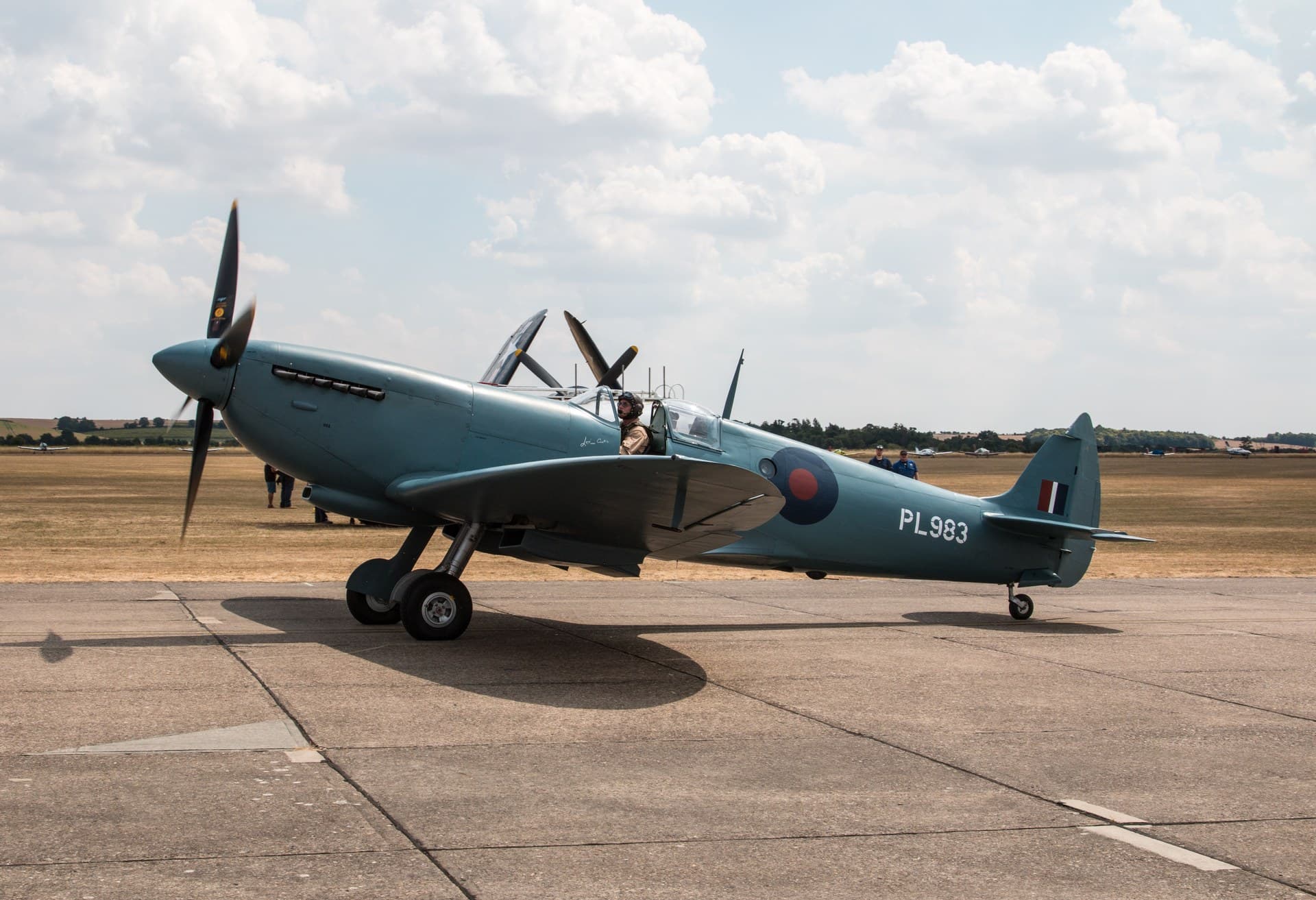
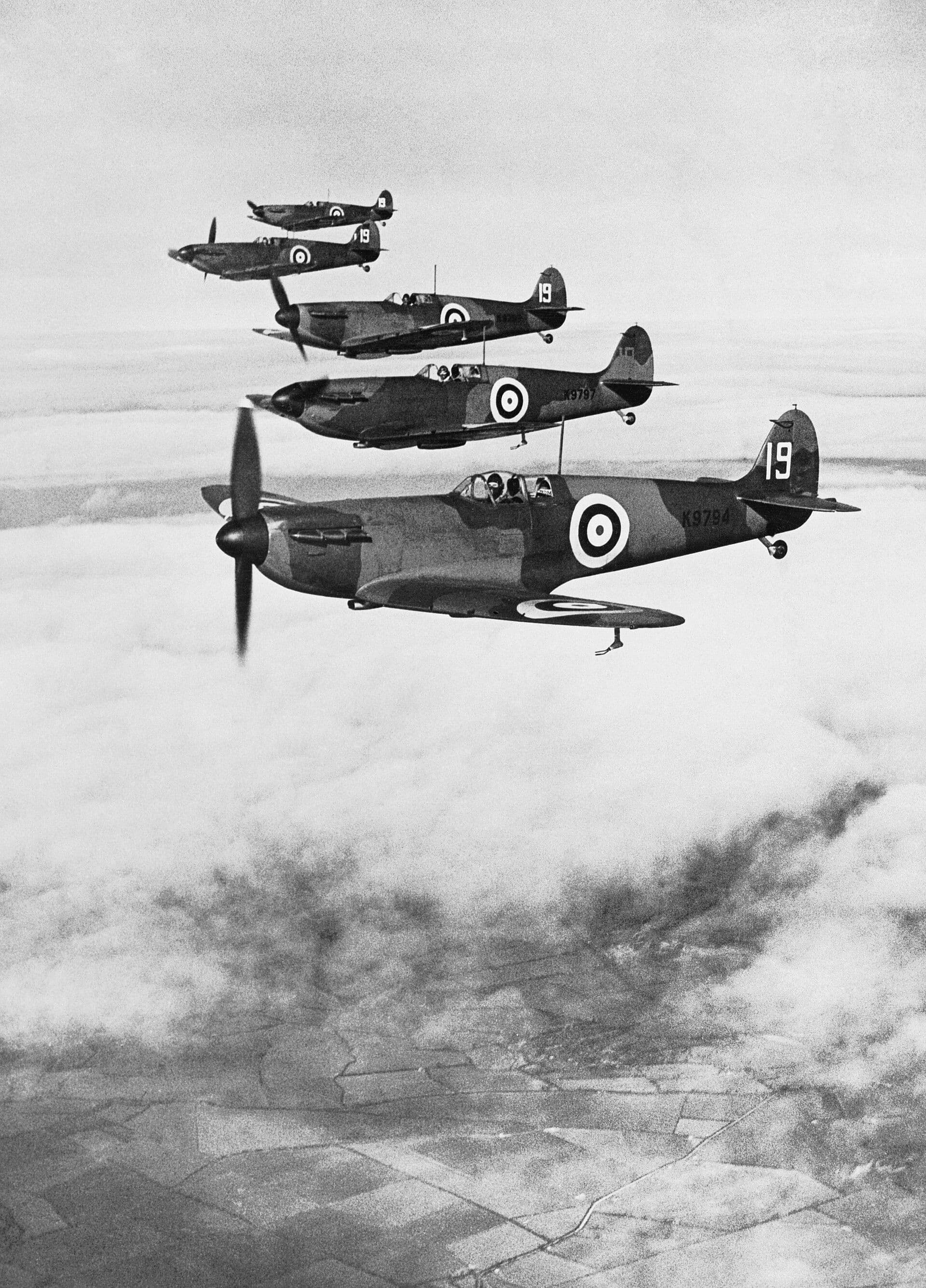
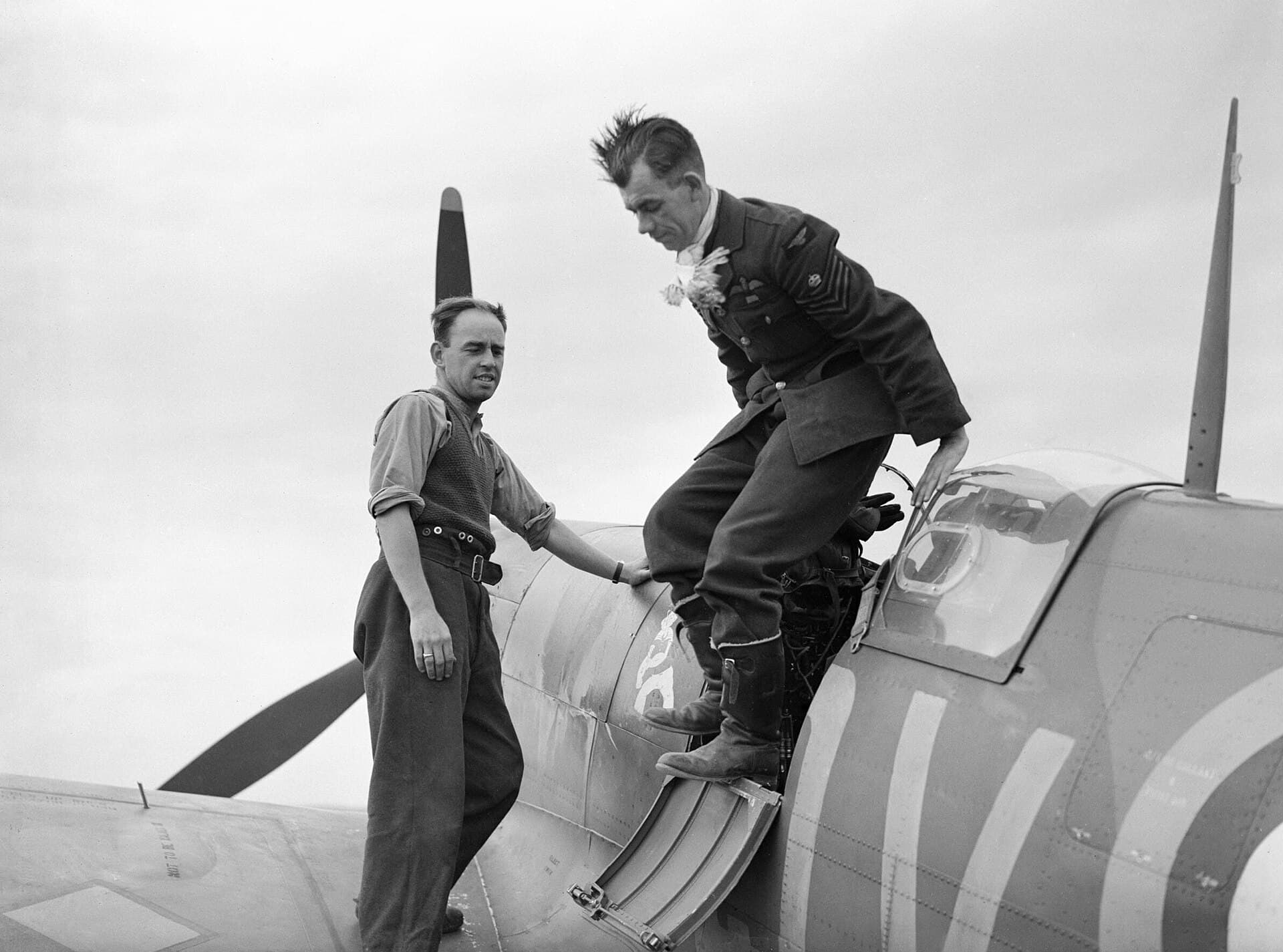
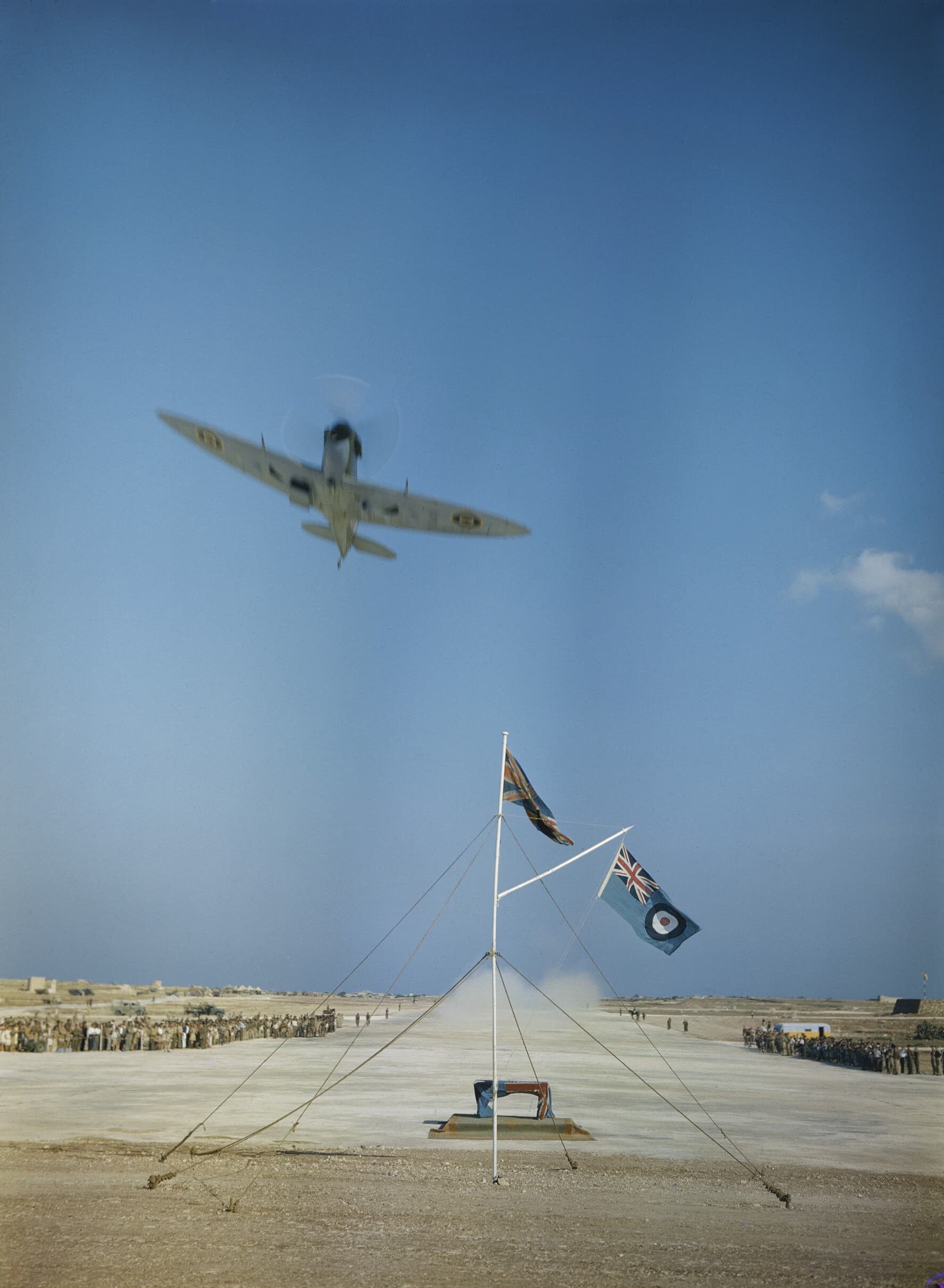
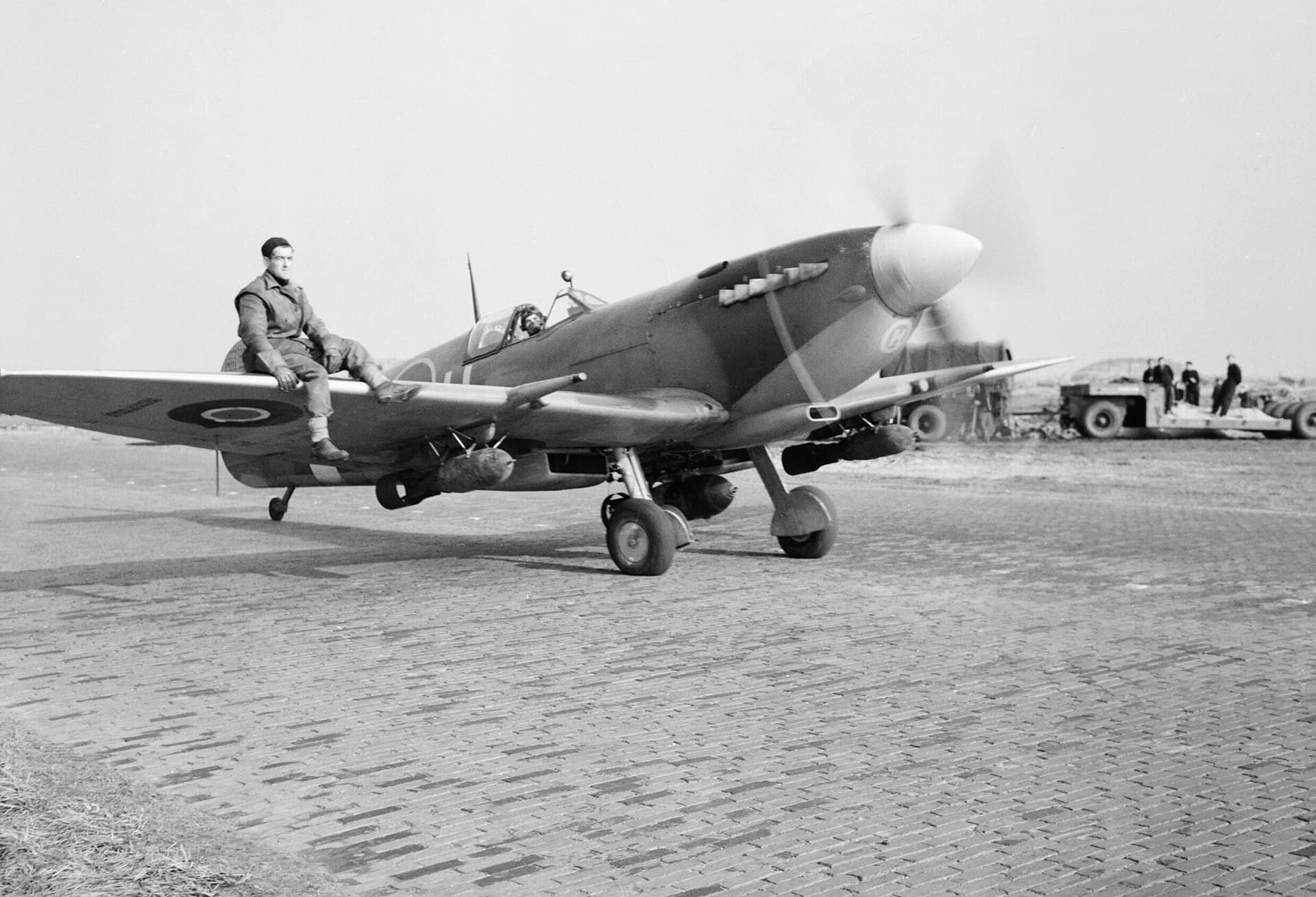
The Supermarine Spitfire was a single-seat fighter designed by R. J. Mitchell for the Royal Air Force, first flying on 5 March 1936 and entering service in August 1938. It became the only British fighter in continuous production throughout the Second World War, built in greater numbers than any other British combat aircraft of the era, with total production across all marks reaching around 20,300 airframes.
Its defining feature was Mitchell's elliptical wing, thin enough to keep drag low at the fighter's top speed while still generous enough in area to give it the tight turning circle that became its combat signature. Combined with the Rolls-Royce Merlin engine, the result was an aircraft that handled superbly at the edge of what a piston fighter could do, light on the controls, forgiving in a turn, and fast enough to matter.
What made the Spitfire remarkable was not any single mark but the twenty-four the airframe eventually ran to. Between the Mk I of 1938 and the Mk 24 of 1946, engine power very nearly doubled, empty weight rose by close to half, and the airframe was reworked again and again (new wingtips, new fuselages, a different engine entirely) while remaining recognisably the same aeroplane throughout. Few combat aircraft of any era have been stretched that far without being redesigned from scratch.
The Spitfire is popularly remembered as the aircraft that won the Battle of Britain, a claim the historical record does not quite support: the Hawker Hurricane flew in greater numbers during the battle and was credited with more enemy aircraft destroyed. The Spitfire's reputation rests instead on what came after, its ability to keep pace with German and, later, Allied jet-age fighter development for the rest of the war and beyond, a feat owed less to any one mark than to the sustained, unglamorous work of continuous development.
History
R. J. Mitchell, Supermarine's chief designer, had spent the early 1930s refining high-speed seaplanes for the Schneider Trophy, work that gave his team direct experience of streamlining and high-powered, liquid-cooled engines. The Air Ministry's 1930 specification F7/30, calling for a new interceptor, produced Mitchell's first fighter design, the Type 224, an ungainly gulled-wing monoplane with a fixed undercarriage that performed poorly and satisfied no one, Mitchell included.
Mitchell reworked the concept from the ground up: a retractable undercarriage, a much thinner and more elegant wing, and, crucially, the new Rolls-Royce PV-12 engine, soon to be named the Merlin. The result, the Type 300, was accepted by the Air Ministry in late 1934 and refined into the prototype K5054, which first flew from Eastleigh aerodrome on 5 March 1936 in the hands of test pilot Joseph "Mutt" Summers. Mitchell himself would not live to see the aircraft's wartime service; he died of cancer in June 1937, aged 42.
An initial order for 310 aircraft was placed in June 1936, but getting the Spitfire into mass production proved harder than designing it. The airframe's compound curves and its elliptical wing, built up from a large number of differently shaped ribs, were far more labour-intensive to manufacture than the straight-edged, largely flat-panelled Hurricane developed in parallel by Hawker. Deliveries to the RAF began only in mid-1938, nearly two years after the order, by which point the Air Ministry had already ordered a second production line to guarantee supply.
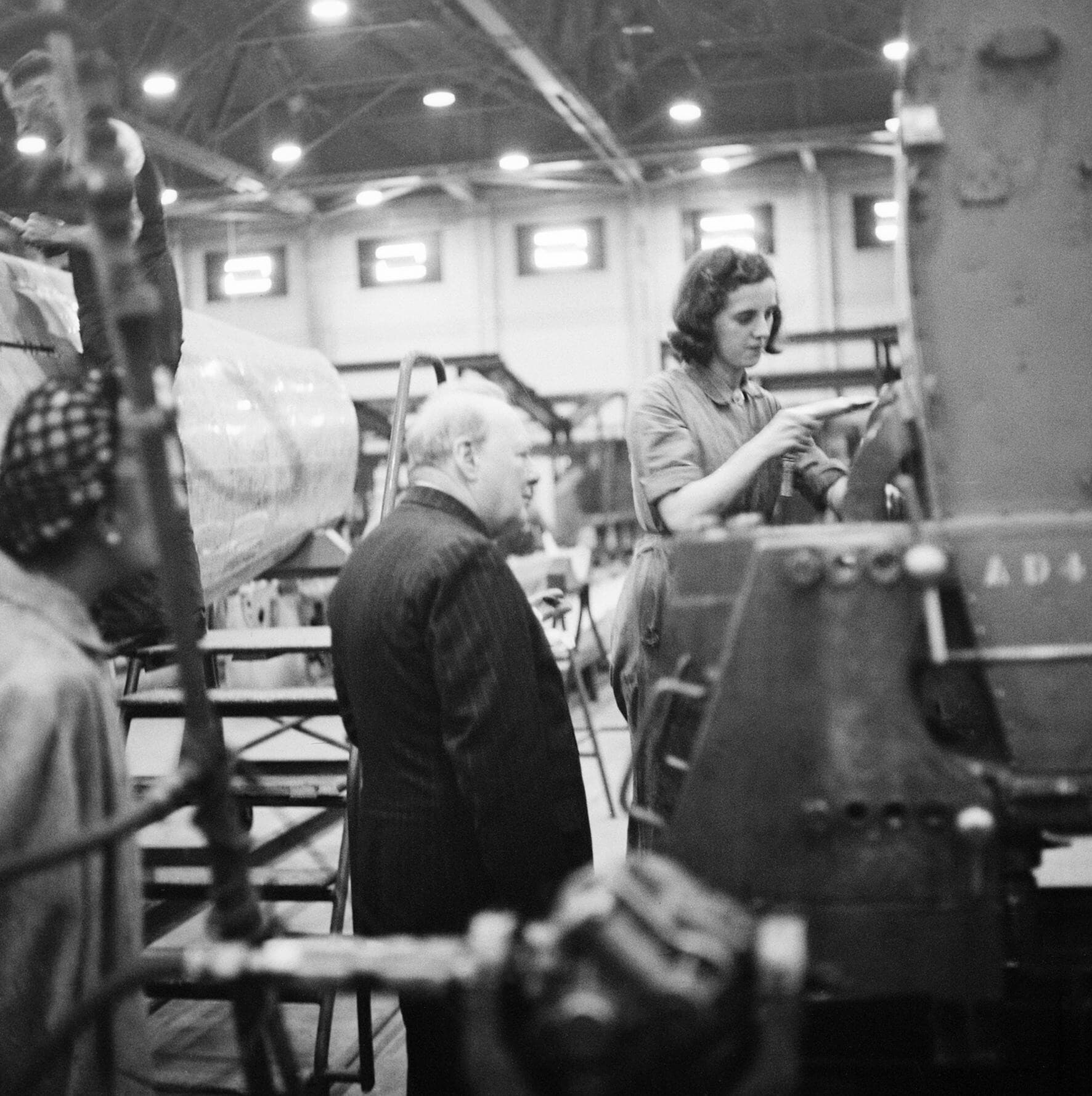
By the outbreak of war in September 1939, nine RAF squadrons were equipped with the Spitfire, a number that grew steadily as production expanded through the dispersed factories built to protect the programme from bombing: most famously the shadow factory at Castle Bromwich, which after a troubled start became the single largest source of wartime Spitfires.
The Battle of Britain in the summer of 1940 gave the Spitfire its reputation, and the popular account of it has been overstated ever since. The RAF fielded substantially more Hurricanes than Spitfires, roughly thirty-three squadrons against nineteen, and Hurricanes accordingly accounted for the larger share of German aircraft destroyed. Where the Spitfire mattered was in the division of labour that Fighter Command's controllers increasingly applied: the faster, higher-flying Spitfires were sent against the Messerschmitt Bf 109 escorts while the Hurricanes attacked the bomber formations beneath. Neither type won the battle alone, and the system of radar, ground control and repair that fed both was at least as decisive as either aeroplane.
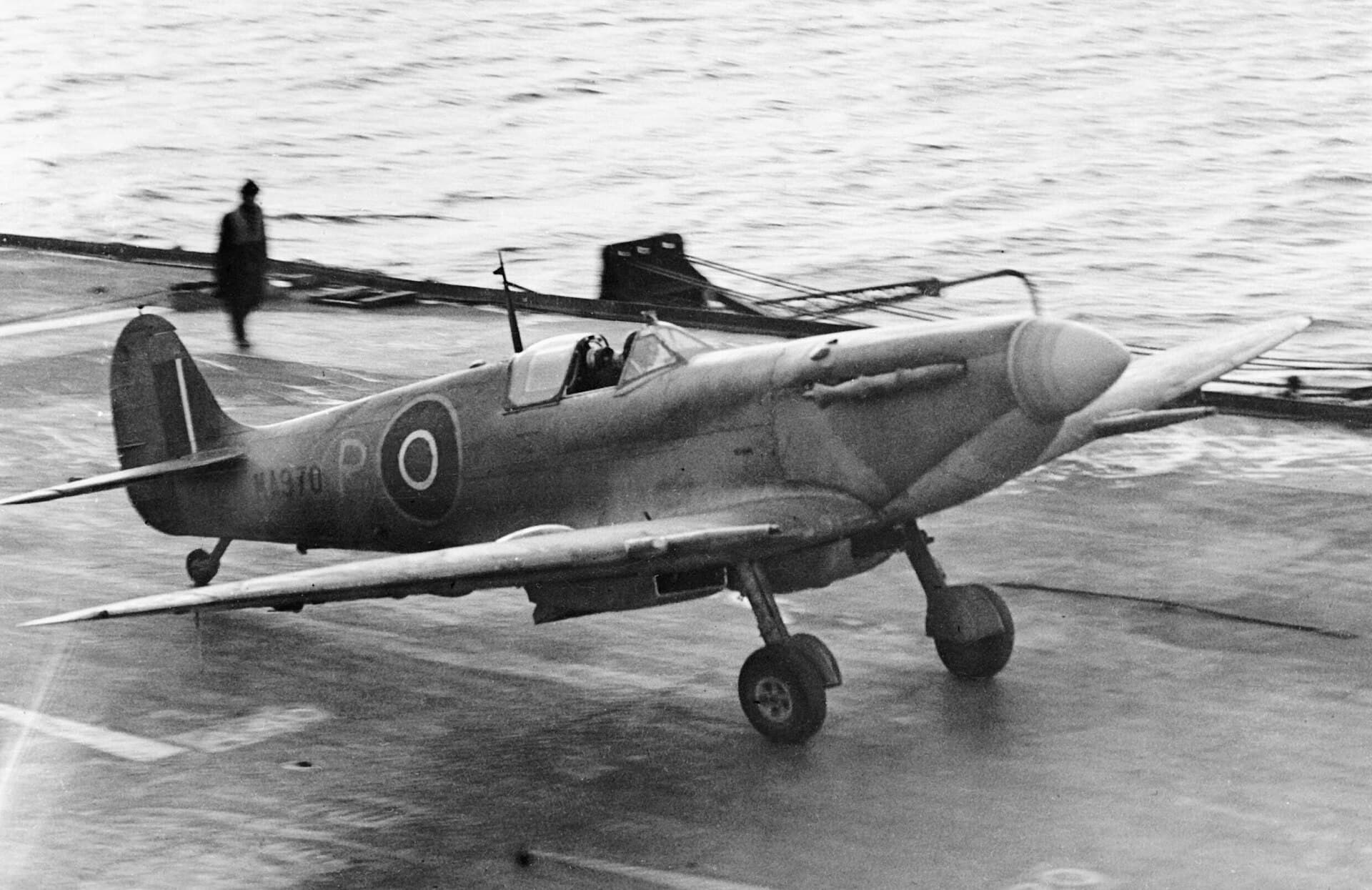
Malta tested the aircraft differently. The island's fighter defence was being ground down through 1942 by sustained Axis bombing, and reinforcement was possible only by flying Spitfires off aircraft carriers within range, including the American carrier USS Wasp, lent for two such operations, alongside HMS Eagle. The first deliveries were destroyed on the ground almost as fast as they arrived; the operation mounted in May 1942 succeeded because the aircraft were refuelled, rearmed and airborne again within minutes of landing, under a plan prepared for exactly that. It is the clearest instance of the Spitfire being used as a strategic commodity rather than a fighter.
The Griffon engine changed the aeroplane's character in the second half of the war. Larger and more powerful than the Merlin, it was fitted first to the Mk XII in 1943, an aircraft optimised for low altitude specifically to catch the Focke-Wulf Fw 190s making fast hit-and-run raids on southern England, which the high-altitude Merlin marks had struggled to intercept. The Griffon-engined Mk XIV that followed was among the fastest piston fighters of the war at low level, and in 1944 was one of the few aircraft quick enough to chase down V-1 flying bombs in level flight.
Spitfires remained in service well past 1945. Seafires flew from carriers off Korea in 1950, Spitfires fought on both sides in the 1948 Arab to Israeli war, and the RAF's last operational sortie by the type, a photo-reconnaissance PR Mk 19 over Malaya, was flown on 1 April 1954, eighteen years after the prototype. More than twenty thousand were built across all marks, and the type has had an unusually active preservation life: dozens remain airworthy today, sustained by a restoration industry that has rebuilt airframes recovered from crash sites, scrapyards and, in a few cases, beaches.
Development
No British combat aircraft of the war was reworked as thoroughly, or as often, as the Spitfire. Successive marks were not cosmetic updates: engine power climbed from the 1,030 hp Merlin II of the Mk I to the 2,375 hp Griffon 85 of the late-war Mk 24, while wingtips were clipped for low-altitude speed, extended for altitude performance, or reshaped for control at high Mach numbers; fuselages were lengthened, strengthened and eventually cut down behind the cockpit for a bubble canopy and better rearward view.
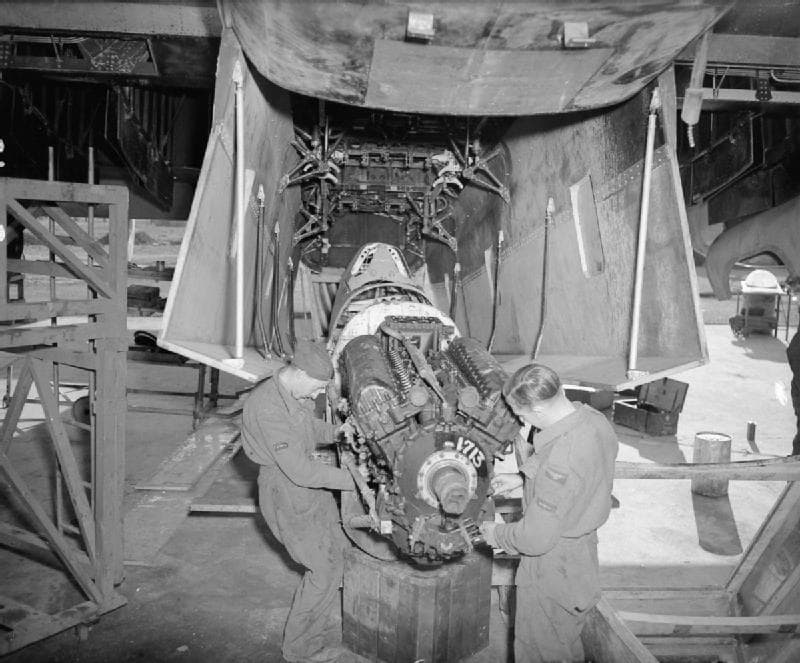
The engine was the single biggest driver of change. The Merlin's supercharger was progressively uprated through the 40, 50, 60 and 70 series, each revision demanding a longer nose, revised cooling and a different centre of gravity that in turn changed handling and required a larger tail to compensate. When the Merlin approached the practical limit of what a single-stage, later two-stage, supercharger could deliver, Rolls-Royce's larger Griffon, a wartime derivative of the pre-war R engine used in Schneider Trophy racers, was fitted from the Mk XII onward, adding still more weight and torque that the airframe had to absorb.
Armament evolved in step. The Mk I's eight rifle-calibre Browning machine guns, adequate against the unarmoured bombers doctrine had anticipated, proved marginal against self-sealing tanks and armour plate; wings were redesigned to carry 20 mm Hispano cannon alongside or instead of machine guns, in the A, B, C and E wing configurations that let squadrons mix and match armament to the threat.
Not every change succeeded. The pressurised high-altitude Mk VI and Mk VII saw limited service and were quickly superseded; pointed, extended wingtips fitted for altitude performance were removed from squadron aircraft that spent most of their time at low level, where they cost speed and roll rate for no benefit. The story of the Spitfire's development is as much about which modifications squadrons discarded as which ones stuck, an unglamorous, iterative process closer to engineering than to legend.
Design
The Spitfire's most immediately recognisable feature is its wing: a thin, elliptical shape that Mitchell's team arrived at after testing straight-tapered alternatives. The ellipse was not chosen for its looks. For a given wing area and structural depth, an elliptical planform produces the most even distribution of lift along the span, which reduces induced drag, the drag generated in the act of producing lift, more effectively than almost any other simple shape. That let Mitchell keep the wing thin enough for speed while still giving it the area needed for a tight turn and a reasonably gentle stall, without the induced-drag penalty a thin, straight-tapered wing of the same area would have paid.
The wing's thinness bought something else: room. A deep wing root, common on other fighters, would have made retracting the undercarriage inward straightforward, but Mitchell's thin section forced a narrow-track, outward-retracting undercarriage instead: a genuine weakness, since the narrow track made the Spitfire more prone to ground-looping than aircraft with wider gear, a vice that dogged the type, and especially the naval Seafire, throughout its service.
Structurally the airframe was a stressed-skin monocoque, built around a single main spar and a rear structure, with flush-riveted duralumin skinning that kept drag low: a labour-intensive technique that was one reason the Spitfire took longer to build than the Hurricane's part-fabric, tubular-steel structure. The fuselage was slim and the cockpit correspondingly tight, a source of pilot complaint throughout the war but also a contributor to the aircraft's low frontal area and clean lines.
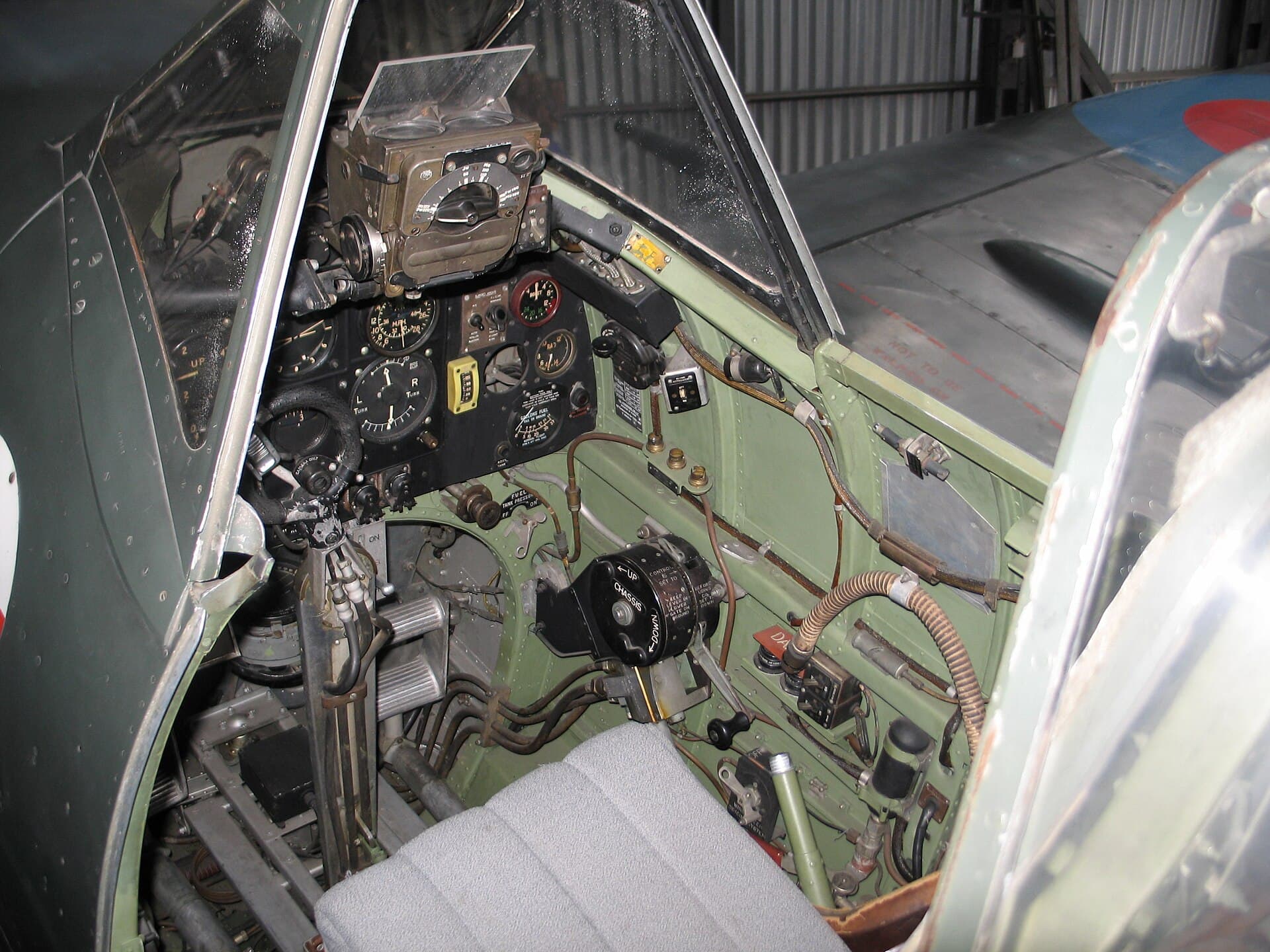
Handling was where the design paid off most directly. Pilots consistently described the Spitfire as light and immediate on the controls at moderate speeds, with a stall that gave clear pre-stall buffet warning rather than dropping a wing without notice, qualities that owed as much to the wing's careful aerodynamic tailoring, twisted slightly from root to tip to control how the stall developed, as to raw power. At high speed, particularly in a dive, the ailerons became heavy enough that some late-war marks needed metal-skinned ailerons in place of the original fabric-covered ones simply to keep control response usable.
Technical characteristics
The airframe's fundamentals stayed remarkably constant even as its details transformed. Every mark retained the same basic wing planform and the same monocoque fuselage concept Mitchell laid down in 1936, which is part of why the aircraft could absorb so much change without becoming, structurally, a different design: the changes were additive rather than a series of clean-sheet redesigns.
Engine power is the clearest single measure of that change. The Mk I's Merlin II produced 1,030 hp; the definitive Merlin-engined Mk IX's Merlin 61 produced around 1,565 hp; the Griffon-engined Mk XIV's engine produced roughly 2,050 hp; and the final Mk 24's Griffon 85 reached about 2,375 hp, well over double the Mk I's output from an airframe that traced its lineage directly back to it.
Weight climbed alongside power. A Mk I had an empty weight of around 4,400 lb; by the Mk 24 that figure had grown to roughly 7,700 lb empty, an increase of more than 70 percent, driven by the larger engine, more fuel, heavier armament, structural strengthening to cope with it all, and equipment (radio, oxygen, later radar warning receivers) that the 1936 design had never anticipated carrying.
Speed rose more modestly in proportion, since drag increases faster than the square of speed and the airframe's basic shape was fixed: the Mk I's maximum speed was around 310 kt, and even the fastest late-war Griffon marks reached only around 390 kt, a real but not proportionate gain against the doubling of engine power, and a reminder that the airframe, not the engine alone, set the ceiling on how far the type could be pushed.
Military service
The Spitfire's combat debut came during the Battle of Britain in the summer of 1940, though it shared the burden with the Hawker Hurricane, which outnumbered it in RAF squadrons and was credited with destroying more enemy aircraft over the course of the battle. Fighter Command's tactic of sending Spitfires against the German fighter escort while Hurricanes attacked the bombers has since hardened into a popular shorthand (Spitfires for glory, Hurricanes for the grinding work) that overstates a division that was never absolute and understates the Hurricane's contribution.
Where the Spitfire's reputation is fully earned is in what followed. As the war progressed the aircraft proved able to absorb a heavier engine, more armament and greater weight without losing the responsive handling that made it effective in a dogfight, allowing it to remain broadly competitive with German fighter development, the Bf 109 and then the Fw 190, through to 1945, something few contemporary designs on any side managed without a fundamental redesign.
Beyond Fighter Command, Spitfires served across every theatre the RAF fought in: escorting bombers over occupied Europe, defending Malta through its siege of 1941 to 42, flying fighter-bomber sorties in North Africa and Italy, and intercepting V-1 flying bombs over southern England in 1944, a role for which the low-altitude speed of the clipped-wing Mk V and the Griffon-engined Mk XIV proved particularly suited. Photo-reconnaissance Spitfires, unarmed and reliant on speed and altitude alone, flew some of the war's most valuable and least celebrated missions.
 Seafire
The naval Seafire extended the lineage to carrier operations with the Fleet Air Arm, seeing action from the North African landings of 1942 through the Pacific in 1945, though the narrow undercarriage inherited from the land-based Spitfire made it a genuinely difficult aircraft to bring aboard a pitching flight deck, and losses to deck-landing accidents frequently exceeded losses to enemy action.
Production
Spitfire production was never concentrated in one place for long. Supermarine's own works at Woolston and Itchen, near Southampton, built the early production run, but both were badly damaged by Luftwaffe bombing in September 1940, forcing production to disperse into a network of small workshops (garages, laundries, even a bus depot) scattered across the Southampton area to reduce the risk that a single raid could halt the programme.
The greater volume came from purpose-built shadow factories, chief among them the vast Castle Bromwich Aeroplane Factory near Birmingham, managed initially by Nuffield and then by Vickers-Armstrongs after early production delays became a political embarrassment. Once running properly, Castle Bromwich became the single largest source of Spitfires of the war, eventually building well over half of all Spitfires produced.
 Spitfire Mk I
Manufacturing the airframe was inherently more labour-intensive than its main RAF stablemate: the elliptical wing required a large number of uniquely shaped ribs rather than the simpler, straighter structure of the Hurricane, and the flush-riveted stressed-skin fuselage demanded more precise, more time-consuming assembly than fabric-covered construction. Output nonetheless rose steadily through the war, from a few dozen aircraft a month in 1939 to well over 300 a month by 1944, driven by dispersal, sub-contracting and the sheer scale of the workforce, much of it, by the war's later years, women brought into aircraft production for the first time.
By the time production ended in 1948, total output across every mark and every variant, including Seafires, stood at roughly 20,300 aircraft: a run sustained without a single break for a decade, making the Spitfire the longest continuously produced British fighter of its era.
Operators
The Royal Air Force was overwhelmingly the Spitfire's principal operator, flying it from 1938 until the last piston-engined examples left front-line service in the early 1950s, with training and second-line roles continuing somewhat longer. Squadrons from across the Commonwealth and occupied Europe flew Spitfires under RAF command, including Polish, Czechoslovak, French, Belgian, Norwegian and Free French units alongside squadrons from Australia, Canada, New Zealand and South Africa.
The Fleet Air Arm operated the naval Seafire variant from 1942, and after the war a substantial number of Spitfires and Seafires were sold or transferred to other air forces as Britain drew down its own wartime fleet. The aircraft went on to serve with more than thirty countries, including several whose service history sits uneasily alongside the type's popular image: Egypt, Syria and Israel all flew Spitfires against each other in the Arab to Israeli conflicts of the late 1940s, in some cases the same mark facing itself across the front line.
Post-war operators ranged from established European air forces to newly independent states building their first air arms from surplus British stock, a role the Spitfire filled well into the 1950s in some countries even as jet fighters were entering front-line service elsewhere. The last Spitfires in active military service, operated by Burma and other air forces that had received late-mark aircraft cheaply after the war, continued flying into the early 1950s before piston fighters were retired everywhere in favour of jets.
 Spitfire Mk XIV
Today no Spitfire remains in military service, but a substantial number (around 240 of the roughly 20,300 built) survive, of which somewhat more than fifty remain airworthy, maintained and flown by museums, warbird operators and private owners, most prominently the Royal Air Force's own Battle of Britain Memorial Flight.
Records and notable flights
The Spitfire set no headline speed or altitude records against rival types in the way some pre-war racing aircraft did, but individual airframes and pilots achieved notable marks within its own service life. A specially lightened Spitfire Mk XI, stripped of armament and dived to test compressibility effects, reached a recorded speed corresponding to roughly Mach 0.92 in April 1944: the highest speed attained by a piston-engined aircraft up to that time, and close to the practical limit of what a propeller-driven design could survive structurally in a dive.
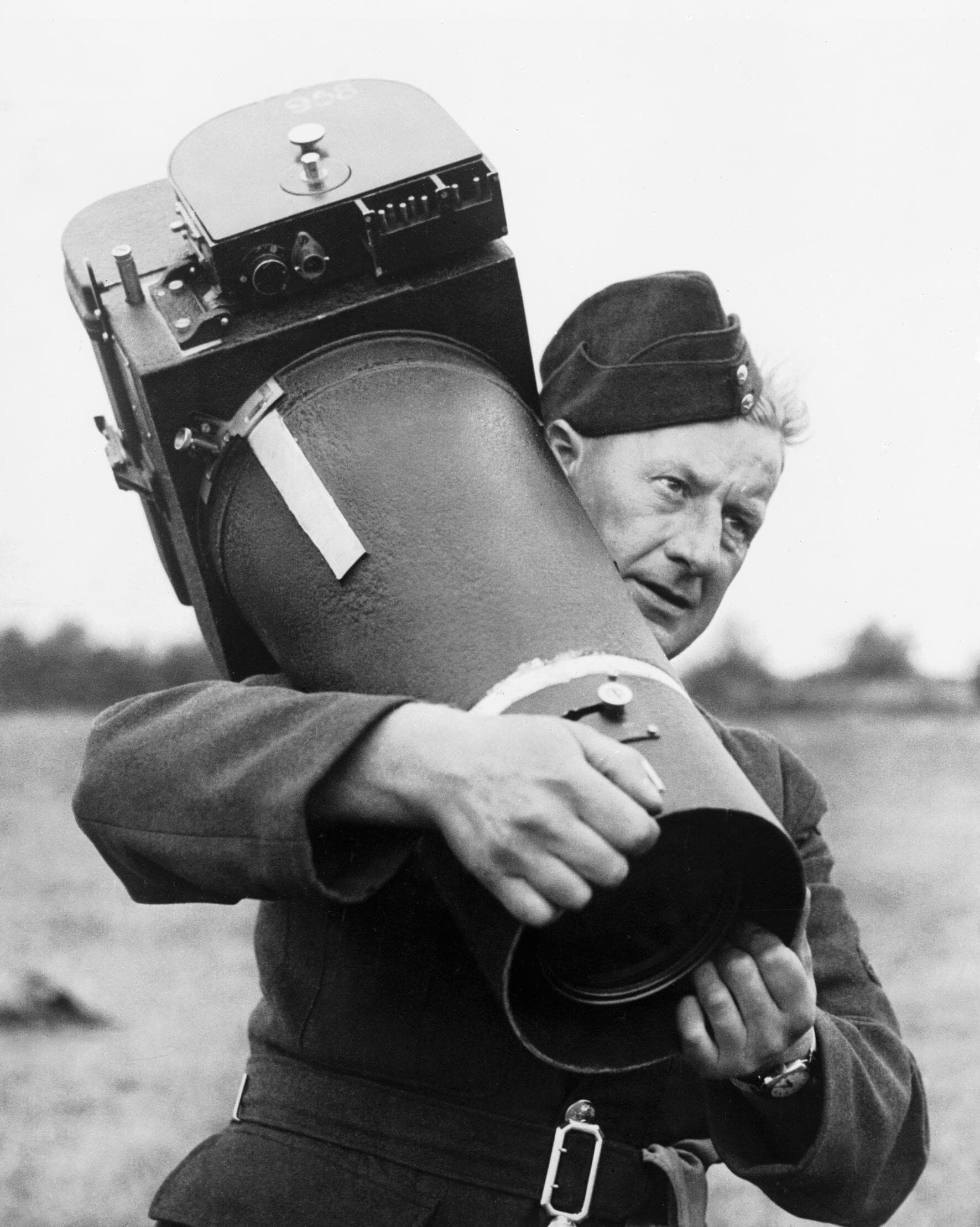
Photo-reconnaissance Spitfires, unarmed and stripped for speed and altitude rather than combat, flew some of the longest and highest missions any variant achieved, with pressurised PR versions operating above 39,000 ft over enemy territory relying on altitude and speed alone for protection.
The type's altitude record for a piston fighter of its generation was set not in a dedicated attempt but in routine high-altitude interception and reconnaissance work, where the two-stage supercharged marks operated well above 39,000 ft as a matter of course: performance that had no equivalent among contemporary German fighters until late in the war.
No Spitfire mark held a formally ratified world absolute speed or altitude record of the kind tracked by the Fédération Aéronautique Internationale; its achievements were operational rather than record-book ones, a distinction that fits an aircraft whose real accomplishment was sustained usefulness across a decade of continuous development rather than any single dramatic feat.
Legacy
The Spitfire's cultural standing in Britain exceeds that of almost any other machine of the twentieth century: a status built partly on its genuine wartime record and partly on decades of commemoration that have, at times, simplified that record into something closer to myth. Wartime "Spitfire Funds," in which towns, workplaces and individuals raised money to sponsor the notional cost of a single aircraft, were as much a home-front morale exercise as a serious contribution to production, but they cemented a public association between the aircraft and national resistance that outlasted the war by decades.
That association has proven durable in ways more measurable than sentiment. The Spitfire remains a fixture of British air displays, most visibly through the Battle of Britain Memorial Flight, and surviving airframes, several restored to airworthiness from wrecks recovered decades after they crashed, regularly change hands at prices in the millions of pounds, a market with few parallels among other wartime aircraft types.
Historically, the more precise legacy is engineering rather than symbolic: the Spitfire is a documented case of how far a well-conceived airframe could be pushed through sustained, incremental development rather than replacement, absorbing a near-doubling of engine power and a substantial weight increase across a decade without losing the essential handling qualities that made the original design work. That is a less dramatic story than "the aircraft that won the war," but it is the one the historical and engineering record actually supports.
The Spitfire's name has also become a kind of shorthand (for British wartime resolve, for a certain idea of graceful, purposeful design) used in contexts that have little to do with the aircraft itself. Separating that symbolic afterlife from the documented history of a fighter that was, in its own time, simply one very good and very persistently improved machine among several, is part of what an honest account of it now requires.
Model evolution
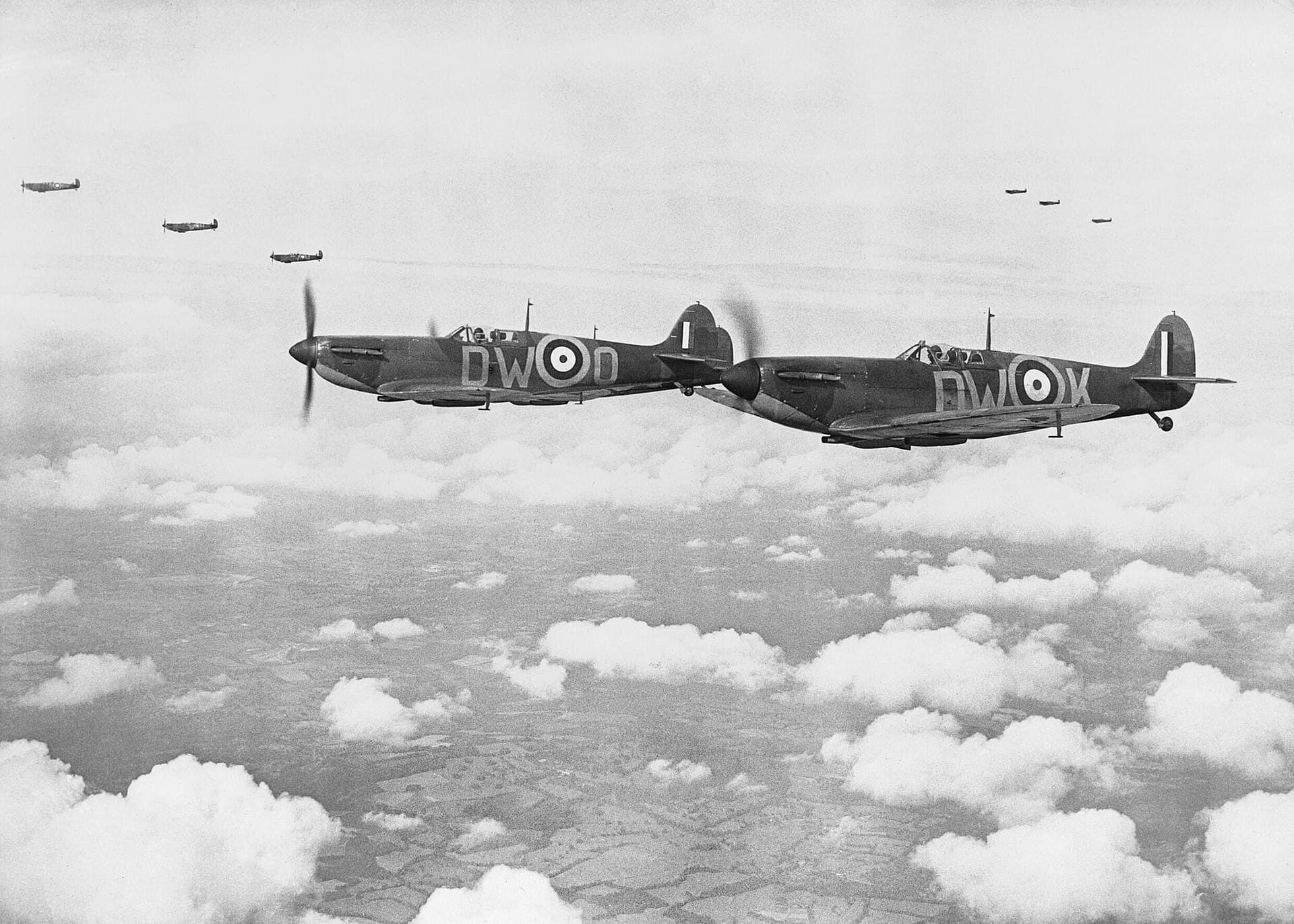
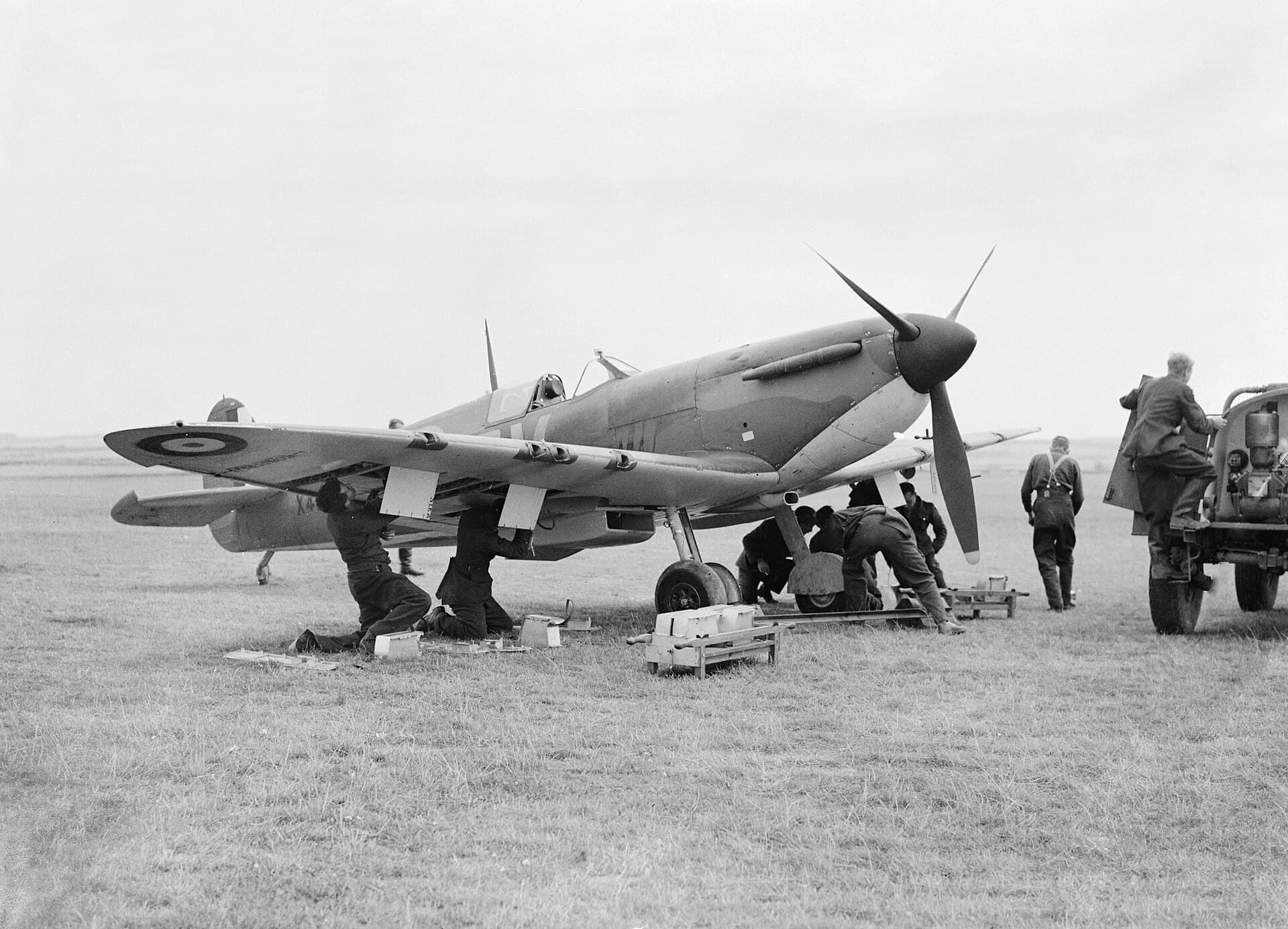
Spitfire Mk I
1938The first production version, entering RAF service with No. 19 Squadron at Duxford in August 1938. Powered by a 1,030 hp Merlin II, armed with eight .303 in Browning machine guns.
Introduced a de Havilland two-pitch, later constant-speed, propeller partway through the run, and a bulletproof windscreen and cockpit armour after early combat losses exposed the pilot's vulnerability. The fixed-pitch propeller fitted to early aircraft badly compromised both take-off and climb; the constant-speed unit alone was credited with cutting the take-off run by a third.
Pilots converting from biplanes found it demanding but transformative: faster and more responsive than anything the RAF had flown, though early accident rates while converting squadrons were high.
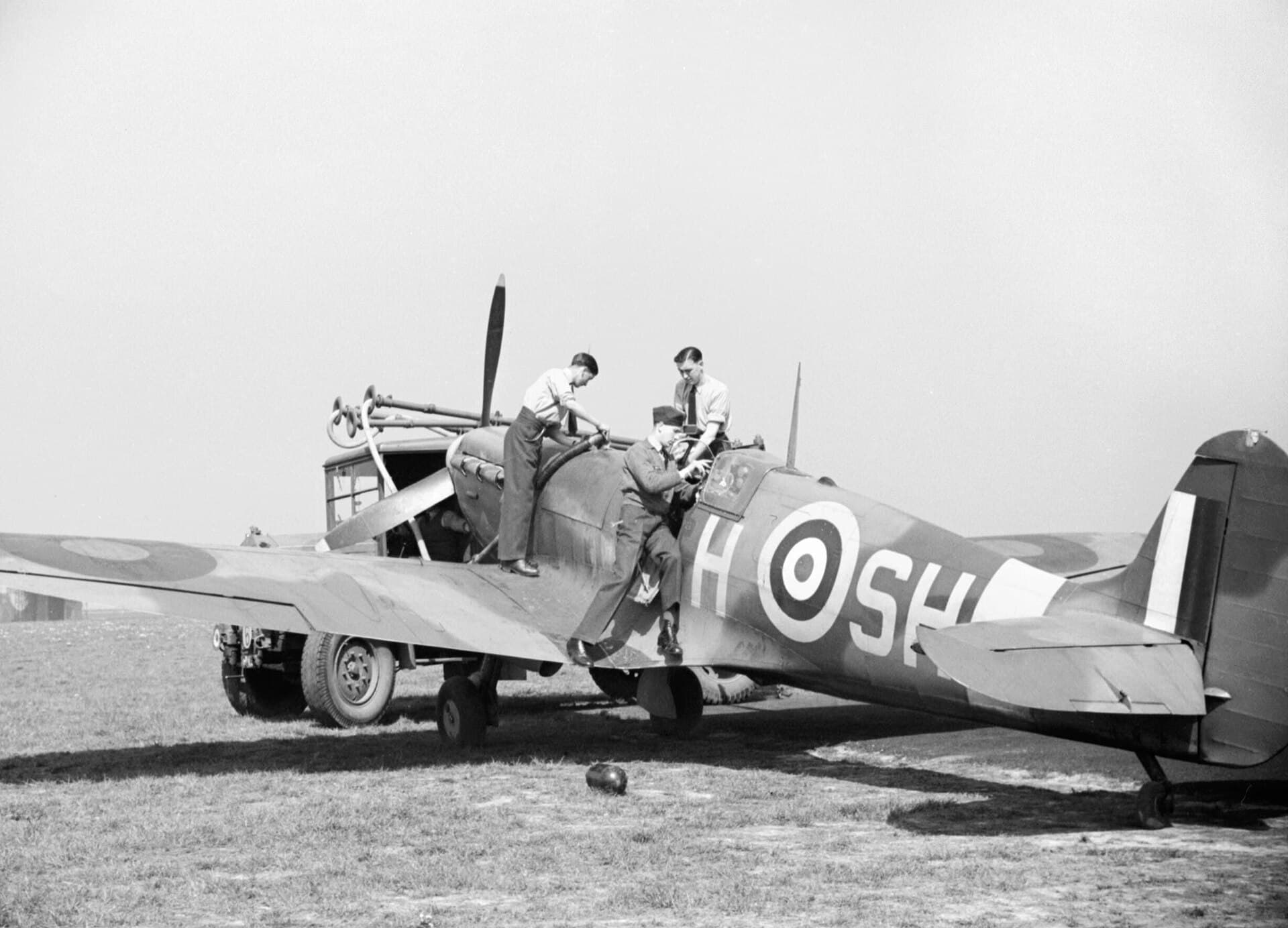
Spitfire Mk V
1941The most numerous mark of all, built in far greater numbers than any other, and the version that carried the RAF through 1941 to 42.
Essentially a Mk I airframe re-engined with the more powerful Merlin 45, offered with A, B or C wings carrying different gun combinations, and in a tropicalised version with a large Vokes air filter for the desert. It was a stopgap: the Mk III intended to succeed the Mk I was delayed, and the Luftwaffe's Bf 109F had already outclassed the Mk I, so Supermarine grafted the new engine onto the existing airframe rather than wait.
It restored rough parity over northern Europe through 1941, but by mid-1942 the Focke-Wulf Fw 190 had again outperformed it, exposing the limits of stretching a five-year-old airframe.
Spitfire HF Mk VIII
1943A dedicated high-altitude fighter with a pressurised cabin option, extended wingtips and a retractable tailwheel: the refined airframe the Mk IX had been rushed ahead of.
Retractable tailwheel, larger fuel tankage, a strengthened undercarriage and, on the HF version, pointed wingtips for altitude and a two-stage supercharged Merlin 61 series engine. It was meant to be the definitive Merlin Spitfire, but its introduction slipped behind the interim Mk IX and it ended up serving mainly overseas, in the Mediterranean, Italy and the Far East.
Spitfire Mk IX
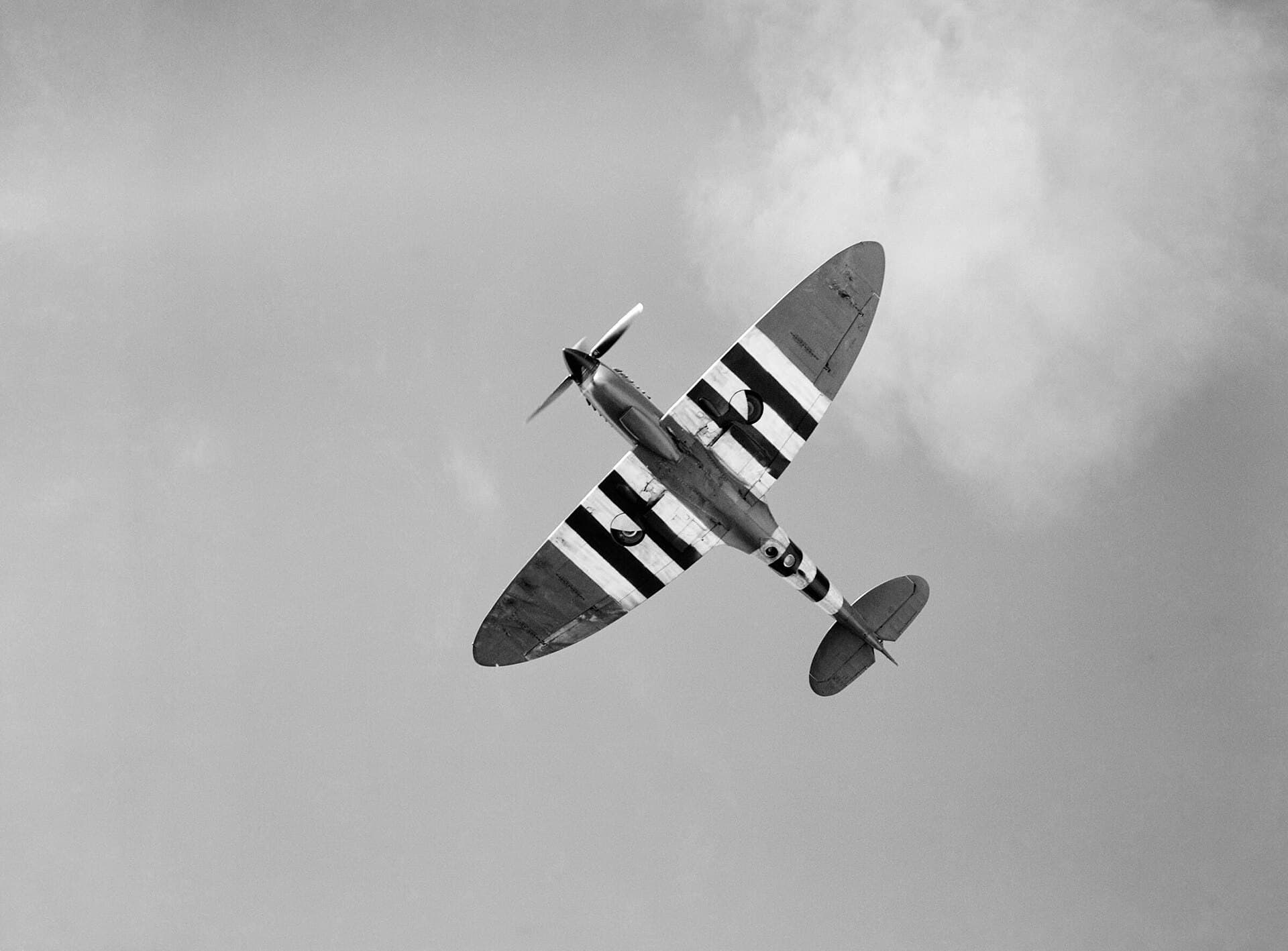
1942The interim answer to the Fw 190, and ultimately the second most numerous mark after the V: proof that the airframe still had growth left in it.
A Mk VC airframe fitted with the two-stage, two-speed supercharged Merlin 61, recognisable by its longer nose and four-bladed propeller, with little else altered. Supermarine needed a counter to the Fw 190 in months, not the year or more the definitive Mk VIII would take, so engineers married the new engine to an existing V airframe on the factory floor.
It restored performance parity at a stroke and went on to become one of the definitive Spitfire marks of the war, flown long after its intended replacement had arrived.
Spitfire PR Mk XI
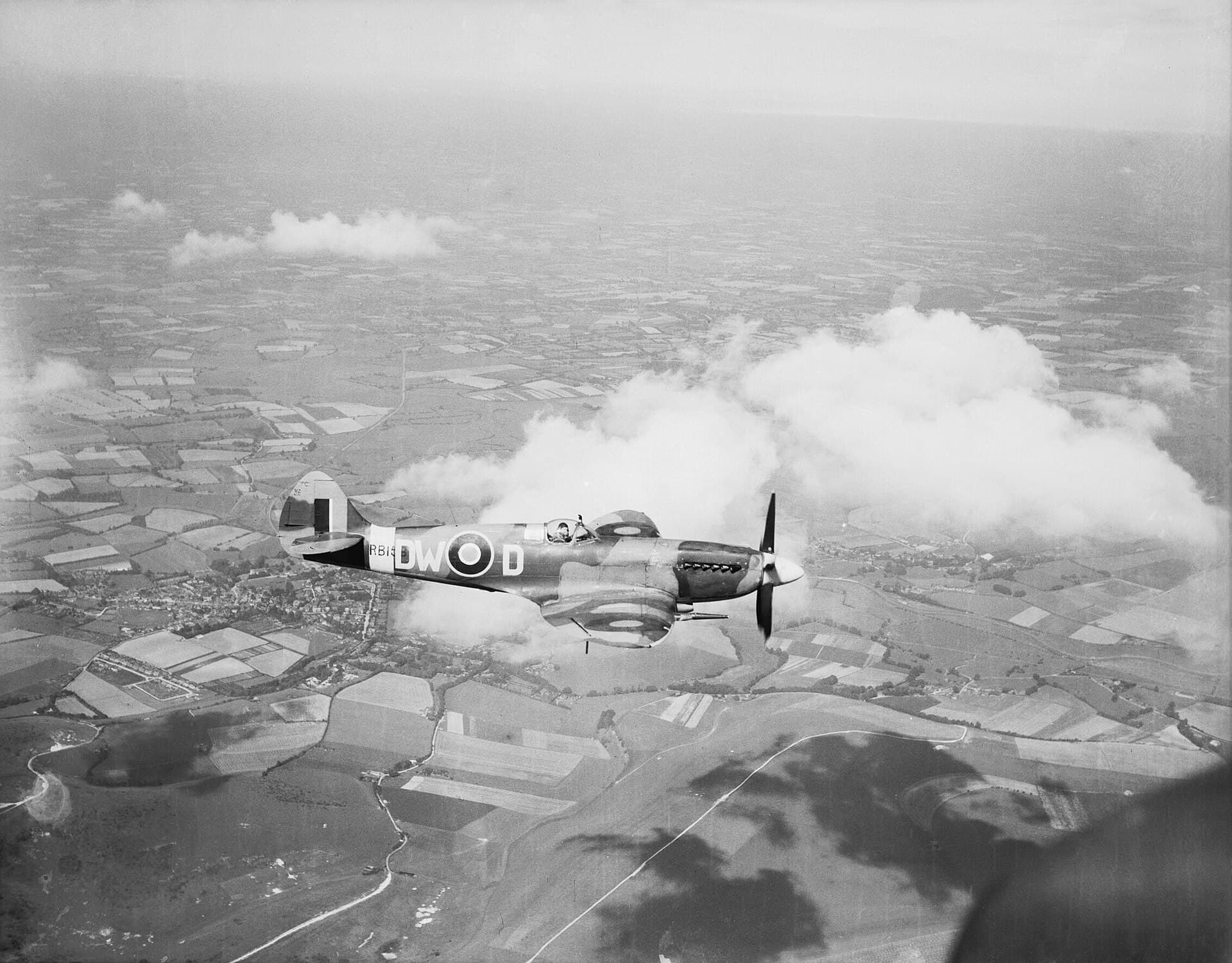
1943An unarmed, camera-equipped reconnaissance version built on the Mk IX's airframe and engine, flown fast and high, relying on speed and altitude rather than guns for survival.
Guns and armour removed and replaced with additional fuel and vertically or obliquely mounted cameras; the airframe polished and puttied smooth to gain every possible knot. Photographic reconnaissance needed an aircraft that could outrun interception outright, and a stripped, polished Spitfire proved faster than the fighter versions it was built from.
PR Spitfires photographed targets from Peenemünde to the Normandy beaches and flew some of the longest unescorted sorties of the war; several were lost only to fuel exhaustion, never to enemy action.
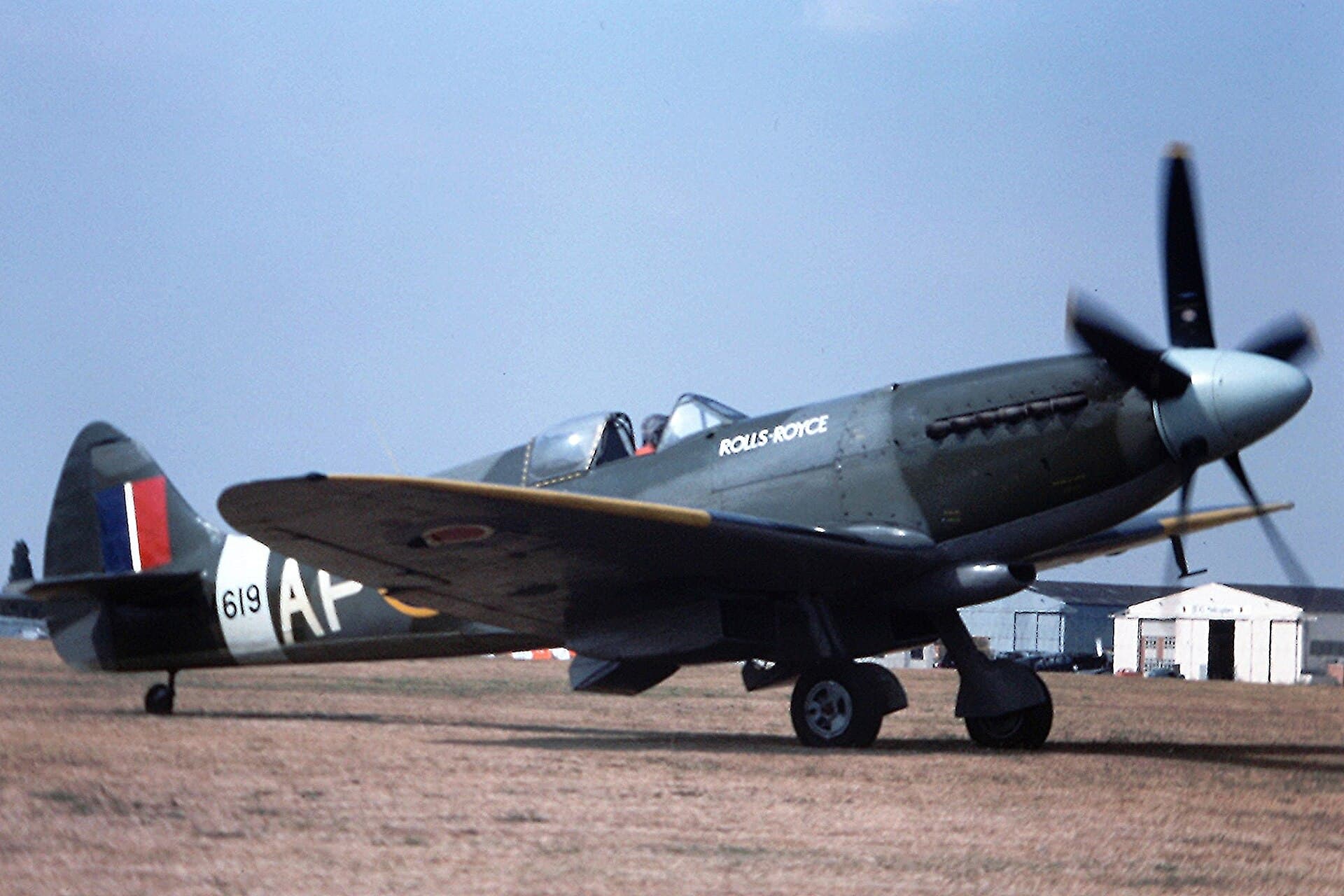
Spitfire Mk XIV
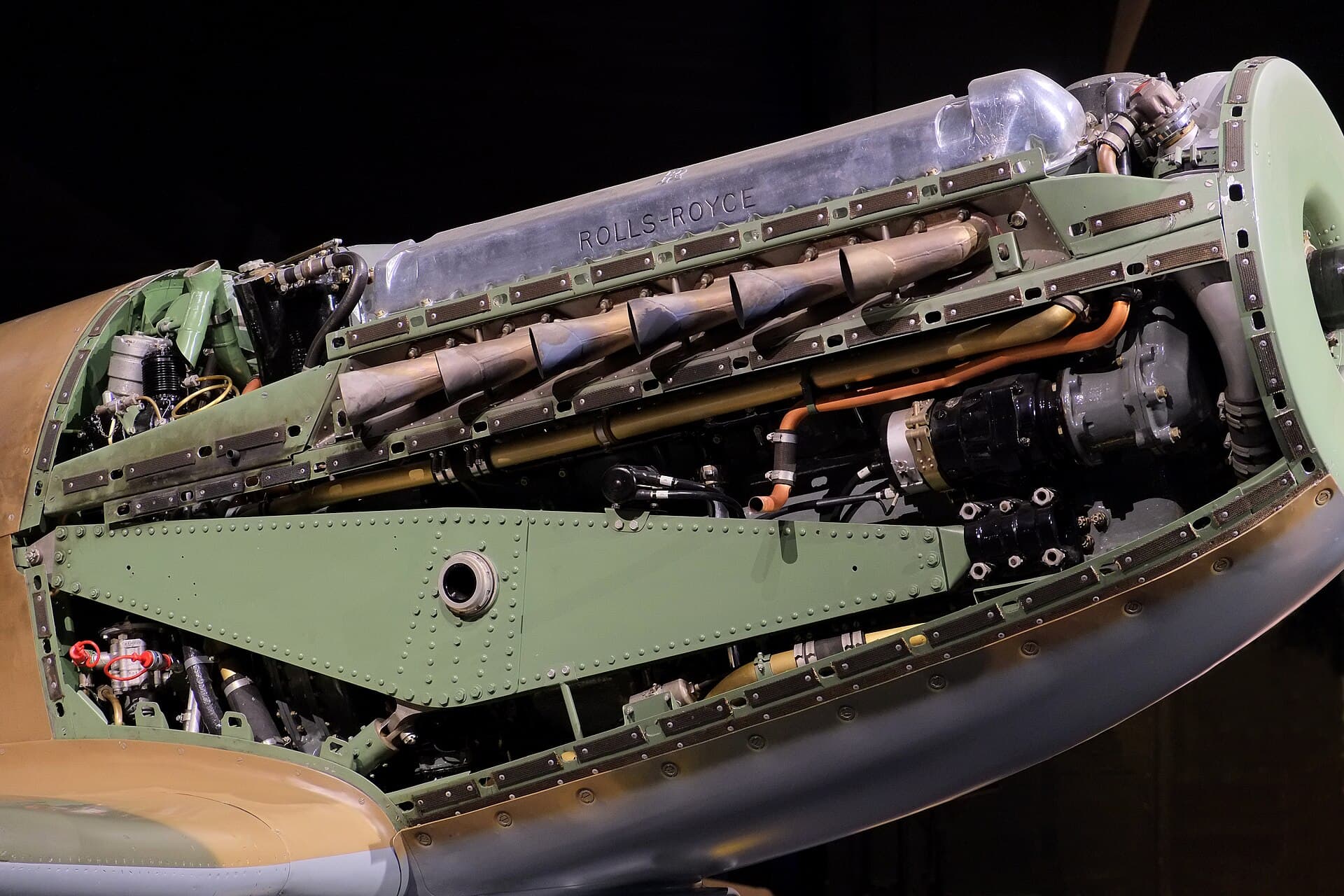
1944The first Griffon-engined Spitfire built in quantity, and the mark that restored a clear performance margin over the best German fighters in the war's final year.
A two-stage Griffon 65 of some 2,050 hp in place of the Merlin, driving a five-bladed propeller; a larger fin and rudder to counter the extra torque, and later a cut-down rear fuselage with a teardrop canopy. The Merlin was reaching the limit of what its supercharger could feed it; the larger, more powerful Griffon, originally developed for the Fleet Air Arm, was fitted to keep pace with German and jet-age performance.
It was used to intercept V-1 flying bombs, for which its speed at low altitude was decisive, and it remained competitive against the Luftwaffe's last piston fighters to the end of the war.
Seafire
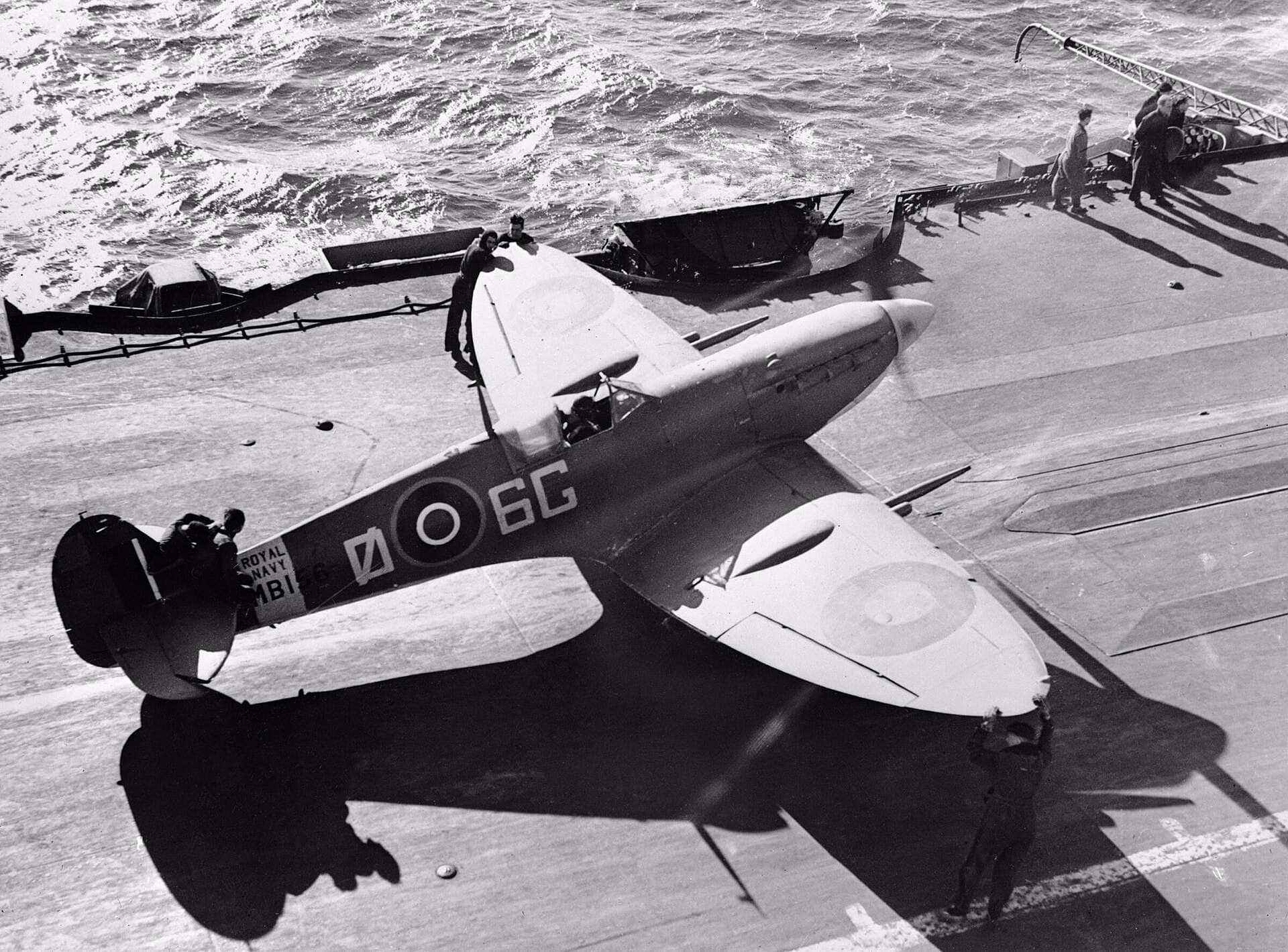
1942A navalised Spitfire adapted for carrier operation with the Fleet Air Arm, converted from existing fighter airframes rather than designed from scratch.
An arrester hook, catapult spools and, on later versions, folding wingtips for the hangar deck; naval radio and IFF equipment replaced some fighter fit. The Royal Navy urgently needed a carrier fighter that could match land-based German and Japanese types, and adapting the Spitfire was faster than developing a purpose-built naval aircraft.
The narrow undercarriage designed for grass airfields made deck landings punishing, and early Seafires suffered heavy losses to landing accidents rather than combat, a compromise the airframe never fully resolved.
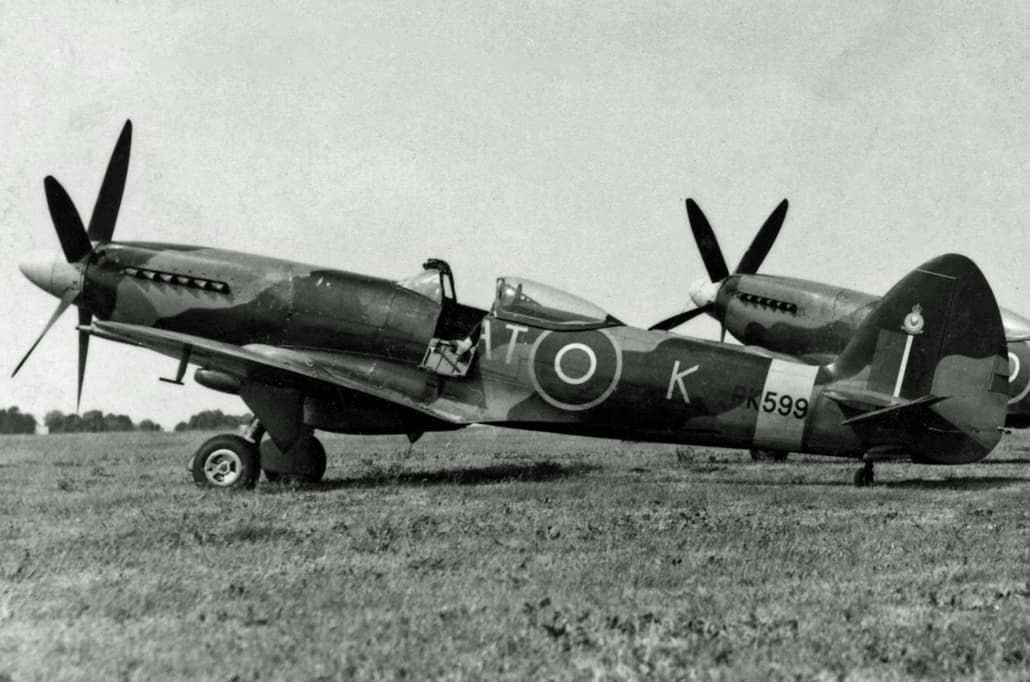
Spitfire F Mk 22 / F Mk 24
1945The last and heaviest production Spitfires, arriving too late for the war they were designed to fight and serving mainly with post-war RAF squadrons and reserves.
A cut-down rear fuselage with bubble canopy as standard, a new broader fin and rudder, wide-track undercarriage and, on the Mk 24, four 20 mm cannon and provision for rockets, nearly twice the empty weight of the Mk I. Continuous development across the airframe's whole life meant each mark absorbed the lessons and equipment of the one before; by the 22 and 24, the accumulated changes amounted to a substantially different aircraft that still traced its lineage to 1936.
Blueprints
- Spitfire Mark I, Imperial War Museums
- Second World War Spitfires, Royal Air Force Museum
- Supermarine Spitfire, Royal Air Force
- Spitfire Mk IX Two Seater, The Fighter Collection / Aeroplane Monthly
- Griffon-engined Spitfires, Battle of Britain Memorial Flight
- Seafire: the Spitfire that went to sea, Fleet Air Arm Museum
- Supermarine Spitfire, Britannica
- Supermarine Spitfire, Wikipedia