History
The Berlin Airlift
June 26, 1948 – September 30, 1949
BerlinGermany
277,569
Allied flights
322days
Blockade
15months
Airlift
The operation
- Blockade
- 24 June 1948 to 12 May 1949
- Airlift
- 26 June 1948 to 30 September 1949
- German name
- Berliner Luftbrücke, "air bridge"
- US code name
- Operation Vittles
- British code name
- Operation Plainfare
- Berlin airfields
- Tempelhof, Gatow, Tegel, the Havel
- Commander
- Maj. Gen. William H. Tunner
The scale
- Allied sorties
- 277,569
- RAF sorties
- 131,800
- Of those, by Avro York
- 58,124
- Largest day
- 1,398 flights, 16 April 1949
- Coal share of cargo
- About two thirds
- US C-54s committed
- About 225
- British charter firms
- 25
Building Tegel
- Begun
- 5 August 1948
- Finished
- 5 November 1948
- Runway
- 5,500 ft
- Workers
- 17,000, mostly women
- Runway made of
- Crushed rubble under asphalt
- Asphalt flown in
- 10,000 drums
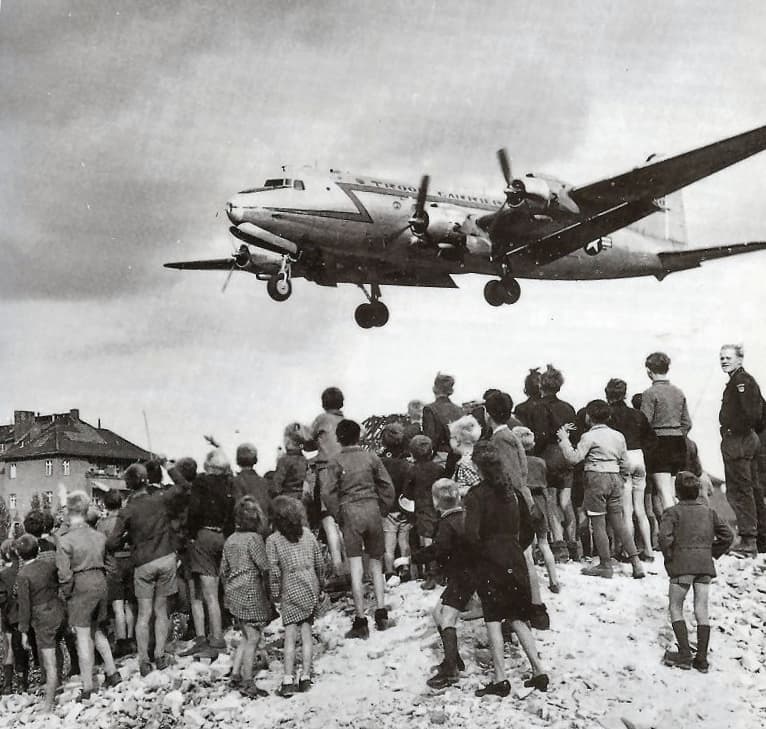
When the Soviet Union blockaded West Berlin on 24 June 1948, the Western Allies supplied the city by air. The airlift ran from 26 June 1948 to 30 September 1949, outlasting the blockade itself, which was lifted on 12 May 1949: the first great demonstration that a city could be kept alive from the air.
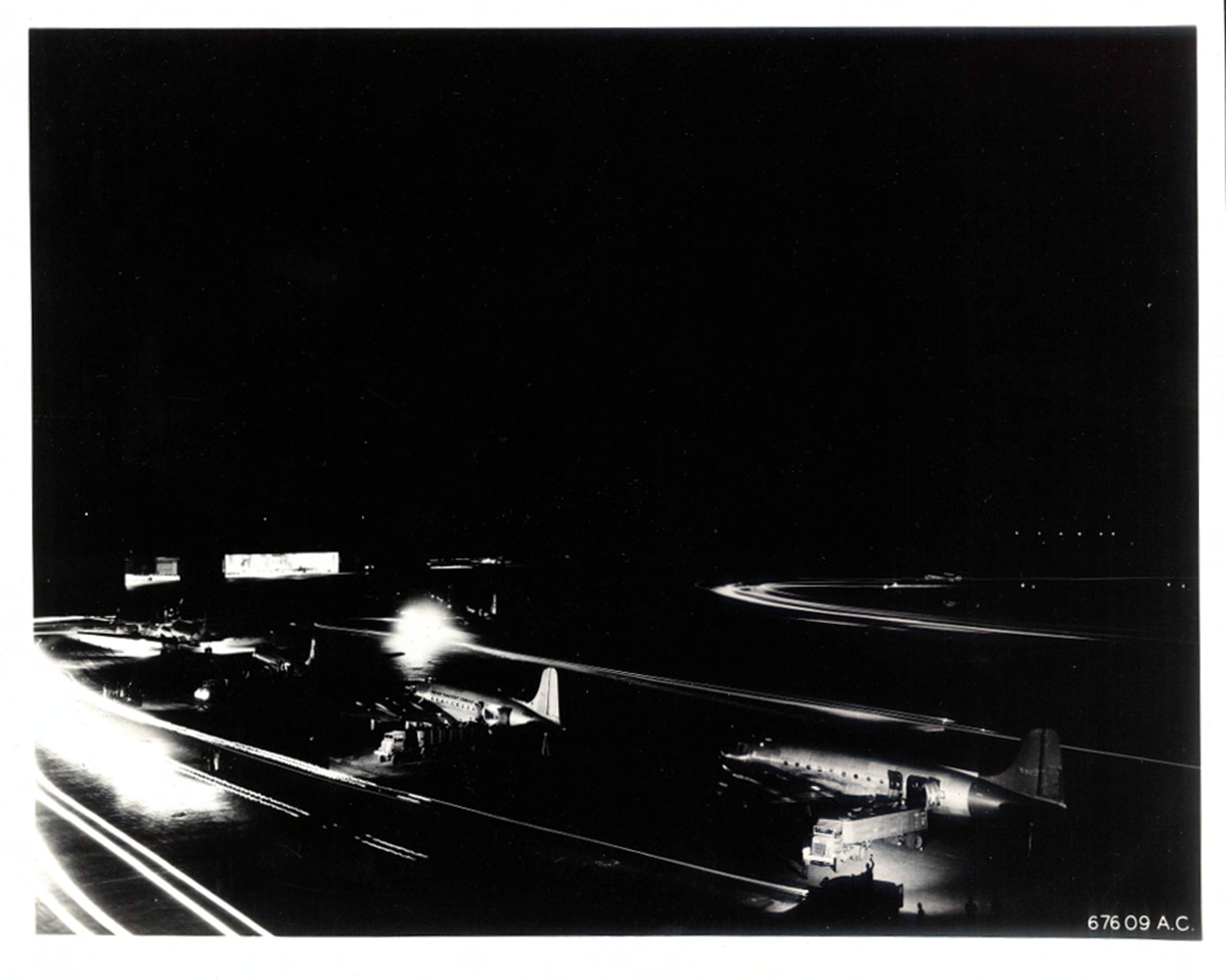
The Berlin Airlift was the fifteen-month operation by which the Western Allies supplied the western sectors of Berlin entirely from the air. The Soviet blockade of road, rail and water access to the city became complete on 24 June 1948; the American operation, code-named Vittles, began two days later on 26 June, and the British operation, Plainfare, two days after that. The Soviet Union lifted the blockade on 12 May 1949, but the flying did not stop with it: the Allies went on stockpiling against a second blockade until the last airlift sortie in the autumn of 1949.
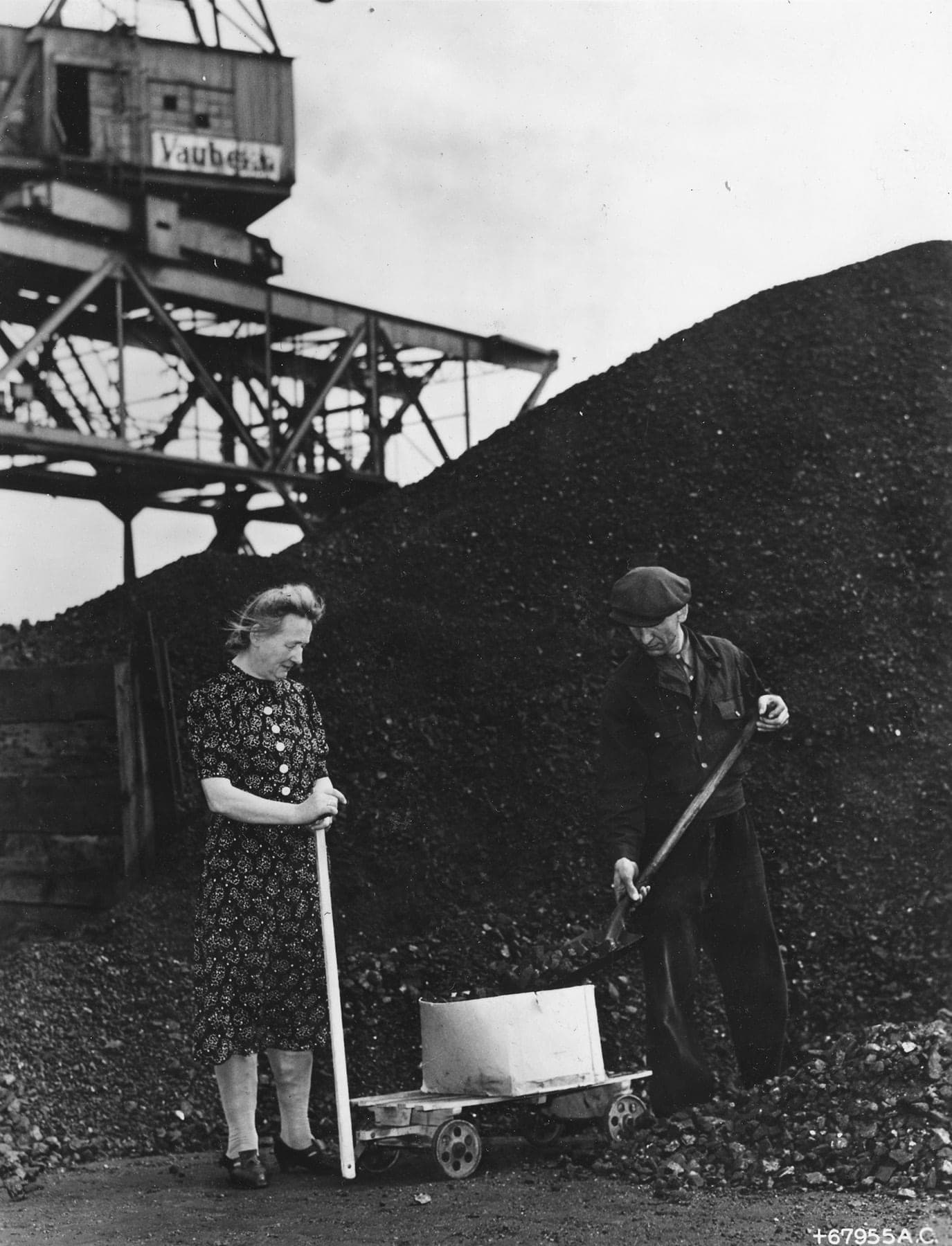
Nothing on this scale had been attempted before. A city of rather more than two million people: the figures given by different authorities range from 2.2 to 2.5 million civilians, plus the Allied garrisons: had to be fed, warmed, lit and kept in work with cargo that arrived only through three narrow air corridors across Soviet-occupied Germany. Two thirds of everything flown in was coal, because coal ran the power stations that ran the water and sewage plants. Flour, dried potato, dried milk, medicine, newsprint, liquid fuel, machinery, even the asphalt for a new runway all came by air.
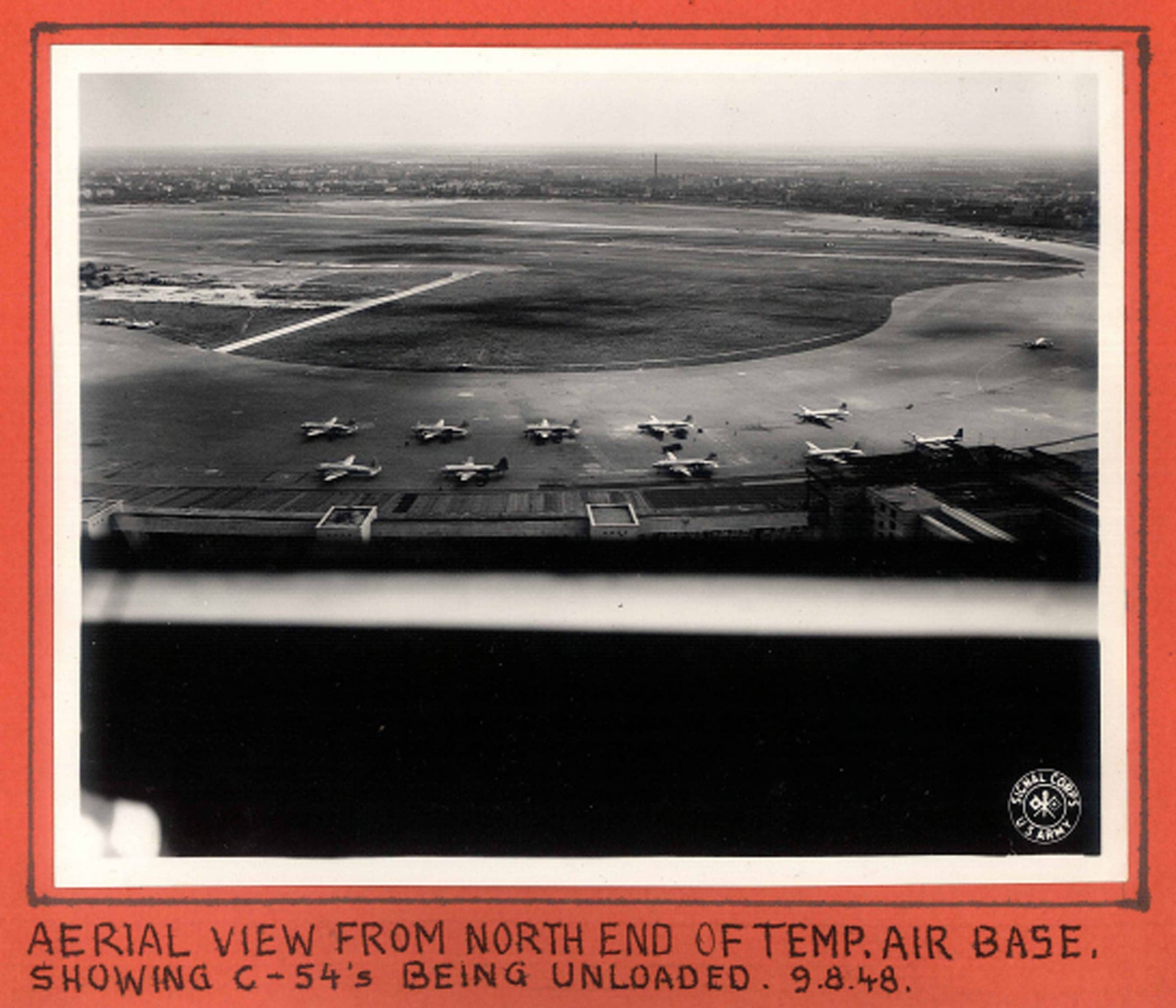
By the end the Allies had flown 277,569 sorties into Berlin and delivered about 5,126,000,000 lb of cargo, of which American aircraft carried roughly 3,931,000,000 lb and British military and civil aircraft about 1,190,000,000 lb. Rates like these were reached by turning the operation into something closer to a production line than a flying programme: aircraft spaced three minutes apart at fixed heights and speeds, a single approach attempt per aircraft, and an unloading time driven down to around twenty minutes and then below it.
The airlift settled the first great confrontation of the Cold War without a shot being fired, and it did more than that. It made West Berlin a symbol rather than a salient, bound the western sectors to the United States and Britain for forty years, and taught every air force that followed how a sustained airlift is actually run. The techniques worked out over Berlin in 1948 and 1949 are the direct ancestors of modern air mobility practice and of the way busy airports still sequence arrivals.
Background
At the end of the Second World War the United States, the United Kingdom, France and the Soviet Union divided Germany into four occupation zones and divided its capital, which lay deep inside the Soviet zone, into four sectors. The arrangement was meant to be temporary and to be administered jointly through the Allied Control Council. Nothing about it was written down in the detail such an arrangement needed. In particular, the Western Allies never obtained a written guarantee of surface access to Berlin through the Soviet zone; what they did obtain, on 30 November 1945, was a written agreement on air corridors.
Berlin itself was in a condition that is hard to overstate. Allied bombing and the battle for the city had reduced much of it to rubble; shelter and fuel were scarce, the black market rather than the currency ran the economy, and roughly two and a half million people were spread across the four sectors living close to the edge. The Office of the Historian at the US State Department, summarising the period, records that starvation loomed and that Berlin had become, in Western eyes, a forward position in a contest that had not yet been named.
Relations between the occupying powers came apart over three years. In 1946 the Soviet authorities stopped sending agricultural produce from their zone into the western sectors, and city elections that year produced a heavy anti-communist vote even in the Soviet sector. On 1 January 1947 the American and British zones were merged economically into the Bizone. In March 1947 the Moscow conference of foreign ministers broke down and President Truman announced the doctrine that carries his name; in June, Secretary of State George Marshall announced the European Recovery Program. At the London meeting of the Council of Foreign Ministers in November and December 1947 the Allies failed altogether to agree on the future of Germany.
In early 1948 the three Western powers began planning in secret for a West German state built out of their zones. When the Soviet delegation learned of it in March, it walked out of the Allied Control Council, which never met again in that form. The decisive step came in June, when American and British officials introduced a new currency, the Deutsche Mark, into the Bizone and into the western sectors of Berlin without consulting the Soviet authorities. The purpose was to take economic control of the city out of Soviet hands, to make Marshall Plan aid usable, and to kill the black market: which, according to accounts from the airlift's own veterans, it did almost overnight.
The Soviet response was to issue a currency of its own, the Ostmark, and then to close the city. Road, rail and canal links to the western sectors were cut; electricity generated in the Soviet sector was switched off; the flow of food and coal stopped. The blockade became complete on 24 June 1948. The Western Allies had few good options. Their combat forces in Europe had been run down since 1945 and were dwarfed by the Red Army around Berlin: figures cited by airlift veterans' organisations put roughly 250,000 Soviet troops against an Allied garrison of about 25,000. But the 1945 air agreement still stood, and an attack on an unarmed humanitarian flight in a corridor the Soviets had signed for would have put the blame for any war squarely on Moscow. That calculation is why the response was an airlift rather than an armoured column.
Development
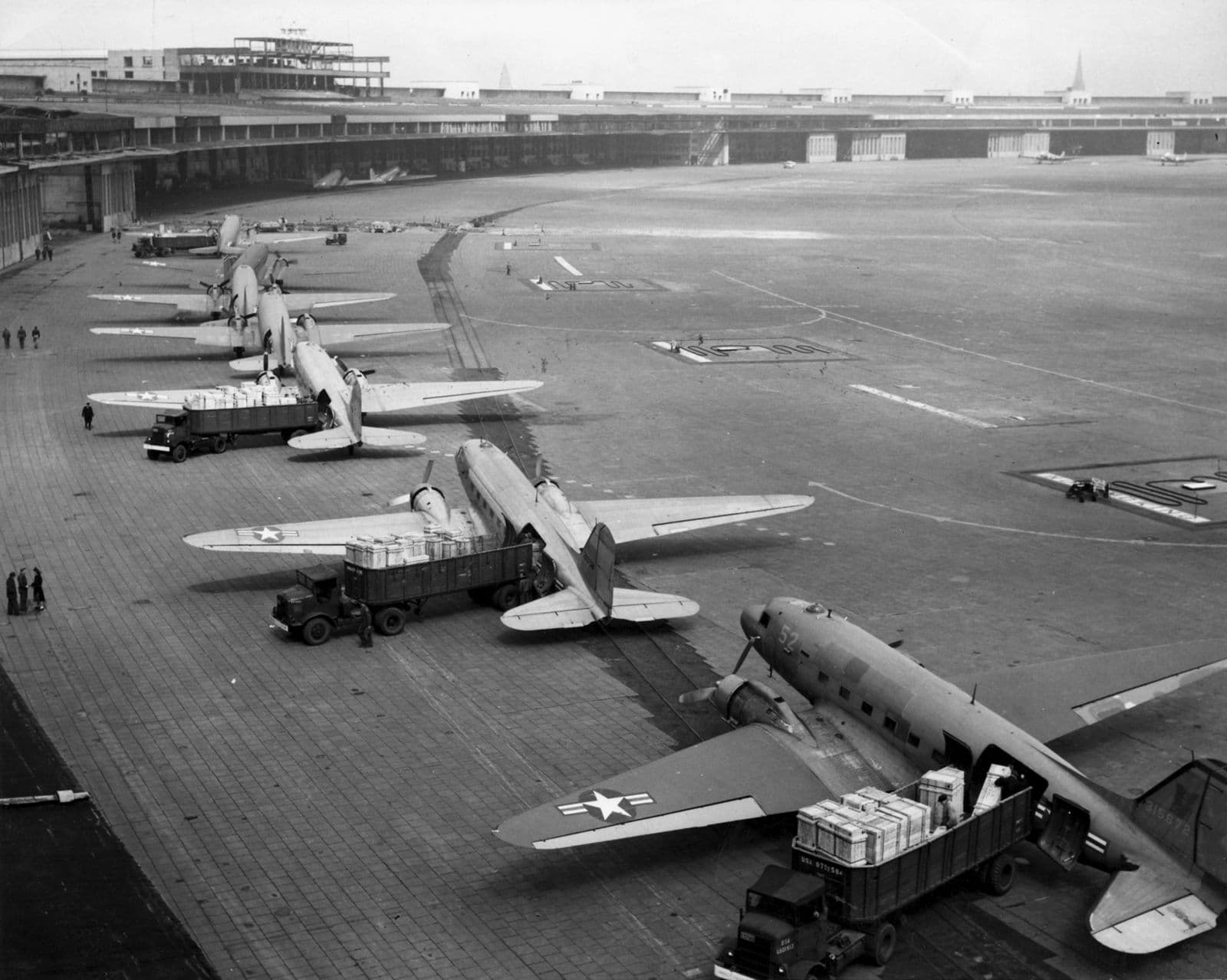
The airlift was improvised before it was organised. On 24 June 1948, the day the blockade closed, General Lucius D. Clay, commander of US occupation forces and military governor of the American zone, told his air commander, Major General Curtis LeMay, to put every transport aircraft he had onto supplying the city. Two days later President Truman directed that the improvisation be regularised and that all transport aircraft in the European Command be pressed into service. On the British side, a plan for feeding the whole civilian population rather than merely the garrisons had been worked out by a British commander, R. W. Waite; Clay took it up, and went to Berlin's mayor, Ernst Reuter, to ask whether Berliners would accept the hardship it implied. Reuter's answer was that they would do whatever was necessary.
The starting fleet was thin: fewer than ninety C-47s, each good for about 6,000 lb of cargo, and a handful of the far larger C-54s. On 22 July 1948 Clay told the National Security Council that he could meet Berlin's summer needs with 3,500 tons a day, but that winter coal would push the requirement to 9,900,000 lb a day, and that to do it he needed 75 more C-54s on top of the 52 C-54s and 80 C-47s he had. The Air Force Chief of Staff, Hoyt Vandenberg, objected that stripping that many Skymasters out of the Military Air Transport Service would cripple worldwide airlift; the council and the president approved the transfer anyway. On 23 July Vandenberg ordered nine MATS squadrons, 81 aircraft, to Germany and directed that a special task force be set up to run the operation.
That task force got its commander on 29 July 1948, when Major General William H. Tunner assumed command of Airlift Task Force (Provisional). Tunner had run the wartime airlift over the Himalayas into China, the operation universally known as the Hump, and he arrived with a settled conviction that an airlift is a transport system and not a series of flights. Almost his first act was to impose a straight-in approach procedure that, by his service's own account, allowed sixteen aircraft to be landed in ninety minutes where the previous method had managed nine.
The build-up continued through the autumn against steady resistance from planners who did not want the aircraft committed. Clay asked on 10 September for 116 more C-54s; Washington offered 50; Clay restated the request on 24 September; and on 22 October Truman approved the further 66 aircraft Clay wanted. That decision put something like 52 per cent of the entire American C-54 inventory into one operation, which is why the Air Force then asked the Navy for help: on 27 October the Navy transport squadrons VR-6 and VR-8 were ordered from Guam and Honolulu to Germany on 180 days' temporary duty. Their last aircraft reached Rhein-Main on 22 November. By then the improvisation of June had become a standing joint organisation drawing on the Air Force, the Navy, the Army's Transportation Corps, the RAF and twenty-five British charter companies.
The machine
Everything the airlift did was constrained by three tubes of air. The corridors agreed in November 1945 ran from Hamburg in the north, from Bückeburg near Hanover in the centre and from Frankfurt am Main in the south; each was about 17 nm wide and topped out around 10,000 ft, and over Berlin they opened into a control zone some twenty miles across in which aircraft could manoeuvre to land. Flight plans passed through the Berlin Air Safety Centre, which was staffed around the clock by American, British, French and Soviet controllers throughout the crisis: one of the very few four-power institutions that kept working while the blockade was on. In practice the Allies flew in along the northern and southern corridors and out along the central one, which turned the whole system into a one-way loop.
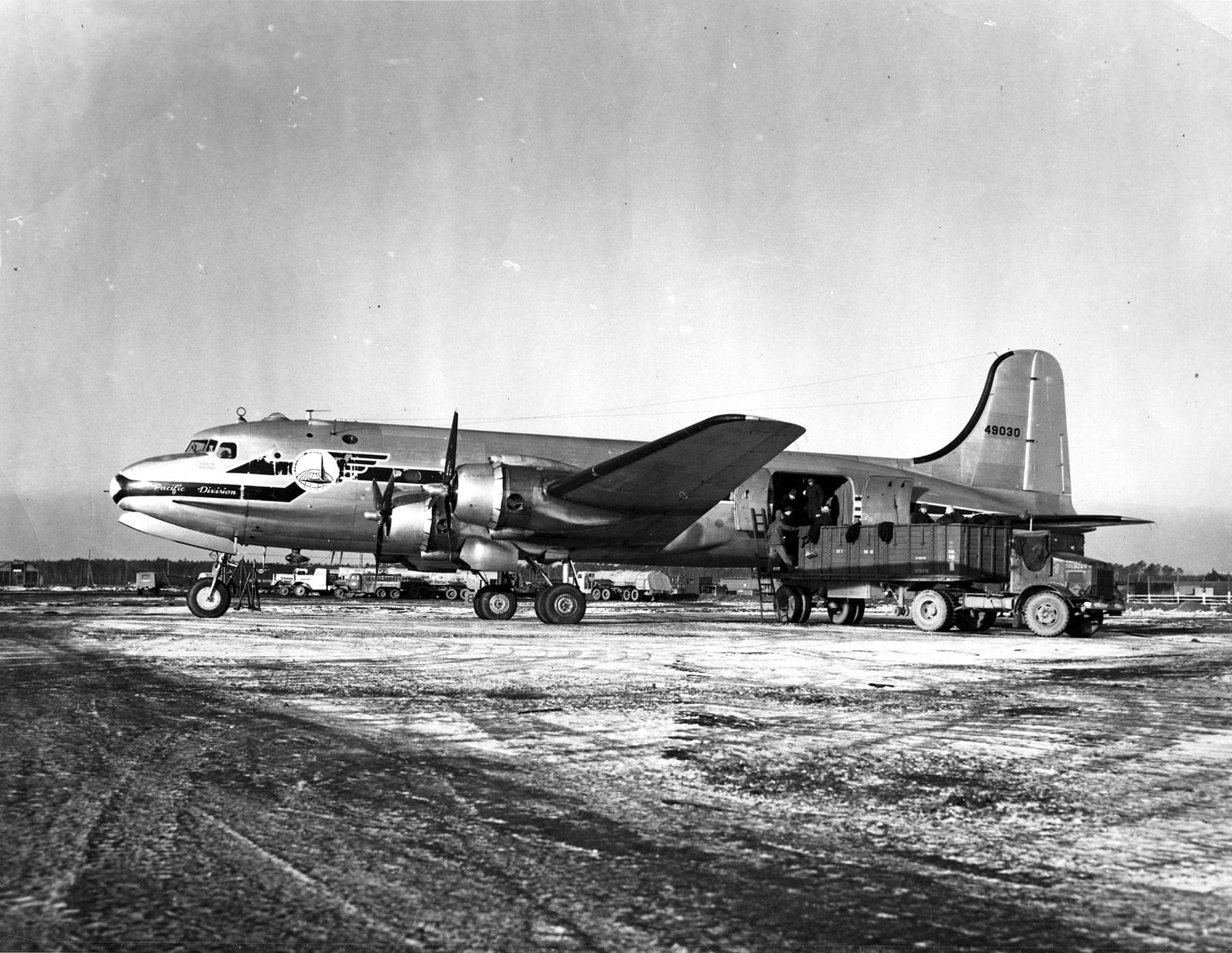
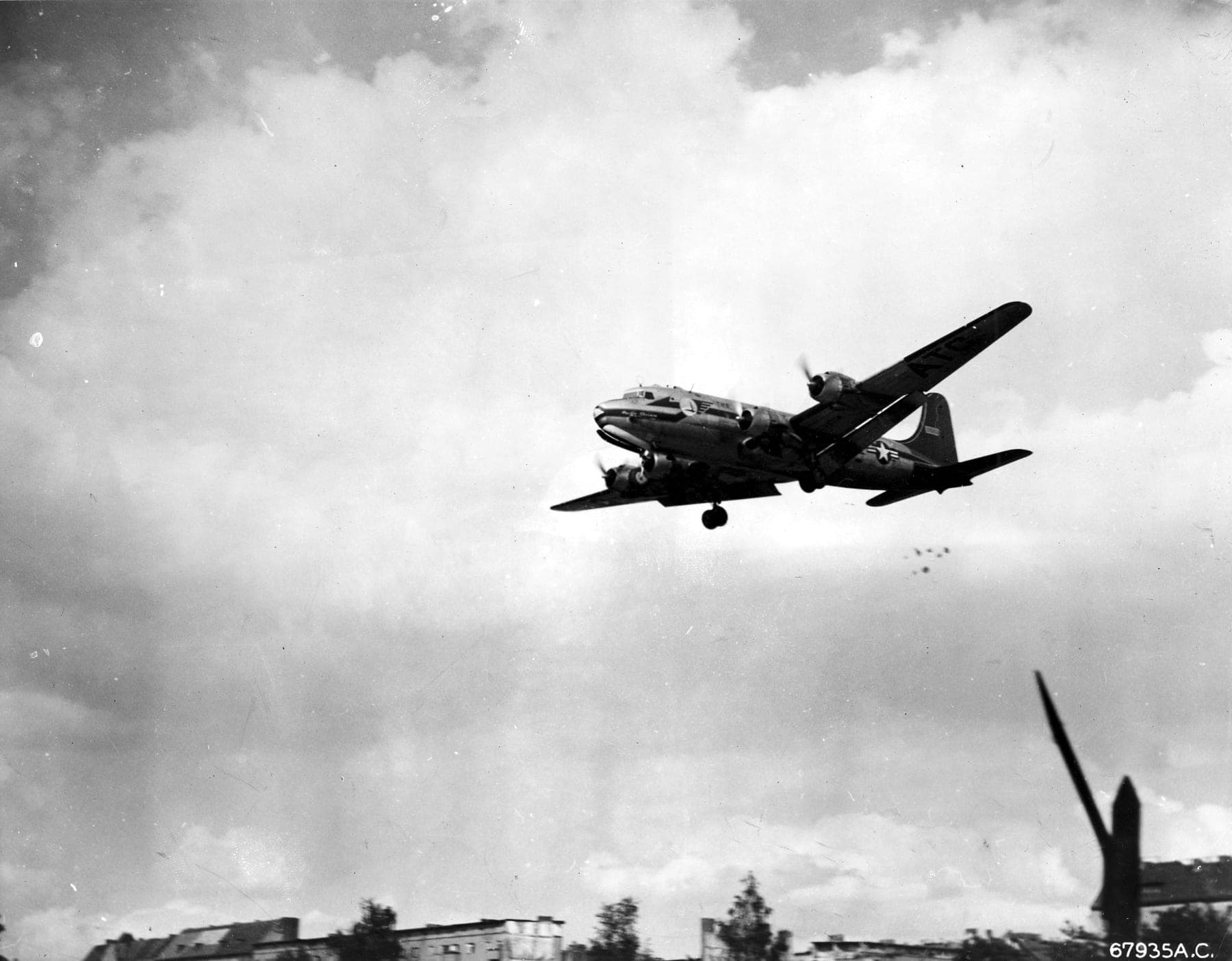
The American workhorses were two Douglas designs, both derived from airliners. The C-47 Skytrain was the military DC-3, carrying about 6,000 lb; the four-engined C-54 Skymaster was the military DC-4 and carried roughly 28,000 lb, nearly five times as much. That ratio decided the shape of the operation. A C-47 and a C-54 occupy the same slot in a three-minute stream and take comparable time to handle, so every C-47 replaced by a C-54 multiplied the tonnage for the same air traffic. Tunner pushed standardisation hard, and by January 1949 the American effort was built around a fleet of Skymasters: accounts from the period put roughly 225 aircraft in daily operation. The Navy's R5D was the same aeroplane under a different designation, and the Navy crews arrived with an advantage: they had spent years being required to make every approach on ground-controlled approach radar, which made them, on average, better instrument pilots than their Air Force counterparts at the moment a Berlin winter arrived.
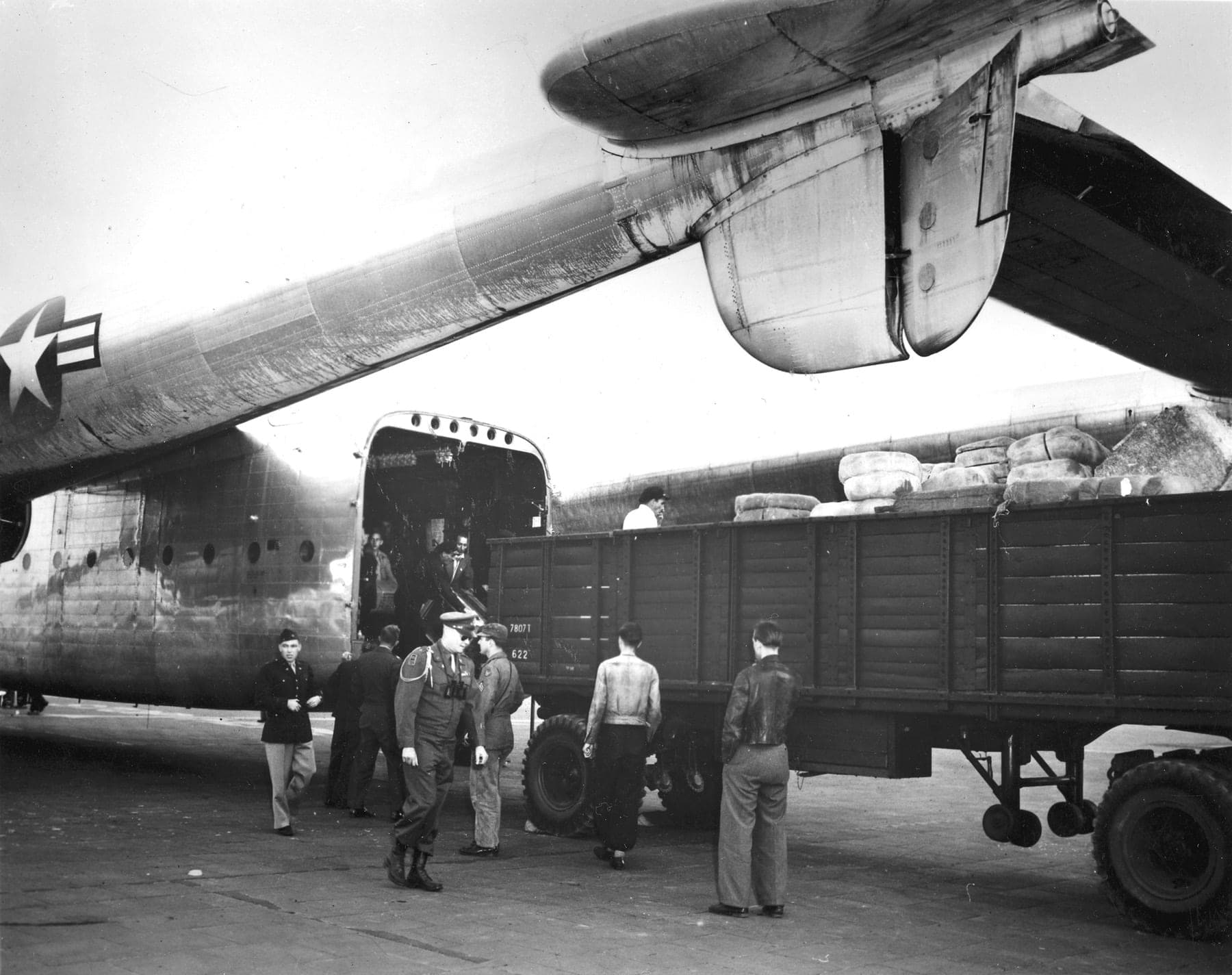
Larger and odder types were tried. The Fairchild C-82 Packet, a twin-boom freighter with a rear loading door, was brought in for outsize loads. The Douglas C-74 Globemaster, of which only about a dozen were built, could carry something like 50,000 lb across the Atlantic but was too heavy for routine use on Berlin's small fields; photographs of one unloading flour at Gatow record its brief appearance. The everyday problem was not exotic cargo but coal, which was flown in sacks, got into everything, and wore out airframes.
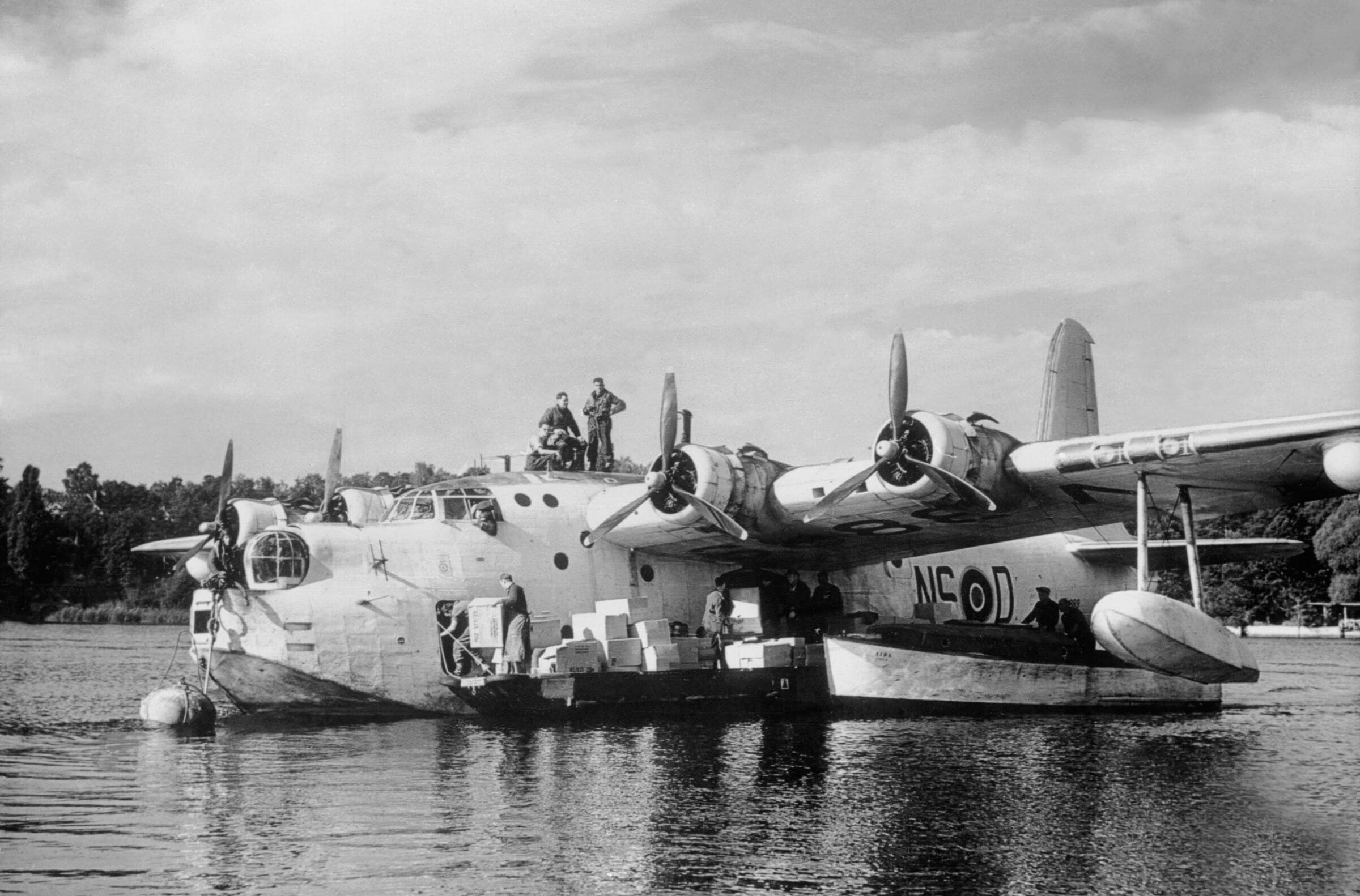
The British contribution was more varied because the RAF had no single Skymaster equivalent. Douglas Dakotas did the short-haul work. The Avro York (Roy Chadwick's transport built around Lancaster wings, tail, undercarriage and engines) became the mainstay, and the RAF Museum records that Yorks flew 58,124 of the 131,800 sorties the RAF conducted. The Handley Page Hastings, which had only entered service with No. 47 Squadron in September 1948, equipped two squadrons that flew alongside the Yorks; a Hastings made the last sortie of the whole airlift. And because Berlin needed salt, which corrodes an ordinary airframe from the inside, the RAF used Short Sunderland flying boats, whose hulls were built for sea water: they flew from Finkenwerder on the Elbe near Hamburg and alighted on the Havel beside RAF Gatow. The Sunderlands carried 4,920 tonnes of freight in all before ice on the Havel ended their season.
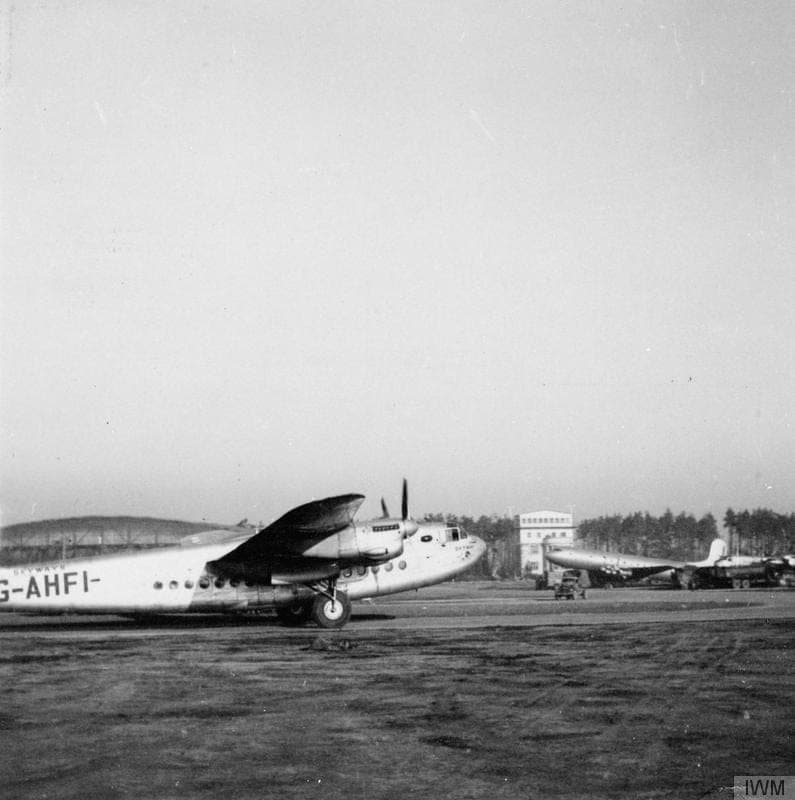
Alongside the RAF, twenty-five British civil charter companies flew the airlift under contract: a part of the story that is routinely lost beside the uniformed effort. Civil aircraft carried a substantial share of the British total, and specialised in the cargoes the military fleet handled badly: Flight Refuelling Limited, the first civil operator engaged and the last to withdraw, ran a dozen aircraft that between them lifted several million gallons of heating and diesel oil into the city. Civil Yorks, Lancastrians, Haltons and Liberators flew from the British bases in Lower Saxony, and one of them, Skyways' York G-AHFI, crashed attempting to land at Gatow on 15 March 1949.
Three airfields received all of it. Tempelhof, in the American sector, was the famous one: a single vast curved terminal with an apron shaped like a half-moon, set in the middle of the city with apartment blocks at the end of the runway. Gatow, in the British sector, took the British traffic and the flying-boat overflow. Tegel, in the French sector, did not exist when the blockade began. The weather was the other constant: the winter of 1948 to 49 brought cold fog that closed Berlin repeatedly, and crews flew the corridors and made their approaches on instruments and on GCA radar as a matter of routine. On 29 October 1948, the worst day of all, only a single aircraft landed in Berlin; more than seven hundred landed the following day.
Preparation
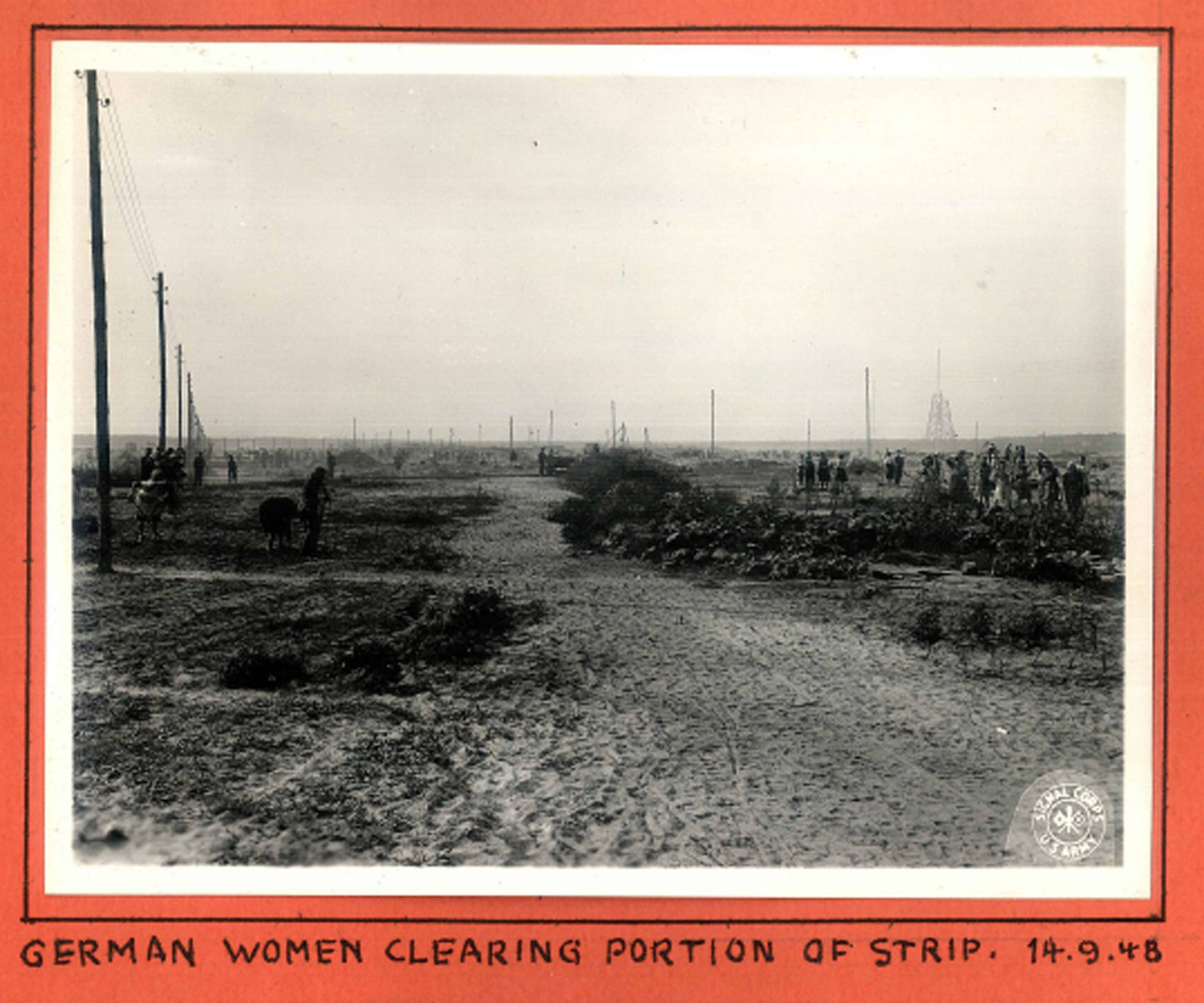
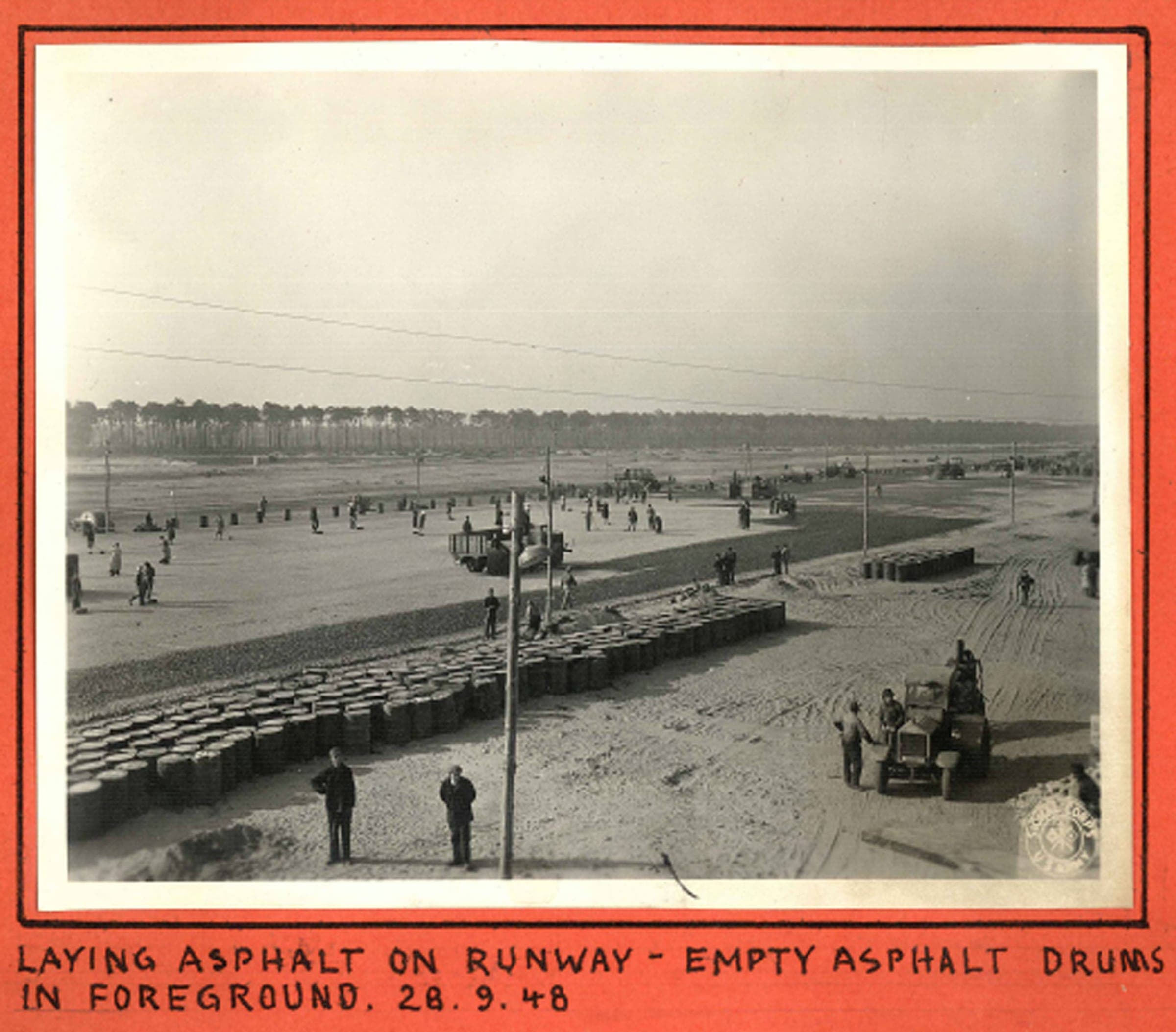
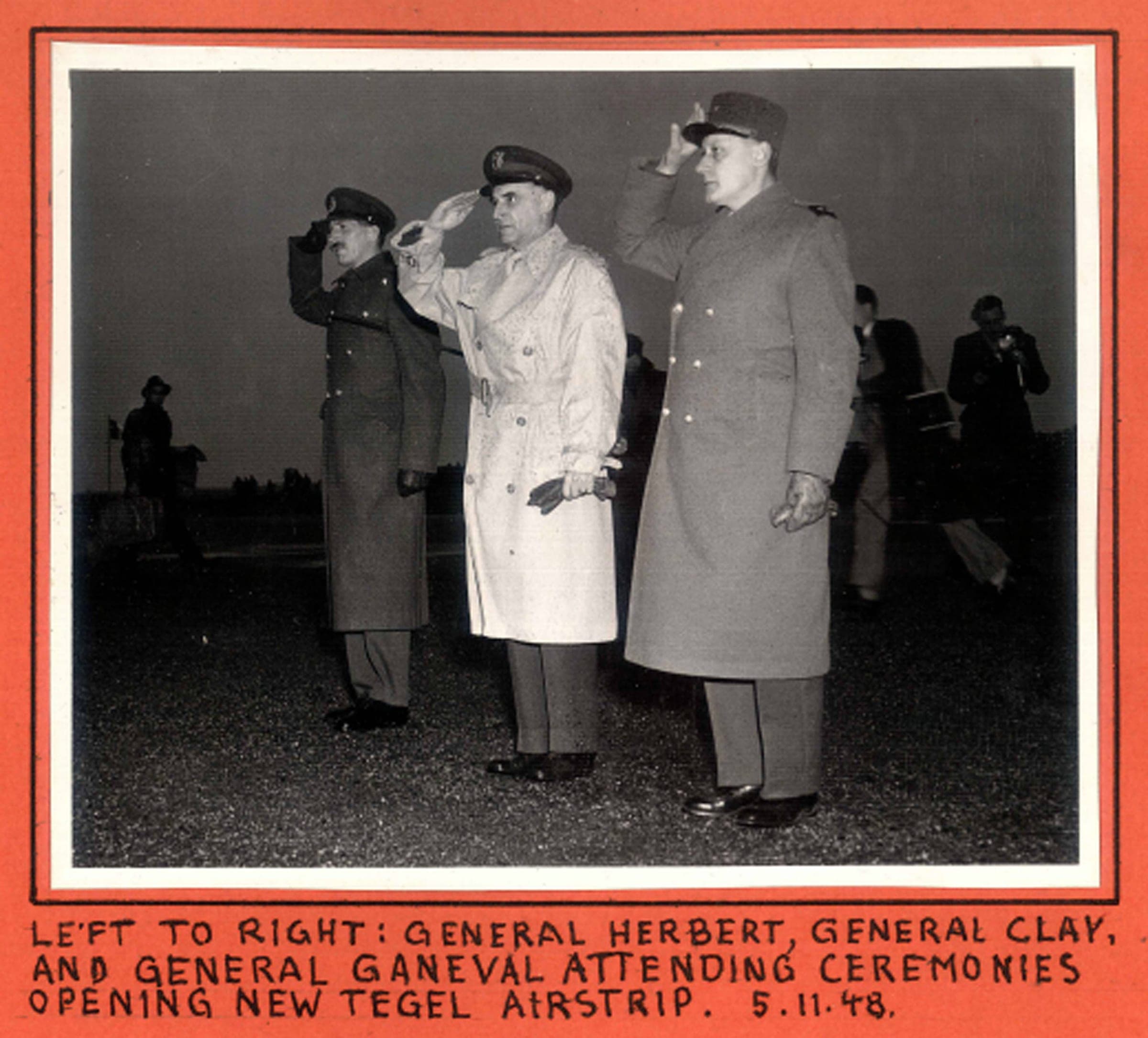
Two airfields could not carry the tonnage the winter would demand, and neither Tempelhof nor Gatow had much room to grow. Clay, an engineer by training, concluded early that Berlin needed a third field, and the French sector provided the site: Tegel, in the north-west of the city. Ground was broken on 5 August 1948 and the field was finished on 5 November, ninety days for a 5,500 ft runway, 6,020 ft of taxiway, 4,400 ft of access road, 2,750 ft of access railway and over 1,000,000 ft² of apron.
It was built, in the main, by hand and by Berliners. The National Museum of the United States Air Force records that 17,000 German civilians, most of them women, worked in three shifts using mostly hand tools. The greater part of the runway and taxiways was made from the broken brick of Berlin's own destroyed buildings, crushed and rolled and then sealed with asphalt: and the asphalt itself had to be flown in, in 10,000 fifty-five-gallon drums, landed at Tempelhof or Gatow and trucked across the city. The workers were paid a hot meal and one Deutsche Mark a day, the same rate as the aircraft loaders.
One obstacle at Tegel could not be built around. Soviet-controlled Radio Berlin's transmitter masts stood along one side of the new runway, in the French sector, directly in the approach path of the Skymaster stream. Negotiation failed. On 16 December 1948 the French commandant in Berlin, General Jean Ganeval, had the tower and a mast under construction demolished with explosives: an act of considerable nerve that removed the hazard and is still the best-remembered French contribution to the airlift.
The preparation that mattered most, though, was not concrete but procedure, and it was Tunner's. Aircraft were spaced three minutes apart at fixed altitudes and a fixed airspeed, so that around twenty-six aircraft might be in a corridor at once; every point had to be crossed at a set height, at a set time, at a set speed, with no room for individual judgement. An aircraft that missed its approach did not try again: it flew its cargo back to Germany rather than disturb the stream. Crews were not allowed to leave their aircraft on the ground at Berlin: a weather officer, a mobile operations unit and a mobile canteen came to the aeroplane instead, so the turnaround was never waiting on a man walking to a building. Unloading, supervised by the Army, came down to an average of about twenty minutes, and maintenance moved to fixed, scheduled inspection intervals rather than fixing what broke.

Behind all of that stood a supply chain that never flew. The Army's Transportation Corps ran the sea terminals, the railways, the pipelines and the truck routes that brought coal and flour and fuel from the North Sea ports to the airfields in western Germany, and Navy tankers delivered aviation gasoline to Bremerhaven from the first weeks of the blockade. The Americans worked from two main bases in their zone, Rhein-Main and Wiesbaden, with Celle and Fassberg added later; the British worked from eight.
The event
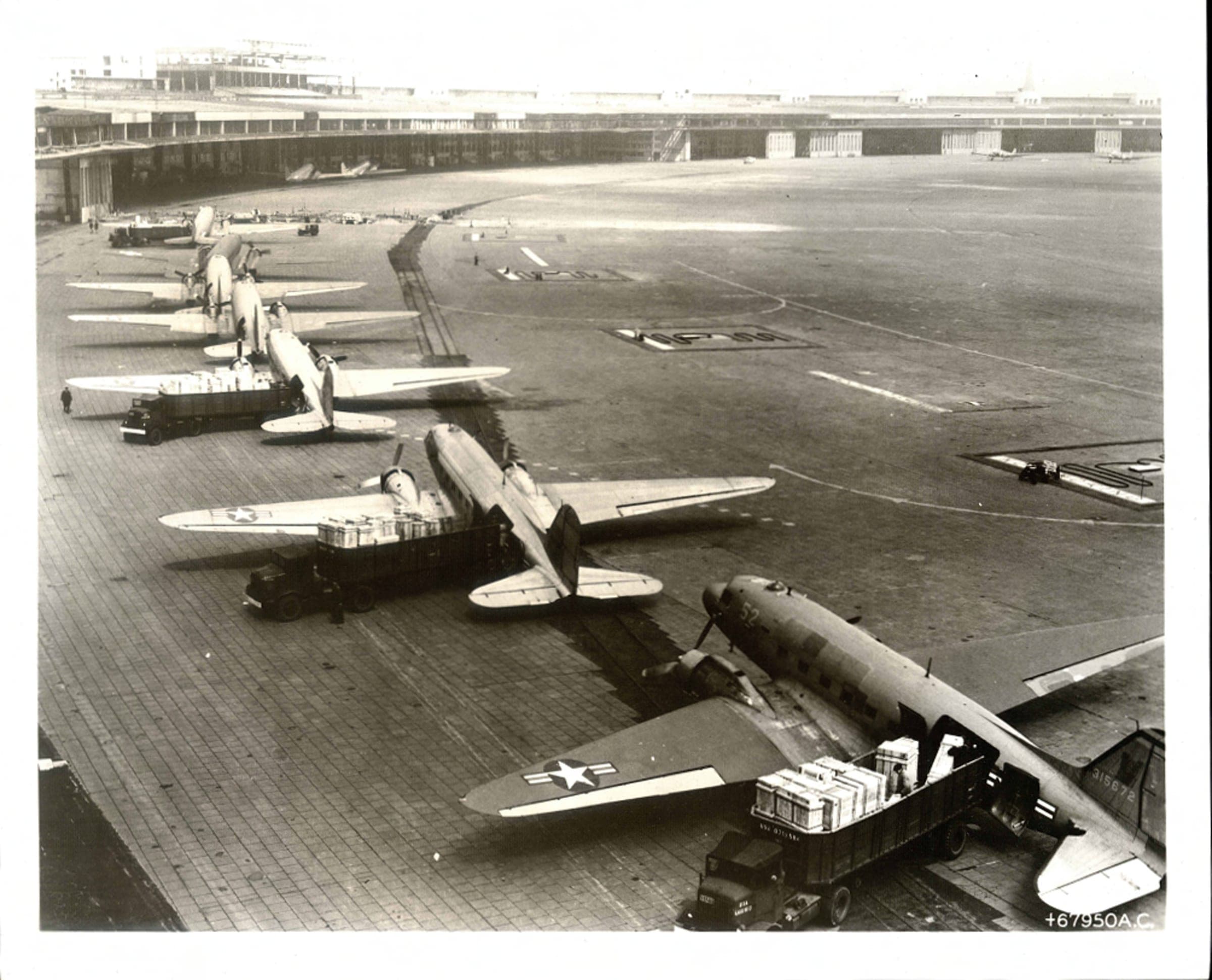
The first weeks were, by the account of the veterans' own organisation, a cowboy operation: tired crews, aircraft flying past their inspections, and a daily tonnage nowhere near what the city needed. It improved unevenly through July and August. By August 1948, two months in, more than 1,500 flights a day were delivering upward of 4,500 tons, the figure Clay had said the city would need once winter came, and although the daily requirement was not reliably met until late August, once it was met it was never given up.
The turning point in method came on 13 August 1948, remembered by the crews as Black Friday. The cloud base over Berlin was a few hundred feet, rain was degrading the radar, a C-54 crashed and burned at the end of the Tempelhof runway, and arriving aircraft began stacking up in cloud with no way of being sorted out. Tunner was in one of them, on his way to decorate a pilot. He ordered every aircraft in the stack back to western Germany and then set about making certain the situation could not recur. The rules that came out of it (one approach only, absolute spacing, controllers with authority over pilots) are what turned the airlift from a heroic effort into a system.
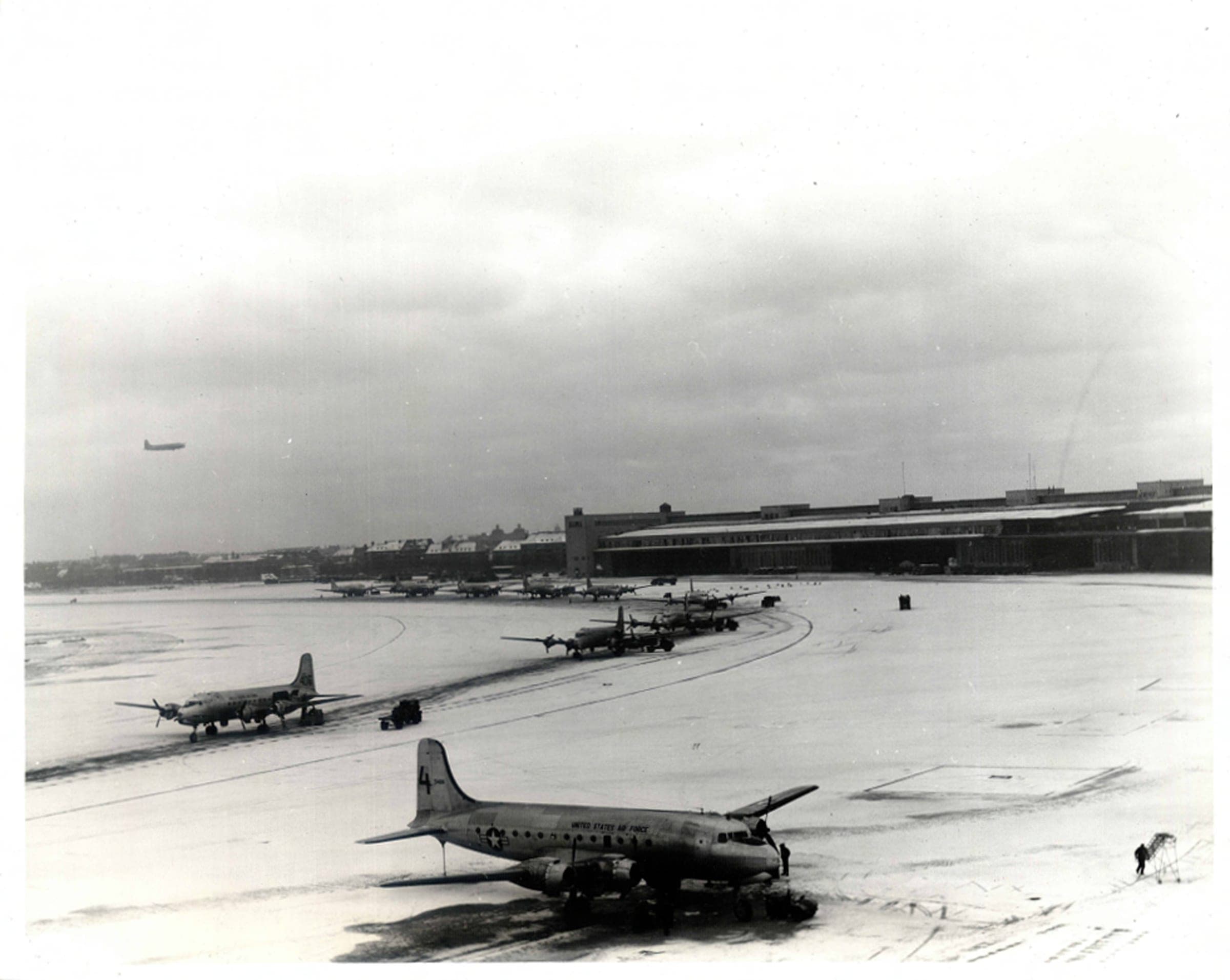
The system's characteristic figure was the interval. Accounts vary because the interval itself varied: a plane landing every three minutes is the figure most commonly given for the operation as a whole, and one every forty-five seconds at Tempelhof at peak, the RAF's own account says an aeroplane landed in Berlin every ninety seconds. A C-54 crew that landed at Tempelhof could expect to be airborne again on the return shuttle to Frankfurt or Wiesbaden about seventeen minutes later.
Winter was the test everyone had been waiting for, and the Soviets, according to Allied accounts, had been counting on it. Cold fog closed Berlin again and again, and it was in these months that the Navy squadrons' instrument-flying habits paid for themselves. The lift held. It also grew: by January 1949 some 225 American Skymasters were committed to it, and in April 1949 the two Navy squadrons alone flew 8,234 hours and delivered 23,550 tons, at a utilisation rate above thirteen hours per aircraft per day.

On 15 and 16 April 1949 the Combined Airlift Task Force staged a deliberate maximum effort, remembered as the Easter Parade. In twenty-four hours it flew 1,398 sorties and delivered about 28,530,000 lb, most of it coal, with aircraft landing at intervals reported as short as forty-five seconds. It was staged as a demonstration, and it demonstrated exactly what it was meant to: that the airlift's ceiling was far above Berlin's needs and that the blockade could be outlasted indefinitely. Tunner's own summary of the position was that the Allies could keep pouring it in for twenty years if they had to.
Traffic also ran the other way. The RAF operated a reverse airlift, carrying out manufactured goods so that Berlin's industry could keep selling, and evacuating people who could not safely spend a winter in the city. The RAF's own account puts the number of evacuees at over 130,000 (the very young, the sick and the elderly) while veterans' accounts give a figure above 150,000. Berlin's factories kept working through the blockade in part because their output could leave by air.
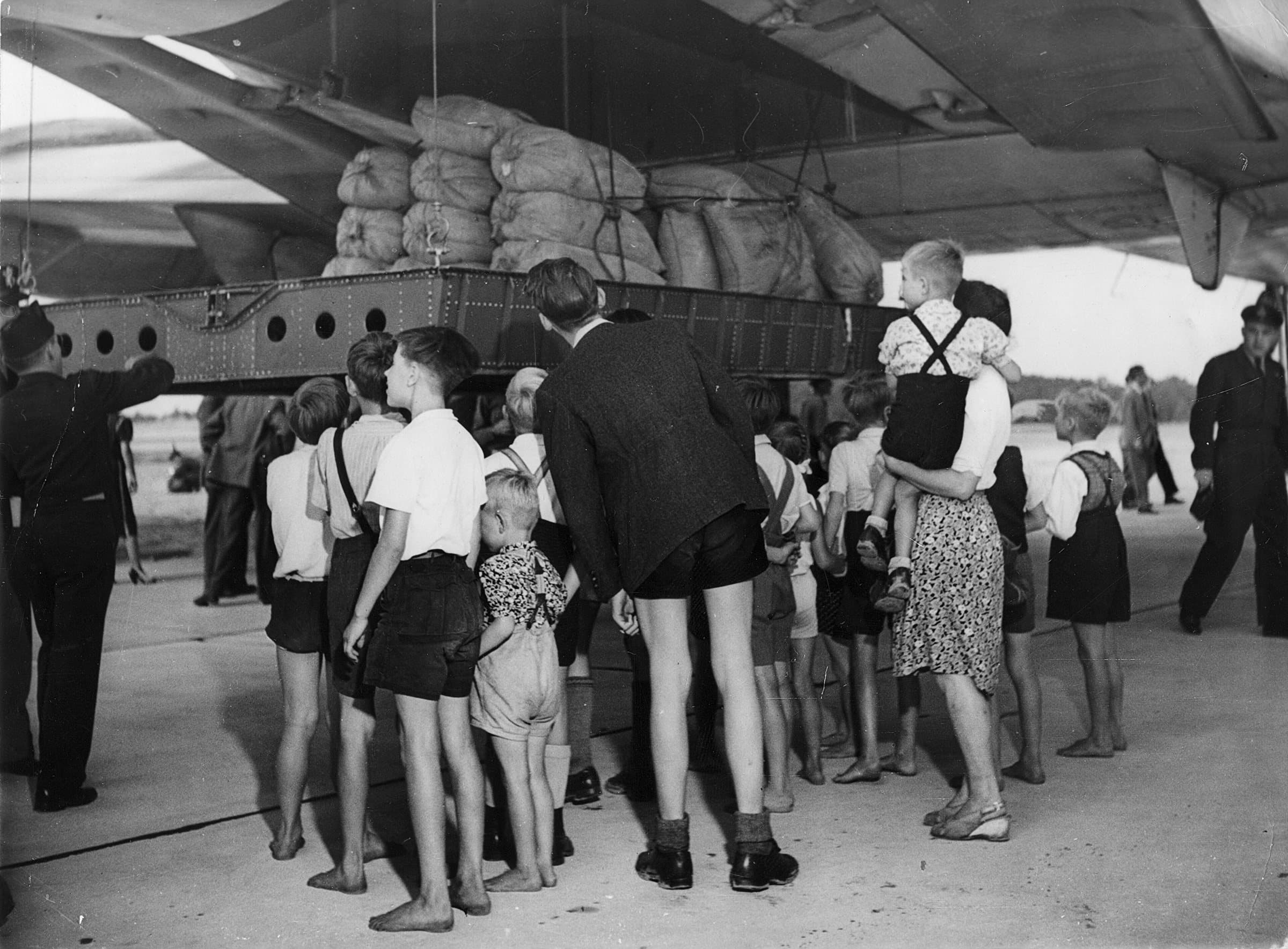
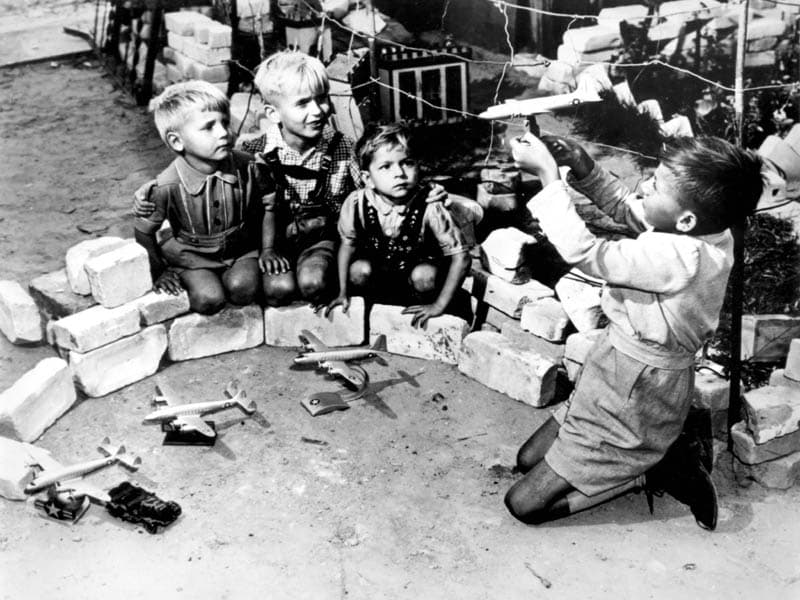
And then there was the part of the story everybody remembers. In July 1948 a young American pilot, First Lieutenant Gail Halvorsen, spoke through the wire at the end of the Tempelhof runway to about thirty children who had nothing, broke his two sticks of chewing gum into four and watched the children who did not get any tear up the wrapper to share the smell. He promised to drop more on his next flight and to waggle his wings so they would know which aeroplane was his. What began as a breach of regulations by one crew pooling their ration cards became, once Tunner heard of it and approved, an official operation called Little Vittles, flown by crews across the airlift, supplied by American schools and businesses and by donations from Britain and Australia. Figures for the total differ: the RAF Museum says 23 tons of sweets, the US Air Force says more than 46,000 lb of candy, and both are describing the same thing. Around 250,000 handmade handkerchief parachutes carried it down.
Aftermath
The blockade failed on its own terms. By the spring of 1949 more was reaching Berlin by air than had previously arrived by rail, road and canal, and the Western counter-blockade of eastern Germany, an embargo on trade across the zonal boundary, was biting hard on an economy that could not absorb it. Moscow, according to the State Department's own account of the period, feared political trouble in its zone if the shortages went on. Negotiations conducted partly through the United Nations produced a deal: the Soviet Union would end the blockade if the three Western powers ended their trade restrictions on East Germany and East Berlin. The four governments issued a communiqué to that effect on 5 May 1949, and the Western commandants ordered the counter-blockade lifted at midnight on 11 May.
The blockade ended on 12 May 1949, after 322 days. The airlift did not. Nobody in Berlin or Washington trusted the settlement enough to disperse the fleet, and the flying continued at a reducing rate through the summer to build a stockpile against a second closure. The Navy squadrons were released in mid-August. The American operation officially ended on 30 September 1949, having flown, by the US Air Force's reckoning, nearly 190,000 of the airlift's sorties, close to 600,000 flying hours and more than 80,000,000 nm.
The price was paid mostly in accidents rather than in confrontation: weather, fatigue, mechanical failure and overloaded aeroplanes flying fixed profiles in bad visibility. The dead included aircrew of both air forces and German civilians killed on the ground supporting the operation or when an aircraft came down on their houses. One loss became a small monument of its own. A C-47 crashed in Berlin in late July 1948 killing its two crew, and flowers appeared at the site: and went on appearing, year after year, for decades. For Berliners fed a steady diet of propaganda about Western abandonment, the fact that foreign airmen were dying to keep the city fed answered the argument better than any broadcast could.
For Berlin the immediate aftermath was not relief so much as a settled division. The city stayed split, and the western sectors stayed an island; but the island now had guarantors who had demonstrated, expensively and at risk, that they would not leave. Two weeks after the blockade ended the Federal Republic of Germany was founded, and the German Democratic Republic followed in October. Berlin, which had been a byword for Prussian militarism and then for Nazism, had become in fifteen months the West's chosen emblem of resistance to Soviet power.
Controversy
The headline numbers of the Berlin Airlift are quoted everywhere and agree almost nowhere, and the reason is usually that two sources are counting different things. Tonnage is the worst case. The Naval History and Heritage Command gives about 5,126,000,000 lb in total, of which American aircraft carried some 3,931,000,000 lb and British aircraft the remaining 1,190,000,000 lb. Other official summaries round to "more than 2.3 million tons", and figures as precise as 2,343,301.5 tons on 277,262 flights circulate widely. British totals are quoted both as 542,236 tons (RAF and civil charter counted separately, at 394,509 and 147,727) and as 541,937 tons. None of these is a fabrication; they differ on the cut-off date, on whether outbound cargo counts, and on whether the unit is a short ton or a tonne. This article gives the Naval History and Heritage Command's figures because they state their own basis, and notes the others rather than silently choosing.
Casualties are contested in the same way, and more painfully. The commonly cited total is 101 dead, made up of aircrew of both air forces and of civilians killed on the ground; within that, British losses are usually given as 39 and American as 31. But the memorial at Tempelhof carries a different count, and the Berlin Airlift Remembrance Alliance gives 32 Americans and 39 British in aircraft operations alone. The discrepancies come from whether ground crew, German construction workers and people killed on the ground by crashing aircraft are counted, and from whether deaths after the blockade ended but before the airlift did are included. No single number can be stated as the figure.
Even the dates move. The blockade was lifted on 12 May 1949 by almost every account, but the Office of the Historian's own summary says 11 May, and the official US Air Force biography of General Tunner, a primary document of the service that ran the operation, says 22 May and also misdates the start of the blockade to 21 June. The end of the airlift is genuinely ambiguous rather than merely mistaken: the American operation ended on 30 September 1949, an official announcement in July had named 31 October, and the RAF Museum records that a Handley Page Hastings flew the last sortie of the airlift on 6 October 1949. Each is true of a different operation, which is exactly the problem with a single date for a two-nation effort.
The people
General Lucius D. Clay (1898 to 1978), military governor of the American zone, is the reason there was an airlift at all. On 13 June 1948, eleven days before the blockade closed, he cabled Washington that remaining in Berlin was essential to American prestige in Germany and in Europe, whether for good or ill, because the city had become a symbol of American intent. When the blockade came he ordered the first flights on his own authority, before Washington had decided anything, to buy time for diplomacy. He was also an engineer, and it was his judgement that Berlin would need a third airfield before winter.
Major General Curtis LeMay (1906 to 1990) commanded United States Air Forces in Europe when the blockade began and put the first transports into the air on Clay's order. He is a figure better known for what came after (Strategic Air Command, and later Chief of Staff of the Air Force) but the improvised first fortnight of Vittles was his.
Major General William H. Tunner (1906 to 1983) is the man the airlift's shape belongs to. He had commanded the India to China Division of Air Transport Command, the Hump, and arrived in Germany with a reputation for efficiency and the nickname Willie the Whip. His own service's biography credits him with the straight-in approach that nearly doubled the landing rate, and the practices he imposed at Berlin: scheduled depot maintenance, standardised fleets, organised loading pipelines, and the open publication of operational data across the command: are cited by Air Mobility Command today as the origin of its own standard procedures. He went on to command the Korean airlift, and eventually MATS itself.
First Lieutenant Gail Halvorsen (1920 to 2022) contributed nothing to the tonnage and everything to what the airlift meant. A C-54 pilot who had trained with the RAF in Oklahoma and wore RAF wings alongside American ones, he began dropping sweets on handkerchief parachutes to the children at the end of the Tempelhof runway in July 1948, in breach of regulations. Tunner made it official. Berlin knew him as Onkel Wackelflügel, Uncle Wiggly Wings, and as der Schokoladenflieger, the chocolate pilot. He returned to Berlin as commander of Tempelhof in the early 1970s, went back some forty times in all, and flew a humanitarian mission to Bosnia in 1994 at the age of seventy-three.
Others mattered as much and are remembered less. R. W. Waite, a British commander, produced the plan for supplying the whole civilian population that Clay adopted. General Jean Ganeval, the French commandant in Berlin, destroyed the radio masts at Tegel in December 1948 when negotiation had failed. Ernst Reuter, Berlin's mayor, committed the city to accepting hunger and cold rather than Soviet control. And 17,000 German civilians, most of them women, built the Tegel runway with hand tools for a hot meal and a mark a day.
Recognition
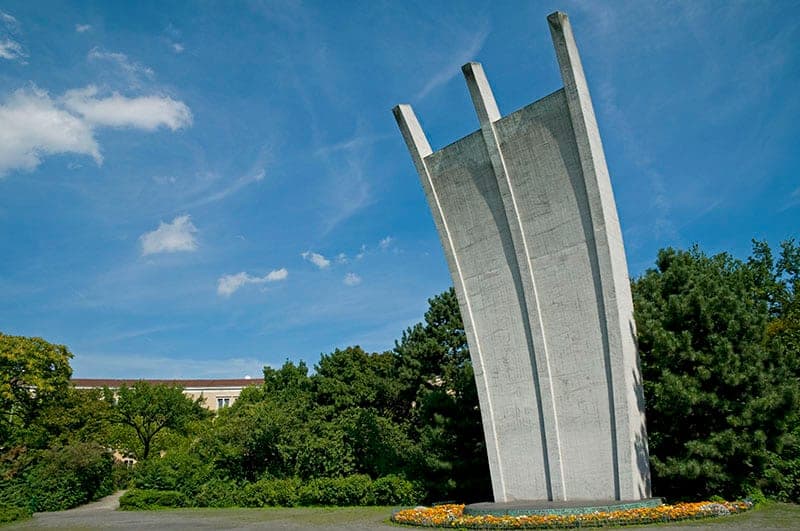
The Luftbrückendenkmal stands on the Platz der Luftbrücke, outside the old Tempelhof terminal. Designed by Eduard Ludwig and dedicated in 1951, it is a curved concrete arc whose three claws point west: the three air corridors, and the three Western occupying powers. It is deliberately only half of a bridge: the eastern buttress, whose western counterpart is elsewhere. Two identical memorials were later built at the airfields the aircraft flew from: at Frankfurt am Main in 1985 and at Celle in 1988. Berliners have always called the Tempelhof one the Hungerharke, the hunger rake.
The names of those who died are set in the base of the memorial. In 1952 the Berlin city government established a foundation, the Berlin Airlift Gratitude Foundation, to support the widows and descendants of the dead, and it still funds scholarships. Anniversary commemorations have been held at Tempelhof, Frankfurt, Wiesbaden and Celle at ten-year intervals, generally with surviving aircrew present.
Individual recognition followed Halvorsen further than anyone else. Germany awarded him the Grosses Bundesverdienstkreuz in 1974; he carried the German team's placard into the stadium at the opening of the 2002 Winter Olympics in Salt Lake City; and in 2014 the United States awarded him the Congressional Gold Medal for Operation Little Vittles. Tunner's own recognition came in a different currency: the Distinguished Service Cross, pinned on him by General MacArthur in Korea for the airlift he ran next.
Legacy
The political consequences arrived within weeks. The North Atlantic Treaty was signed in April 1949, shortly before the blockade ended; the Federal Republic of Germany was founded a fortnight after it ended, and the German Democratic Republic that October. The division of Europe was now a fact with institutions attached to it. West Germany joined NATO in 1955. West Berlin remained an enclave for forty more years, and remained, for as long as it lasted, a place where the Western guarantee was understood to have been tested and honoured.
The military legacy is more specific than "airpower works". The Berlin Airlift was the first large operational test of the United States Air Force, which had become an independent service only in 1947, and of the Military Air Transport Service, created on 1 June 1948, three weeks before the blockade, and the direct ancestor of today's Air Mobility Command. What Tunner proved at Berlin was that sustained airlift is a logistics discipline: fixed schedules rather than heroics, standardised fleets rather than whatever is available, scheduled maintenance rather than repair, and measured performance published where everyone can see it. Air Mobility Command still traces its standard operating procedures to those months.
There is a civil legacy too, and it is in the sky over every busy airport. Streaming aircraft at fixed intervals, at assigned altitudes and speeds, under controllers whose instructions are not negotiable, with a missed approach that sends you away rather than round again, was worked out under pressure over Berlin and is recognisably how high-density arrivals are handled now. The RAF Museum's account of Halvorsen makes the link explicitly: the lessons of the airlift's conveyor belt went into civil transport and can still be seen at places like Heathrow.
And the places themselves survive. Gatow holds a museum of German military aviation. Tegel served West Berlin and then the reunified city until 2020. Tempelhof closed to flying in 2008 and its airfield is now a public park, the Tempelhofer Feld, where Berliners cycle and picnic on the runways that kept the city alive, with the Hungerharke at the gate, and the half-bridge still pointing west.
From the blockade to the last sortie
Fifteen months, from the closing of the roads to the end of the flying.
November 30, 1945
The air corridors are agreed in writing
The Allied Control Council approves the only written agreement on access to Berlin the Western Allies will have, three corridors from Hamburg, Bückeburg and Frankfurt.
June 1948
The Deutsche Mark is introduced
The Western powers put a new currency into the Bizone and the western sectors of Berlin without consulting the Soviet authorities.
June 24, 1948
The blockade closes
Road, rail and canal access is cut and power from the Soviet sector switched off. Clay orders LeMay to put every transport aircraft onto supplying the city.
June 26, 1948
Operation Vittles begins
Truman directs that the improvised resupply be put on a regular basis. The British Operation Plainfare follows two days later.
July 29, 1948
Tunner takes command
Major General William H. Tunner assumes command of Airlift Task Force (Provisional) and begins turning a flying effort into a transport system.
August 5, 1948
Ground broken at Tegel
Work starts on a third Berlin airfield in the French sector, built largely by German women using hand tools.
- Days to completion
- 92
August 13, 1948
Black Friday
Low cloud, rain and a burning C-54 at Tempelhof stack the arrivals in cloud. Tunner clears the sky and writes the rules that follow.
October 29, 1948
One aircraft lands
The worst weather day of the operation. More than seven hundred aircraft land the following day.
November 5, 1948
Tegel opens
The first C-54 lands on the new strip, ninety days after work began. Generals Herbert, Clay and Ganeval attend.
November 22, 1948
The Navy squadrons complete their move
VR-6 and VR-8, ordered from Guam and Honolulu on 27 October, have all their R5Ds at Rhein-Main. They will carry 7.3 per cent of the American total.
December 16, 1948
The Tegel radio masts are demolished
General Ganeval has the Soviet-controlled transmitter beside the approach path blown up after negotiation fails.
April 16, 1949
The Easter Parade
A deliberate maximum effort: 1,398 sorties in twenty-four hours, mostly coal, with landings at intervals reported as short as forty-five seconds.
- Sorties
- 1,398
- Delivered
- 28,530,000 lb
May 5, 1949
The four powers announce the end
A communiqué states that the blockade will be lifted on 12 May in exchange for the end of the Western counter-blockade.
May 12, 1949
The blockade is lifted
After 322 days the roads, railways and canals reopen. The flying continues, to build a stockpile against a second closure.
September 30, 1949
The American airlift ends
Operation Vittles closes after nearly 190,000 American sorties. The RAF Museum records a Hastings flying the last sortie of the airlift on 6 October.
Who was there
- Lucius D. Clay1898 to 1978
- Military governor of the American zone; ordered the first flightsAn engineer by training who argued to Washington on 13 June 1948 that Berlin had become a symbol of American intent, and who started the airlift on his own authority before Washington had decided anything. He also judged, correctly, that two airfields would not survive the winter.
- Curtis LeMay1906 to 1990
- Commander, United States Air Forces in Europe, June 1948Put every available transport into the air on Clay's order on 24 June 1948. The improvised first weeks of Operation Vittles were his before Tunner arrived to systematise them.
- William H. Tunner1906 to 1983
- Commander of the airlift task force from 29 July 1948Veteran of the wartime Hump airlift into China and known as Willie the Whip. He imposed the straight-in approach, the three-minute stream, the single approach attempt and scheduled depot maintenance, and summarised the Allied position as being able to keep pouring it in for twenty years if necessary.
- Gail Halvorsen1920 to 2022
- C-54 pilot; originator of Operation Little VittlesKnown to Berlin as Onkel Wackelflügel and der Schokoladenflieger. He began dropping sweets on handkerchief parachutes in July 1948 against regulations; the practice was made official and spread across the airlift. Awarded the Grosses Bundesverdienstkreuz in 1974 and the Congressional Gold Medal in 2014.
- Jean Ganeval
- French commandant in BerlinHad the Soviet-controlled Radio Berlin masts beside the new Tegel runway demolished on 16 December 1948, after negotiation to have them removed had failed.
- Ernst Reuter
- Mayor of BerlinAsked by Clay whether Berliners would accept cold and hunger to stay out of Soviet control, he answered that the people of Berlin would do whatever was necessary.
- R. W. Waite
- British commander; author of the plan to supply the whole cityThe American plan at the outset was to supply the Allied garrisons only. Waite's calculation that the entire civilian population could be fed from the air with the aircraft available was the one Clay adopted.
Airports
- The Berlin Airlift, 1948–1949, Office of the Historian, U.S. Department of State
- The U.S. Navy's Participation in the Berlin Airlift, Naval History and Heritage Command
- Lieutenant General William H. Tunner, U.S. Air Force
- Operation VITTLES: The Legacy of the Berlin Airlift, 437th Airlift Wing, Joint Base Charleston
- RAF's vital role in the Berlin Airlift, Royal Air Force
- Rubble to Runway: The Triumph of Tegel, National Museum of the United States Air Force
- Planes, Boats and Trains: The Berlin Airlift Team, National Museum of the United States Air Force
- Avro York C1, RAF Museum
- Handley Page Hastings, RAF Museum
- Short Sunderland MR5, RAF Museum
Checked September 29, 2026