Manufacturer
Douglas
United States1921
Douglas Aircraft Company
Company
- Country
- United States
- Headquarters
- Santa Monica and Long Beach, California
Founding
- Founded
- July 22, 1921Santa Monica, California
- Founders
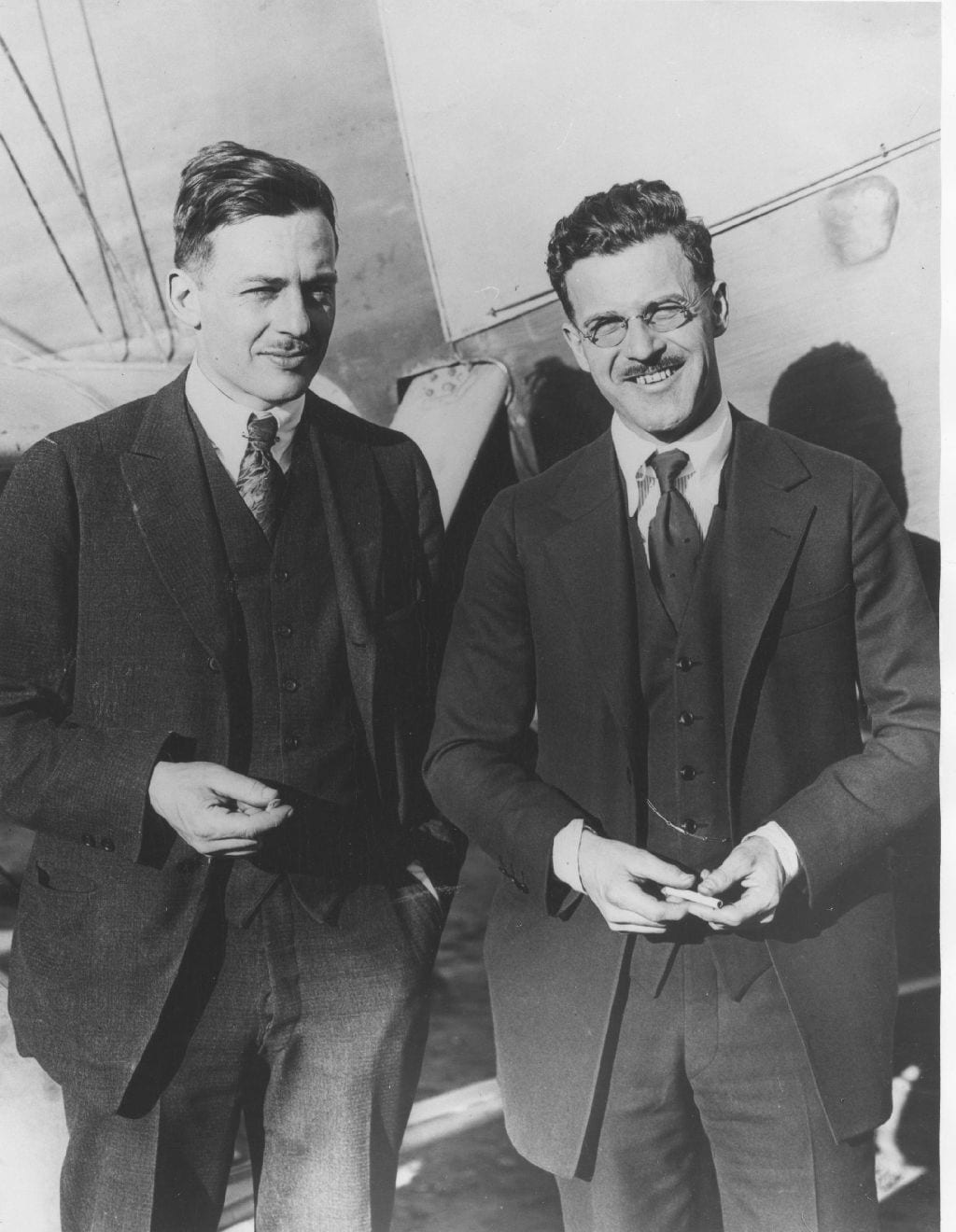
- Donald Wills Douglas

The Douglas Aircraft Company, founded by Donald Douglas in Santa Monica in 1921, built the DC series of airliners: above all the DC-3, often regarded as the most significant transport aircraft ever made. It merged with McDonnell in 1967 to form McDonnell Douglas, which joined Boeing in 1997.
For roughly twenty years in the middle of the twentieth century, the Douglas Aircraft Company built the aeroplanes that most of the world's airlines flew. That is a claim few manufacturers can make even briefly, and Douglas sustained it for a generation.
The company was founded in Santa Monica, California, on 22 July 1921 by Donald Wills Douglas, and its name survived until 1967, when it merged with McDonnell Aircraft to form McDonnell Douglas. That company in turn merged with Boeing in 1997, so the Douglas line ends inside the firm that had been its principal rival from the beginning.
Its central achievement is the DC series, and within it one aeroplane. The Douglas DC-3 is the aircraft most often described as the one that made air travel a business rather than an adventure, and the Smithsonian records the reason in a sentence from C. R. Smith of American Airlines, who had asked for it: it was the first airplane in the world that could make money just by hauling passengers. By 1938, 95 per cent of all United States commercial airline traffic was flying on DC-3s.
What makes Douglas interesting beyond that is the shape of the ending. A company that had dominated airliner manufacture found itself, within fifteen years of the jet's arrival, unable to build fast enough to meet the orders it had won, and merged from a position of weakness. The firm that built the most successful transport aircraft in history did not fail at designing aeroplanes. It failed at making enough of them.
Origins
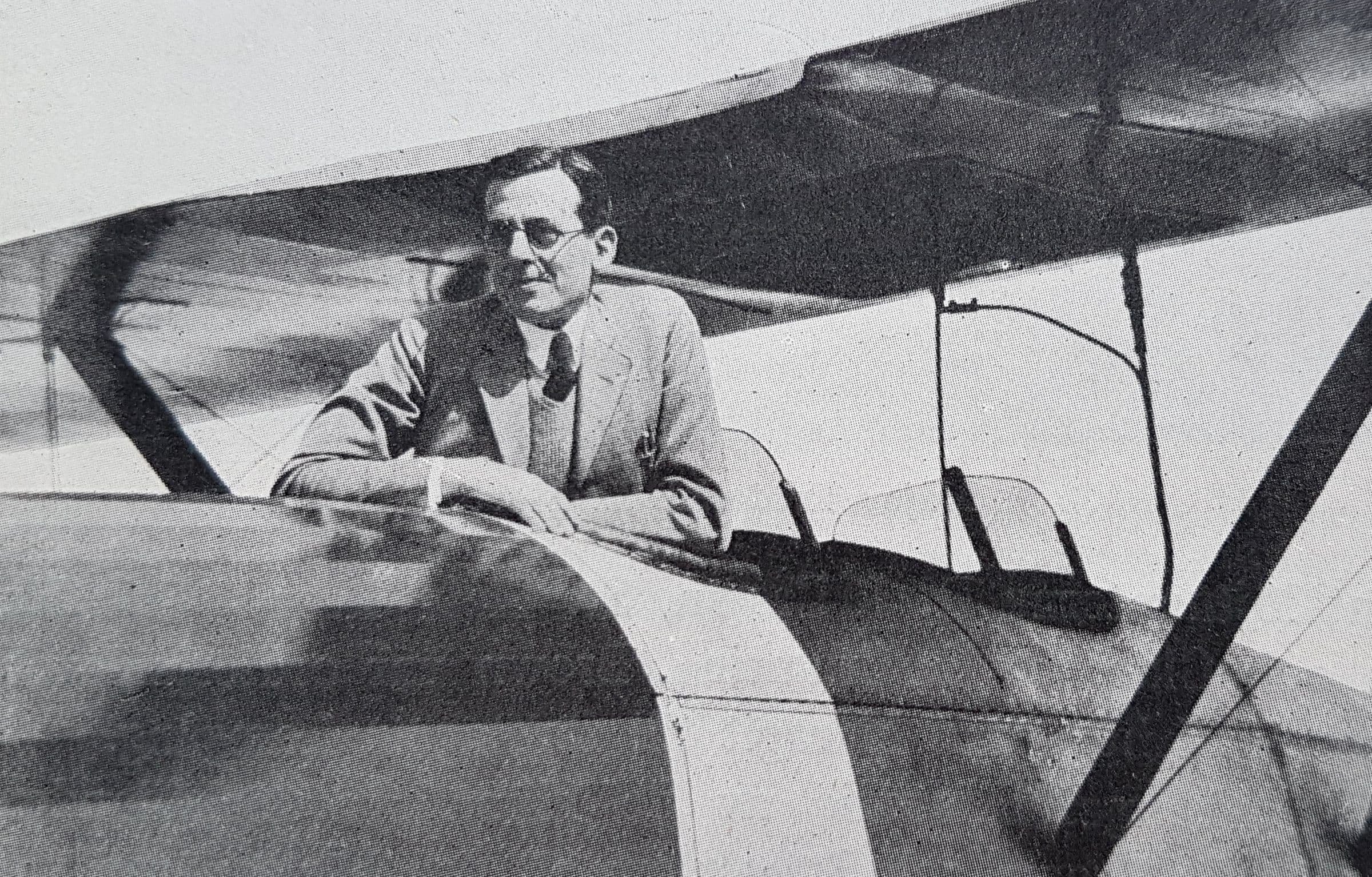
Donald Douglas founded the company that bears his name after the dissolution of an earlier venture, the Davis-Douglas Company, which he had formed with the sportsman David R. Davis to build an aeroplane capable of crossing the United States non-stop.
That aircraft, the Cloudster, did not make the crossing, but it did something more useful. It was the first aeroplane able to lift a payload greater than its own weight, which is the arithmetic on which the entire commercial aviation industry subsequently rests. An aircraft that can carry more than it weighs can be made to pay; one that cannot is a demonstration.
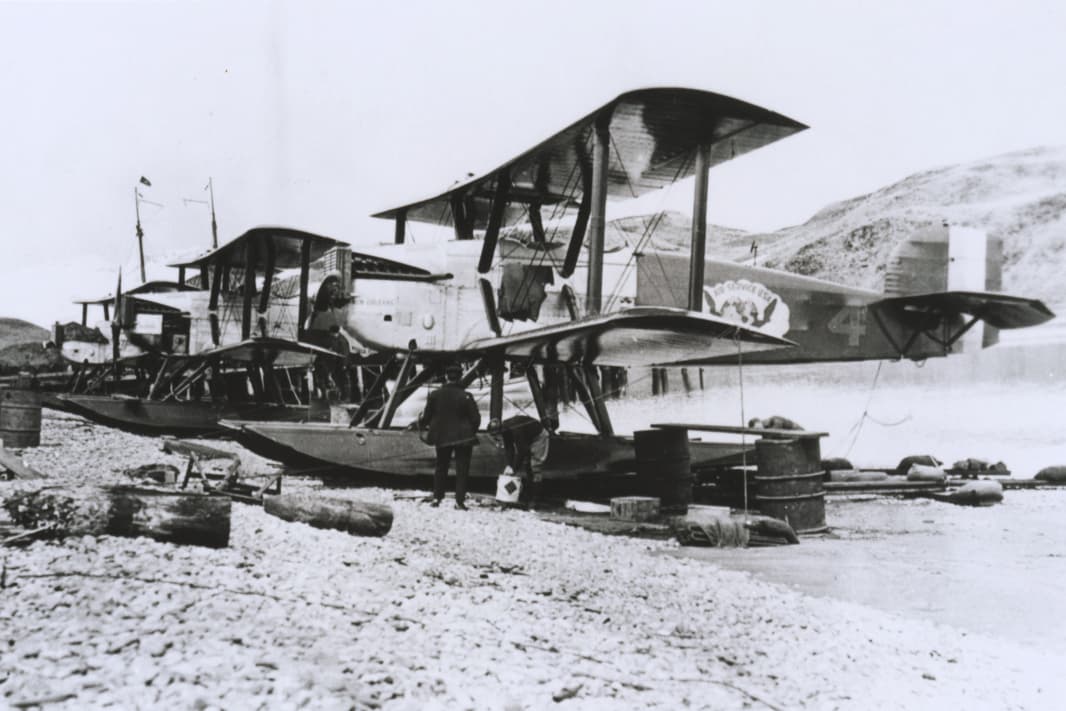
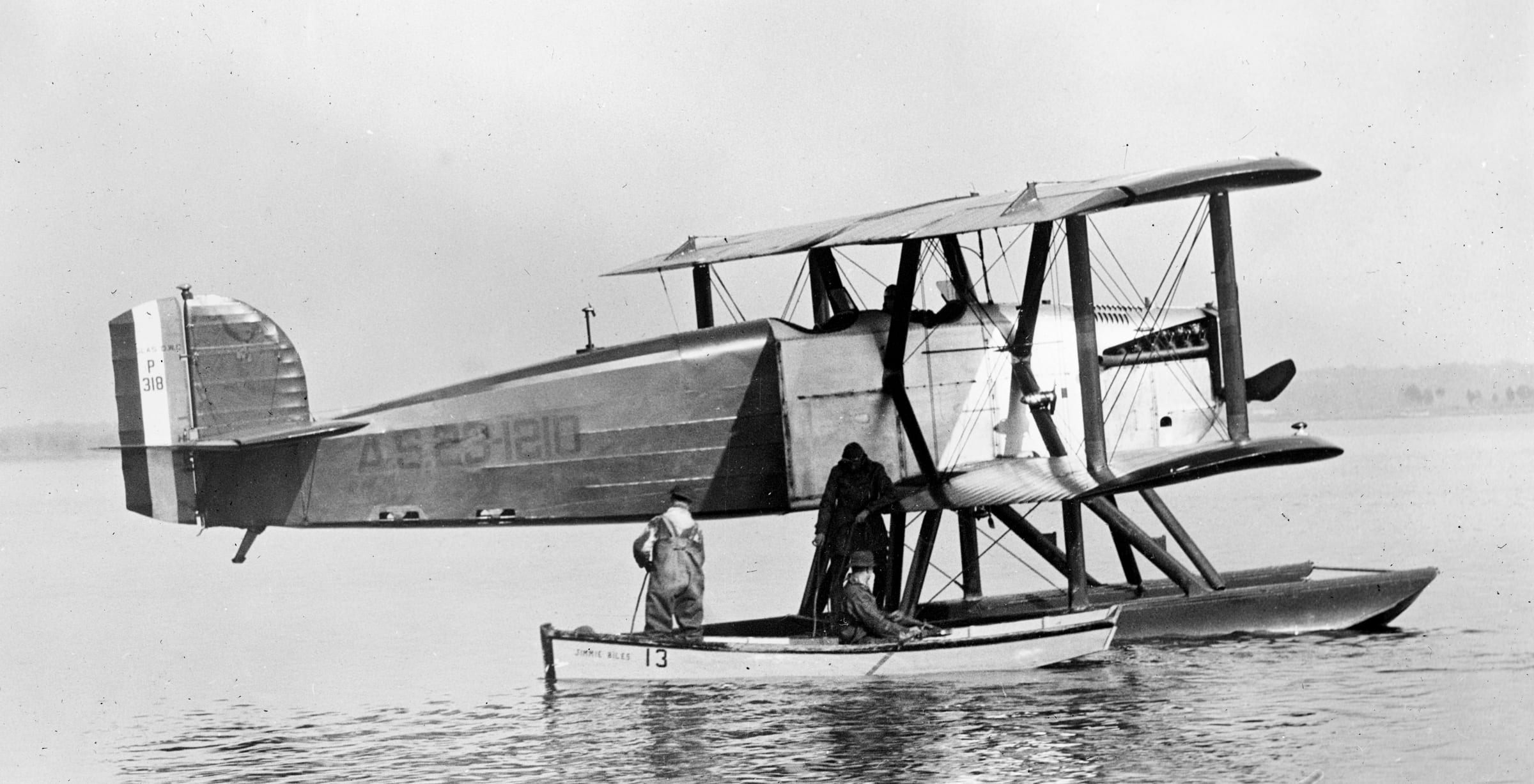
The company's reputation was made two years later and by the United States Army. Four Douglas World Cruisers set out from Seattle on 6 April 1924 to fly around the world. Two of them, the Chicago and the New Orleans, completed the circuit and returned on 28 September, 175 days after leaving, having covered something over 26,000 miles. It was the first circumnavigation of the globe by air.
The commercial value of that to a three-year-old company is difficult to overstate. The flight was an Army undertaking and the publicity attached to the Army, but the aeroplanes were Douglas aeroplanes, and they had been across the Pacific, over Asia, through Europe and back across the Atlantic without structural failure. For a manufacturer trying to sell aircraft to a government that had an enormous surplus of wartime machines, a demonstration of durability on that scale was worth more than any specification.
Expansion
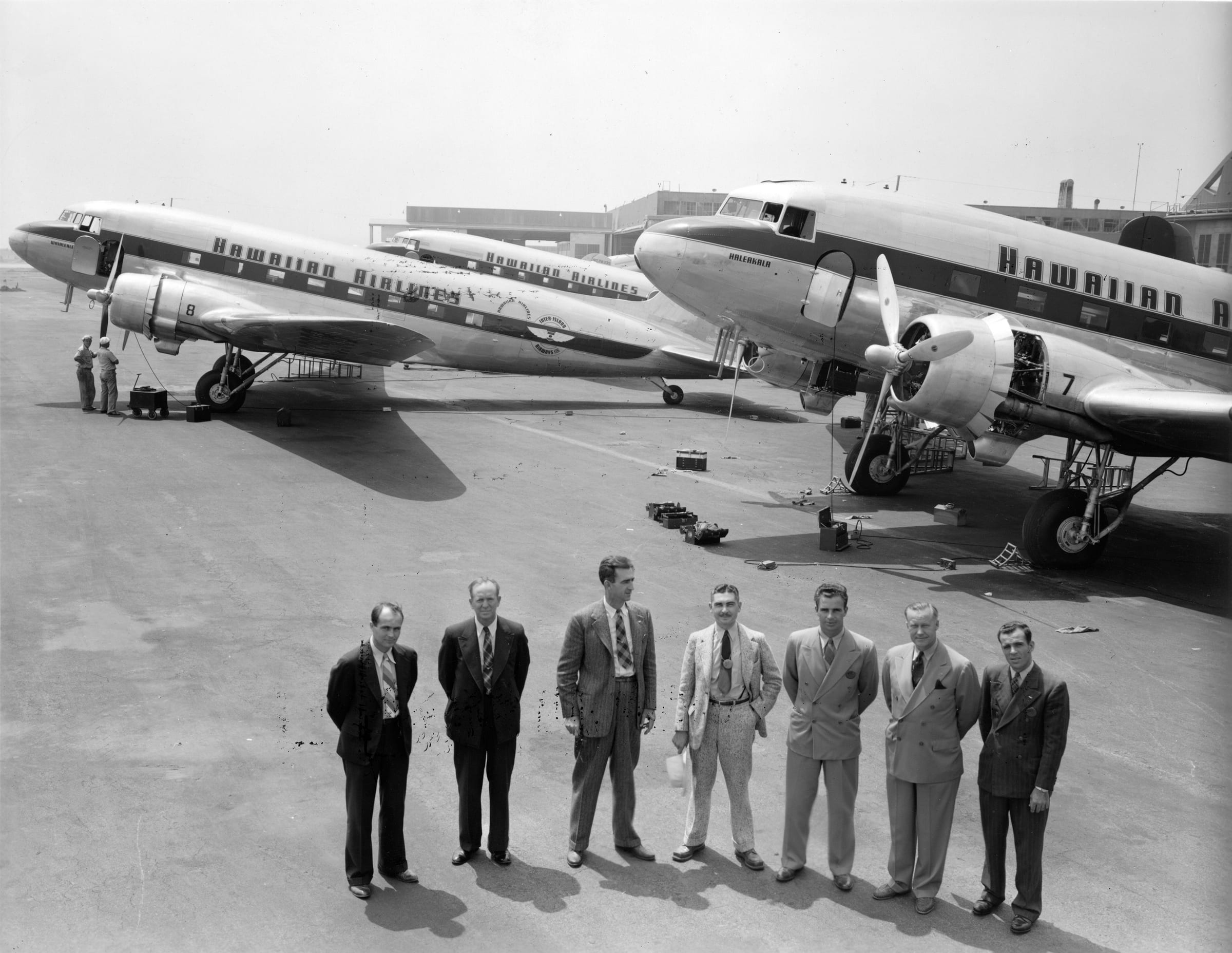
The aircraft that made Douglas the dominant airliner manufacturer began as a response to a competitor.
In 1933 Transcontinental and Western Air asked Douglas for an aeroplane to compete with the Boeing 247, which Boeing had declined to sell to anyone until its own airline's order was filled. The result was the DC-1, a single aircraft, soon succeeded by the DC-2 and quantity production.
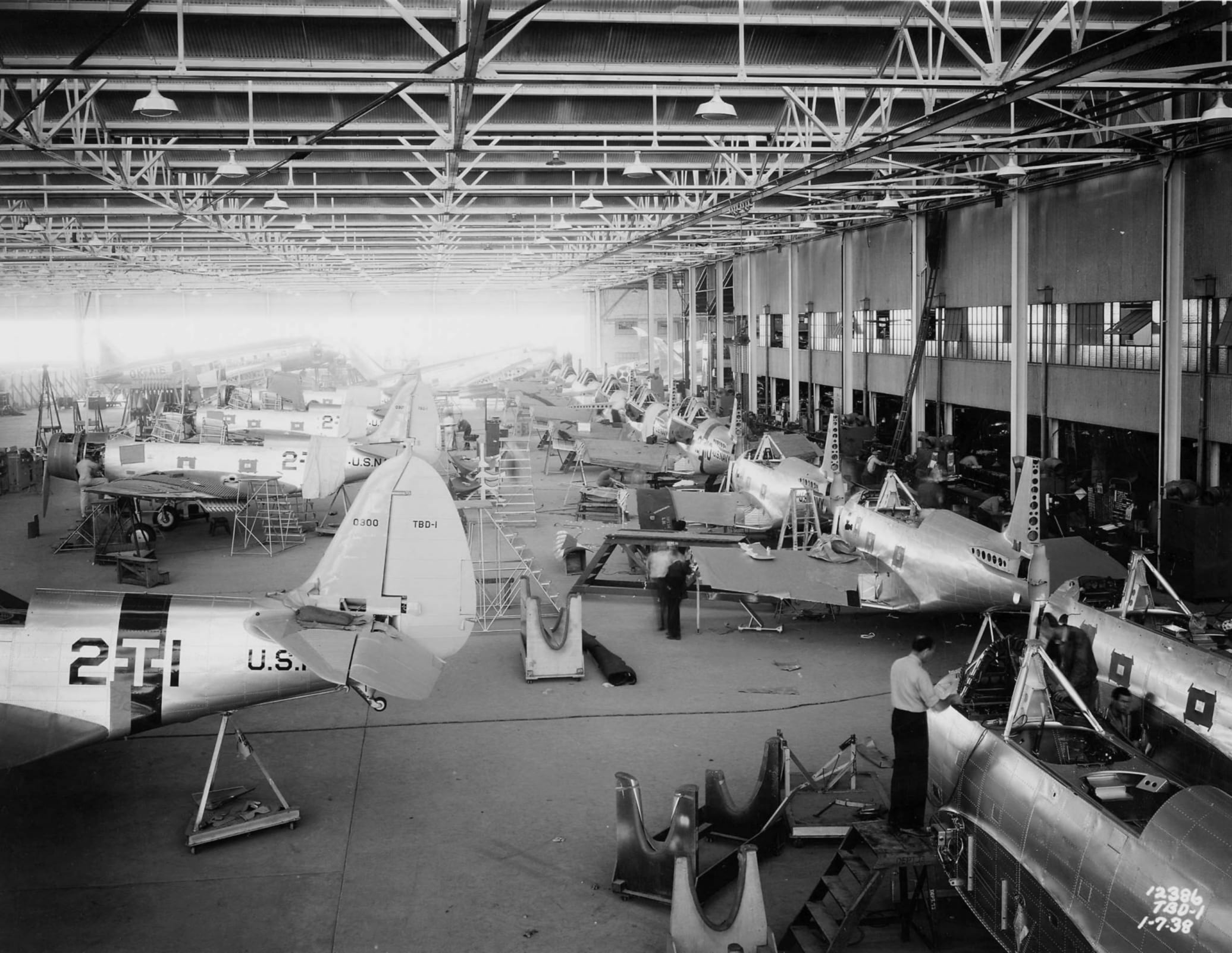
The decisive step came from American Airlines. Its president, C. R. Smith, wanted something larger, with sleeping berths for transcontinental overnight services. The Douglas Sleeper Transport first flew on 17 December 1935, and the day version, with 21 seats against the DC-2's 14, was designated the DC-3.
The specification is worth reading as a list because every item on it became standard: cantilever wings, all-metal construction, two cowled Wright SGR-1820 radials of 1,000 horsepower, retractable landing gear and trailing-edge flaps. None of these was a Douglas invention. Putting all of them on one airframe, at a size that let an airline fill the aircraft and still turn a profit on tickets alone, was the achievement.
American began DST services between New York and Chicago on 25 June 1936, with DC-3 operations following in September. Within two years the type carried 95 per cent of United States airline traffic. Airlines that had been subsidised to carry mail, taking passengers as an afterthought, could now make money from passengers, and the industry changed shape around that fact.
Wartime production
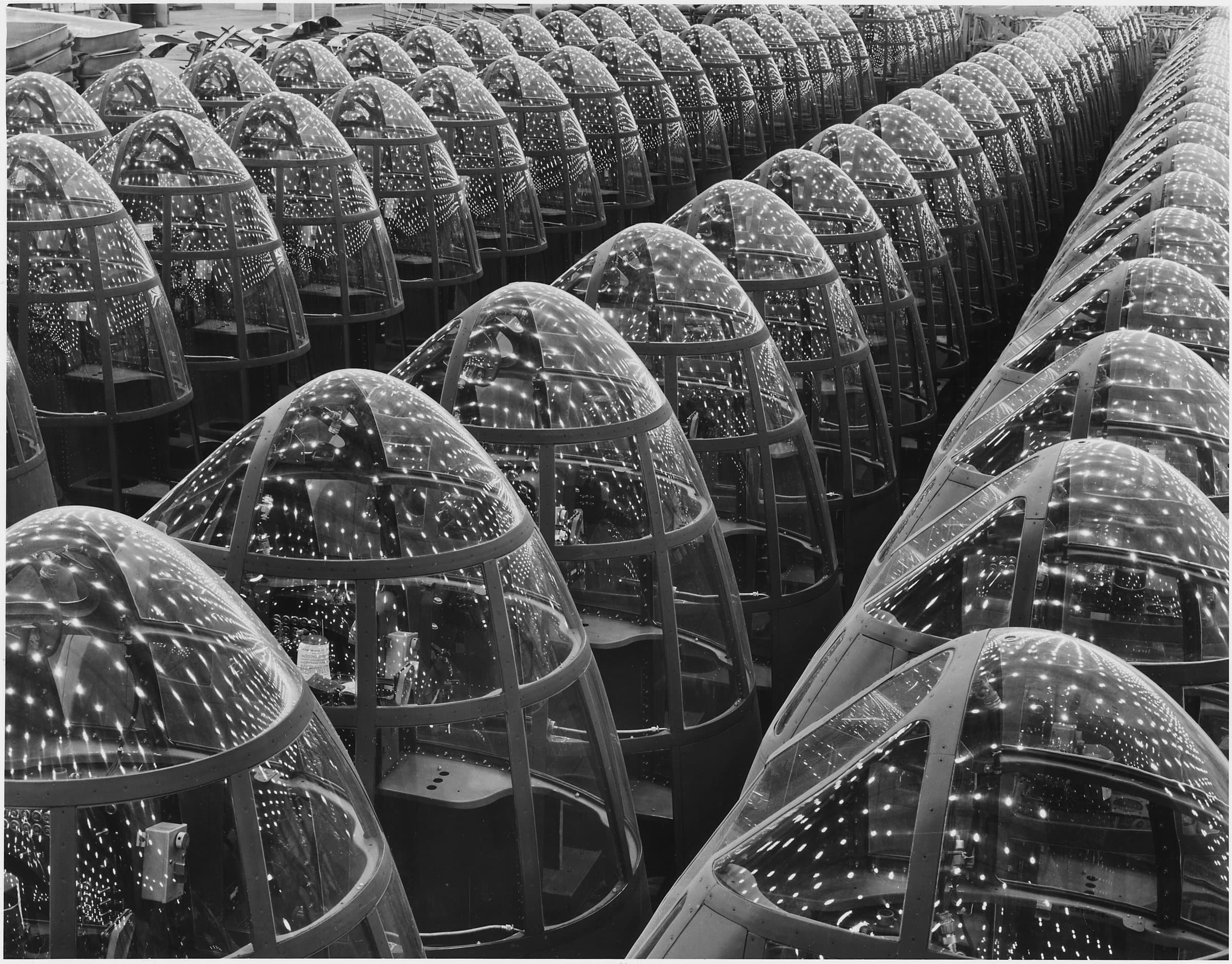
The war turned the DC-3 into the C-47 Skytrain, and turned Douglas into one of the largest manufacturing enterprises in the world.
The conversion was straightforward and tells you what the civil aircraft already was: more powerful engines, a reinforced fuselage, cargo doors and a strengthened cabin floor. The first Army models arrived in 1941. Production ran at Long Beach, California, and Tulsa, Oklahoma, and reached approximately 11,000 airframes. Across all variants and licence production the Smithsonian counts 803 commercial transports and 10,123 military versions, with around 3,000 more built under licence in the Soviet Union and nearly 500 in Japan.
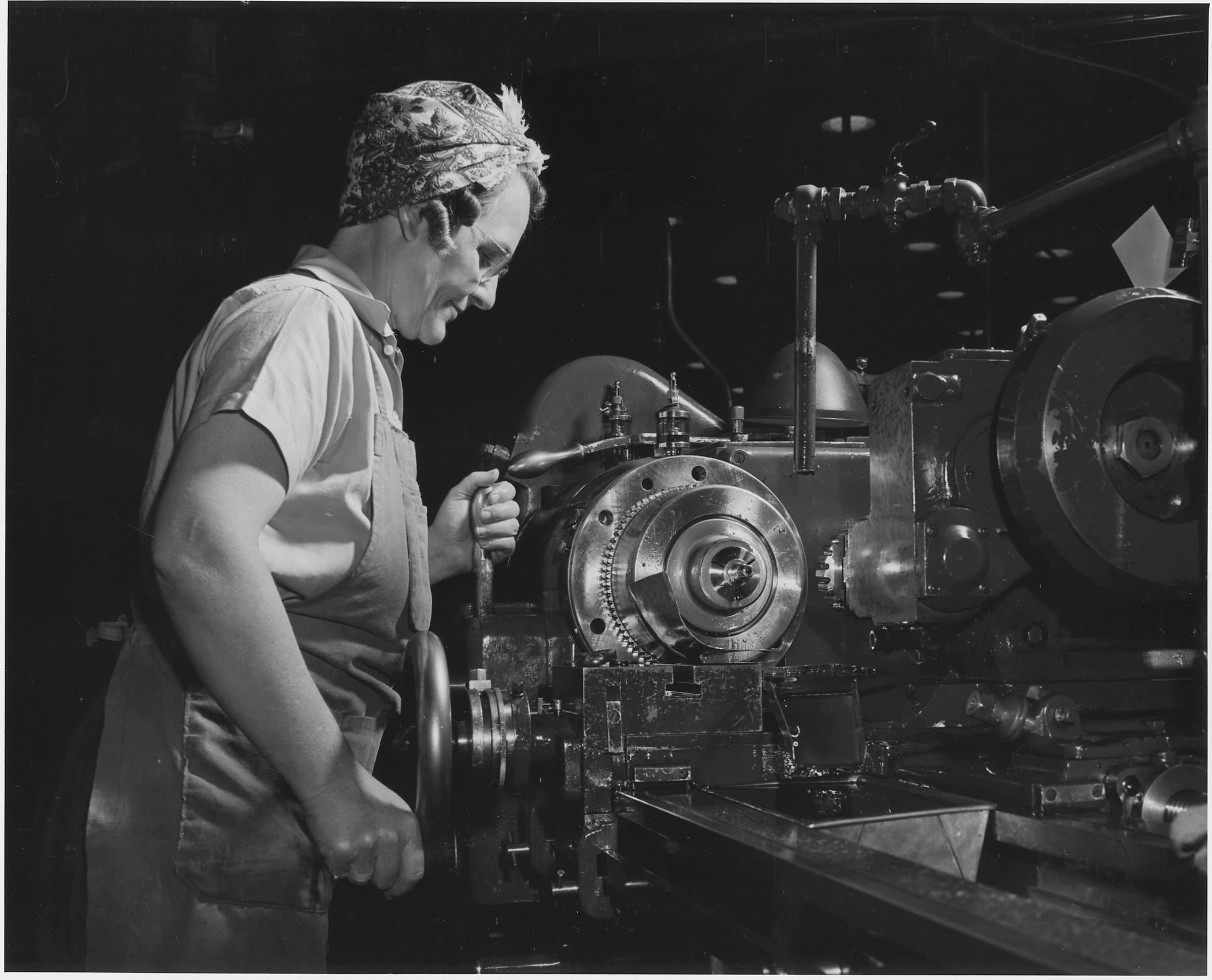
Those numbers describe an industrial effort rather than an aircraft programme. Building eleven thousand of anything that complicated, in four years, in plants that had been making a few hundred aeroplanes a year, required a transformation of how the company worked.
What the C-47 did with that production is the other half. It carried cargo, troops, casualties and gliders. Its first large airborne operation was Husky in Sicily in 1943. On 6 June 1944 more than 1,000 C-47s carried American paratroopers into Normandy, 28 men to an aircraft. More than 1,400 flew in Market Garden, and 836 in Varsity in March 1945. Over the Himalayas, C-47s and C-46s supplied China by flying the Hump at altitudes reaching 17,000 ft.
The aeroplane American Airlines had ordered so that passengers could sleep between New York and Chicago spent the war delivering paratroopers over Normandy and supplies over the Himalayas, essentially unchanged.
The jet age
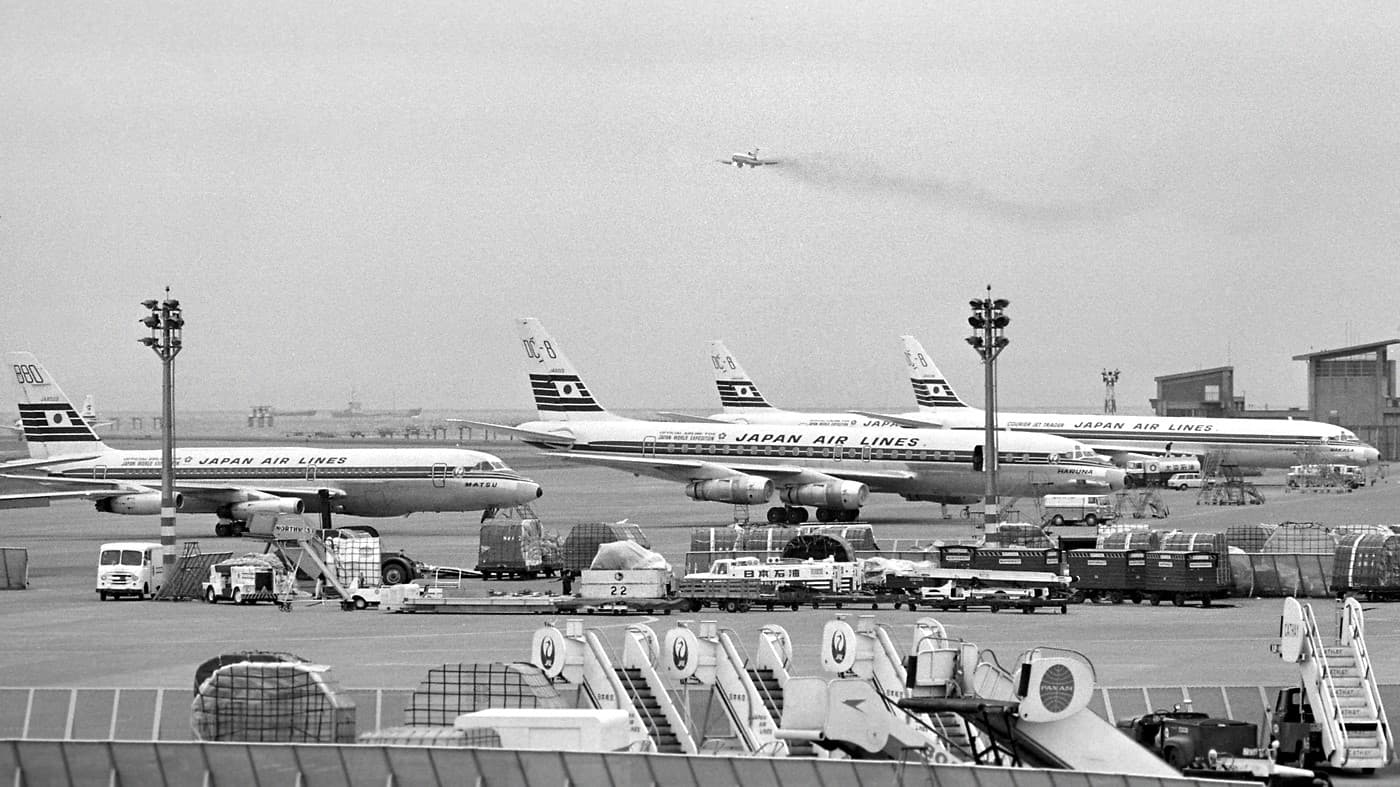
Douglas came to the jet airliner second, and the gap was four years wide at the point where it mattered most.
Boeing flew the prototype of what became the 707 in 1954 and had the advantage of a military tanker programme to share the development cost. Douglas launched the DC-8 and first flew it in 1958. The aircraft was competitive, sold in quantity, and in several respects was the better aeroplane, but it arrived into a market where the rival had been taking orders for years.
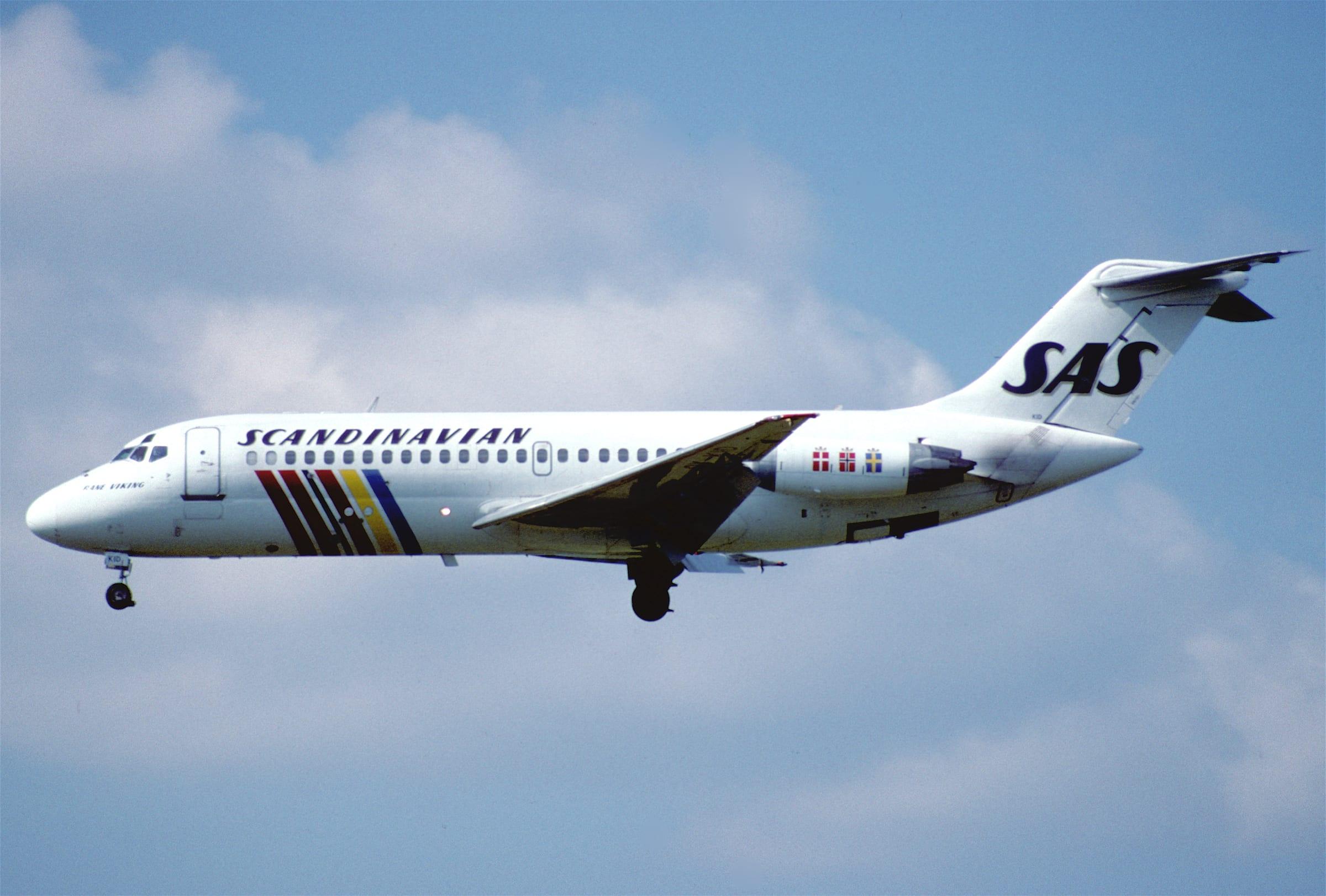
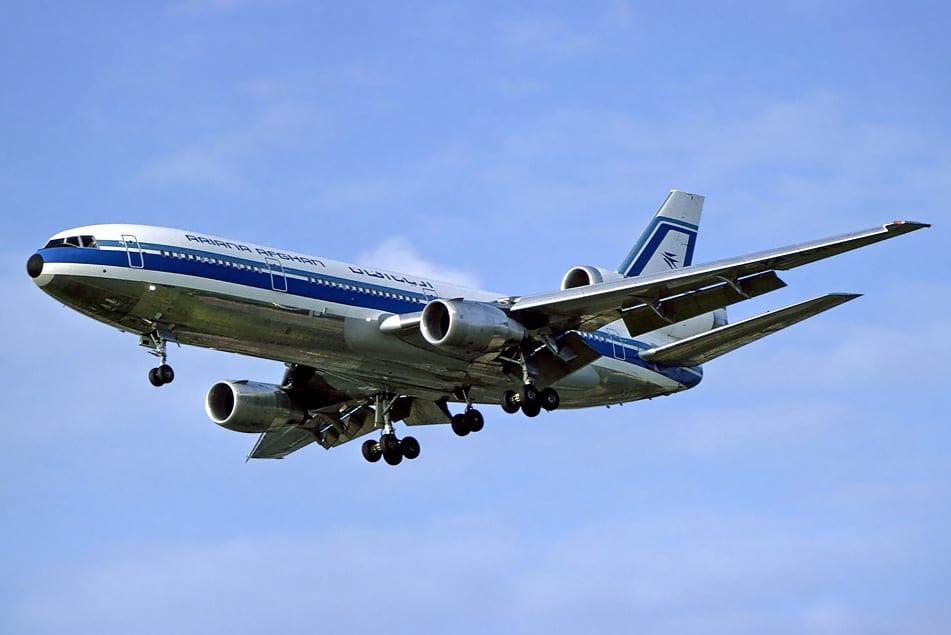
The company's answer to the short-haul market was the DC-9, a small twin that sold extremely well and in its later forms as the MD-80 series continued in production for decades. The DC-10, a wide-body trijet, followed.
The difficulty was never demand. By the mid-1960s Douglas held orders for DC-8s, DC-9s and the A-4 Skyhawk attack aircraft for the Navy, and the problem was that it could not build them fast enough. Expanding production required capital and skilled labour, and the Vietnam War was consuming both. Shortages of parts and people met a production system being asked to scale faster than it could, and the result was late deliveries, quality problems and a cash position that deteriorated as the company spent on work it could not yet bill for.
A manufacturer that cannot deliver has a worse problem than one that cannot sell, because the penalties are contractual and the customers are airlines with schedules to run.
Mergers and ownership
In 1967 Douglas agreed to merge with McDonnell Aircraft Corporation, and the agreement was made from weakness rather than strength.
The combination of production shortfalls on the DC-8 and DC-9, development spending on the DC-10, quality problems and wartime shortages had left the company short of cash at precisely the moment its order book was fullest. McDonnell, a St Louis firm built on military aircraft and with the balance sheet to match, provided the capital. The merged company became McDonnell Douglas.
The pairing made a certain industrial sense. McDonnell built fighters and had little civil business; Douglas built airliners and was struggling to finance them. Put together they covered both markets and had the resources to do it. In practice the military side dominated the company's priorities, and the civil programmes that had made Douglas famous were never again the centre of the business.
McDonnell Douglas merged with Boeing in 1997. The Douglas name, which had been on aircraft continuously since 1921, disappeared from new products, and the DC designation ended with the MD series that followed it.
The Long Beach plant that had built C-47s during the war continued producing airliners into the twenty-first century, latterly as a Boeing facility assembling the C-17 military transport, a direct descendant of the Douglas transport tradition. It closed in 2015. Santa Monica, where Donald Douglas had started, had stopped building aircraft decades earlier, and the airport there is now surrounded by the city that grew around it.
Legacy
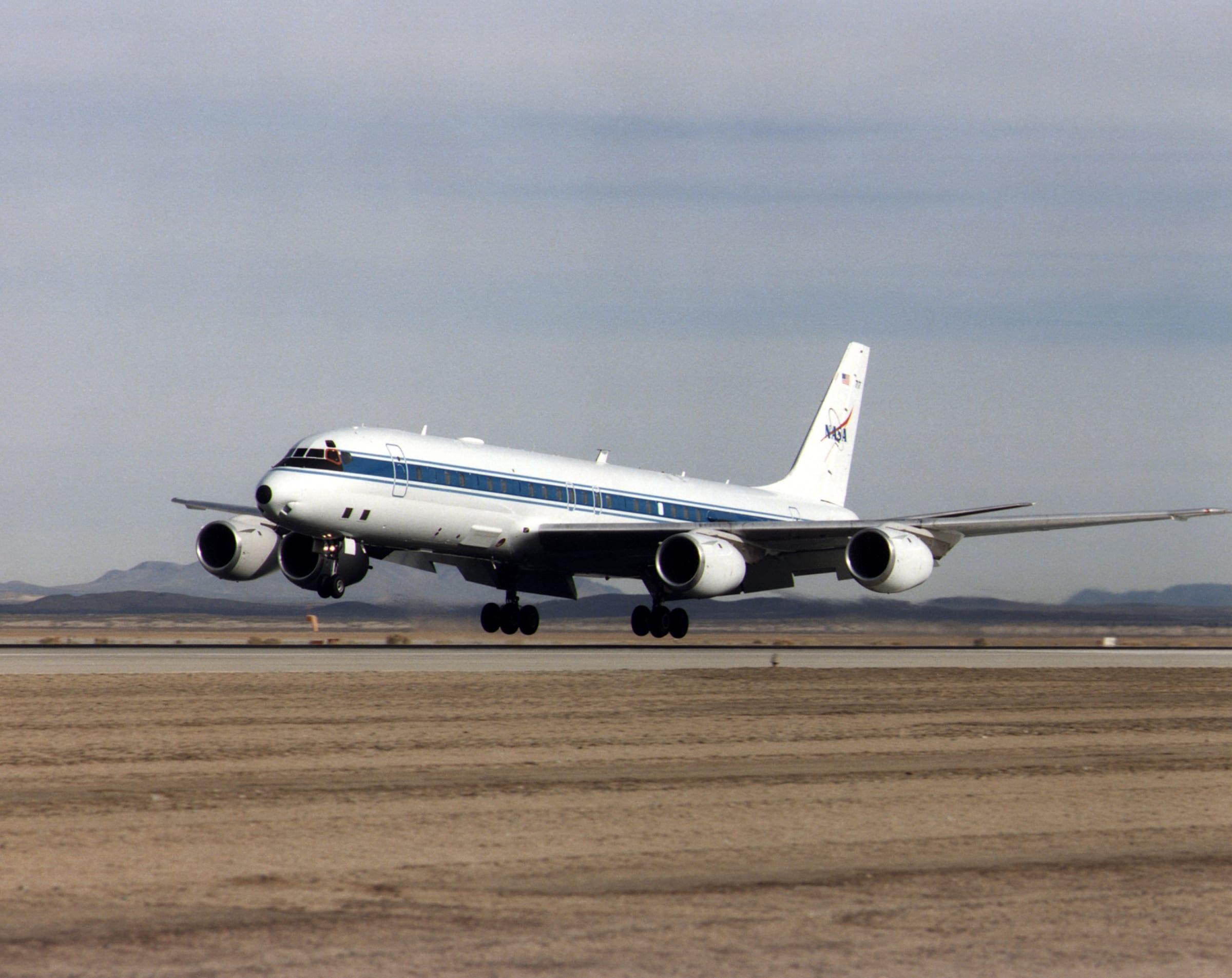
The Douglas legacy is one aeroplane and one lesson, and they point in opposite directions.
The aeroplane is the DC-3. Roughly eleven thousand were built as military C-47s and around eight hundred as civil transports, with several thousand more under licence abroad, and the type is still flying commercially in small numbers nearly ninety years after its first flight. No other transport aircraft has had that kind of life. It did not achieve it by being advanced: every feature on it existed elsewhere. It achieved it by being the right size, strong enough to be rebuilt indefinitely, and economical enough that an airline could fill it with passengers and make money, which nothing before it had managed.
That is the first half of the legacy, and it is why Douglas is remembered.
The second half is the warning, and it is the more useful of the two for anyone studying how aircraft manufacturers fail. Douglas did not lose because its designs were poor. The DC-8 was a good aeroplane, the DC-9 an excellent one, and both sold. It lost because it could not convert orders into delivered aircraft fast enough, and because expanding production consumed cash faster than the deliveries replaced it. The company that had built eleven thousand C-47s in four years could not, twenty years later, build a few hundred airliners a year to schedule.
Aircraft manufacture is an industrial problem at least as much as an engineering one. Douglas proved both halves of that, in the same century, with the same name on the hangar.
Products
Programmes the company has built or is building. Entries that exist elsewhere in FLYPEDIA are linked.
Airliners
- Douglas DC-2Out of production
The twin-engined airliner of 1934.
- Douglas DC-3 / C-47Out of production
The 1936 airliner, also built as the C-47 Skytrain or Dakota.
- Douglas DC-6Out of production
The four-engined airliner of 1946.
- Douglas DC-7Out of production
The last propeller-driven Douglas airliner, 1953.
- Douglas DC-8Out of production
The jet airliner of 1958, built to compete with the Boeing 707.
- Douglas DC-9Out of production
The short-haul jet whose third generation became the Boeing 717.
Military aircraft
- Douglas World CruiserOut of production
The aircraft of the first flight around the world, in 1924.
- Douglas A-4 SkyhawkOut of production
A light attack aircraft in production at the time of the 1967 merger.
Genealogy
The Douglas line, from the company Donald Douglas founded in 1921 to its 1967 merger with McDonnell and McDonnell Douglas's merger with Boeing in 1997.
Scroll to see the full diagram
Timeline
July 22, 1921
Donald Douglas founds his company in Santa Monica
1924
Douglas World Cruisers make the first flight around the world
November 30, 1928
Reorganised as the Douglas Aircraft Company
1936
The DC-3 follows the DC-2 of 1934
1942
Wartime production begins: almost 30,000 aircraft by 1945
1958
The DC-8 jet airliner
April 28, 1967
Merger with McDonnell as McDonnell Douglas
1997
McDonnell Douglas merges with Boeing
- Douglas DC-3, Smithsonian National Air and Space Museum
- The Douglas C-47 Skytrain, The National WWII Museum
- Douglas Aircraft Company, Wikipedia
Checked October 7, 2026