History
Lindbergh's New York to Paris Flight
May 20, 1927, 7:52 AM – May 21, 1927, 10:22 PM
Roosevelt Field, Long IslandNew York, United States
Le Bourget, near ParisFrance
33½hours
In the air
3,140nm
Distance
1
Crew
The flight
- Take-off
- 20 May 1927, 7:52 a.m.
- Landing
- 21 May 1927, 10:22 p.m.
- Time in the air
- 33 h 30 min
- Distance
- ≈ 3,140 nm
- Route
- Great circle, via Ireland
- Navigation
- Dead reckoning, no radio
- Crowd at Le Bourget
- 100,000 to 150,000
The machine
- Aircraft
- Ryan NYP Spirit of St. Louis
- Builder
- Ryan Airlines, San Diego
- Built in
- ≈ 60 days
- Wingspan
- 45.9 ft
- Length
- 27.6 ft
- Engine
- Wright J-5C Whirlwind, 223 hp
- Fuel
- 450 US gal
- Take-off weight
- ≈ 5,140 lb
- Cost
- $10,580 (1927)
- Where it is now
- National Air and Space Museum
The prize
- Offered by
- Raymond Orteig
- First offered
- 1919; renewed 1925
- Terms
- New York to Paris, nonstop
- Amount
- $25,000
- Awarded
- 16 June 1927
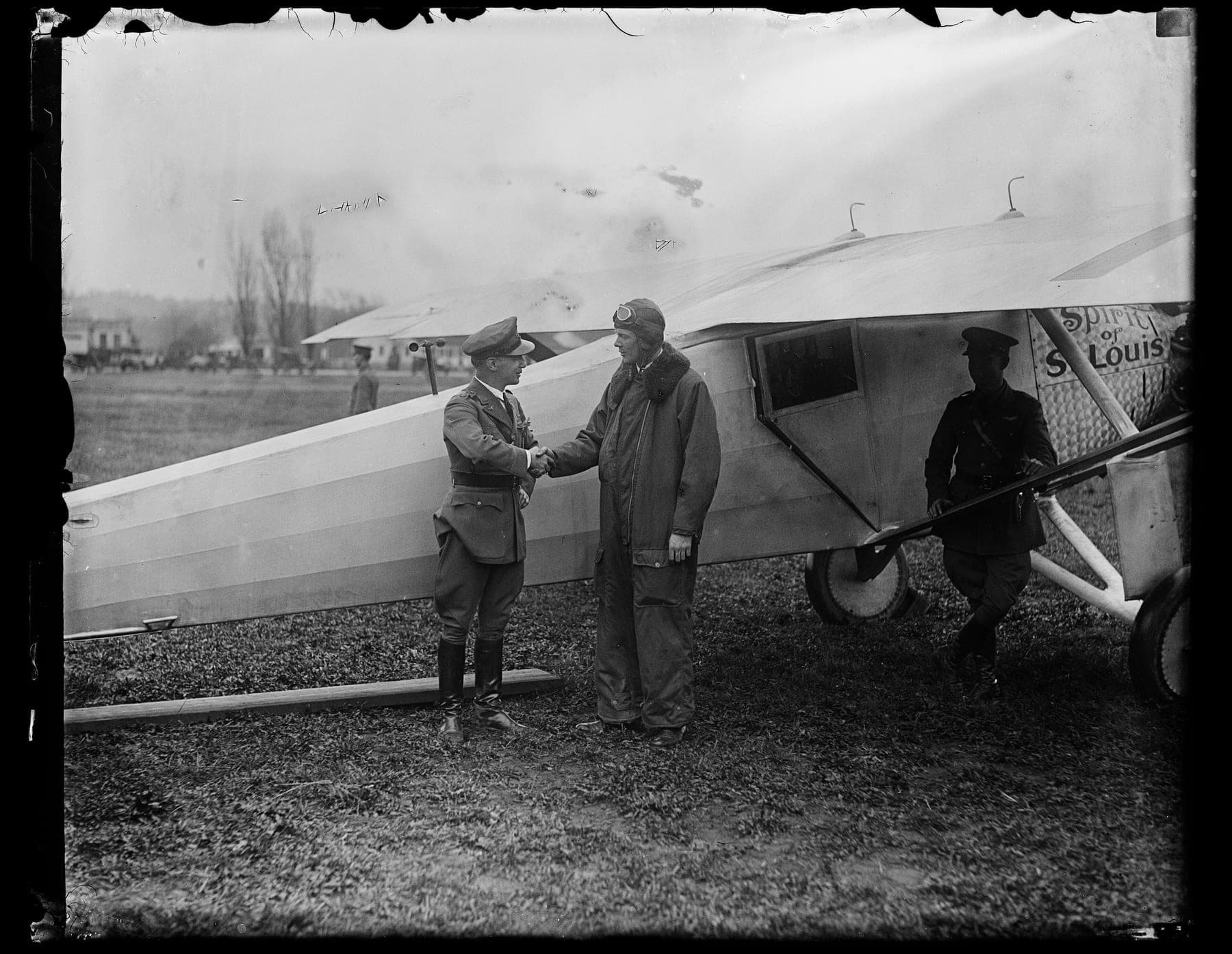
Charles Lindbergh, a twenty-five-year-old air-mail pilot, flew alone and without a stop from Roosevelt Field on Long Island to Le Bourget outside Paris in thirty-three and a half hours, the first solo nonstop crossing of the Atlantic, winning the Orteig Prize and turning the aeroplane, overnight, into something the public believed in. Within two years American pilot licences, aircraft and airline passengers had multiplied.
At 7:52 on the morning of Friday 20 May 1927, a silver monoplane so heavy with fuel that it could barely leave the ground lumbered down a muddy runway at Roosevelt Field on Long Island, cleared the telephone wires at the end by about twenty feet, and turned east. Thirty-three and a half hours later, at 10:22 on the Saturday night, it came down out of the dark at Le Bourget, outside Paris, into a crowd so large that soldiers had to pull its pilot out of it.
Charles Lindbergh was twenty-five, an air-mail pilot from the Midwest whom almost nobody had heard of a fortnight earlier. He flew alone, in a machine built for this one flight in sixty days, with no radio, no parachute and no forward view: the main fuel tank sat where the windscreen should have been. He navigated by compass, clock and dead reckoning, stayed awake for more than fifty-five hours, and made his landfall in Ireland within a few miles of where he had planned to.
He was not the first to fly the Atlantic. Alcock and Brown had crossed it nonstop eight years earlier, and others had done so in stages or by airship. What Lindbergh was first to do was to cross it alone, and to fly without a stop from New York to Paris: the terms of a $25,000 prize that had already cost six men their lives. The flight's real consequence was not the prize. It was that, within weeks, the public in two continents decided that the aeroplane worked.
Background
On 22 May 1919 Raymond Orteig, a French-born New York hotelier who owned the Lafayette and the Brevoort, offered $25,000 to the first aviator of an Allied country to fly nonstop between New York and Paris, in either direction. He was, by his own account, moved by the airmen of the war and by the idea of joining his two countries through the air. The prize was generous and, for the moment, unwinnable.
Nobody made a serious attempt for five years. The distance, about 3,100 nm, was nearly twice what Alcock and Brown had flown between Newfoundland and Ireland that same summer, and no aero engine of the day could be trusted to run for a day and a half without stopping. Orteig renewed the offer on 1 June 1925 under a board of trustees. By then the arithmetic had begun to change: the Wright Whirlwind, a light, air-cooled radial with unusually durable valve gear, was making long flights look less like gambling. In 1926 the famous names began to enter.
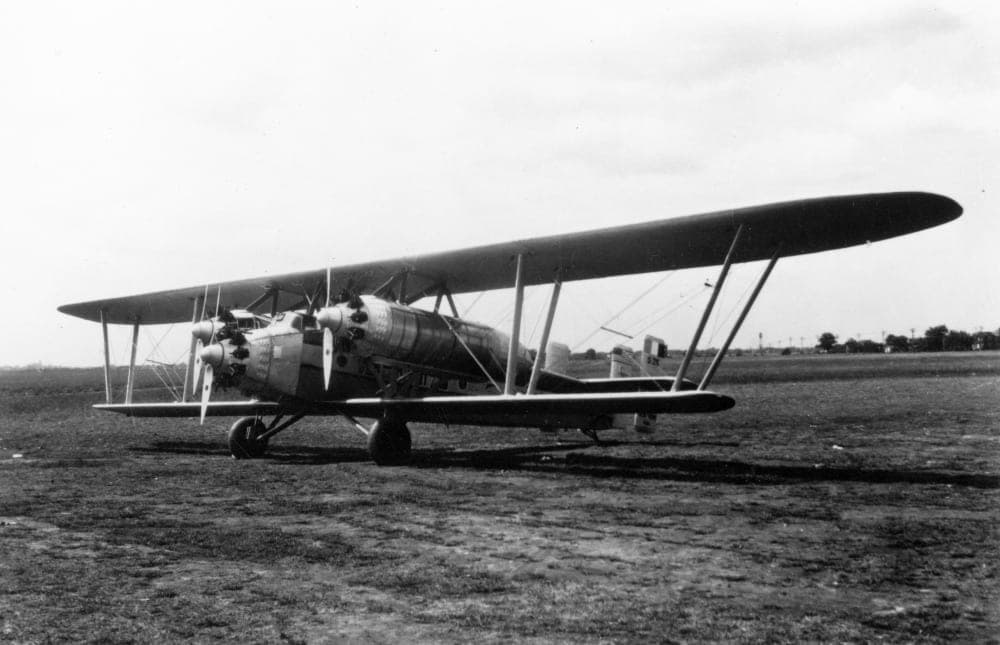
The first was René Fonck, France's leading surviving ace of the war. His Sikorsky S-35 was a large three-engined biplane fitted out almost luxuriously, and on 21 September 1926 it started its take-off run at Roosevelt Field carrying far more than it had ever lifted. It never left the ground: at the end of the runway it went over an embankment and burned. Fonck and his co-pilot escaped. The radio operator, Charles Clavier, and the mechanic, Jacob Islamoff, were killed.
The spring of 1927 was worse. Richard Byrd's Fokker trimotor America, the best-financed entry of all, overturned on a test flight in April and injured two of its crew. On 26 April Noel Davis and Stanton Wooster, two Navy officers with a Keystone Pathfinder they had named American Legion, took off fully loaded from Langley Field in Virginia on a final trial and crashed into a marsh; both were killed. Clarence Chamberlin's Bellanca Columbia, perhaps the most capable aircraft in the field, sat in its hangar while its owner and its crew argued over who would fly it.
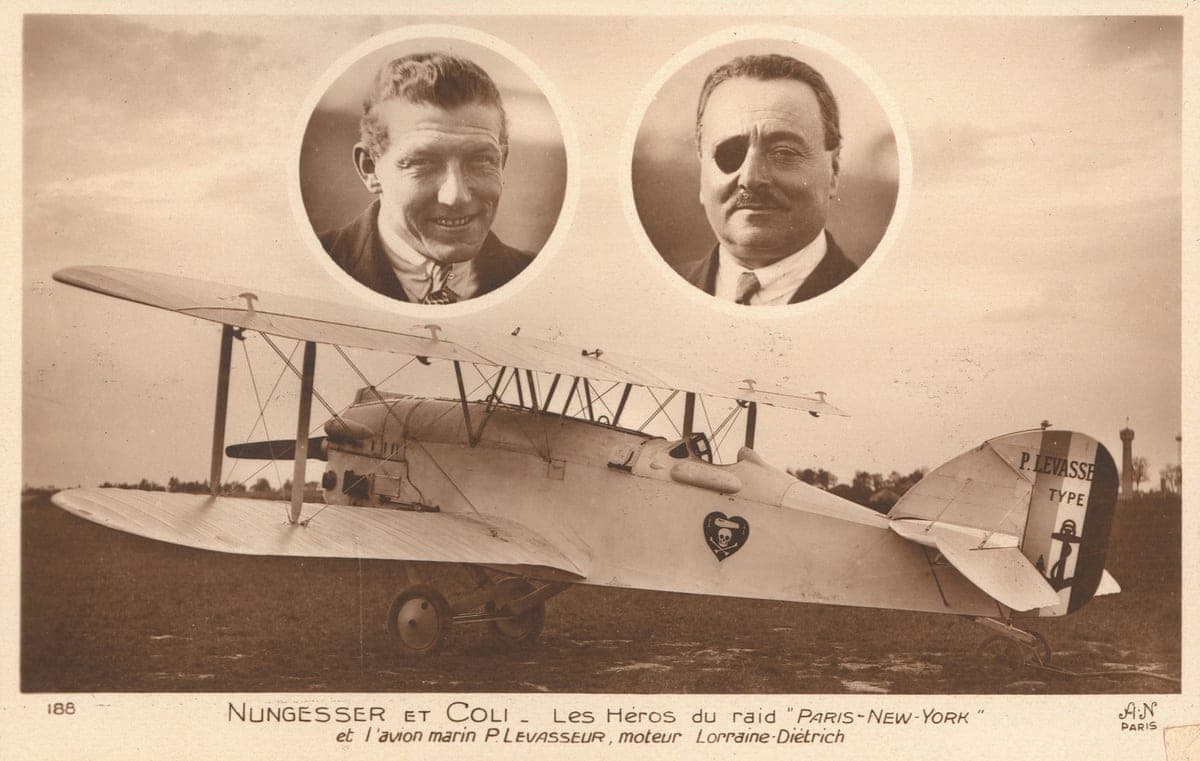
Then the French went first. On 8 May Charles Nungesser, another great ace of the war, and his one-eyed navigator François Coli left Le Bourget for New York in L'Oiseau Blanc, a Levasseur biplane that dropped its undercarriage after take-off to save weight and meant to land on water in New York harbour. They were seen leaving the French coast and never seen again. For a day Paris newspapers reported their arrival; then the silence set in. In eight months six men had died trying for Orteig's prize, and none had come close.
Development
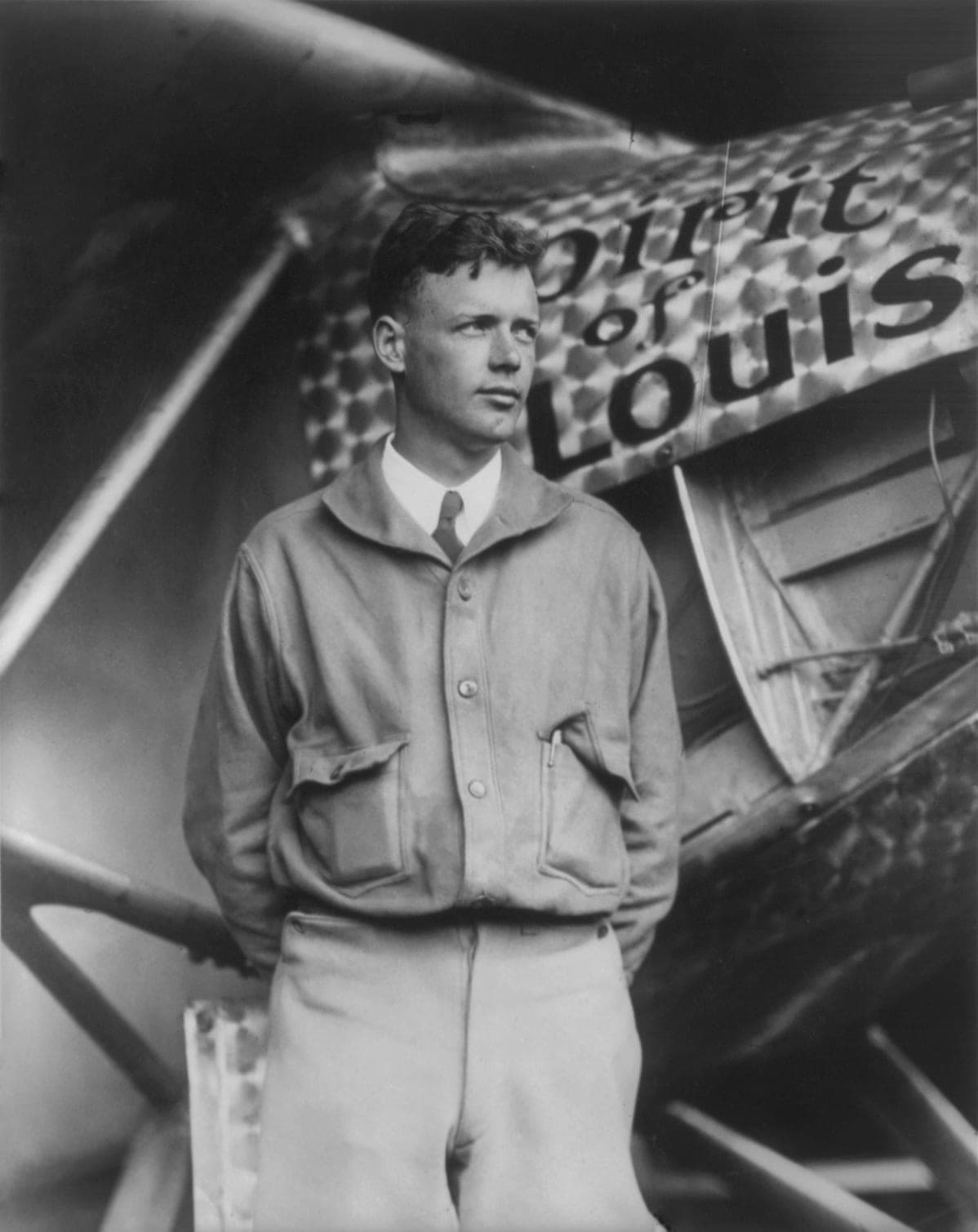
Charles Lindbergh was an outsider to all of this. Born in Detroit in 1902 and raised on a farm at Little Falls, Minnesota, he had left university to learn to fly, spent two years barnstorming, and graduated at the head of his class from the Army's flying school in Texas in 1925. By 1927 he was chief pilot on the St Louis to Chicago air-mail route, flying a war-surplus biplane at night in all weathers. He had already jumped from failing aircraft four times.
His idea contradicted every serious entry. The others were building large, multi-engined machines with crews of two to four; Lindbergh reasoned that every extra engine was another thing to fail, every extra crewman another two hundred pounds of fuel left behind, and that a single reliable engine in a clean monoplane, flown by one man, had the best chance of all. He found backers among St Louis businessmen, among them Harold Bixby and Harry Knight, who raised the money and gave the aircraft its name. Established builders turned him down or, like the Columbia's owner, offered their aircraft only on condition that they chose who would fly it.
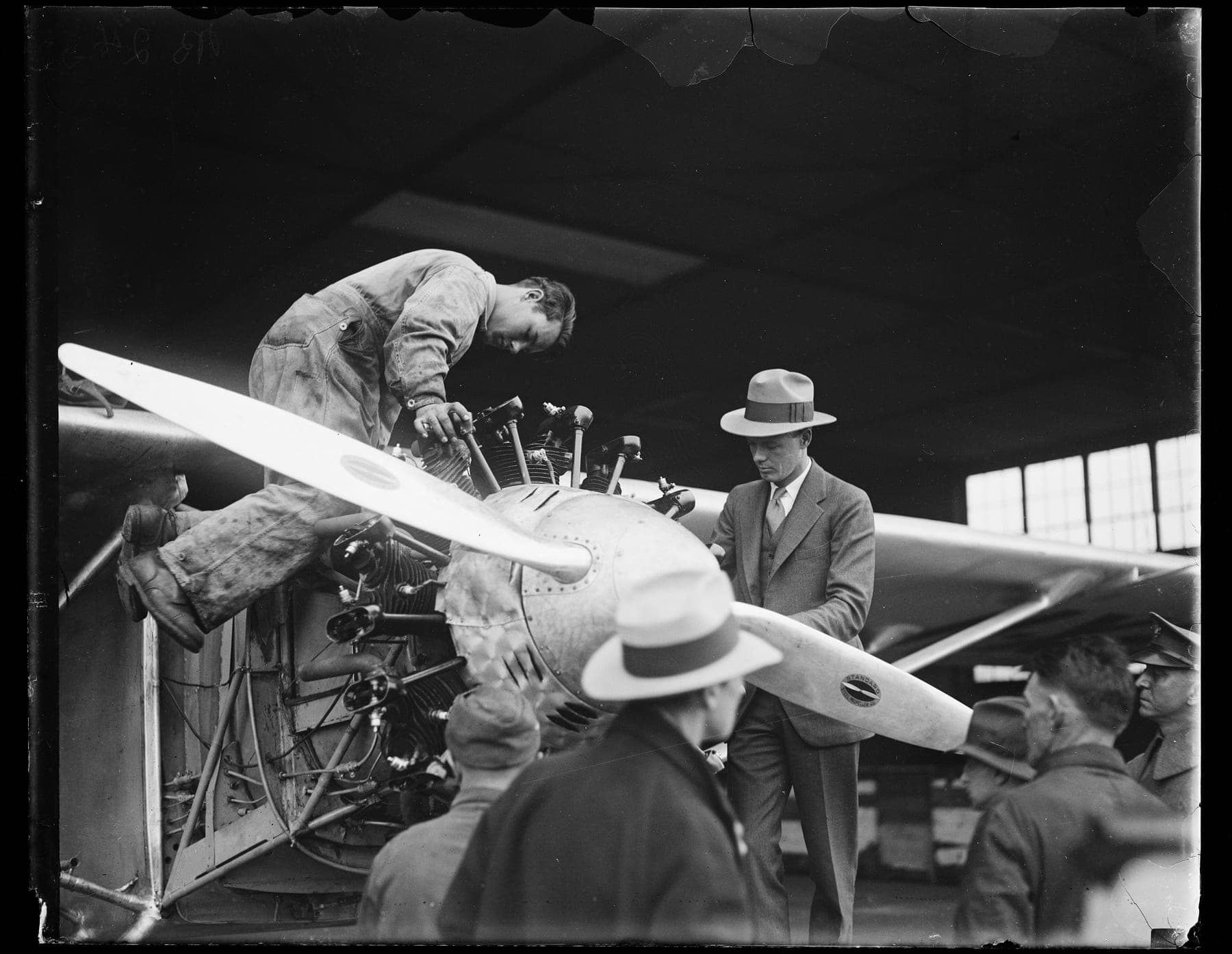
The firm that said yes was Ryan Airlines of San Diego, a small company that built mail planes, owned by B. F. Mahoney. It agreed to build a new aircraft in about sixty days, and did so for $10,580. The designer was Donald A. Hall, who started from Ryan's M-2 mail plane and changed nearly everything that mattered: the wingspan grew by ten feet to forty-six to lift the load, the fuselage was lengthened, and the structure was redesigned around fuel rather than cargo. Lindbergh stayed at the factory for the whole build, arguing each ounce.
The machine, designated NYP for New York to Paris and registered N-X-211, first flew on 28 April 1927: two days after Davis and Wooster were killed, and ten days before Nungesser and Coli left Paris. Lindbergh spent the next ten days testing it over San Diego, loading it progressively heavier to learn how it behaved, while the newspapers reported one rival after another as ready to go.
The machine
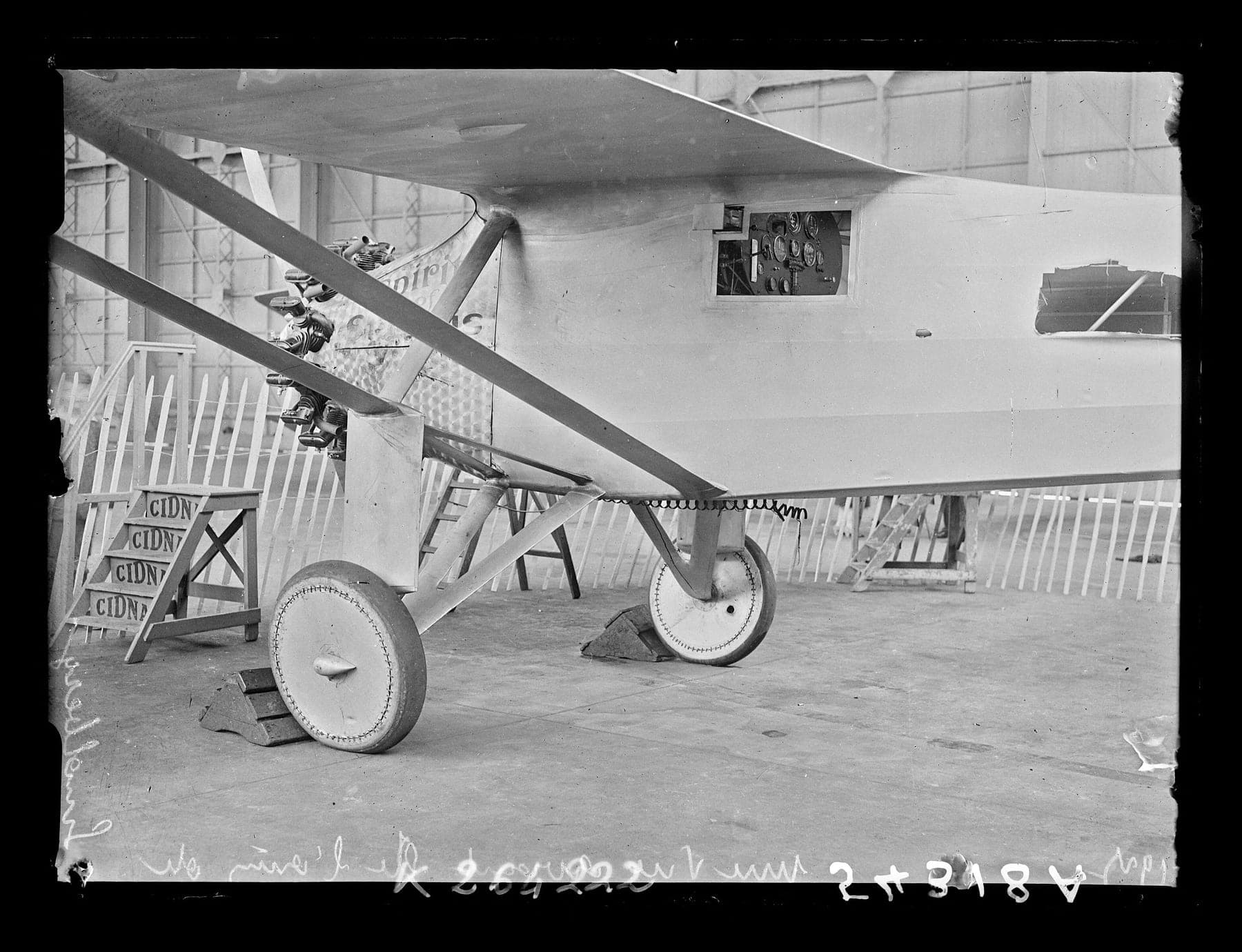
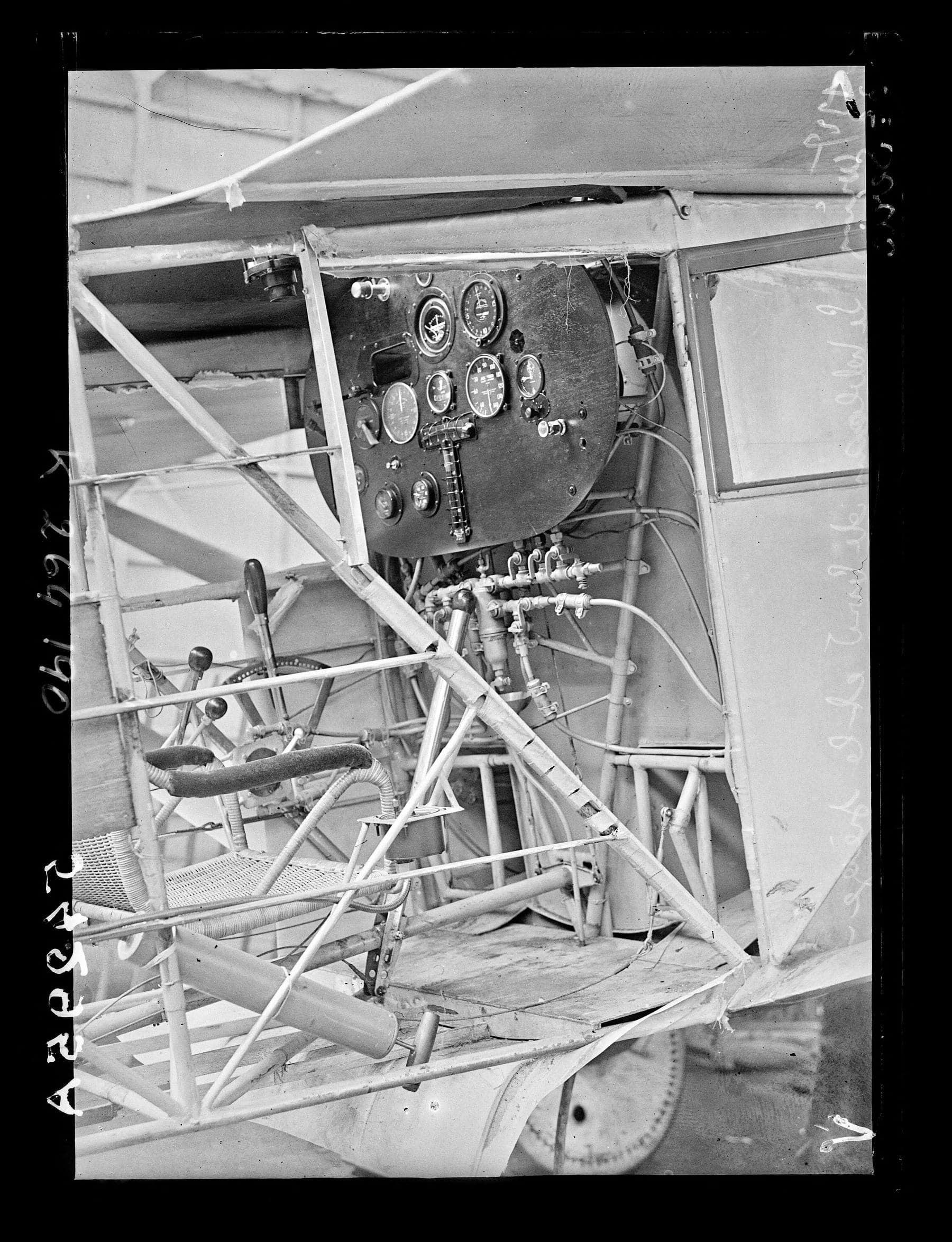
The decision that defined the Spirit was where to put the fuel. Hall and Lindbergh placed the largest tank in the fuselage directly behind the engine and ahead of the cockpit, close to the centre of gravity. As fuel burned off, the balance of the aircraft barely changed; and in a crash the pilot would be behind the tank rather than trapped between it and the engine. The price was that there was no room for a windscreen. From his seat Lindbergh could not see forwards at all.
The rest of the machine followed from the load. The high wing, forty-six feet across, carried more tanks of its own; together they held 450 US gal, and at take-off the Spirit weighed about 5,135 lb, more than twice its empty weight. The fuselage was a welded steel-tube frame covered in fabric, with the nose in engine-turned aluminium. The undercarriage was widened and strengthened to survive a take-off at a weight nobody had tested in advance.
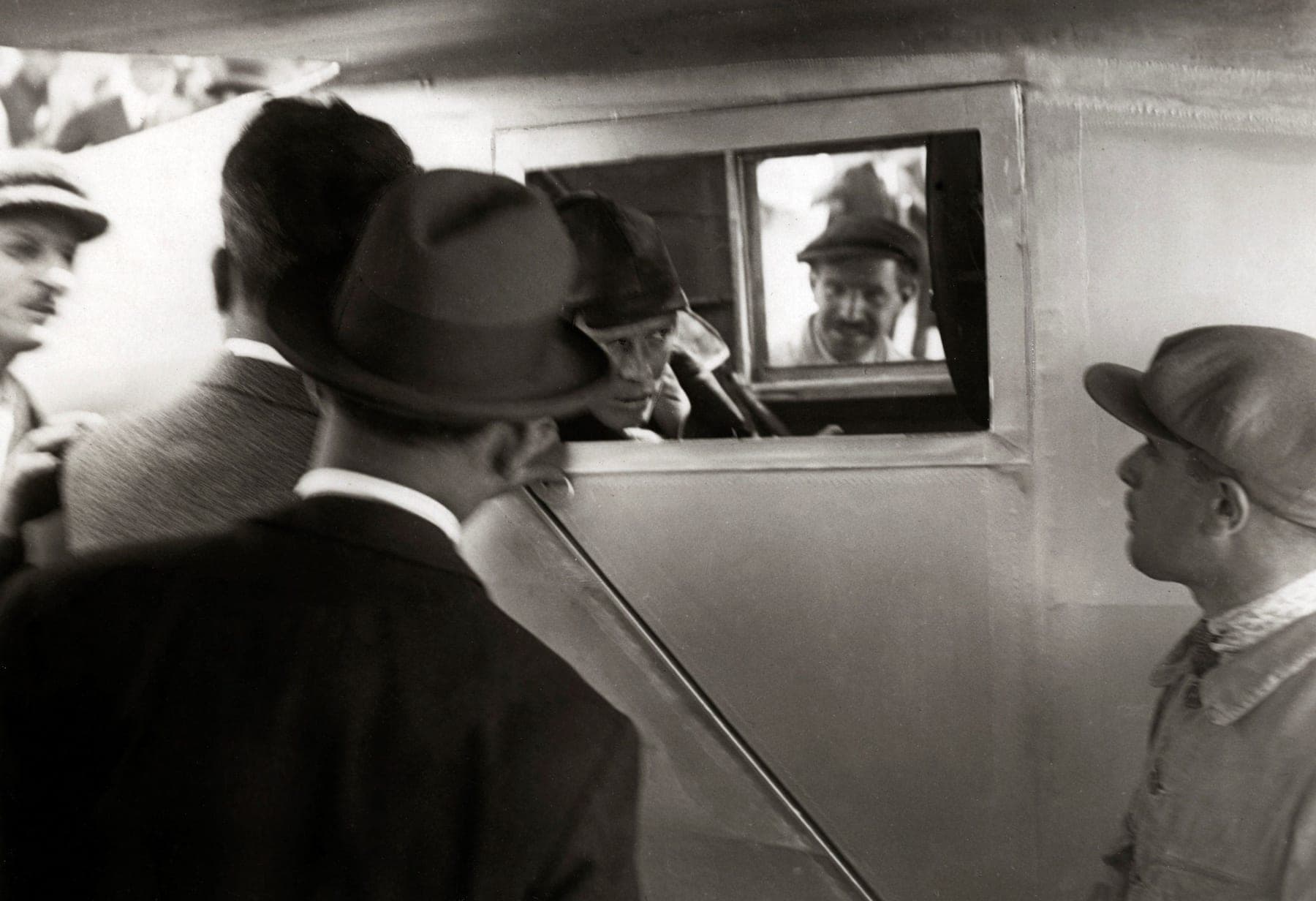
To see ahead Lindbergh relied on two side windows and a small periscope that could be pushed out of the left side of the fuselage; in practice, when he needed to know what was in front of him, he turned the aircraft a few degrees and looked out of the side. For the crossing itself it hardly mattered: there was nothing ahead of him but air. For take-off and landing it mattered a great deal, and he flew both by looking out of the side.
Everything else was sacrificed to weight. He sat in a light wicker seat, chosen partly because it was uncomfortable enough to keep him awake. He carried no radio, which he judged too heavy and too unreliable to justify its weight in fuel, no parachute, and no sextant. His rations were a few sandwiches and water; his emergency kit an inflatable rubber raft, a knife, flares and a small amount of emergency food. He trimmed the margins off his charts.
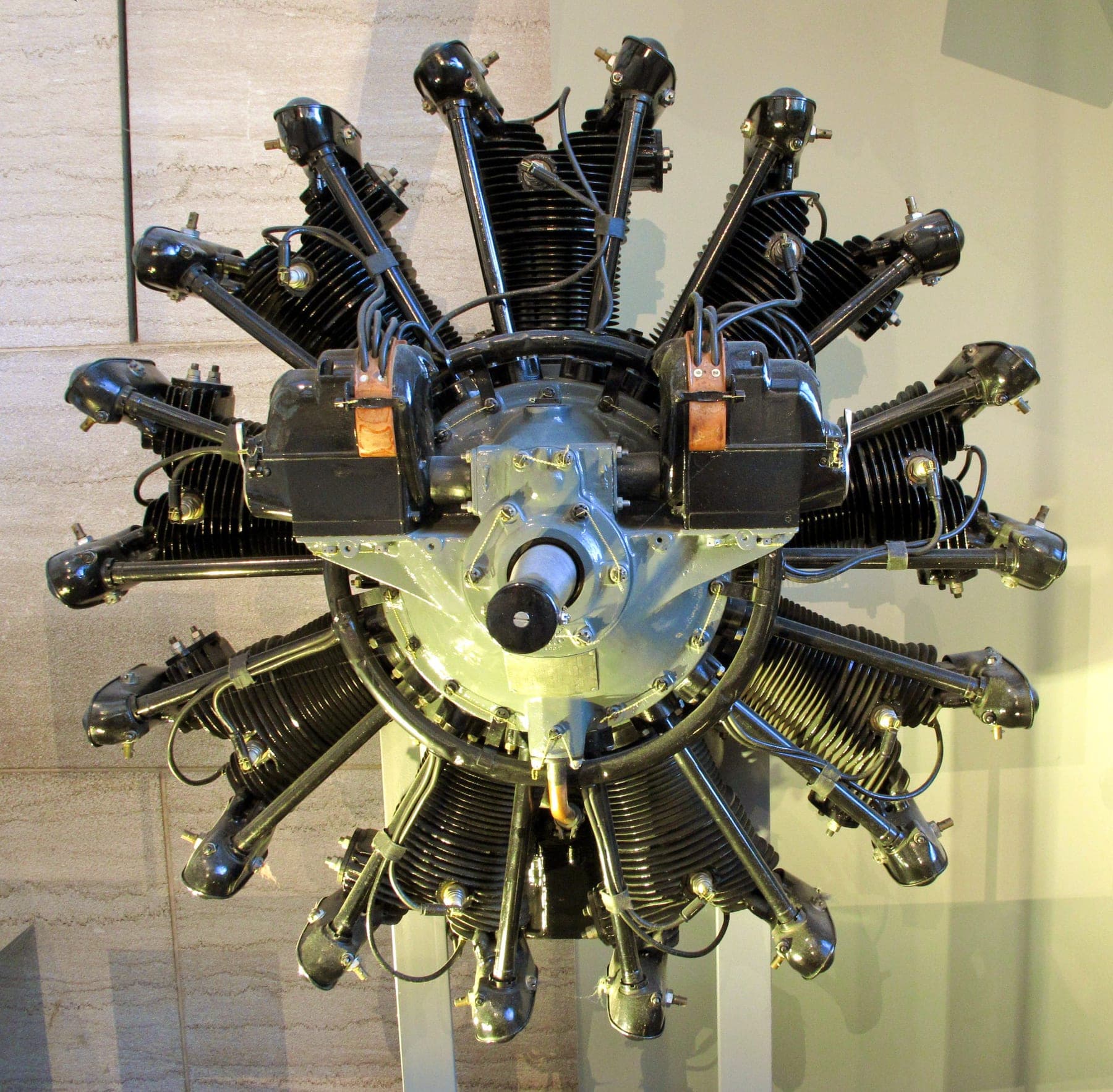
What he did not economise on was the engine and the compass. The Wright J-5C Whirlwind was a nine-cylinder, air-cooled radial of 223 horsepower, the same family that powered Byrd's America and the Columbia, and its reputation for running for hours without attention was the foundation of the whole plan. For navigation he had an earth inductor compass, which reads direction from the earth's magnetic field without the swing of an ordinary compass, and which he would steer by, alone, for thirty-three hours.
Preparation
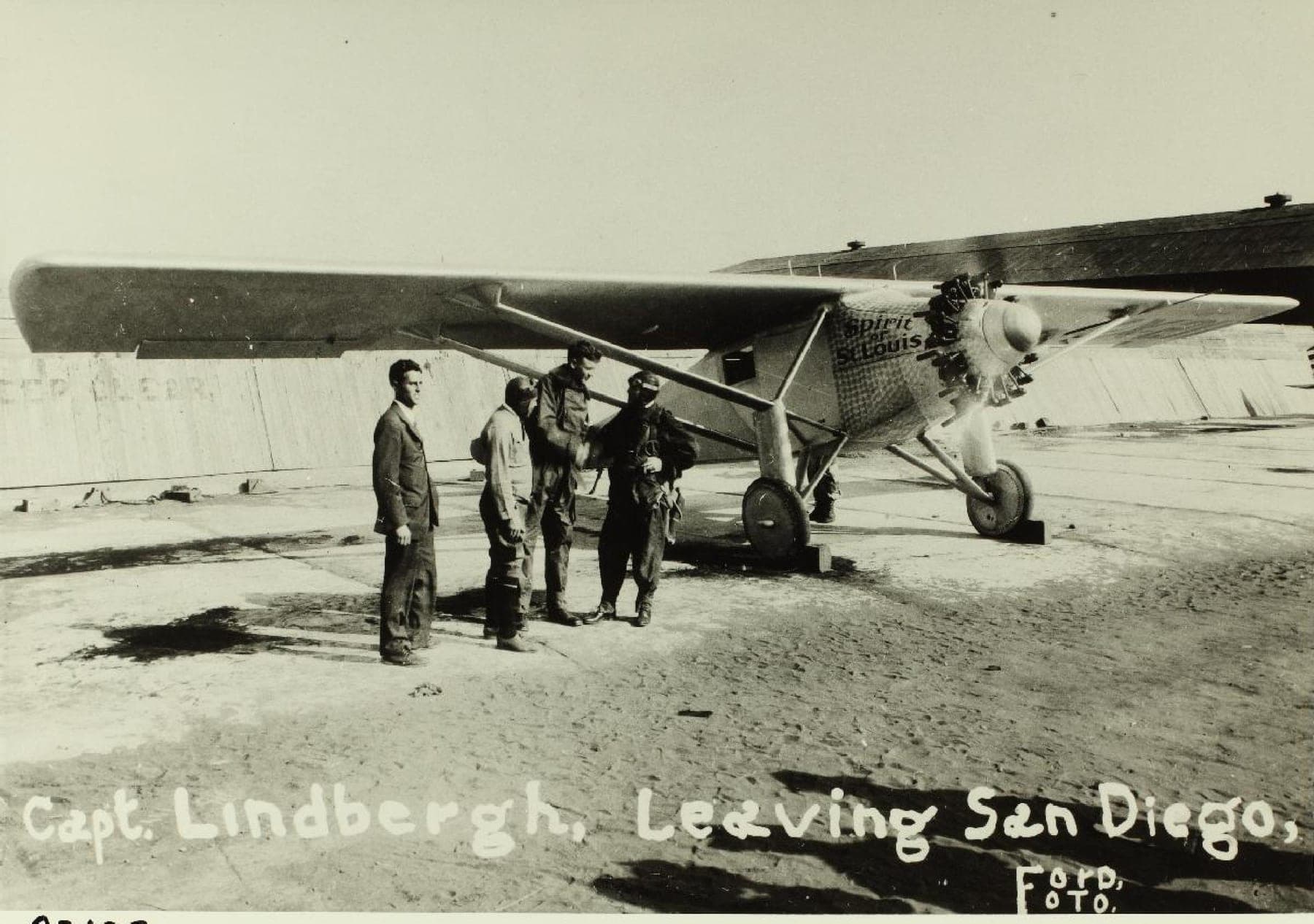
On the afternoon of 10 May 1927 Lindbergh took off from San Diego and flew through the night across the south-west and the Rockies to Lambert Field at St Louis: 14 hours 25 minutes, the longest nonstop solo flight yet made across the United States. It was a rehearsal as much as a delivery: a night of dead reckoning over dark country, with the engine running without a stop from start to finish.
He paused in St Louis only long enough to see his backers and left the next morning for New York, landing at Curtiss Field on Long Island on 12 May after 7 hours 20 minutes. The two legs together had crossed the continent in under twenty-two hours of flying: a transcontinental record, set almost in passing, which made the newspapers notice him for the first time.
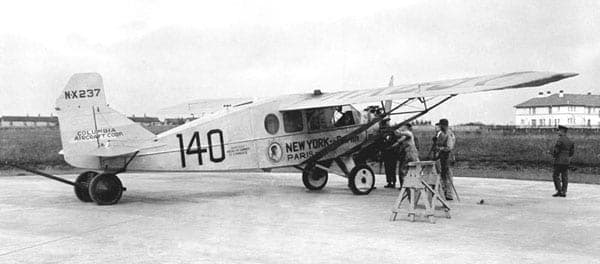
On Long Island he found his rivals waiting. Byrd's America had been repaired; Chamberlin's Columbia was ready but still tied up in its owner's quarrels. For a week rain and fog over the Atlantic grounded all three, while crowds and reporters gathered at the fields. The press, which had discovered a lanky, shy twenty-five-year-old flying alone, called him the Flying Fool and then, more kindly, Lucky Lindy. Byrd, who controlled the long runway at the neighbouring Roosevelt Field, offered to let him use it.
On the evening of 19 May, on his way into Manhattan to see a show, Lindbergh learned from the Weather Bureau's New York forecaster, Dr James Kimball, that a high-pressure area was clearing the weather over the North Atlantic. He turned back. Through the night the Spirit was towed to Roosevelt Field, fuelled and checked in the rain. He had meant to sleep for a few hours before dawn and did not; he would take off having been awake for nearly a full day.
The morning of 20 May was grey and drizzling. The runway was soft, the light wind was blowing from behind rather than into his face, and the aircraft was heavier than it had ever been. Neither of the other crews judged the weather good enough. Lindbergh climbed in, and at about 7:50 he signalled for the chocks to be pulled.
The event
The Spirit gathered speed so slowly that the men running alongside the wings kept pace with it for the first stretch. It bounced, touched, bounced again, and lifted off with perhaps a thousand feet of runway to spare, clearing the telephone wires beyond the end of the field by about twenty feet. It was 7:52 a.m. Lindbergh settled at a few hundred feet and turned north-east along the coast.
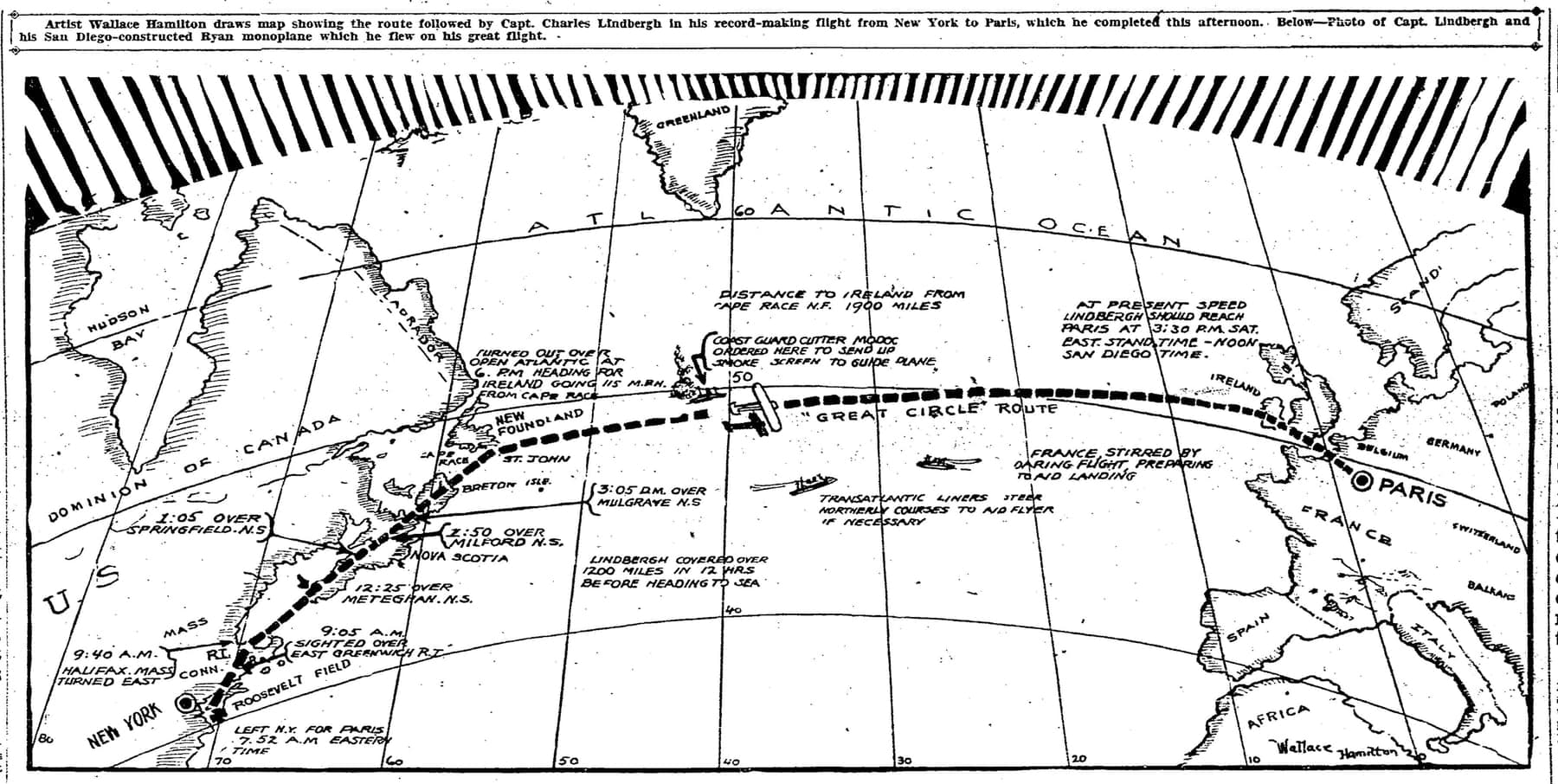
He crossed Long Island Sound, Connecticut and Rhode Island, passed Cape Cod, and struck out over two hundred miles of open water to Nova Scotia, the first test of his dead reckoning, which brought him to the coast within a few miles of his mark. Newfoundland followed in the late afternoon. At dusk, about eleven and a half hours out, he flew low over the harbour at St John's, deliberately, so that someone would report that he had reached the edge of the ocean. Then there was nothing ahead but the Atlantic and the night.
The night was the hardest part of the flight. Fog and cloud built up beneath him and then around him; he climbed to about ten thousand feet to stay above them and flew for hours among towering clouds. Entering one, he felt the air turn bitter and, shining a flashlight out of the window, saw ice forming on the struts. He turned back into clear air and went round the storm rather than through it: a detour that cost fuel and time, and very nearly the aircraft.
By the time dawn came he had been awake for over a day and a half, and the struggle was no longer with the weather but with sleep. His eyes closed while he flew; he woke seconds later, sometimes minutes, with the aircraft wandering off heading. He flew down close to the waves so that the spray and the danger would keep him alert, held his eyelids open with his fingers, and later described sensing presences in the fuselage behind him (voices, figures, companionable and unalarming) which modern readers recognise as the hallucinations of extreme sleep deprivation.
Late in the second morning he saw small boats below him. He circled one and, cutting the engine, shouted down to ask which way Ireland was; nobody answered. An hour later a coastline appeared, and after checking his chart against it he found he was over Dingle Bay in the south-west of Ireland: within about three miles of the course he had drawn in San Diego. The fatigue lifted with the landfall.
He crossed southern Ireland, the Irish Sea and Cornwall, reached the coast of France at Cherbourg as the light went, and followed the Seine towards Paris. He circled the Eiffel Tower and searched the dark to the north-east for Le Bourget, which he found by the lights of the thousands of cars on the roads around it. At 10:22 p.m. on Saturday 21 May, looking out of the side window, he put the Spirit down on the grass. He had been in the air for thirty-three and a half hours.
Aftermath
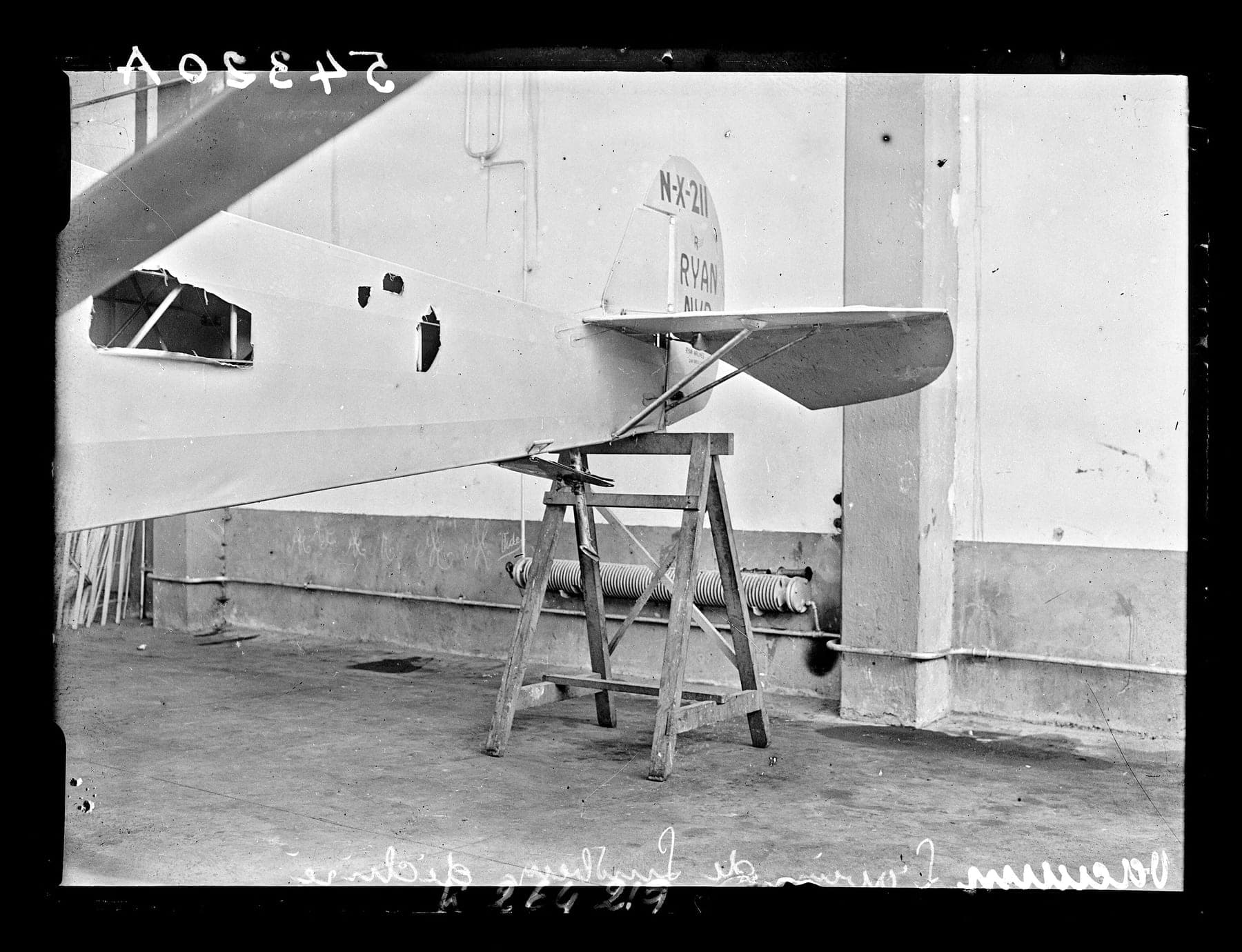
Le Bourget had expected a crowd; it had not expected the one that came. Estimates at the time ran from 100,000 to 150,000 people, and when the Spirit rolled to a stop they broke through the fences and the lines of soldiers and police and ran across the field towards it. Lindbergh was pulled out of the cockpit and carried on shoulders for a long half-hour before two French airmen got him away. Souvenir hunters stripped fabric from the fuselage; soldiers had to be set around the aircraft to stop it being taken apart.
He spent the night at the residence of the American ambassador, Myron T. Herrick, who had come to meet him and found himself looking after a guest who had not slept in over sixty hours and had brought no clothes but what he wore. The next morning the young man from Minnesota woke up as the most famous person in the world.
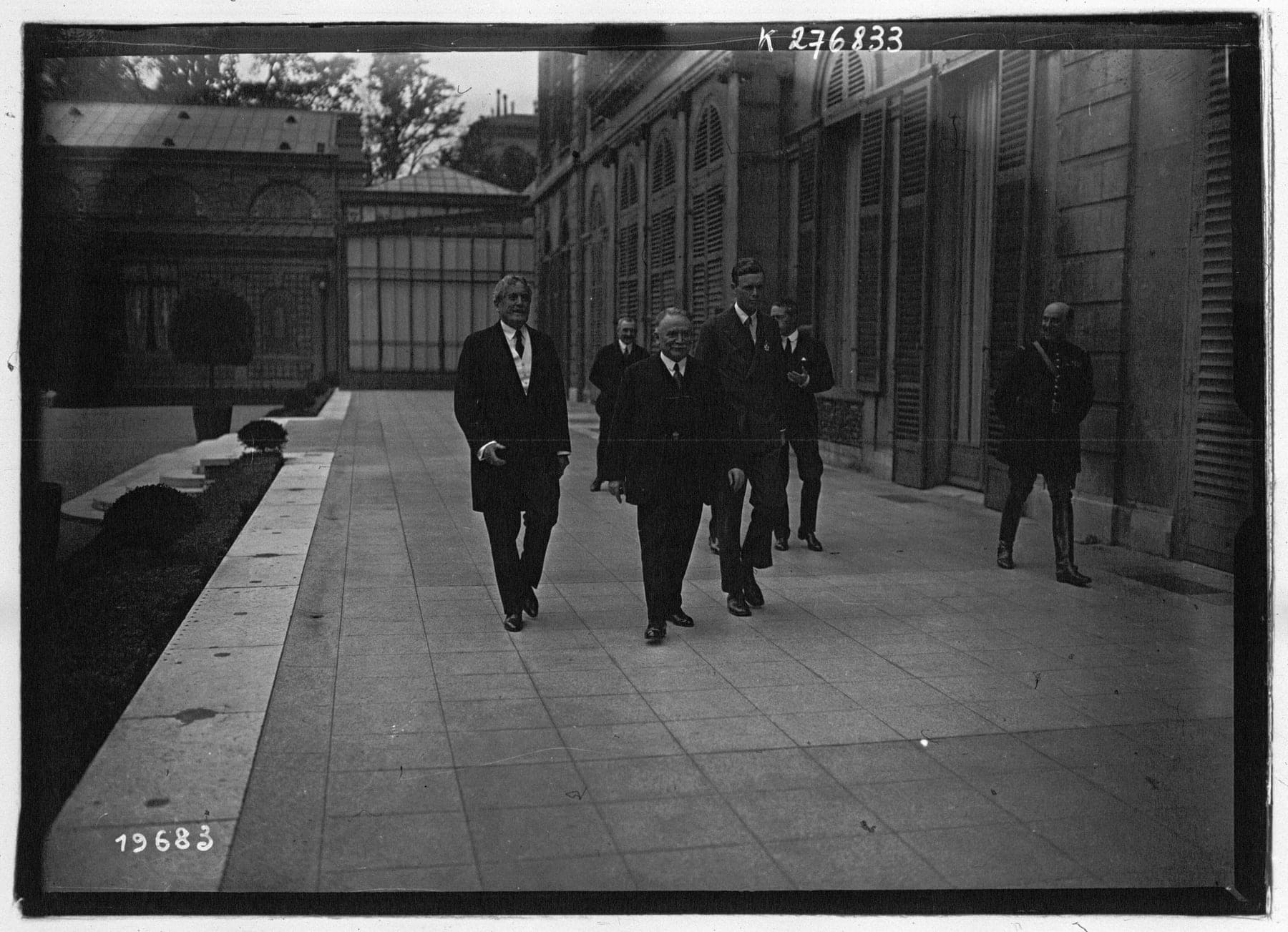
The following days in Paris set the tone for the rest of his life. He was received by President Gaston Doumergue and made a chevalier of the Légion d'honneur; he called, unannounced, on the mother of Charles Nungesser, whose son was still missing; he spoke modestly and briefly and let the crowds come to him. He flew the Spirit over the city, and crowds gathered whenever he appeared.
On 28 May he flew to Brussels and on 29 May to Croydon, outside London, where another vast crowd met him. President Coolidge sent the cruiser USS Memphis to bring him and the Spirit home; the aircraft was crated for the voyage. On 11 June, in Washington, Coolidge presented him with the Distinguished Flying Cross.
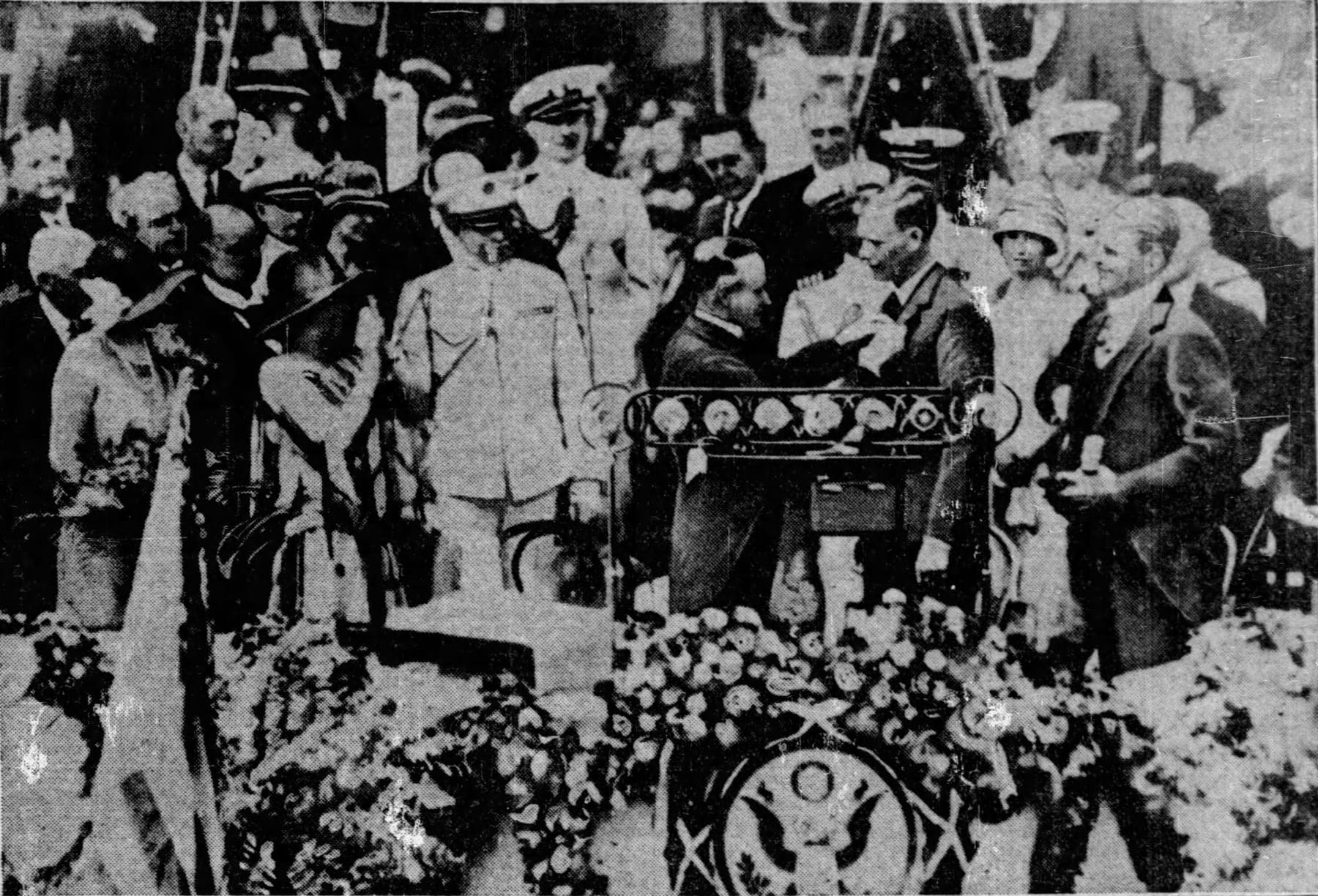
Two days later New York gave him a ticker-tape parade that an estimated four million people turned out to watch. On 16 June Raymond Orteig handed him the cheque for $25,000. In December Congress awarded him the Medal of Honor; Time made him its first Man of the Year; and his short account of the flight, We, became a best-seller within weeks of publication.
Recognition
Lindbergh was not the first person to fly the Atlantic, and he never claimed to be. In May 1919 the US Navy flying boat NC-4 crossed it in stages by way of the Azores. On 14 to 15 June 1919 John Alcock and Arthur Whitten Brown flew a Vickers Vimy nonstop from Newfoundland to Ireland, 1,640 nm in just under sixteen hours, the first nonstop crossing of the ocean. That July the British airship R34 made the first east-to-west crossing and then flew home again. By 1927 at least eighty people had flown across the Atlantic in one way or another.
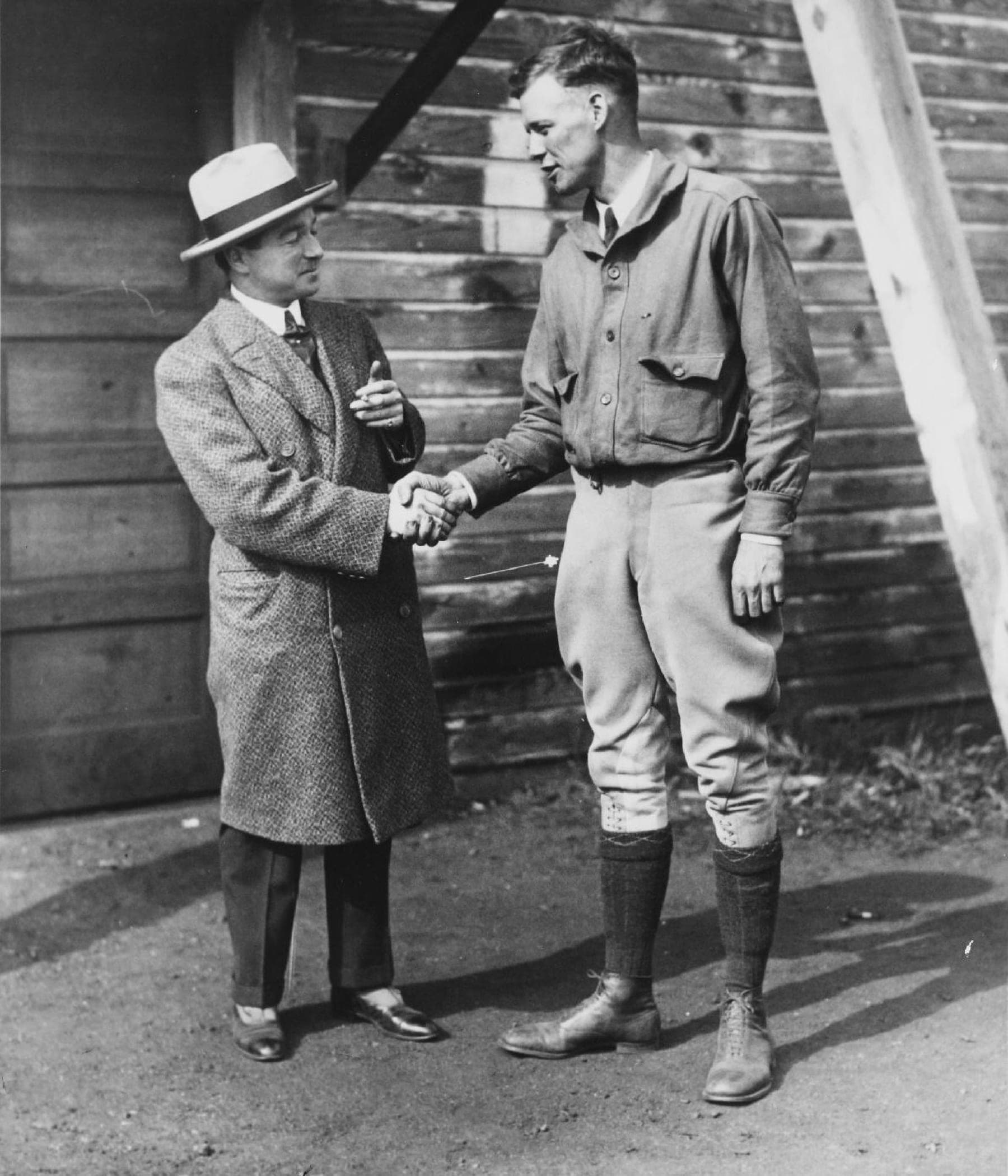
What Lindbergh was first to do is narrower and still extraordinary. He was the first to cross the Atlantic alone, and the first to fly nonstop between New York and Paris: nearly twice the distance of Alcock and Brown's crossing, from one continent's greatest city to another's, which was exactly what Orteig had asked for. The airmen who had gone before understood the difference and were generous about it; René Fonck, whose own attempt had ended in a burning wreck, was among those who welcomed him. In Paris Lindbergh himself said that Alcock and Brown had shown him the way.
The record he set did not last long. Two weeks later, on 4 to 6 June, Clarence Chamberlin flew the Columbia from New York to Eisleben in Germany, 3,399 nm, carrying its owner Charles Levine as the first transatlantic passenger. Byrd's America reached France at the end of June and came down in the sea off the Normandy coast. What lasted was the thing no later flight could repeat: that the first of them to succeed had done it alone, in a machine built for the purpose in sixty days.
Legacy
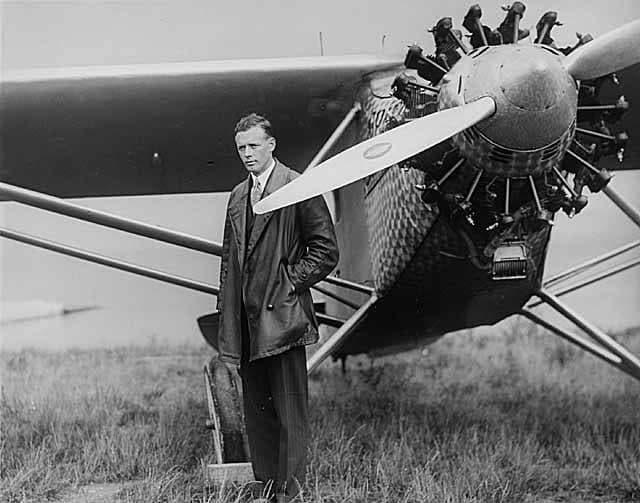
From July to October 1927, under the sponsorship of the Daniel Guggenheim Fund for the Promotion of Aeronautics, Lindbergh flew the Spirit around the United States, all forty-eight states and eighty-two cities, landing on time almost everywhere, making speeches about airports and air mail rather than about himself. The tour was propaganda for an industry, and it worked.
In December he flew the Spirit nonstop from Washington to Mexico City and on through Central America and the Caribbean on a goodwill tour that ended in February 1928. On 30 April 1928 he flew it for the last time, from St Louis to Washington, and handed it to the Smithsonian Institution. In just over a year of existence it had made 174 flights and spent 489 hours and 28 minutes in the air.
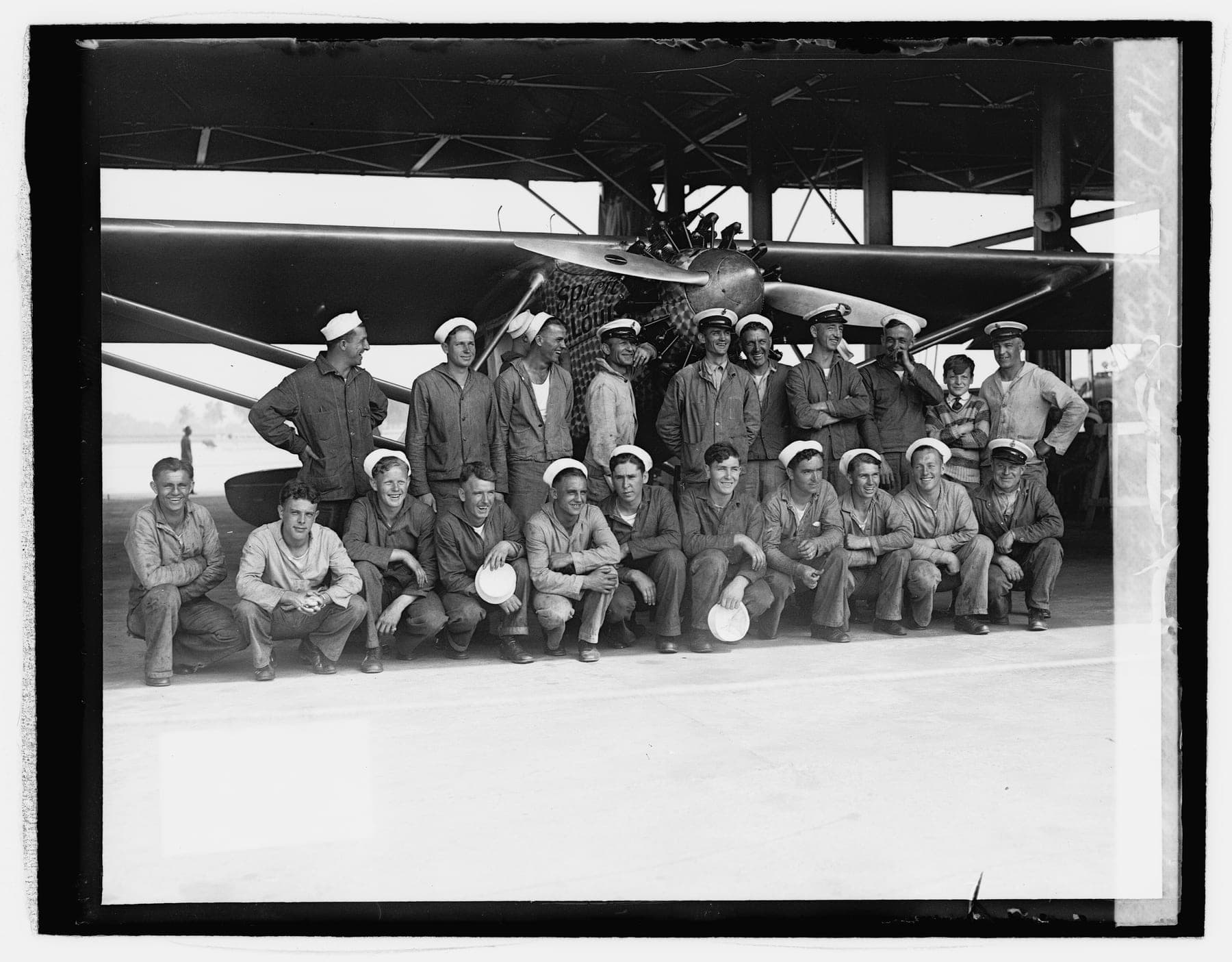
The effect on aviation was immediate and measurable. Within months applications for pilot licences in the United States had tripled and the number of licensed aircraft had grown fourfold; air-mail volume rose by half within six months. Money followed the public: aviation stocks became the fashion of the late 1920s, and the airlines that grew out of the mail contracts began, for the first time, to plan for passengers. The period is still called the Lindbergh boom.
Lindbergh's own later life was more complicated than the parade. In 1932 his infant son was kidnapped and murdered, a crime that drove the family to live abroad for years. Before the Second World War he became the best-known voice of the America First movement against intervention, and a speech he gave in Des Moines in 1941 singling out Jewish Americans did lasting damage to his reputation. He flew combat missions in the Pacific as a civilian adviser, won the Pulitzer Prize in 1954 for his book The Spirit of St. Louis, and died in 1974. None of that alters what he did in May 1927; an encyclopedia owes the reader both.
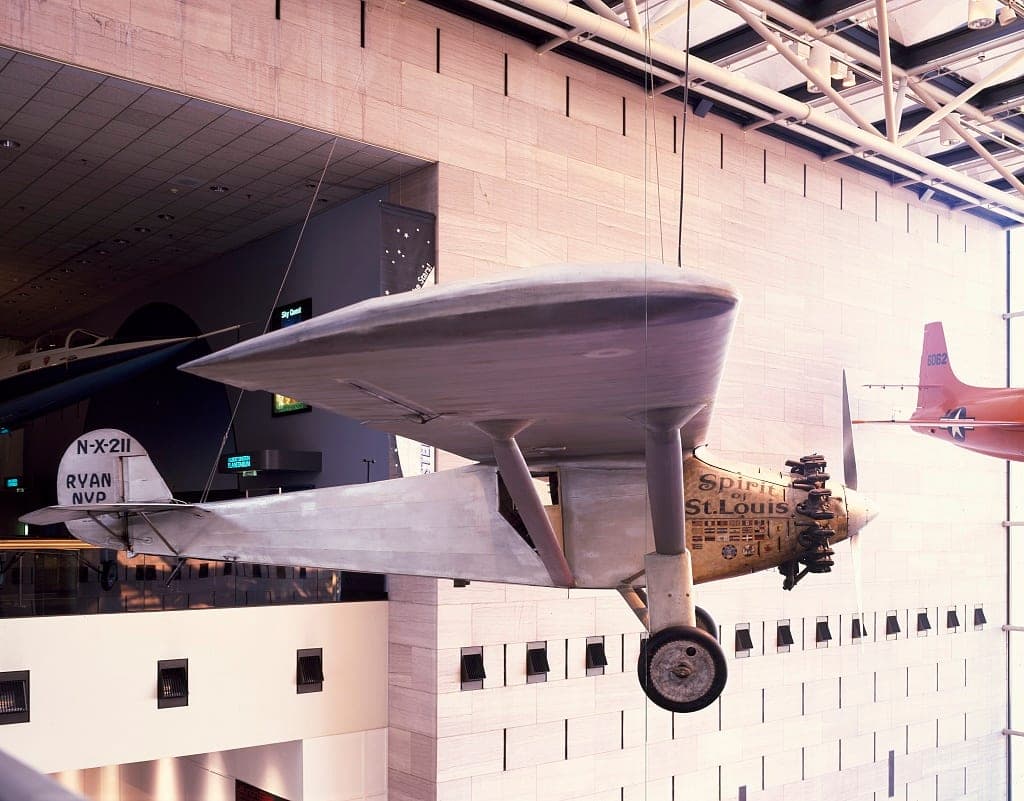
The Spirit of St. Louis hangs today in the National Air and Space Museum in Washington, among the aircraft that define the century of flight, a small silver monoplane with a painted name, a wicker seat and no windscreen, which crossed an ocean in a day and a half with one man on board.
The race for the Orteig Prize
Eight years from the offer to the award, and six deaths in the last eight months of it.
May 22, 1919New York
Orteig offers $25,000
For the first nonstop flight between New York and Paris, in either direction, by an aviator of an Allied country.
June 14, 1919 – June 15, 1919Newfoundland to Ireland
Alcock and Brown cross nonstop
The first nonstop crossing of the Atlantic, 1,640 nm in just under sixteen hours, about half the distance Orteig's prize demanded.
June 1, 1925
The offer is renewed
Unclaimed after five years, the prize is reissued under a board of trustees.
September 21, 1926Roosevelt Field
Fonck's Sikorsky crashes on take-off
Overloaded, the S-35 fails to leave the ground and burns. Charles Clavier and Jacob Islamoff are killed.
February 1927San Diego
Ryan agrees to build the NYP
About sixty days and $10,580 for a new single-engined monoplane.
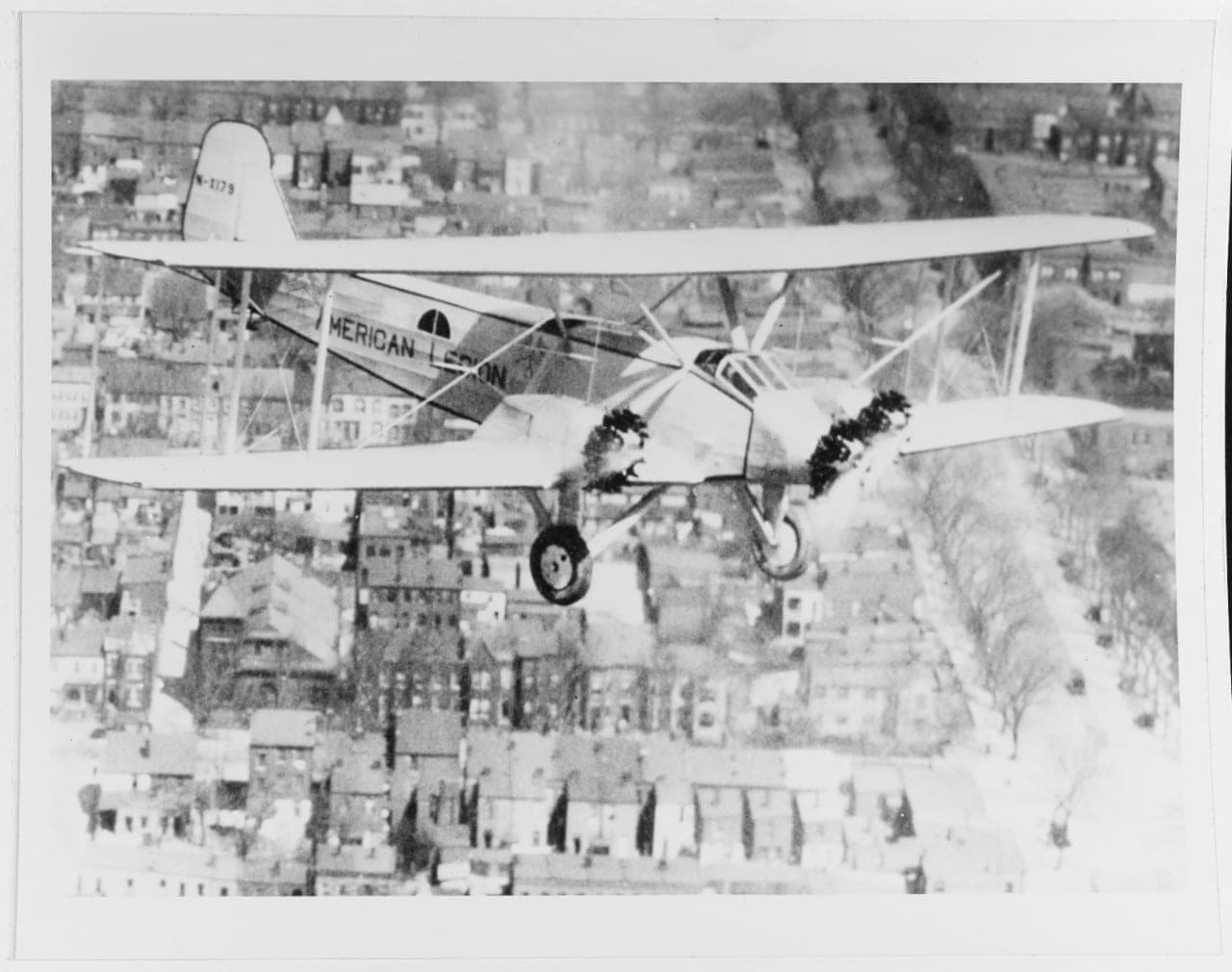
The Keystone Pathfinder American Legion, in which Noel Davis and Stanton Wooster were killed during a test flight in April 1927.early 1927 · Naval History and Heritage Command · Public domain April 26, 1927Langley Field, Virginia
Davis and Wooster are killed
The fully loaded American Legion crashes into a marsh on its final test flight.
April 28, 1927San Diego
The Spirit flies for the first time
May 8, 1927From Le Bourget
Nungesser and Coli vanish
L'Oiseau Blanc leaves Paris for New York and is never seen again.
May 10, 1927 – May 12, 1927
San Diego to New York, by way of St Louis
- San Diego to St Louis
- 14 h 25 min
- St Louis to New York
- 7 h 20 min
May 20, 1927 – May 21, 1927
New York to Paris, nonstop and alone
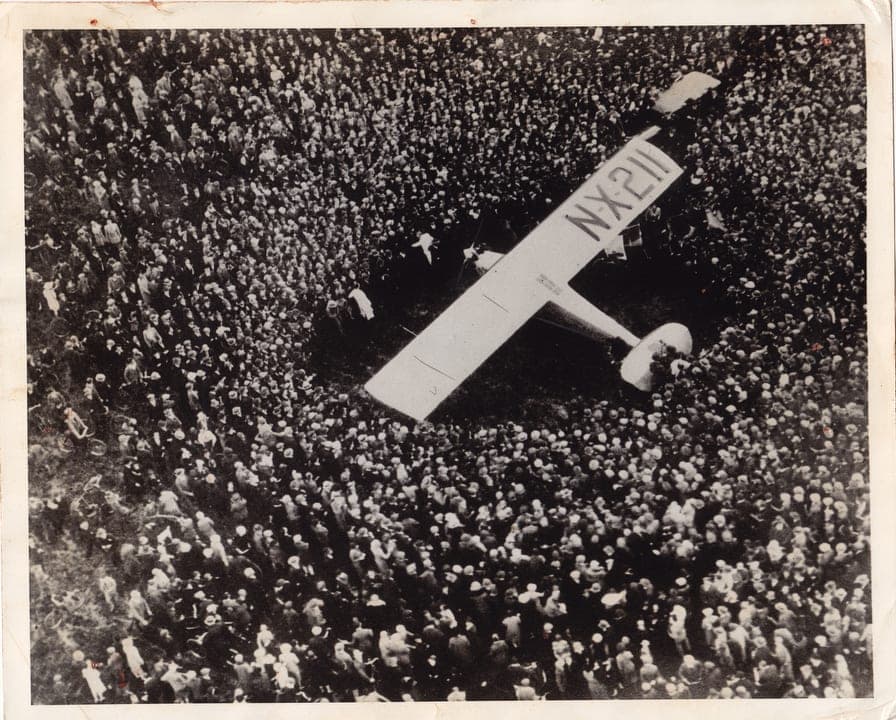
The crowd around Lindbergh on his arrival at Croydon aerodrome, south of London.29 May 1927 · Pacific and Atlantic Photos · Public domain May 29, 1927Croydon
Brussels, then London
June 11, 1927
Home to Washington
Brought back aboard USS Memphis, the Spirit is reassembled at Bolling Field; Coolidge presents the Distinguished Flying Cross.
June 16, 1927New York
The prize is awarded
Thirty-three and a half hours
Times on the American side are New York time; the landing time is Paris time. Between them lie about five hours of time zones and a night with no reliable clock but Lindbergh's own.
7:52 AM
Take-off from Roosevelt Field
On a soft runway, with a light tailwind, at the heaviest weight the aircraft had ever carried. The telephone wires are cleared by about twenty feet.
May 20, 1927
Across open water to Nova Scotia
The first long sea crossing tests the dead reckoning; the coast arrives within a few miles of where it should.
7:15 PM
Over St John's, Newfoundland
The last land before the ocean. He flies low over the harbour so that his passage will be reported.
- Hours in the air
- about 11½
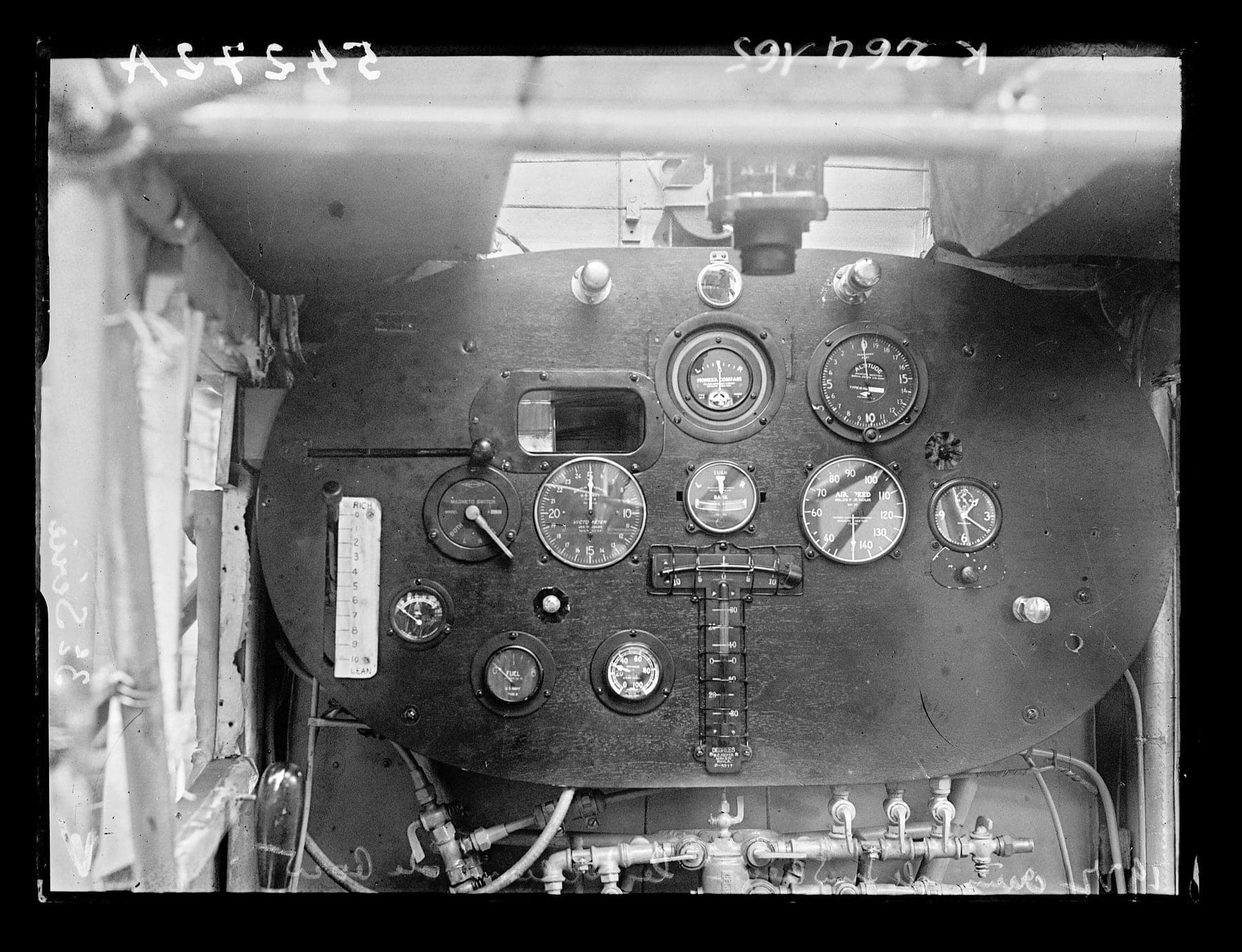
The Spirit's instrument panel photographed at Le Bourget after the flight.May 1927 · Agence Meurisse / Bibliothèque nationale de France · Public domain May 20, 1927 – May 21, 1927
Fog, storm cloud and ice
Climbing to about 10,000 ft to stay above the fog, he enters a towering cloud, sees ice forming on the struts by flashlight, and turns back to go round it.
May 21, 1927
The fight against sleep
Awake for well over a day and a half, he falls asleep at the controls for seconds at a time, flies down near the waves to keep alert, and senses presences in the fuselage behind him.
May 21, 1927
Landfall at Dingle Bay
After fishing boats that do not answer his shouted question, the coast of south-west Ireland: almost exactly where he meant to reach it.
- Off course
- under 2.6 nm
May 21, 1927
Cornwall, the Channel, Cherbourg
France at dusk, then the Seine to Paris.

The Spirit, registration N-X-211 on its wing, standing on the grass at Le Bourget in the days after the landing.May 1927 · Agence Meurisse / Bibliothèque nationale de France · Public domain 10:22 PMLe Bourget, Paris time
Landing at Le Bourget
- Time in the air
- 33 h 30 min
- Distance
- about 3,140 nm
Who was there
- Charles A. Lindbergh1902 to 1974
- Pilot, aloneAir-mail pilot, twenty-five years old, who proposed the single-engine, single-pilot approach every other entrant had rejected.
- Raymond Orteig
- Sponsor of the prizeFrench-born New York hotelier who offered $25,000 in 1919 and renewed the offer in 1925.
- Donald A. Hall
- Designer of the Ryan NYPRyan's engineer, who adapted the M-2 mail plane into a flying fuel tank in about two months.
- B. F. Mahoney
- Owner of Ryan Airlines
- Harold M. Bixby
- St Louis backerOne of the St Louis businessmen who financed the aircraft and gave it its name.
- Harry H. Knight
- St Louis backer
- James H. Kimball
- Weather Bureau forecaster, New YorkHis report of clearing weather over the North Atlantic on 19 May set the departure.
- Myron T. Herrick
- US ambassador to FranceMet Lindbergh at Le Bourget and put him up for the night.
- René Fonck
- Rival; French aceHis 1926 attempt ended in a take-off crash that killed two of his crew.
- Charles Nungesser
- Rival; lost at seaLeft Le Bourget with François Coli on 8 May 1927 and was never found.
- François Coli
- Navigator of L'Oiseau Blanc; lost at sea
- Clarence Chamberlin
- Rival; pilot of the ColumbiaFlew New York to Germany two weeks after Lindbergh, carrying the first transatlantic passenger.
- Richard E. Byrd
- Rival; commander of the AmericaLent Lindbergh the Roosevelt Field runway; reached France himself at the end of June.
Competing claims
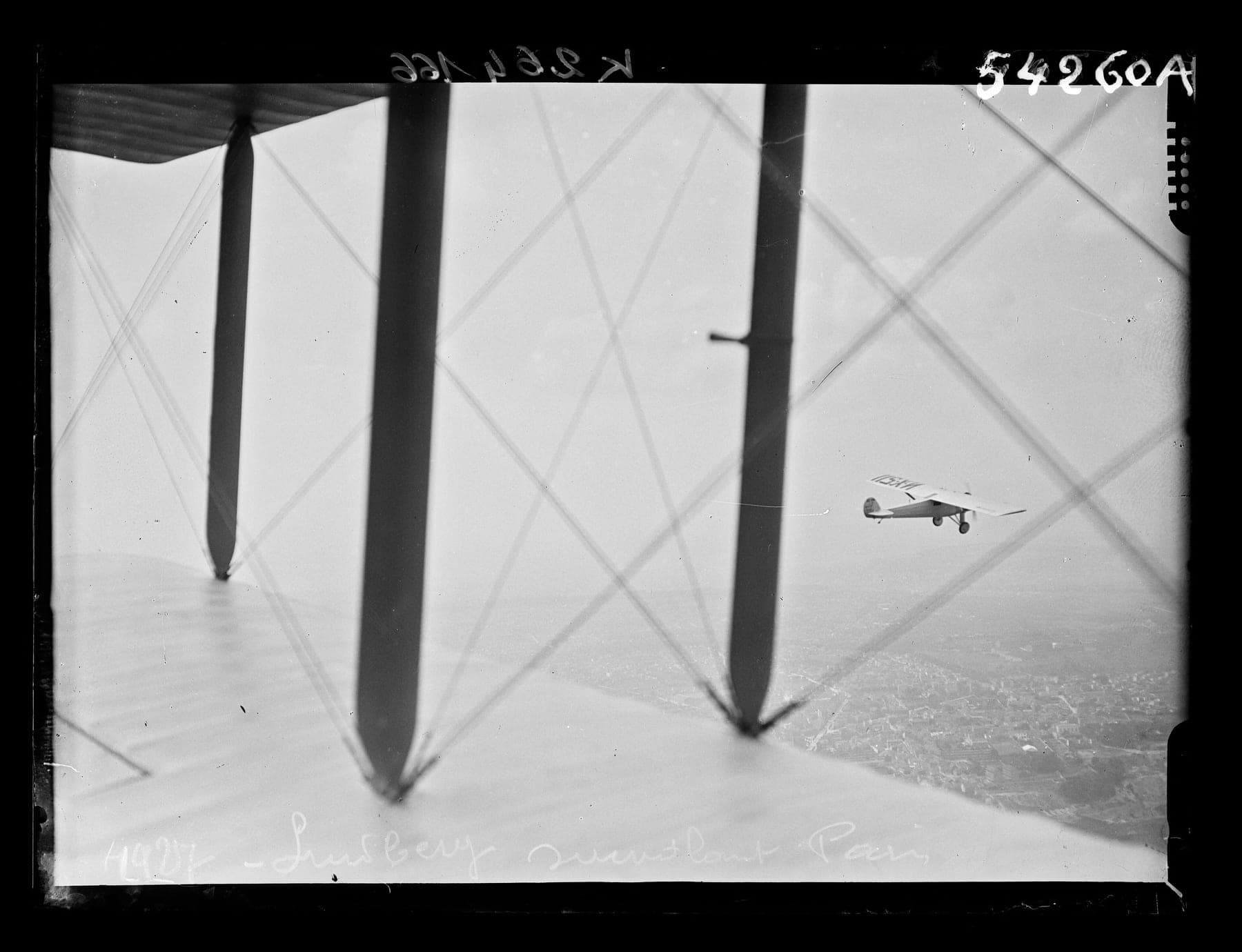
The Spirit of St. Louis photographed from another aircraft as Lindbergh flew over Paris in the days after his arrival.May 1927 · Agence Meurisse / Bibliothèque nationale de France · Public domain Charles Lindbergh
Accepted20 to 21 May 1927New York to Paris
The claim
The first solo nonstop crossing of the Atlantic, and the first nonstop flight between New York and Paris.
The evidence
Observed departure at Roosevelt Field, sightings over Nova Scotia, St John's and Ireland, a landing witnessed by perhaps a hundred thousand people, and the Orteig trustees' award. It is not a claim to the first transatlantic flight, which Lindbergh never made.
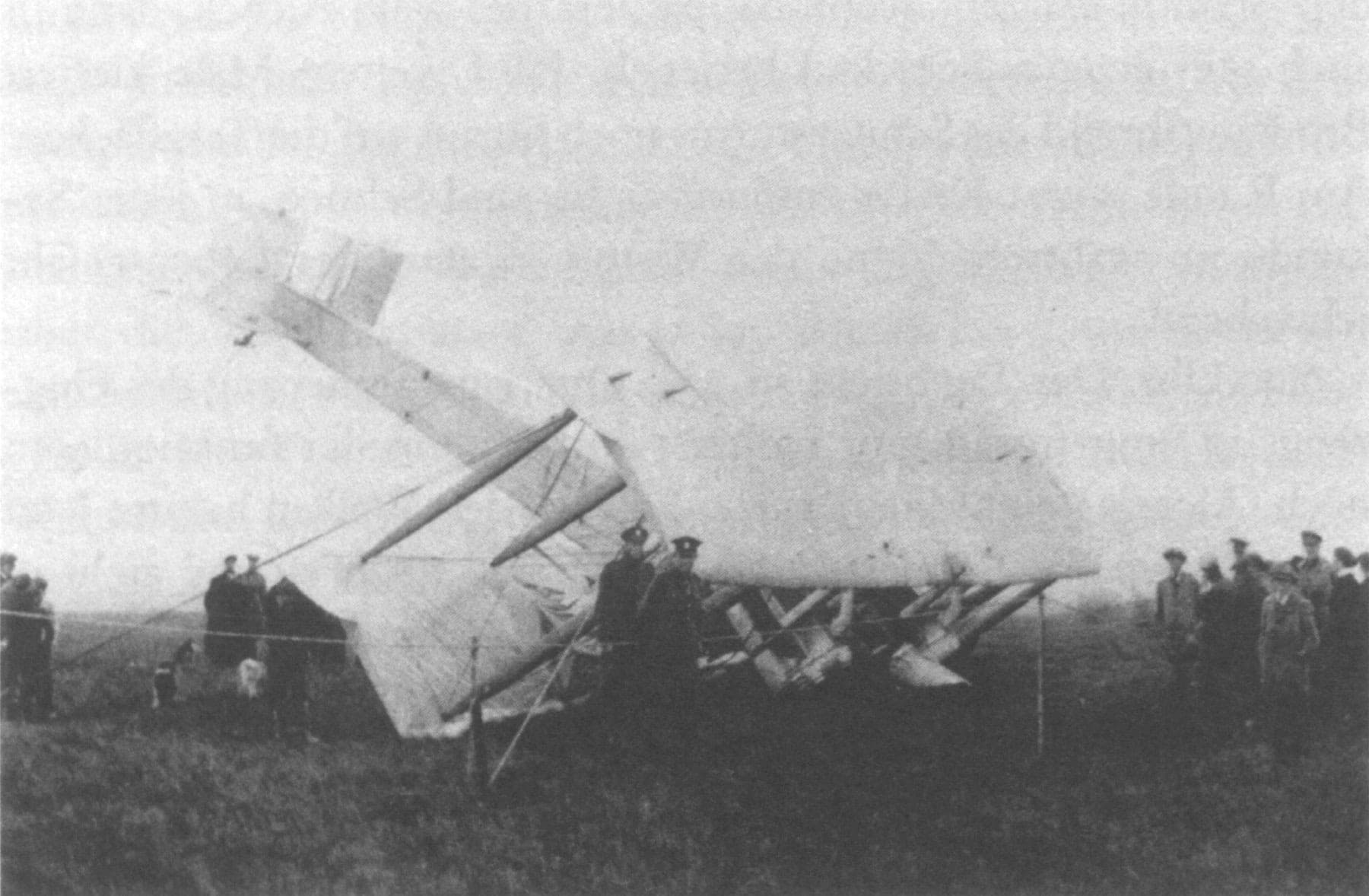
Alcock and Brown's Vickers Vimy nosed into the bog at Clifden, Ireland, at the end of the first nonstop transatlantic flight.15 June 1919 · Unknown author · Public domain John Alcock and Arthur Whitten Brown
Accepted14 to 15 June 1919St John's, Newfoundland, to Clifden, Ireland
The claim
The first nonstop crossing of the Atlantic by air.
The evidence
A two-man crew in a Vickers Vimy flew 1,640 nm in 15 hours 57 minutes and won the Daily Mail's £10,000 prize. Uncontested: eight years before Lindbergh, and half his distance.
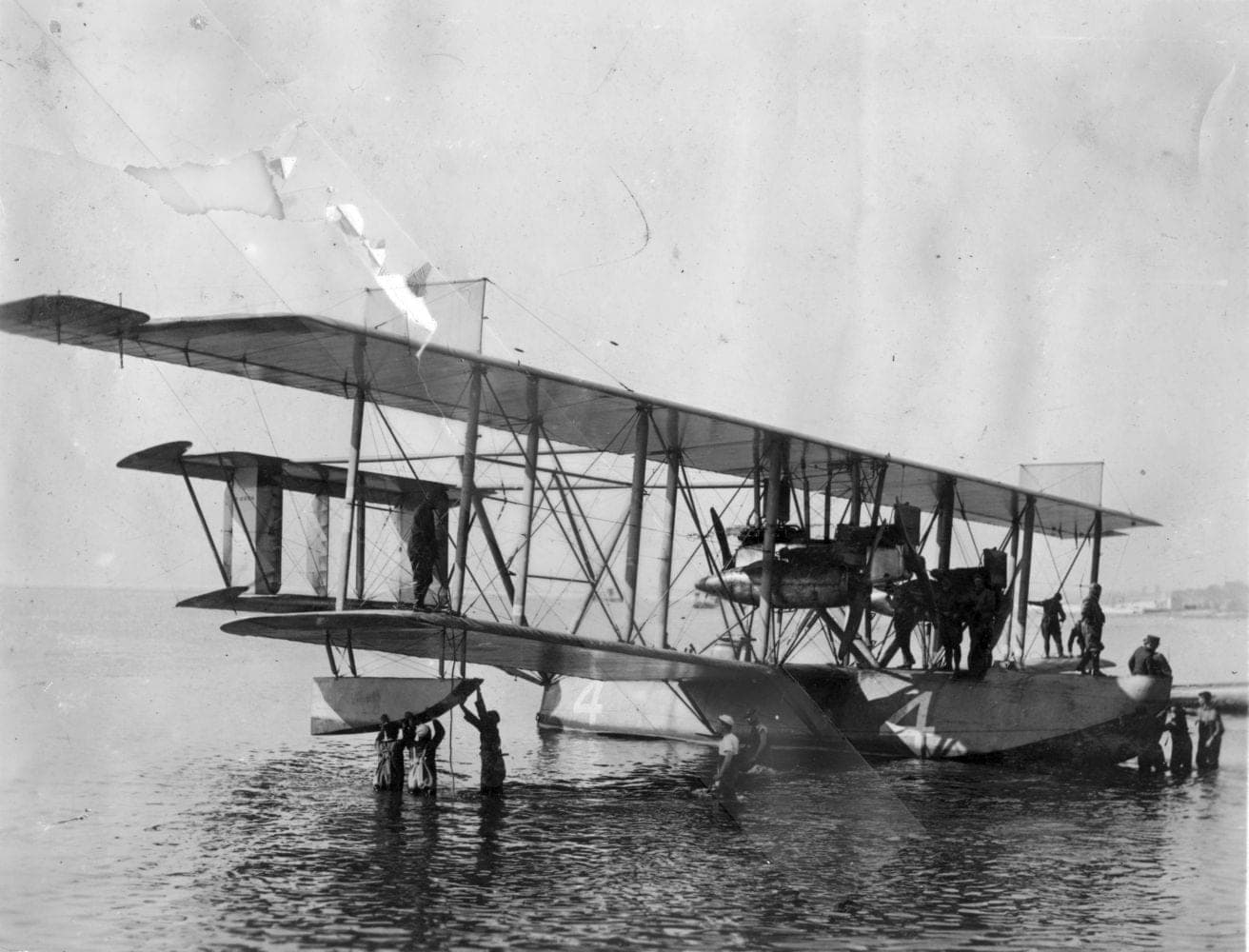
The US Navy flying boat NC-4, which crossed the Atlantic in stages in May 1919.1919 · San Diego Air & Space Museum Archives · Public domain US Navy NC-4 (Albert C. Read and crew)
AcceptedMay 1919New York to Lisbon, via the Azores
The claim
The first crossing of the Atlantic by air, in stages.
The evidence
A naval operation with ships stationed along the route; the flying boat reached Lisbon on 27 May. First to cross, but not nonstop, and not the flight Orteig's prize described.
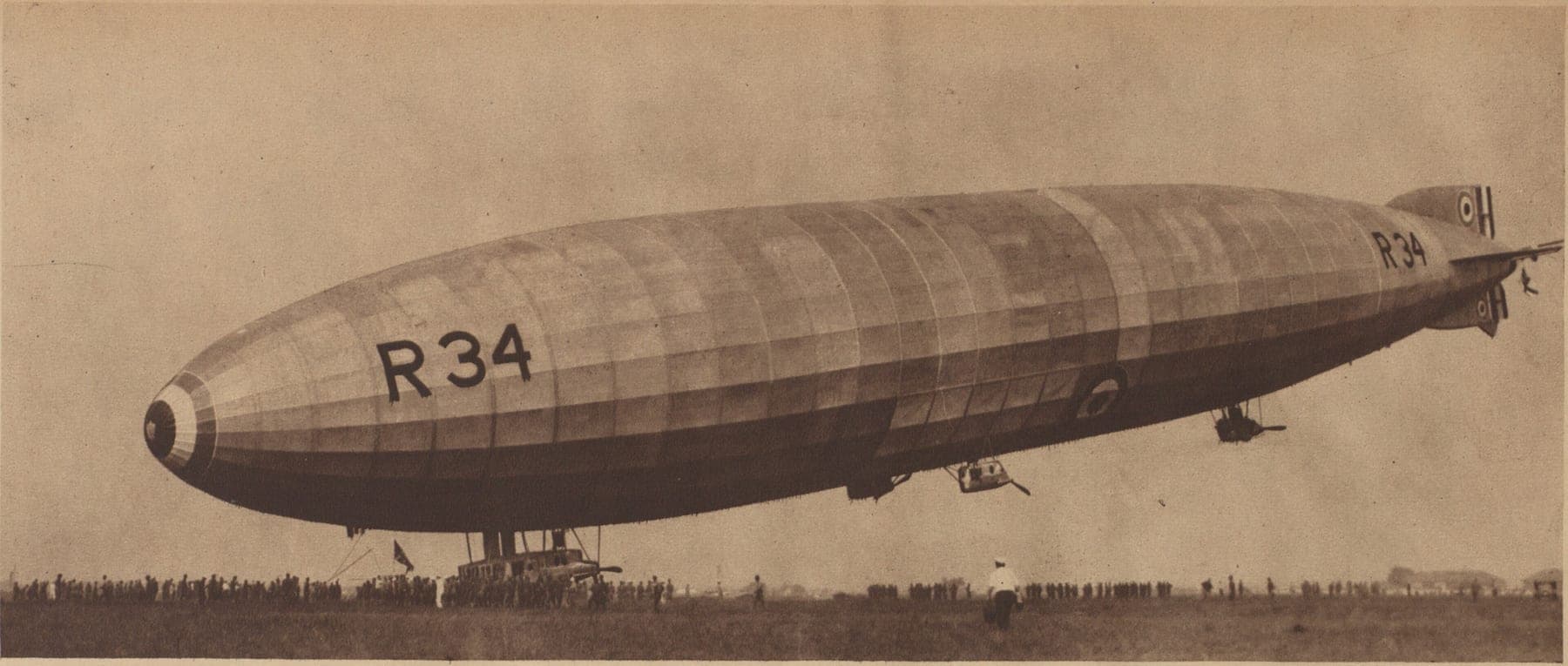
The British airship R34 landing on Long Island in July 1919 after the first east-west crossing of the Atlantic by air.July 1919 · New-York Tribune · Public domain Airship R34
AcceptedJuly 1919Scotland to Long Island and back
The claim
The first east-to-west crossing of the Atlantic by air, and the first return crossing.
The evidence
A British rigid airship with a crew of about thirty; it landed at Mineola, Long Island, and flew home again. Lighter than air, crewed, and a different kind of achievement.
Clarence Chamberlin and Charles Levine
Accepted4 to 6 June 1927New York to Eisleben, Germany
The claim
A longer nonstop flight than Lindbergh's, and the first transatlantic passenger.
The evidence
3,399 nm in the Bellanca Columbia, two weeks after Lindbergh. True on both counts: and it came second, which is why the Orteig Prize was not in question.
Charles Nungesser and François Coli
Disputed8 to 9 May 1927Paris towards New York
The claim
Advanced by later researchers rather than by the airmen: that L'Oiseau Blanc reached the far side of the Atlantic, near Newfoundland or Saint-Pierre-et-Miquelon, before it was lost, which would make it the first east-to-west aeroplane crossing, two weeks before Lindbergh.
The evidence
Reports at the time of an aircraft engine heard over Newfoundland, and repeated searches since; no wreckage has ever been confirmed. It remains open, and unproven.
Airports
Related entries
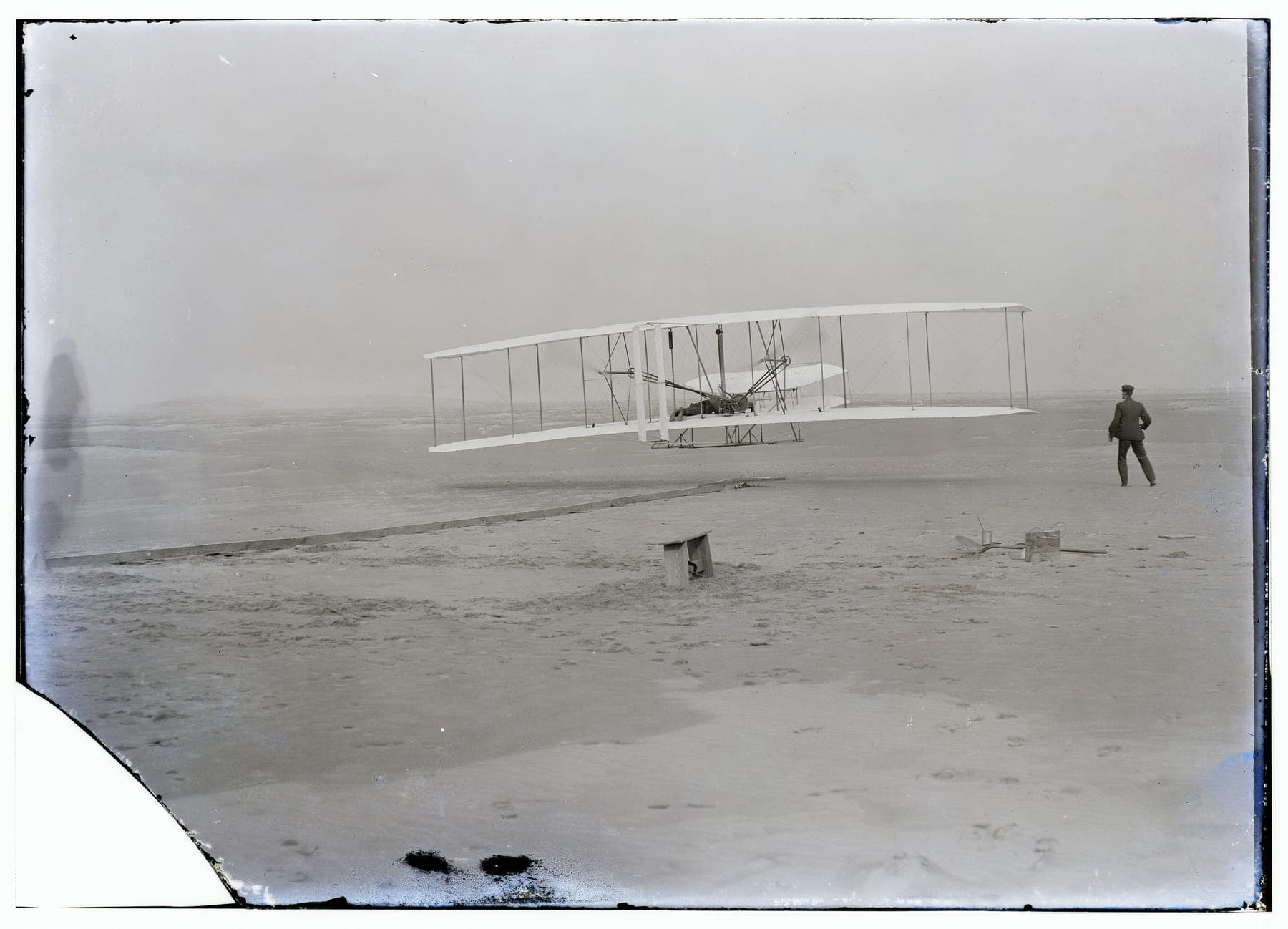
- Ryan NYP "Spirit of St. Louis" (collection object A19280021000), Smithsonian National Air and Space Museum
- Charles Lindbergh, Smithsonian National Air and Space Museum
- Lindbergh lands in Paris, HISTORY
- Charles Lindbergh, Wikipedia
- Spirit of St. Louis, Wikipedia
- Orteig Prize, Wikipedia
- Transatlantic flight of Alcock and Brown, Wikipedia
- L'Oiseau Blanc, Wikipedia
- Transatlantic flight, Wikipedia
Checked September 10, 2026