Airline
Air France
AF · AFR · AIRFRANSFranceAir France to KLM
Société Air France, SA
268
Aircraft
In service at December 31, 2025
42.3M
Passengers
in 2025
Identity
- IATA
- AF
- ICAO
- AFR
- Callsign
- AIRFRANS
- Founded
- August 30, 1933
- First service
- October 7, 1933
Company
- Legal name
- Société Air France, SA
- Headquarters
- Roissypôle, Charles de Gaulle Airport, Tremblay-en-France
- Country
- France
- Parent
- Air France to KLM
- Status
- Operating
Network
- Alliance
- SkyTeam, founding member (2000)
- Load factor
- 86.7 %
Hubs and bases
Paris to Charles de GaulleCDG
Hub · since 1974
Paris to OrlyORY
Secondary hub
Nice Côte d'AzurNCE
Base
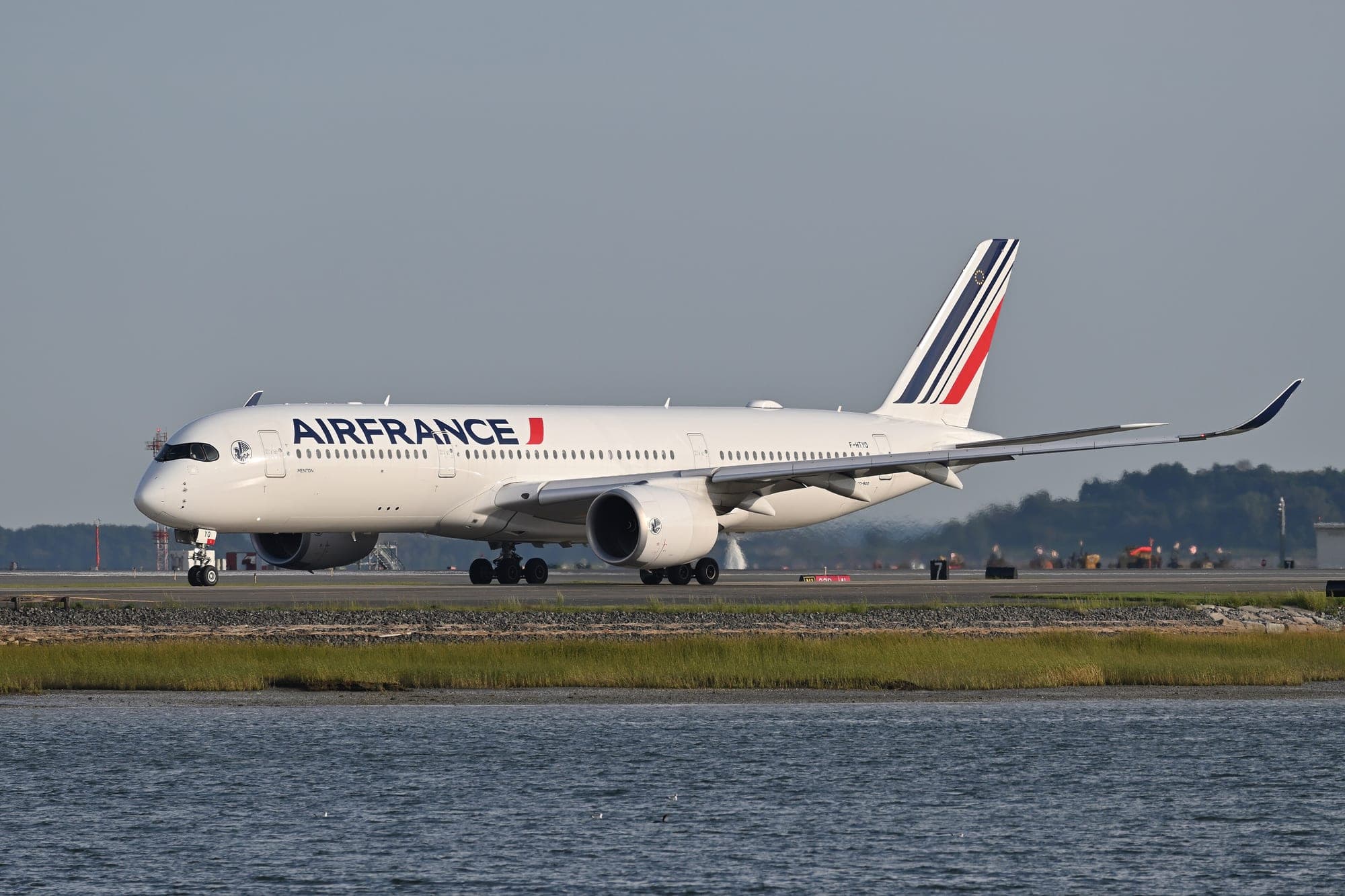
Air France is the flag carrier of France and, with KLM, one of the two airlines of the Air France to KLM group. It is AF to the booking systems, AFR to air traffic control, and AIRFRANS on the radio. Its home is Paris to Charles de Gaulle, where it runs the largest connecting hub in continental Europe, with a second and more domestic operation at Orly, the airport it left half a century ago and never entirely gave up.
It was formed on 30 August 1933 out of five struggling French airlines, and inherited from one of them, Air Orient, the winged seahorse that has been on its aircraft ever since. Nationalised after the Second World War and run as a state company for the next fifty years, it carried French industrial ambition as visibly as it carried passengers: the Caravelle, the first jet airliner France designed and sold abroad; Concorde, flown in scheduled service by only two airlines in history, of which it was one.
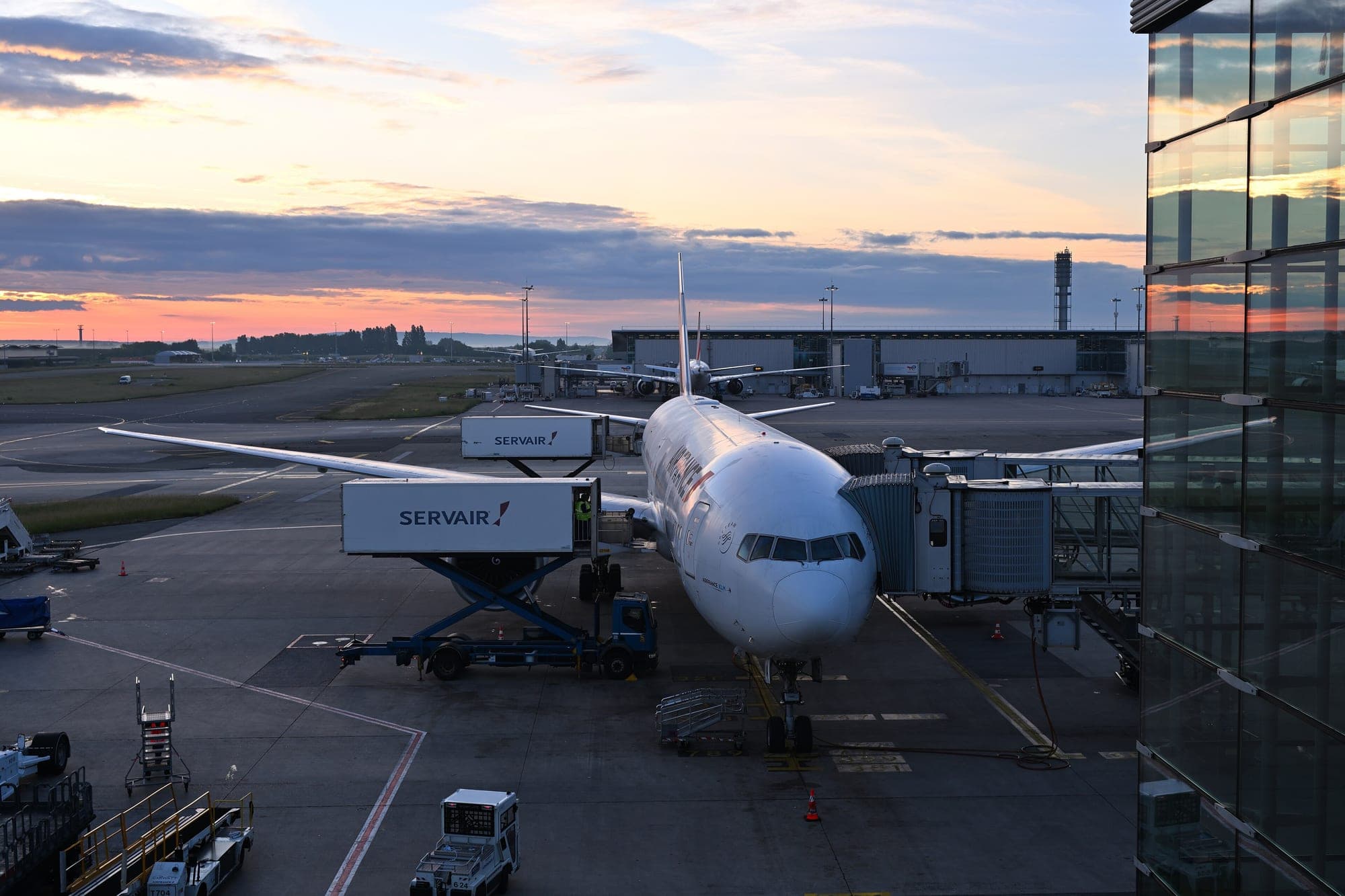
At 31 December 2025 the airline and its regional subsidiary operated 268 aircraft, and over that year its passenger network carried 42.3 million people at a load factor of 86.7 per cent. The company behind the name is no longer French alone. Since 5 May 2004 Air France has been one half of Air France to KLM, a Franco-Dutch group in which two national airlines kept their names, their crews and their liveries and share almost everything behind them.
Formation
France entered the 1930s with too many airlines and not enough traffic. Five companies were named in the merger (Air Orient, Air Union, the CIDNA, the Farman company and Aéropostale) each subsidised, each losing money, and by 1933 the government had lost patience with paying five times for one network. The genealogy below traces the three decades of mergers, syndicates and colonial subsidiaries that produced them, and the further consolidation of 1941 that followed.
The merged company was constituted on 30 August 1933 and took a name proposed by a journalist, Georges Raffalovitch. Air France began flying on 7 October from Le Bourget, with a fleet of a few dozen aircraft of a dozen types and a route map that was really an inventory of French foreign policy: the Mediterranean, North and West Africa, the Levant, Indochina, South America. From Air Orient it took the emblem: a winged seahorse, drawn for the Indochina line, which the staff would come to call *la crevette*, the shrimp, and which the company has never replaced.
The pre-war fleet was mostly French and mostly slow. The Potez 62, a high-wing twin with a wooden fuselage carrying fourteen to sixteen passengers in two compartments, cruised at around 150 kt and was the workhorse of the European and colonial lines. The network was extended rather than modernised, and the routes east took days. Then came the war: the company moved what it could to Casablanca, and what remained in France was requisitioned, dispersed or destroyed.
Nationalisation and reconstruction
On 26 June 1945 the whole of French air transport was nationalised, and a decree that December handed Air France the management of the national network. The company was reconstituted as Société Nationale Air France on 1 January 1946, and three years of extraordinary reconstruction followed. It opened a city terminal at Les Invalides, in the middle of Paris, with coaches out to Le Bourget. It hired its first female flight attendants in 1946. On 1 July of that year it began flying Paris to New York with Douglas DC-4s, stopping at Shannon and Gander, in a little under twenty hours.
The statute that governed the airline for the next half-century came on 16 June 1948, when an act of parliament created the Compagnie Nationale Air France with the state holding seventy per cent of the capital: a share that would in practice grow to very nearly all of it. Max Hymans was appointed president that August and stayed thirteen years; the modernisation of the fleet, and eventually the decision to buy jets, belong to him.
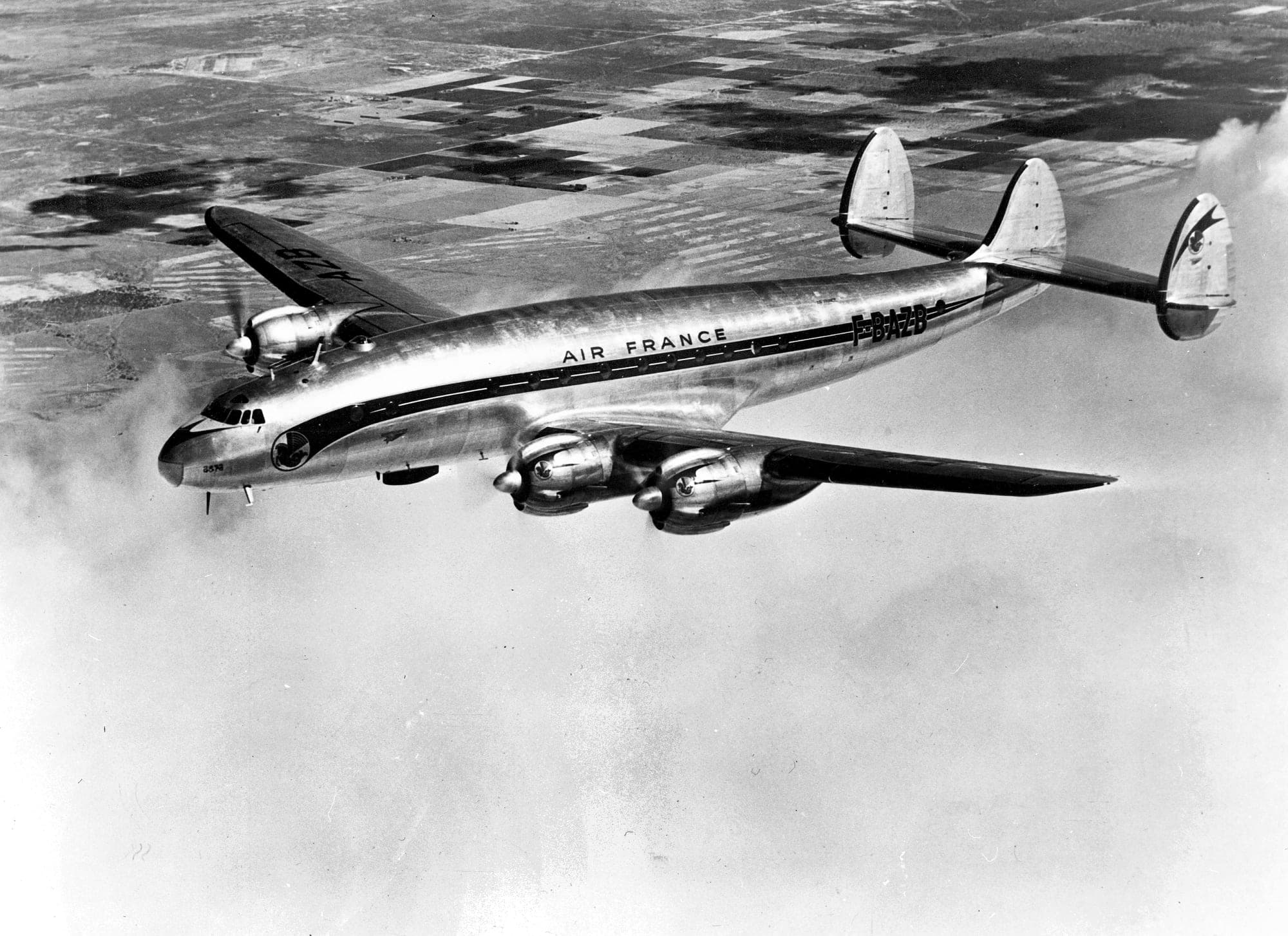
By 1948 the airline was flying about 130 aircraft, one of the largest fleets in the world, and claiming the longest network. From 1947 the Lockheed Constellation and then the Super Constellation carried the long-haul routes, pressurised, four-engined, triple-finned, and fast enough to make North America a single overnight rather than an expedition. They served until 1965, by which time the aircraft beside them on the apron were jets.
The jet age
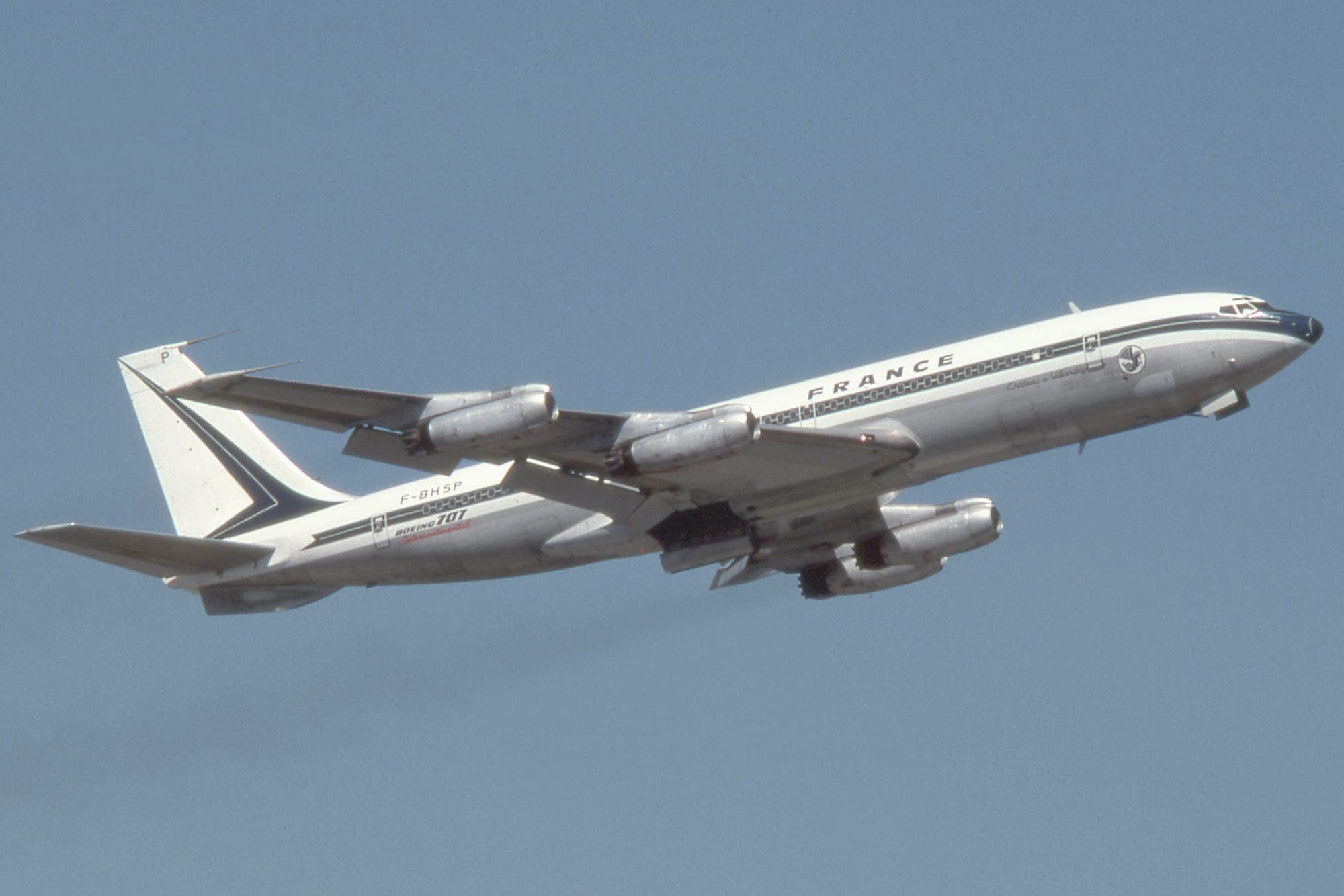
Air France reached the jet age early and by accident of nerve: in August 1953 it put the de Havilland Comet 1A on Paris to Rome to Beirut, months before the type was grounded worldwide. The operations and engineering base had moved to the new Orly South terminal in 1952, and the airline spent the rest of the decade waiting for jets that worked.
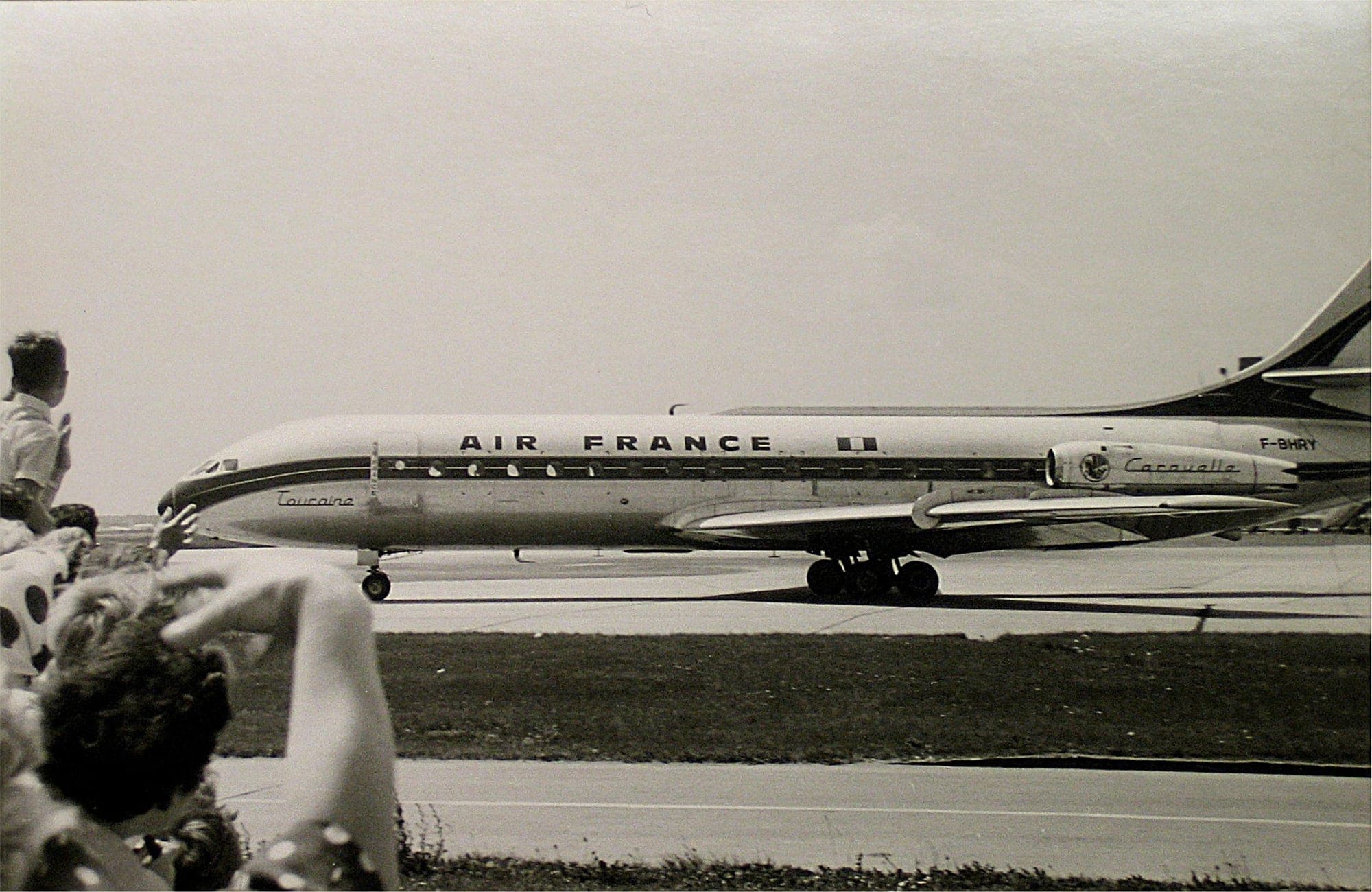
They came from Toulouse. The Sud Aviation Caravelle (twin-engined, engines mounted at the tail so the wing stayed clean, five seats abreast) was ordered by Air France in 1956 and entered revenue service in 1959, on Paris to Rome to Athens to Istanbul. The airline named each aircraft after a French province: *Alsace*, *Lorraine*, *Touraine*, *Picardie*. The Caravelle was quiet where the first jets were loud and comfortable where they were cramped, it sold to airlines on every continent, and it settled the question of whether France could build and export a modern airliner. The Boeing 707 arrived in parallel for the long-haul routes, and continuous jet operation dates from 1960.
The same years brought the least aeronautical part of the story. French governments spent the 1960s dividing the world between their airlines by decree: the domestic network went to Air Inter in 1960, and from 1963 whole regions (West and southern Africa, Australia, the Pacific, much of south-east Asia) were transferred to the private UTA. Air France grew inside the space it was allotted, and when the policy was relaxed in 1986 it found itself competing on its own routes with a rival the state had built.
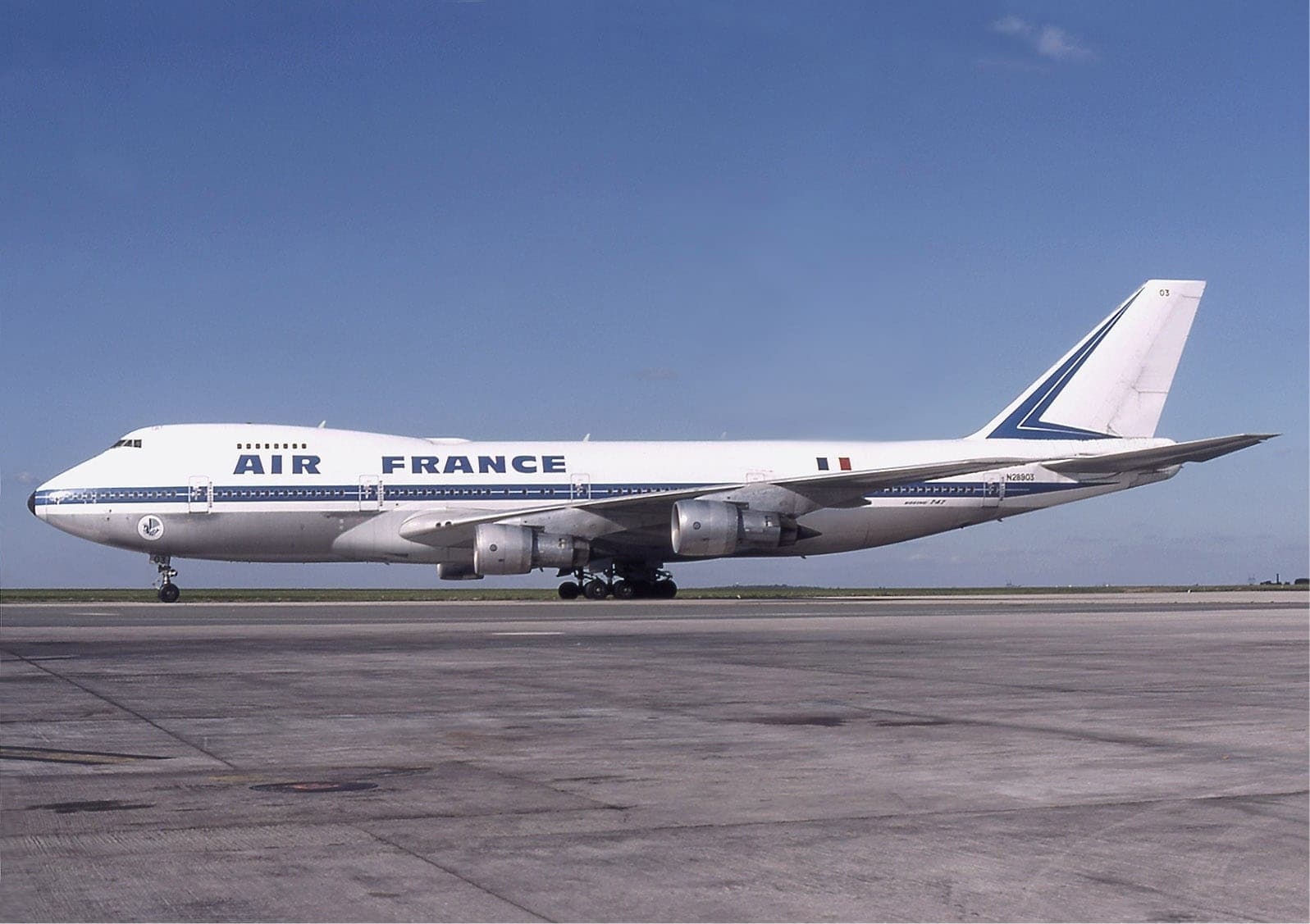
In 1974 the airline began moving to the new Charles de Gaulle airport at Roissy, north of Paris, and became the first operator of the Airbus A300, the twin-engined widebody that started Airbus. The Boeing 747 had arrived in 1970 and would eventually give Air France one of the largest jumbo fleets in the world: thirty-three of them by the airline's fiftieth anniversary in 1983, when it flew about a hundred jets to 150 destinations in 73 countries with more than 34,000 staff.
Supersonic service
On 21 January 1976, at the same hour as a British Airways Concorde left London for Bahrain, Air France's F-BVFA lifted off from Charles de Gaulle for Rio de Janeiro by way of Dakar. Supersonic scheduled service had begun, and only two airlines in the history of aviation would ever operate it.
The route that mattered was the North Atlantic, and it took American permission. Washington Dulles came on 24 May 1976; New York, held up by noise objections, on 22 November 1977. Paris to New York took about three hours and twenty minutes at twice the speed of sound, against seven or eight for a subsonic aircraft: the one product in commercial aviation that could not be matched at any price. Air France flew seven Concordes, ran services to Mexico City by way of Washington, and chartered the aircraft widely; the fleet never made the economic case its designers had promised, and both operators effectively flew it as a prestige service with a small, loyal and very rich clientele.
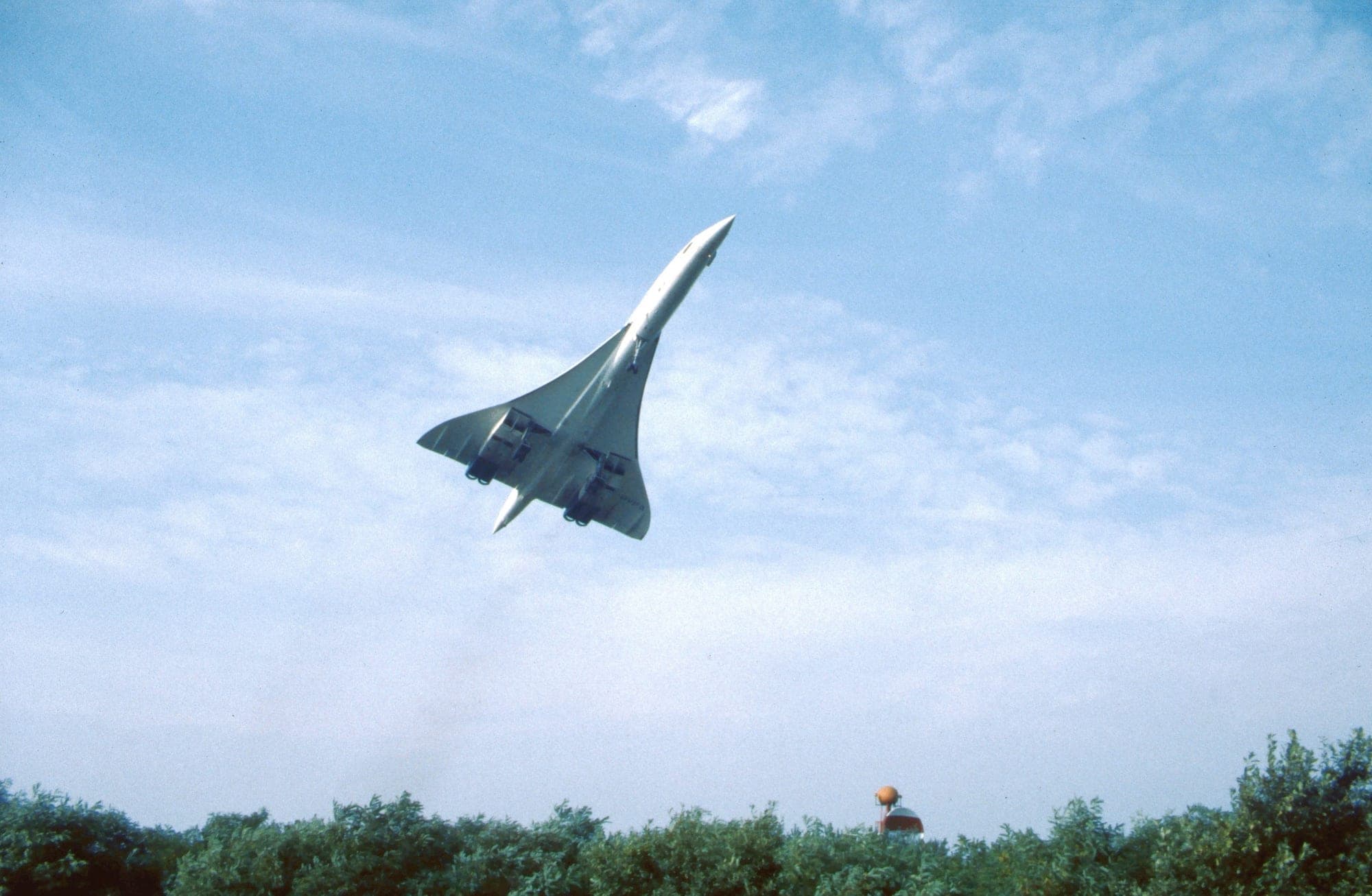
It ended in two stages. On 25 July 2000 the Concorde operating flight AF4590 ran over a strip of metal on the runway at Charles de Gaulle, burst a tyre, ruptured a fuel tank and crashed into a hotel at Gonesse two minutes after take-off, killing all 109 people aboard and four on the ground. The type was grounded, modified (Kevlar-lined tanks, burst-resistant tyres) and returned to service in 2001 into a transatlantic market that had collapsed. Air France withdrew Concorde in late May 2003, British Airways that October, and the fastest airliners ever flown in commercial service went to museums, one of them at Le Bourget within sight of where Air France started.
Consolidation and merger
The policy of dividing France between three airlines was undone in a single decision. On 12 January 1990 the operations of state-owned Air France, semi-public Air Inter and private UTA were merged into one enlarged company, on the reasoning that a European air transport market about to be liberalised would reward scale and punish a national carrier kept deliberately small. A holding company, Groupe Air France, followed in 1994; Air Inter Europe was absorbed outright in 1997; and the hub-and-spoke operation at Charles de Gaulle, banks of arrivals and departures timed to connect with each other, was built in those same years.
Privatisation came next, cautiously. The government approved a partial sale in February 1999 and the shares were listed in Paris on the 22nd. In June the airline signed a transatlantic partnership with Delta Air Lines, and on 22 June 2000 that partnership became SkyTeam, founded with Delta, Aeroméxico and Korean Air and now one of the three global alliances.
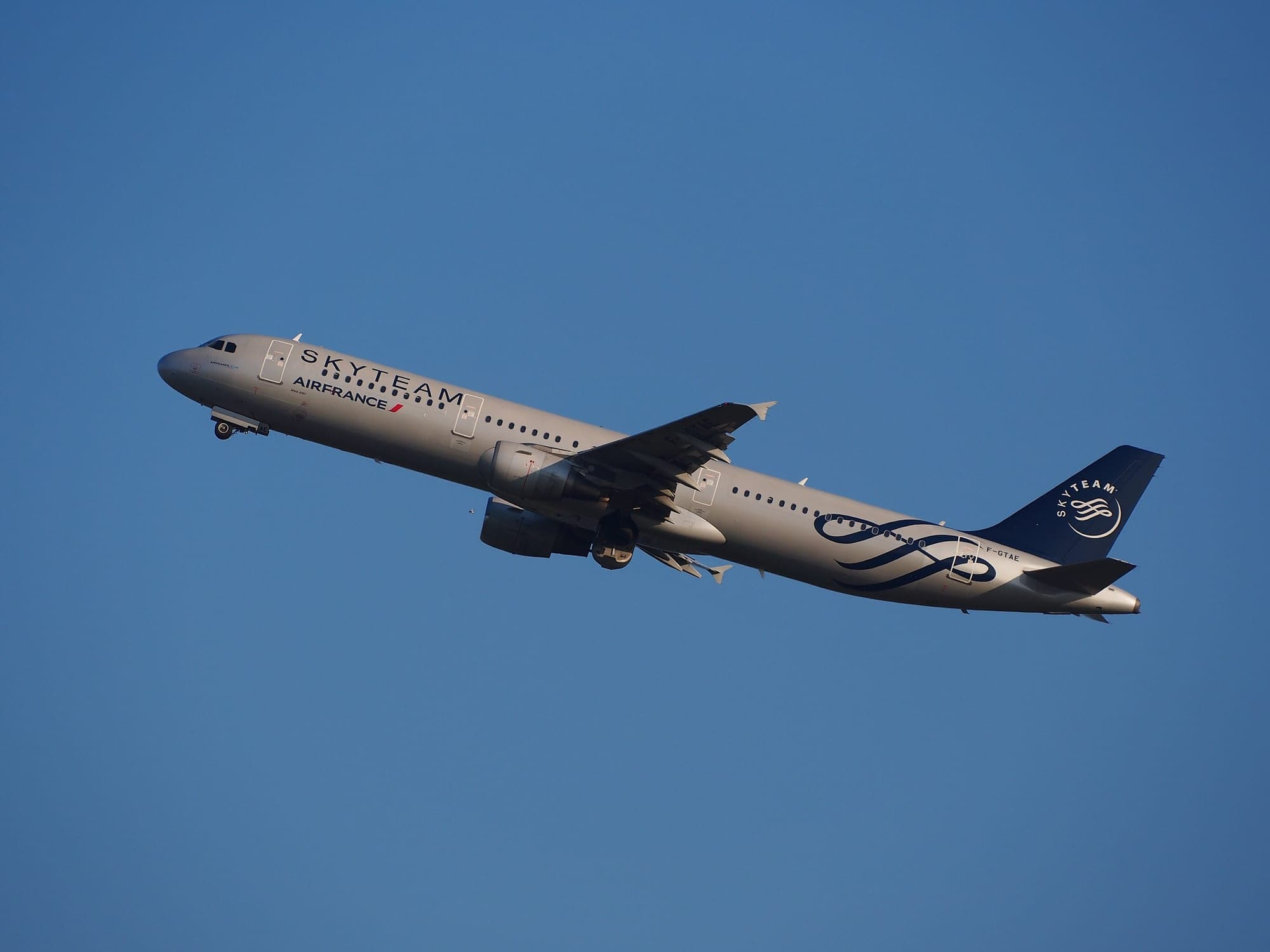
The decisive move was the merger with KLM, announced on 30 September 2003 and completed on 5 May 2004. The structure was novel and has held: one listed holding company, Air France to KLM, owning two airlines that kept their names, their national identities, their hubs and their crews while sharing network planning, fleet strategy, maintenance and sales. Former Air France shareholders held 81 per cent of the new group at the outset, and the French state's stake fell from 54.4 per cent of the old company to 44 per cent of the new one and then, through later sales, to well under a quarter, enough to make the merger, in effect, the privatisation. The state remains the group's largest shareholder.
Air France to KLM was for a time the largest airline group in the world by operating revenue. In 2025 it carried 102.8 million passengers across all its airlines and reported record revenues of €33.0 billion; Air France's own share of that was 42.3 million passengers. The group is run by Benjamin Smith; Air France has been led since December 2018 by Anne Rigail.
Network and hubs
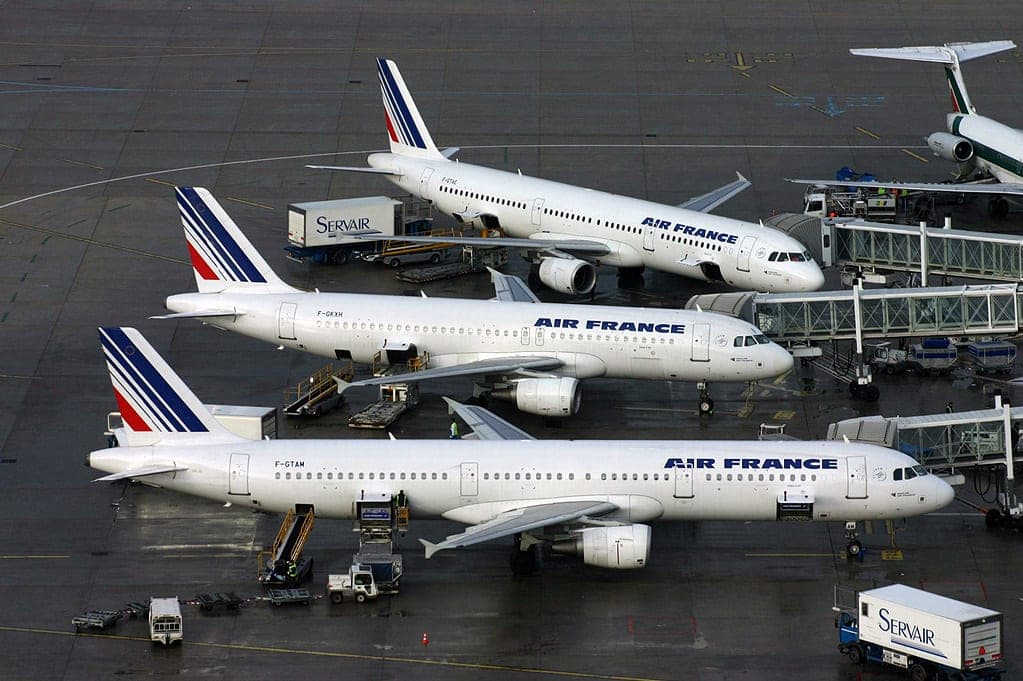
Air France is built around one airport. Charles de Gaulle is a connecting hub in the strict sense: long-haul arrivals and departures are grouped into banks, and the medium-haul and regional flights are timed to feed them, so a passenger from a European or French regional city can reach almost anywhere the airline flies with one stop in Paris. Terminal 2 is effectively the airline's own building, 2E and 2F for the long-haul and Schengen operations, with the group's maintenance, catering and headquarters on the same site at Roissypôle.
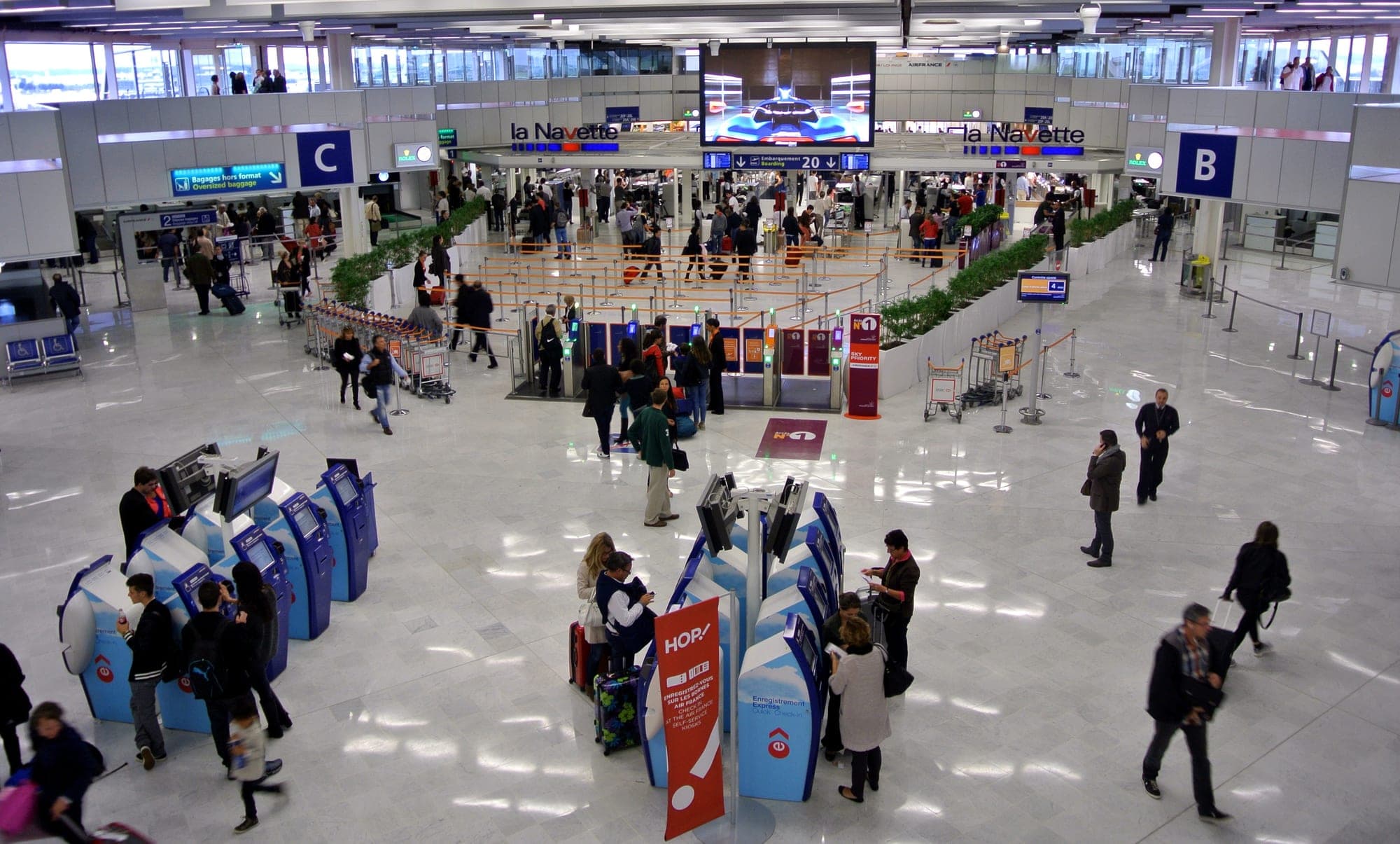
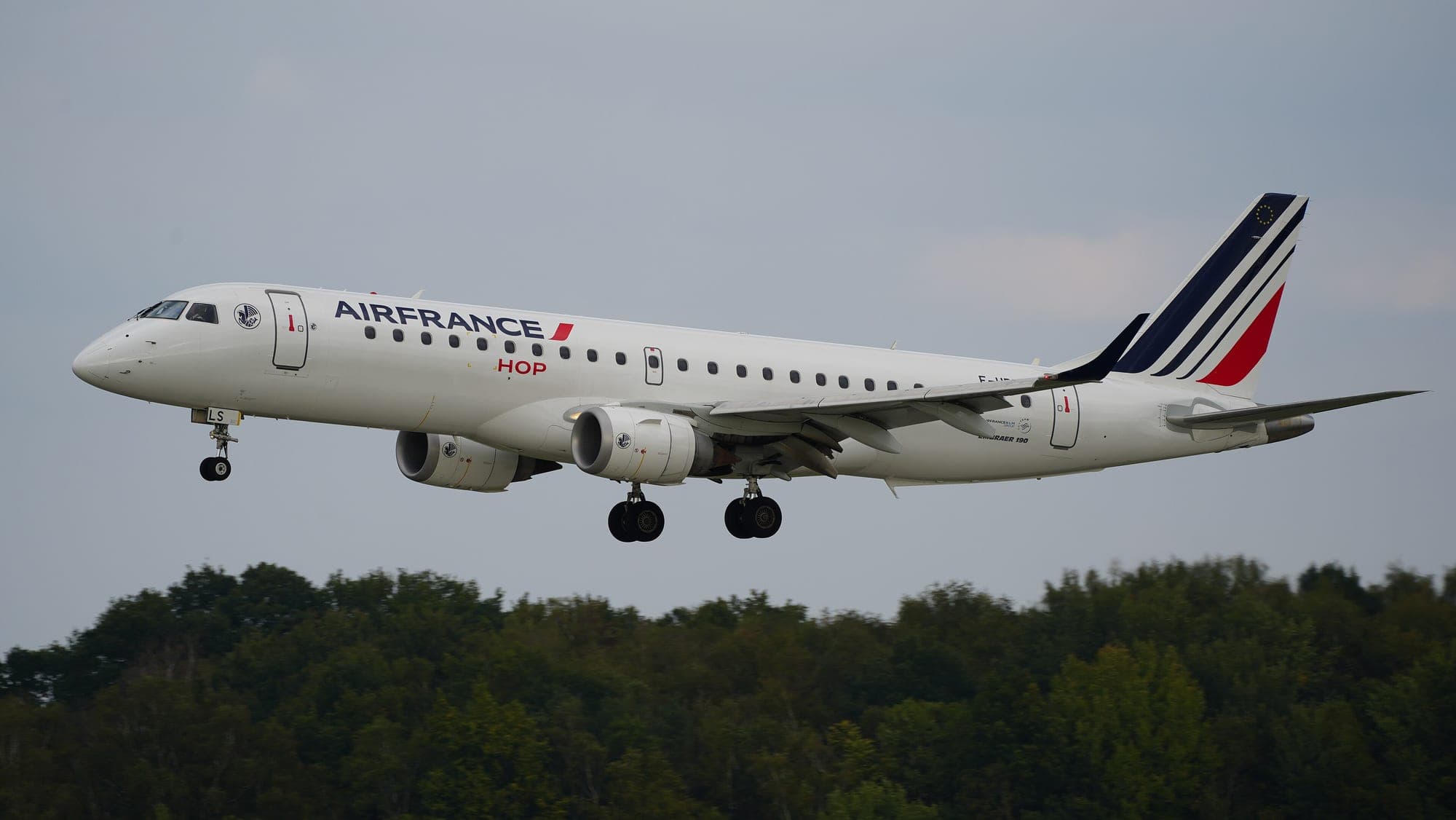
Orly, the airport Air France left for Roissy in 1974, kept the traffic that has no reason to connect: Corsica, the French overseas departments, the Maghreb, southern Europe and the domestic trunk routes. It is also the base of Transavia France, the group's low-cost airline, which has taken over most of the point-to-point flying that a full-service network carrier can no longer do profitably. Regional flying is done by Air France Hop with Embraer jets, and Nice is a crew and aircraft base rather than a connecting hub.
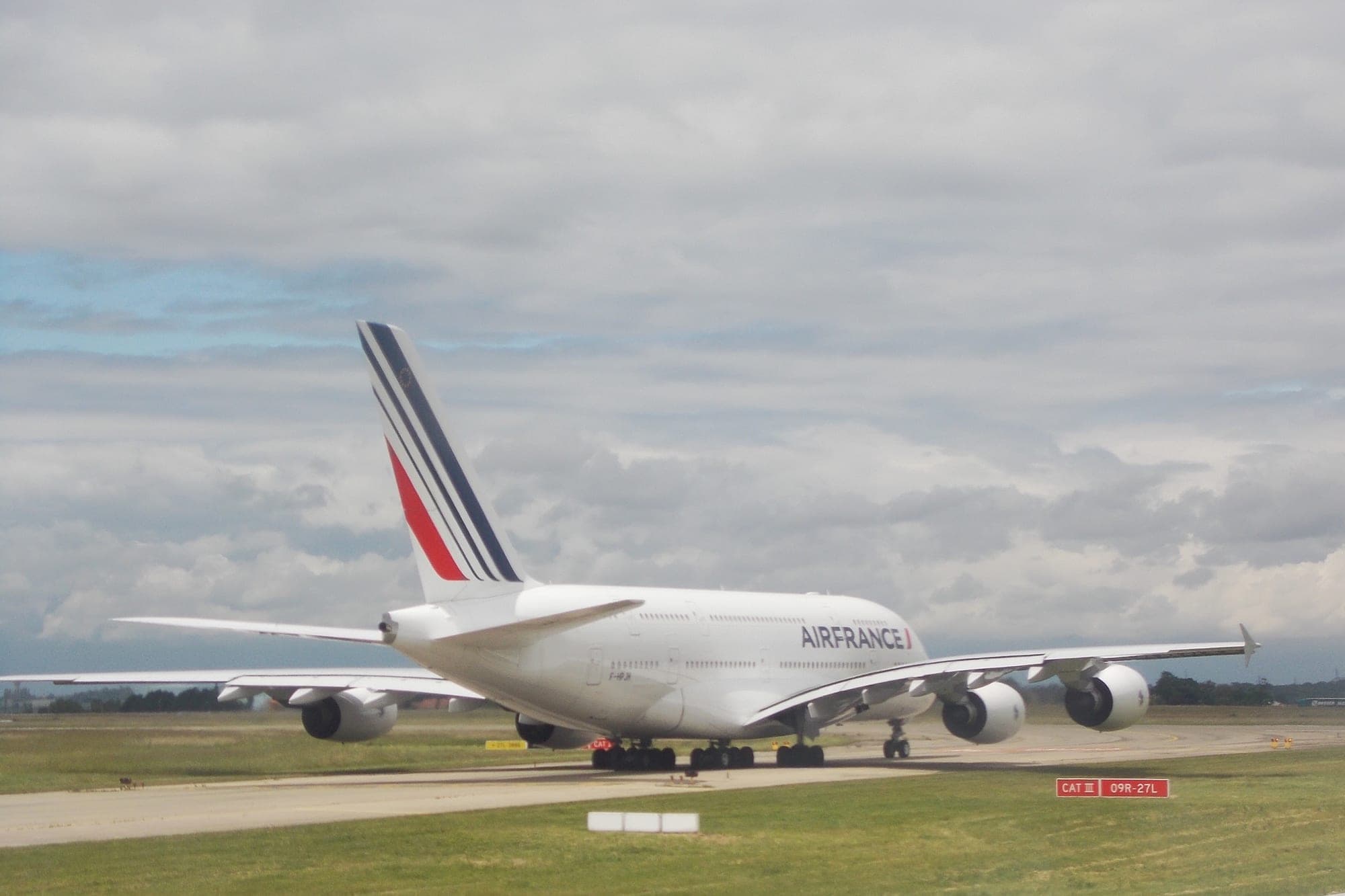
The alliance and the joint ventures extend the map well past the fleet. Air France is a founding member of SkyTeam, and its transatlantic business is run as a joint venture with Delta, KLM and Virgin Atlantic in which capacity, schedules and revenue are shared rather than merely codeshared. Against this the airline's exposure is unusually wide: French overseas territories and West and central Africa are markets where it has flown continuously since before the war, and where a European rival has no comparable presence.
In 2025 Air France's passenger network carried 42.3 million people, 17.2 million of them on long-haul routes and 25.1 million on short and medium-haul, filling 86.7 per cent of the seats it offered.
Fleet
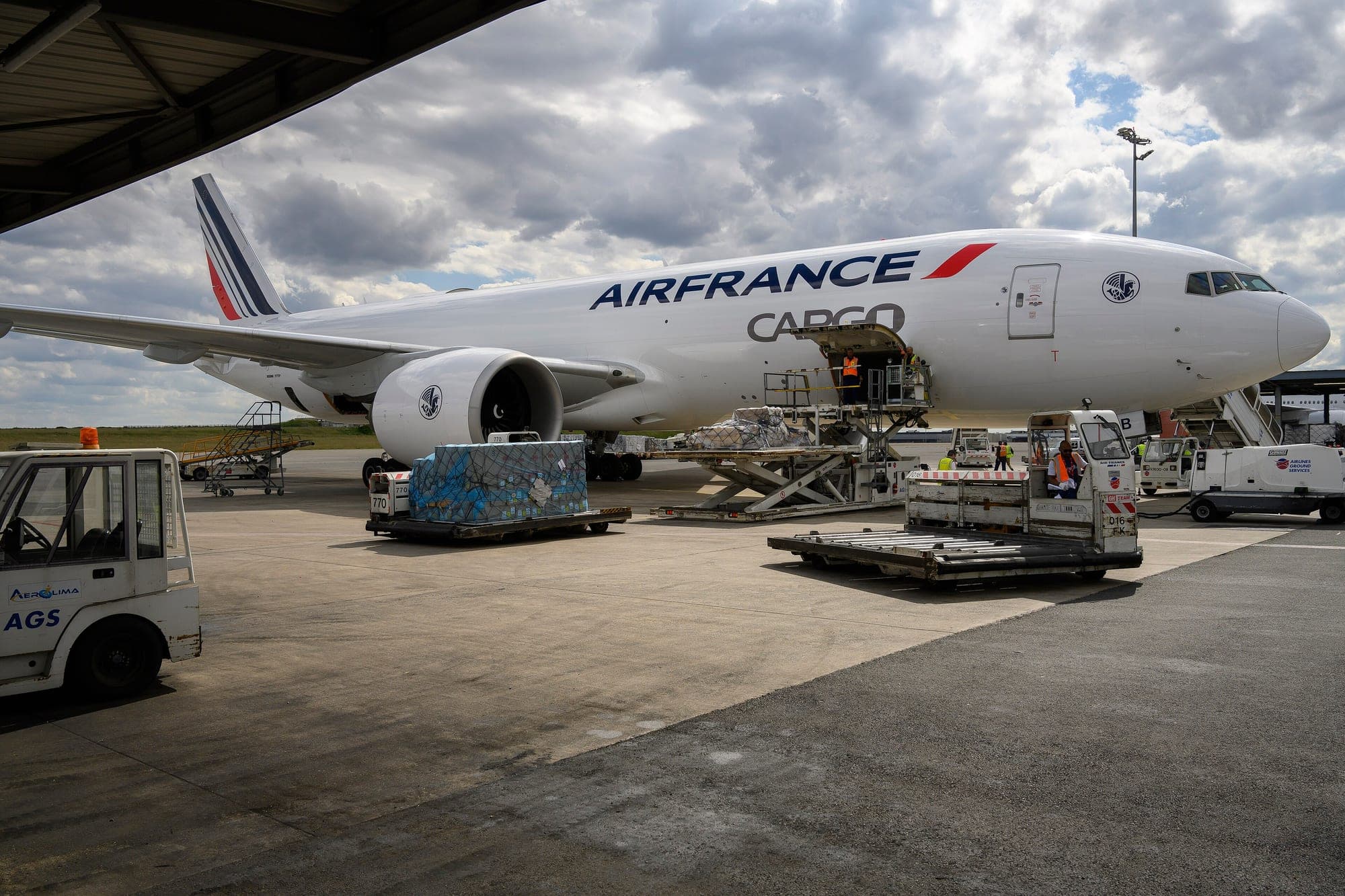
At 31 December 2025, Air France and its regional subsidiary operated 268 aircraft: 120 long-haul, 107 medium-haul, 39 regional and two freighters. The long-haul fleet rests on two families (61 Boeing 777s, of which 43 are the -300ER, and a growing line of 41 Airbus A350-900s) with ten Boeing 787-9s and the last eight Airbus A330-200s beside them. The medium-haul fleet is now led by the Airbus A220-300, of which 52 were in service, and the remaining A318s and A319s are down to single figures.
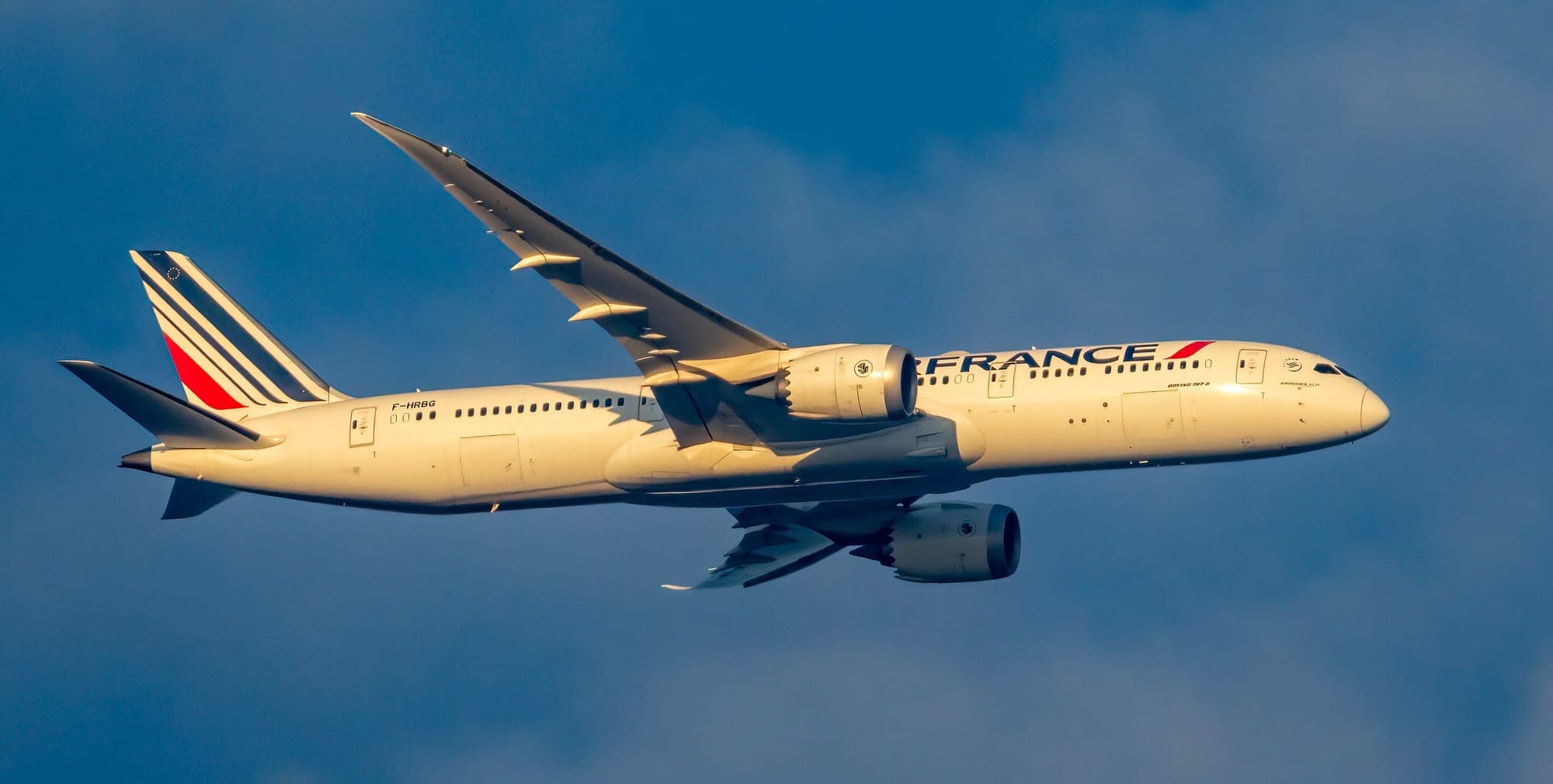
The fleet is being renewed rather than expanded, and the arithmetic is deliberate: new-generation aircraft burn substantially less fuel per seat than the types they replace, and at the end of 2025 they made up 35 per cent of the Air France to KLM group's fleet, eight points more than a year earlier, with a stated aim of 80 per cent by 2030. Air France's part of that is the A350 on the long-haul routes, the A220 and the A320neo family on the medium-haul, and the Embraer 195-E2 in the regional fleet.
What has gone is as telling as what has arrived. The Boeing 747 flew for the airline from 1970 to a farewell flight on 14 January 2016: forty-six years, and for much of that time the aircraft on which the long-haul network was built. The ten Airbus A380s, delivered from 2009 and once the flagship of the Paris to New York and Paris to Los Angeles routes, were retired outright in May 2020 during the pandemic, several years before the plan called for it. Both are types the encyclopedia treats in their own right; here they mark the shape of a fleet that has moved decisively from four engines to two.
Cabins and service
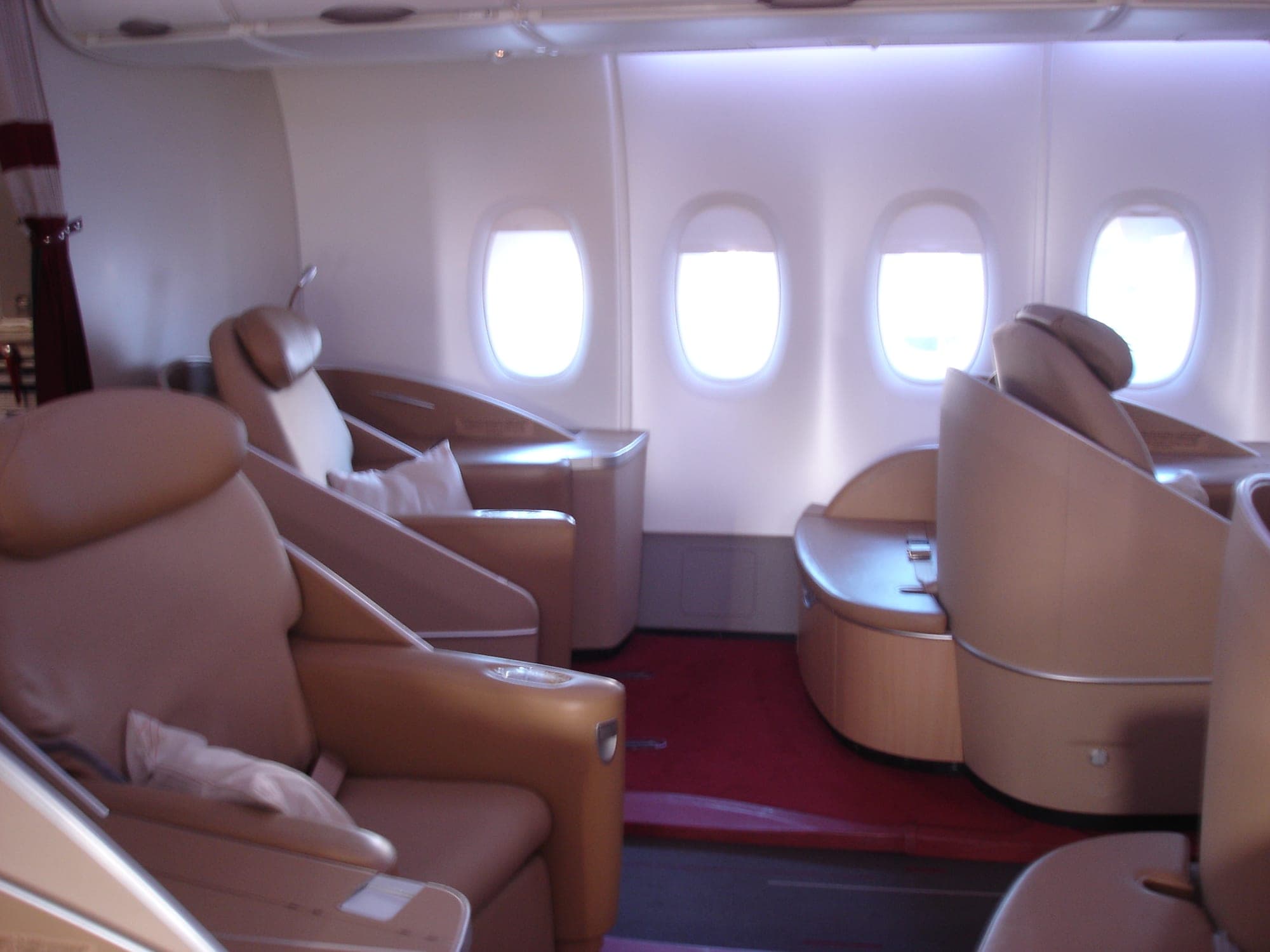
Air France sells four cabins on its long-haul routes and three within Europe. La Première, the first class, exists on only a handful of Boeing 777-300ERs and is deliberately tiny: four seats on an aircraft that carries close to three hundred people, with a private lounge at Charles de Gaulle, a car to the aircraft steps and a meal service built around named chefs. A completely new La Première suite was unveiled in 2024 and flew for the first time on 8 April 2025, from Paris to New York.
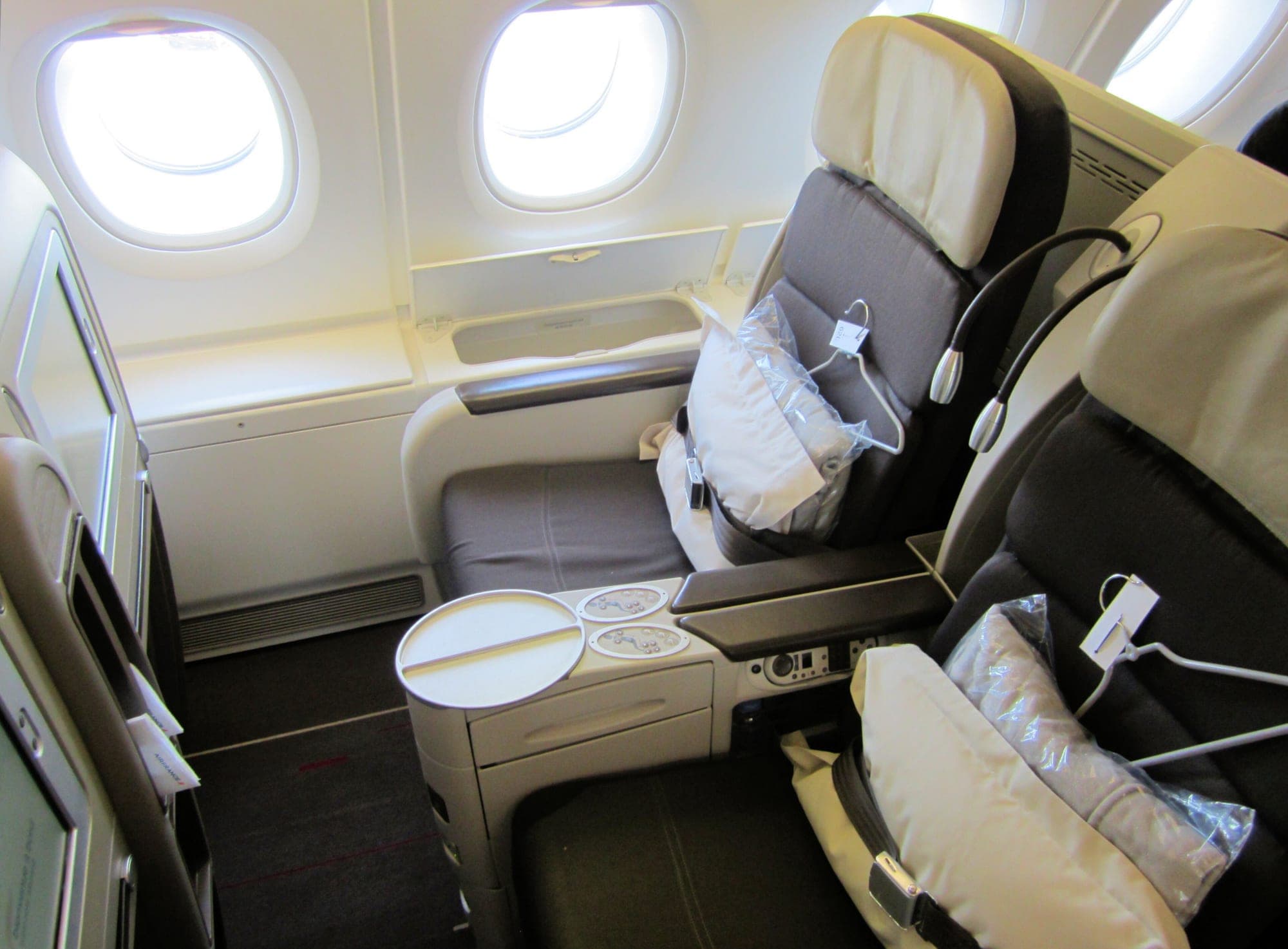
Business is the cabin the airline actually lives on. The current seat: a fully flat bed in a 1-2-1 arrangement, so every passenger reaches the aisle without climbing over anyone: was introduced on the Boeing 777 in June 2014 and then fitted across the long-haul fleet, replacing the angled seats and the 2-3-2 rows that had preceded it. Premium Economy, a separate cabin of fixed-shell reclining seats introduced from late 2009, sits between Business and Economy, and Economy fills the rest of the aircraft with seat-back screens throughout the long-haul fleet.
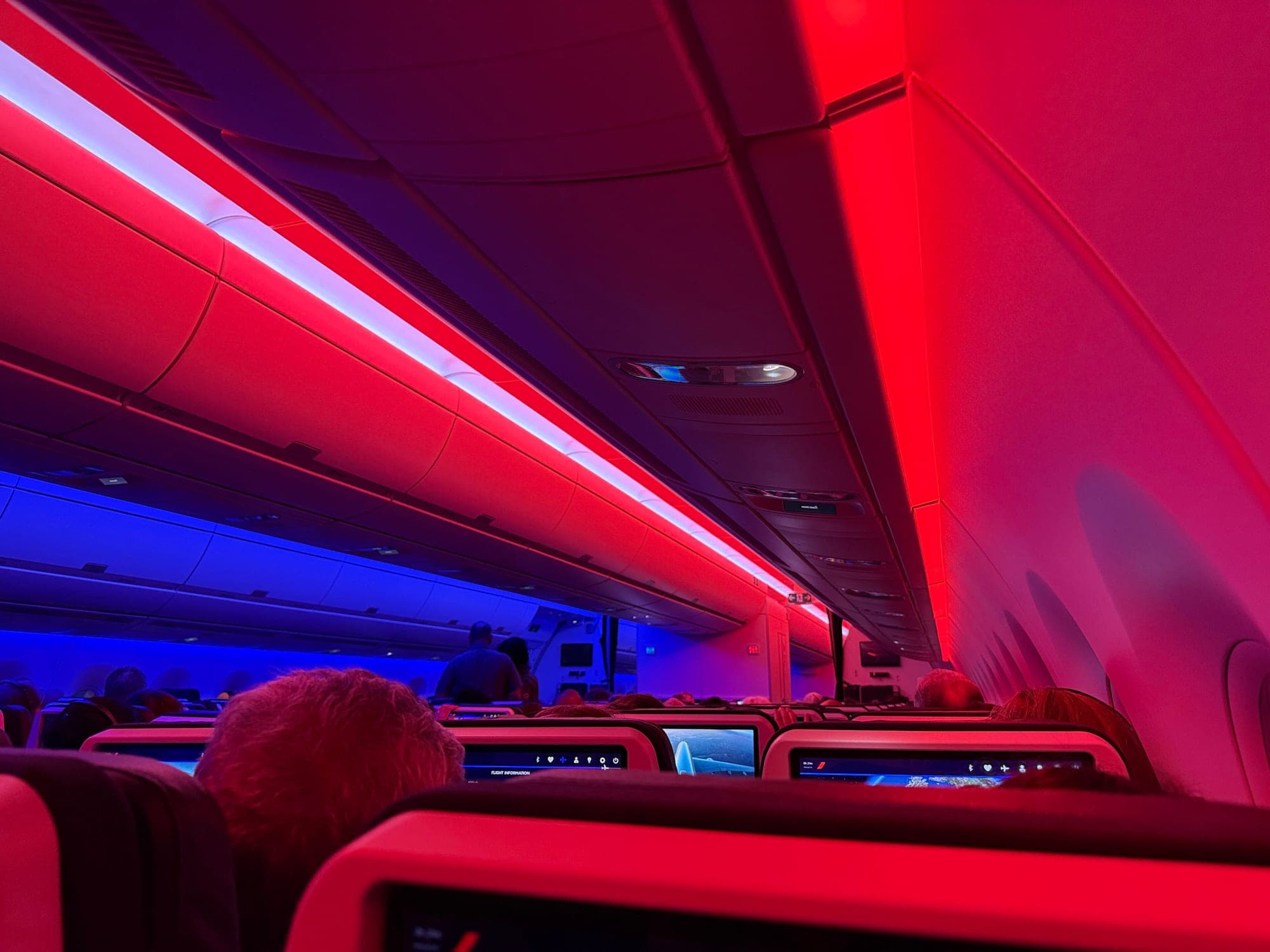
The service around the seats has been the more durable part of the brand. Champagne is offered in every cabin, including Economy, and has been for so long that its absence would be the news. Uniforms have been the work of French couture houses, the current ones were designed by Christian Lacroix, and the catering business the airline built for its own kitchens, Servair, became large enough to sell meals to other airlines. It is a service proposition that turns on Frenchness, and the airline has never pretended otherwise.
Livery and identity
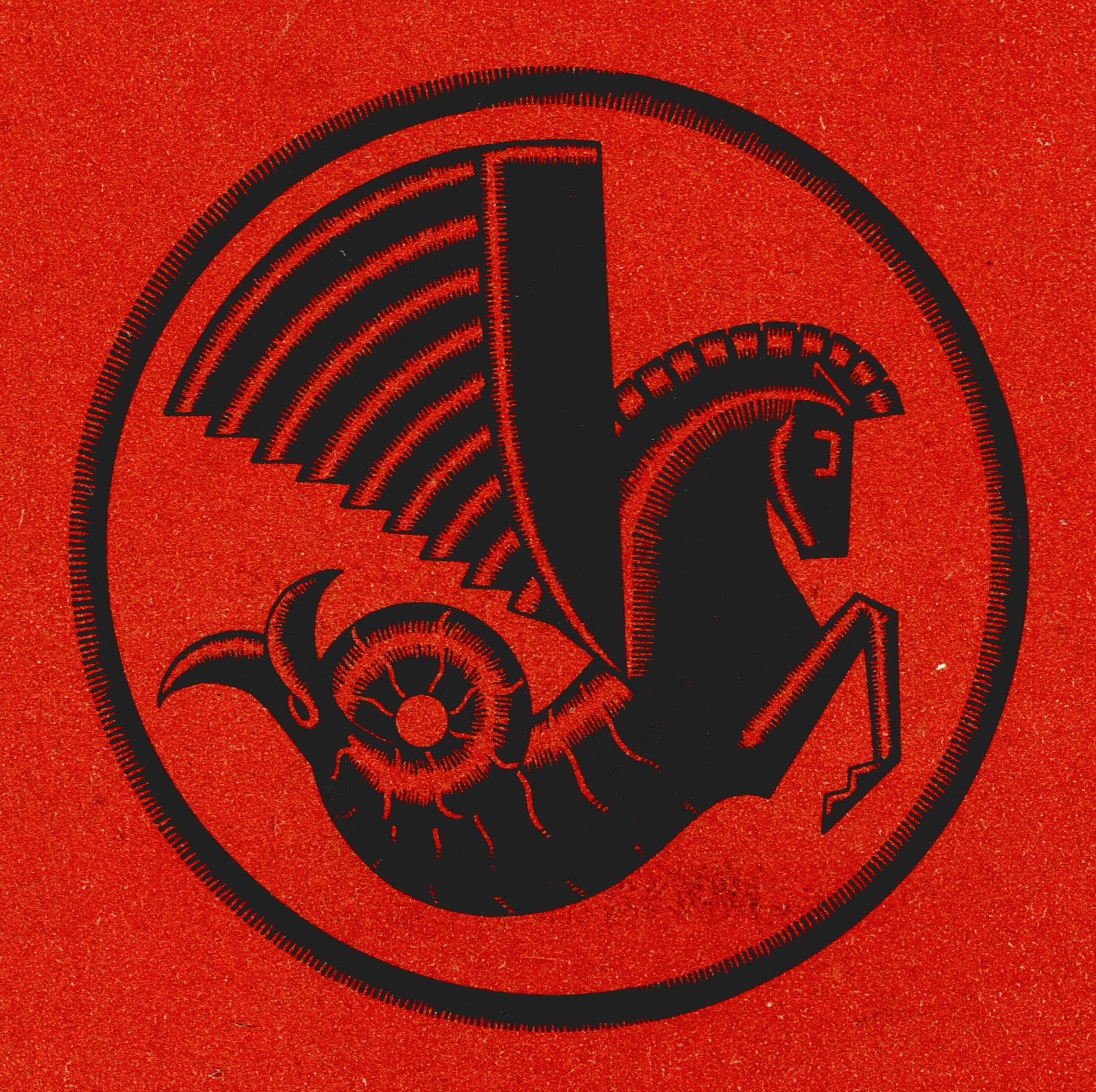
The oldest thing about Air France is its emblem. The *hippocampe ailé*, a winged seahorse, was drawn for Air Orient and came with that airline into the 1933 merger; ninety years later it is still on the nose and the engine nacelles of every aircraft. Staff call it *la crevette*, the shrimp, which is exactly the kind of affection a corporate identity cannot be designed to earn.
The livery has changed four times in substance. Until the late 1970s aircraft wore a bare-metal underside beneath a blue cheatline through the cabin windows, with a white upper fuselage and two heavy blue stripes tapering down the fin: the scheme in which the airline's Constellations, Caravelles, 707s and first 747s all flew. From the late 1970s came the "Eurowhite" arrangement still recognisable today, a white fuselage, blue titles, and parallel red and blue lines raked across the tail.
In January 2009 the airline changed its logo to a red stripe and rolled out a revised livery on 11 February: four bars on the fin became three, and they curved at the bottom to echo the new mark. The Boeing 787 brought larger titles in 2017. The Airbus A350 brought blue winglets carrying the seahorse in 2019, and with them the return of an old habit: naming individual aircraft after French places, the first A350 for Toulouse, the way the Caravelles had been named for the provinces. Since 2021 the seahorse has also sat between the cockpit windows and the forward doors, where the SkyTeam mark used to be.
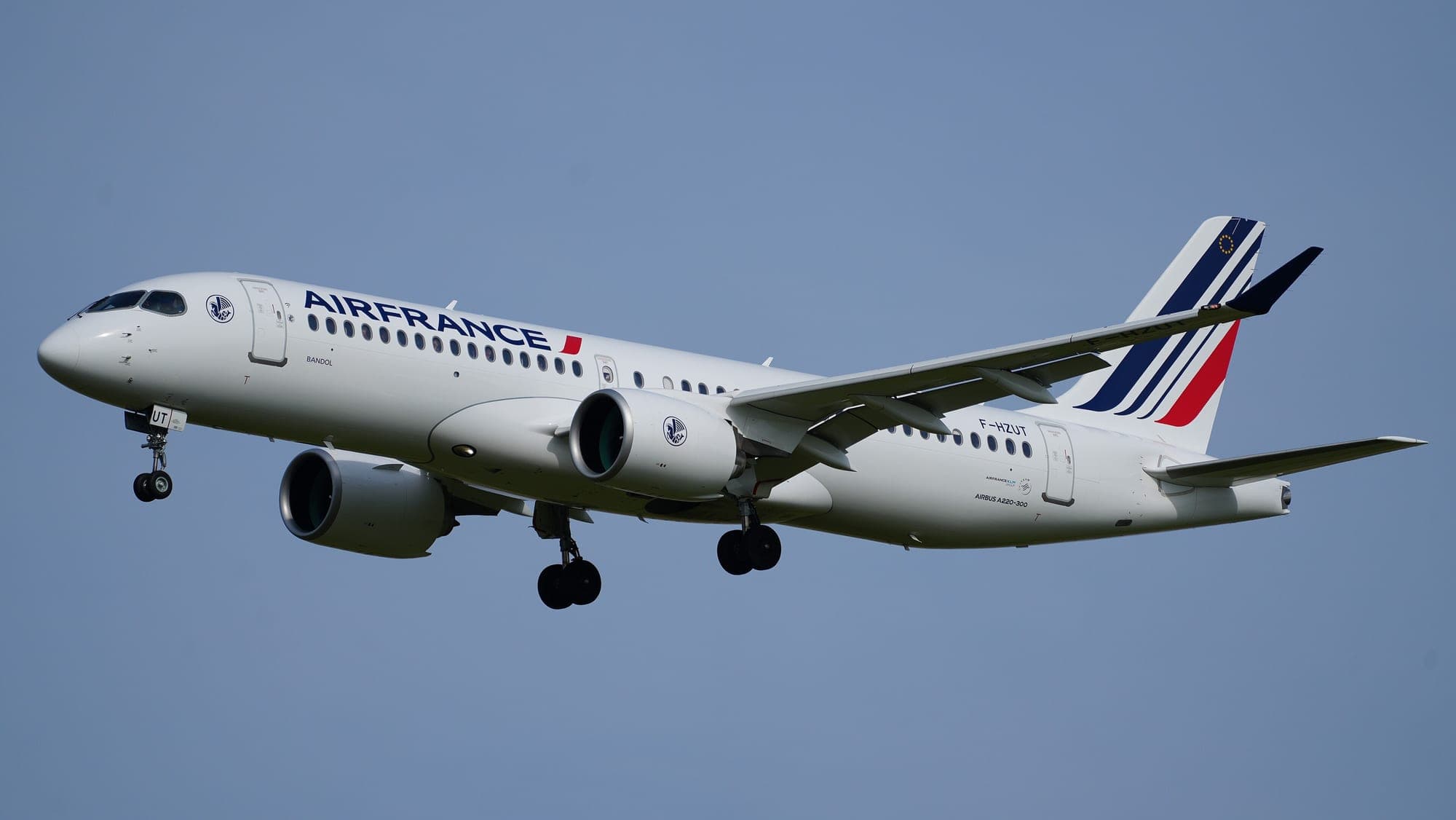
None of this is loud. The airline's visual identity has stayed within blue, white and red for its whole existence, and its strongest signature is a piece of 1930s drawing that no rebrand has managed to improve on.
Safety record
The airline's record includes four events that shaped it. The Caravelle of flight AF1611 caught fire in the air off Nice on 11 September 1968 and went into the Mediterranean with ninety-five people aboard; the cause has been argued over ever since. On 24 December 1994, flight AF8969 was seized on the ground at Algiers by four gunmen of the Armed Islamic Group, who killed three passengers before the aircraft was allowed to fly to Marseille and stormed there by the GIGN on the 26th. The loss of Concorde F-BTSC at Gonesse on 25 July 2000 killed 113 people and ended, in effect, the supersonic era.
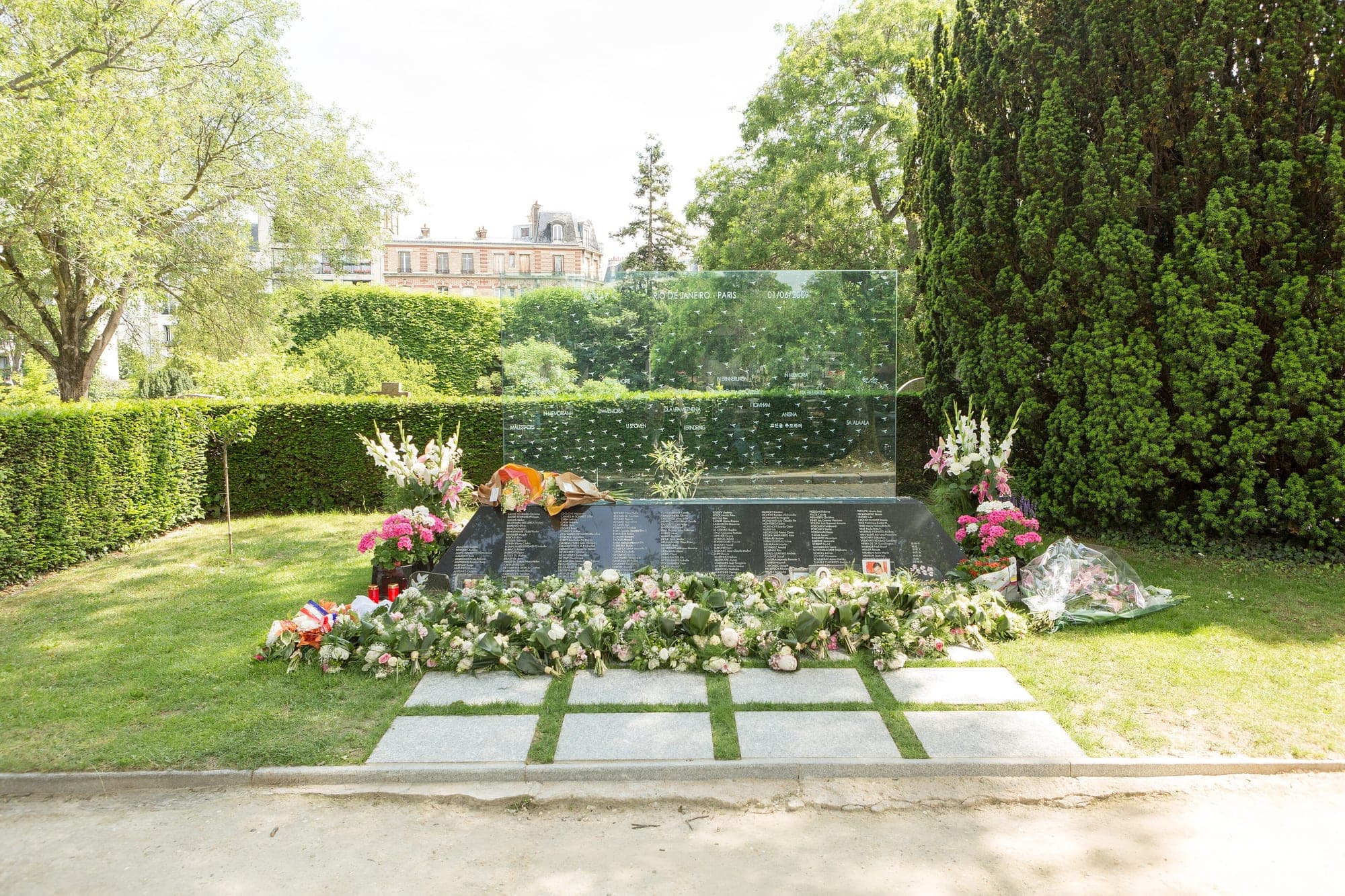
The deepest mark was left by flight AF447. On 1 June 2009 an Airbus A330-200 flying from Rio de Janeiro to Paris crossed a line of storms at cruise altitude, and ice crystals blocked its pitot probes. The airspeed indications became inconsistent, the autopilot disconnected, and in the four and a half minutes that followed the crew's response brought the aircraft into a stall it never came out of. All 228 people on board were killed. The wreck lay under nearly four kilometres of ocean; the flight recorders were not recovered until May 2011, and the BEA's final report followed on 5 July 2012.
That report is unusually plain about how the accident divides. The pitot probes were of a type already known to ice up, and the manufacturer's response to earlier events had been slow; the crew, faced with a failure that removed their airspeed reference at night over water, applied nose-up inputs and did not recognise the stall. The investigation's recommendations reached beyond the two companies to the training of airline pilots in high-altitude manual handling: a subject the industry had largely stopped teaching, and which it now teaches again.
The legal aftermath ran for seventeen years. A French court acquitted Air France and Airbus of involuntary manslaughter in 2023, finding errors but no proven causal link. On 21 May 2026 the Paris Court of Appeal reversed that judgment and convicted both companies, holding that Airbus had underestimated the known probe problem and that Air France had not adequately trained its crews for it, and imposing on each the maximum corporate fine of €225,000. Both have said they will appeal to the Court of Cassation, and as of September 2026 the case is not finally settled.
Legacy
Air France occupies a place in France that no other company quite holds. It was assembled by the state, owned by the state for half a century, and used deliberately as an instrument of French presence overseas: in Africa, in the Levant, in the Caribbean and the Pacific, on routes that carried administration and settlement as much as tourism. Its posters were commissioned from designers of the rank of Jean Carlu; its uniforms from couture houses; its aircraft named after provinces and towns. The result is a brand read at home as public property rather than as a listed company, which is one reason a strike at Air France is national news and a fare rise is a political argument.
Its aeronautical legacy is more specific: it was the launch customer that made French and European aircraft credible. The Caravelle proved a French jet could be sold across the world, the A300 and later the A320 gave Airbus its first operators, and Concorde, flown in scheduled service by only two airlines ever, put the airline permanently in the history of what aviation attempted and then stopped attempting. That story is now told in museums; one of its Concordes sits at Le Bourget, a few kilometres from the aerodrome the company flew out of on its first day in 1933.
What survives of the original company is smaller and stranger than any of that. A shrimp, drawn for a line to Indochina in the 1920s, still flies on the nose of every aircraft it owns.
The fleet
In service at December 31, 2025
Long-haul
Boeing 777-300ER
43
Boeing 777-200ER
18
Airbus A350-900
41
Boeing 787-9
10
Airbus A330-200
8
Total120
Medium-haul
Airbus A220-300
52
Airbus A320
36
Airbus A321
12
Airbus A318
4
Airbus A319
3
Total107
Regional
Embraer 190
27
Embraer 170
12
Total39
Cargo
Boeing 777F
2
Total2
Cabins
La Première
The first class, and the smallest cabin the airline sells: a handful of suites, a dedicated lounge at Charles de Gaulle and a car to the aircraft. A new suite entered service in April 2025.
Available onSelected Boeing 777-300ERs
Business
A fully flat bed with direct aisle access in a 1-2-1 arrangement, introduced on the Boeing 777 in June 2014 and rolled out across the long-haul fleet. On European routes, Business is the front rows of a single-aisle cabin with the middle seat left empty.
Available onAll long-haul aircraft
Premium Economy
A separate cabin of fixed-shell reclining seats, introduced from late 2009, sold between Business and Economy with priority ground services and a larger baggage allowance.
Available onAll long-haul aircraft
Economy
The largest cabin on every aircraft, with seat-back screens throughout the long-haul fleet and extra-legroom rows sold as Seat Plus. Champagne is served in every cabin, a habit the airline has never given up.
Subsidiaries
- Air France Hop
- The regional operation, flying Embraer jets on domestic and short European routes.
- Transavia France
- The group's French low-cost airline, based at Orly and growing from the regional airports.
- Servair
- The catering business built around the airline's own kitchens.
Genealogy
How French air transport converged into Air France, redrawn from the classic genealogy chart of the French airlines, 1909 to 1941. The warm boxes are the main line: the company itself, carrying on under one name after another: the Lignes Latécoère of 1918 became the C.G.E.A., then Aéropostale, whose assets passed on 31 May 1933 to the S.C.E.L.A., which took the name Air France that October and was reorganised in 1941. Every pale box is a separate company that came in from outside. Four of them, Air Union, the S.G.T.A. (Farman), the C.I.D.N.A. and Air Orient, merged on 19 May 1933 to constitute the S.C.E.L.A. itself; the rest are colonial, mail and transatlantic lines absorbed afterwards. The distinction matters: an airline is not only what it grew into, but also what it bought.
Scroll to see the full diagram
Timeline
August 30, 1933
Air France is constituted
Five airlines (Air Orient, Air Union, the CIDNA, the Farman lines and what remained of Aéropostale) are merged into a single national company.
October 7, 1933
First service, from Le Bourget
The new company begins flying the routes it inherited, under one name and one winged seahorse.
January 1, 1946
Société Nationale Air France
French air transport having been nationalised in June 1945, the airline is reconstituted as a state company and given the national network.
June 16, 1948
Compagnie Nationale Air France
An act of parliament gives the airline its statute; the state holds seventy per cent of the capital.
1959
The Caravelle enters service
The first French jet airliner takes up the European network, on Paris to Rome to Athens to Istanbul.
1970
The first Boeing 747
The airline becomes an early 747 operator and eventually one of the largest, flying the type for forty-six years.
1974
The move to Roissy
Operations shift to the new Charles de Gaulle airport north of Paris; the same year the airline becomes the launch operator of the Airbus A300.
January 21, 1976
Concorde enters service
F-BVFA leaves Charles de Gaulle for Rio de Janeiro by way of Dakar, at the same hour as British Airways leaves London for Bahrain.
January 12, 1990
Air Inter and UTA absorbed
The state-owned, semi-public and private halves of French airline policy are merged into one enlarged Air France.
February 22, 1999
Listed on the Paris exchange
Partial privatisation: the airline's shares are traded for the first time.
June 22, 2000
SkyTeam is founded
With Delta, Aeroméxico and Korean Air, the airline turns its transatlantic partnership into a global alliance.
May 5, 2004
Merger with KLM
Air France to KLM is created: one holding company, two national airlines that keep their names and their crews.
January 14, 2016
The last 747 flight
A farewell flight retires the Boeing 747-400, and with it the four-engined jumbo from the fleet.
May 2020
The A380 is withdrawn
The ten Airbus A380s are retired outright during the pandemic, ending a decade of service some years earlier than planned.
April 8, 2025
The new La Première flies
The redesigned first class suite enters service on the Paris to New York route aboard a Boeing 777-300ER.
Accidents and defining events
Recorded as the investigators recorded them: what happened, where, and how many people died. Fatal accidents and the events that changed the airline, in date order.
September 11, 1968
AF1611
Sud Aviation Caravelle IIIThe Mediterranean off Nice, France
The aircraft caught fire in flight on the short hop from Ajaccio to Nice and went into the sea. All ninety-five people on board were killed. The cause of the fire has been disputed ever since, and a claim that the aircraft was struck by a stray missile resurfaced in 2011.
95 deaths95 people on board
December 24, 1994
AF8969
Airbus A300B2Algiers, then Marseille, France
Four gunmen of the Armed Islamic Group seized the aircraft on the ground at Algiers and killed three passengers over two days. After it was allowed to fly to Marseille, the GIGN stormed it on 26 December and killed all four hijackers; nine gendarmes and sixteen others were injured, and the remaining 229 people on board survived.
7 deaths236 people on board
July 25, 2000
AF4590
ConcordeGonesse, near Paris, France
Taking off from Charles de Gaulle on a charter to New York, the aircraft ran over a metal strip shed by a preceding departure. A tyre burst, fragments ruptured a fuel tank, the leaking fuel ignited and two engines lost thrust. The aircraft crashed into a hotel two minutes later. All 109 people on board and four on the ground were killed. It was the only fatal accident in Concorde's twenty-seven years of service.
113 deaths (including 4 on the ground)109 people on board
June 1, 2009
AF447
Airbus A330-200The South Atlantic, en route Rio de Janeiro to Paris
Ice crystals blocked the pitot probes at cruise altitude, the airspeed indications became inconsistent and the autopilot disconnected. The crew's response brought the aircraft into a high-altitude stall from which it did not recover; it struck the ocean four and a half minutes later. All 228 people on board were killed. It remains the deadliest accident in the airline's history.
228 deaths228 people on board
In the catalogue
Aircraft central to this airline's story, as the encyclopedia records them.
- Full Year 2025 results — press release, 19 February 2026, Air France–KLM
- AF447 flight: Airbus to lodge an appeal with the Court of Cassation following the Paris Court of Appeal decision, Airbus
- Final report on the accident on 1 June 2009 to the Airbus A330-203 registered F-GZCP operated by Air France, flight AF 447 Rio de Janeiro – Paris, BEA — Bureau d'Enquêtes et d'Analyses pour la sécurité de l'aviation civile
- Accident on 25 July 2000 at La Patte d'Oie in Gonesse to the Concorde registered F-BTSC operated by Air France, BEA — Bureau d'Enquêtes et d'Analyses pour la sécurité de l'aviation civile
- French court finds Airbus, Air France guilty of manslaughter in 2009 crash, 21 May 2026, Al Jazeera
- Généalogie de la compagnie Air France, Aéroplanes.fr
- Air France, Wikipedia
- Air France fleet, Wikipedia
- Air France Flight 447, Wikipedia
- Air France Flight 4590, Wikipedia
Checked September 4, 2026