Aircraft
Boeing 747
B747
The Boeing CompanyUnited States
- Role:
- Wide-body airliner and freighter
- First flight:
- 1969
493kt
Cruise speed
7,262nm
Range
General
- Role:
- Wide-body airliner and freighter
- Status:
- Retired
Programme
- First flight:
- February 9, 1969
- Introduction:
- 1970
- Produced:
- 1968 to 2023
- Number built:
- 1,574
Crew & capacity
- Crew:
- 3
- Capacity:
- 524 passengers
Dimensions
- Length:
- 232 ft
- Height:
- 64 ft
- Wingspan:
- 211 ft
- Wing area:
- 5,825 ft²
Weights
- Empty weight:
- 404,548 lb
- Maximum takeoff weight:
- 874,993 lb
- Fuel capacity:
- 57,283 US gal
Powerplant
- Engine:
- 4 × Pratt & Whitney, General Electric or Rolls-Royce turbofans (747-400: PW4056 / GE CF6-80C2 / RB211-524, each around 25,700 to 27,600 kgf thrust)
Performance
- Maximum speed:
- 533 kt
- Ceiling:
- 44,948 ft
For most of the twentieth century, the future of long-haul air travel looked supersonic. Concorde flew, briefly, as though that future had arrived: cross the Atlantic in three and a half hours, above the weather, faster than the earth turned. But the aircraft that actually decided how the world would fly was not supersonic at all. It was slower than the airliners it replaced, four times as wide, and built on a bet that the age of supersonic travel was coming so certainly that the subsonic jumbo carrying it would need a second career as a freighter once passengers moved on.
That bet did not pay off the way Boeing and Pan Am expected. Concorde entered service in 1976, six years after the 747, and never carried more than a fraction of the transatlantic market; airlines and passengers overwhelmingly chose cheap seats over fast ones. The contest, as FLYPEDIA's Concorde entry puts it, was never close: it was Concorde against the Boeing 747, and the real question was never how fast one hundred passengers could cross the Atlantic, but how cheaply four hundred could. The 747 answered that question so thoroughly that it did not merely outsell Concorde: it made supersonic travel for the masses economically unnecessary, and international air travel affordable to people who had never imagined boarding an aircraft at all.
The airplane that did this was, by any ordinary measure, an enormous gamble. Boeing committed to building the largest civil aircraft ever attempted, on a schedule dictated by Pan Am's founder Juan Trippe, in a factory that did not yet exist, using engines that did not yet exist either. The company borrowed more money than it was worth to do it, and very nearly did not survive the years that followed. The distinctive hump behind the cockpit, the single feature everyone recognises the 747 by, exists because of that same gamble: it was there so the aircraft's nose could open as a cargo door on the day passengers stopped wanting to fly it.
That day never came, not for decades, and the 747 spent half a century as the definitive shape of long-haul travel, the aircraft that airlines put on their most prestigious routes and their advertising, that turned Boeing into the dominant civil manufacturer, and that gave four generations of passengers their idea of what a big airplane looked like. When the passenger version finally did retire from most major fleets, the freighter it was designed to become all along kept flying, carrying the world's air cargo in an airframe whose founding premise had simply arrived fifty years later than planned.
History
The 747 exists because Juan Trippe wanted an airplane twice the size of the Boeing 707, and because Boeing needed a large commercial win after losing the C-5 Galaxy military transport competition to Lockheed in 1965. Trippe pressed Boeing hard for a jet that could move far more passengers at a far lower cost per seat, betting that a bigger airplane, filled, would make flying cheap enough to matter to people who had never flown. Boeing's condition for building it was equally blunt: Pan Am had to commit to buying twenty-five aircraft before Boeing would commit to building even one, since no manufacturer had ever risked so much capital on a single customer's order.
Joe Sutter led the engineering team, nicknamed "The Incredibles" internally for the impossible schedule they were handed, through a twenty-nine-month design-to-delivery programme that remains one of the fastest major aircraft developments in history. Sutter's team settled the twin-aisle, wide-body cabin cross-section that every subsequent large airliner would copy, and placed the cockpit above the main deck specifically so a hinged nose could later open beneath it for cargo, without waiting on redesign.
Building the aircraft required a factory that did not exist. Boeing bought a forested site north of Seattle at Everett, Washington, and built what was then the largest building in the world by volume around the production line, finishing enough of it to begin assembly before the roof itself was complete. The first aircraft, City of Everett, rolled out in September 1968 and flew for the first time on 9 February 1969, with test pilot Jack Waddell at the controls.
Early flight testing exposed a problem Boeing had not caused and could not immediately fix: the Pratt & Whitney JT9D turbofans specified for the aircraft fell short of promised thrust and suffered recurring compressor stalls, grounding finished airframes on the ramp at Everett faster than engines could be certified to fly them. Dozens of nearly complete 747s sat nose to tail outside the factory through 1969, a sight employees called the "parking lot," while Pratt & Whitney worked through the shortfall.
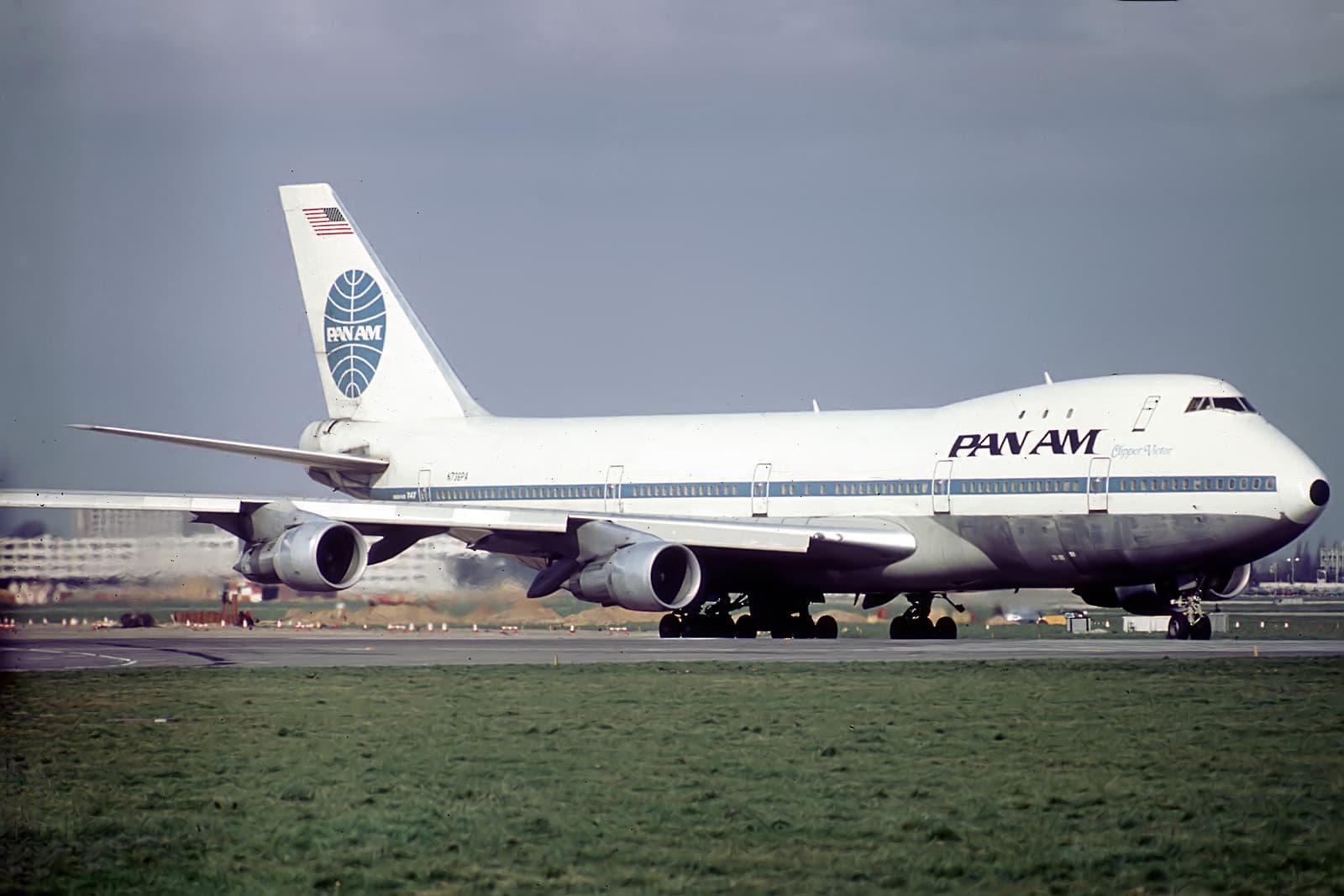 Boeing 747-121
Pan Am put the 747 into scheduled service on 22 January 1970, flying Clipper Young America from New York to London after an engine problem forced a last-minute aircraft swap with Clipper Victor. The delay was minor against the scale of what had just changed: for the first time, an airline could fly nearly four hundred passengers across an ocean on a single aircraft, and every long-haul route in the world began to be planned around what that made possible.
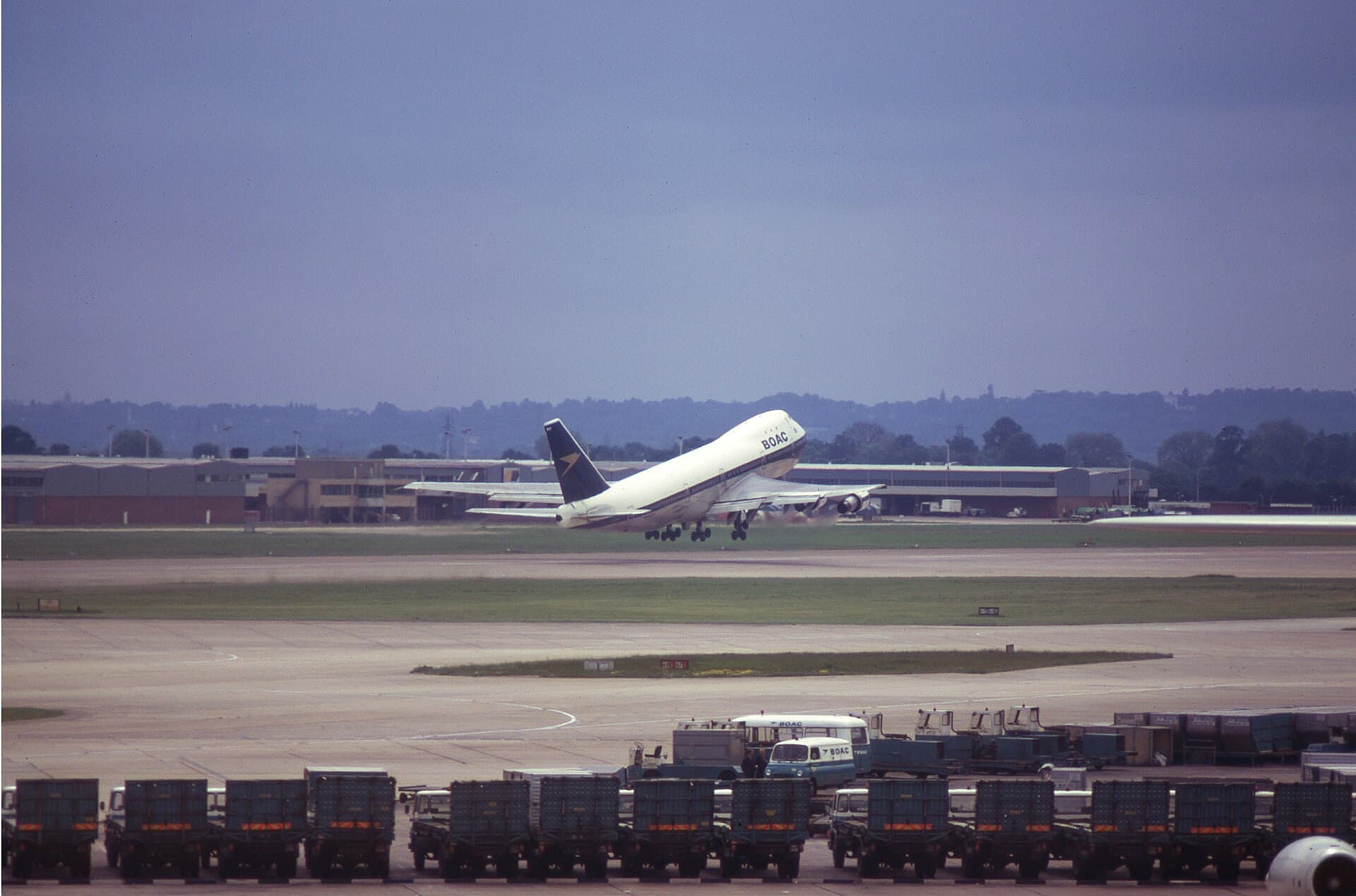 Boeing 747-136
Two accidents in the 747's history stand apart from ordinary attrition because of how directly they changed the industry around the aircraft. On 27 March 1977, a KLM 747 began its take-off roll in dense fog at Los Rodeos Airport on Tenerife without full clearance and collided with a Pan Am 747 still taxiing on the same runway; 583 people died, making it still the deadliest accident in aviation history and the direct cause of standardised radio phraseology and stricter runway-incursion procedures that air traffic control still follows worldwide. On 12 August 1985, Japan Airlines Flight 123, a 747SR flying a short domestic route out of Tokyo, suffered a sudden failure of its aft pressure bulkhead: the consequence of an improper repair Boeing technicians had carried out after a tailstrike seven years earlier: and after more than thirty minutes with the crew fighting an aircraft that had lost its hydraulic flight controls, crashed into a mountainside in Gunma Prefecture; 520 of the 524 aboard died, the highest death toll ever recorded in a single-aircraft accident. Both disasters left lasting marks on the industry: Tenerife reshaped cockpit and air-traffic-control communication procedures still taught to pilots today, and JAL 123 forced Boeing and regulators worldwide to overhaul how structural repairs were documented, inspected and signed off.
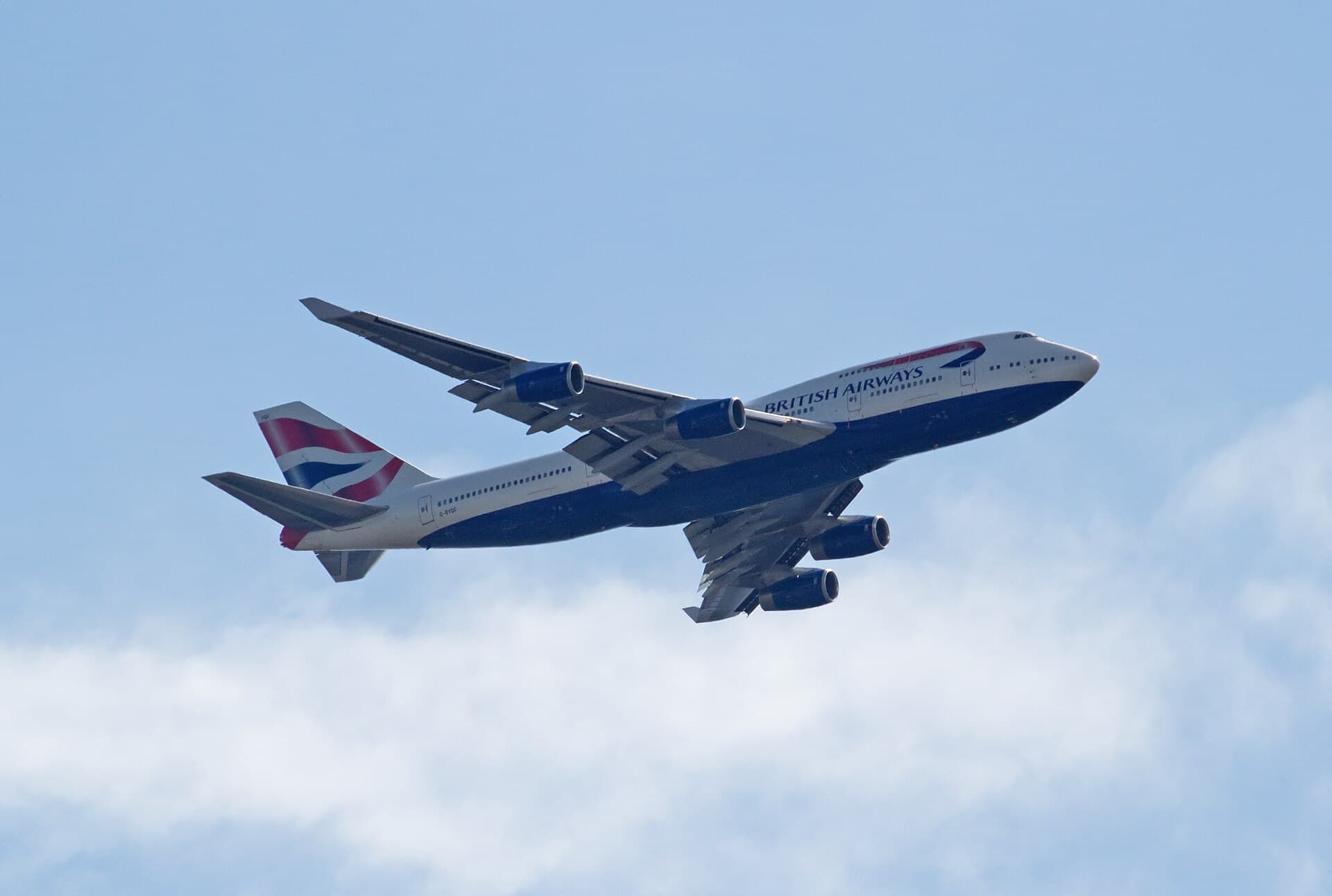
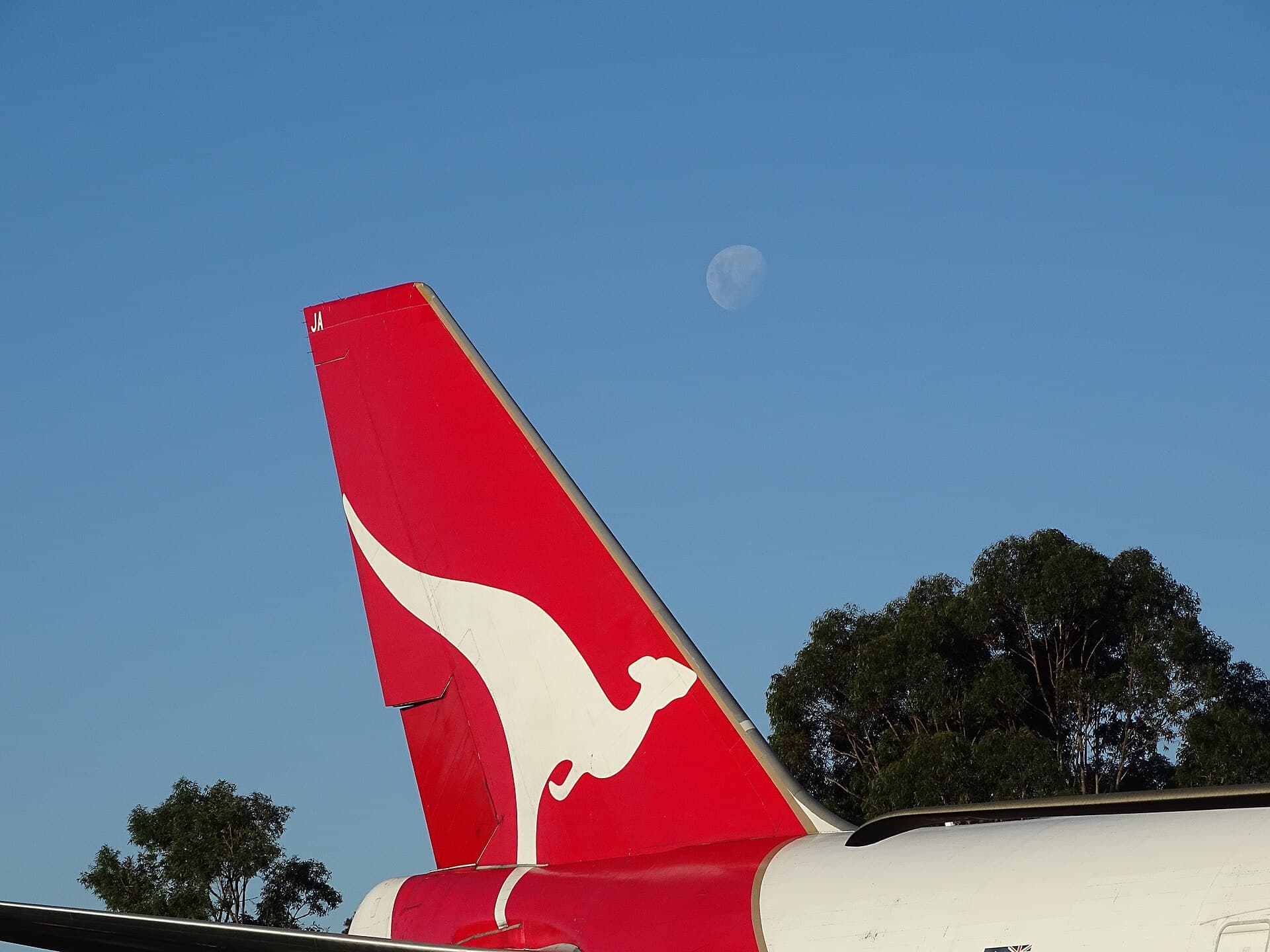
The passenger 747 did not survive to see most of its longest-serving operators fly it into a sixth decade. The collapse in long-haul demand brought on by the Covid-19 pandemic in 2020 led British Airways, Qantas and Virgin Atlantic to retire their remaining passenger 747 fleets years earlier than planned, ending scheduled passenger service at several of the airlines that had flown the type longest. Production continued only for the freighter, and the last 747 ever built, a 747-8F, was delivered to Atlas Air on 31 January 2023, closing fifty-four years of continuous production with exactly the cargo role Boeing had designed the aircraft to fall back on from the start.
Development
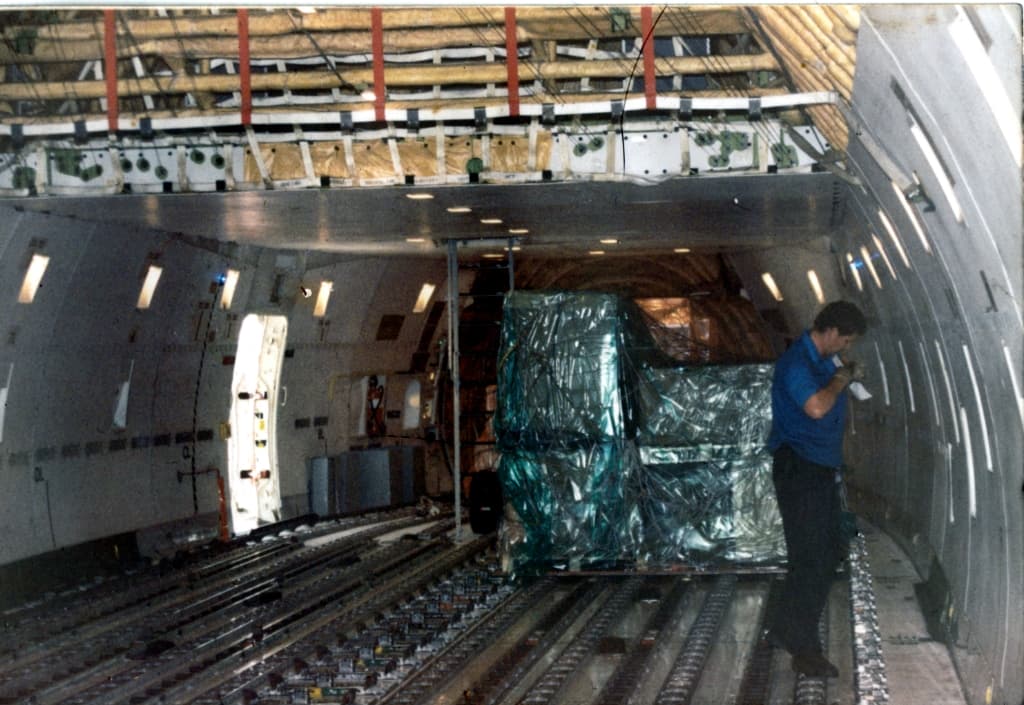
The 747's most famous feature was never meant to be a passenger space at all. Both Boeing and Pan Am expected supersonic transports (Concorde among them, and Boeing's own cancelled 2707 SST) to take over premium long-haul passenger travel within a decade or two, leaving subsonic wide-bodies to freight. So the 747 was designed from the outset as a freighter that could carry passengers for a while first: the cockpit was raised above the main deck specifically so the entire nose could hinge upward, clear of the cargo floor, and pallets could be driven straight in from a loading vehicle without disturbing the flight deck at all.
That single decision shaped almost everything distinctive about the airplane. The raised cockpit created the small hump behind it, which Boeing's engineers filled with a short upper-deck cabin rather than leave empty: first as a lounge, later as extra seating, and on the 747-300 and 747-400 as a stretched compartment that became one of the type's most recognisable variants. The nose-loading door it was built around remained on every freighter model built afterward, from the original 747-200F through the 747-8F, giving the type a cargo capability no competing wide-body could match even decades later.
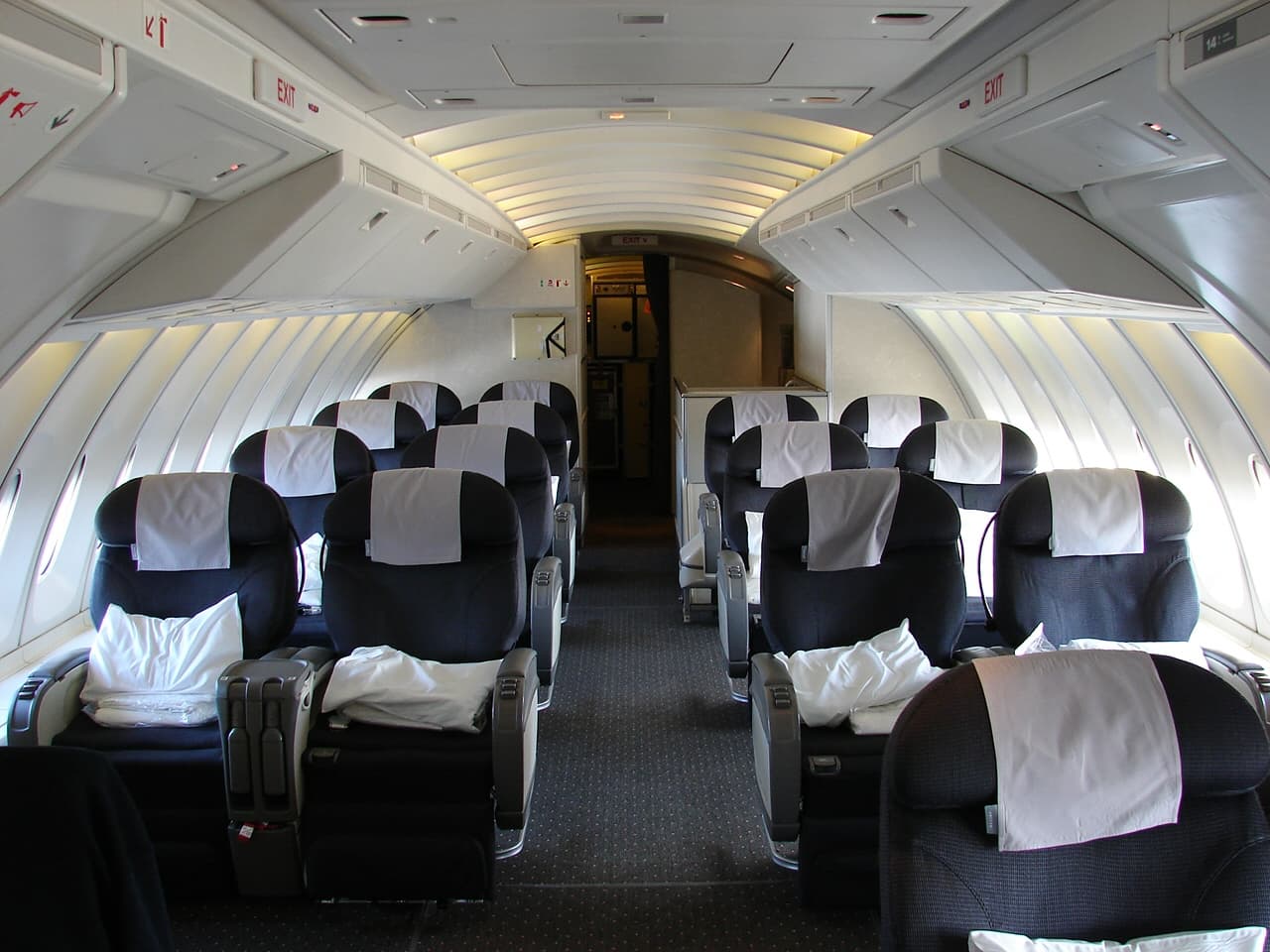
The freighter-first premise never materialised the way Boeing and Pan Am expected. Supersonic airliners stayed a small, loss-making niche: Concorde flew barely more than a dozen years of profitable-ever service on two airlines, never came close to displacing subsonic long-haul travel, and by the time it retired in 2003 the 747 had already carried the great majority of the passengers who ever crossed an ocean by air. The freighter role Boeing designed the 747 to fall back on eventually arrived anyway, just fifty years later than planned and for entirely different reasons: rising fuel costs and twin-engine efficiency pushed passenger airlines toward smaller wide-bodies, while the world's air-cargo volume kept growing into exactly the aircraft the 747 had always been built to become.
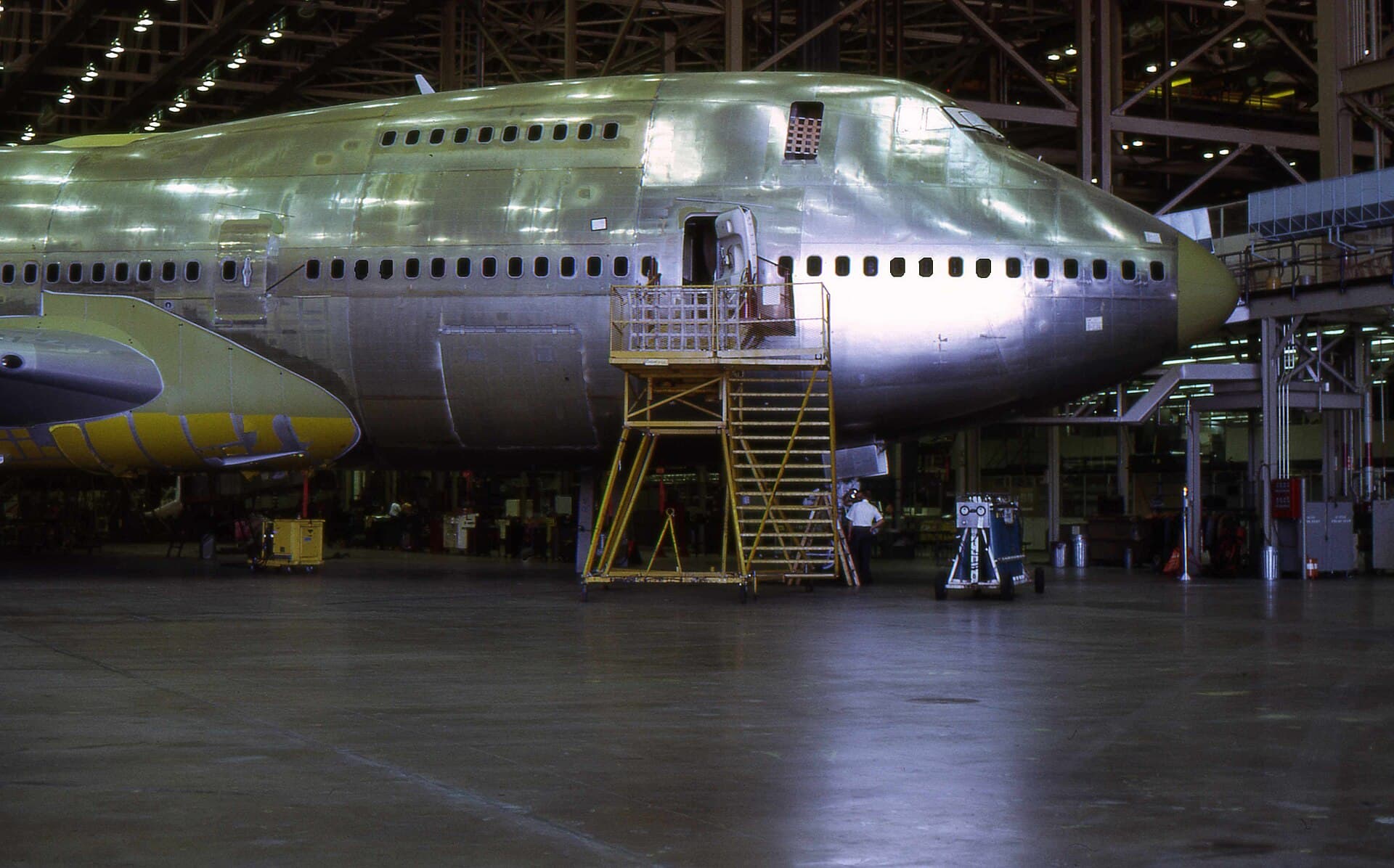
Delivering on any of this required Boeing to build the aircraft faster and in greater volume than any commercial airplane before it, and the company borrowed against its own survival to do so. Development and tooling costs ran far beyond budget while the JT9D engine problems delayed revenue from the first deliveries, and by 1969 Boeing's debt load and a simultaneous collapse in other orders brought the company to the edge of bankruptcy. Employment in the Seattle area fell from around 105,000 to roughly 38,000 within two years, prompting a billboard near the airport reading "Will the last person leaving SEATTLE: Turn out the lights." The 747 survived that period only because Pan Am and a handful of other launch customers kept flying it while Boeing worked through the debt, and its eventual commercial success is what allowed the company to recover at all.
Design
The 747's cabin cross-section was, and remains, its central engineering achievement: a fuselage wide enough for two aisles and up to ten economy seats abreast, generous enough that the type became the template every later wide-body, from the DC-10 to the A380, was measured against. The twin-aisle layout let airlines board and deplane four hundred passengers in roughly the time a narrow-body aircraft needed for a hundred, which did as much to make the 747 profitable as its range or fuel burn.
Four engines, mounted on pylons well forward of the wing's leading edge, gave the original 747 the range and redundancy transoceanic routes demanded in an era before twin-engine aircraft were certified to fly them; that same four-engine layout later became one of the type's biggest disadvantages against newer, more efficient twins on the routes it once had to itself. The wings themselves were swept at 37.5 degrees, among the most aggressive sweep angles fitted to any wide-body, chosen to let the aircraft cruise at speeds close to Mach 0.85, noticeably faster than most of its wide-body successors.
 Boeing 747-400
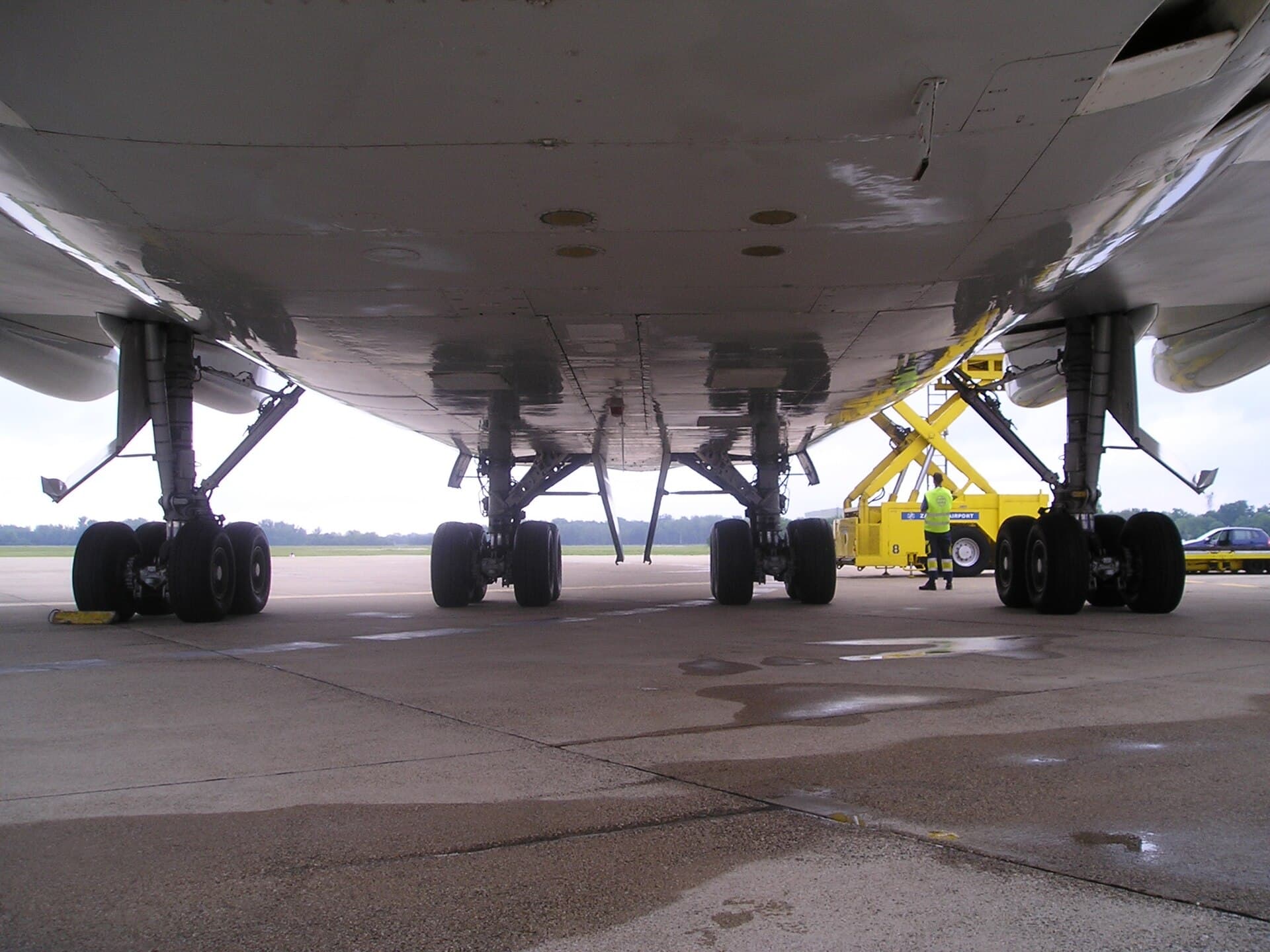
The main and body landing gear (four bogies of four wheels each, plus a two-wheel nose gear, eighteen wheels in total) exist because no runway pavement of the era could take the concentrated load of an aircraft this size on fewer, larger tyres. Spreading the weight this way let the 747 use existing major airports without their runways being rebuilt specifically for it, a practical constraint that shaped the undercarriage as much as any aerodynamic requirement did.
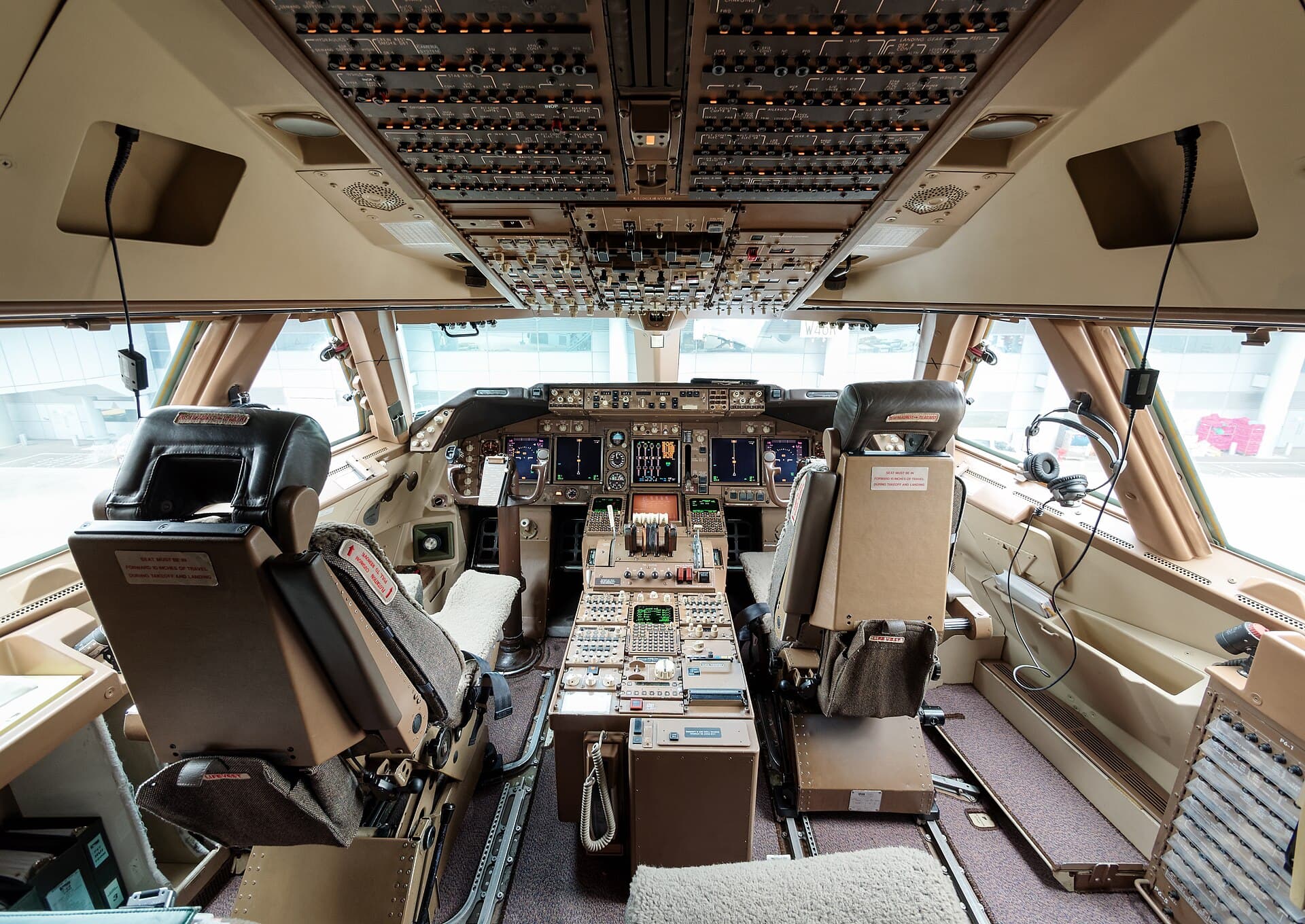
Inside, the flight deck evolved through the type's history from a three-person crew, pilot, co-pilot and flight engineer monitoring the analogue instrument panels of the original 747-100 and -200, to the two-person, glass-cockpit flight deck introduced on the 747-400 in 1988, which replaced dozens of dials and the flight engineer's role with electronic displays and computerised systems management. That single change let airlines operate the aircraft with smaller crews and lower training costs through the rest of its passenger career.
Cabin configuration varied enormously by operator and era: dense charter layouts crammed in close to five hundred economy seats, while flagship carriers used the same airframe for spacious multi-class cabins with fully flat business seats and, on the upper deck, some of the most exclusive first-class cabins ever flown, a range the 747's size made possible in a way narrower aircraft never could.
Technical characteristics
Across its history the 747 was offered with three engine families (Pratt & Whitney, General Electric and Rolls-Royce) a deliberate choice that let Boeing sell the aircraft to airlines with existing loyalties to any of the three manufacturers, and that no other wide-body of the era matched so completely. The most numerous passenger variant, the 747-400, could be fitted with the Pratt & Whitney PW4056, the General Electric CF6-80C2 or the Rolls-Royce RB211-524, each delivering roughly 56,700–60,800 lb of thrust.
Maximum take-off weight grew across the type's history from around 710,000 lb on the original 747-100 to nearly 988,000 lb on the 747-8, a fifty-percent increase carried mostly by strengthened wings and landing gear rather than a change in the fuselage's basic cross-section. Fuel capacity grew alongside it, and the 747-400's extended range, helped by the small winglets added to its wingtips, let airlines fly routes like Los Angeles to Sydney and Singapore to New York nonstop for the first time.
 Boeing 747-8F
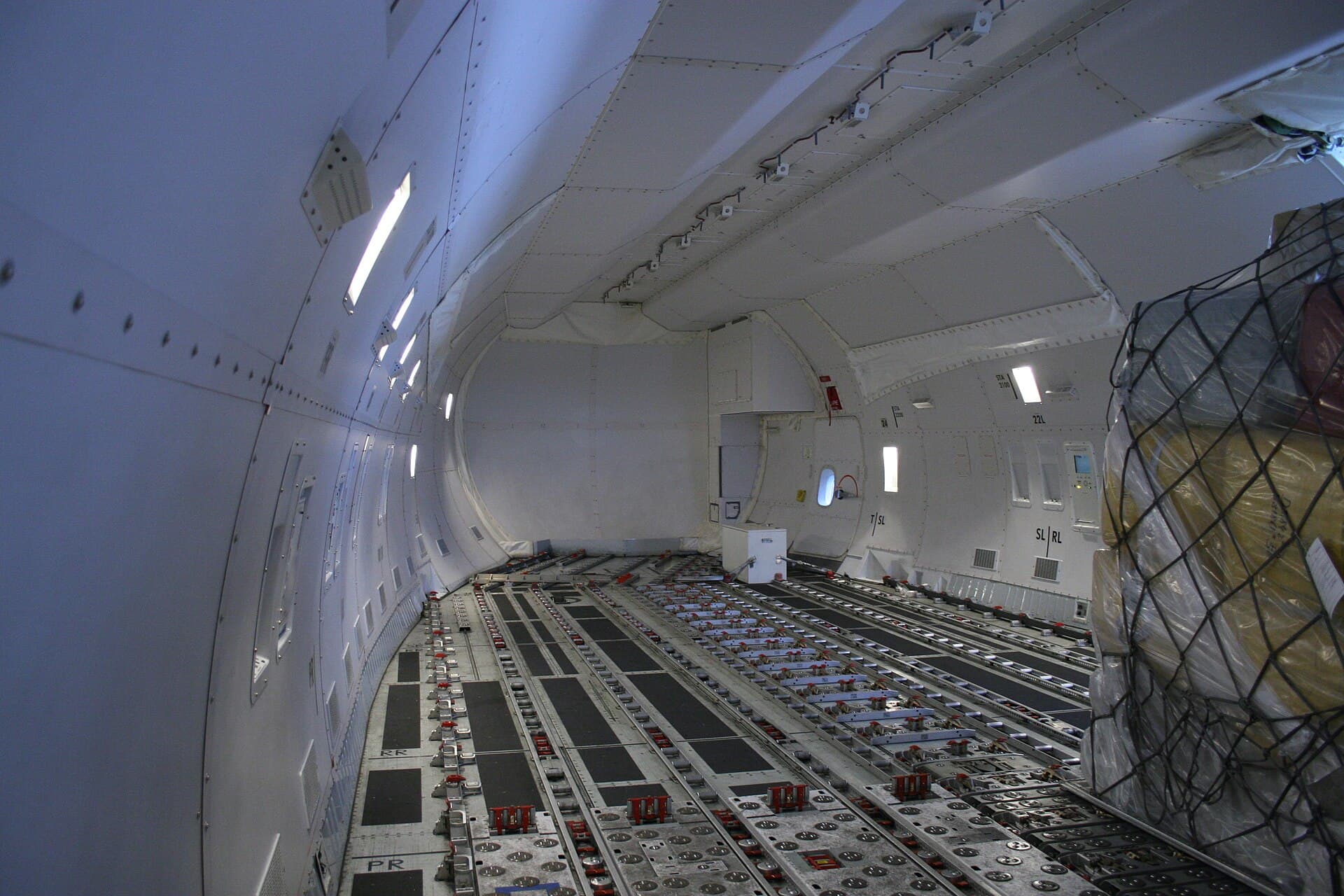
The freighter models carried their own engineering demands. A hinged nose door, hydraulically raised clear of the fuselage, opened the entire cross-section of the main deck to straight-in loading, while a powered roller-and-guide-rail floor let ground crews position multi-tonne pallets and containers with comparatively little manual effort. The 747-8F pushed this further with a stretched main deck and a strengthened floor rated for higher point loads than any earlier freighter version.
Structurally, the 747 was among the first airliners engineered around a fail-safe philosophy, with redundant load paths designed so that a single structural failure could not by itself bring down the aircraft, a standard adopted industry-wide in the decades that followed, in part because of the type's long, closely studied service record.
Military service
Two 747-200Bs, heavily modified and designated VC-25A, have served as Air Force One since 1990, carrying the president of the United States on a airframe chosen specifically for its range, redundancy and the reassurance of four engines over long overwater legs. Their systems include secure communications, electronic countermeasures and the ability to refuel in flight, none of which appear on any commercial 747.
The United States Air Force also operates a small fleet of 747-200-based E-4B "Nightwatch" aircraft, built as airborne command posts able to direct nuclear forces and coordinate a national response from the air if ground command centres were destroyed or unreachable. Equipped with extensive shielding, satellite communications and the ability to remain airborne for extended periods with in-flight refuelling, the E-4B has been kept in service since the late 1970s largely because no newer aircraft has matched its combination of range, payload and survivability.
 Boeing 747-123 Shuttle Carrier Aircraft
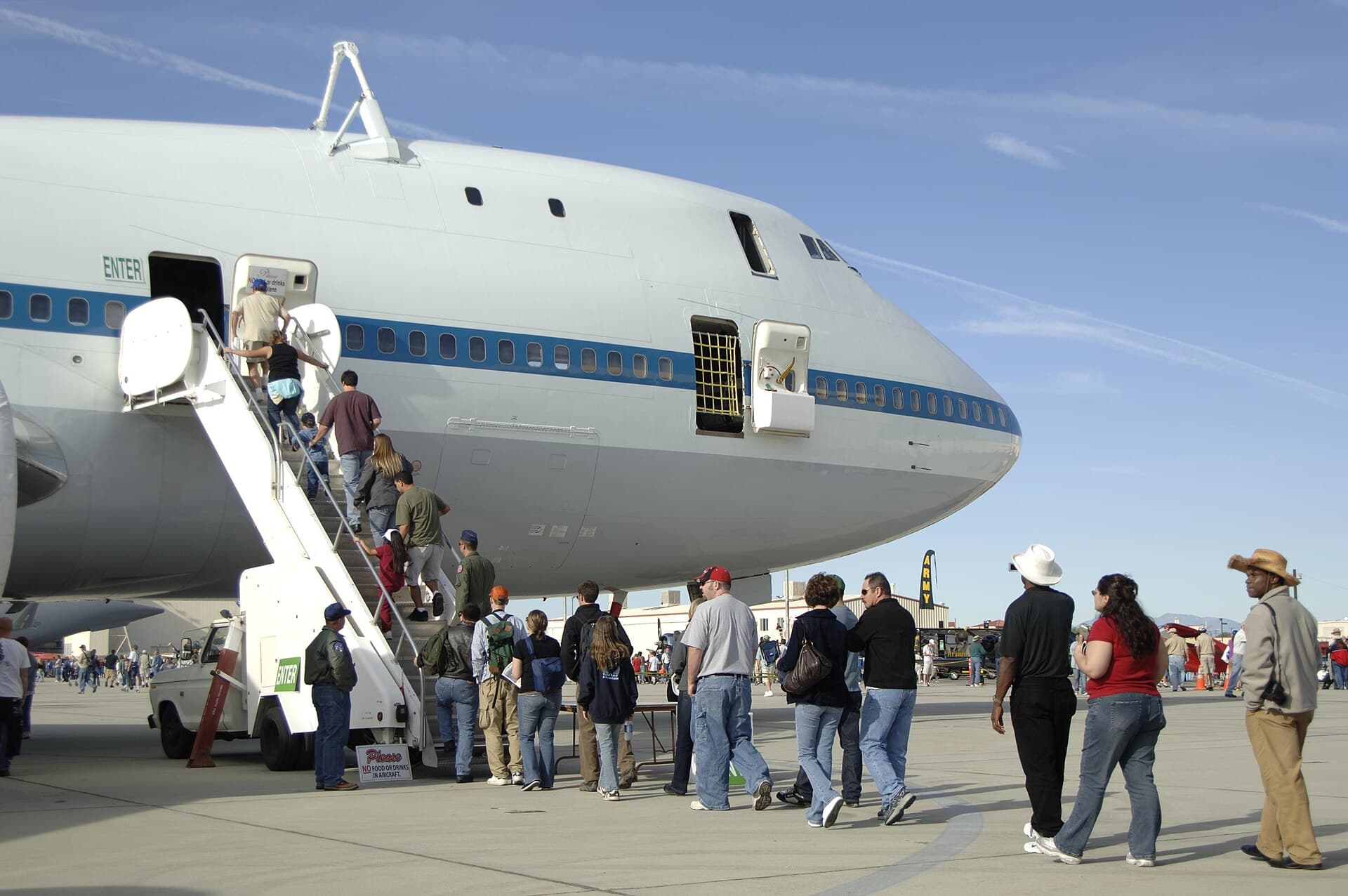
NASA's most visible use of the 747 had nothing to do with weapons at all. Two extensively modified 747-100s, designated Shuttle Carrier Aircraft, ferried the Space Shuttle orbiters piggyback between landing sites and the Kennedy Space Center launch complex from 1977 until the programme's retirement in 2012, mounted on struts above the fuselage that gave the pairing one of the most photographed silhouettes in aviation history. The aircraft that Boeing designed to carry freight through its nose ended up, for three decades, carrying spacecraft on its back instead.
Production
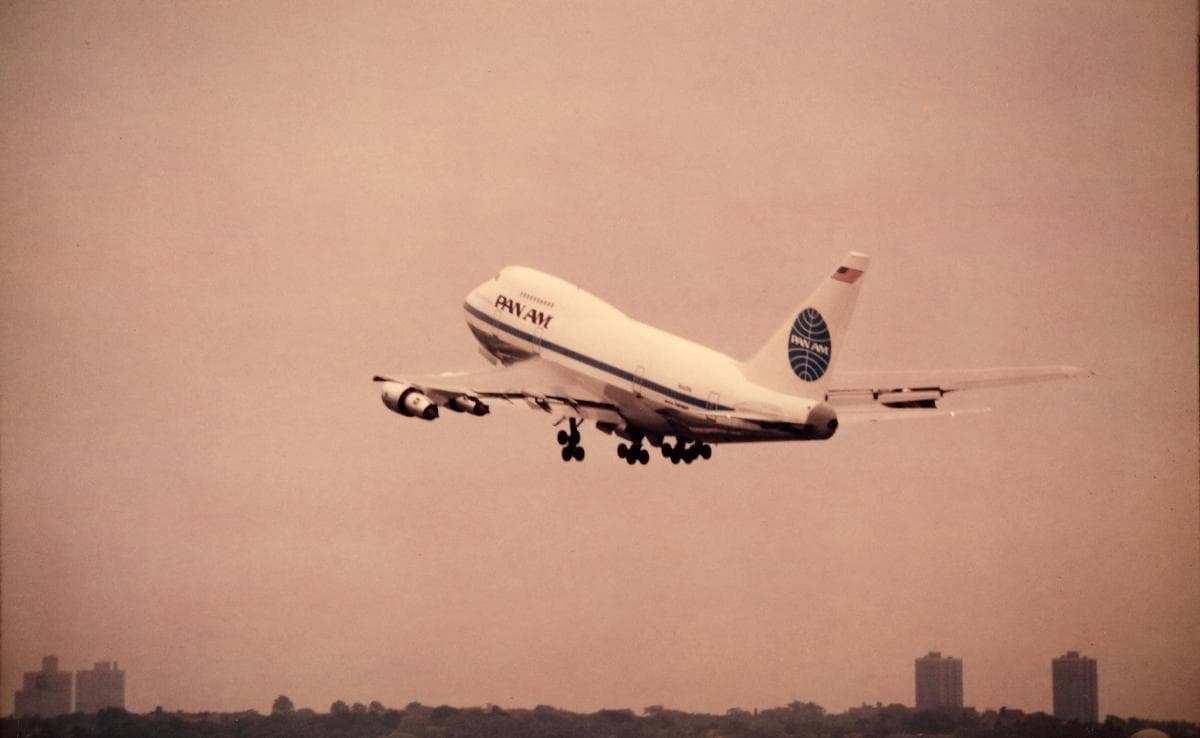 Boeing 747SP
Boeing built the 747 in six broad generations across fifty-four years. The 747-100 was the original production version delivered from 1970, followed quickly by the longer-range 747-200 in 1971, which became the best-selling variant of the type's first two decades and the basis for the earliest dedicated freighters. The 747SP, Special Performance, shortened the fuselage by more than fourteen metres to fly farther on less fuel, entering service in 1976 for routes too long for the standard-length aircraft; only forty-five were built, but they set numerous distance and round-the-world speed records.
The 747-300, introduced in 1983, stretched the short upper-deck lounge into a proper extended cabin seating up to sixty-nine passengers, previewing the shape most people now associate with the type. The 747-400, launched in 1989, was the most significant revision the aircraft ever received: a two-crew glass cockpit, wingtip winglets, greater fuel capacity and range, and a lighter airframe using more advanced aluminium alloys. It became by far the most numerous variant, with well over six hundred built, and the aircraft most airlines and passengers pictured when they thought of a 747 at all.
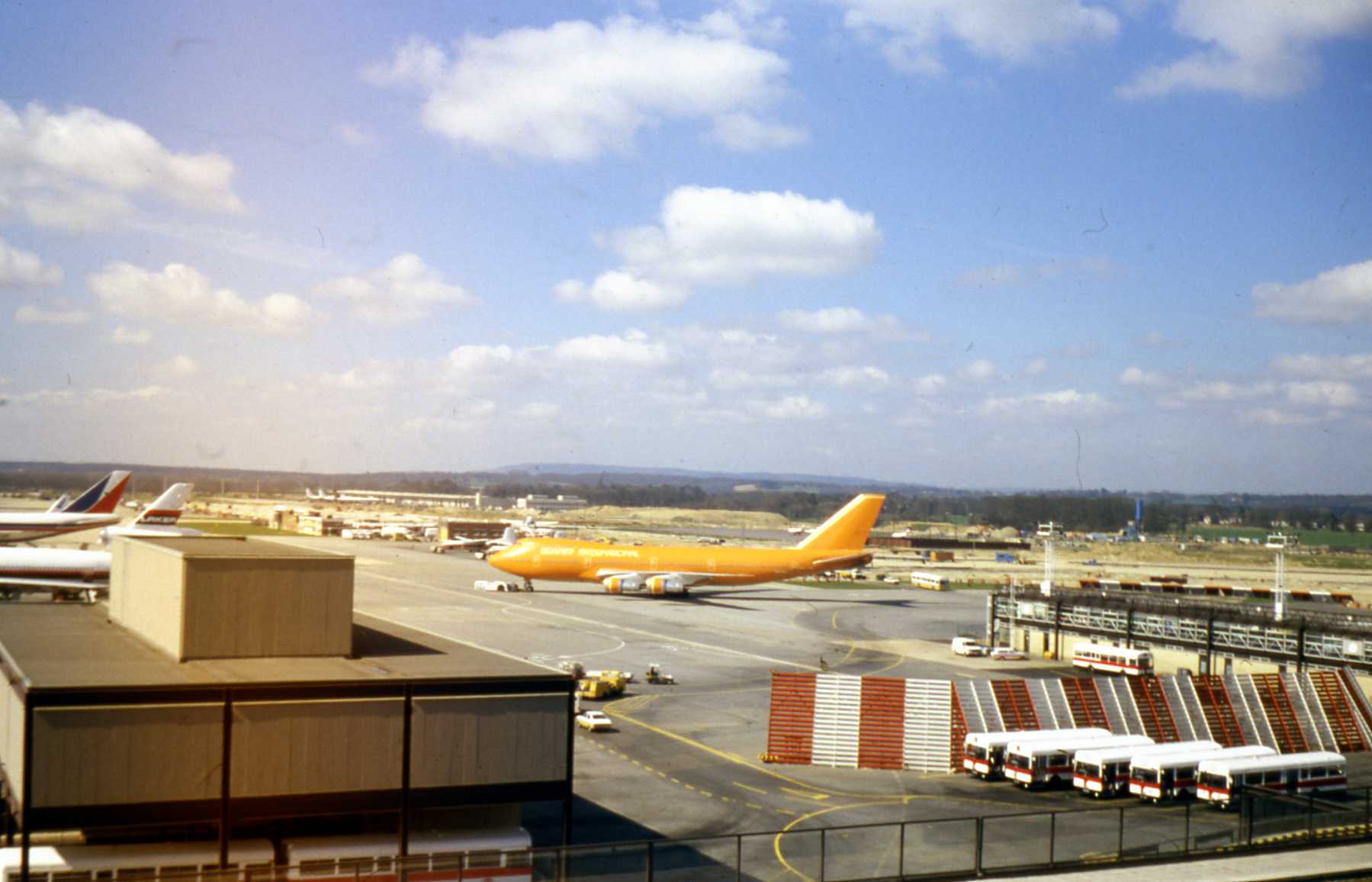 Boeing 747-200F
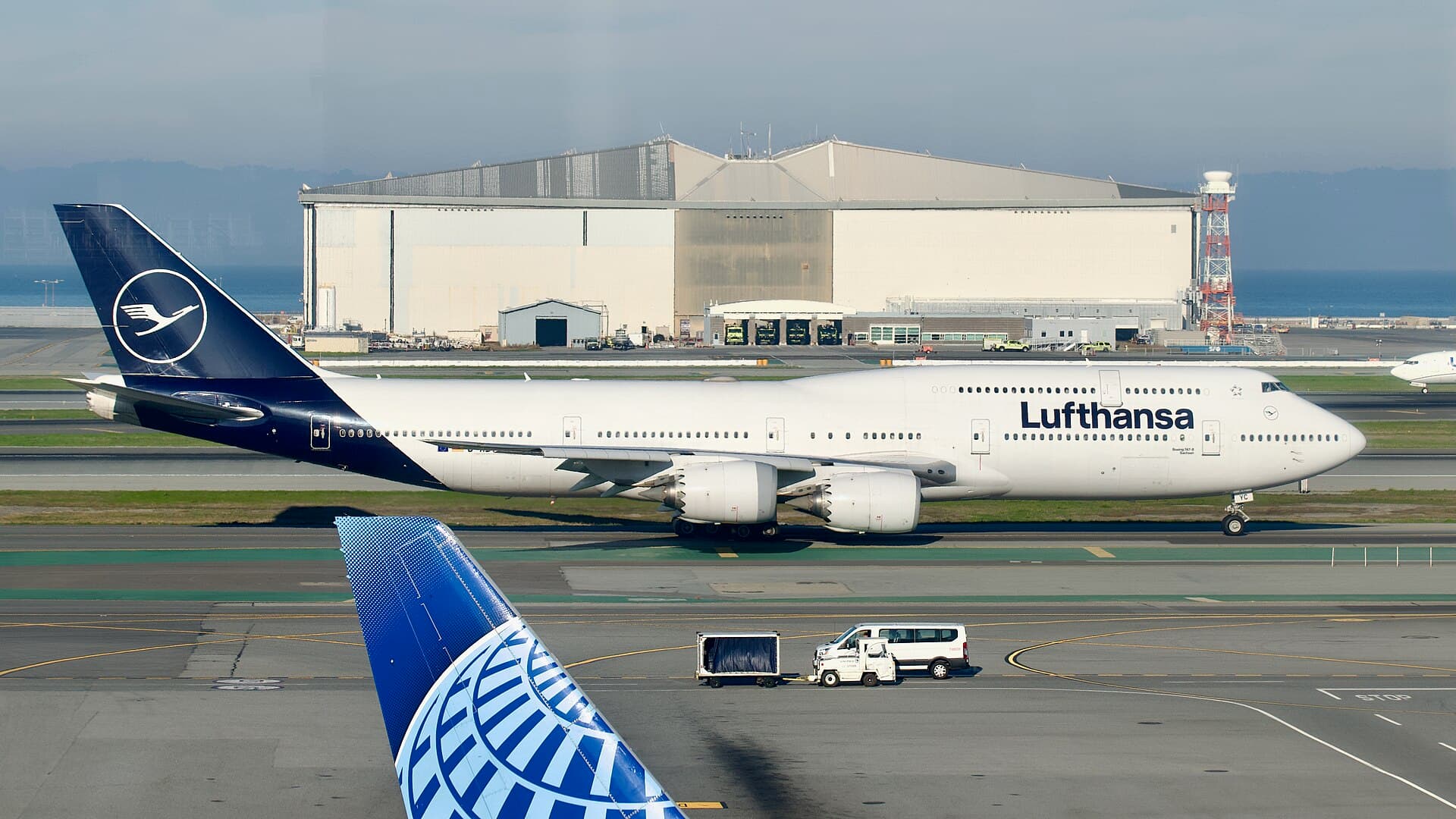
The final generation, the 747-8, launched in 2005 and entered service in 2011: a stretched, re-winged, re-engined aircraft using technology developed for the 787 Dreamliner, offered almost entirely as the 747-8F freighter and in small numbers as the 747-8I passenger version, of which only a handful were sold to airlines, principally Lufthansa and Korean Air, alongside a run of VIP and government aircraft. Passenger demand for a four-engine wide-body had by then largely moved to twin-engine competitors, and the 747-8's order book stayed thin even as its freighter sibling remained in steady demand.
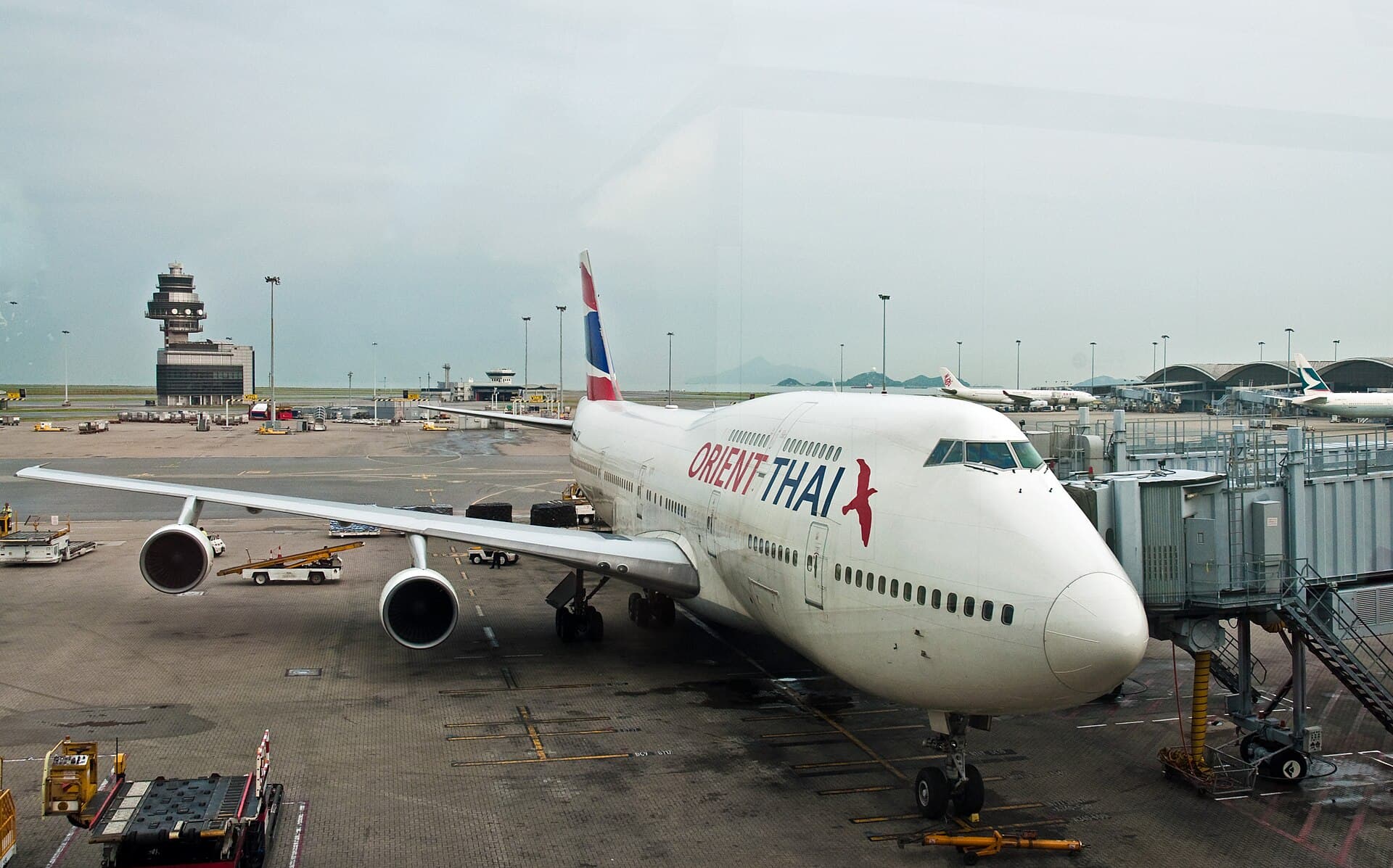 Boeing 747-300
Production ended on 6 December 2022, when the last airframe, a 747-8F for Atlas Air, rolled off the Everett line, and Boeing delivered it on 31 January 2023, fifty-four years after City of Everett first flew. In total, 1,574 747s of every version were built, a production run longer than that of any other wide-body airliner in history.
Operators
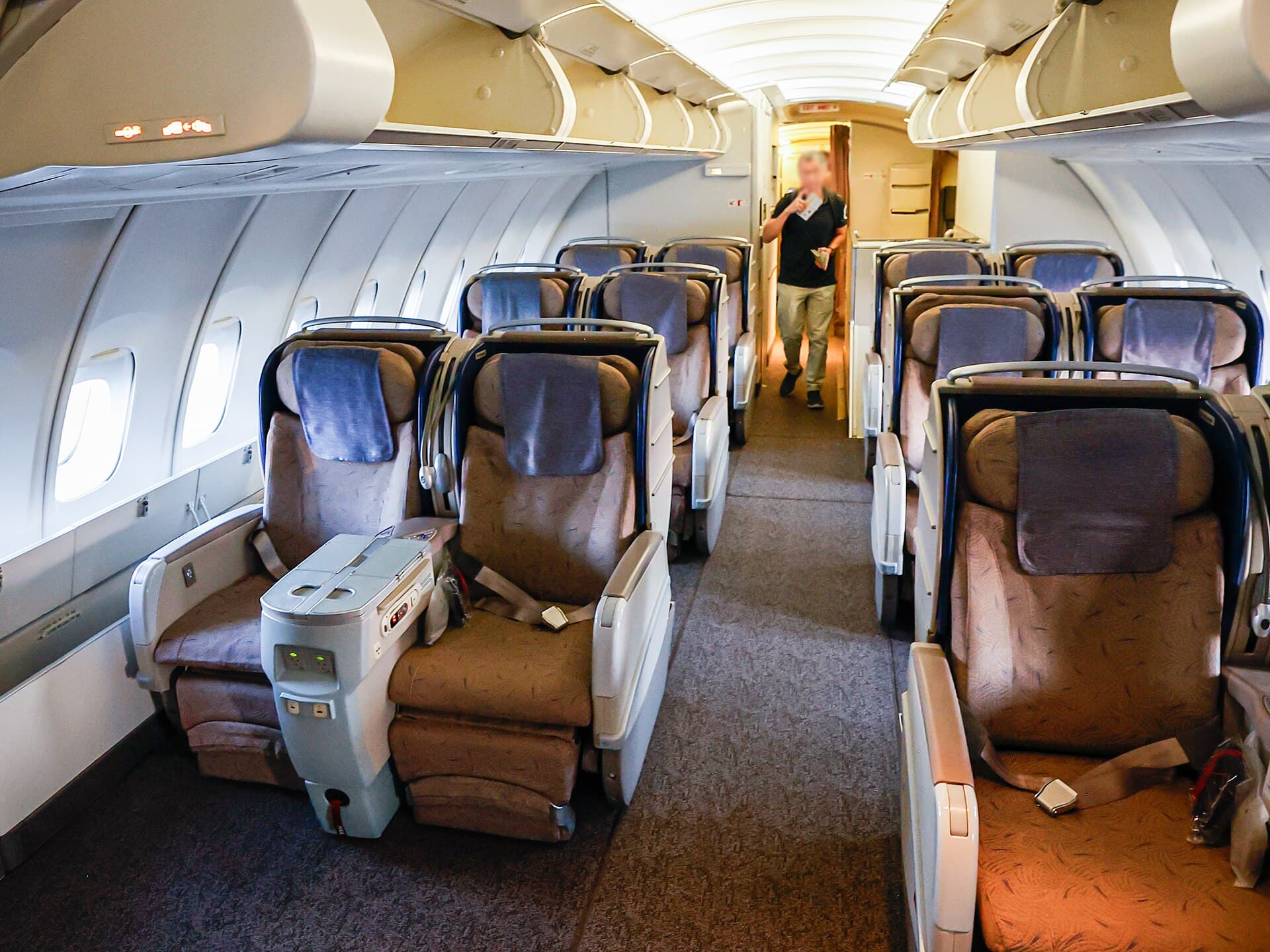 Boeing 747-400
Pan Am's launch order made it the type's first and, for years, its most closely identified operator, but the 747 quickly became the aircraft every major international carrier needed on its most important routes. BOAC and its successor British Airways flew the type for fifty years, longer than almost any other airline, retiring their last 747s in 2020. Lufthansa, Japan Airlines, Qantas, Singapore Airlines and Cathay Pacific each built long-haul networks and, in several cases, entire brand identities around the aircraft's size and range.
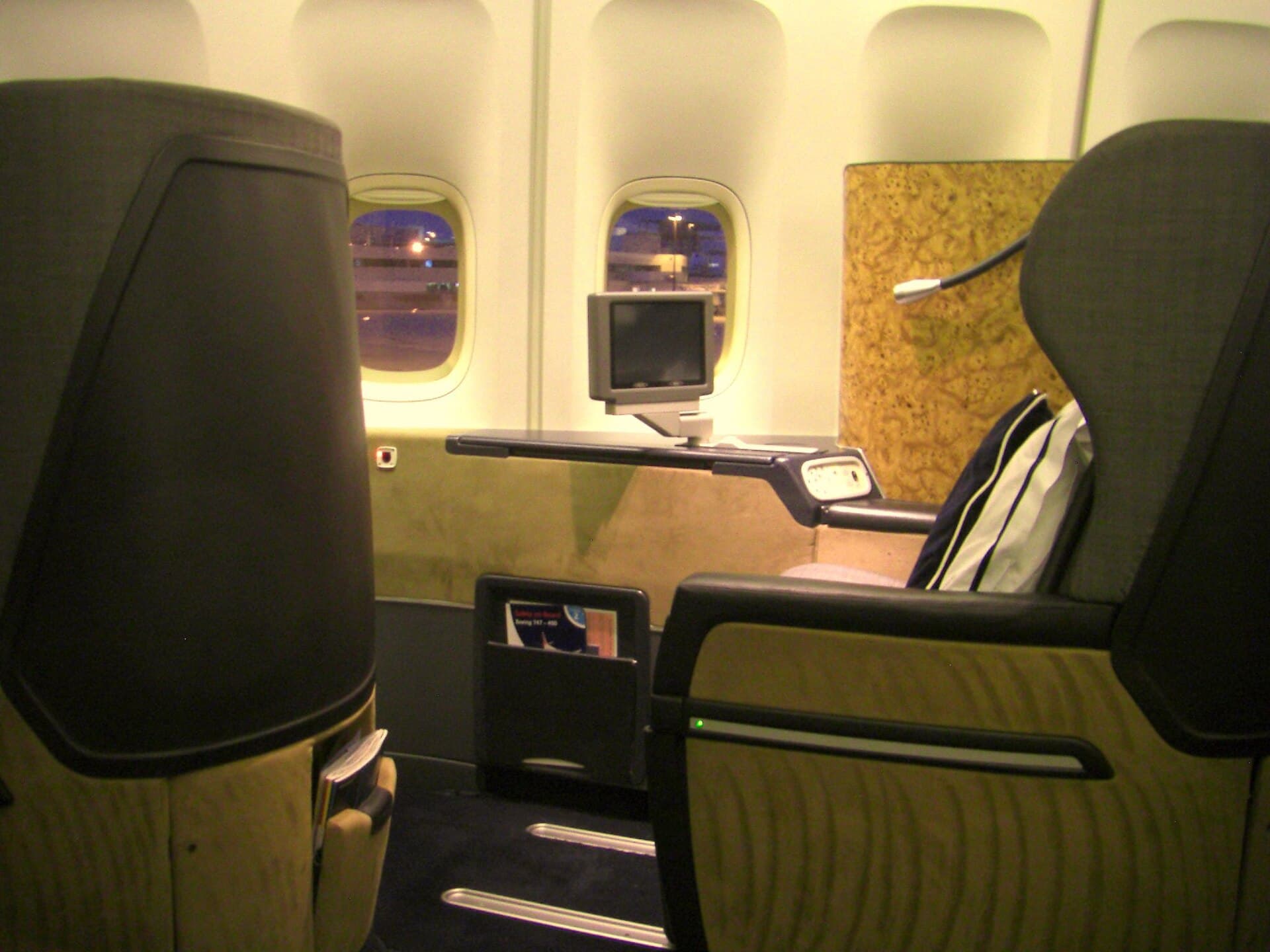
Qantas in particular made the 747 central to its story, flying non-stop between Australia and the rest of the world on routes no smaller aircraft of the era could have managed, while Japan Airlines and All Nippon Airways operated some of the highest-density domestic 747 configurations ever built, carrying well over five hundred passengers on short intercity hops within Japan: a use case almost nobody outside the country ever saw.
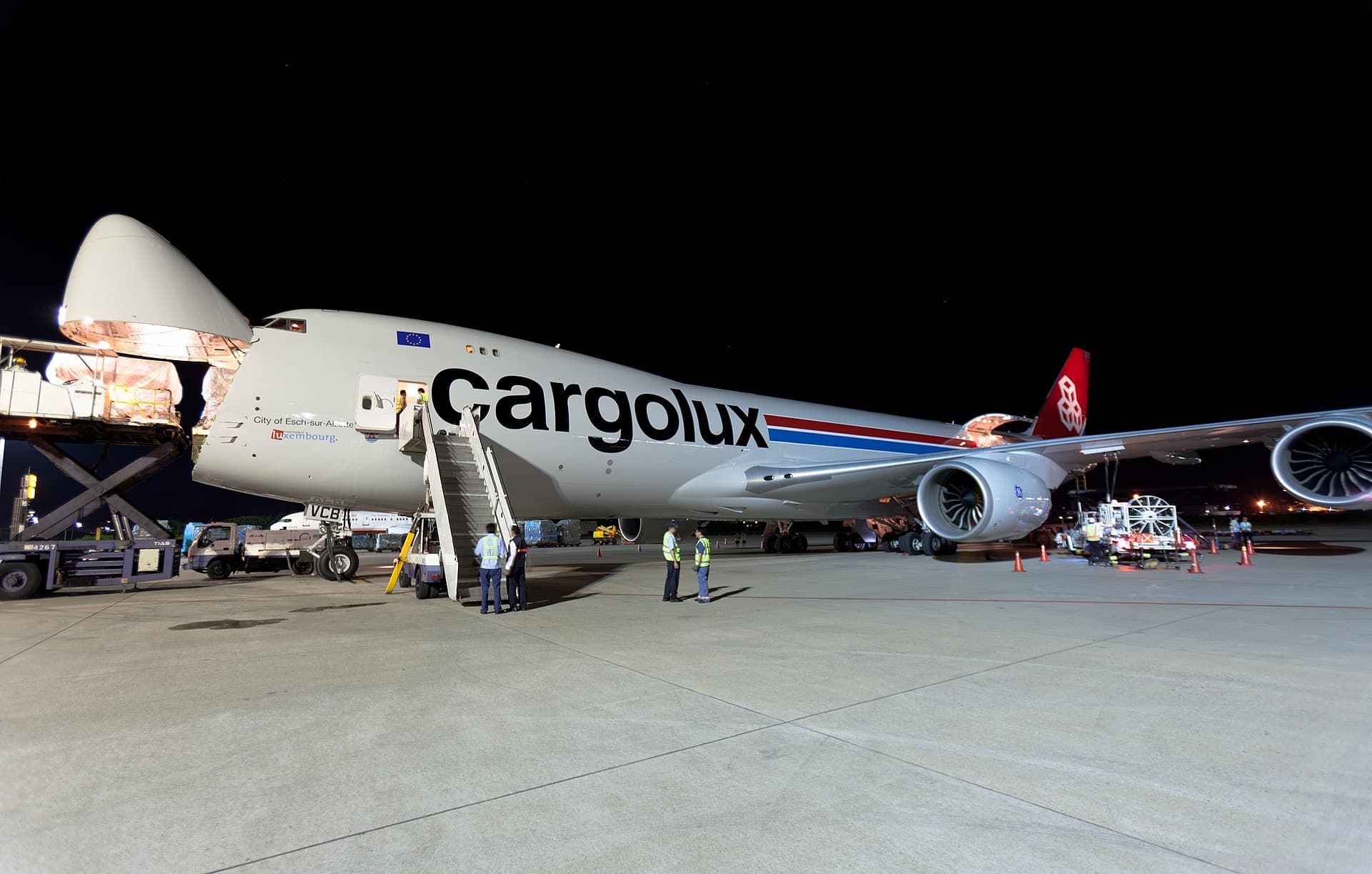 Boeing 747-8F
As passenger demand shifted toward twin-engine wide-bodies from the 2000s onward, the 747's role among major airlines shifted with it. Freight operators (Cargolux, Atlas Air, Kalitta Air, Cathay Pacific Cargo and others) became the type's most committed customers, keeping 747 freighters, and eventually the 747-8F, at the centre of global air-cargo networks long after most passenger fleets had moved on. By the aircraft's final years of production, freighter orders were effectively the only orders left.
Legacy
The 747's retirement from passenger service came faster than almost anyone expected, and largely for reasons that had nothing to do with the aircraft's engineering. The Covid-19 pandemic collapsed long-haul travel demand in 2020 just as airlines were weighing whether to keep flying an ageing, four-engine, fuel-hungry design against newer twin-engine wide-bodies; British Airways, Qantas and Virgin Atlantic all retired their remaining 747 passenger fleets that year, years earlier than planned, and most other major operators had already been winding theirs down.
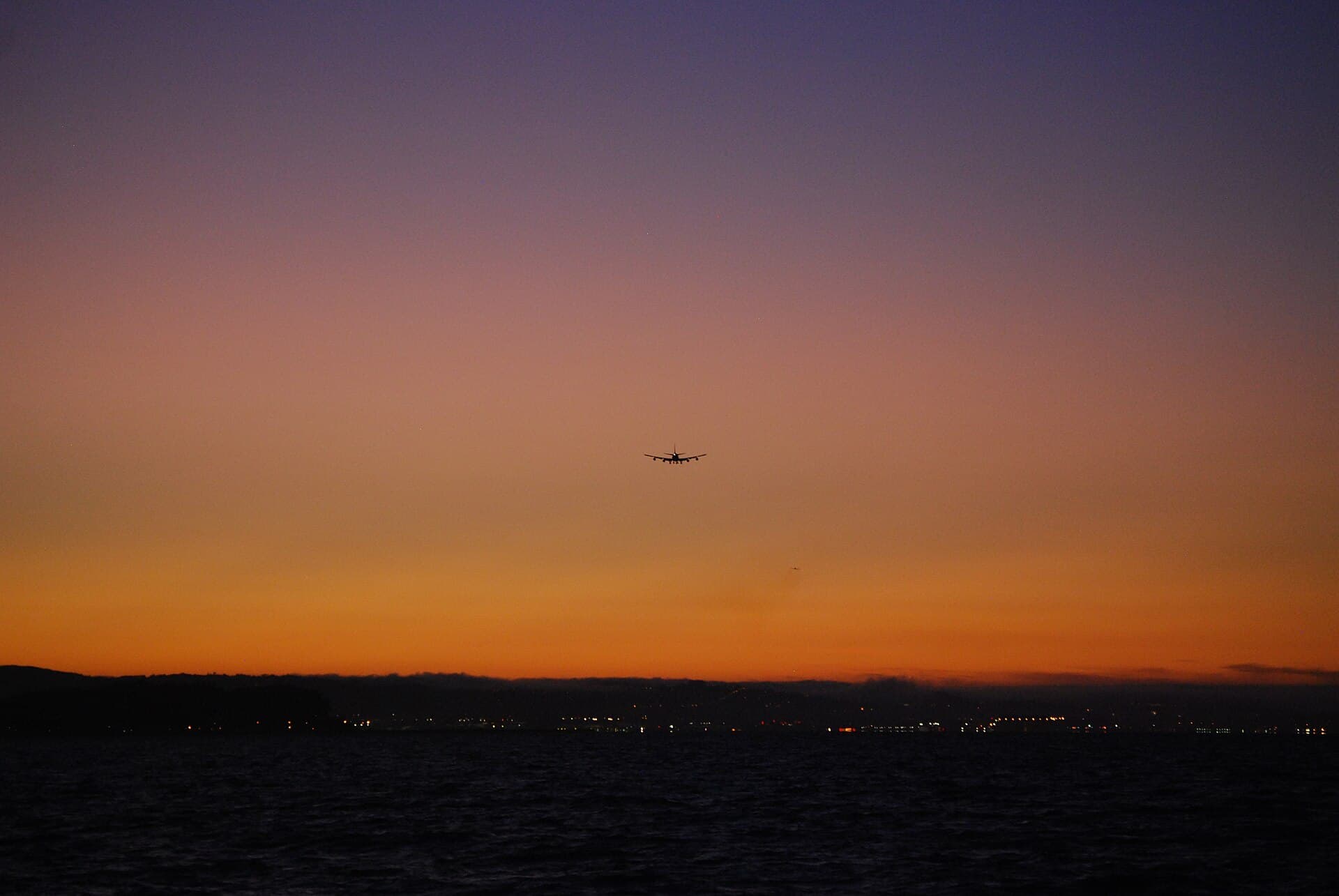 Boeing 747-400
The freighter did not follow the passenger aircraft into retirement, and that asymmetry is the clearest evidence that Boeing's original premise, an aircraft built to become a cargo carrier once its passenger career ended, was correct all along, just decades late. Cargolux, Atlas Air, UPS and a handful of other operators kept ordering and flying 747 freighters well into the 2020s, and the very last aircraft built, delivered to Atlas Air in January 2023, was a 747-8F rather than any passenger variant, a fitting way for a fifty-four-year production run to end.
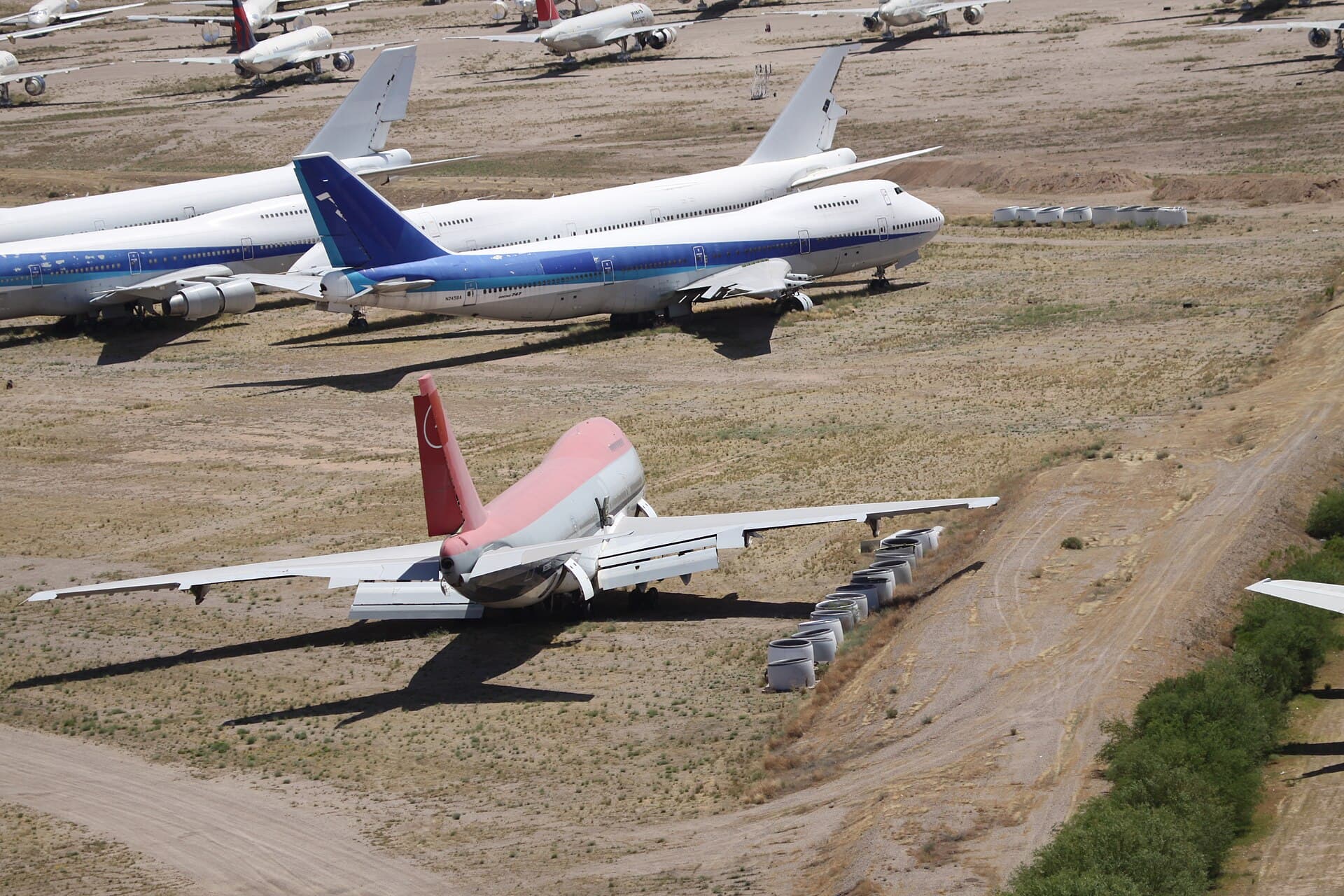
Culturally, the 747 earned a nickname few aircraft ever receive on their own merits: the Queen of the Skies, a title that stuck because for most of half a century it was simply true. It was the aircraft that made long-haul international travel affordable to ordinary passengers, the shape that appeared in films and airline advertising as shorthand for glamorous travel, and for many people the first and only jumbo jet they ever flew on.
Its most consequential legacy, though, is the one told at the top of this entry: by making it cheap to fly hundreds of people across an ocean at once, the 747 answered the question Concorde could never answer profitably, and in doing so decided that the future of mass air travel would be wide and slow rather than narrow and fast. Every wide-body built since, twin-engine or not, flies routes the 747 proved existed, in cabins shaped by the cross-section it introduced in 1970.
Model evolution
Boeing 747-100
1970The original production version, delivered to Pan Am and other launch customers from January 1970. It established the twin-aisle, wide-body cabin cross-section every later large airliner would copy, and the raised-cockpit, swing-nose freighter capability that defined every 747 built after it. Early examples were plagued by the underperforming Pratt & Whitney JT9D engine that had grounded finished airframes at Everett through 1969, and Boeing spent the type's first years resolving reliability problems the engine, not the airframe, had caused.
Established the baseline airframe, wing planform and JT9D-powered configuration that every later variant was derived from, including the twin-aisle main-deck cross-section, the raised flight deck with a short upper-deck cabin behind it, and the hinged nose door built in from the start for the freighter role Boeing expected to need eventually. Built to Pan Am founder Juan Trippe's demand for an aircraft roughly twice the capacity of the Boeing 707, priced to make long-haul flying affordable to far more passengers than the jets it replaced, and designed as a freighter-in-waiting because Boeing and Pan Am both expected supersonic transports to eventually take over premium passenger long-haul routes.
Boeing 747-200
1971A heavier, longer-range development of the -100 offered in passenger, freighter (747-200F), convertible (747-200C) and combi (747-200M) forms, and the best-selling version of the type through the 1970s and 1980s at just under 400 built. It was also the airframe chosen for the two VC-25s that serve as Air Force One and for the E-4B airborne command post.
Higher maximum take-off weight, greater fuel capacity, strengthened structure and landing gear, and, for the first time on the 747, a choice of engines from all three major manufacturers: Pratt & Whitney JT9D, General Electric CF6-50 and Rolls-Royce RB211-524. The -100 could fill its cabin or fly its longest advertised route, but not reliably both, and the early JT9D's troubles had made airlines wary of being tied to a single engine supplier. Opening the aircraft to three engine makers was as commercially important as the extra weight and fuel: it let carriers buy a 747 without abandoning the powerplant their maintenance base was already built around.
Boeing 747SP
1976A shortened, ultra-long-range Special Performance version built for routes the standard-length 747 could not fly nonstop, distinguished by its stubby fuselage and taller tail.
Fuselage shortened by more than 46 ft and tail height increased for stability, trading capacity for range. Built for Pan Am and Iran Air routes too long for a fully loaded standard 747 to fly nonstop.
Only 45 were built, but the type set multiple distance and round-the-world speed records and earned a devoted following among enthusiasts for its distinctive proportions.
Boeing 747-300
1983The first variant with the stretched upper deck, extending the small lounge behind the cockpit into a full passenger cabin seating up to 69. Launched by Swissair and introduced in 1983, it was the shortest-lived passenger 747: only 81 were built before the -400 replaced it.
Upper deck stretched by about seven metres with a straight internal staircase replacing the earlier spiral one, and the fairing behind it reshaped to suit the longer deck. The stretch added premium seats and cabin volume without lengthening the main deck or changing the aircraft's airport footprint: the cheapest capacity Boeing could offer on an existing airframe. Its commercial problem was what it kept rather than what it added: the -300 retained the three-crew flight deck, and airlines facing the cost of a flight engineer on every sector waited eighteen months for the two-crew -400 instead.
Commercially the weakest passenger 747. The stretched deck itself was well received and carried over unchanged to the -400; the aircraft it was first fitted to was simply overtaken by its own successor.
Boeing 747-400
1989The most heavily revised and most numerous passenger variant, with a two-crew glass cockpit, wingtip winglets and greater range, becoming the aircraft most associated with the 747 name by the 1990s and 2000s.
Two-person glass-cockpit flight deck replacing the flight engineer, wingtip winglets, extended range and a lighter airframe using advanced aluminium alloys. Developed to cut operating costs and extend range as twin-engine wide-bodies began to compete for the same long-haul routes.
Became the definitive 747 for most airlines and passengers, with well over 600 built, by far the most successful version of the type.
Boeing 747-8
2011The final and largest 747, stretched further and re-winged with technology from the 787 programme, built overwhelmingly as the 747-8F freighter with only a small number of 747-8I passenger aircraft delivered.
Stretched fuselage, new composite wing with raked tips, and General Electric GEnx-2B67 engines shared in principle with the 787. Built to keep the 747 competitive on payload and efficiency as air-cargo demand grew and Airbus's A380 entered service.
A commercial success as a freighter but a limited one as a passenger aircraft, sold mainly to Lufthansa and Korean Air; production ended in 2022 with the last 747-8F delivered to Atlas Air.
Blueprints
- 747 Family, Boeing
- 747-8 Freighter, Boeing
- Boeing 747 — City of Everett, The Museum of Flight
- Shuttle Carrier Aircraft, NASA
- Type Certificate Data Sheet A20WE — Boeing 747, Federal Aviation Administration
- Boeing 747 production list, Planespotters.net
- How the 747 Changed Air Travel, Smithsonian Air & Space Magazine
- Boeing 747, Wikipedia
Checked September 1, 2026