Aircraft
Taylorcraft BC-12
Taylorcraft Aviation CorporationUnited States
- Role:
- Light trainer
- First flight:
- 1938
83kt
Cruise speed
208nm
Range
General
- Role:
- Light trainer
- Status:
- Retired
Programme
- First flight:
- January 1, 1938
- Introduction:
- 1938
- Produced:
- 1938 to 1946
- Number built:
- 4,191
Crew & capacity
- Crew:
- 1
- Capacity:
- 1 passengers
Dimensions
- Length:
- 22 ft
- Height:
- 7 ft
- Wingspan:
- 33 ft
- Wing area:
- 163 ft²
Weights
- Empty weight:
- 750 lb
- Maximum takeoff weight:
- 1,199 lb
- Fuel capacity:
- 18 US gal
Powerplant
- Engine:
- 1 × Continental A-65 (65 hp)
- Power:
- 65 hp (48 kW)
Performance
- Maximum speed:
- 89 kt
- Stall speed:
- 33 kt
- Rate of climb:
- 551 ft/min
- Ceiling:
- 13,999 ft
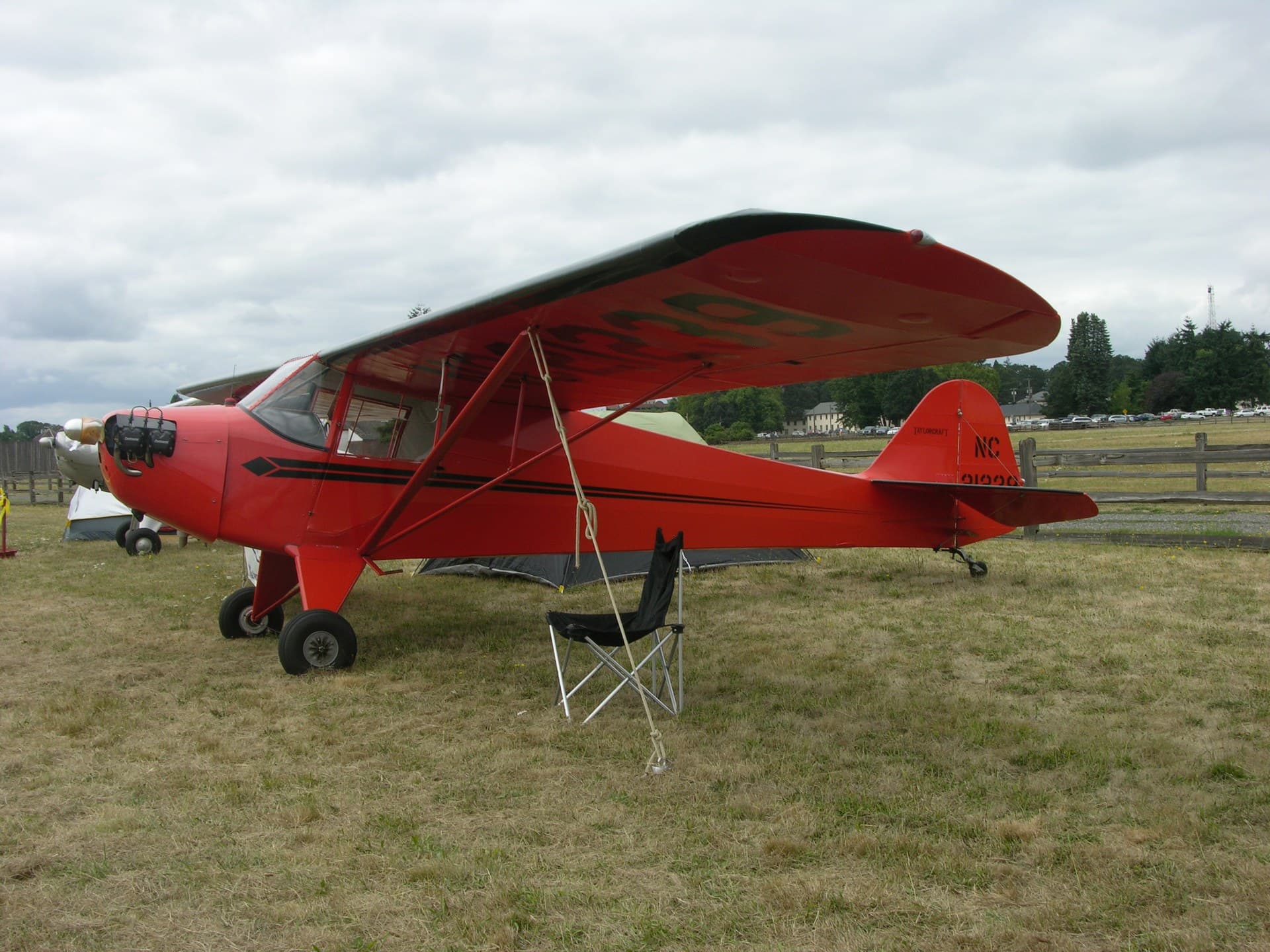
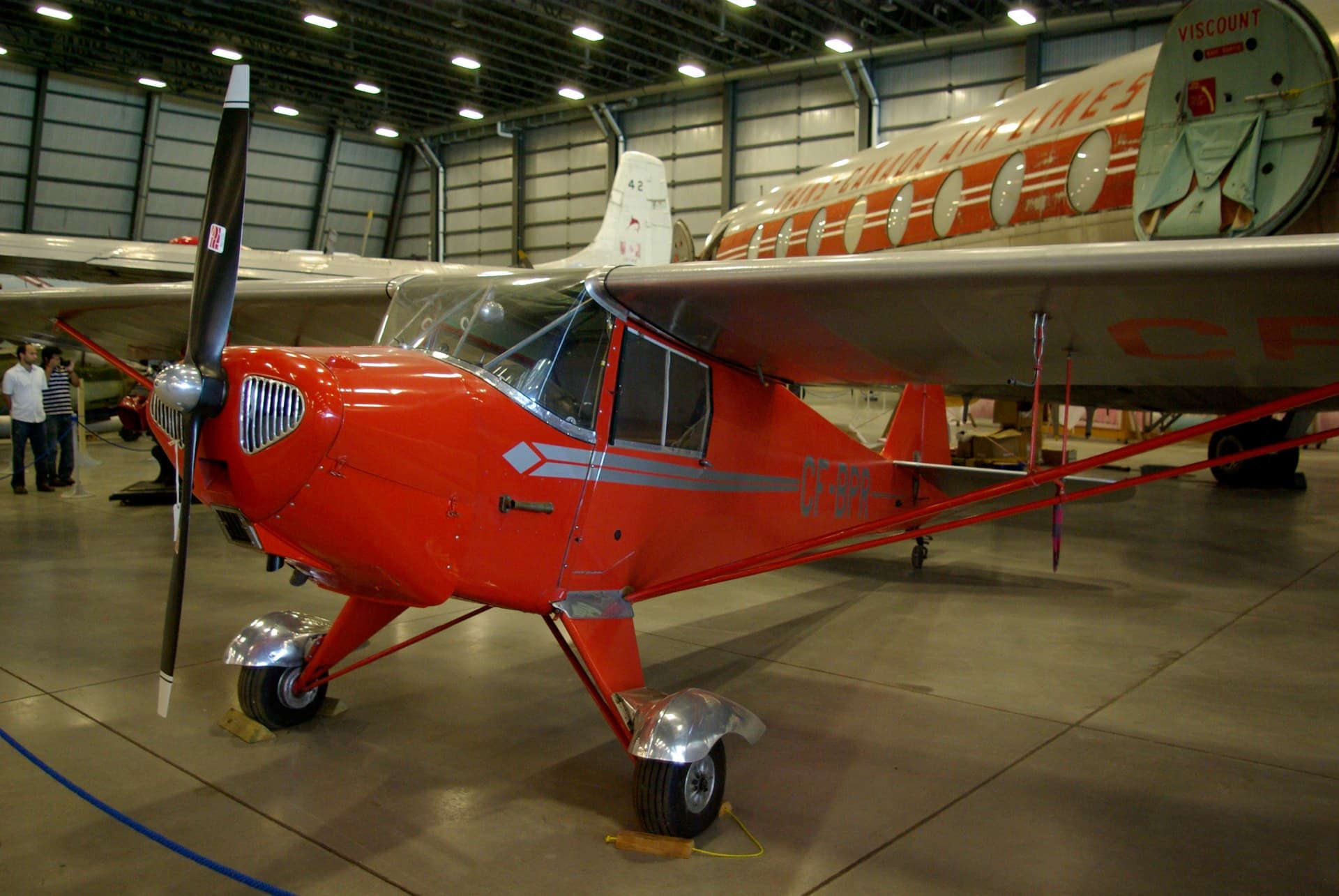
The Taylorcraft BC-12 is the aircraft C. Gilbert Taylor built after he lost the Cub. Taylor had designed the original Taylor Cub in the early 1930s, sold his stake to William Piper during the company's Depression-era bankruptcy, and by 1936 had broken with Piper entirely to found a direct competitor bearing his own name. The BC-12 is what that break produced: a two-seat, high-wing, fabric-covered light aeroplane of almost exactly the Cub's size, weight and mission, sold to the same flying schools for the same money.
The two aircraft are frequently confused at a glance, and just as frequently mistaken for each other's better half. The Taylorcraft is not a copy. Its seats sit side by side rather than in tandem, its fuselage has flat rather than rounded sides, and its NACA-section wing gave it a genuine, measurable speed advantage over a Cub on the same 65-horsepower Continental engine. Pilots who have flown both tend to agree the Taylorcraft was the more efficient design.
Efficiency did not translate into survival. Taylorcraft built the BC-12D into the middle of the largest and shortest general-aviation boom in American history, only to have the boom collapse under the entire industry in 1946: and unlike Piper, Taylorcraft did not come through it. The company most identified with the BC-12 went bankrupt that year, a fact that outweighs any dyno figure and is the reason this entry exists as much for what the aircraft could not save as for what it was.
History
C. Gilbert Taylor did not leave Piper Aircraft on good terms. Taylor had designed the original Taylor E-2 Cub in the early 1930s at Bradford, Pennsylvania, and remained the company's chief engineer after Bradford oilman William T. Piper bought the bankrupt Taylor Brothers Aircraft Manufacturing Company out of liquidation in 1931. The two men's partnership soured through the mid-1930s, and in 1936 Taylor sold his remaining stock and walked away, taking his name and a competitor's ambitions with him. He set up first at Pittsburgh-Butler Airport as the Taylor-Young Airplane Company, with local businessman William C. Young supplying capital, then moved that same year to Alliance, Ohio, where the city offered a vacant biplane factory rent-free with an option to buy. The firm was renamed the Taylorcraft Aviation Corporation in 1939, raising further capital by selling more than 35,000 shares to local citizens: a company built, quite literally, on the town's own money.
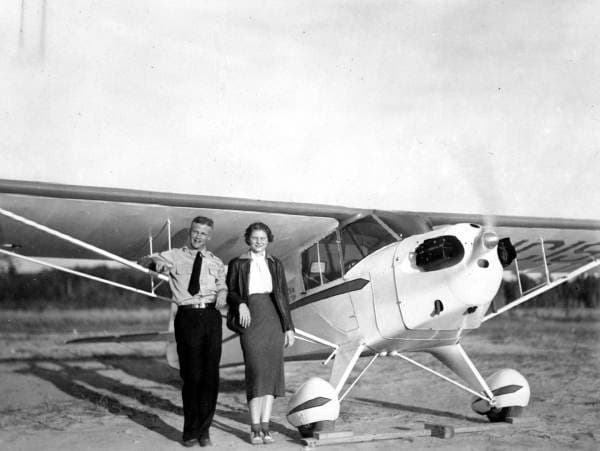
The aircraft Taylor designed there (the Model A, then the B, then the BC) was his answer to the Cub built without Piper: side-by-side seating instead of tandem, flat-sided fabric-over-tube construction instead of rounded, and a NACA-section wing that gave it a real edge in speed and efficiency over the Cub's flatter, draggier aerofoil on the same power. It sold well enough through the late 1930s to make Taylorcraft a genuine second force in the American light-aircraft market, never matching Piper's volume but never far behind it either.
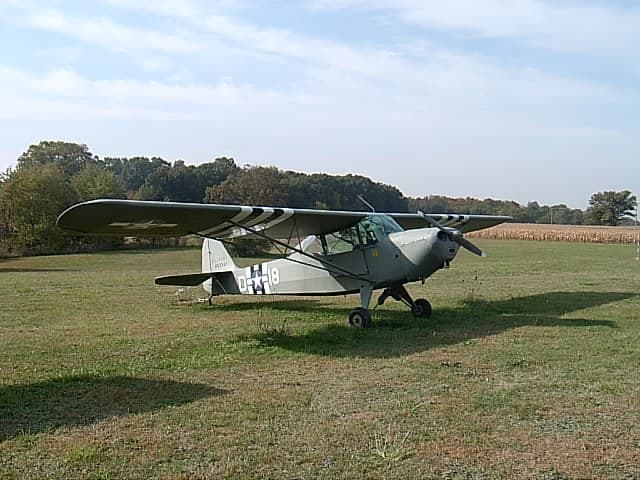 Taylorcraft L-2 Grasshopper
War changed the aircraft rather than replacing it. The U.S. Army adopted a lightly modified Taylorcraft, the DCO-65, as an artillery-observation and liaison type and designated it the L-2 Grasshopper: Taylorcraft's answer to Piper's L-4, built to the same tactical requirement and flying much the same missions over the same battlefields, unarmed and almost defenseless, spotting for artillery and ferrying dispatches from strips a few hundred metres behind the front line. Successive L-2 sub-variants added observation glazing, and late-war L-2M aircraft picked up minor equipment refinements; something over two thousand Grasshoppers were built in total, alongside a smaller run of unpowered TG-6 training gliders derived from the same airframe.
Peace brought the company's best year and its last. Civilian production resumed in 1945 with the redesigned BC-12D, and 1946: fed by returning servicemen with pilot training, government loans and an industry-wide conviction that millions of Americans were about to buy an aeroplane the way they bought a car: became one of the highest-output years any light-aircraft manufacturer in the United States has ever recorded, Taylorcraft included. It did not last through the year. The postwar general-aviation boom collapsed almost as fast as it had inflated, dealers cancelled orders faster than factories could halt production lines, and in the fall of 1946 a fire at the Alliance plant compounded a company already drowning in unsold inventory. Taylorcraft petitioned for bankruptcy that year; a trustee took over the liquidation, and the company's assets went to public auction in March 1947.
That failure is the fact this entry has to sit with. Piper absorbed the same 1946 collapse and came out the other side, building the PA-11 and then the Super Cub into a second act that lasted decades. Taylorcraft did not get a second act of its own, only a series of them, run by others. The Taylorcraft name was revived in 1947 as Taylorcraft Inc. at Conway, Pennsylvania, and built light aircraft into the late 1950s; further revivals followed under other owners through the 1970s and 1980s, briefly producing the F-19 and F-21 Sportsman derivatives of the same basic B-model airframe. None of them recovered the position the company had held, however briefly, in 1946. The aircraft that was arguably the better of the two Cub-class trainers ended up owned by a company that, unlike Piper, could not survive its own best year.
Development
The B-series lineage that produced the BC-12 ran through a sequence of engine and detail changes rather than a single clean redesign. The Model A of the mid-1930s gave way to the Model B, refined into the BC with a 50-horsepower Continental A-50, and then the BC-65 of 1939 with the 65-horsepower A-65 that became the type's defining powerplant: the same engine, notably, that Piper standardized on for the J-3 that same period, which is exactly why the two aircraft invite such direct comparison.
The postwar BC-12D, sometimes marketed as the "Twosome" or "Traveller," was the version that mattered commercially: a lightly revised tail with a simplified two-hinge rudder in place of the prewar three-hinge design, and the airframe that Taylorcraft built in volume through 1946 to meet the veteran-driven training boom. A later BC-12D-85 offered an 85-horsepower Continental C-85 for buyers wanting more climb and payload margin, at the cost of the type's lightest, most efficient form.
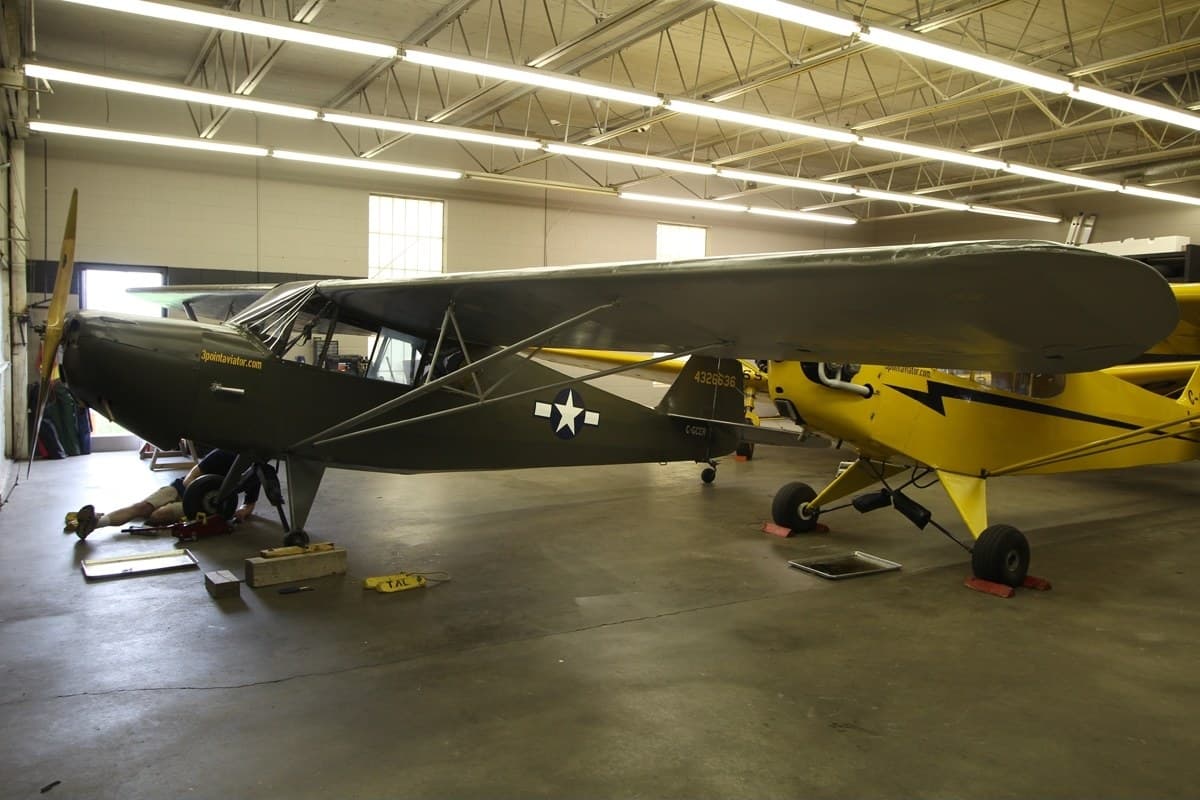 Taylorcraft DCO-65
Military production ran alongside civilian, not after it: the DCO-65 observation variant became the L-2 Grasshopper from 1941, and the type stayed in that dual civilian-and-military development track until the 1946 collapse ended new production of any kind. What followed was not development so much as revival: later owners of the Taylorcraft name built the F-19 and F-21 Sportsman on the same basic wing and fuselage decades afterward, but the core BC-12 design was never substantially redrawn after 1946; there was no company left with the capital to redraw it.
Design
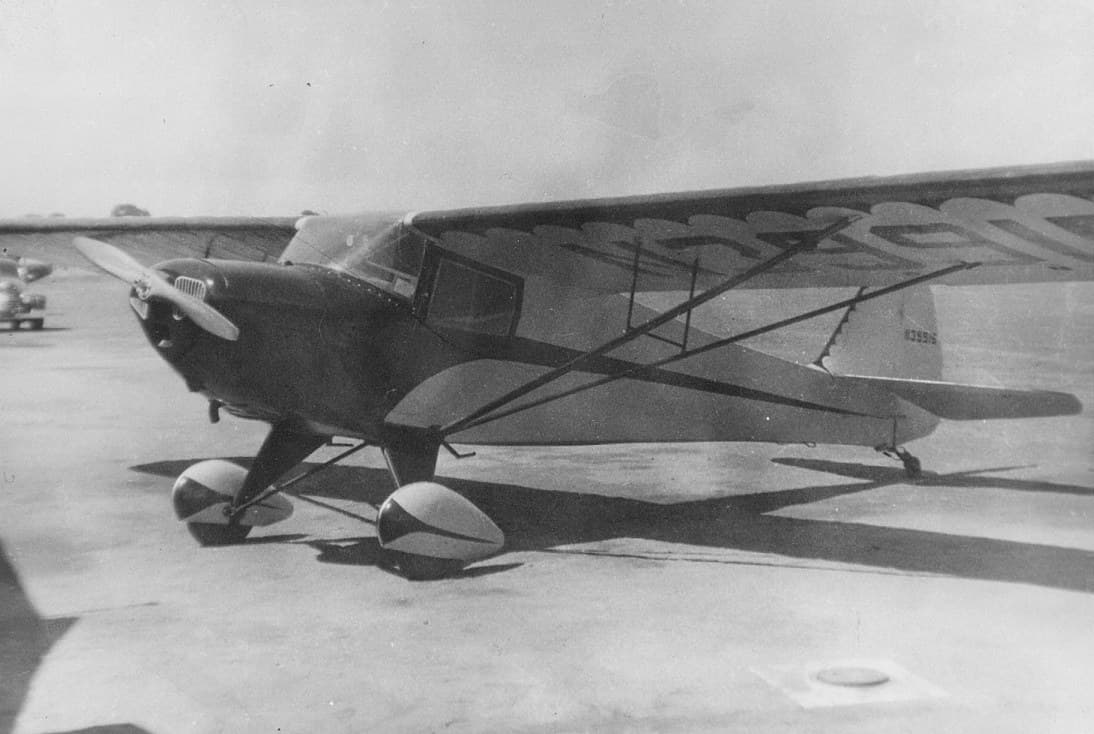 Taylorcraft BC-12D
Structurally the BC-12 is close kin to every light trainer of its generation: a welded steel-tube fuselage, wooden wing spars, and the whole airframe covered in doped fabric. At around 750 lb empty it is marginally lighter than a comparable Cub, a difference that shows up directly in performance rather than remaining a specification-sheet curiosity.
The defining structural choice is the cabin. Where the Cub seats its two occupants in tandem, the Taylorcraft puts them side by side under a single wide windscreen, a layout that changes the instructional relationship as much as the airframe: an instructor sitting beside a student can watch their hands on the controls directly, rather than reading their inputs through the airframe from a seat behind them. It also gives the BC-12 a distinctly boxier, flatter-sided fuselage than the Cub's rounded lines, the single most reliable way to tell the two apart at a glance once a viewer knows to look for it.
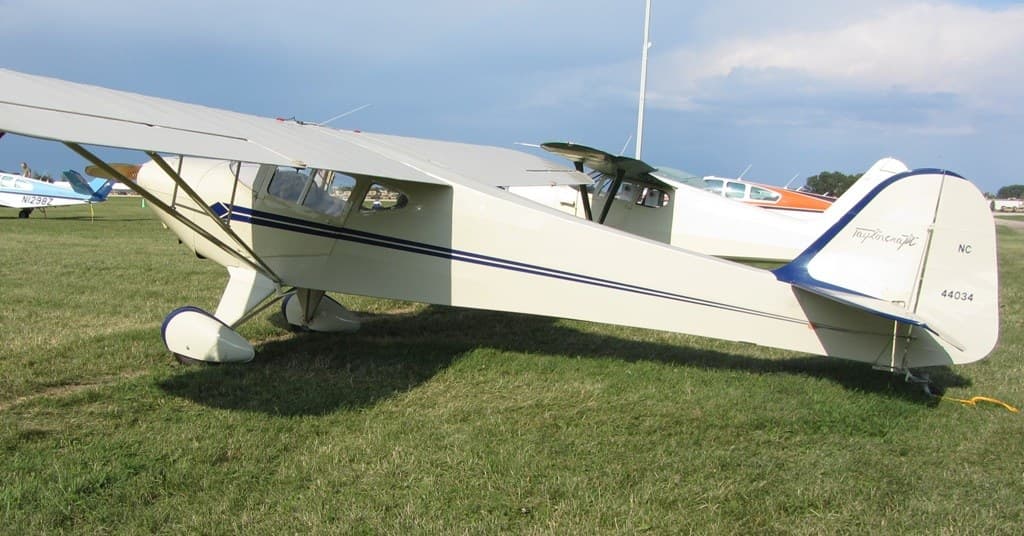
The wing is the other real point of difference. Taylorcraft used a NACA-derived semi-symmetrical section rather than the flat-bottomed aerofoil Piper carried over from the original Taylor Cub design, and the aerodynamic result was measurable: pilots who have flown both types report a BC-12D on a 65-horsepower Continental cruising close to 81 kt, meaningfully faster than a same-engined J-3's roughly 65 kt. Two aircraft built to the same brief, on the same engine, for the same market, arrived at genuinely different efficiency: and the more efficient one is the one that failed.
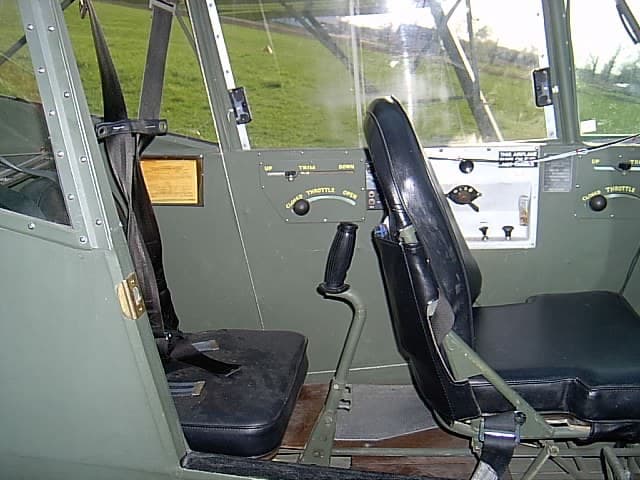
The cockpit is as spartan as any trainer of the period: airspeed indicator, altimeter, engine gauges, a compass, a single control stick each, and no electrical system on the earliest models. What the BC-12 lacks in refinement it makes up in outward visibility, the side-by-side cabin and its broad windscreen give both occupants a wider view forward than a tandem cockpit affords the rear-seat solo pilot in a Cub.
Flight characteristics
Pilots checked out on both types tend to describe the BC-12 as the livelier of the two: a touch faster in cruise, a touch more responsive on the controls, and, thanks to its side-by-side cabin, noticeably more sociable to fly with a passenger or instructor who wants to see exactly what the pilot is doing rather than infer it. That sociability comes at the cost of a wider, blunter cross-section than a tandem cabin needs, a small drag penalty the aircraft's more efficient wing largely absorbs.
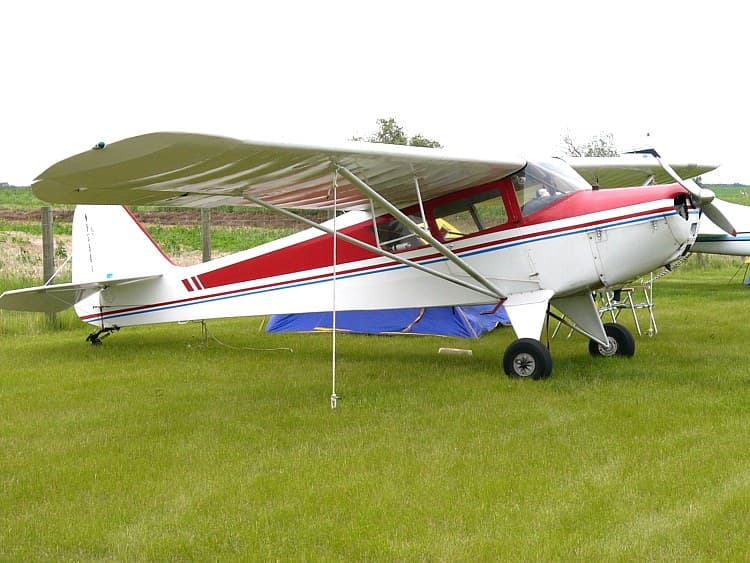 Taylorcraft BC-12D
Like the Cub, it is a taildragger, and it demands the same active rudder discipline on takeoff and landing roll that any tailwheel type requires, a pilot who lets the tail wander invites the same ground-looping swing regardless of which side-by-side or tandem cabin sits ahead of it. Stall behaviour is gentle and well mannered, in keeping with a type built from the outset as elementary instruction, and the low wing loading that gives it good short-field manners also makes it, like most light taildraggers of the era, sensitive to crosswind and gusty conditions.
Where the comparison to the Cub becomes almost unavoidable is in straight-line performance: a BC-12D pilot flying formation with a J-3 on the same power will typically find themselves throttled back to stay with it. It is a small, almost trivial-sounding margin in absolute terms, perhaps 8–11 kt in cruise, but it was exactly the kind of margin that mattered to a flying school comparing operating costs per training hour, and precisely the kind of advantage that a light-aircraft market obsessed with price rather than efficiency in the late 1930s and 1940s often failed to reward.
Military service
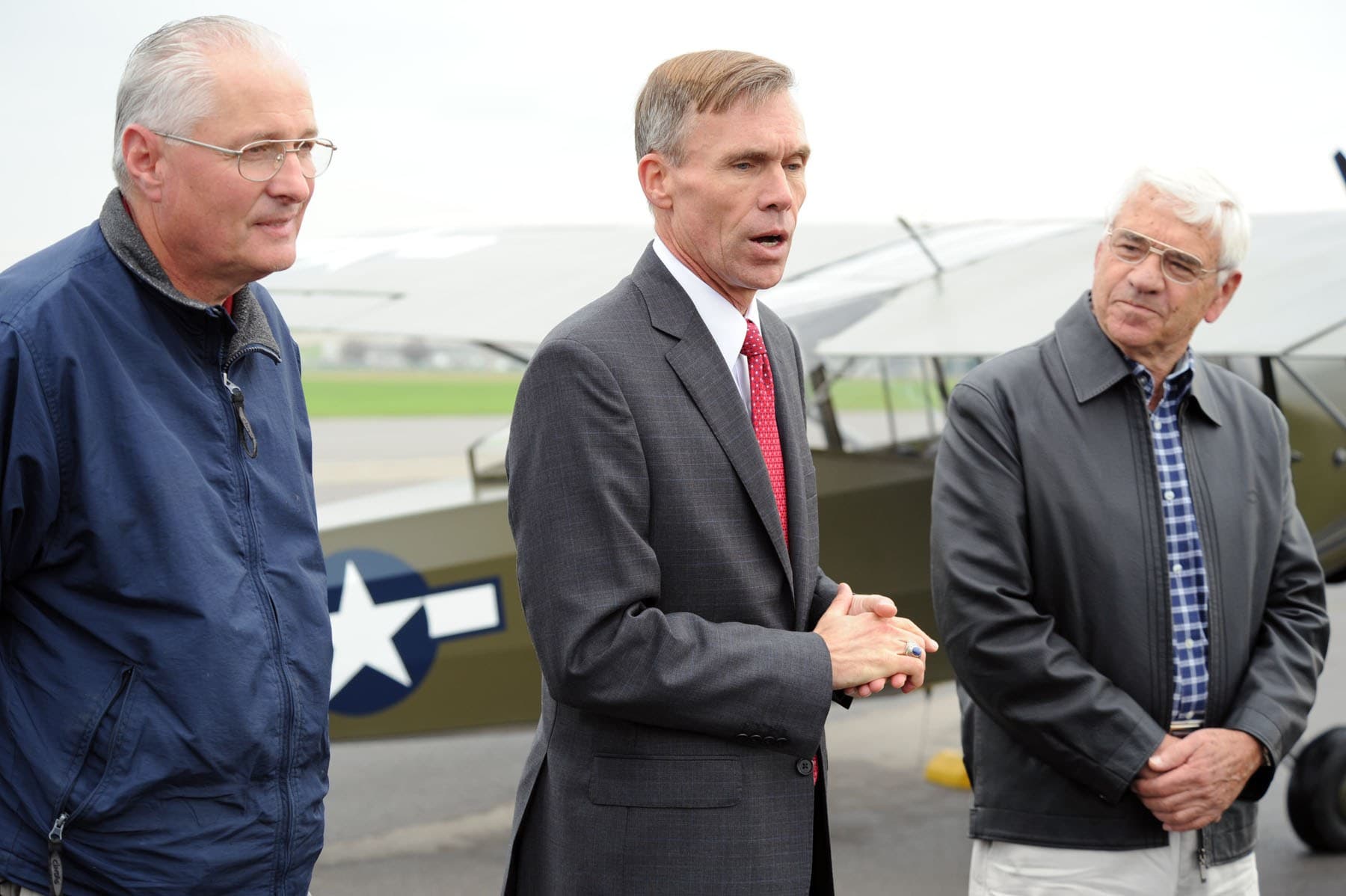 Taylorcraft L-2M Grasshopper
Taylorcraft's wartime aircraft was the mirror image of Piper's: where the L-4 Grasshopper was a militarized J-3 Cub, the L-2 Grasshopper was a militarized Taylorcraft, adopted by the U.S. Army for exactly the same battlefield role, artillery observation, liaison and light transport from unimproved strips close behind the front line. The prewar DCO-65 civilian-observation variant supplied the airframe basis, modified with expanded glazing to give a forward observer a usable view of the ground for spotting artillery fall-of-shot.
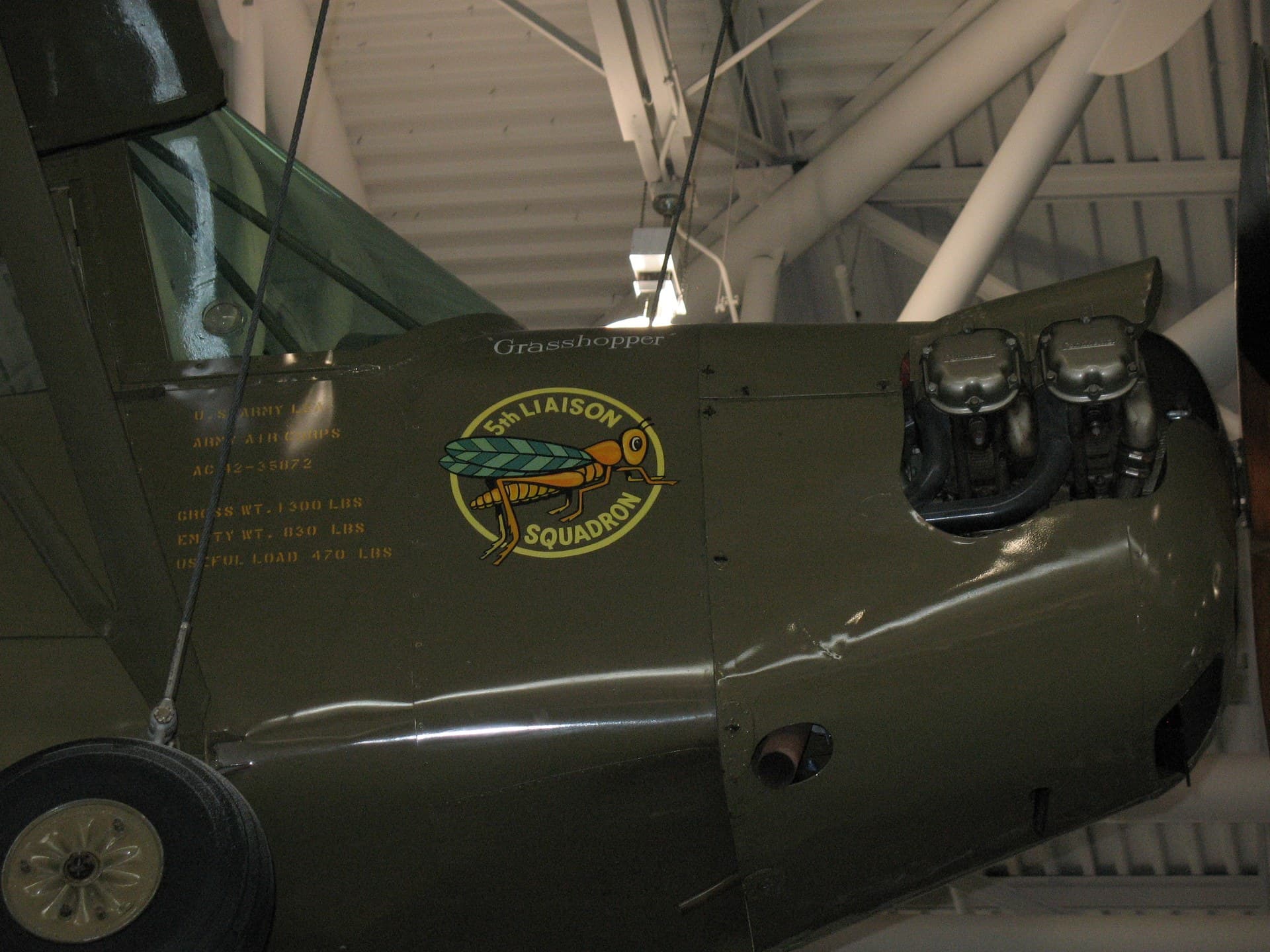 Taylorcraft L-2A Grasshopper
Like its Piper counterpart, the L-2 was unarmed and almost entirely dependent on flying low, slow and unnoticed for its survival; it operated from farm fields, roads and cleared strips a few hundred metres behind friendly lines across the same theatres the L-4 flew, North Africa, Italy, France and the Pacific among them. Successive military sub-variants, up to the late-war L-2M, added minor equipment refinements, some electrical starting and improved radio fits, without changing the basic airframe underneath. Total Grasshopper production ran to a little over two thousand aircraft, a smaller run than the L-4's, but Taylorcraft's military business was never intended to match Piper's civilian volume; it was simply the same wartime opportunity, offered to a smaller competitor.
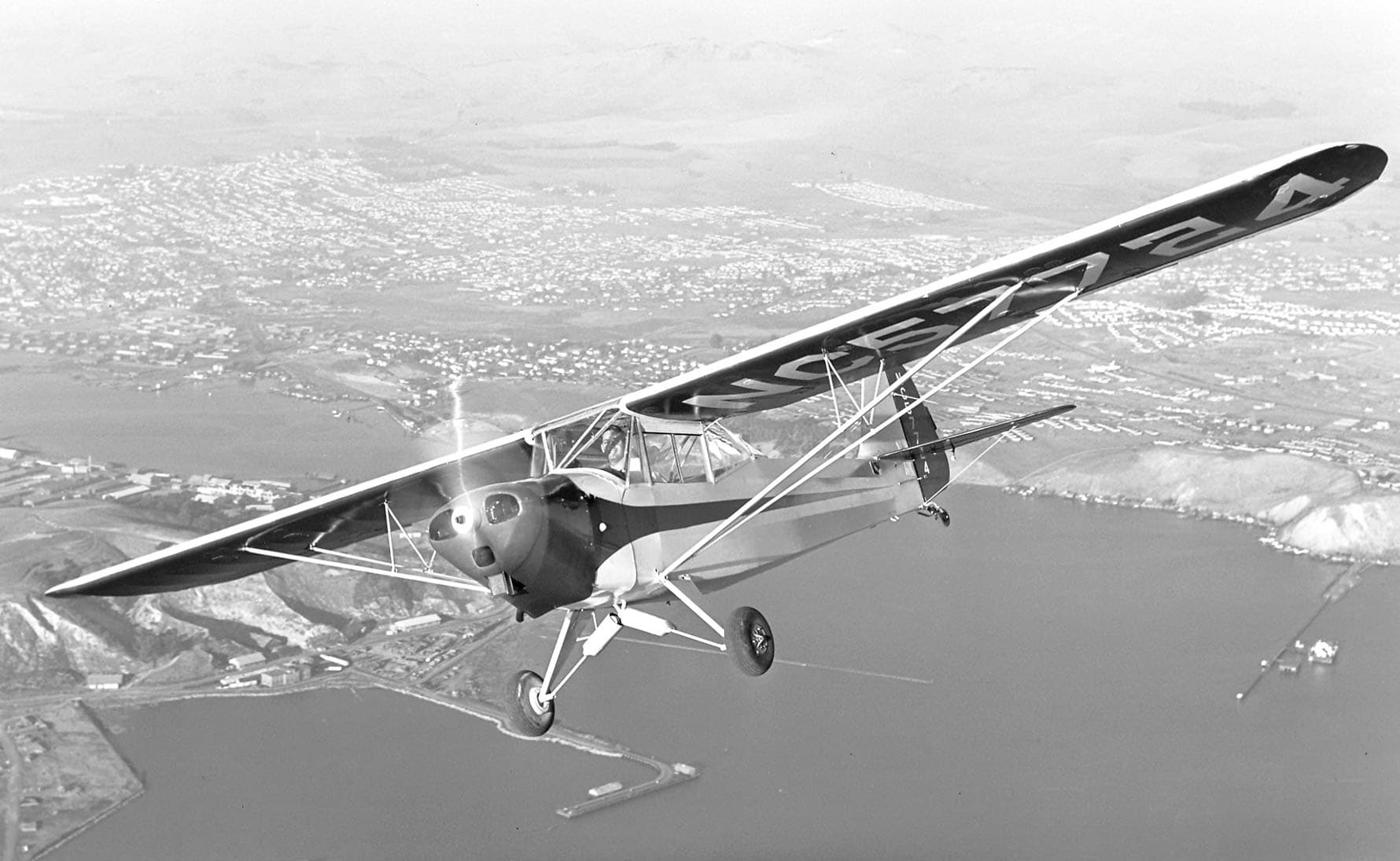 Taylorcraft L-2M Grasshopper
After 1945, surplus L-2s followed the same path as surplus L-4s: sold off cheaply to civilian buyers, stripped of military glazing and radios where practical, and repainted out of olive drab, one more channel feeding the postwar boom that would very nearly, and then not quite, save the company that built them.
Production
Taylorcraft built 4,191 BC-12D airframes, serial numbers 6400 through 10590, in the brief span between the postwar resumption of civilian production in 1945 and the company's collapse in 1946: a rate of output that, for a few months, put Taylorcraft among the highest-volume light-aircraft producers in the United States. Military L-2 Grasshopper production, spread across the war years rather than concentrated in one postwar rush, added a little over two thousand more airframes from the same basic design.
All of it came out of one factory: the former Hess-Argo biplane plant at Alliance, Ohio, that the town had first offered Taylor rent-free in 1936 as an inducement to relocate there, an arrangement that tied the company's fortunes to a single Midwestern community rather than the multi-site footprint larger rivals could fall back on. When a fire struck that plant in the autumn of 1946, on top of a general-aviation market that was already cancelling orders faster than Taylorcraft could fill them, there was no second site to absorb the shock.
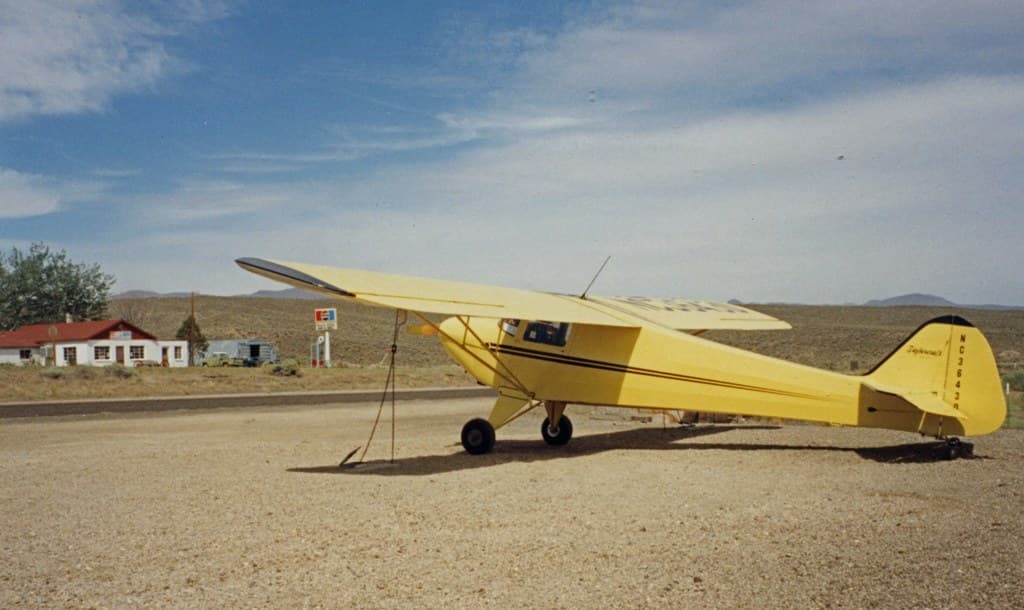 Taylorcraft BC-12
The production run's brevity is itself the historical fact worth sitting with. Piper spread a comparable total across roughly a decade of Cub production ending in the same 1946 to 47 collapse; Taylorcraft built the bulk of its postwar total inside about eighteen months, meaning the company's entire commercial fate, boom and bankruptcy alike, played out in less time than it takes most manufacturers to develop a single new model.
Legacy
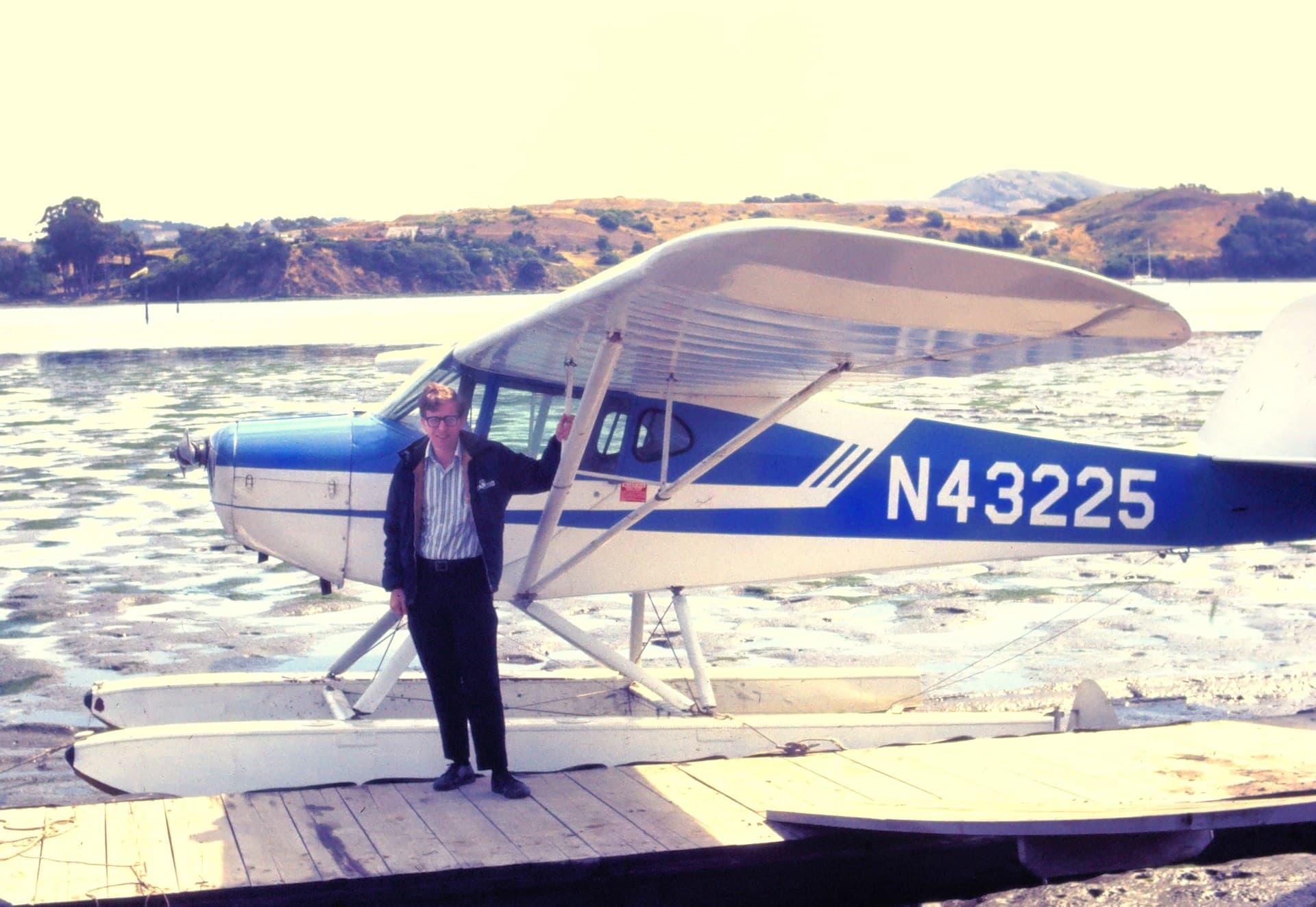 Float-equipped Taylorcraft BC-12D
The BC-12's afterlife has followed much the same paths as the Cub's, on a smaller scale: float and ski conversions found favour with the same bush-flying communities in Alaska and Canada, prized for the same low stall speed and light wing loading that made the type gentle to fly in the first place, and a number of surviving airframes still wear floats today. Owner and restorer clubs, organized in significant part around the Taylorcraft Owners Club, have kept a meaningful fraction of the surviving fleet airworthy, helped by the type's simple fabric-and-tube construction and generally sound parts supply.
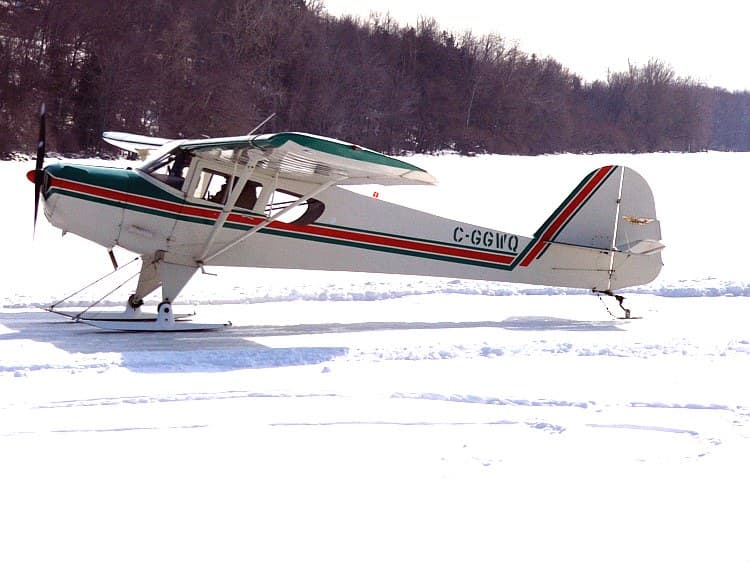 Taylorcraft F-19 Sportsman
What sets the Taylorcraft's legacy apart from the Cub's is the company behind it, and the entry cannot end anywhere but there. Piper's 1946 crisis became a chapter in a much longer success story; Taylorcraft's became the whole story, a single company undone by the same market collapse that its larger rival merely survived. The revivals that followed, Taylorcraft Inc. from 1947, and later ownership changes through the 1970s and 1980s that briefly produced the F-19 and F-21 Sportsman on the same basic wing and fuselage: kept the name alive without ever recovering the position the original company had held in 1946, and none of them lasted.
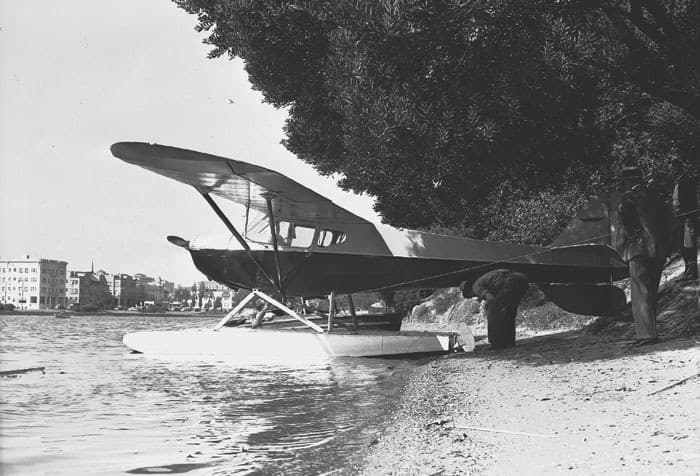 Float-equipped Taylorcraft BC-12D
That makes the BC-12 an unusually honest case study in what determines an aircraft's fate. It was not beaten in the air: by most direct measures (speed, efficiency, cabin usability) it was arguably the better trainer of the two. It was beaten by a factory fire, a single-site supply chain, and a boom that turned to bust faster than a undercapitalized company built on local shareholders' money could absorb. The Cub's story is the one told at length elsewhere in this encyclopedia because Piper is the company that got to keep telling it. The Taylorcraft's is worth telling precisely because the company did not.
Model evolution
Taylorcraft Model A/B
1936The first aircraft built after C. Gilbert Taylor's break with Piper: a two-seat, side-by-side-seating light monoplane developed at Taylor's new Alliance, Ohio factory, powered by a range of engines around 40 to 50 horsepower. It established the layout (flat-sided fuselage, side-by-side cabin, NACA-derived wing) that every later B-series Taylorcraft, including the BC-12, would keep.
New airframe entirely independent of the Taylor Cub design, with side-by-side seating and a NACA semi-symmetrical wing section in place of the Cub's flat-bottomed aerofoil. Taylor needed an aircraft distinct enough from the Cub he no longer owned to avoid legal exposure, but close enough in size and price to compete for the same flying-school buyers. Side-by-side seating and a different wing section delivered both at once, genuine differentiation and, as it turned out, genuinely better numbers.
Taylorcraft BC-65
1939The definitive prewar version, fitted with the 65-horsepower Continental A-65 that became the type's standard engine and put it on genuinely equal terms with the same-powered Piper J-3. Faster and more efficient than the Cub on the identical engine, it sold well through the last prewar years and supplied the basis for the wartime DCO-65 observation variant.
Adopted the 65 hp Continental A-65 as standard in place of earlier 40 to 50 hp engines, with minor cowling and mount revisions to suit. The smaller prewar engines left little performance margin for a flying school buying on climb rate and useful load as much as price. Sixty-five horsepower, the same figure Piper was standardizing on for the J-3 at almost exactly the same time, made the Taylorcraft competitive on the numbers a training-fleet buyer actually compared.
Taylorcraft L-2 / L-2A / L-2M Grasshopper
1941The militarized Taylorcraft, adopted by the U.S. Army from the civilian DCO-65 observation variant for artillery spotting and liaison duty. Later sub-variants such as the L-2A and late-war L-2M added expanded observation glazing and, in some cases, electrical starting; a little over two thousand were built in total, Taylorcraft's direct counterpart to Piper's L-4.
Expanded cockpit glazing for a forward observer's downward and rearward view, plus military radio fits; later L-2M blocks added electrical starting and detail equipment changes. An artillery observer needs a clear view of the ground he is directing fire onto, which the civilian Taylorcraft's plainer cabin did not provide. The conversion cost Taylorcraft almost nothing structurally, the underlying airframe was already suited to rough-field operation, which is exactly why the Army chose it.
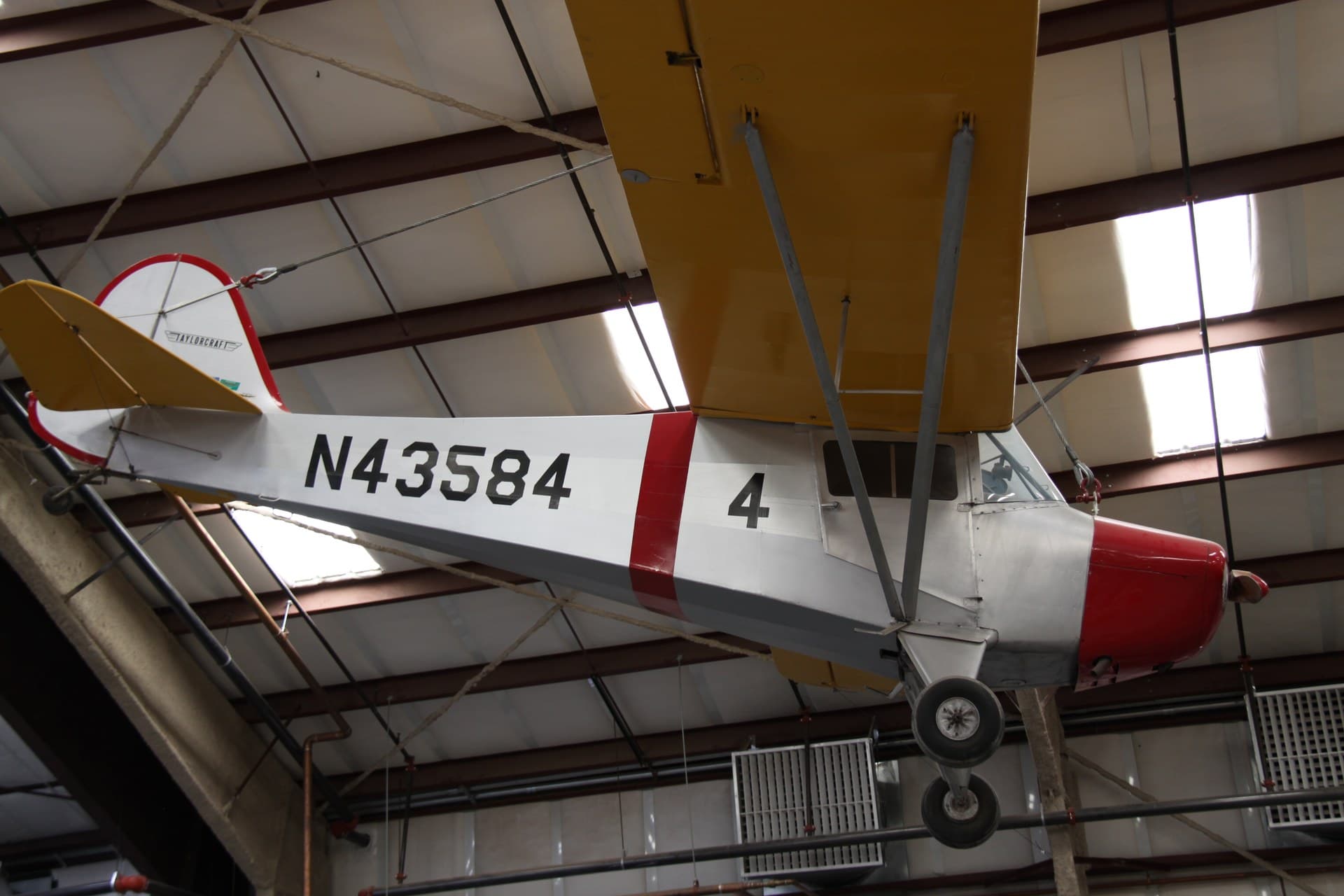
Taylorcraft BC-12D
1945The postwar production version and the type most people mean by "BC-12": a lightly revised tail with a simplified two-hinge rudder, otherwise close to the prewar BC-65. Built to meet the veteran-driven training boom, 4,191 were completed before the 1946 market collapse and factory fire ended the run: Taylorcraft's highest-volume model and the aircraft the company's bankruptcy is most closely tied to.
Simplified two-hinge rudder in place of the prewar three-hinge design, plus incremental postwar equipment updates to the otherwise unchanged BC-65 airframe. Postwar buyers wanted the proven prewar airframe with minimal disruption to a supply chain already straining to meet demand; the rudder simplification was a manufacturing economy rather than a performance change, typical of a company scaling production as fast as its single factory could manage.
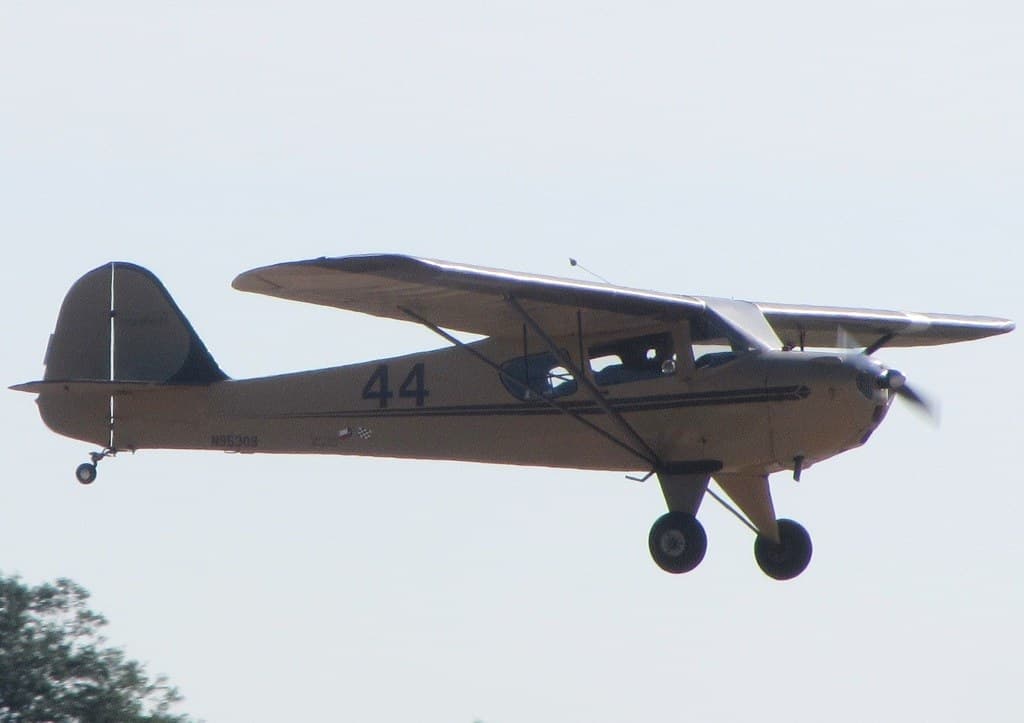
Taylorcraft BC-12D-85
1948A more powerful derivative offered after the company's 1947 reorganization, replacing the 65-horsepower Continental A-65 with an 85-horsepower Continental C-85 for buyers wanting more climb and useful load. Built in far smaller numbers than the original BC-12D, after the company had already lost the market position it held in 1946.
Continental C-85 85 hp engine in place of the 65 hp A-65, with a revised cowling and higher gross weight to use the extra power. Post-bankruptcy Taylorcraft had lost the volume advantage that once let it compete purely on price, and tried instead to compete on capability, offering buyers the option of more power the reorganized company hoped would justify a higher margin per aircraft.
Taylorcraft F-19 / F-21 Sportsman
1973A 1970s revival of the basic B-series airframe under new ownership of the Taylorcraft name, fitted with a 100-horsepower Continental O-200 (F-19) or Lycoming O-235 (F-21), decades after the original company's 1946 collapse. Produced only in small numbers before later ownership changes, it kept the Taylorcraft name flying without recovering anything close to the original company's market position.
More powerful Continental O-200 or Lycoming O-235 engines in place of the original 65 to 85 hp Continentals, on an airframe otherwise close to the 1950s Model 19 Sportsman.
Well regarded by owners for its combination of vintage handling and modern engine reliability, but produced in numbers too small to constitute a real revival of the marque; ownership of the Taylorcraft name changed hands again more than once after this production run.
Blueprints
- Taylorcraft FAQ — Frequently Asked Questions, Taylorcraft Owners Club
- TAYLORCRAFT BC-12D, Pima Air & Space Museum
- Taylorcraft L-2 Grasshopper, National Museum of the United States Air Force
- 1946 Taylorcraft Model BC12-D, Port Townsend Aero Museum
- Taylorcraft, Aviation Consumer
- Taylorcraft Aircraft, Wikipedia
- Taylorcraft B, Wikipedia
Checked September 2, 2026