Airline
Qantas
QF · QFA · QANTASAustralia
Qantas Airways Limited
128
Aircraft
In service at June 30, 2025
55.9M
Passengers
in 2025
Identity
- IATA
- QF
- ICAO
- QFA
- Callsign
- QANTAS
- Founded
- November 16, 1920
- First service
- November 2, 1922
Company
- Legal name
- Qantas Airways Limited
- Headquarters
- Mascot, Sydney, New South Wales
- Country
- Australia
- Status
- Operating
Network
- Alliance
- oneworld, founding member (1999)
- Load factor
- 84.7 %
Hubs and bases
Sydney Kingsford SmithSYD
Hub · since 1920
MelbourneMEL
Hub
BrisbaneBNE
Secondary hub
PerthPER
Secondary hub · since 2018
Singapore ChangiSIN
Base
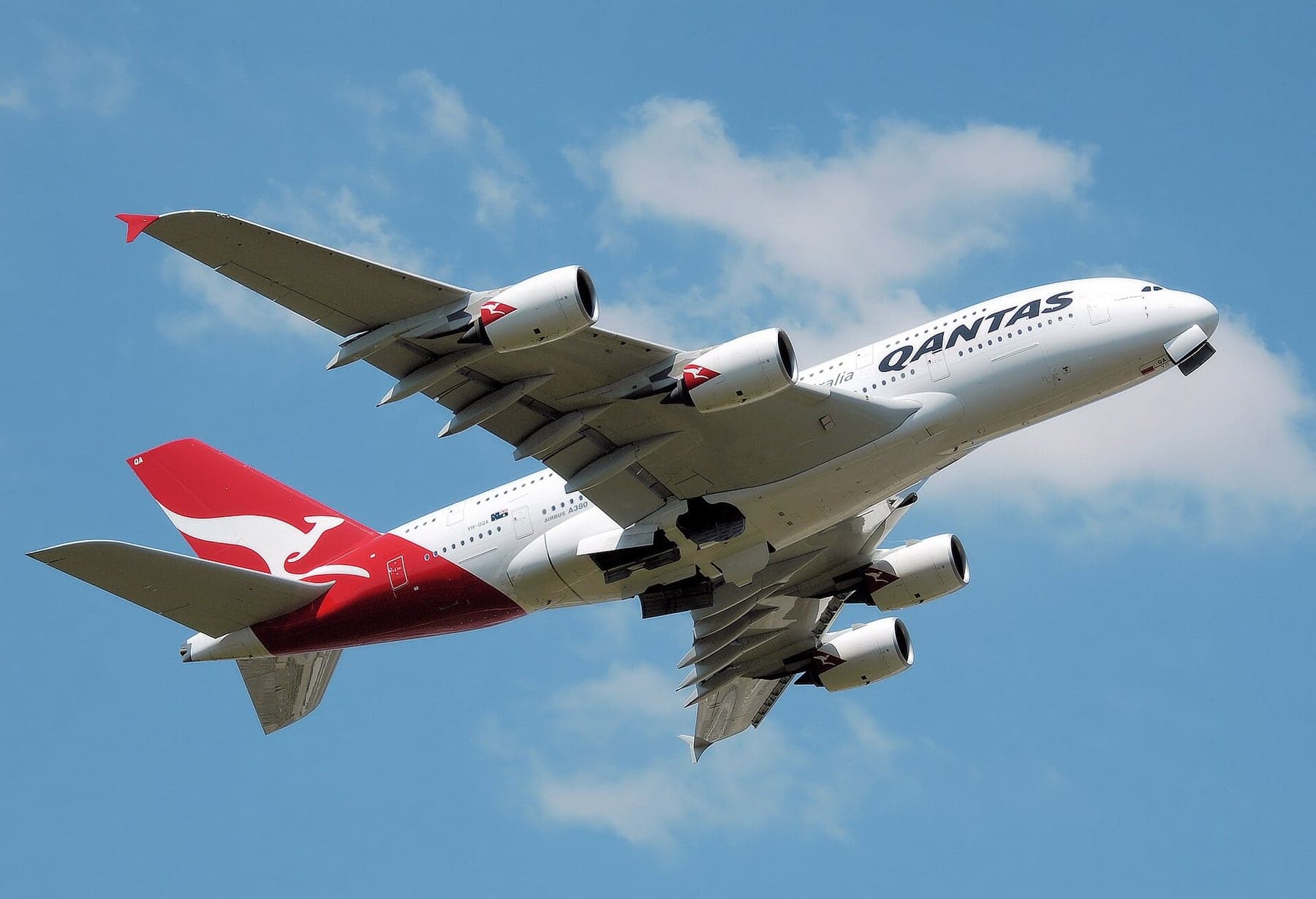
Qantas is the flag carrier of Australia and the oldest airline in the English-speaking world still flying under the name it was given at birth. It was registered in the Queensland town of Winton on 16 November 1920 as the Queensland and Northern Territory Aerial Services Limited, and the acronym has outlived every word in it: the company has not been a Queensland aerial service for a century, but it has never been called anything else. It flies as QF, is known to air traffic control as QFA, and answers on the radio simply as QANTAS.
The operation is built on Sydney, where the airline has had its base since the 1930s and its head office at Mascot, beside the runways, since the 1950s. Melbourne is the second hub, Brisbane and Perth carry the rest of the domestic weight, and Perth has since 2018 been the point from which Qantas flies non-stop to Europe. Below the mainline sit three other businesses the group built rather than bought: Jetstar, the low-fare airline launched in 2004; QantasLink, the regional network; and Qantas Frequent Flyer, a loyalty programme profitable enough to be reported as a division in its own right.
In the year to 30 June 2025 the group carried 55.9 million passengers at an average load factor of 84.7 per cent, and the mainline ended the year with 128 aircraft in service. Qantas was a founding member of the oneworld alliance in 1999, was state-owned from 1947 until its privatisation was completed in 1995, and has not lost a passenger in an accident since 1951: a record made in the propeller era and kept, so far, through every year of jet operation.
Formation
The company was the idea of two returned airmen and a grazier. Paul McGinness and Hudson Fysh had flown with the Australian Flying Corps in Palestine; in 1919 they were sent to survey a landing-ground route across northern Australia for the England-to-Australia air race, and drove the distance in a Model T because no aircraft could be spared. What they saw on that drive was the argument for the airline: a country where a doctor, a letter or a stock agent could be a fortnight away by horse and buggy, and an afternoon away by air. Fergus McMaster, a Queensland grazier they met when his car broke down at a creek crossing, found the money.
Queensland and Northern Territory Aerial Services Limited was registered in Brisbane on 16 November 1920, with its first registered office at Winton. Its capital was a few thousand pounds, its fleet an Avro 504K and a B.E.2e, and its first business was joy-riding and charter work around the western Queensland graziers who had subscribed the shares. Arthur Baird, the engineer who had maintained Fysh's aircraft in the war, joined as the fourth of the founding group and stayed for thirty years; the airline's early reputation for maintenance is largely his.
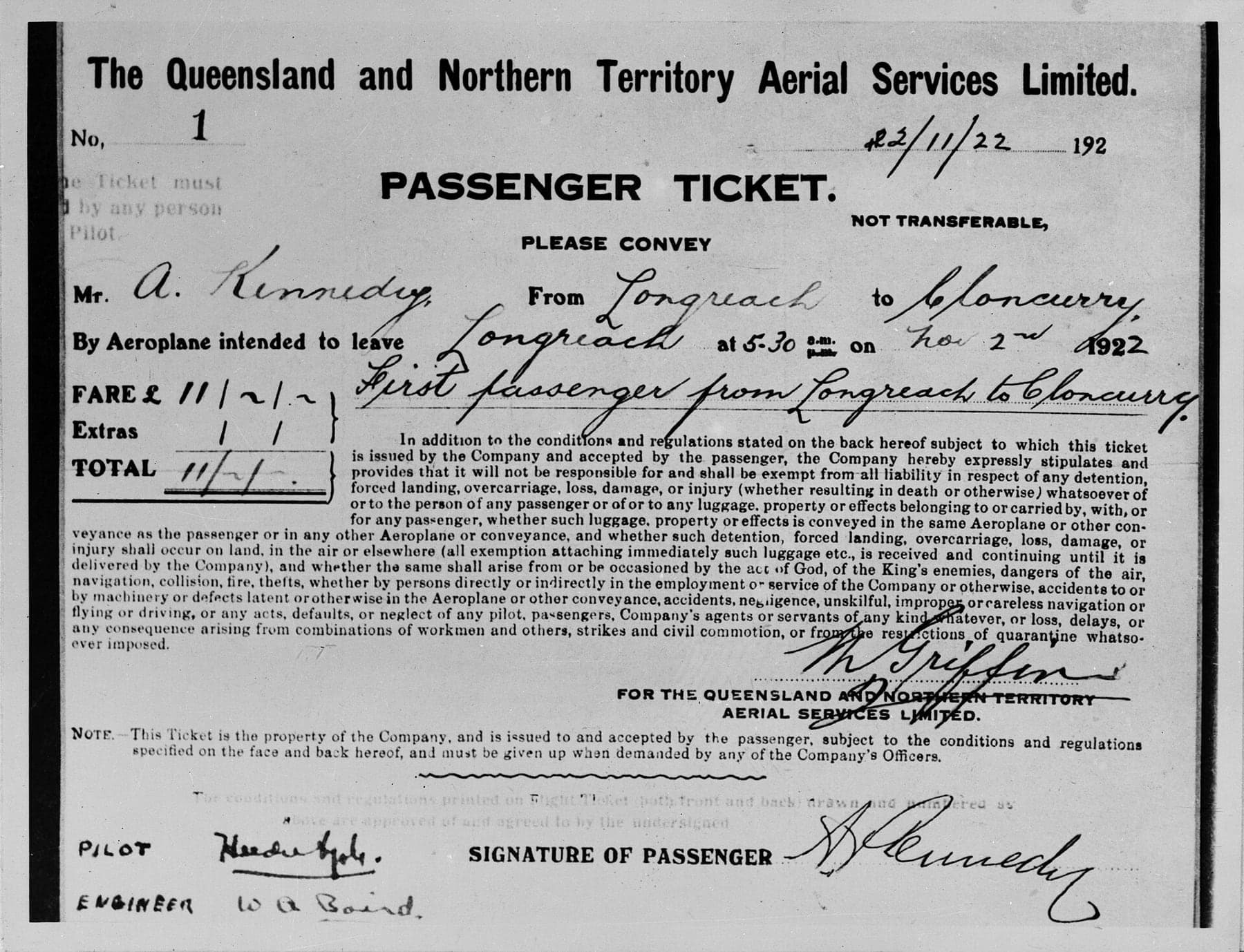
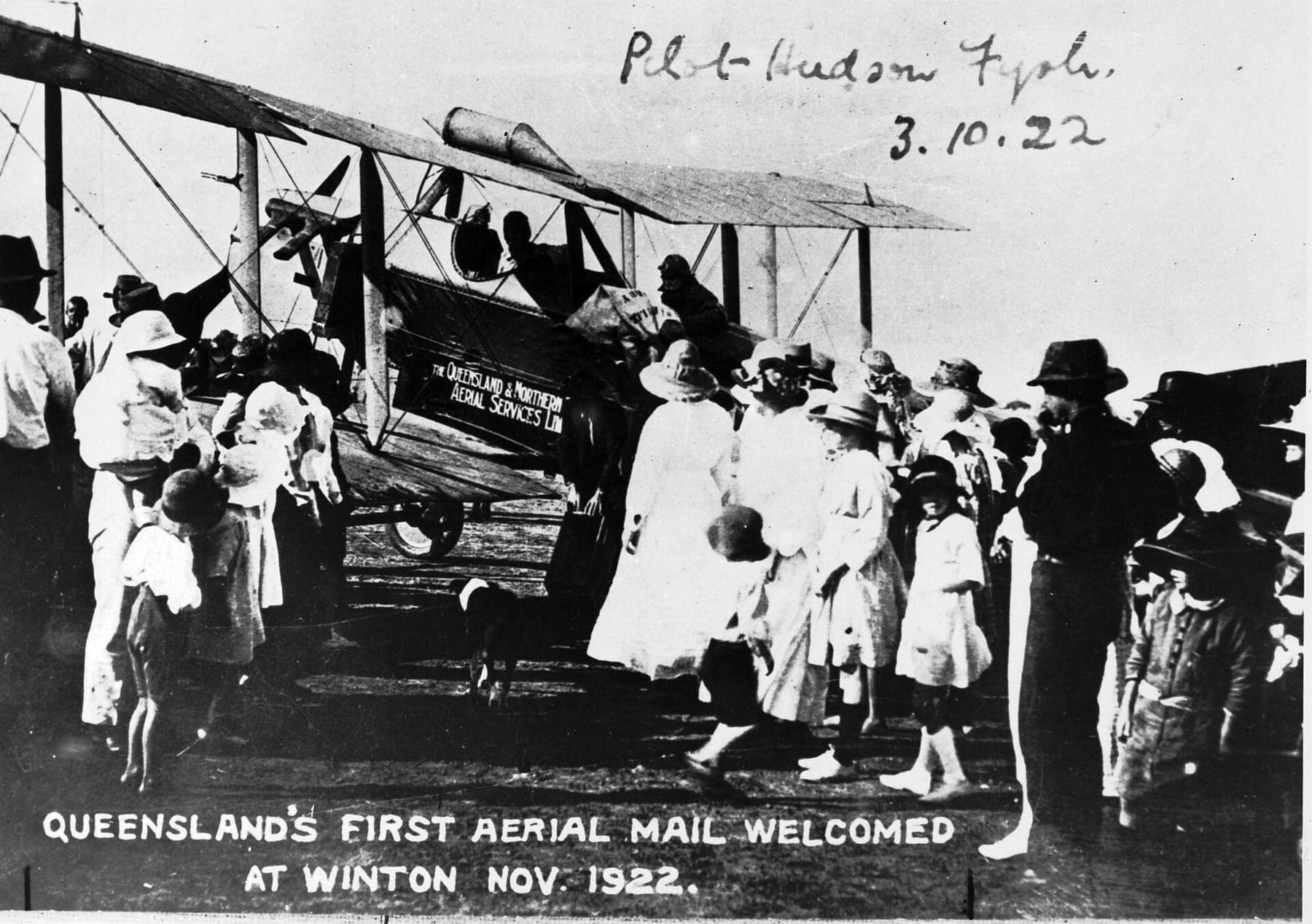
In 1921 the base moved to Longreach, which had a railhead, and on 2 November 1922 the company flew the service it had been formed to fly: a subsidised air mail between Charleville and Cloncurry, 501 nm of it, in an Armstrong Whitworth F.K.8. Passenger ticket number one went to Alexander Kennedy, an 84-year-old pastoralist and shareholder who had insisted on it as a condition of investing, and who flew the Longreach to Cloncurry leg sitting in the open front cockpit.
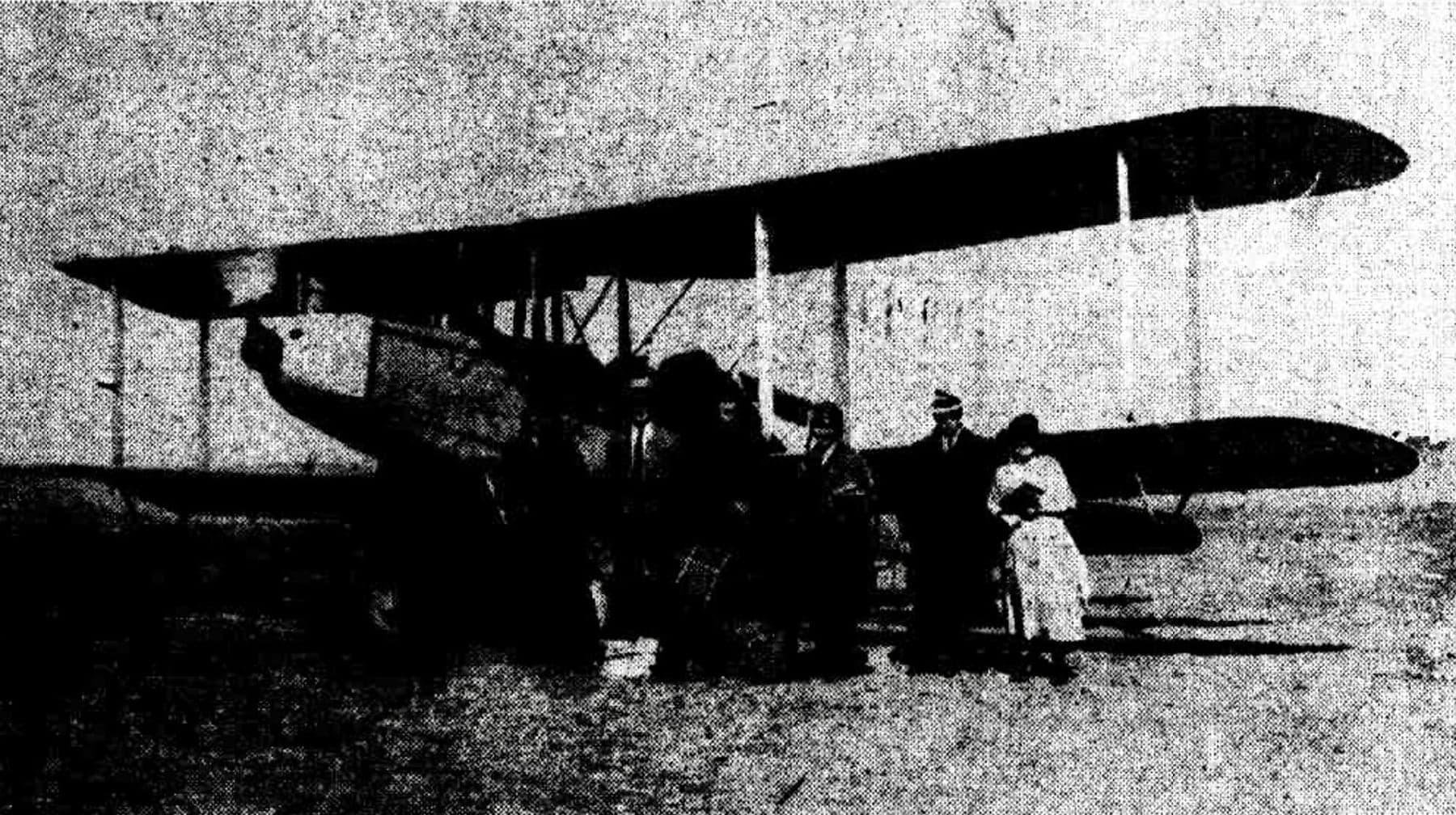
For most of the 1920s that was the whole airline: one route, a government mail contract, and a fare list on which a seat cost about as much as a good horse. It was also, from the start, an airline with no competitor and no alternative: in the country it served there were no roads worth the name, and the mail it carried was the only mail there was.
The war years
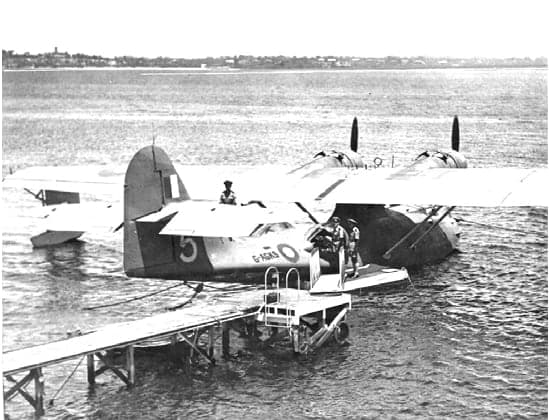
The Empire route died in stages. Qantas flying boats were impressed for evacuation and supply work as the Japanese advanced through the Netherlands East Indies, and two of them were lost with most of the people aboard: Corio was shot down by Japanese fighters off Timor on 30 January 1942, killing thirteen of the eighteen on board, and Circe disappeared a month later while evacuating civilians from Java, with twenty aboard. In February 1942 Singapore fell, and with it the only link between Australia and Britain.
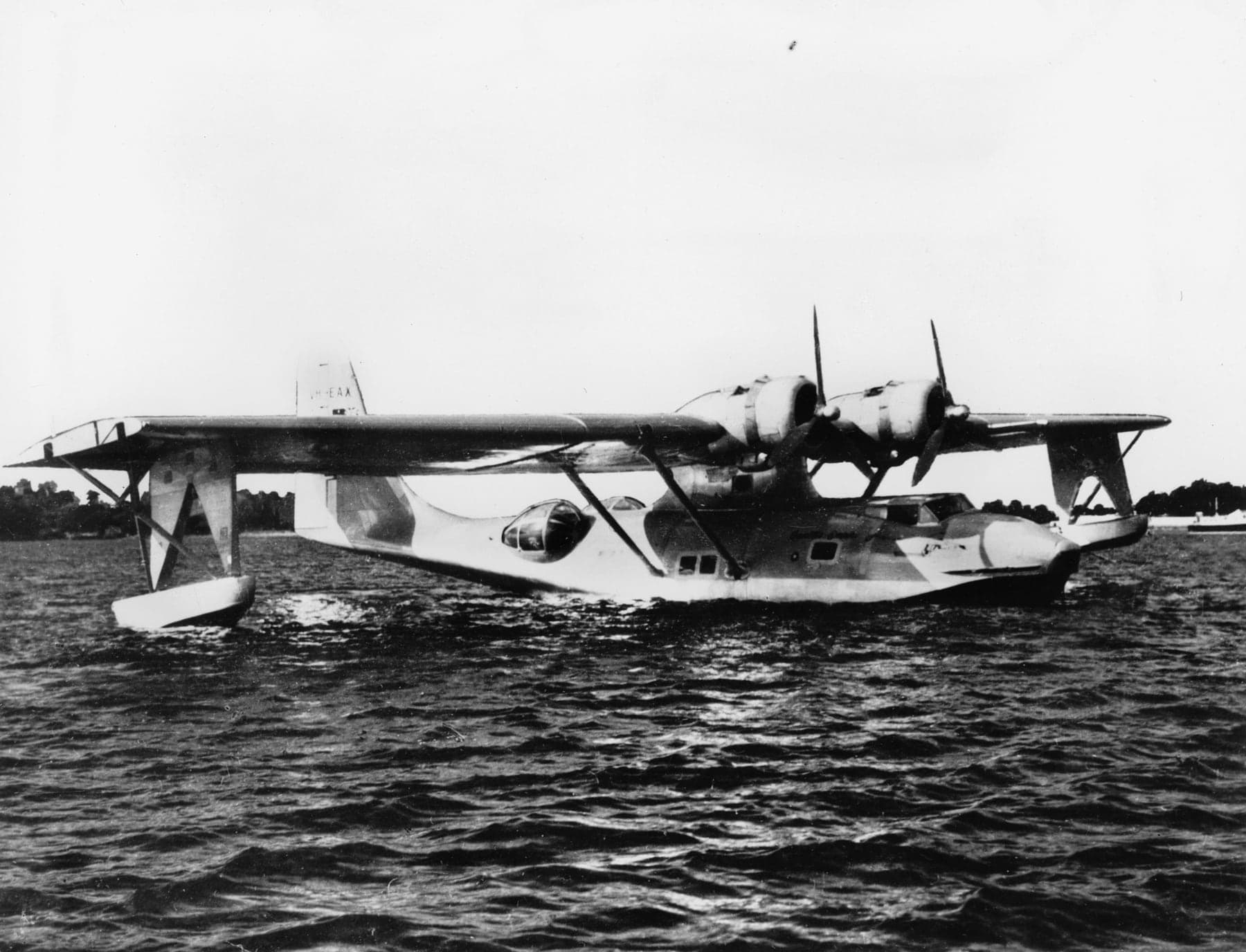
What replaced it was the most remarkable service the airline ever flew. From 29 June 1943 Qantas operated Consolidated Catalina flying boats non-stop from the Swan River in Western Australia to Koggala in Ceylon: 3,000–3,100 nm of open Indian Ocean, in radio silence, taking between 27 and 33 hours. Passengers (never more than three, alongside diplomatic mail) crossed a night and saw the sun rise twice, and were given a certificate of membership of "the Rare and Secret Order of the Double Sunrise". The crews navigated by sextant. The route was flown 271 times without loss.
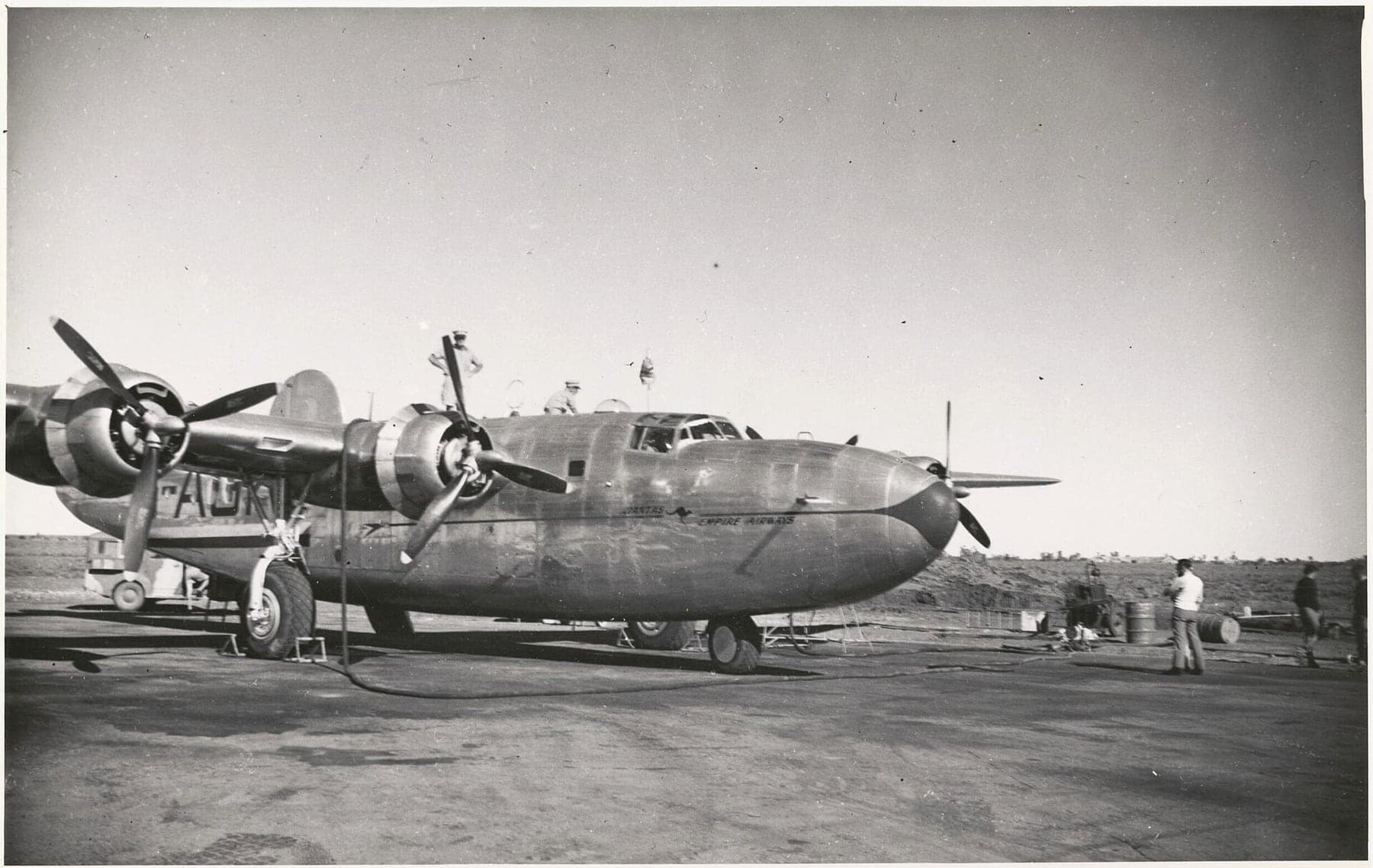
From 1944 the Catalinas were supplemented and then replaced by converted Liberators flying a faster Perth to Ceylon route with a refuelling stop at Learmonth, and it was on this service that the airline's emblem appeared: a kangaroo inside a winged circle, the mark of the "Kangaroo Service". It was drawn by the Australian designer Gert Sellheim, and it has been on the tail of the airline's aircraft in one form or another ever since.
The war left Qantas with long-range crews, ocean navigation experience and a claim on the Australia to Britain route that no other Australian company could match. It also left it without a business model: its pre-war partner, Imperial Airways, had become the state-owned BOAC, and the Australian government had begun to think about airlines the same way.
The Empire route
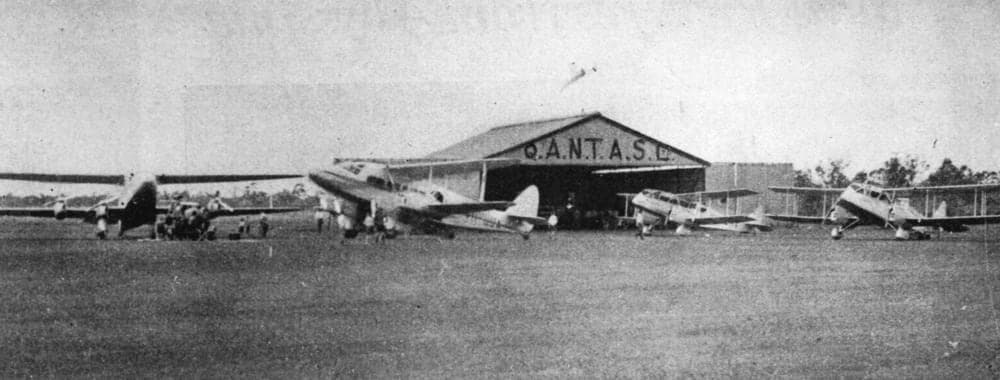
Britain wanted an air route to Australia, and Imperial Airways could not fly the last leg of it alone. On 18 January 1934 Qantas and Imperial Airways each took half of a new company, Qantas Empire Airways Limited, formed to operate the Australian end of the England to Australia service. Fysh ran it. In December 1934 the first through service left Brisbane for Singapore, where Imperial Airways took the mail on to London; the journey took twelve days and the aircraft was a de Havilland DH.86 four-engined biplane.
The partnership moved the airline from Longreach to Brisbane and then to Sydney, from mail contracts measured in hundreds of miles to a route measured in continents, and from bush operations to something recognisably an international airline. It also moved it onto the water. From July 1938 the Empire route was flown by Short S.23 flying boats (Qantas took six, with names like Cooee and Coolangatta) operating from Rose Bay on Sydney Harbour through Singapore to Southampton, the whole way in British hands for the first time.
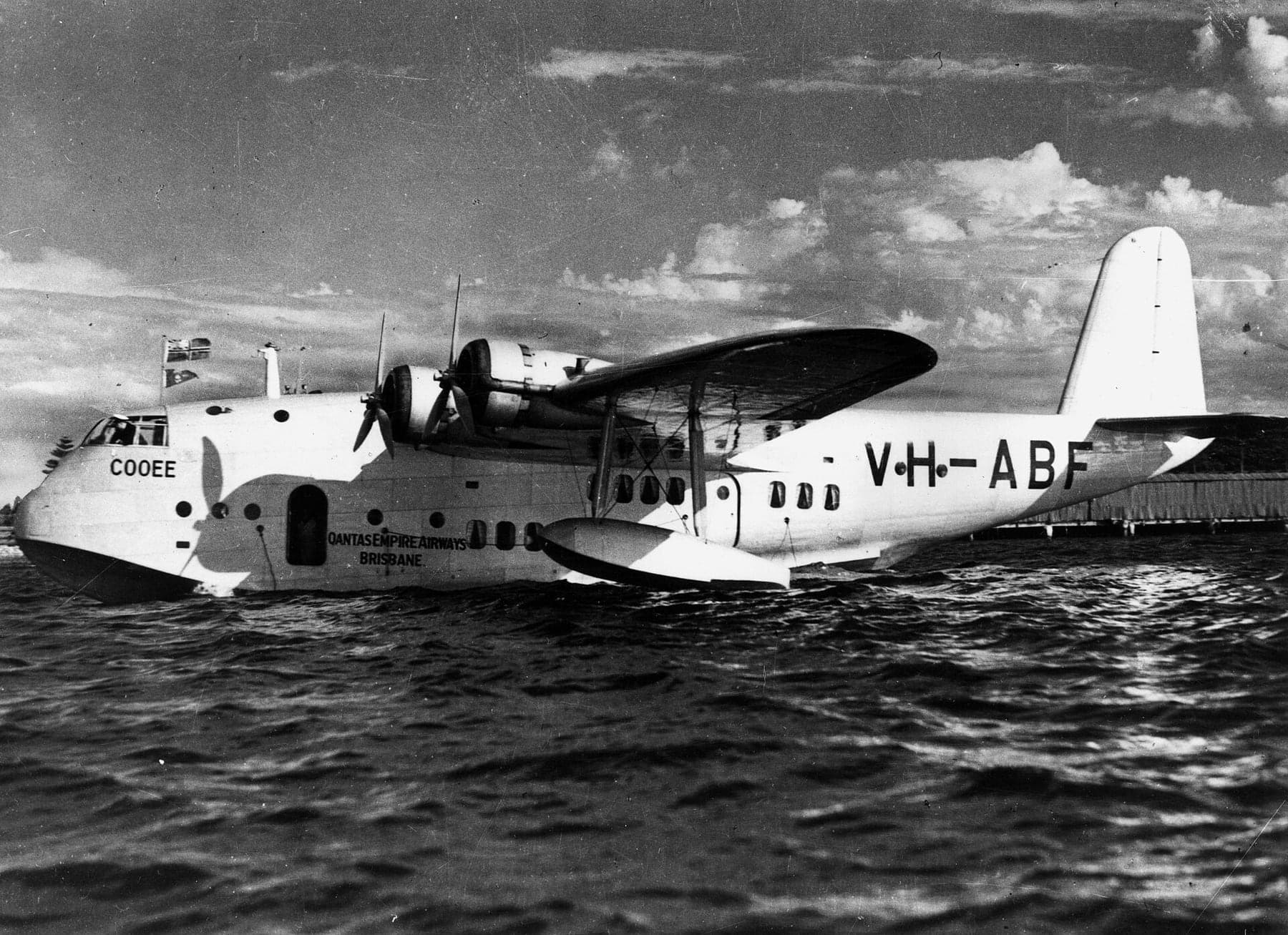
The flying boat service was the most comfortable travelling Qantas had ever sold and, in its way, the least efficient: fifteen passengers, nine or ten days, thirty-odd stops, and a night spent ashore at each. It was also profoundly vulnerable, as the next four years proved. The aircraft were unarmed, they were slow, they landed on open water at published times, and the route ran through the exact latitudes the Japanese advance would take.
By 1939 Qantas Empire Airways was carrying mail and passengers between Australia and Britain on a schedule, and had become, without ever being told so, an instrument of imperial communication. When that communication was cut, the airline was handed the job of restoring it.
Nationalisation and reconstruction
In 1947 the Australian government bought Qantas Empire Airways outright (first the British half from BOAC, then the Australian shareholding) and the airline became a wholly state-owned company. The domestic network went to the government's other airline, Trans Australia Airlines, and Qantas was given the international routes and told to fly them. For the next forty-eight years it was an instrument of national policy as much as a business, and its route map was argued over in Canberra.
It began flying the routes almost at once. On 1 December 1947 a Lockheed Constellation left Sydney for London by way of Darwin, Singapore, Calcutta, Karachi, Cairo and Tripoli: four days, and the service was named the Kangaroo Route, a name it still carries. Flying boats continued alongside it for a few more years on the Pacific and the New Guinea services, and the last Qantas Catalinas were retired at the end of the 1940s.
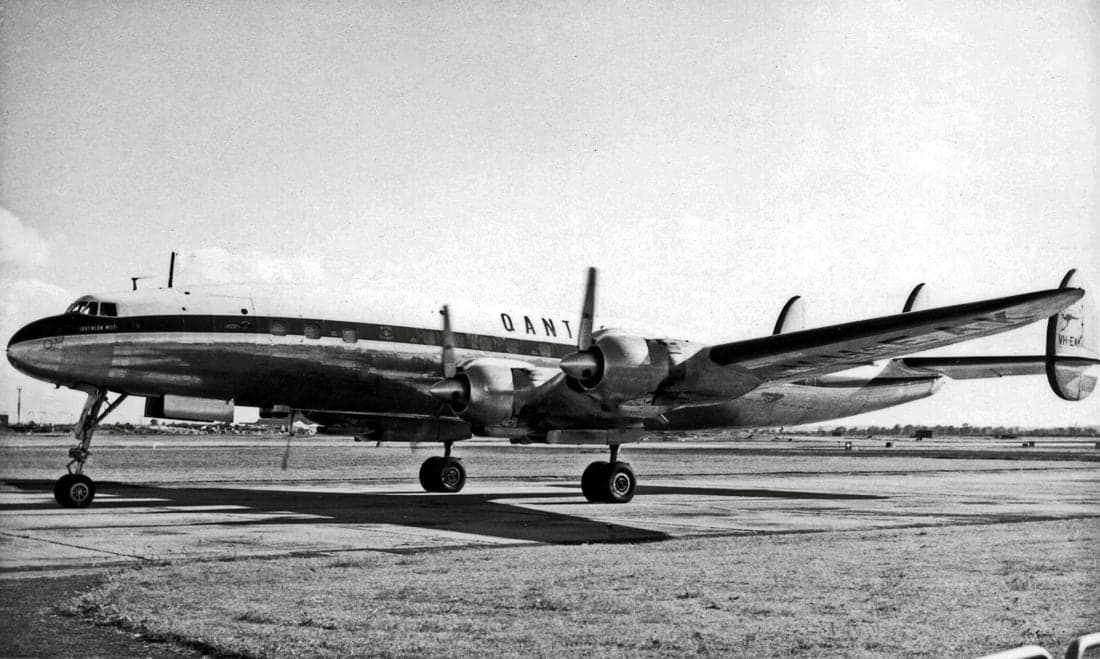
The Constellation, and from 1954 the Super Constellation, gave the airline its first genuinely competitive long-haul aircraft, and it used them to draw a map that no European carrier had reason to draw: Sydney to Johannesburg across the southern Indian Ocean from 1952, Sydney to Vancouver by way of Fiji and Honolulu, and from 14 January 1958 a round-the-world service operated jointly with BOAC, Qantas flying one direction through Asia and the other through the Americas, the first airline in the world to offer it.
Being state-owned settled the airline's ambitions in a particular direction. It had no domestic business to defend and no shareholders to satisfy, and its job, as the government understood it, was to connect a country on the far side of the world to the places its people came from and traded with. That is still, recognisably, the shape of the network.
Growth and expansion
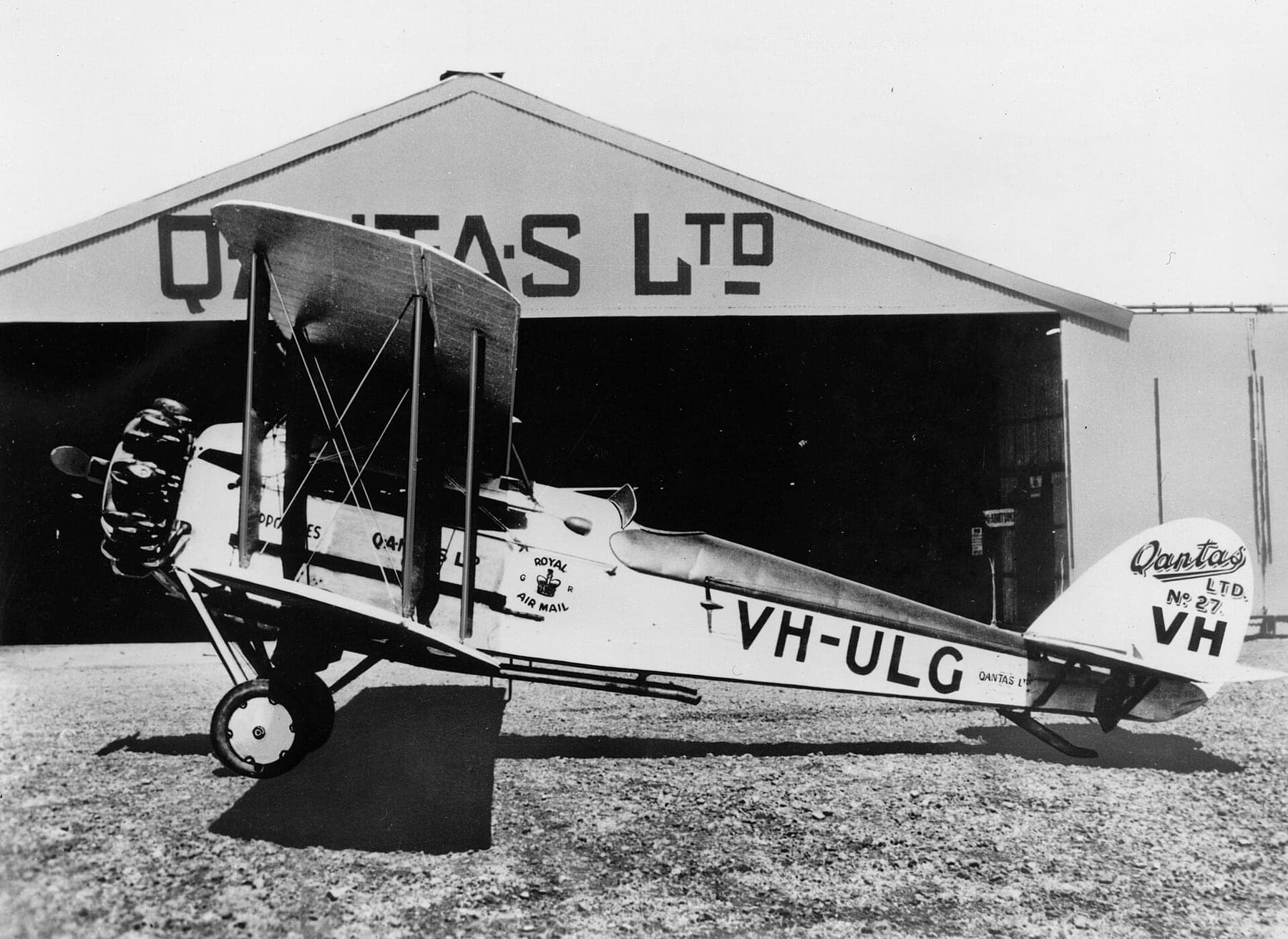
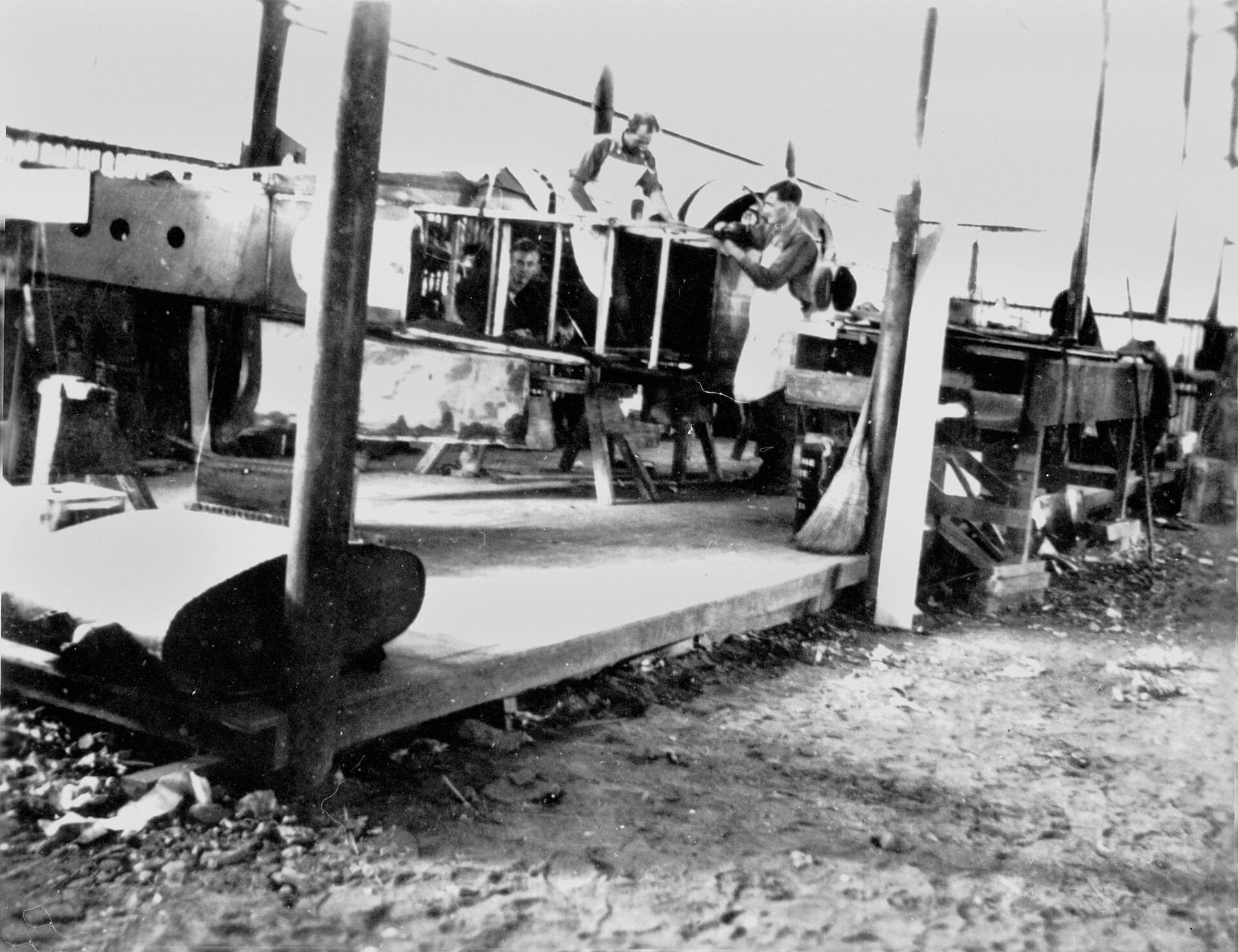
What turned a mail contract into an aircraft company was the decision to build its own aeroplanes. Imported machines were slow to arrive and slower to repair, so from 1926 Qantas assembled de Havilland DH.50s under licence in its hangar at Longreach, and went on to build seven of them, along with a single aircraft of its own design, the DH.50-derived Qantas biplane of 1929. The hangar still stands; it is heritage-listed, and the airline is one of very few in the world that can point to a shed in which it manufactured its own fleet.
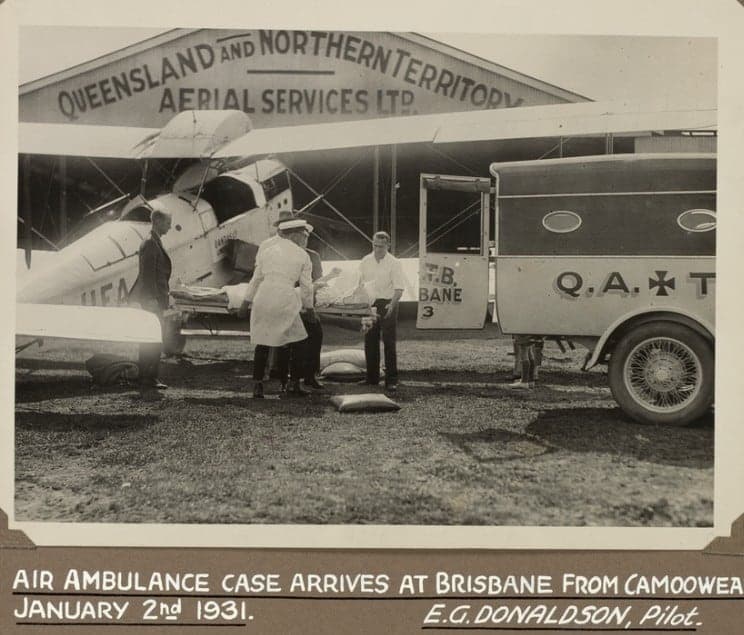
The DH.50 had an enclosed cabin, which mattered more in western Queensland than it sounds. It made possible the second thing that shaped the airline's early character: medical flying. On 17 May 1928 a Qantas DH.50 named Victory, flown by Arthur Affleck with Dr Kenyon St Vincent Welch aboard, left Cloncurry on the first flight of the Australian Inland Mission Aerial Medical Service: the organisation that became the Royal Flying Doctor Service. Qantas supplied the aircraft, the pilots and the maintenance for its first years, and did so on a route network built for mail.
The route map grew slowly and along the same logic: Charleville to Brisbane in 1929, which finally joined the outback service to a capital city, and a spread of feeder lines through Queensland and into the Northern Territory. Fares remained high, aircraft remained small, and the company remained, by any measure a European or American carrier would have recognised, tiny.
Its importance was not in its size. By 1930 Qantas had ten years of continuous operation over terrain with no diversions, no weather reporting and no rescue, and a staff that had learned to keep aircraft flying a thousand miles from a spare part. That was the qualification it brought to the negotiation that changed it.
The jet age
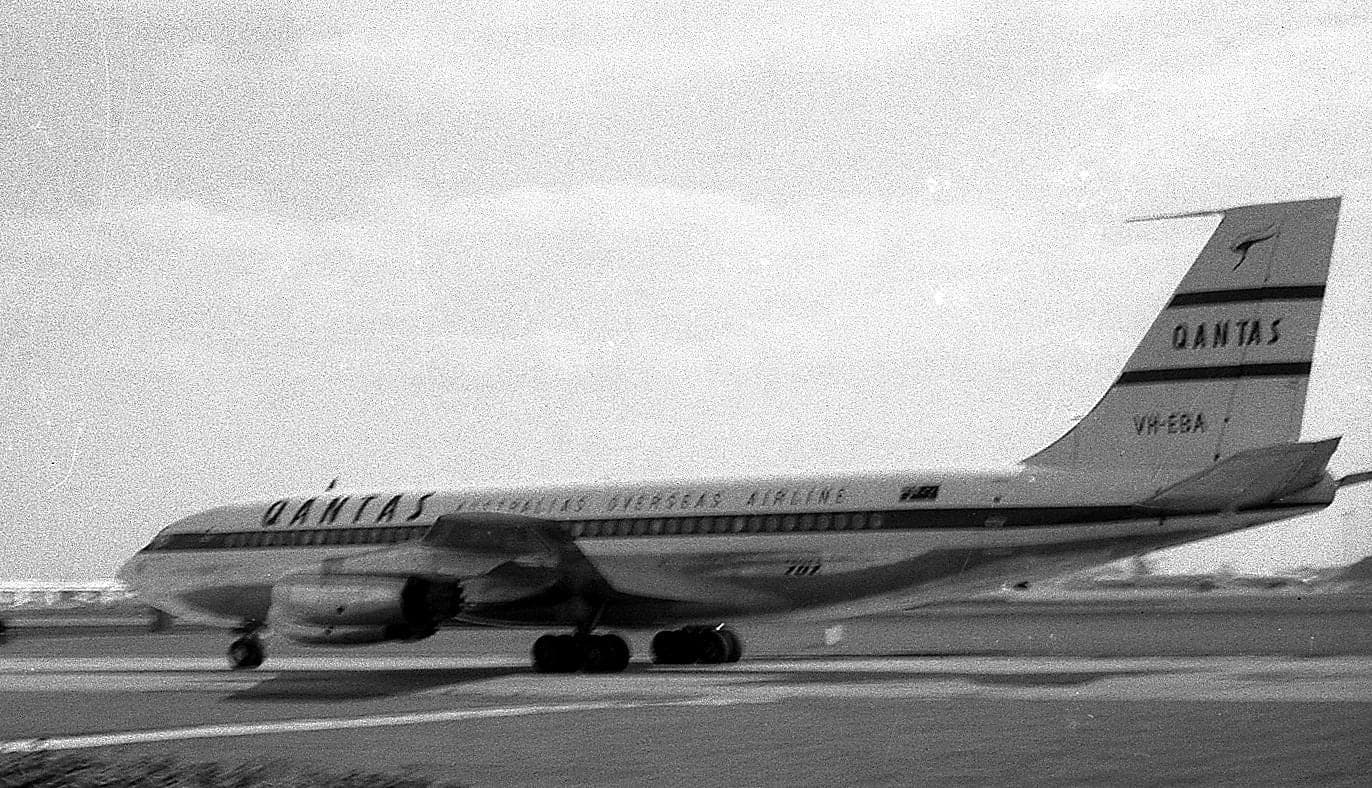
Qantas ordered the Boeing 707 in 1956 and put it into service on 29 July 1959, on the Pacific route from Sydney to San Francisco. It was the first airline outside the United States to fly the type, ahead of BOAC and Air France, and it flew a version built for nobody else: the 707-138, shortened by ten feet against the standard aircraft to trade capacity for the range the Pacific demanded. The Constellations were gone from the main routes within four years.
The jets did to the Kangaroo Route what the Constellation had done to the flying boat. London came within thirty-odd hours and then under thirty, the stops fell from seven to four, and the fare fell far enough that the traffic changed character: through the 1960s Qantas carried migrants, students and the first generation of Australians for whom a trip to Europe was a plan rather than an emigration. The company was renamed Qantas Airways Limited in 1967, dropping "Empire" from a title that had outlasted the thing.
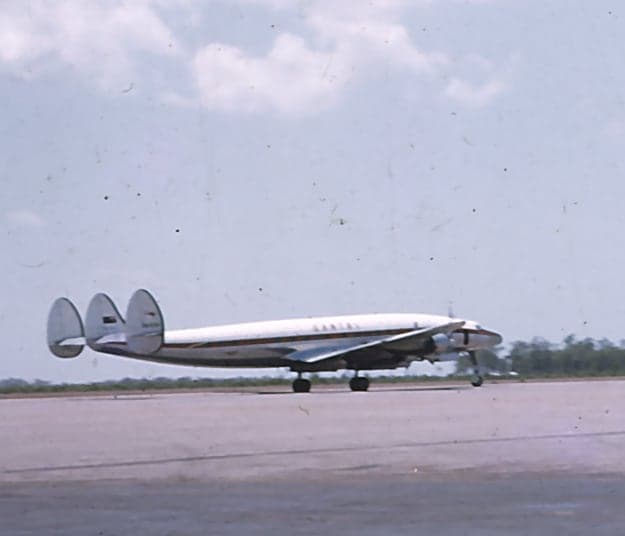
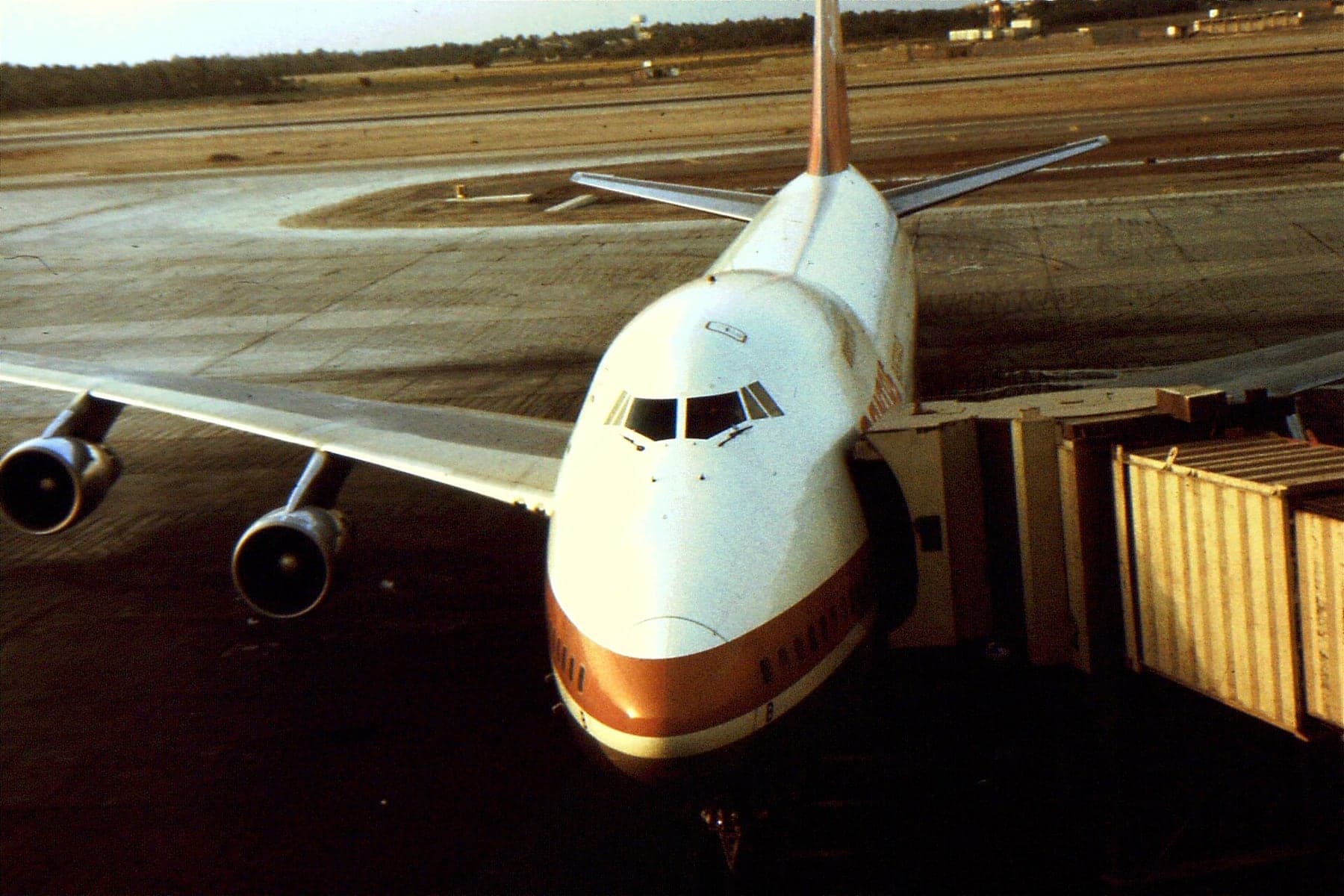
The Boeing 747 arrived in September 1971 and suited the airline better than it suited almost anyone else. Australia's problem had always been distance and thin traffic; the 747 answered the first and the country's post-war growth answered the second. Qantas took the type further than any other operator: by 1979 it was flying nothing else, the only all-747 airline in the world, and it went on to buy almost every major variant through to the 747-400.
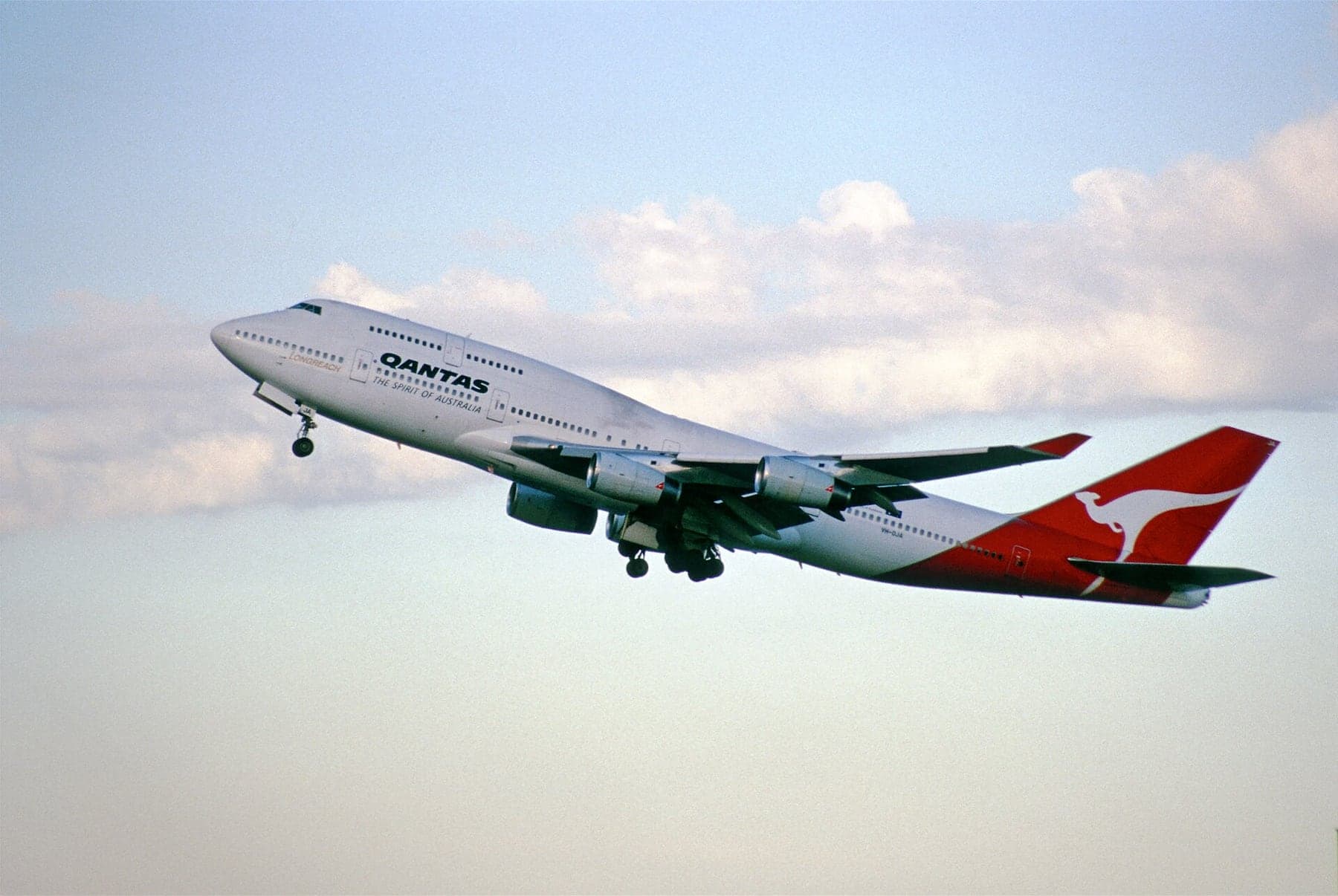
The most complete demonstration came on 17 August 1989, when the brand-new 747-438 VH-OJA City of Canberra flew London Heathrow to Sydney non-stop on its delivery flight: 9,719.5 nm in 20 hours and 9 minutes, a distance record for a commercial airliner. It carried no revenue passengers and a minimum of fuel reserves, and it made a point the airline had been making since 1943: that the interesting problem in Australian aviation is the one leg nobody else has to fly.
Consolidation and merger
The arrangement that had kept Qantas international and TAA domestic lasted until Australian aviation was deregulated at the end of the 1980s. In September 1992 Qantas absorbed Australian Airlines (the renamed TAA, and its state-owned sibling for forty-five years) and became for the first time since 1947 an airline that flew within Australia as well as out of it. The two networks were merged under one brand, and the domestic operation has been roughly half the airline's passengers ever since.
Privatisation followed in two steps. In March 1993 British Airways bought 25 per cent of the company for A$665 million, a strategic stake that tied the Kangaroo Route to Heathrow and lasted until 2004. The remainder was floated on the Australian Securities Exchange in July 1995, completing the sale and ending forty-eight years of government ownership. Foreign ownership of the airline remains capped by the Qantas Sale Act that accompanied it.
On 1 February 1999 Qantas began operating as a founding member of oneworld, alongside American Airlines, British Airways, Cathay Pacific and Canadian Airlines: the second of the three global alliances to start flying, and the one that gave the airline reciprocal reach into North America and Europe without buying aircraft to get there.
The decade that followed set the group's present shape. Jetstar was launched in May 2004 as a separate low-fare airline with its own aircraft, crews and costs, initially to meet Virgin Blue in the domestic market and later to take on the long-haul leisure routes the mainline could not fly profitably. The strategy of running two airlines at two cost bases under one group, unusual when Qantas adopted it, is now the thing the company is most often studied for.
Network and hubs
Qantas flies a network shaped by one fact: Australia is a long way from everywhere, including itself. Sydney and Melbourne are the two hubs, Brisbane and Perth carry the rest, and the domestic operation between them (a handful of trunk routes across a continent, flown many times a day) is the profitable core of the business rather than a feeder for the international one.
The long-haul map runs in four directions. East across the Pacific to Los Angeles, Dallas Fort Worth, New York, Vancouver and South America; north into Asia; west from Perth to Europe; and the Kangaroo Route to London, which since 2018 has flown Perth to London non-stop rather than stopping in Asia. A base at Singapore Changi supports the Asian and one-stop European services. Johannesburg and Santiago close the map at its two loneliest corners.
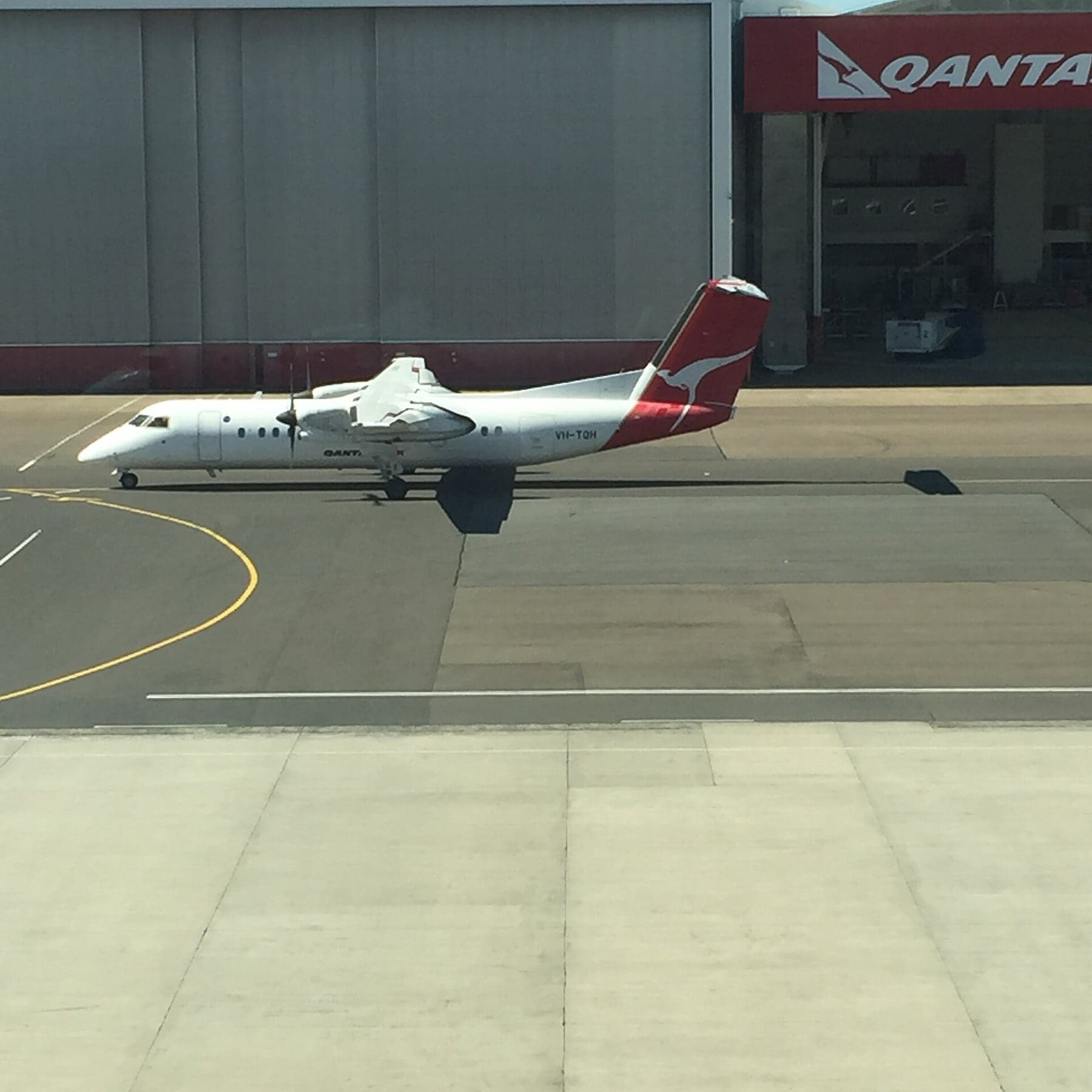
Below the mainline, QantasLink flies Dash 8s, Fokker 100s, Embraer E190s and Airbus A220s to about sixty Australian destinations, including the fly-in fly-out mining charters of Western Australia, which are a substantial business in their own right. Jetstar covers the leisure market domestically and to Asia and the Pacific. Qantas Freight runs dedicated A321 and A330 freighters alongside the passenger holds.
The declared next step is Project Sunrise: Airbus A350-1000ULRs configured for about 240 passengers, intended to fly Sydney to London and Sydney to New York non-stop, twenty hours, and the last two city pairs on earth that no aircraft could link directly. Qantas ordered the aircraft in 2022 and has repeatedly rescheduled the start of service; as of September 2026 the airline had not yet begun commercial Project Sunrise flights.
Fleet
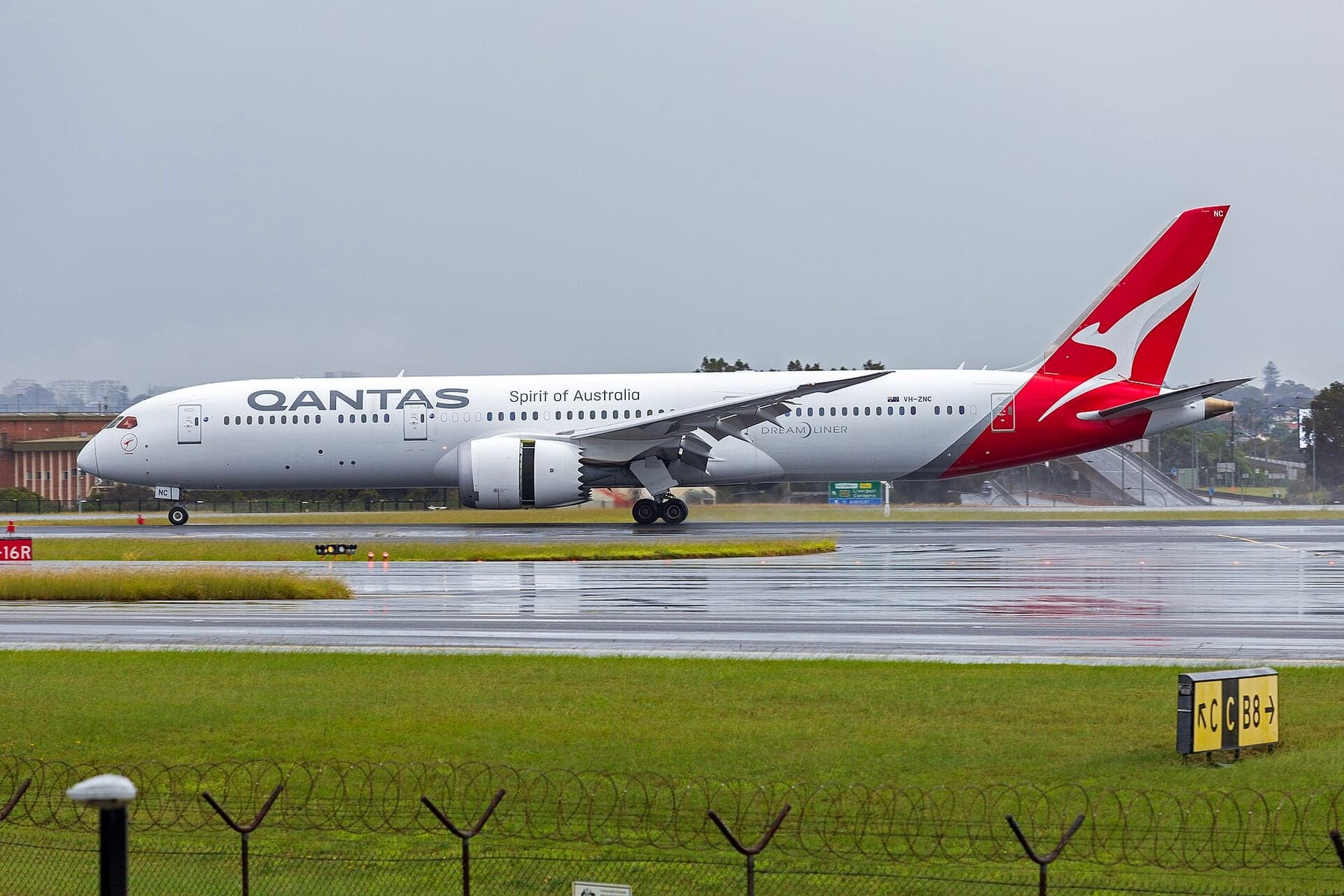
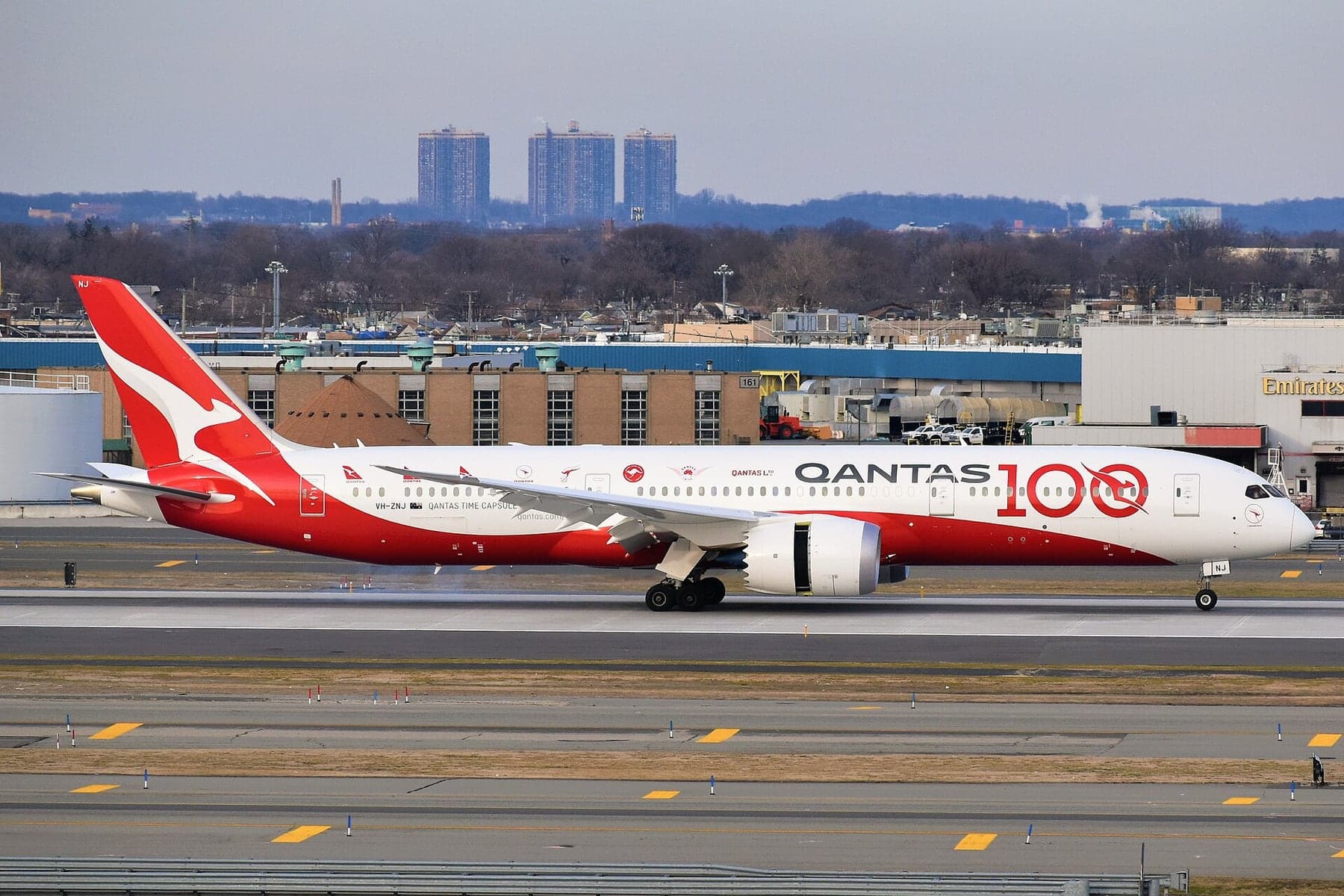
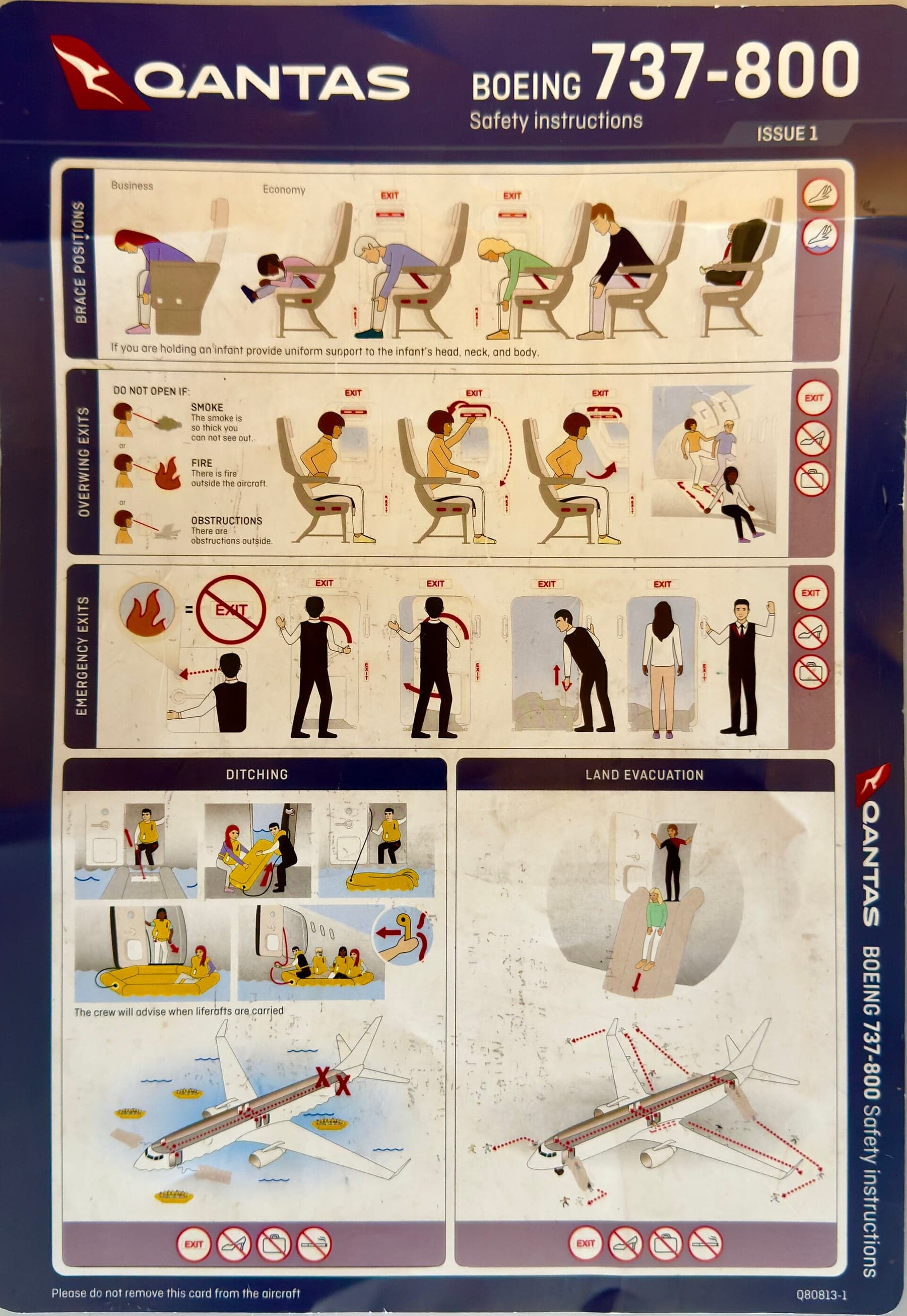
At 30 June 2025 the Qantas mainline had 128 aircraft in service. The long-haul fleet was ten Airbus A380-800s, fourteen Boeing 787-9s and twenty-eight Airbus A330s in two sizes; the short-haul fleet was seventy-five Boeing 737-800s and the first Airbus A321XLR. These figures cover the mainline only: QantasLink and Jetstar fly their own aircraft, and the group total is much larger.
The shape of that list is the airline's whole strategy in one column. The 737-800 is the domestic workhorse and is being replaced by A321XLRs and A220s, which will end a Boeing-only narrowbody fleet that dates back to 1986. The A380s, retired to the Mojave in 2020 and brought back from 2022, remain on the highest-density routes to Los Angeles and London. The 787-9 is the aircraft that made Perth to London possible and is the type Qantas uses to open thin, very long routes.
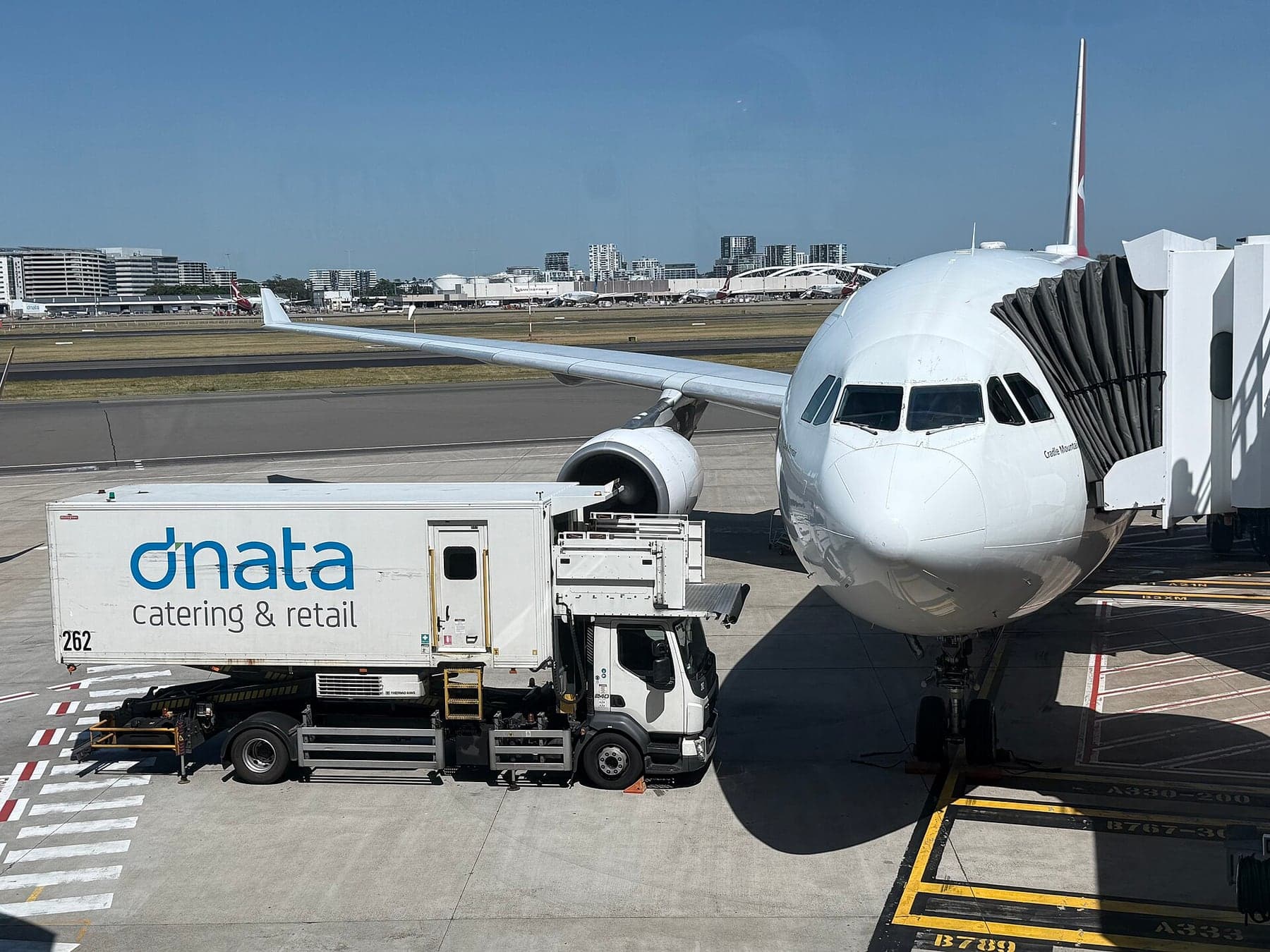
The Boeing 747 left the fleet in July 2020 after forty-nine years, retired early when the pandemic emptied the long-haul network. Qantas had operated the type longer than almost any other airline and had at one point flown nothing else; the last aircraft departed Sydney drawing a kangaroo in its flight path over the Pacific before flying to storage in the United States.
Cabins and service
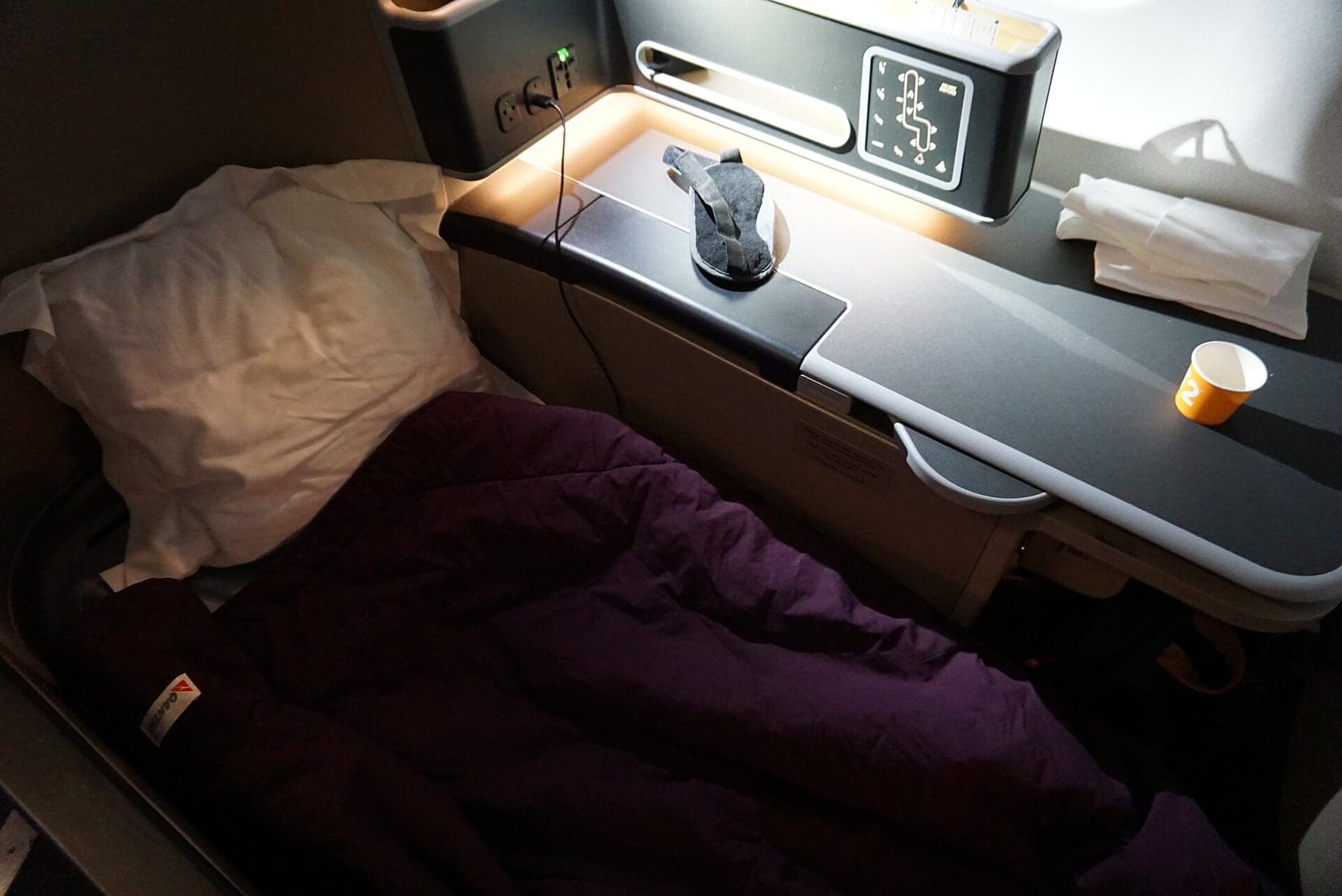
Qantas sells four cabins, and only one aircraft type carries all of them. First survives on the Airbus A380 alone, fourteen suites on the upper deck nose, and exists because of the routes it was built for: the long Sydney and Melbourne runs to Los Angeles, Dallas Fort Worth and, by way of Singapore, London. No other Qantas aircraft has offered a first-class cabin since the 747 left.
Business is a fully flat bed on every long-haul type, sold as the Business Suite on the 787 and the refitted A380 and as the older Skybed on part of the A330 fleet; domestically the same brand covers a recliner at the front of a 737. Premium Economy sits between them on the long-haul aircraft, and Economy is the rest.
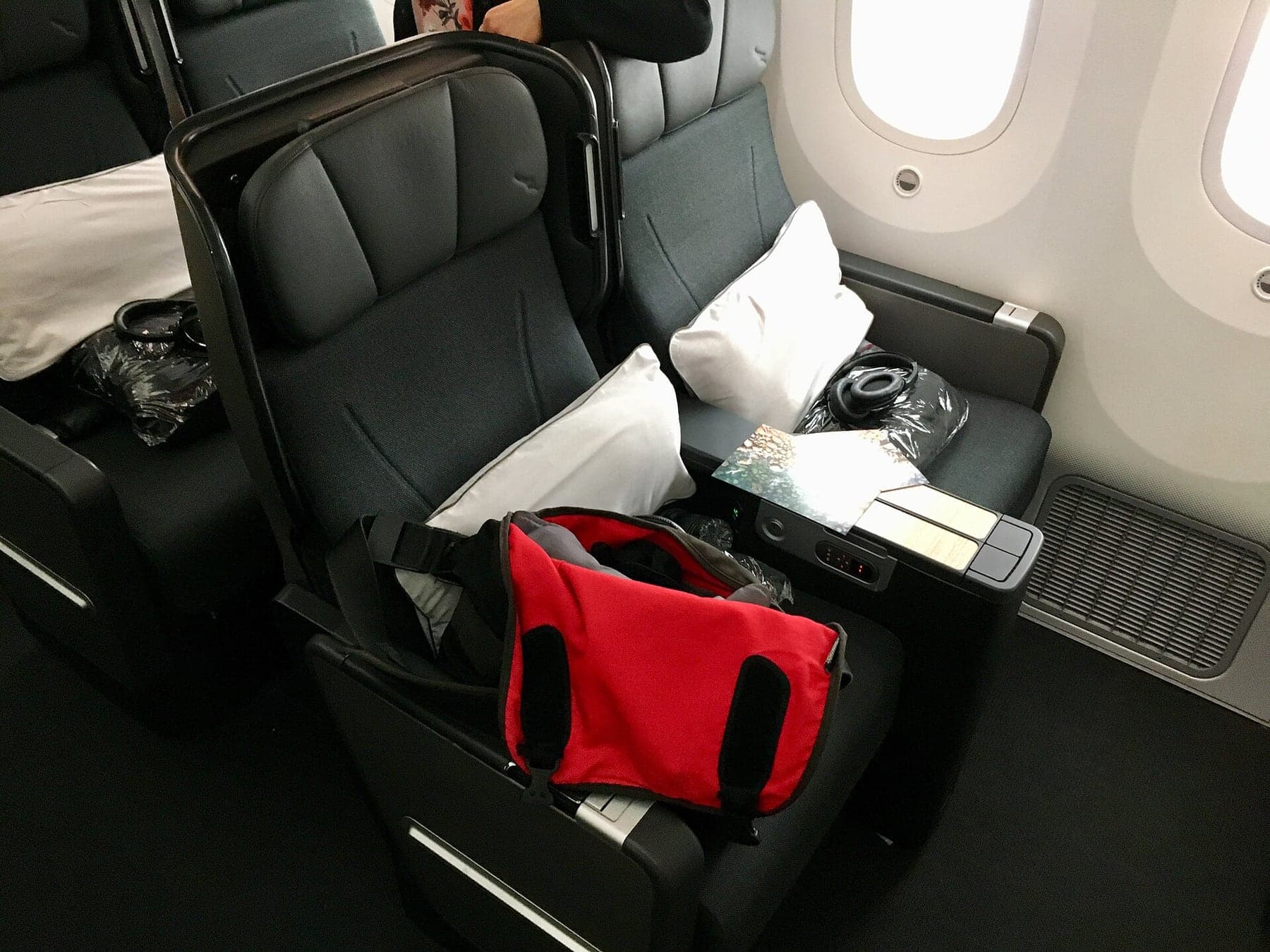
The interiors have been a design programme rather than a procurement exercise since 2003, when the airline began working with Marc Newson, and more recently with the Sydney studio of David Caon. The same hands shaped the lounges, the Sydney and Los Angeles transit facilities and the cabin service items, which is why a Qantas cabin is recognisable at a level below the livery. The A350s ordered for Project Sunrise are to introduce a dedicated wellbeing zone in the middle of the aircraft: the first structural answer the airline has proposed to a twenty-hour flight.
Livery and identity
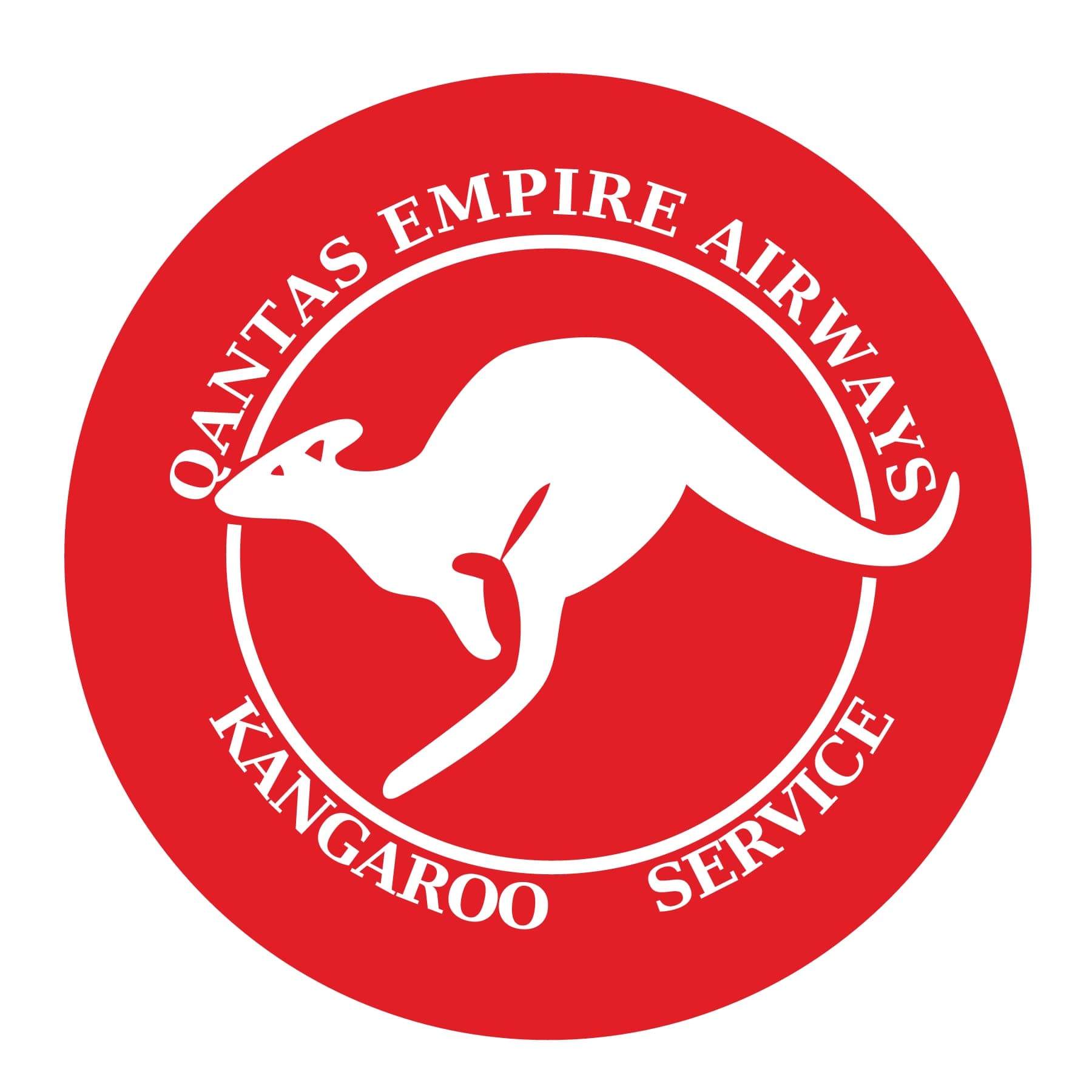
The kangaroo came from a coin. The Australian one-penny piece carried a kangaroo, and when Qantas needed a mark for the wartime Liberator service across the Indian Ocean the designer Gert Sellheim drew one inside a winged circle: the Kangaroo Service emblem of 1944. In 1947 the wings were given to the kangaroo itself, and the winged kangaroo flew on the tails of Constellations, 707s and early 747s for the next thirty-five years in an ochre and white livery that is still the airline's most recognisable.
The wings were removed in 1984, leaving a kangaroo on a red fin, and the mark has been redrawn three times since, most substantially in 2007, when Hans Hulsbosch tilted and simplified it for the 747-400 and A380 fleet, and again in 2016 for the arrival of the 787. Each revision has been a refinement of the same animal in the same place. No Qantas aircraft in eighty years has flown without one.
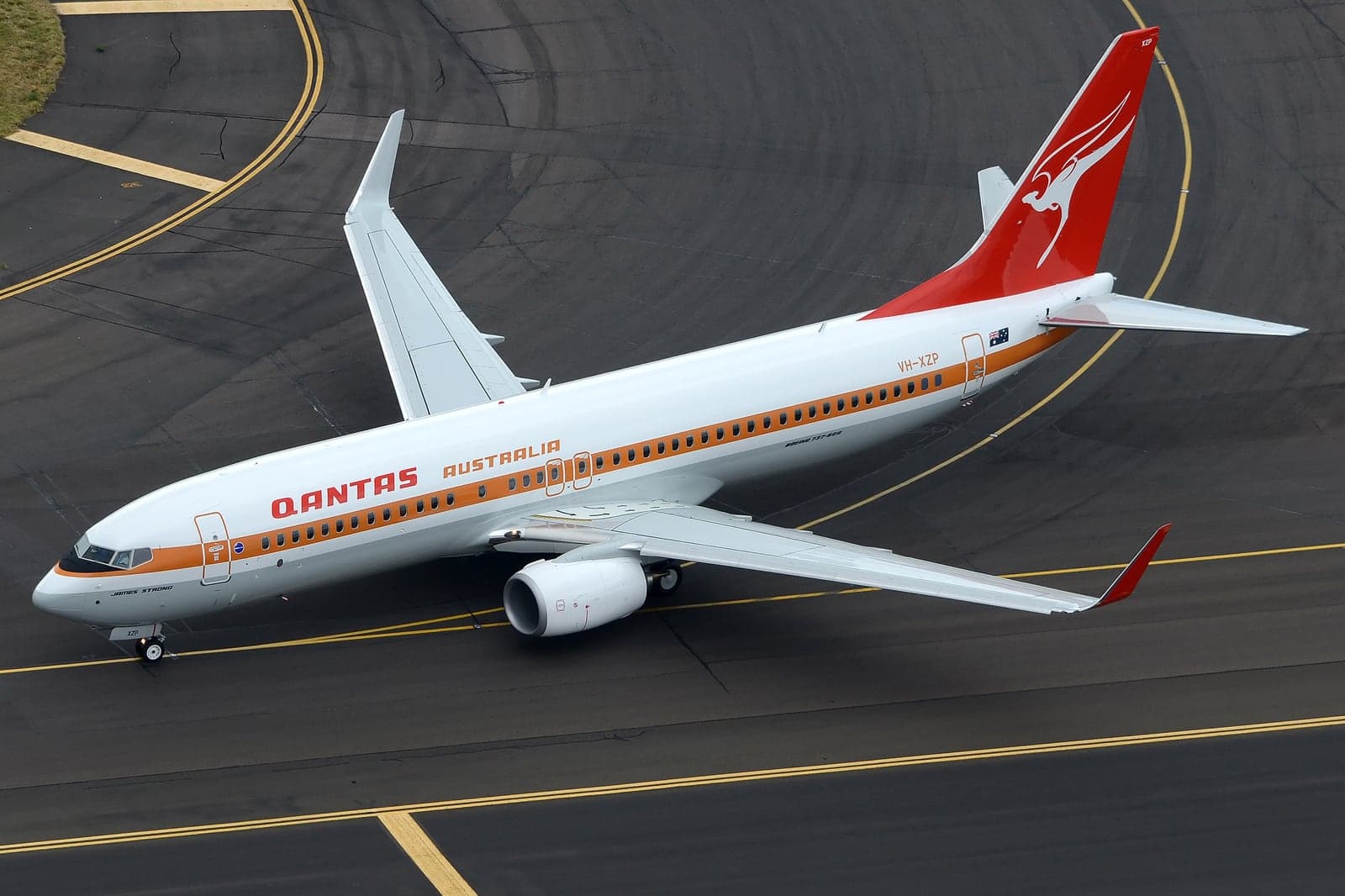
Around it sits a body of imagery the airline has built deliberately. The retro liveries (the ochre-and-white 737 of 1970s pattern, the Qantas Empire Airways schemes) are flown as working aircraft rather than museum pieces. From 1994 two 747s wore Wunala Dreaming and Nalanji Dreaming, full-airframe designs by Indigenous artists, which made the airline one of the first to put Aboriginal art on the outside of an aeroplane rather than on the menu card.
And there is the voice. "I still call Australia home", used in the airline's advertising since 1998 with choirs of Australian children filmed at landmarks around the world, is the closest thing a commercial campaign has come to a national anthem in Australia: which is the point, and also the risk. An airline that positions itself as the country tends to be judged as the country, and the grounding of the entire fleet on 29 October 2011 during an industrial dispute, and the reputational damage the group took over its conduct during and after the pandemic, were felt as national arguments rather than corporate ones.
Safety record
Qantas has one of the strongest safety records in commercial aviation, and it is worth stating precisely, because it is usually stated wrongly. The airline has never lost a jet aircraft, and no passenger has died in a Qantas accident since 1951. It is not true, as a line of dialogue in the 1988 film Rain Man asserted and a great deal of subsequent advertising implied, that Qantas has never had a crash. The accidents listed below include a de Havilland DH.86 lost on take-off in 1934, two Empire flying boats destroyed by Japanese action in 1942, a Lancastrian that disappeared over the Indian Ocean in 1946 with no wreckage ever found, and a Dragon lost in the New Guinea mountains in 1951, the last fatal accident in the airline's history.
The jet-era record is a record of accidents survived rather than accidents avoided. On 23 September 1999 the 747-438 VH-OJH landed long on a flooded runway at Bangkok, aquaplaned and overran the end with 410 people aboard; nobody was killed. On 25 July 2008 an oxygen cylinder ruptured in the forward hold of VH-OJK at 29,000 ft, tearing a hole in the fuselage, and the aircraft landed at Manila. On 7 October 2008 a faulty air data unit on the A330 VH-QPA commanded two violent pitch-downs west of Learmonth, injuring more than a hundred people, and produced design changes to the Airbus flight control software.
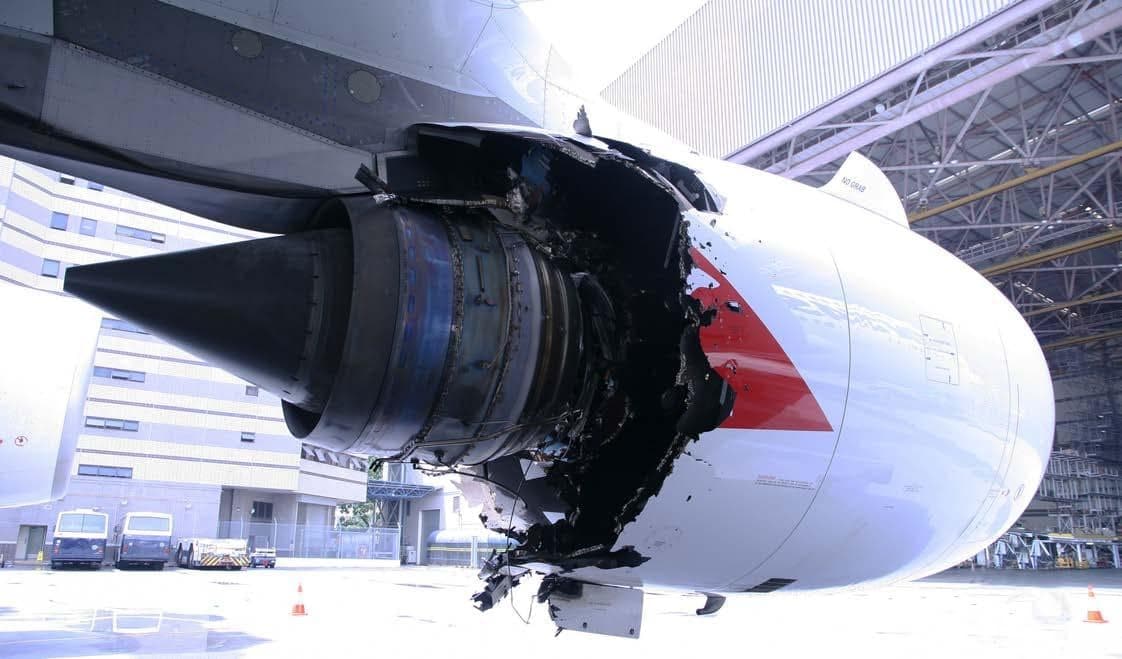
The defining case is flight QF32. On 4 November 2010, four minutes after leaving Singapore, a fatigue crack in an oil feed pipe inside the number two Rolls-Royce Trent 900 of the A380 VH-OQA caused an uncontained failure; turbine debris cut hydraulic lines, wiring and a wing fuel tank, and the crew of five pilots worked through more than fifty cascading system failures before landing back at Singapore. None of the 469 people on board was hurt. The Australian Transport Safety Bureau's investigation led to a redesign of the affected component across the Trent 900 fleet.
Legacy
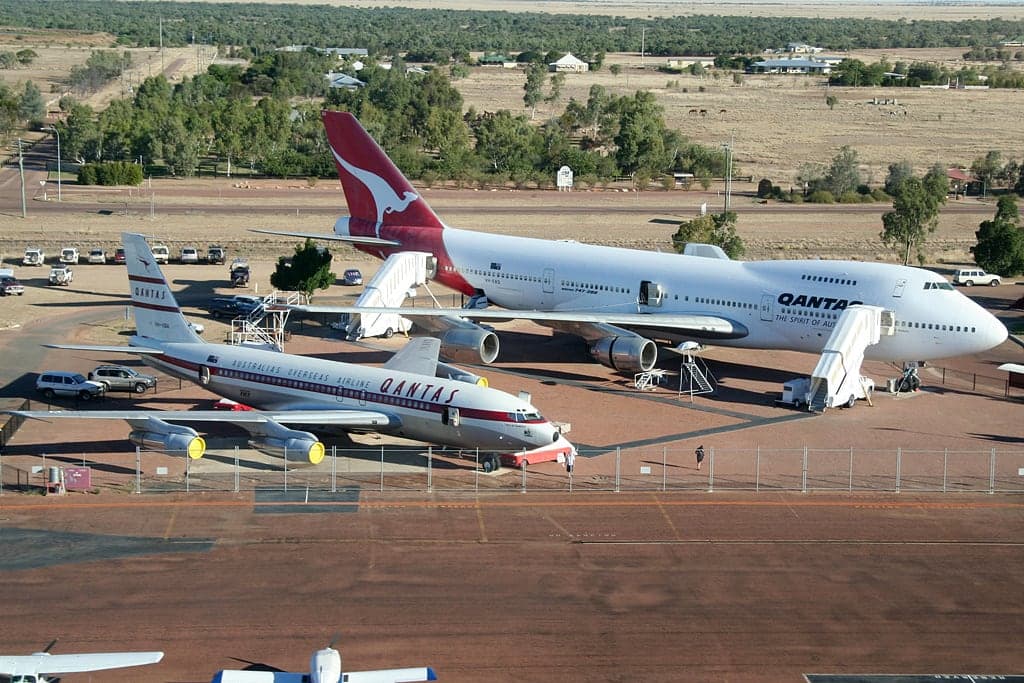
Qantas is older than the country's federal capital was when it opened, older than commercial aviation in most of the world, and older than every airline still trading under its original name except KLM. It has been a bush mail service, a manufacturer, an ambulance operator, an instrument of empire, a wartime lifeline, a state enterprise and a listed company, and it has done all of it from the furthest point from the world's air routes that a large economy occupies.
What it built out of that position is a specific competence: flying further than anyone needs to. The Double Sunrise crossings of 1943, the 707-138 shortened for the Pacific, the all-747 fleet, the record delivery flight of 1989, Perth to London and the Project Sunrise A350s are the same problem solved six times with the equipment of six different eras.
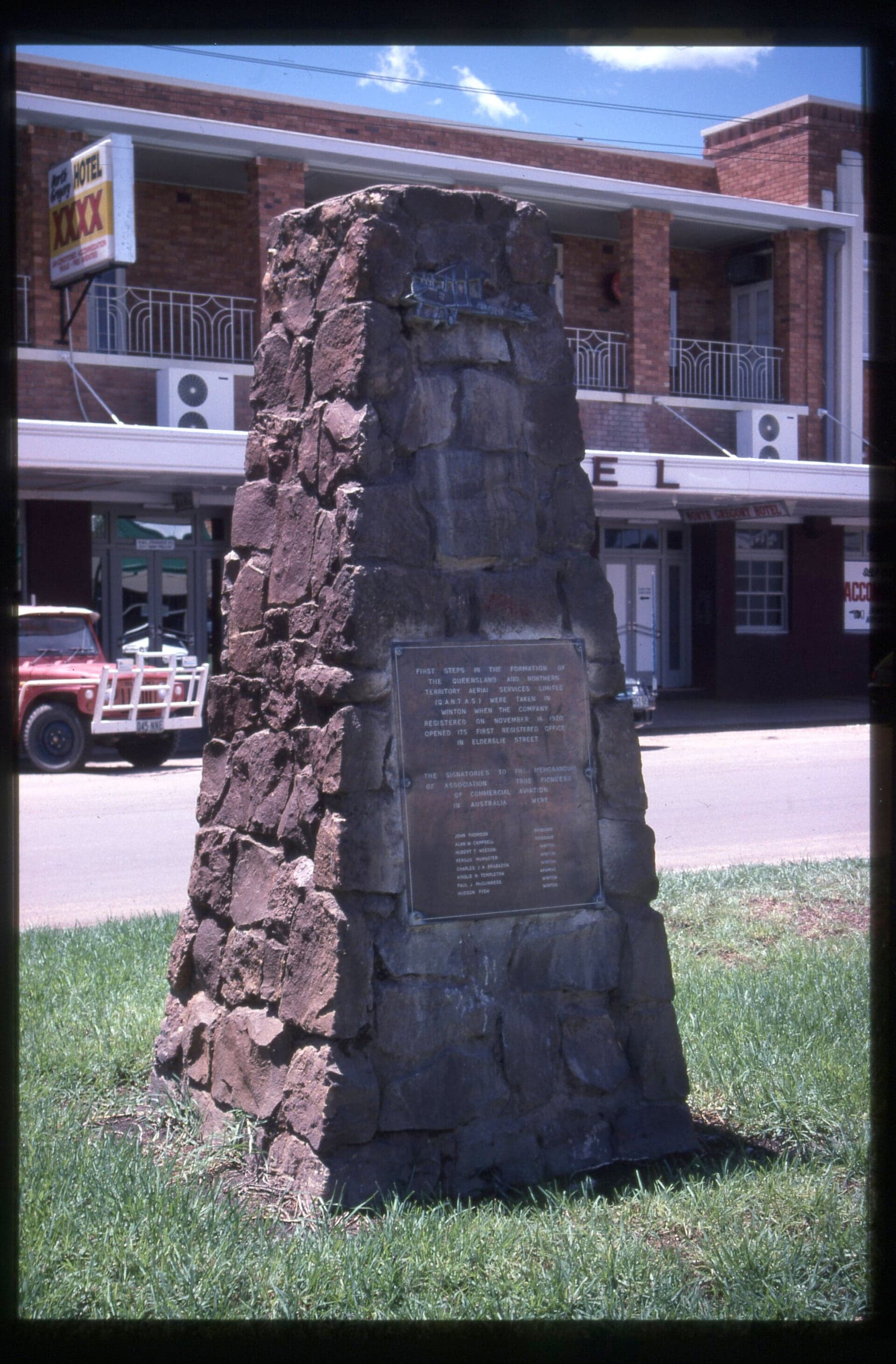
The physical record survives at Longreach, where the Qantas Founders Museum stands on the airfield the company flew from in the 1920s, keeping the heritage-listed hangar in which it built its own DH.50s along with the first Qantas 707 and a 747-200. At Winton, five hours further west, a memorial marks the town where the company was registered in November 1920. Both are a long way from an international airport, which is exactly the point.
The fleet
In service at June 30, 2025
Long-haul
Total52
Medium-haul
Airbus A321XLR
1
Total76
Cabins
First
The smallest cabin Qantas sells, and the only one carried on a single type: fourteen private suites on the upper deck nose of the Airbus A380. It survives because of the route it was built for: the fourteen-hour Sydney and Melbourne runs to Los Angeles, Dallas Fort Worth and, by way of Singapore, London.
Available onAirbus A380 only.
Business
A fully flat bed on every long-haul type, sold as the Business Suite on the Boeing 787 and the refitted A380 and as the older Skybed on parts of the Airbus A330 fleet. Domestically the same brand covers a recliner at the front of a Boeing 737.
Premium Economy
A separate cabin of wider seats with more recline, introduced on the Airbus A380 and carried since on the Boeing 787 and the A380 after its refit. Sold only on international services.
Available onAirbus A380 and Boeing 787 only.
Economy
The great majority of the seats Qantas sells, on every aircraft in the fleet. Meals, checked baggage and seat selection remain included in the fare, which is the clearest commercial difference between Qantas and Jetstar, the low-fare airline the group set up beside it.
Subsidiaries
- Jetstar
- The group's low-fare airline, launched in Australia in 2004 and since extended to New Zealand and, through associated companies, to Japan.
- QantasLink
- The regional brand, flying Dash 8s, Fokker 100s, Embraer E190s and Airbus A220s to about sixty Australian destinations.
- Qantas Freight
- The cargo division, operating dedicated Airbus A321 and A330 freighters alongside the holds of the passenger fleet.
- Qantas Loyalty
- The Frequent Flyer programme and its associated businesses, one of the group's most profitable segments.
Genealogy
The line of Qantas, from the Queensland and Northern Territory Aerial Services registered in 1920. In 1934 it formed Qantas Empire Airways with Imperial Airways, each holding half, to fly the Australian end of the route to London; the Australian government bought both halves in 1947, and the company took the name Qantas Airways in 1967. In 1992 it absorbed Australian Airlines, the state's domestic carrier, founded as Trans Australia Airlines in 1946.
Scroll to see the full diagram
Timeline
November 16, 1920
Queensland and Northern Territory Aerial Services is registered
Hudson Fysh, Paul McGinness and the grazier Fergus McMaster register the company, with its first office in Winton, western Queensland.
1921
The base moves to Longreach
Longreach sits better on the planned network; the hangar built there still stands.
November 2, 1922
First scheduled service
The Charleville to Cloncurry mail and passenger run begins. Ticket number one goes to the 84-year-old grazier Alexander Kennedy.
May 17, 1928
The first Flying Doctor flight
Qantas supplies and flies the de Havilland DH.50 Victory for the Australian Inland Mission's Aerial Medical Service out of Cloncurry, the beginning of what becomes the Royal Flying Doctor Service.
January 18, 1934
Qantas Empire Airways is formed
A joint company owned equally with Britain's Imperial Airways, to fly the Australian end of the route to London.
December 1934
The Empire route opens
Qantas Empire Airways flies the Brisbane to Darwin to Singapore sectors; Imperial Airways carries the mail onward to London.
July 1938
Empire flying boats reach Southampton
Short S.23 flying boats fly Sydney to Southampton in nine and a half days, landing on water the whole way.
June 29, 1943
The first Double Sunrise crossing
A Catalina flies Perth to Koggala in Ceylon in radio silence, restoring the link to Britain cut when Singapore fell.
1944
The kangaroo appears
The Indian Ocean crossing is named the Kangaroo Service, and its winged-circle emblem is the first use of the kangaroo as the airline's mark.
1947
Nationalisation
The Chifley government buys out the British half and then the remaining private shares; Qantas becomes wholly owned by the Commonwealth of Australia.
December 1, 1947
The Kangaroo Route opens
A Lockheed Constellation flies Sydney to London in four days with six stops: the route that gave the airline its name in the public mind.
January 14, 1958
Round-the-world service
Qantas begins flying round the world in both directions, by way of London, becoming one of the first airlines to do so.
July 29, 1959
The jet age
The first Boeing 707-138 service, Sydney to San Francisco. Qantas is the first airline outside the United States to fly the 707.
1967
Renamed Qantas Airways Limited
September 1971
The Boeing 747 enters service
The 747-238B begins on the routes to London and the United States; by 1979 Qantas flies nothing else.
August 17, 1989
London to Sydney non-stop
The Boeing 747-438 VH-OJA City of Canberra flies 9,720 nm in 20 hours 9 minutes on its delivery flight, a record for a commercial aircraft.
September 1992
Australian Airlines is absorbed
The government merges its domestic carrier into Qantas, giving the international airline a domestic network for the first time.
March 1993
British Airways buys 25 per cent
July 1995
Privatisation completed
The Commonwealth's remaining shares are floated on the Australian Stock Exchange, subject to statutory limits on foreign ownership.
February 1, 1999
oneworld begins operating
Qantas is a founding member alongside American Airlines, British Airways, Canadian Airlines and Cathay Pacific.
May 2004
Jetstar launched
A low-fare airline inside the group, set up to meet Virgin Blue on the domestic market without repricing Qantas itself.
October 20, 2008
The Airbus A380 enters service
The first commercial flight runs Melbourne to Los Angeles.
November 4, 2010
Flight QF32
An A380 suffers an uncontained engine failure after leaving Singapore and returns safely; nobody is hurt.
October 29, 2011
The fleet is grounded
During an industrial dispute the chief executive Alan Joyce grounds every Qantas aircraft worldwide, stranding tens of thousands of passengers until Fair Work Australia ends the action two days later.
March 24, 2018
Perth to London non-stop
A Boeing 787-9 flies the first scheduled non-stop service between Australia and Europe, 7,828 nm in about seventeen hours.
November 16, 2020
Centenary
Qantas turns a hundred with almost its whole fleet on the ground because of the COVID-19 pandemic.
Accidents and defining events
Recorded as the investigators recorded them: what happened, where, and how many people died. Fatal accidents and the events that changed the airline, in date order.
November 15, 1934
De Havilland DH.86Near Longreach, Queensland, Australia
VH-USG lost control shortly after take-off and crashed. All four on board were killed. The accident was one of several that led to an investigation of design deficiencies in the DH.86.
4 deaths4 people on board
January 30, 1942
Short S.23 Empire flying boatTimor Sea, off Koepang
The flying boat Corio, G-AEUH, was shot down by Japanese fighters while flying the route to Singapore. Thirteen of the eighteen people on board were killed.
13 deaths18 people on board
February 28, 1942
Short S.23 Empire flying boatIndian Ocean, between Tjilatjap, Java, and Broome, Australia
The flying boat Circe, G-AETZ, disappeared while evacuating people from Java and is believed to have been shot down by Japanese aircraft. All twenty on board were lost.
20 deaths20 people on board
March 23, 1946
Avro LancastrianIndian Ocean
G-AGLX disappeared over the Indian Ocean with ten people on board. No wreckage was found and the cause has never been established.
10 deaths10 people on board
December 13, 1951
De Havilland DH.84 DragonNear Mount Hagen, New Guinea
VH-URV crashed in mountainous terrain on a New Guinea service, killing all three on board. This is the most recent fatal accident in the airline's history.
3 deaths3 people on board
September 23, 1999
QF1
Boeing 747-438Bangkok Don Mueang, Thailand
VH-OJH landed long on a runway flooded by heavy rain, aquaplaned and overran the end, coming to rest on a golf course. None of the 410 people on board were killed; the investigation criticised the operator's approach and landing procedures and its emergency response.
No deaths410 people on board
July 25, 2008
QF30
Boeing 747-438475 km north-west of Manila, Philippines
An emergency oxygen cylinder in the forward cargo hold ruptured at 29,000 ft, tearing a hole in the fuselage and depressurising VH-OJK. The crew descended and diverted to Manila; nobody on board was injured.
No deaths
October 7, 2008
QF72
Airbus A330-303154 km west of Learmonth, Western Australia
A faulty air data inertial reference unit on VH-QPA fed spurious values to the flight control computers, which commanded two sudden pitch-downs. One cabin crew member and eleven passengers were seriously injured and many more less seriously; the aircraft diverted to Learmonth. There were no deaths.
No deaths315 people on board
November 4, 2010
QF32
Airbus A380-842Overhead Batam Island, Indonesia
Four minutes after leaving Singapore, a fatigue crack in an oil feed pipe inside the number two Rolls-Royce Trent 900 started an internal fire; a turbine disc burst and threw debris through the left wing and fuselage of VH-OQA, disabling electrical, hydraulic and fuel systems. The crew spent nearly two hours working through the failures and landed back at Singapore. None of the 469 people on board was injured. The ATSB traced the crack to oil feed stub pipes manufactured with wall sections thinner than the design allowed.
No deaths469 people on board
In the catalogue
Aircraft central to this airline's story, as the encyclopedia records them.
Related airlines
- Annual Report 2025, Qantas Airways Limited
- Qantas Group delivers strong FY25 result and orders 20 additional A321XLR aircraft, Qantas Newsroom
- In-flight uncontained engine failure — Airbus A380-842, VH-OQA, overhead Batam Island, Indonesia, 4 November 2010 (AO-2010-089), Australian Transport Safety Bureau
- Runway excursion — Boeing 747-438, VH-OJH, Bangkok Airport, Thailand, 23 September 1999, Australian Transport Safety Bureau
- Oxygen cylinder failure and depressurisation — Boeing 747-438, VH-OJK, 475 km north-west of Manila, Philippines, 25 July 2008 (AO-2008-053), Australian Transport Safety Bureau
- In-flight upset — Airbus A330-303, VH-QPA, 154 km west of Learmonth, Western Australia, 7 October 2008 (AO-2008-070), Australian Transport Safety Bureau
- Qantas established — Australia's Defining Moments, National Museum of Australia
- Museum and National Heritage Listed Qantas Hangar, Qantas Founders Museum
- Airbus A350 — Project Sunrise, Qantas Airways Limited
- Qantas, Wikipedia
Checked September 16, 2026