Terminal 1
Opened 1984
Opened in January 1984 ahead of the Olympic Games; renovated by 2018.
Airport
LAX · KLAX
Los AngelesUnited States
Los Angeles International Airport
73,709,594a year
Passengers
580,996a year
Aircraft movements
Figures for 2025
Ownership as of 2026
Los Angeles International Airport, LAX, is the main airport of Los Angeles and the busiest international gateway on the West Coast of the United States. It sits on the edge of the Pacific in the Westchester district, and is owned and run by Los Angeles World Airports, a department of the city.
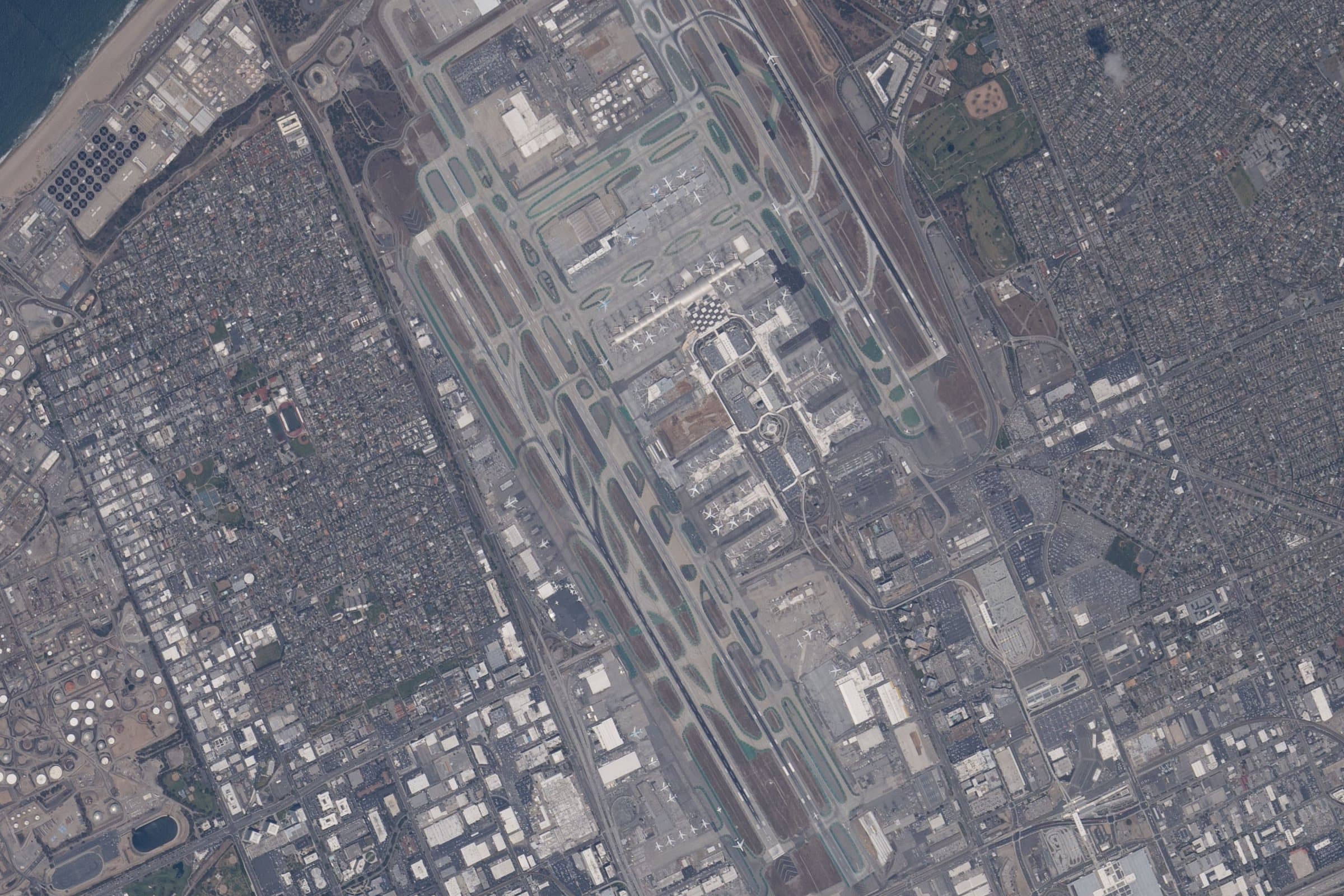
The airport is laid out with unusual clarity: two pairs of parallel runways run east to west, one pair to the north and one to the south, and between them the terminals form a U around a central loop road, with the arched Theme Building at its heart. In 2025 LAX handled 73.7 million passengers and about 581,000 aircraft movements.
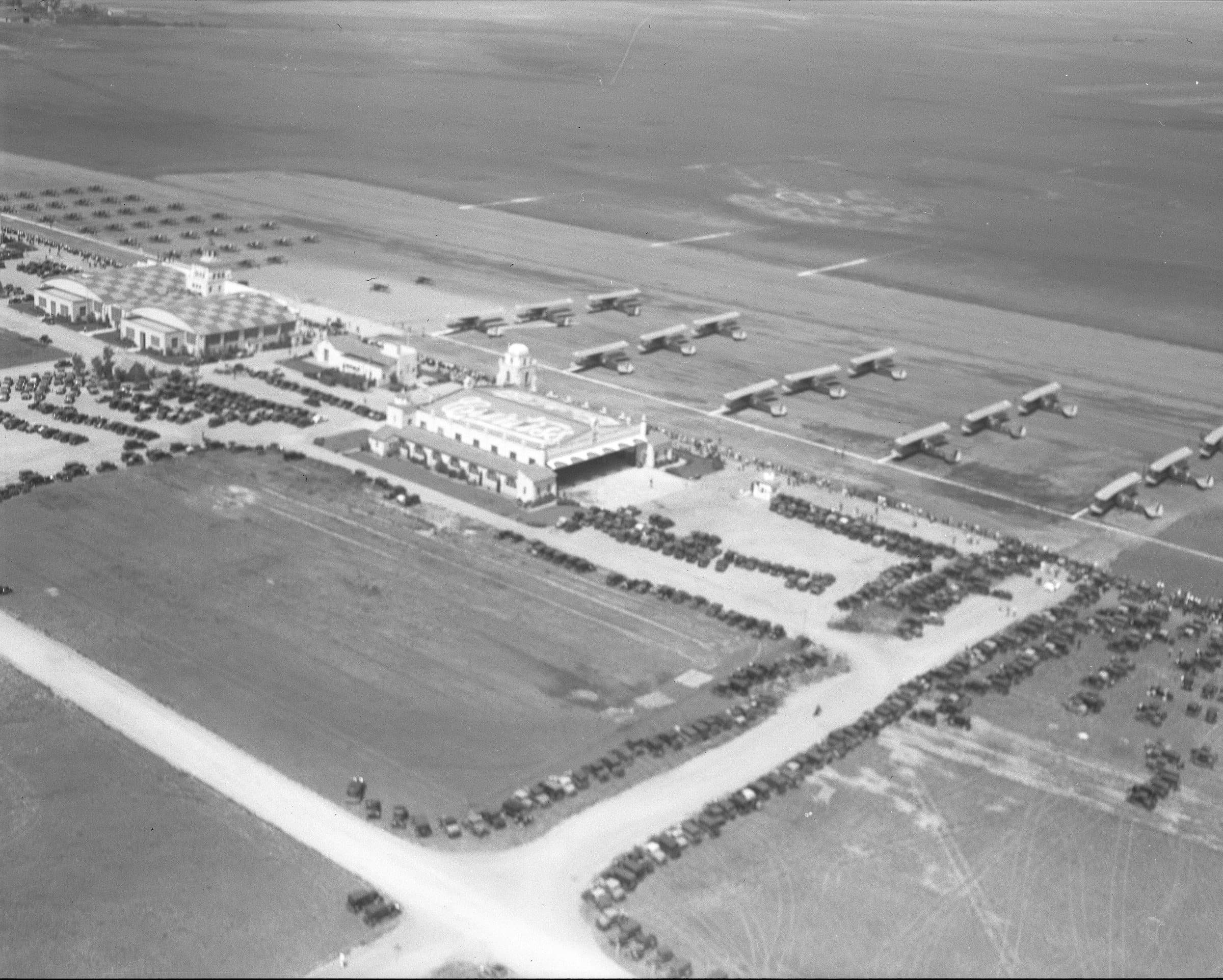
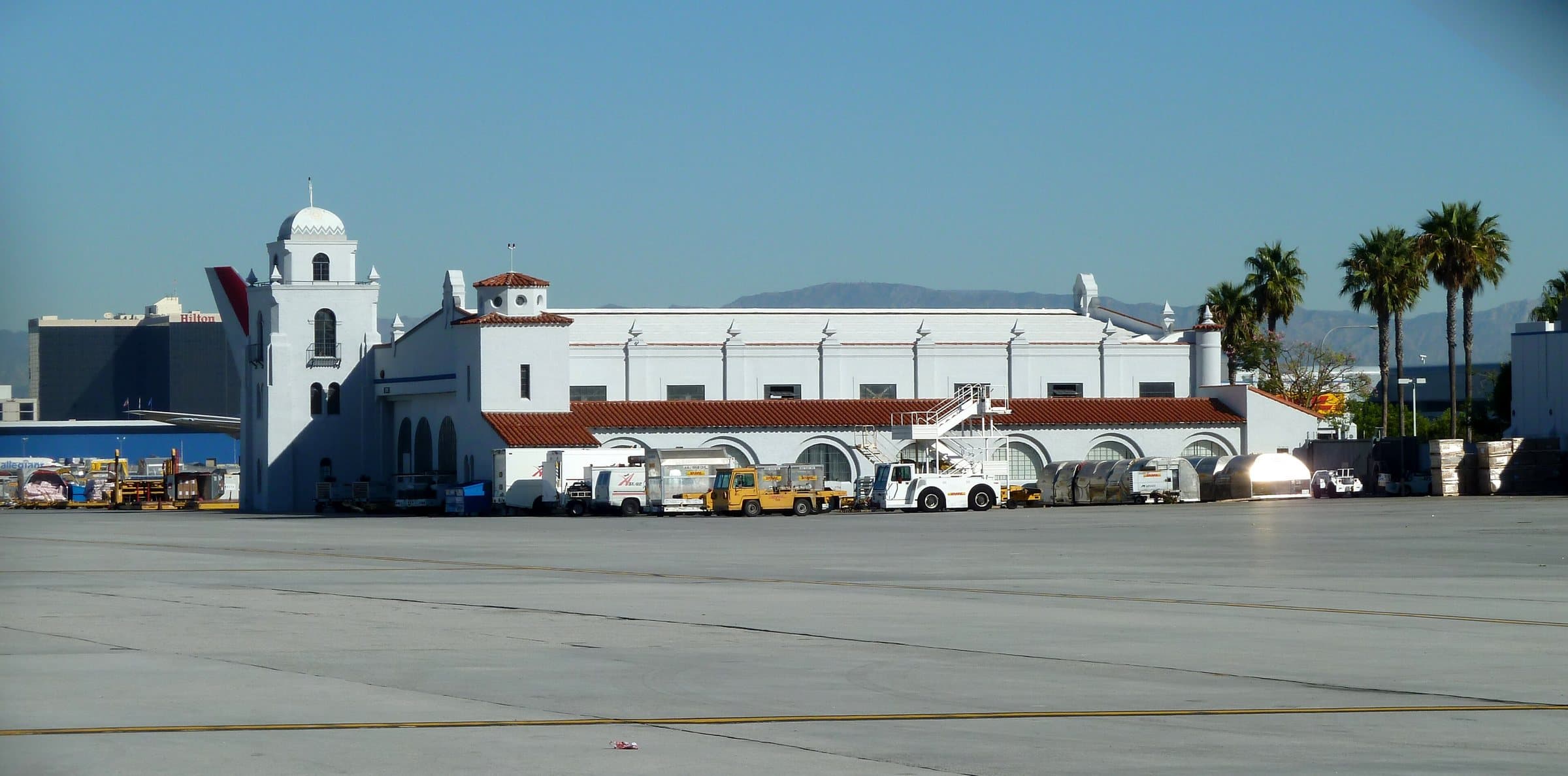
In 1926 the city council and the Chamber of Commerce decided Los Angeles needed an airport of its own. They chose a stretch of wheat, barley and lima-bean fields in Westchester promoted by the estate agent William W. Mines, Mines Field, already picked to host the 1928 National Air Races. The city leased the land in August 1928, the airport opened that October, and in 1929 its first building went up: Hangar No. 1, which is still in use.
Renamed Los Angeles Municipal Airport on its dedication in June 1930, it drew private pilots and flying schools but no airlines, which stayed at Burbank and Glendale. The war then took it over: the military assumed control in January 1942, stationing fighters on the field and gun batteries in the dunes to the west.
A $12.5 million bond approved by voters in 1943 finally brought the airlines. On 9 December 1946 American, TWA, United, Southwest Airways and Western began flying from four temporary terminals on the north side, and Pan Am followed a month later. The airport took its present name in 1949.
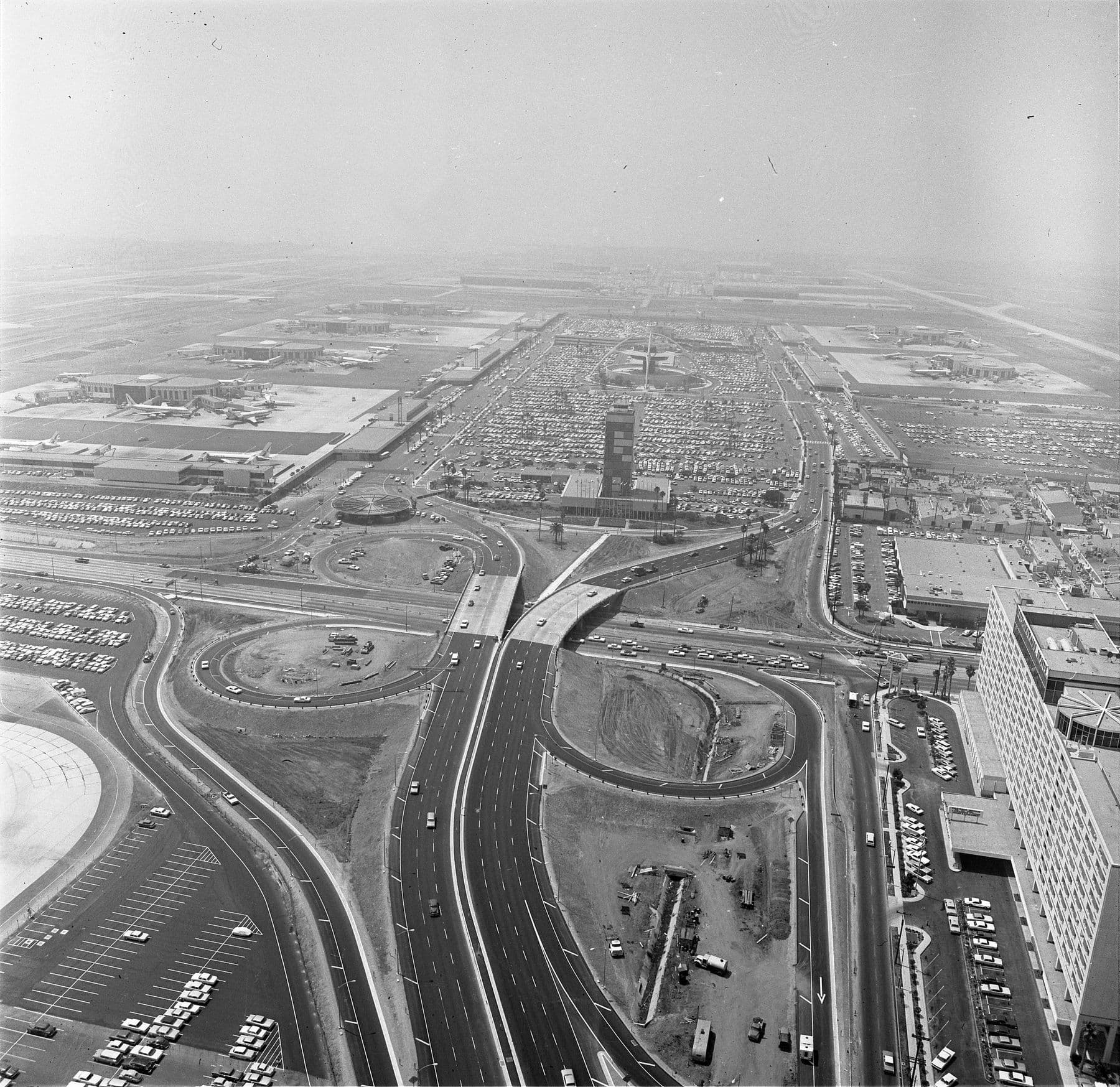
The temporary buildings lasted fifteen years. A 1958 plan set the terminals out in a U around a central area that was to be covered by a vast glass dome; the dome was never built. On 25 June 1961 the first new terminals, 7 and 8, opened for United, and the Theme Building was dedicated the same day. The other terminals followed within the year.
LAX has four parallel runways. The North Airfield Complex, 06L/24R and 06R/24L, lies above the terminals; the South Airfield Complex, 07L/25R and 07R/25L, lies below them. The longest, 07L/25R, is 12,920 ft. The south side is the busier of the two, because most of the passenger gates and cargo areas are there; in 2007 the southernmost runway was moved further south to make room for a centre taxiway between the pair.
With the Pacific to the west and houses on every other side, the airport has since 1972 followed a preferential-runway policy to limit noise. By day the prevailing westerly wind sets the pattern: aircraft take off to the west, over the ocean, and land from the east.
Departures use the inboard runways, nearest the terminals and furthest from the neighbours, and arrivals the outboard ones, historically the pattern of more than 90 per cent of flights. When the wind turns, the airport reverses to easterly operations, with departures to the east and arrivals from the west.
Nine passenger buildings stand around the central loop. Terminals 2 to 8 are the descendants of the 1961 buildings, each renovated in turn since 2008; Terminal 1 and the Tom Bradley International Terminal, named after the city's mayor, were both added in 1984, ahead of the Los Angeles Olympic Games, along with an upper-level roadway for departures.
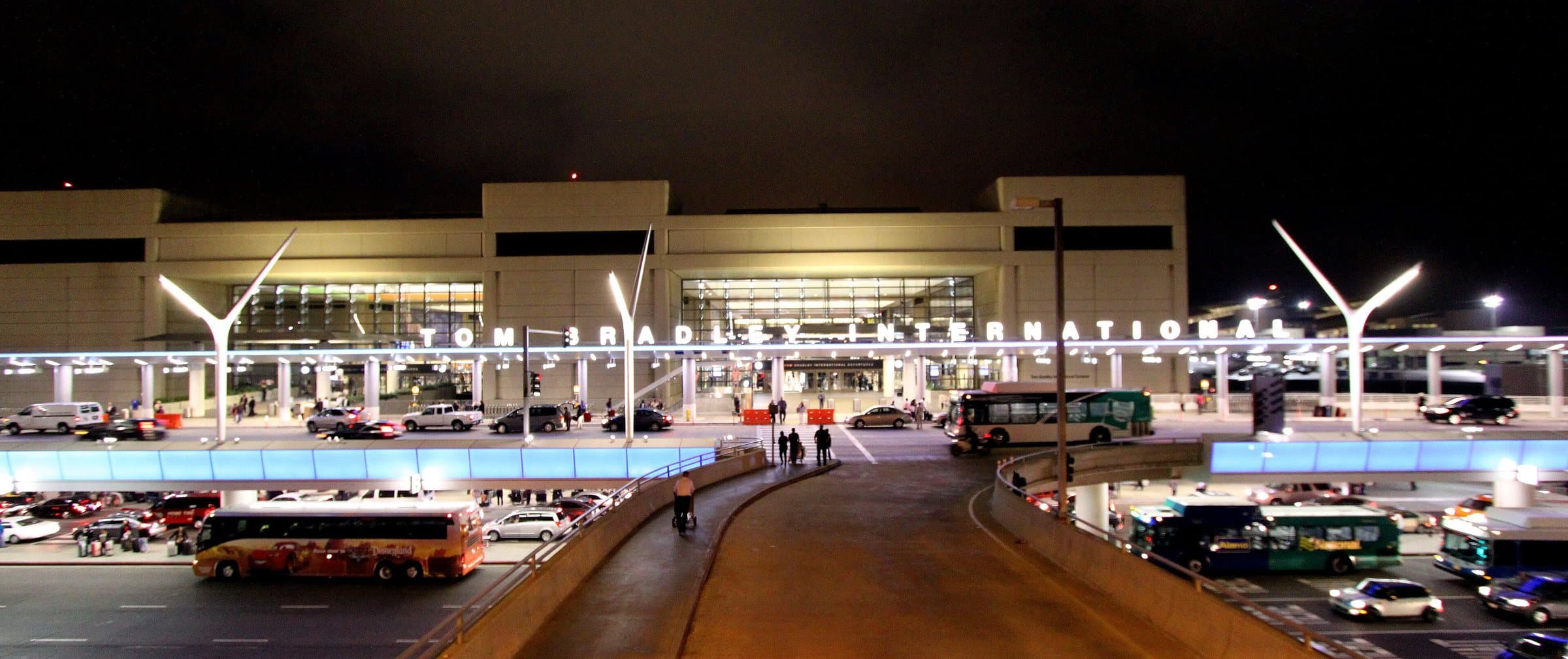
The Tom Bradley terminal is the airport's main international building. It was substantially rebuilt from 2008, and its gates were extended westwards by a separate building out on the airfield.
That building, the Midfield Satellite Concourse, the West Gates, opened in 2021 with 15 gates and gained eight more in 2025. Smaller junction buildings, Terminal 1.5 (2021) and Terminal 4.5 (2022), now link neighbouring terminals and connect them to the new transit system.
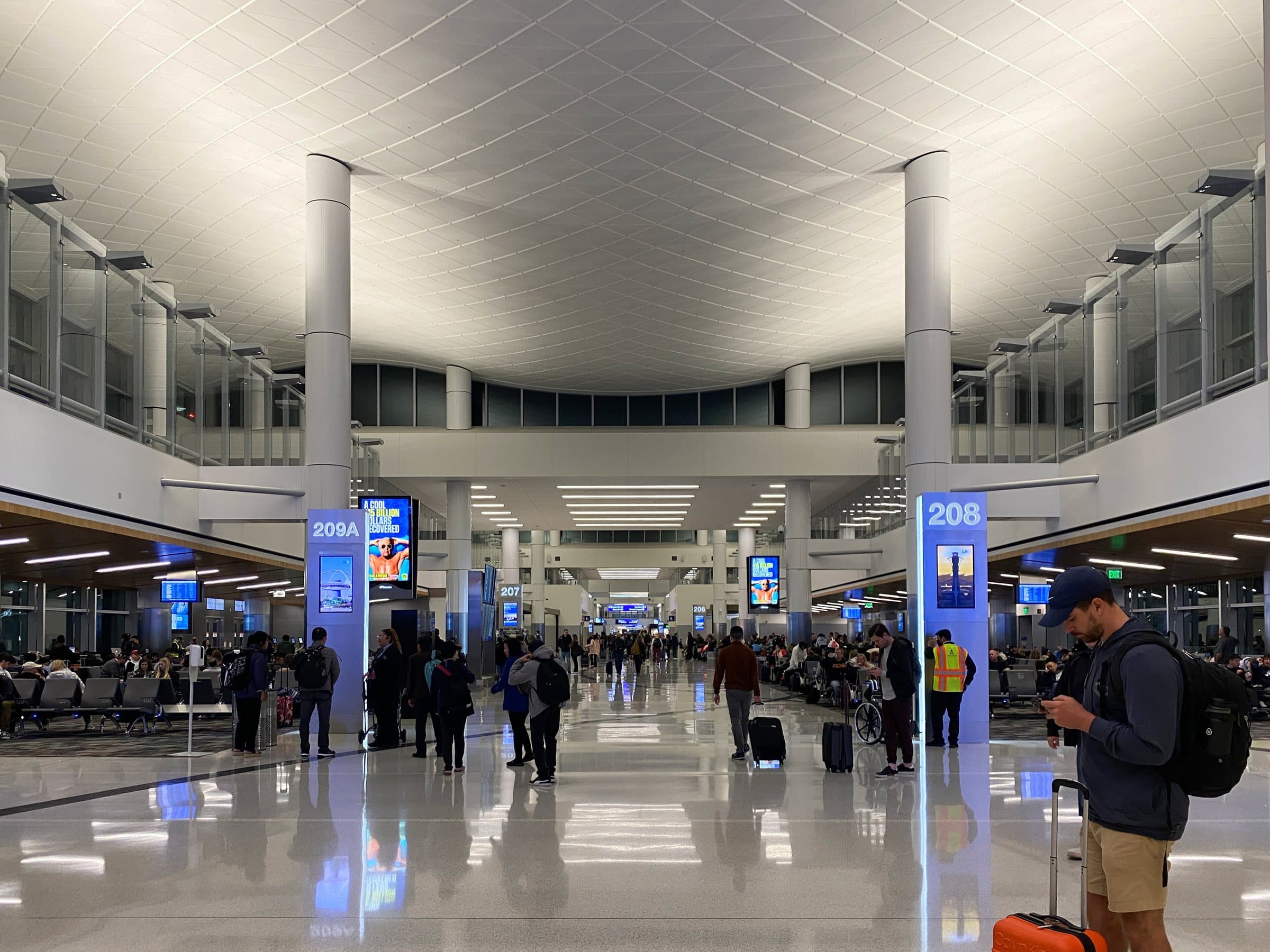
LAWA's programme counts 146 gates at the start of the works and 182 at their end, with new Terminals 0 and 9 still in planning.
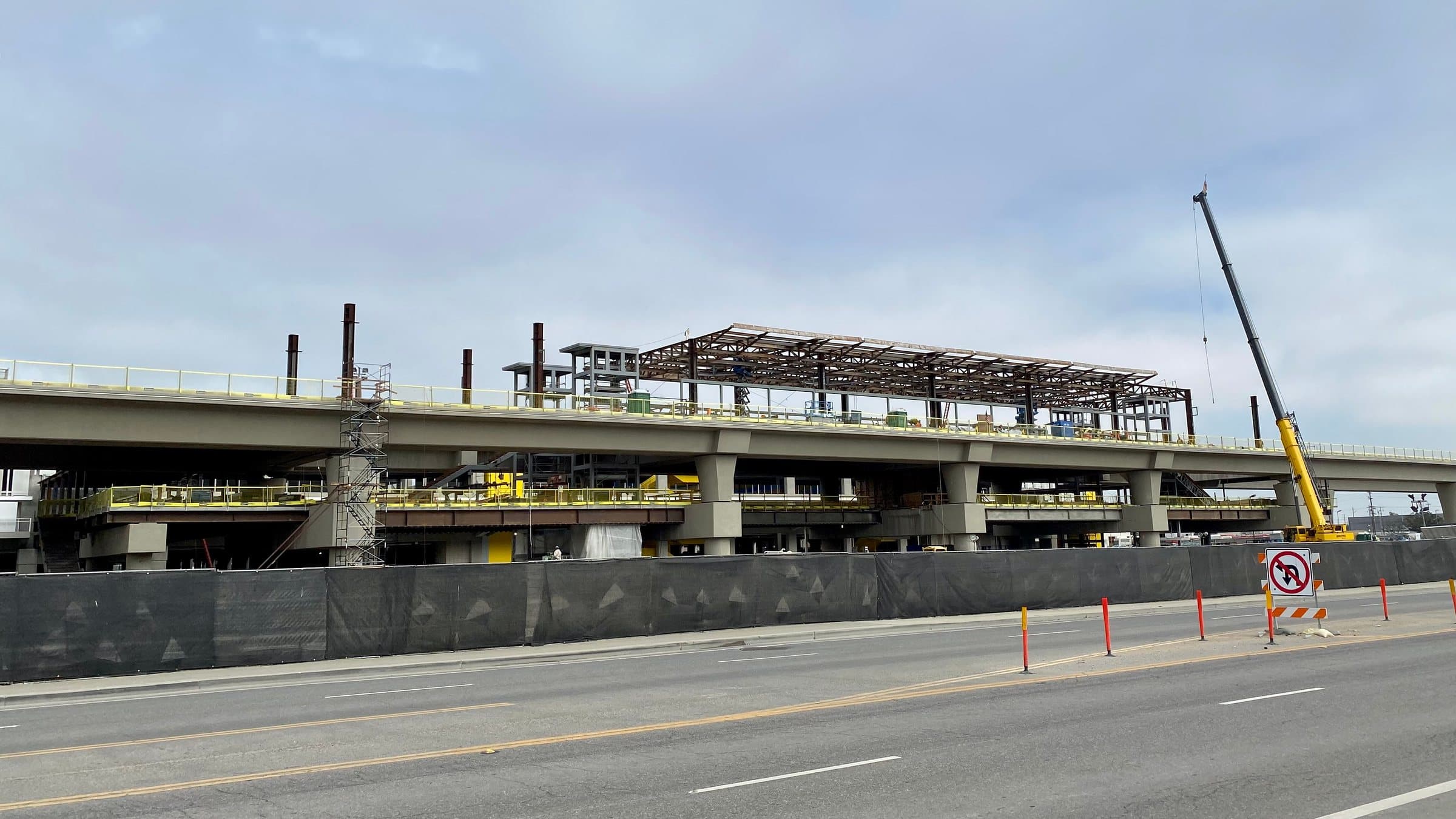
In 2017 Los Angeles World Airports adopted a modernisation plan costed at about $30 billion, in two parts: the airfield and terminal works, and a landside programme meant to take cars out of the congested central loop.
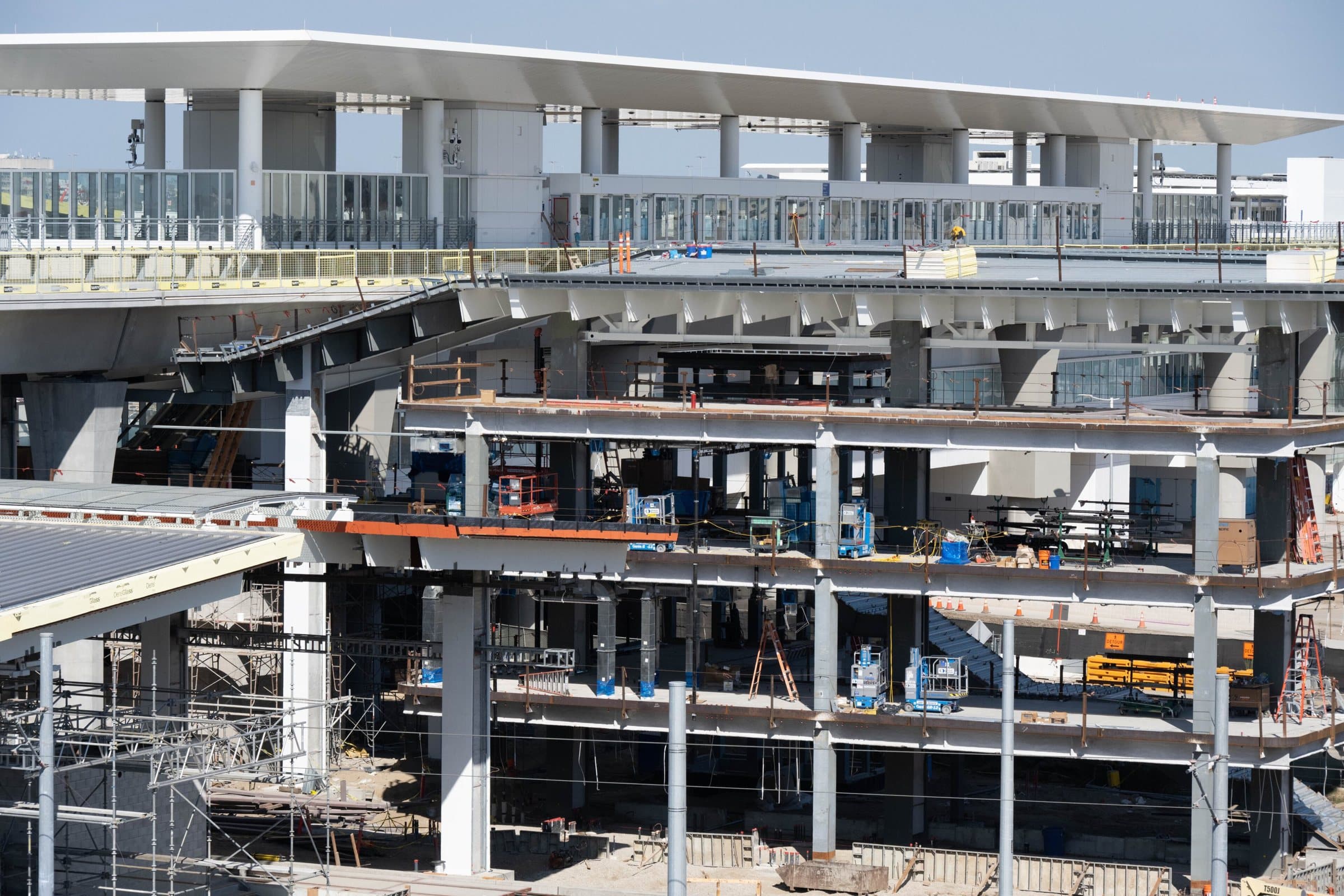
The landside half is built around SkyLink, an automated people mover joining the terminals to an economy car park (opened 2021), a consolidated rental-car centre (2024) and the LAX/Metro Transit Center (2025), where the Metro C and K light-rail lines stop. SkyLink itself was scheduled, as of early 2026, to open that summer; Terminals 4 and 5 are due to finish their renovation in 2028 and the new roadways around the central area in 2030.
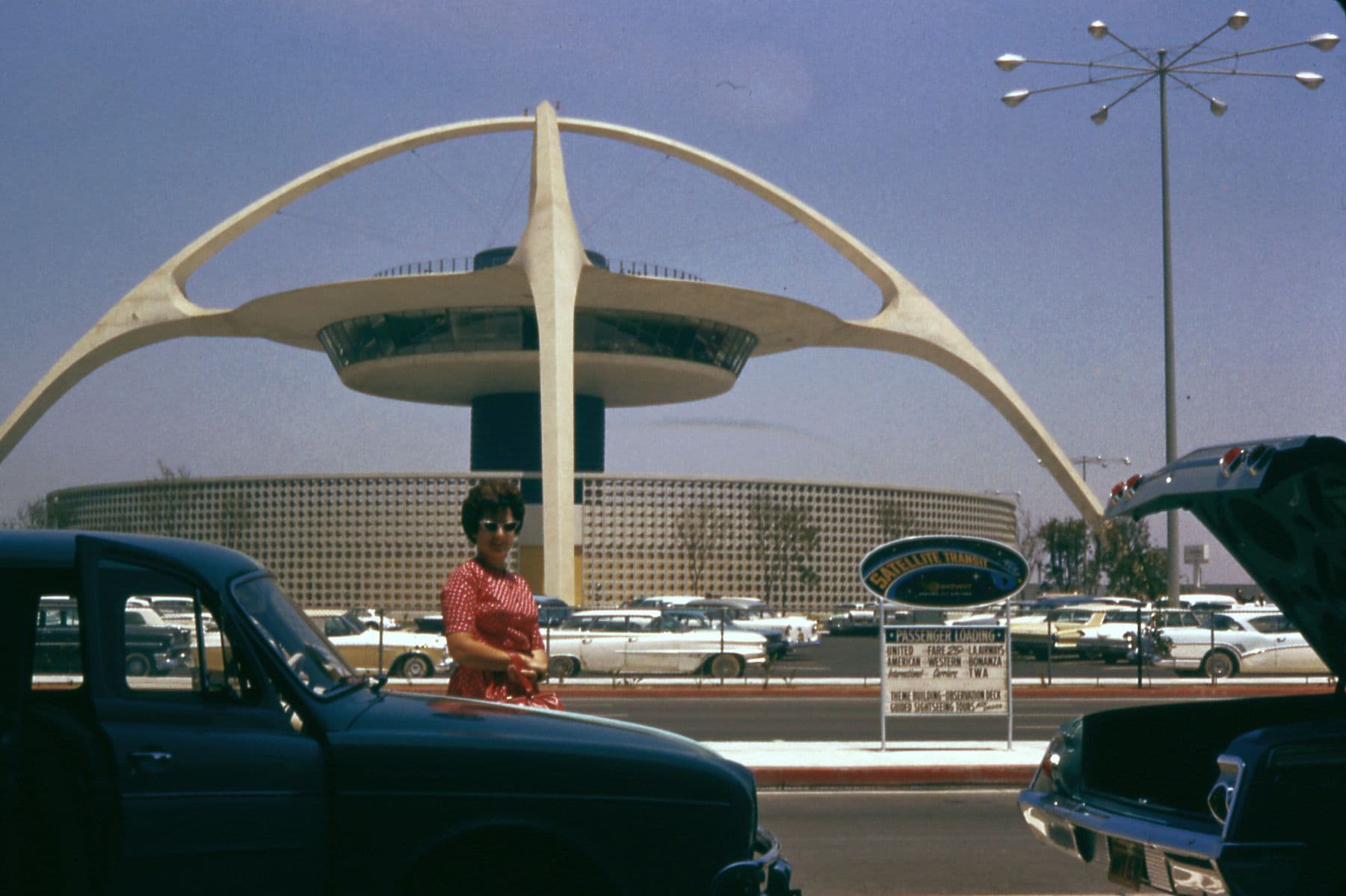
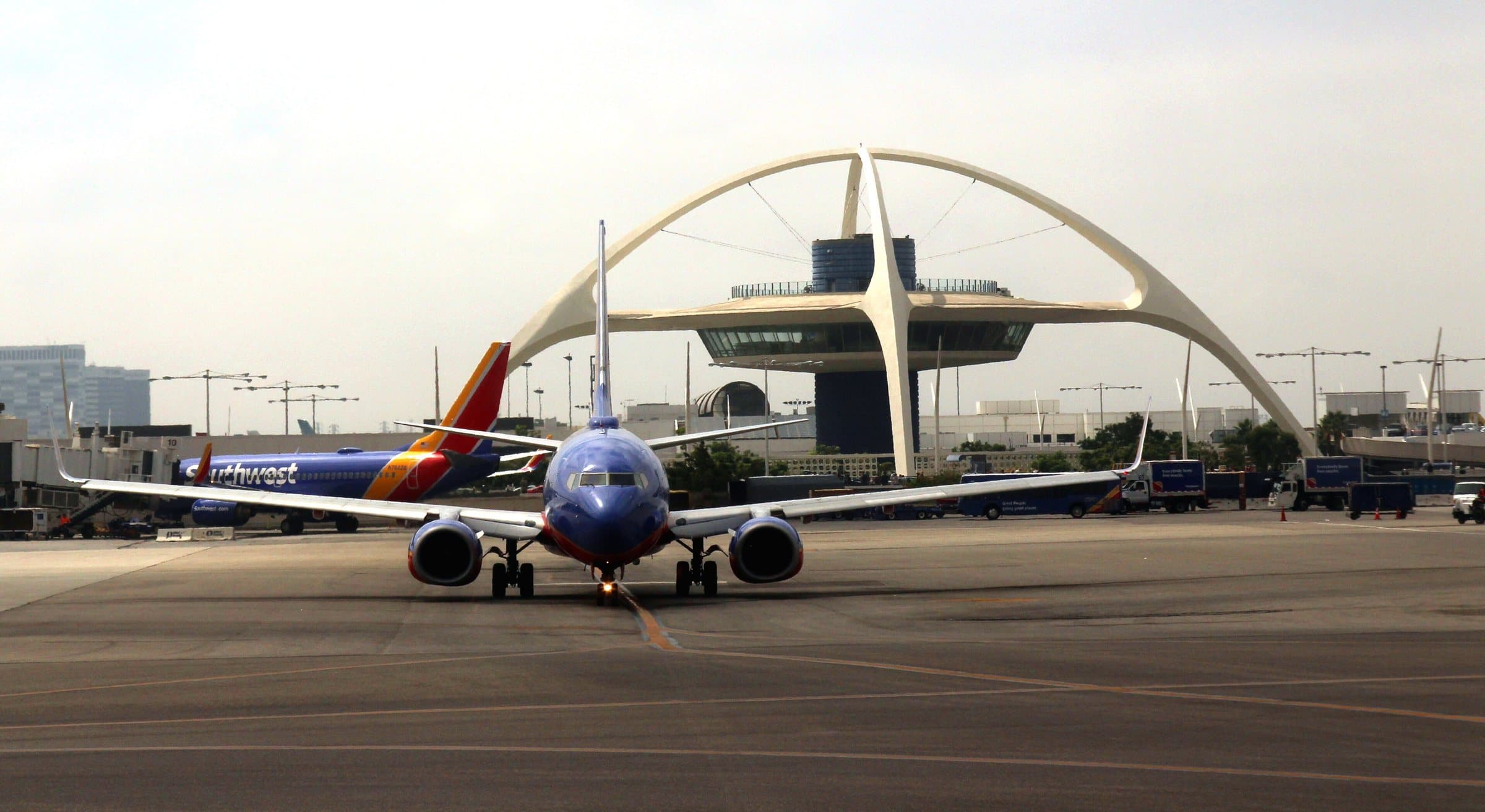
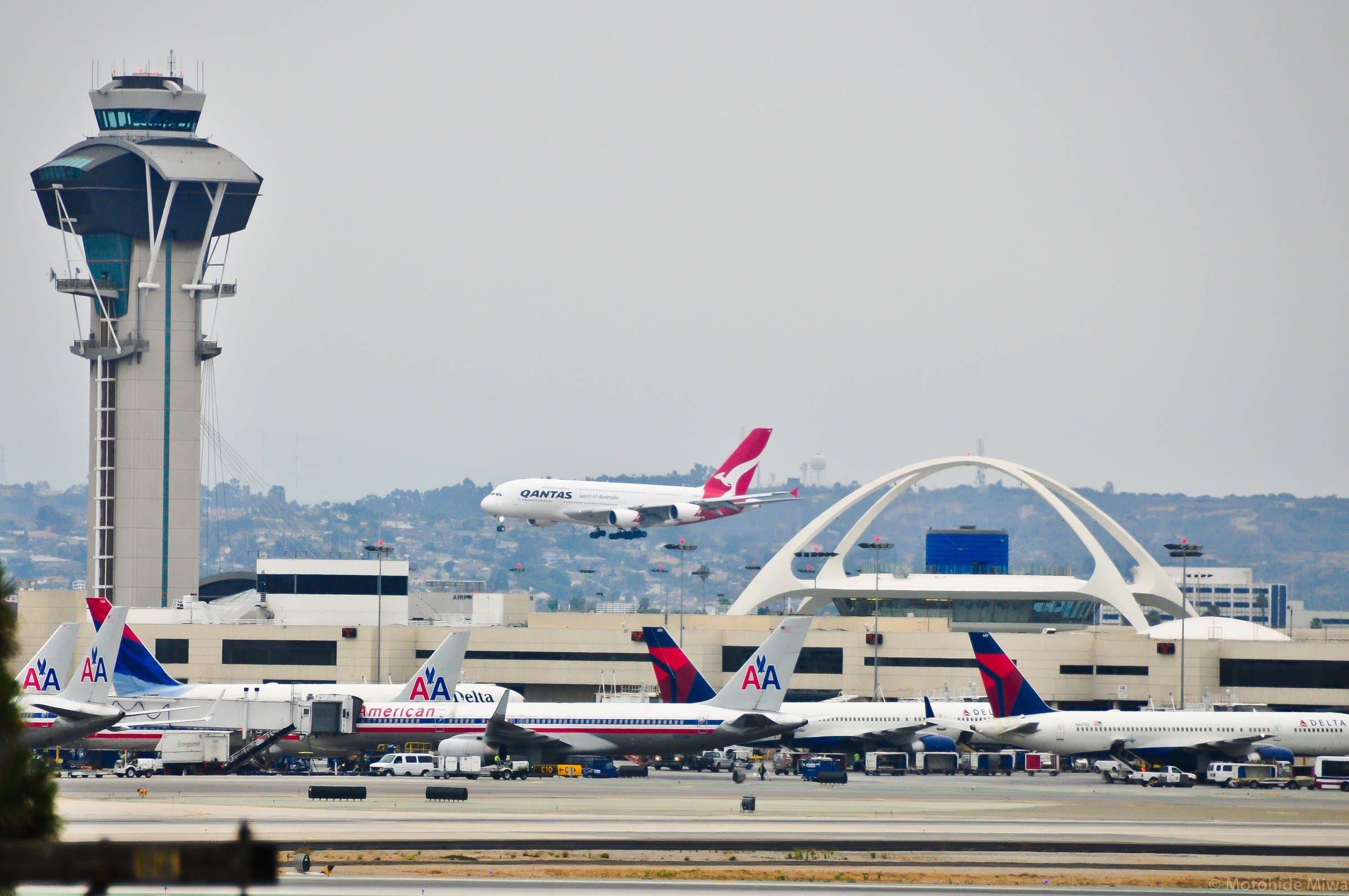
The emblem of LAX is not a runway or a terminal but the Theme Building: a saucer-like restaurant hung beneath two crossed parabolic arches, built in the Googie style of the jet age and dedicated by Vice President Lyndon B. Johnson in June 1961. It is all that was built of the 1958 plan's great central dome.
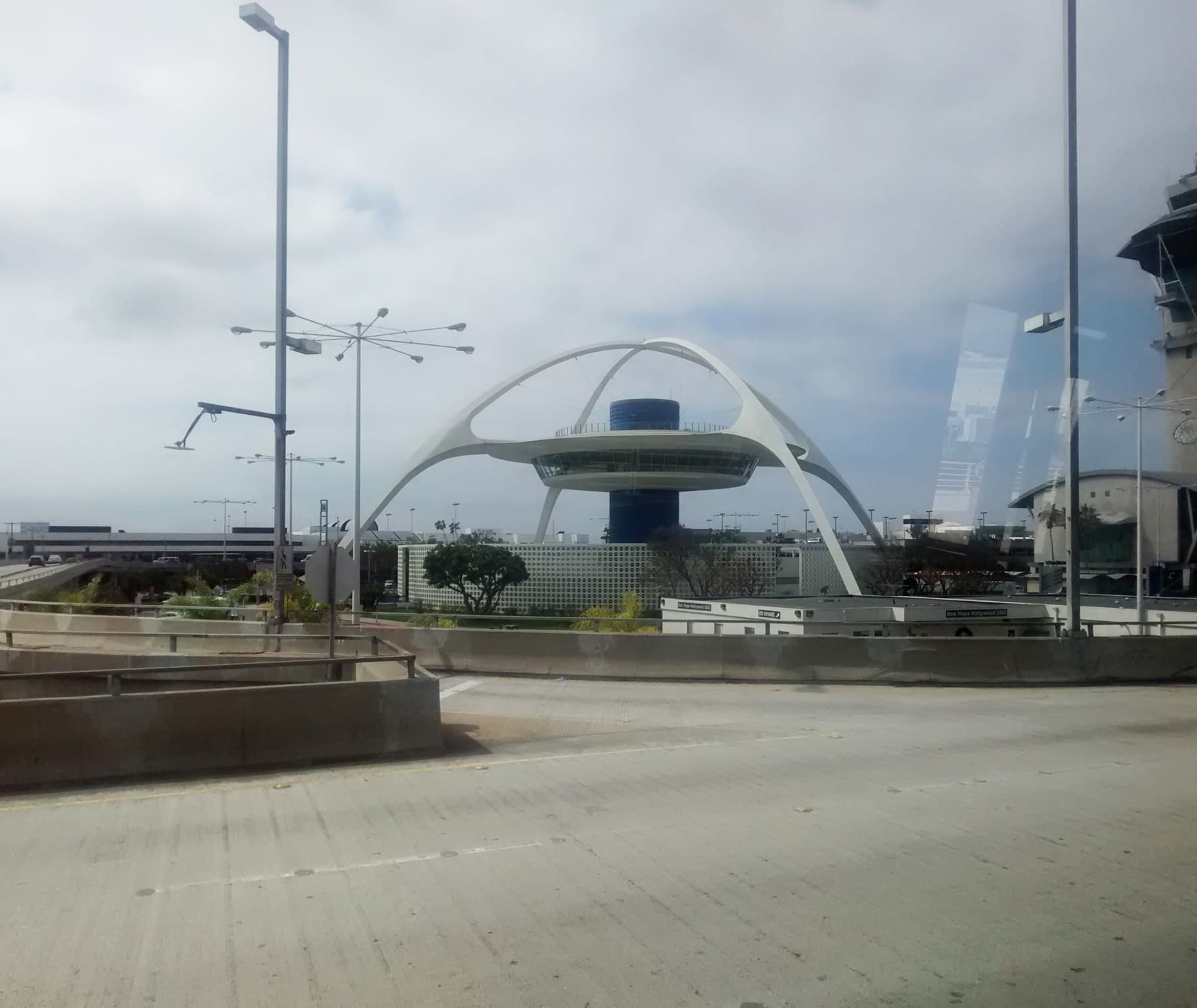
The city declared it a Historic-Cultural Monument in 1992. A $4 million renovation with an interior and lighting by Walt Disney Imagineering preceded the Encounter restaurant, which opened in 1997 and has since closed; the observation deck, shut after the attacks of 11 September 2001, has reopened. A memorial on its grounds remembers those attacks, in which three of the four hijacked aircraft had been bound for Los Angeles.
Hangar No. 1, the building of 1929 at the other end of the airport's history, is listed on the National Register of Historic Places.
North Airfield Complex
North Airfield Complex
South Airfield Complex
The longest runway; an inboard runway, used mainly for departures.
South Airfield Complex
Moved south in 2007 to make room for a centre taxiway.
Opened 1984
Opened in January 1984 ahead of the Olympic Games; renovated by 2018.
Opened 1961
The 1961 terminals around the U, renovated one by one since 2008; Terminals 4 and 5 are due to finish in 2028.
Opened 1984
The main international terminal, opened in June 1984 and substantially rebuilt from 2008.
Opened 2021
A separate building on the airfield: 15 gates in 2021, eight more added in 2025.
August 1928
October 1928
1929
June 7, 1930
January 1942
December 9, 1946
American, TWA, United, Southwest Airways and Western, from four temporary terminals.
1949
June 25, 1961
1984
1992
2021
2025
Types whose story is bound up with this airport.
Checked September 19, 2026