Terminal 1
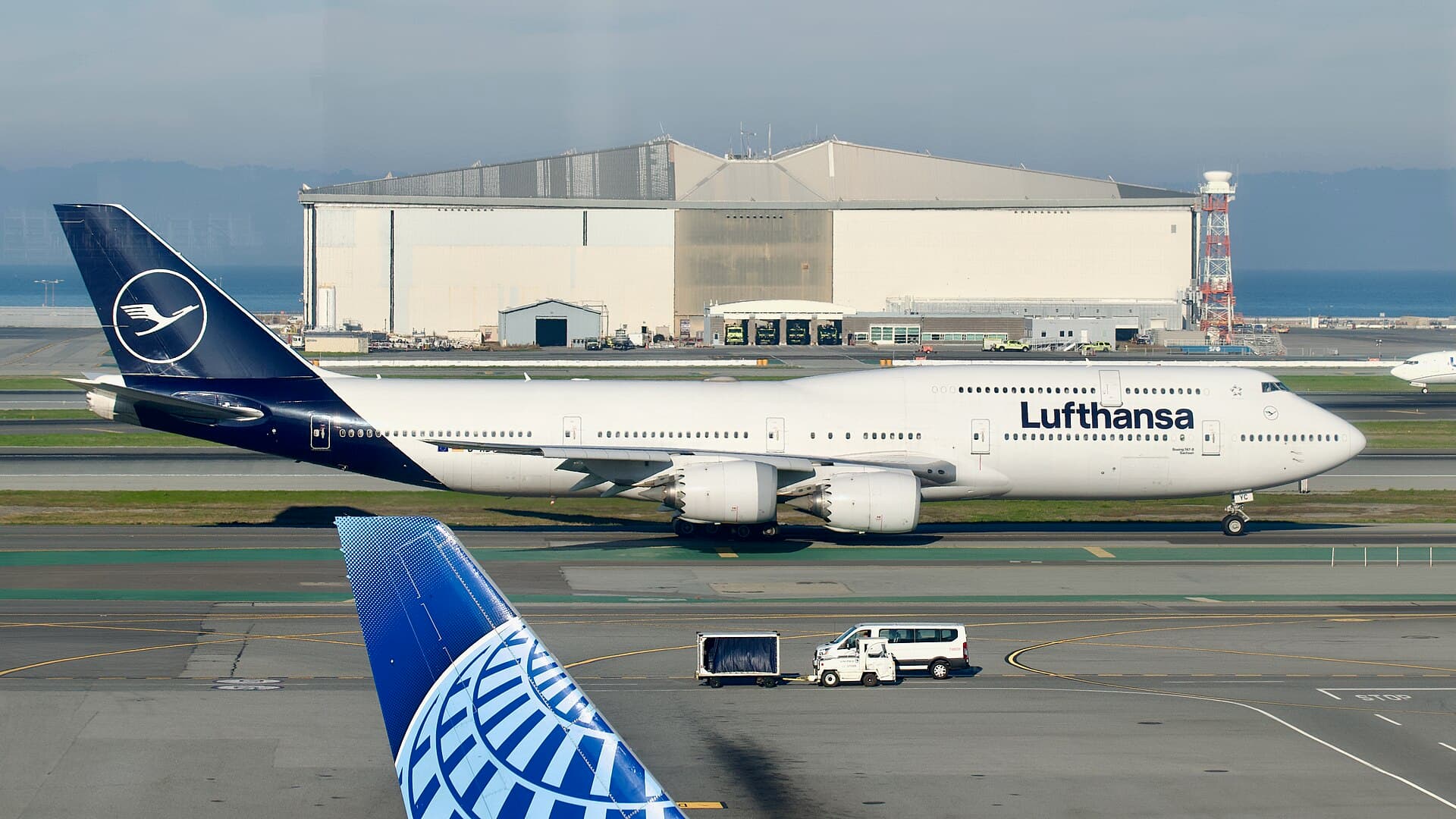
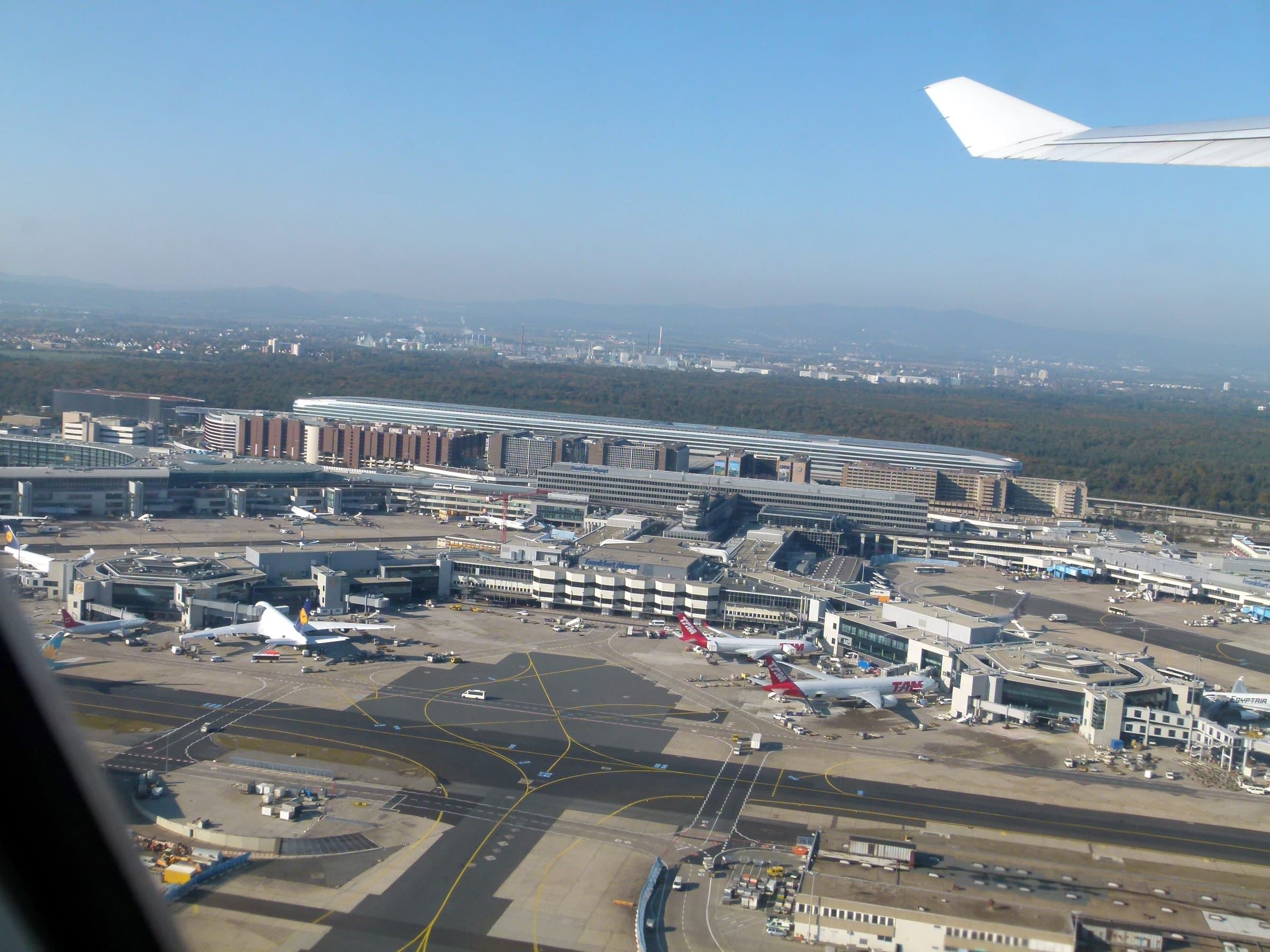
The main terminal and Lufthansa's home, with Pier A-Plus (2012).
Airport
FRA · EDDF
FrankfurtGermany
Frankfurt Airport
63,186,114a year
Passengers
460,272a year
Aircraft movements
2,071,665t
Cargo
Figures for 2025
Ownership as of 2026
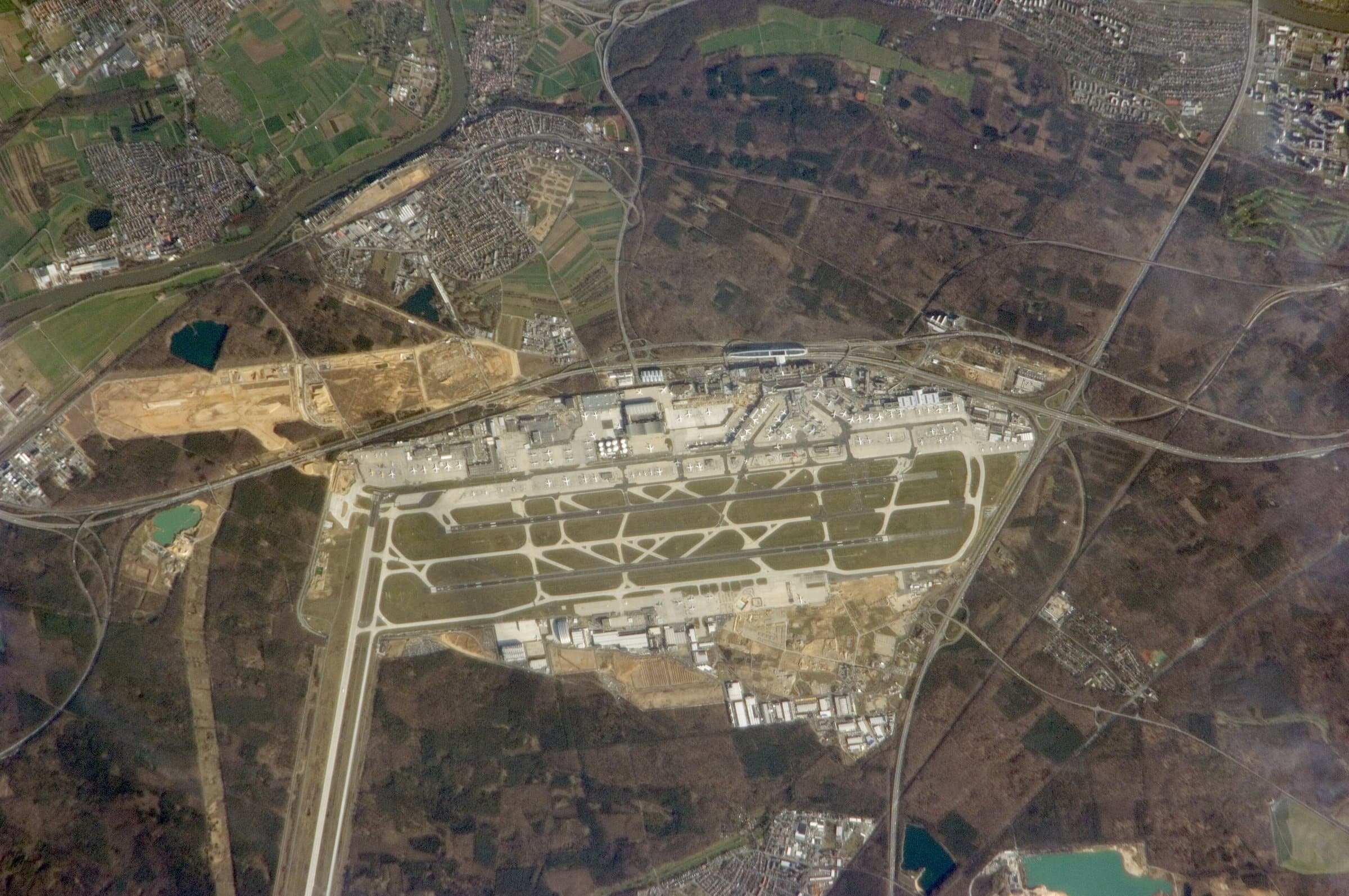
Frankfurt Airport is the largest airport in Germany and one of the handful in Europe that functions as a genuine intercontinental hub, which is to say that a substantial proportion of the people inside it have no intention of visiting Frankfurt at all.
In 2025 it handled around 63.2 million passengers, up about 2.6 per cent on the previous year, with 460,272 takeoffs and landings and roughly 2.1 million tonnes of cargo. Ninety-four airlines served 301 destinations in 96 countries from it. Those last numbers are the ones that describe what the airport is for: more destinations than any passenger could need means the airport exists to connect them to each other.
It is Lufthansa's principal base and the main European hub of the Star Alliance, and it is operated by Fraport AG, a company that has grown from running one airport into managing a portfolio of them worldwide.
The cargo figure deserves attention because it is unusual. Frankfurt sits at the centre of the German industrial economy, with motorway and rail connections that make it a freight node as much as a passenger one, and a large share of its tonnage travels in the holds of passenger aircraft rather than in dedicated freighters. An airport that moves two million tonnes a year is doing something structurally different from one that merely moves people.
The site it occupies has been an aerodrome since 1936, and for nearly sixty years of that it was shared with a foreign air force.
The operating company is older than the airport. It was founded in 1924 as Südwestdeutsche Luftverkehrs AG and ran Frankfurt's flying from a site at Rebstock, closer to the city. The move to the present location, beside what is now the Frankfurter Kreuz motorway junction, produced the airport that exists today.
The new Flug- und Luftschiffhafen Rhein-Main opened on 8 July 1936, and its name states something the modern airport has entirely lost: it was built as an airport and an airship port. The first aircraft to land was a Junkers Ju 52. Six days later, on 14 July, the airship LZ 127 Graf Zeppelin arrived, and Rhein-Main became the home base of both of Germany's great rigid airships, the Graf Zeppelin and LZ 129 Hindenburg. The traffic in that first year was 58,000 passengers and 800 tonnes of cargo, rising to 70,000 passengers and 966 tonnes in 1937.
The Hindenburg burned at Lakehurst in May 1937 and the airship era ended within a year of the airport opening for it. The war then took the rest.
What followed is the part of Frankfurt's history that is least visible today and mattered most. American engineers arrived on 26 April 1945 and began clearing rubble and rebuilding on 11 May. The southern side of the field became Rhein-Main Air Base, a United States Air Force installation that would occupy it until the end of 2005, operating alongside the civil airport on the same ground for sixty years.
Frankfurt works four runways, three of them parallel and aligned roughly east to west, with a fourth running north to south.
The parallel pair at the core of the airfield, 07C/25C and 07R/25L, are each 13,000 ft long, and the layout places the terminals between them, which is the arrangement that makes a hub operation practical: an aircraft can land on one, taxi a short distance to a stand, and depart from the other without crossing the active runway it arrived on.
The fourth runway, 18/36, points north and south and is used for departures only. Its unusual restriction is a consequence of geometry rather than preference, since its approach path and the parallel runways' operations cannot be reconciled in both directions.
The runway that shaped the airport's recent politics is the northwest, added to increase capacity and opposed with a persistence that German airport projects regularly attract. Runway capacity at Frankfurt has been the limiting factor on growth for decades, because the airport is surrounded by the city, the forest and the motorway network, and there is nowhere obvious left to put concrete.
What makes the airfield distinctive is not any single runway but the fact that this much capacity is packed into a site hemmed in on every side. Frankfurt handles traffic comparable to airports with far more land, and does so by using what it has intensively rather than by spreading out.
Frankfurt has two operating terminals and is building a third, and the third is the interesting one because of where it stands.
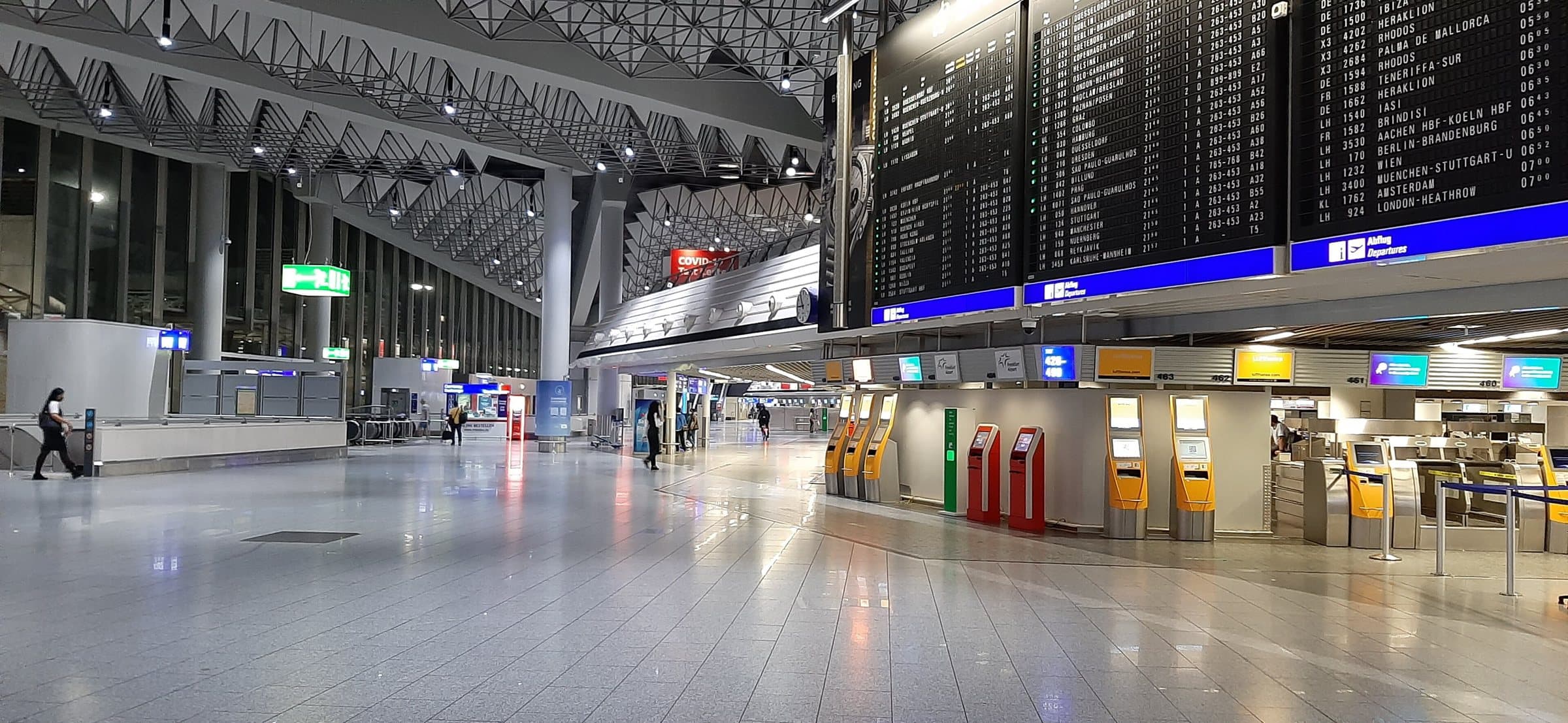
Terminal 1 is the older and larger, home to Lufthansa and most of its Star Alliance partners, and it is organised around the requirement that a connecting passenger should be able to move between flights without clearing immigration. Terminal 2 handles most other carriers. The two are linked by the SkyLine, an automated people mover running airside, which exists because a hub that cannot move passengers between its terminals quickly is not really one airport.
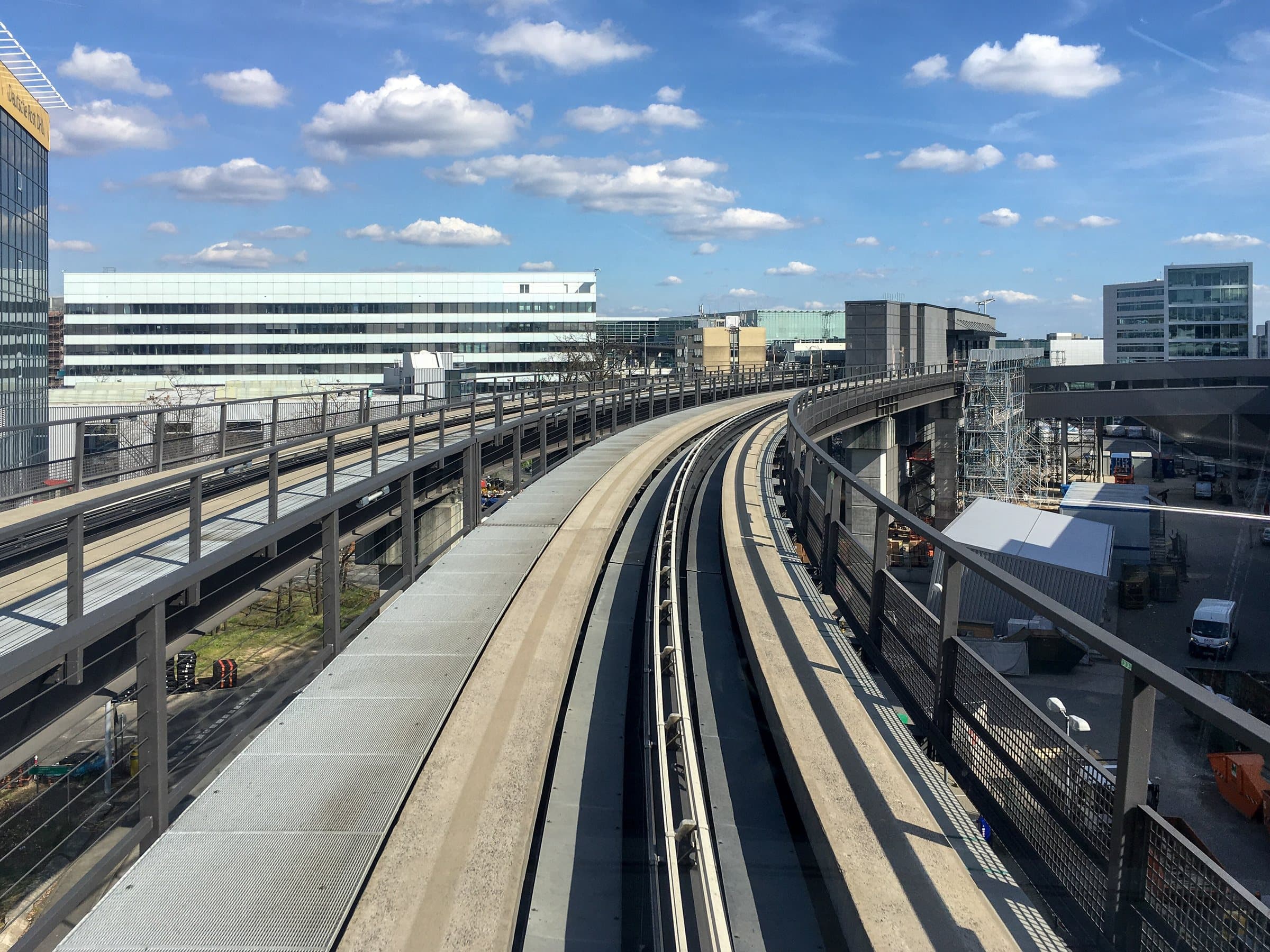
Terminal 3 is being built on the ground that was Rhein-Main Air Base. When the Americans handed the site back at the end of 2005, Fraport levelled the entire base, and in October 2015 construction began on what will be the airport's third terminal. There is a neatness to that: an airport that could not expand because it was surrounded got its room from the departure of the air force that had been occupying a third of it since 1945.
The terminal is designed to add substantial capacity, and it addresses the structural problem that has limited Frankfurt for decades. The airport has been constrained not only by runway slots but by the capacity of the buildings to process the people the runways deliver, and a hub that cannot handle its connecting passengers quickly loses them to hubs that can.
In 2025 Frankfurt handled 460,272 aircraft movements for 63.2 million passengers, which works out at roughly 137 arrivals and departures per average hour of the year, and considerably more at the times that matter.
Hub airports do not spread their traffic evenly. They run in waves: a bank of arrivals lands within a short window, passengers and bags transfer, and a bank of departures leaves. The pattern is what allows a passenger from a small European city to reach a destination that could never support a direct flight, and it is also what makes the airport fragile. A delay that causes an aircraft to miss its wave does not inconvenience one flight; it strands connecting passengers across the whole bank.
Cargo is the other half of the operation, at roughly 2.1 million tonnes in 2025, up 1.1 per cent. Frankfurt is consistently among the busiest freight airports in Europe, and the reason is partly geography, sitting in the middle of the German manufacturing economy with motorway and rail links in every direction, and partly the passenger operation itself: a long-haul aircraft carrying people also carries several tonnes in its hold, and 301 destinations means a great many holds.
The airline mix reflects the hub's purpose. Lufthansa and its Star Alliance partners dominate, and the 94 airlines operating from the airport include a long tail of carriers for which Frankfurt is their single German point and their gateway to onward connections across Europe.
Frankfurt's ground connections are better than most airports' and are part of why it works.
The airport sits directly on the Frankfurter Kreuz, one of the busiest motorway junctions in Europe, where the A3 and A5 cross. More importantly it has two railway stations: a regional one beneath Terminal 1, and a separate long-distance station on the high-speed network, which means an intercity train can take a passenger from the airport to Cologne or Stuttgart without their ever entering the city of Frankfurt.
That long-distance station changes what the airport is. A passenger arriving from Singapore can walk to a platform and be in another German city within the hour, and Lufthansa has long sold rail segments as part of air itineraries on that basis. For journeys of a few hundred kilometres a train that leaves from under the terminal is competitive with a connecting flight, and uses a runway slot that can then be sold to someone travelling further.
The arrangement is an argument that gets made more often than it gets built. Integrating air and rail requires the station to be at the airport rather than near it, the schedules to be coordinated, and the baggage and ticketing systems to treat a train as a flight. Frankfurt has more of that than almost anywhere, and it is a large part of why an airport hemmed in by a motorway junction and a forest can function as a continental hub.
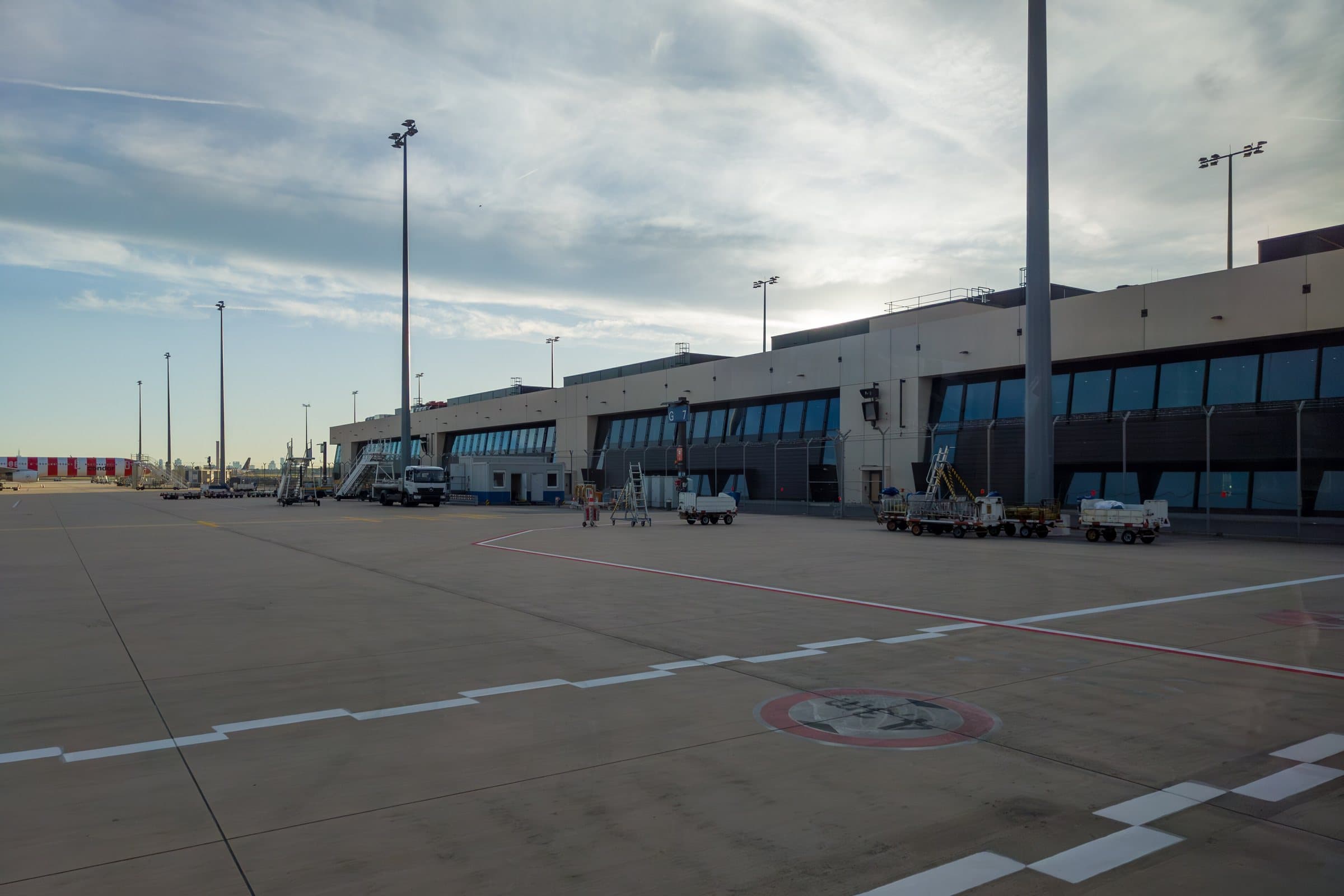
Every major development at Frankfurt for forty years has been a fight, and the reason is that the airport is in the wrong place for an airport of its size: close to a large city, surrounded by inhabited country, with a forest on one side that Germans regard as worth defending.
The northwest runway and Terminal 3 are the two most recent instances. Both were necessary by the airport's own account, both took years, and both generated sustained legal and political opposition. Terminal 3 had the advantage of being built on land that was already an air base, which removed the question of taking new ground, and construction began in October 2015.
What drives the expansion is a constraint that is easy to state and hard to escape. Frankfurt's value is its connectivity: the number of destinations reachable and the number of connections possible between them. That value grows faster than the traffic does, because adding one destination adds connections to every destination already served. An airport in that position either grows or is overtaken by one that can, and the airports competing with Frankfurt for European connecting traffic, in Istanbul and the Gulf, have had rather more room and rather less opposition.
The counter-argument is the one the surrounding communities make, and it is not unreasonable. The benefit of hub connectivity accrues to the national economy and to passengers from across Europe. The noise accrues to the people under the approach path. Those are different populations, and no amount of economic modelling makes them the same one.
Frankfurt operates under a night flight ban, which is the single most consequential environmental restriction on a hub airport and one that distinguishes European airports sharply from their competitors elsewhere.
The ban closes the airport to scheduled movements through the core night hours. For a hub this is a substantial constraint: long-haul arrivals from Asia and departures to the Americas naturally want slots at the edges of the night, and cargo in particular operates on overnight cycles because freight moves when passengers are asleep. An airport that cannot work at night is competing against airports that can, and the cargo operation feels it first.
The restriction exists because people live nearby and a German court decided their sleep outweighed the airport's convenience. That is the environmental argument in its clearest form, and Frankfurt's history of expansion disputes has turned on it repeatedly.
The second environmental question is the newer one and has no settled answer. Aviation's emissions are concentrated at hubs by definition, since a hub exists to put as many aircraft as possible in one place, and an airport whose business model is connecting traffic is more exposed than one serving local demand. Fraport has pursued ground-side measures and efficiency programmes, which are real but address a fraction of the total, because the emissions that matter are produced by the aircraft rather than the airport.
This is the structural difficulty facing every European hub: the thing being criticised is precisely the thing the airport is for.
Frankfurt's significance is easiest to see by asking what would happen without it, which is not a question most airports survive well.
Germany's economy is export-led and geographically dispersed, with manufacturing spread across the country rather than concentrated in the capital. An airport that connects that economy to the world, and that moves two million tonnes of freight a year while doing it, is infrastructure in the way a port or a motorway network is infrastructure. Fraport's description of the site evolving into an airport city is corporate language for something real: the airport generates enough activity to have become a place rather than merely a facility.
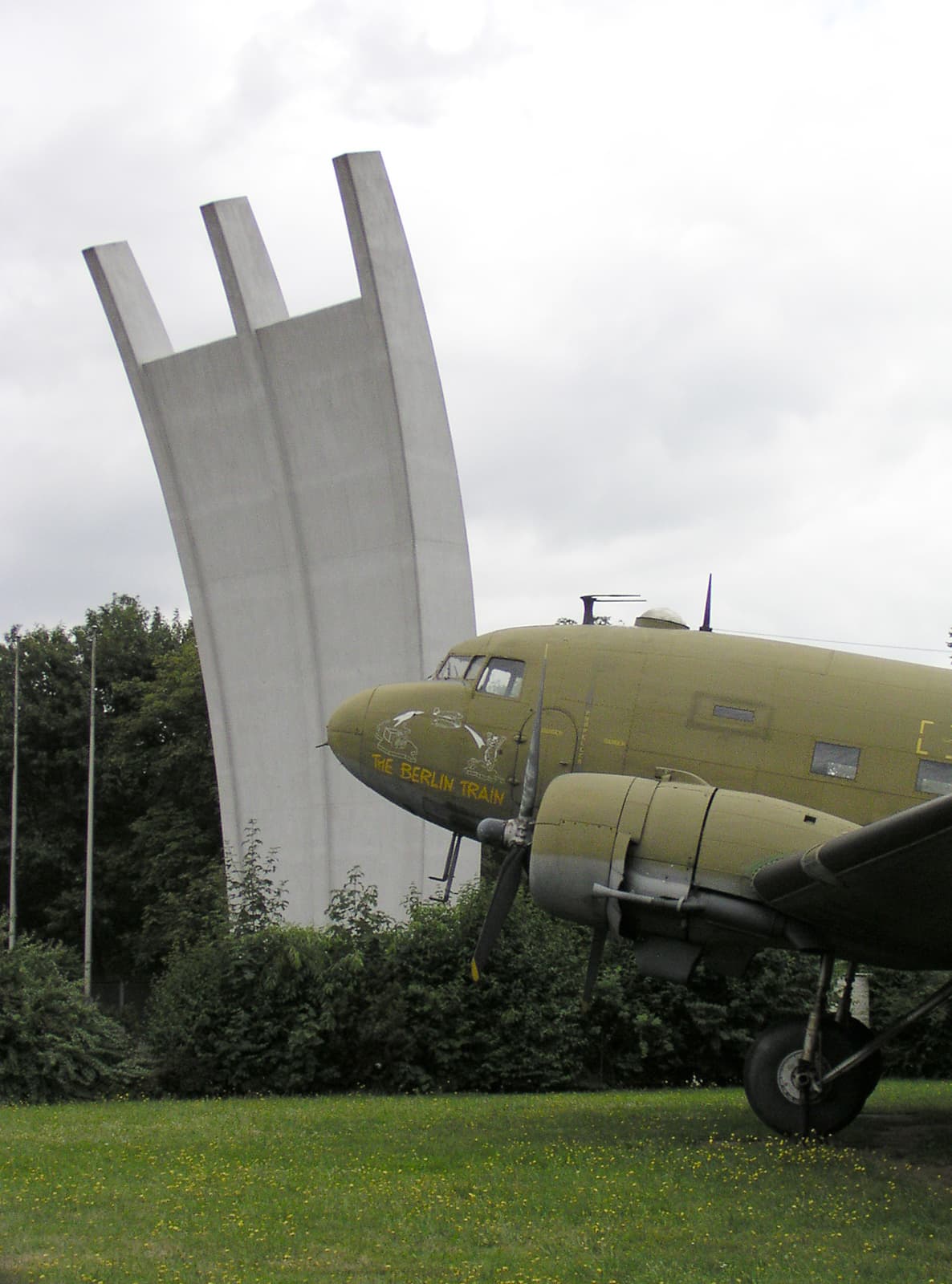
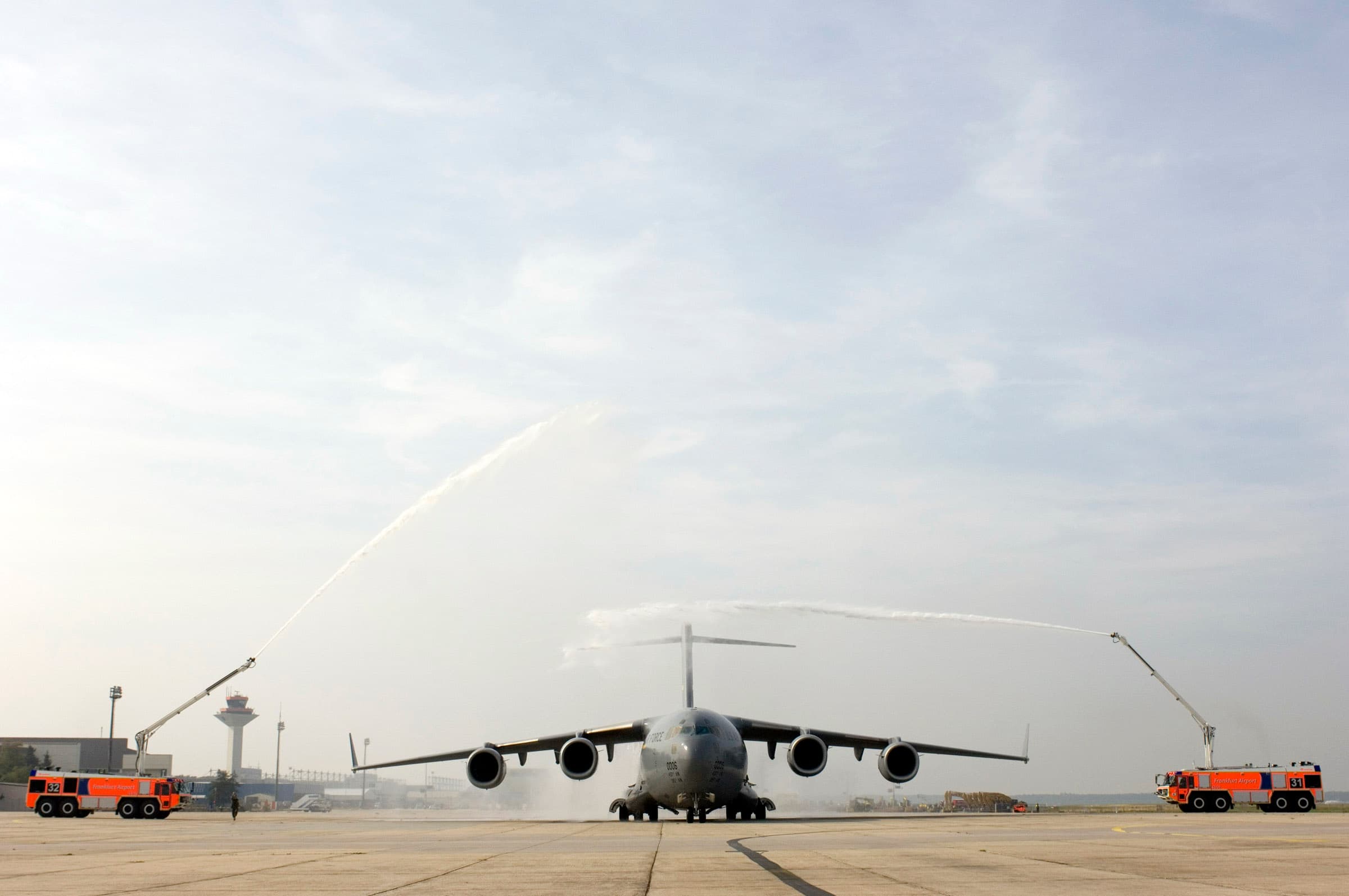
Its second claim is historical, and it is the one most likely to be forgotten. For sixty years, from 1945 to the end of 2005, a third of this airport was an American air base, and it was the main western terminal of the Berlin Airlift. The aircraft that kept a blockaded city supplied through the winter of 1948 flew from here. The base was nicknamed the Gateway to Europe, and the land it stood on is now becoming Terminal 3.
That transformation is the airport's history in one site: an airship port that opened in 1936 and lost its airships within a year, a ruin in 1945, a foreign military base for six decades, and now a terminal being built to keep a German hub competitive against newer airports with more room. Few airports have been quite so many different things on the same ground.
Runway 18 West, north-south.
The Northwest Runway, opened in 2011.
The main terminal and Lufthansa's home, with Pier A-Plus (2012).
Opened 1994
Concourses D and E; closed in June 2026 for refurbishment until the mid-2030s.
Opened 2026
Built on the former Rhein-Main Air Base; opened in April 2026.
July 8, 1936
1947
1994
December 31, 2005
October 20, 2011
October 10, 2012
April 22, 2026
Types whose story is bound up with this airport.
Checked October 6, 2026