History
The First Flight of the Boeing 747
February 9, 1969
Everett, WashingtonUnited States
76minutes
Time in the air
15,500ft
Altitude reached
26
Airlines that had ordered it
The first flight
- Date
- 9 February 1969
- Take-off
- 11:34, Paine Field
- Landing
- 12:50
- Time in the air
- 1 h 16 min
- Altitude
- 15,500 ft
- Crew
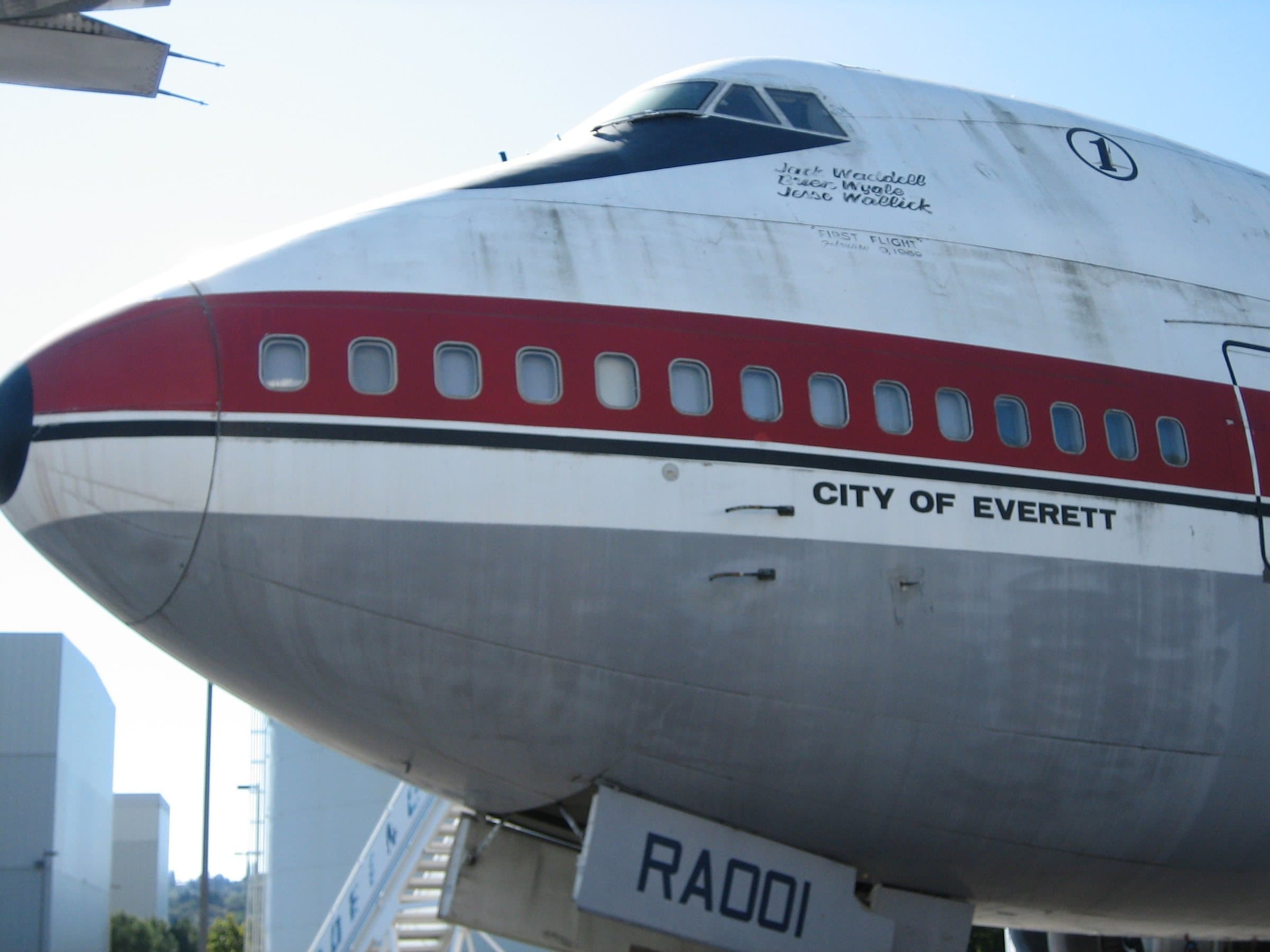
- Waddell, Wygle, Wallick
- Ended by
- A loose flap, right wing
The aircraft
- Registration
- N7470
- Name
- City of Everett
- Model
- Boeing 747-121
- Serial
- c/n 20235
- Test number
- RA001
- Engines
- Four Pratt & Whitney JT9D
- Chase plane
- Canadair Sabre, Paul Bennett
The programme
- Launch order
- 25 aircraft, Pan Am, April 1966
- Roll-out
- 30 September 1968
- Test aircraft
- 5
- Test flying
- 1,013 flights, 1,400 h
- Certified
- 30 December 1969
- In service
- 22 January 1970, Pan Am
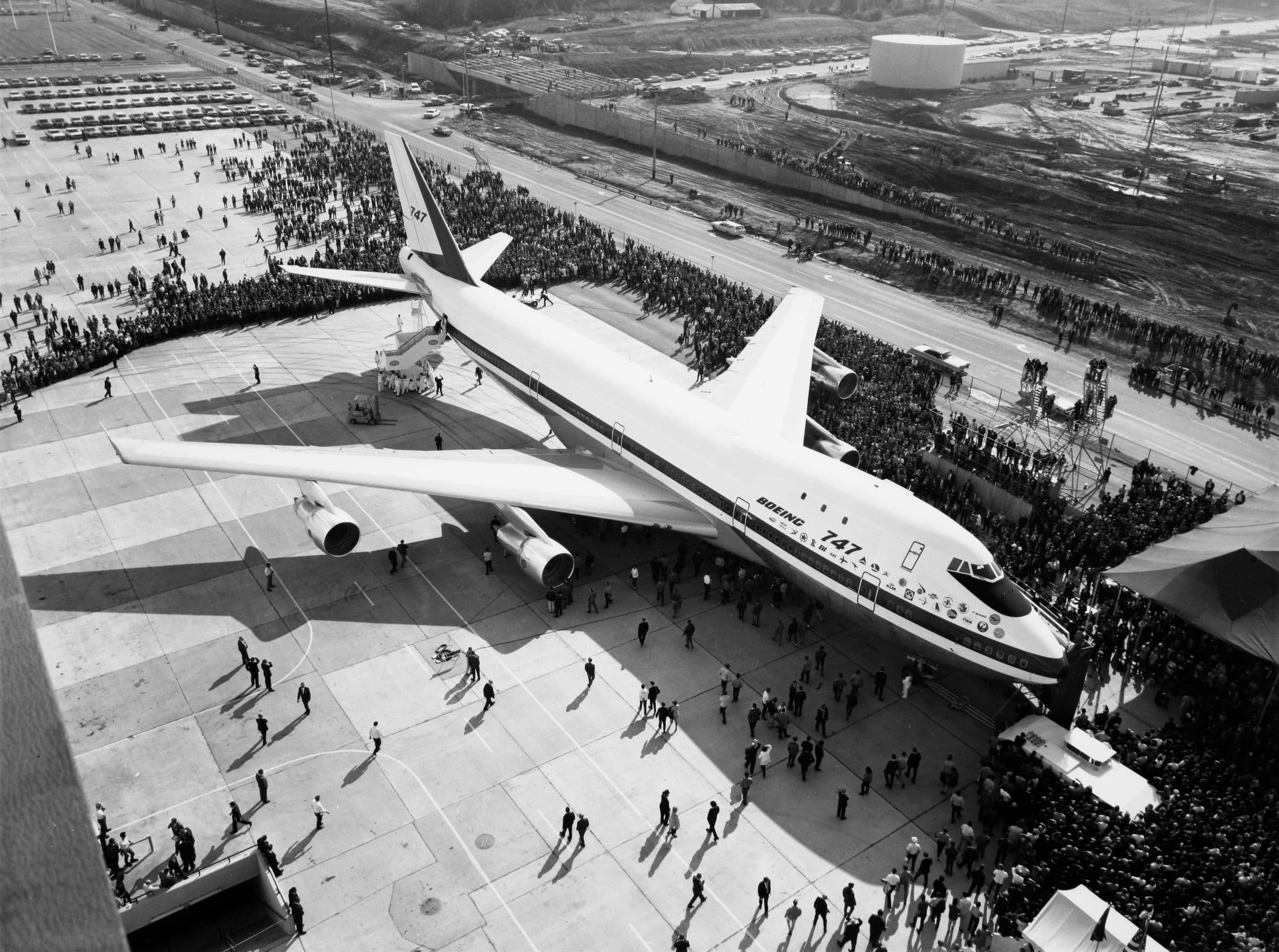
The first Boeing 747 was rolled out at Everett on 30 September 1968 and flew on 9 February 1969, with Jack Waddell, Brien Wygle and Jesse Wallick aboard. They returned early with a trailing-edge flap working loose, and Waddell told the press the aeroplane was "a pilot's dream". Certified that December and in Pan Am service from 22 January 1970, it made long-distance flight affordable and stayed in production for fifty-five years.
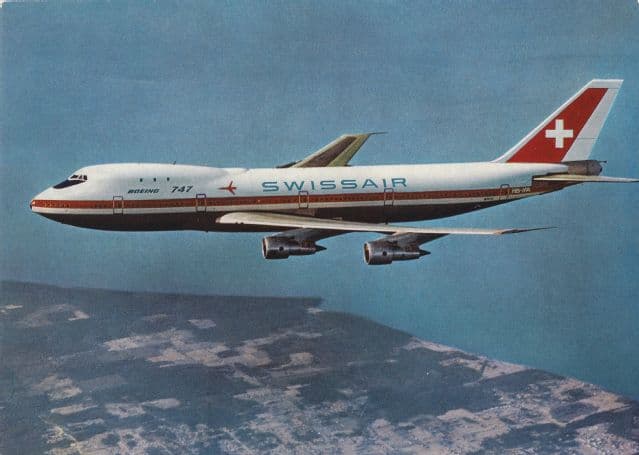
At 11:34 on the morning of 9 February 1969 a Boeing 747-121 registered N7470 lifted off from Paine Field at Everett, Washington, and flew for about an hour and a quarter. It was the largest aeroplane the world had seen, more than twice the weight of the Boeing 707 it was meant to succeed, and it had been built inside a factory that did not exist three years earlier by a company that had borrowed more than it was worth to pay for both. The crew were Boeing's chief test pilot Jack Waddell, engineering test pilot Brien Wygle in the right-hand seat, and flight engineer Jesse Wallick. They climbed to 15,500 ft, flew sideslips, simulated the loss of hydraulic power, found that the aircraft was almost immune to the Dutch roll that had troubled every swept-wing jet before it, and came home early because a section of trailing-edge flap on the right wing had worked loose.
Waddell's verdict, given to the press on the apron, became the most quoted sentence in the programme's history: the 747 was "a pilot's dream", a "two-finger airplane" that he had flown with a forefinger and thumb on the wheel. It was an unusually cheerful thing to say about a prototype that had just been brought back with a flap problem, and it was also the line Boeing most needed, because the company's position in February 1969 was precarious in a way that the size of the aeroplane on the runway rather concealed.

The 747 had been ordered by one airline, Pan American, in April 1966; designed by a team under Joe Sutter who were the engineers not chosen for the supersonic transport everyone assumed would replace it; assembled in a building at Everett that became the largest enclosed volume on Earth and inside which clouds occasionally formed; and rolled out on 30 September 1968 to be christened by twenty-six airline stewardesses, one for each carrier that had ordered it. It was certified on 30 December 1969 and entered service with Pan Am on the New York to London route in the small hours of 22 January 1970. What followed was not merely a successful airliner. It was the aeroplane that made long-distance flight affordable to ordinary people, and it stayed in production for fifty-five years and 1,574 aircraft.
Background
The 747 begins with a competition Boeing lost. In 1963 the United States Air Force started studying an enormous strategic transport, and in March 1964 it issued the requirements for the CX-Heavy Logistics System: an aircraft that would have to swallow vehicles through its nose and carry them across the Pacific. Boeing, Douglas, General Dynamics, Lockheed and Martin Marietta all submitted designs in May 1964. Lockheed's airframe and General Electric's engine won in 1965 and became the C-5 Galaxy. Boeing was left holding a great deal of work on very large aeroplanes, and two ideas in particular that it had no use for: a hinged nose that opened for cargo, and a flight deck placed above the cabin so that the nose could hinge at all.
The second thread was commercial, and it came from one man. Juan Trippe of Pan American had spent forty years buying aeroplanes that did not yet exist in order to force them into being, and by the mid-1960s the 707 was filling and the airports were choking. Trippe wanted something roughly twice as large, and he wanted it soon. In April 1966 Pan Am ordered twenty-five 747-100s for 525 million dollars: a sum around 3.9 billion in 2024 money: and at the contract banquet in Seattle Trippe told the room that the aircraft would be "a great weapon for peace, competing with intercontinental missiles for mankind's destiny". Launch customers do not normally get to shape an airliner to this extent; Pan Am did.

The third thread is the one that explains the 747's shape, and it is a thread of expected obsolescence. Everybody in the industry in 1966, Boeing included, believed that the future of long-haul passenger flight was supersonic, and that subsonic aeroplanes would end their lives hauling freight. Boeing was itself building the 2707 supersonic transport, which absorbed the company's most sought-after engineers. So the 747 was designed from the start to be convertible into a freighter, which is why the flight deck sits on top, why there is a hump behind it, and why the main cabin is wide enough to take two rows of standard shipping containers side by side.
And there was no factory. Boeing had nowhere large enough to assemble an aeroplane of this size, so it bought land near Paine Field at Everett, some 26 nm north of Seattle, in June 1966 and began building a plant while the aircraft was still being designed. Both had to be finished at once, and the company borrowed against everything it had to do it.
The economic argument behind all of this was a single number: cost per seat-mile. Boeing had already built the 707, 720, 727 and 737, and the lesson of that decade was that a bigger aeroplane carries each passenger more cheaply, because the crew, the airframe and much of the fuel do not scale with the seat count. A 747-100 in a typical three-class layout seated 366, with ten-abreast economy in a 3 to 4 to 3 arrangement across two aisles, more than twice a 707. The rest of the industry drew the same conclusion at a smaller size, and the Douglas DC-10 and Lockheed L-1011, both wide-body trijets, followed within a few years. What none of them had was the 747's raised flight deck, and none of them needed it, because none of them had been drawn for a military nose-loading requirement.
Development

Joe Sutter moved across from the 737 programme in 1965 to be the 747's chief engineer, reporting to Malcolm Stamper, who ran the project, with Jack Steiner overseeing planning as vice-president of product development. Sutter had to build a team out of the engineers the supersonic transport had not taken, which is the origin of the affectionate name the group later carried: the Incredibles. They were given the largest airliner ever attempted and a schedule of a little under four years from a standing start to a flying aeroplane.
The first great decision was to abandon the double deck. The original concept was a full-length two-storey cabin, and it was dropped in early 1966 for two reasons that were not aerodynamic: an upper deck that long could not be evacuated within the time the regulations allowed, and a two-storey fuselage is a poor shape for carrying freight, which mattered a great deal given what everyone expected the aircraft's second life to be. What replaced it was the wide body: a single deck 20 ft across, with two aisles, the configuration that every large airliner has used since.
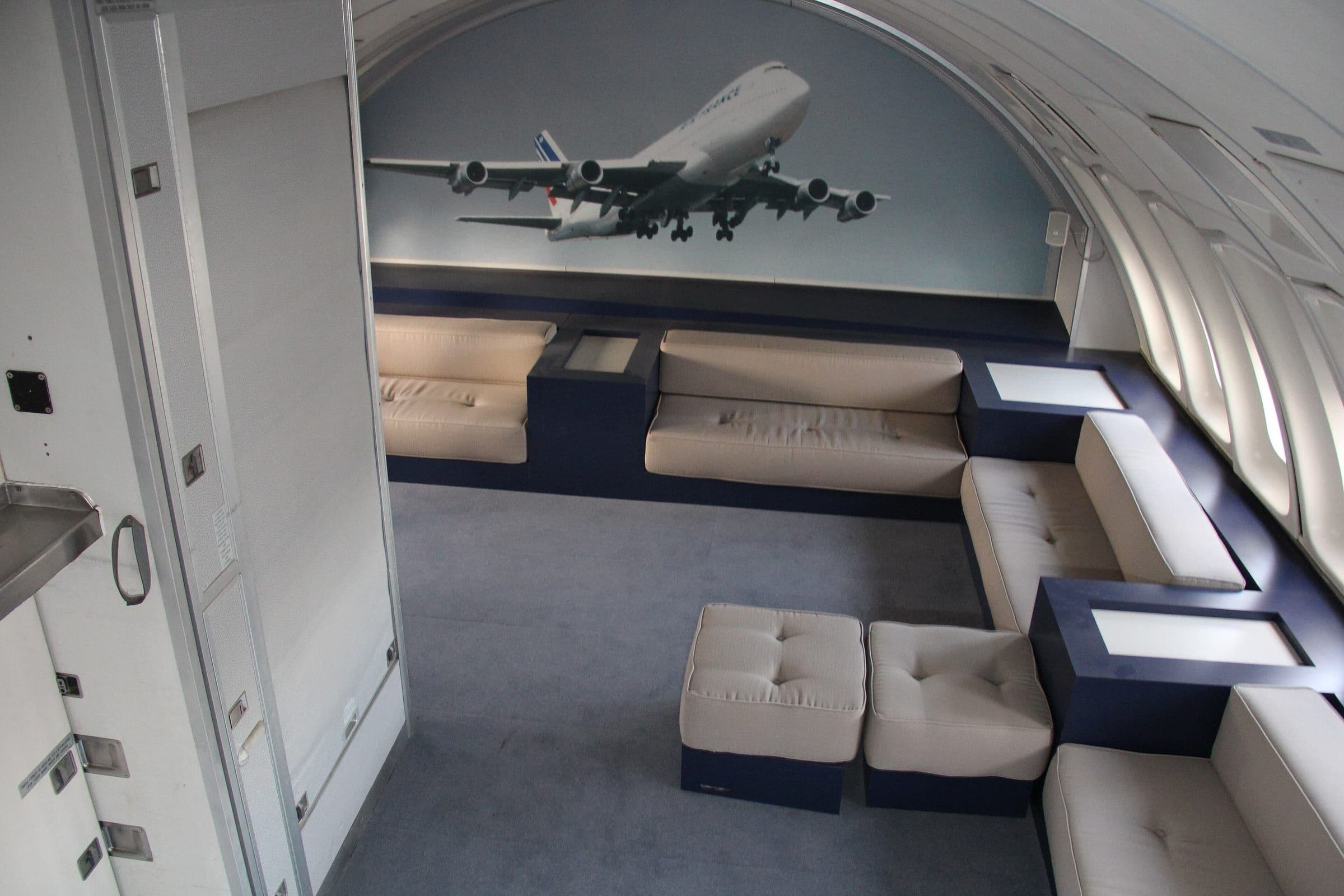
That left the raised flight deck, inherited from the lost CX-HLS bid, sitting on top of a single-deck fuselage with nothing behind it. The fairing that smoothed it into the fuselage created a small enclosed space, and during a mock-up walkthrough Juan Trippe asked what it was for. Boeing had intended it as a crew rest area. Trippe wanted it for passengers. The result was the 747's upstairs lounge, the spiral staircase, the piano bars of the 1970s and, eventually, the stretched upper deck of the 747-300 and -400. One of the most recognisable shapes in aviation exists because a nose door was needed for a military competition Boeing did not win, and one of the most glamorous interiors in aviation exists because an airline chairman asked a question during a walkthrough.
The factory was the other half of the programme, and its construction reads like a civil engineering story rather than an aeronautical one. Boeing looked at sites outside Washington State and at a tract near McChord Air Force Base before settling on Everett. The nearest railway was 4.3 nm away and 500 ft lower, so a spur had to be built up the hill. One landowner inside the site refused to sell a property worth under 5,000 dollars; Boeing eventually paid him 50,000, and then lost two further months locating his separated spouse for a signature. Work started in the summer of 1966 through 67 consecutive days of rain and then snow, and the earthmoving exceeded the excavation for the Grand Coulee Dam. The result was the largest enclosed space ever built under one roof, big enough that clouds sometimes formed near the ceiling.
The finished building is worth stating in figures, because they are the only way to convey it. The Everett factory covers 39.8 hectares under one roof and encloses 13.3 million cubic metres, which makes it the largest building in the world by volume and has done since it opened; it holds the Guinness record still. It operates as a small town, with its own fire department, medical clinic, banks, daycare and water treatment plant, a tunnel system for utilities and people, and twenty-six overhead cranes running on tracks. It has since been extended for the 767, the 777 and the 777X's composite wing, and it employs tens of thousands of people. All of it exists because in 1966 Boeing needed somewhere to put an aeroplane it had not yet finished designing.
The machine
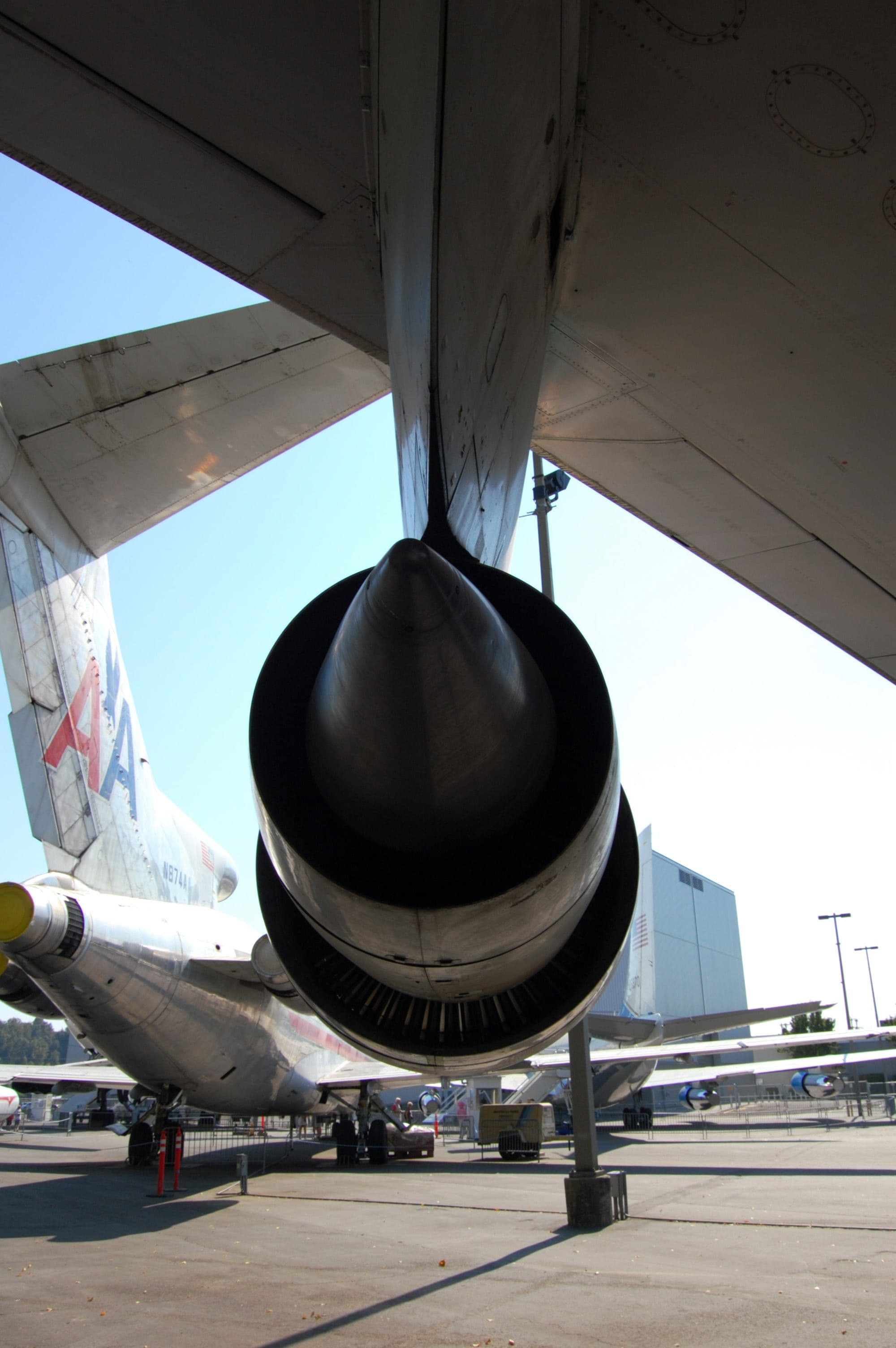
The prototype was a 747-121, construction number 20235, carried on Boeing's books as RA001. It was 231.8 ft long with a span of 195.7 ft and stood 63.42 ft high; the empty weight was about 370,800 lb and the maximum take-off weight 735,000 lb. For comparison, a Boeing 707-320B of the same period took off at less than half that. The cabin was 20 ft across, which is where the phrase wide body comes from, and the aircraft cruised at Mach 0.84 over a range of about 5,300 nm.
None of that would have been possible without a new kind of engine, and the 747 and the Pratt & Whitney JT9D were developed together as a single problem. The JT9D programme began in September 1965, the first engine ran in December 1966, and it was the first high-bypass-ratio turbofan to power a wide-body airliner. Its bypass ratio is 4.8:1 and its fan is 7.78 ft across, a dimension it is worth pausing on, because the single most effective photograph taken at the 747's roll-out was of an SAS chief hostess, Wiveca Ankarcrona, sitting comfortably inside one. The JT9D-3 was rated at 193 kN of thrust; the -3A that followed gave 205 kN. High bypass is what made the aeroplane possible at all: it delivers far more thrust for the fuel burnt than the low-bypass engines of the 707 generation, and it is also much quieter, which is the reason a 747 taking off is a softer sound than a 707 half its size.
The wing was swept 37.5 degrees and carried triple-slotted trailing-edge flaps and leading-edge devices across almost its whole span, the machinery a very heavy aeroplane needs to use an ordinary runway. It was a flap on that system, on the right wing, that ended the first flight early. Above the wing sits the other quiet triumph of the design: the 747 proved largely immune to Dutch roll, the coupled yaw-and-roll oscillation that had required yaw dampers on every swept-wing jet since the Comet, and which pilots on the first flight deliberately tried and failed to provoke.
The structural numbers are what make the aeroplane sound improbable even now. Four engines, eighteen wheels, a fuselage that could be hinged open at the nose, and a certificated weight nearly twice that of anything flying. Boeing had to prove all of it in under a year of flight testing, with engines that were not yet reliable, in order to have the aeroplane certified in time for the airline that had paid for it.
It is also the aeroplane that gave the language a phrase. The 747 was the first airliner anybody called a Jumbo Jet, because it was the first wide-body, and the nickname stuck so completely that for a generation it meant this aircraft and no other. Inside, the -100 typically carried 366 passengers in three classes, and up to ten abreast in economy in a 3 to 4 to 3 layout: a cabin shape nobody had experienced before, in which the far side of the aeroplane was genuinely far away.
Preparation

The first 747 was rolled out of the Everett plant on 30 September 1968, less than five months before it flew. Twenty-six airlines had ordered the aircraft by then, and the christening was carried out by twenty-six stewardesses, one from each of those carriers, who afterwards lined up in front of the aeroplane for the photographers. The press coverage was enormous, and the thing reporters kept reaching for was scale: 231 feet long, a 196-foot span, a tail as high as a six-storey building. The photograph that did the job best was the simplest one. SAS sent its chief hostess, Wiveca Ankarcrona, and someone put her inside the fan of a JT9D, where she sat with room to spare.
There was also a genuinely novel training problem. The 747's flight deck is two storeys above the ground, and no airline crew had ever taxied an aircraft from that height; the sight picture, the distance to the nosewheel and the time it takes for a steering input to have any visible effect are all different. Boeing's answer was a mock-up cockpit bolted to the roof of a truck, which was driven around the airfield so that pilots could learn to judge turns from the right eye level. It was known as Waddell's Wagon, after the chief test pilot who would make the first flight, and it is one of the few pieces of flight-test equipment in aviation history that anyone remembers fondly.
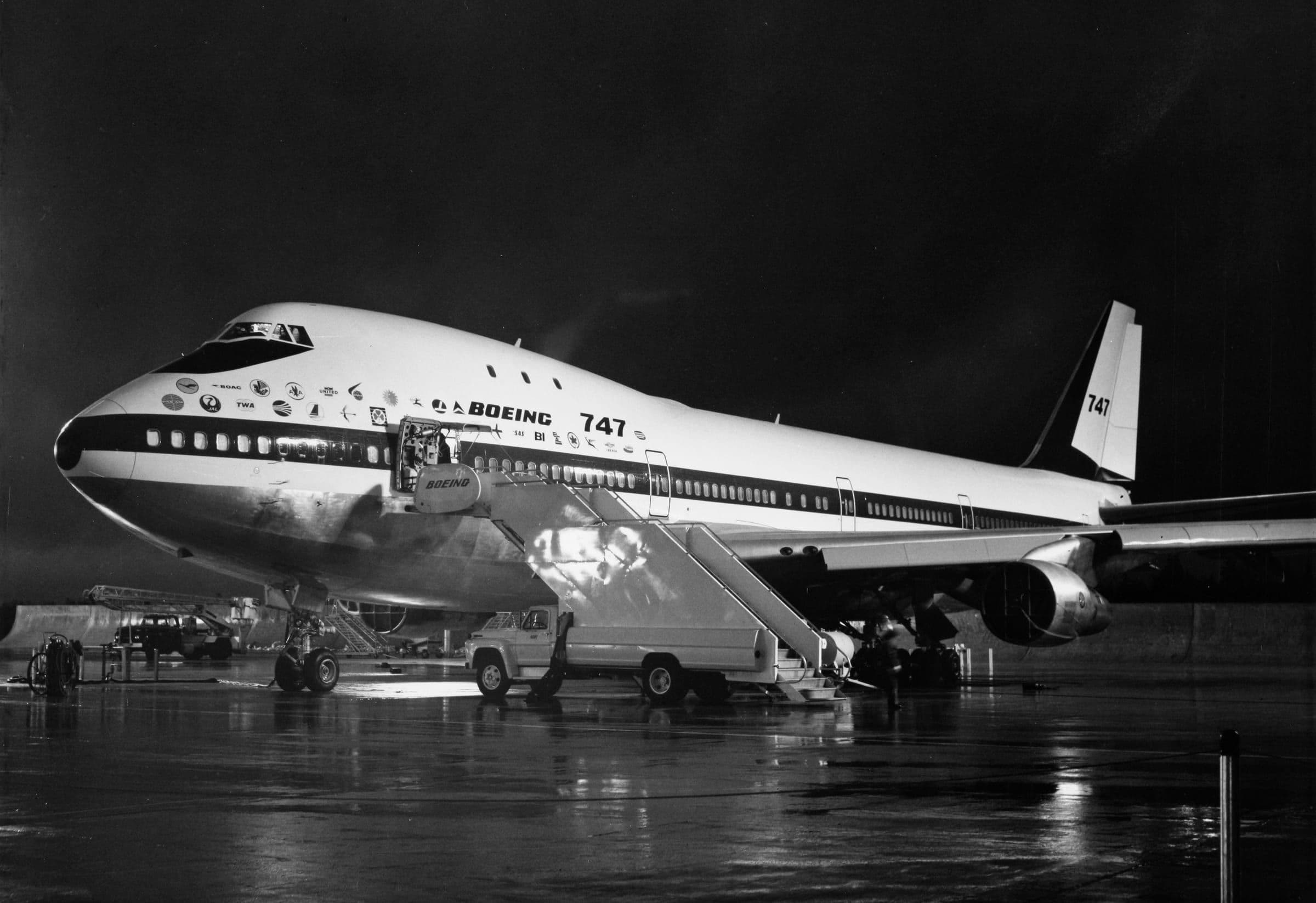
Behind the prototype, four more aircraft were being completed for the flight-test programme, giving five in total. The schedule was brutal and not negotiable: Pan Am had a delivery date, the first commercial service was already being advertised, and Boeing's debt was accruing interest. Every week of delay in certification was money the company no longer had.
The flight itself had to wait for weather. The morning of 9 February 1969 began grey and low over Everett, and the aircraft sat while the cloud thinned. By late morning the sky had opened enough, and several hundred people had gathered along the fences and on the high ground around Paine Field. A Canadair CL-13B Sabre Mk.6, N8686F, flown by Paul Bennett, was waiting to fly as chase and observer; a Boeing 727 would go up to take the air-to-air photographs. The crew boarded an aeroplane that had, at that point, never left the ground.
The event
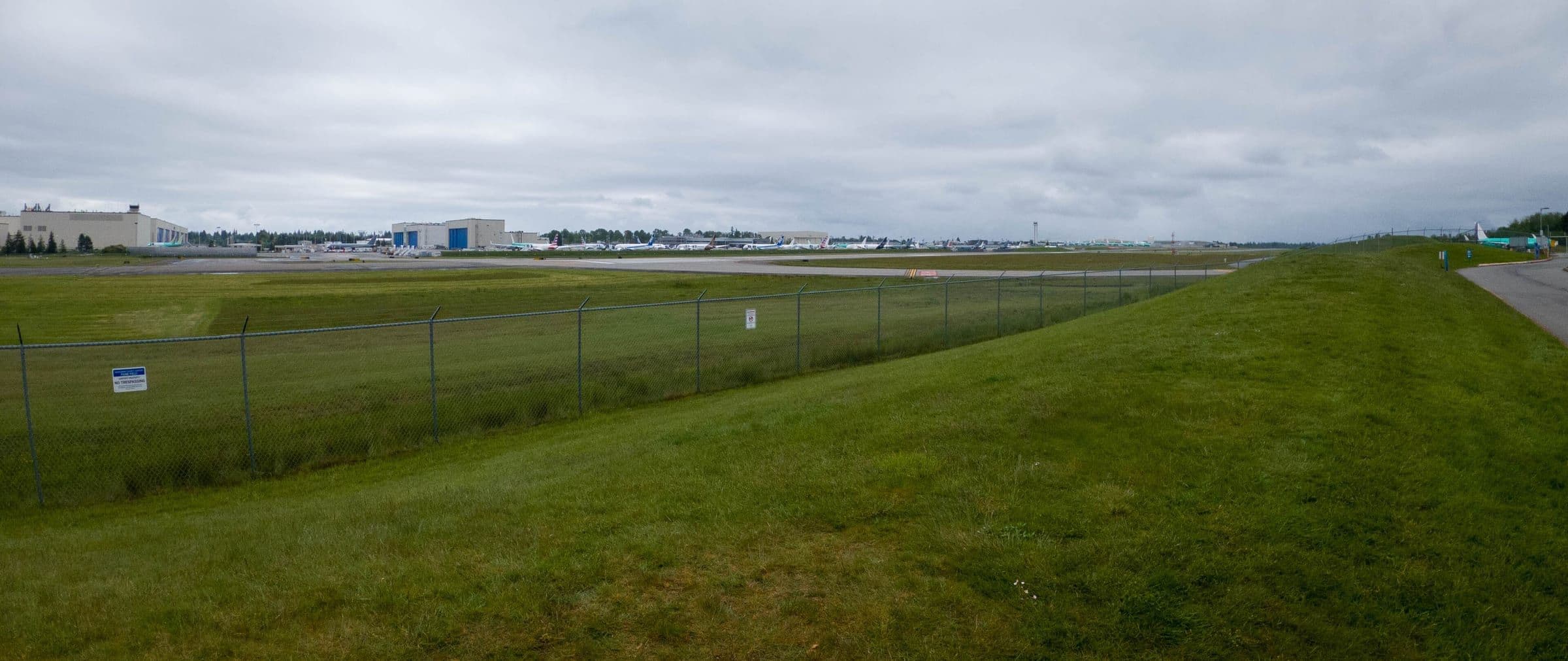
N7470 left the runway at Paine Field at 11:34 and climbed away to the north. Reported figures for the moment of take-off vary: most accounts give 11:34, one gives about 11:20, and HistoryLink's account of the day says eleven o'clock. All of them agree on the landing, at 12:50, which makes the flight either one hour sixteen minutes or one hour fifty depending on which departure time is accepted. The figure Boeing's own record and most subsequent histories carry is the shorter one.
What the crew did with the time is well documented. They climbed to 15,500 ft, took off at about 143 kt and settled into a cruise of roughly 160 kt: deliberately slow, because a first flight is a handling check and not a performance demonstration. They flew sideslips. They simulated a loss of hydraulic power and recovered from it. They tried to provoke Dutch roll with deliberate cross-controlled inputs, and largely failed to, which was the single most reassuring result of the day: the aeroplane simply did not want to oscillate. Wallick worked through the engine and systems checks from the flight engineer's panel behind them.

Then, extending the flaps from 25 to 30 degrees, the aircraft began to vibrate. Wallick went to look and found that a section of the trailing-edge flap on the right wing had come loose. It was not dangerous at the speeds they were flying, but it was not something to continue a first flight with, and the crew decided to end the test schedule early. They stayed up long enough to let the accompanying 727 take its air-to-air photographs, the images of the prototype against the Washington landscape that appeared in every newspaper the next morning, and then brought the aeroplane back, touching down at Paine Field at 12:50 at about 130 kt.
Waddell climbed down and told the reporters what they had come to hear, and he did it in a form that has outlasted almost everything else said about the aircraft. The 747, he said, was "a pilot's dream"; it was "a two-finger airplane", he had needed no more than a forefinger and thumb on the control wheel, and it answered them. Coming from the man who had just flown the heaviest aeroplane ever built, with a flap hanging loose on one wing, it was both a genuine engineering verdict and exactly the sentence a company two billion dollars in debt needed on the front pages. Boeing put it on the front pages, and the 747's reputation as an unexpectedly sweet-handling aeroplane never left it.
Aftermath
The flight-test programme that followed was one of the hardest ever attempted on a commercial schedule: more than 1,400 hours of flying across 1,013 flights by five aircraft, compressed into the ten and a half months between the first flight and certification. Most of the difficulty was not the airframe, which behaved. It was the engines.
The JT9D had two related failure modes that emerged under flight loads rather than on a test bed. The first was surging and stalling caused by rapid throttle movement. The second, and far more serious, was ovalization: the stresses of take-off deformed the engine casing out of round, so that the tips of the high-pressure turbine blades rubbed. Pratt & Whitney and Boeing worked through 1969 to fix it, and the answer was to strengthen the casing and add yoke-shaped thrust links so that the thrust loads no longer distorted the engine that was producing them. Meanwhile the production line at Everett kept building aeroplanes that Pratt & Whitney could not power. By late 1969 something like twenty to thirty finished 747s were parked outside the factory with concrete blocks hanging from the engine pylons in place of engines: a photograph that circulated widely and did the programme no good at all.
There was one accident during testing. On 13 December 1969 the second aircraft, flown by Ralph C. Cokely, undershot the runway at Renton and was seriously damaged, tearing off the right outer landing gear and damaging two engine nacelles. Nobody was hurt, and the programme continued.
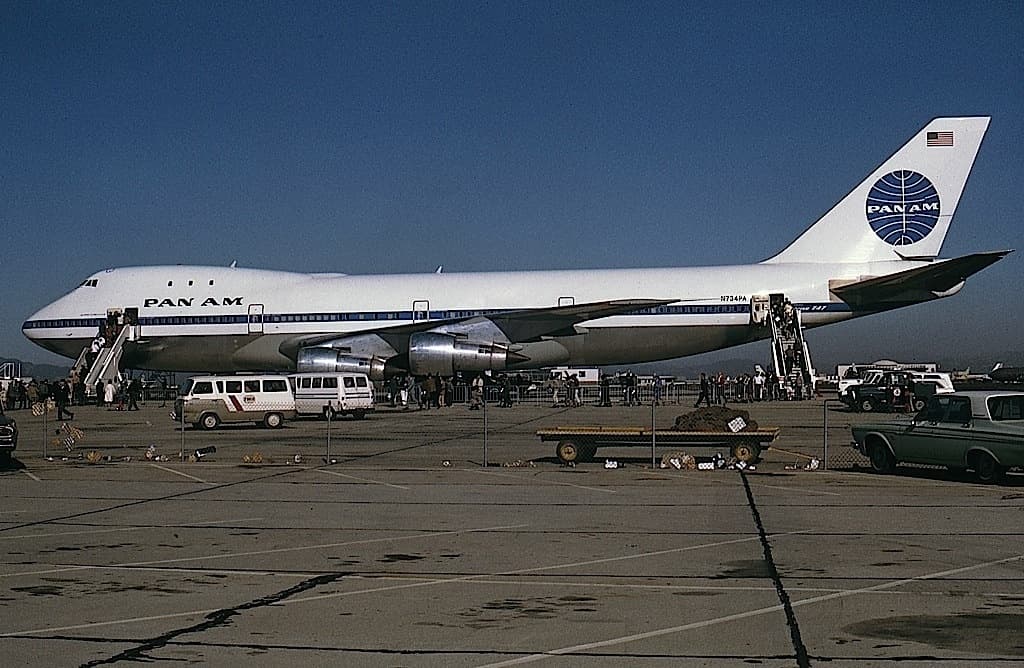
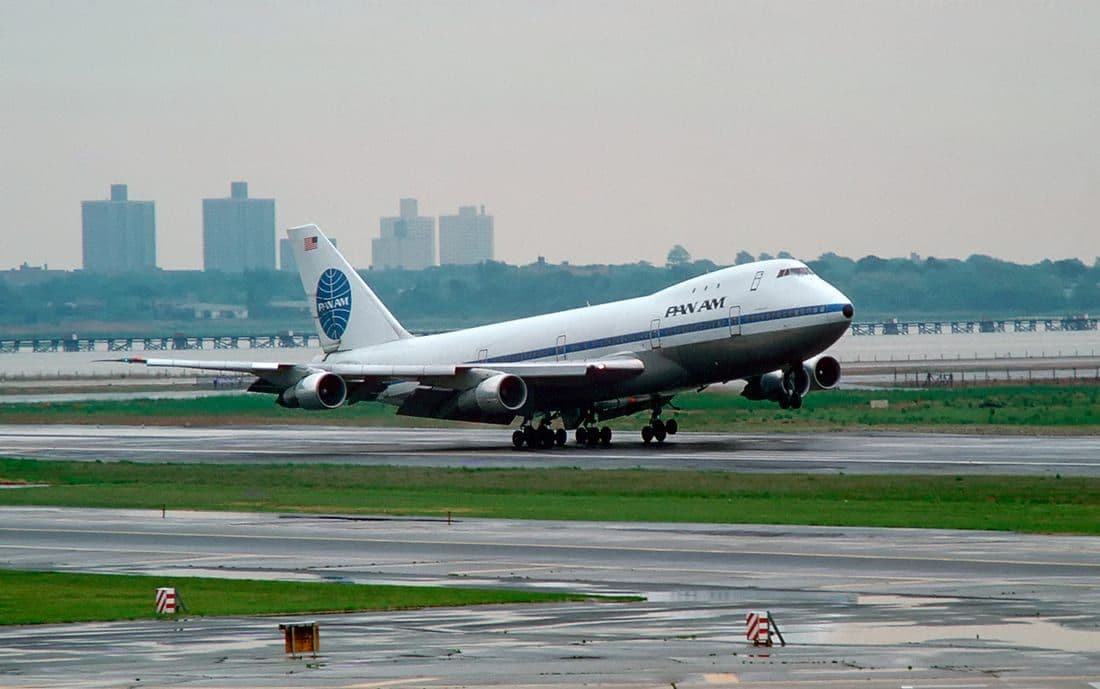
The FAA certified the 747 on 30 December 1969. Pan Am's inaugural service was scheduled for the evening of 21 January 1970 from New York to London, and it did not go smoothly: Clipper Young America, the first 747 delivered to the airline, taxied out and came back with the number four engine overheating. Pan Am substituted a second aircraft, N736PA, until that evening named Clipper Victor, and transferred the Young America name to it for the occasion. It left New York at 1:52 a.m. Eastern time on 22 January, nearly seven hours late, with Captain Robert M. Weeks, Captain John Noland, flight engineer August "Mac" McKinney, seventeen cabin crew and 332 passengers, and landed at Heathrow at 8:06 a.m. after six hours and fourteen minutes. The 747 was in service, and the era of the full wide-body aeroplane had begun with a delay and a borrowed name.
The other thing the 747 broke was the airports. An aeroplane of this weight and span could not simply be added to an existing airfield: pavements and taxiways had to be strengthened for the loads and widened for the wingspan, jet bridges had to be lengthened, and even the ground equipment had to grow, because the 747's doors sit higher than those of any previous airliner and catering trucks and fuel tankers could not reach them. Terminals, check-in halls and baggage systems were rebuilt around the arrival of three or four hundred passengers at once rather than a hundred and forty. The design criteria for terminals, runways, taxiways and pavements were reviewed wholesale in the late 1960s against what the new aeroplane would do to them. A great deal of what a modern international airport physically is dates from the decision to accommodate this aircraft.
Controversy
Two arguments attach themselves to the 747's first flight, and both are about judgement rather than fact.
The first is whether Boeing's gamble was defensible. The company borrowed from banking syndicates until its debt passed two billion dollars, 1.2 billion of it owed to banks, a record for Boeing, to develop the 747 and the 737 at once and to build a factory for the former. Then the market turned. Orders fell away, and from 1970 Boeing began laying off tens of thousands of people. Its payroll fell from a peak of 100,800 in 1967 to 38,690, and unemployment in the Seattle region reached 13.8 per cent against a national average of 4.5. The 1973 oil crisis made it worse before the mid-1970s recovery arrived. William Allen's own summary, that it was really too large a project for the company, is not false modesty; on the numbers the programme very nearly destroyed Boeing, and the fact that it eventually gave the company an unchallenged monopoly in very large airliners is a judgement made with hindsight the board did not have.
The second is the persistent claim that the 747 was designed as a stopgap freighter. This is half true, and the half that is true explains the aeroplane's shape. Boeing genuinely expected supersonic transports to take the long-haul passenger market, and genuinely designed the 747 so that it could be converted to carry freight through a hinged nose, hence the raised flight deck and the hump. What is not true is that the passenger aircraft was an afterthought or a cheap job. Pan Am ordered twenty-five passenger aeroplanes, Trippe reviewed the cabin in person, and the wide single deck was chosen over the double deck partly on evacuation grounds, which is a passenger consideration. The 747 was designed to be a first-rate airliner that could later become a freighter, not a freighter with seats in it.
There is also a small factual disagreement, recorded here because the sources do not resolve it: the time the aircraft left the ground on 9 February 1969 is given as 11:34, as about 11:20, and as eleven o'clock by different accounts, and the flight's duration follows from whichever is chosen.
The people
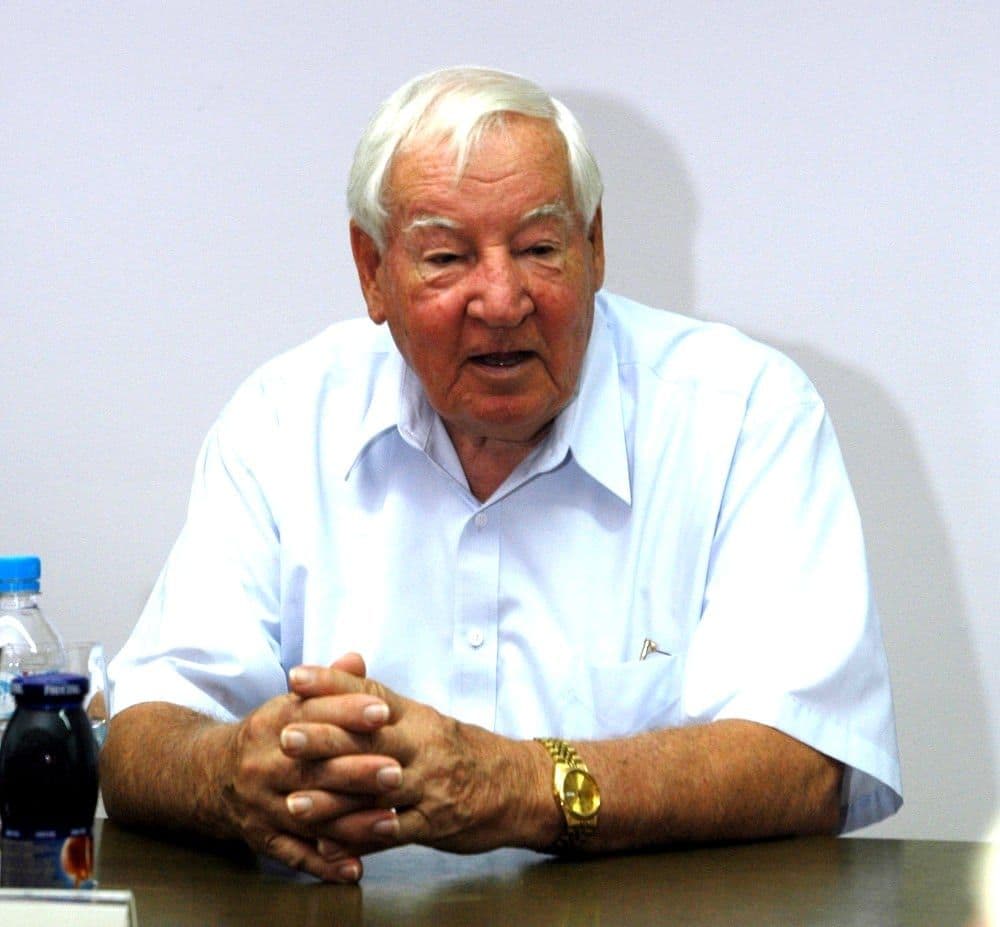
Three men were aboard on 9 February 1969. Jack Waddell, born in 1923, was Boeing's chief test pilot and flew from the left seat; he is remembered almost entirely for one sentence about two fingers. Brien Wygle (1924 to 2020) was an engineering test pilot who went on to become Boeing's vice-president of flight operations, and who spent the last decades of his life as the surviving voice of the flight, retelling it patiently at anniversaries. Jesse Wallick (1934 to 2016) sat at the flight engineer's panel, and it was Wallick who got up to look at the right wing when the vibration started and found the flap.
The aeroplane itself belongs to Joe Sutter (1921 to 2016). Seattle-born, transferred off the 737 in 1965, he built his team from the engineers the supersonic transport did not want and delivered the largest aircraft ever attempted in under four years. He reported to Malcolm Stamper, who ran the 747 project and had to deliver the Everett factory at the same time, while Jack Steiner as vice-president of product development oversaw the planning. Sutter received the United States Medal of Technology in 1985, the Daniel Guggenheim Medal in 1990, and was inducted into the National Aviation Hall of Fame in September 2024, eight years after his death.
Two executives carried the risk. Juan Trippe (1899 to 1981) of Pan American ordered the aeroplane into existence in April 1966, shaped its cabin during mock-up reviews, and gave it the upstairs lounge by asking what a piece of empty fairing was for. William M. Allen (1900 to 1985), Boeing's president, authorised a programme that put the company into more debt than it was worth, and later said of it, plainly, "It was really too large a project for us."
And there are the people at the edges of the story who are worth naming because the record keeps them. Paul Bennett flew the Canadair Sabre that chased the prototype on its first flight. Wiveca Ankarcrona, SAS's chief hostess, sat inside a JT9D fan at the roll-out and produced the image that told the public how large the engines were more effectively than any figure. Ralph C. Cokely was at the controls of the second test aircraft when it undershot at Renton in December 1969. Robert M. Weeks commanded the first 747 to carry paying passengers, seven hours late, in the small hours of 22 January 1970.
Recognition

The first 747 was never sold. Boeing kept N7470 for twenty-six years and used it as the programme's permanent laboratory, which is a form of recognition in itself: the company's most valuable test asset was the aeroplane that had proved the type in the first place.
Its later career is a catalogue of Boeing's ambitions. It was fitted out and flown as an aerial refuelling tanker, passing fuel to an SR-71 Blackbird and a B-52 Stratofortress in trials of a 747 tanker that was eventually judged impractical. It was stored at Las Vegas from October 1983 to August 1986 and then sent to Wichita to serve as the development airframe for the VC-25: the aircraft that carries the president of the United States. In its last years it was the flying testbed for the Pratt & Whitney PW4000, the engine that would power the Boeing 777. Across all of that it accumulated only about 5,200 flight hours, which is very little for a commercial airframe and entirely explicable: those hours included repeated deliberate stalls and dives, and it spent its life being broken rather than being flown for money.
N7470 made its last flight on 6 April 1995, when Boeing donated it to the Museum of Flight in Seattle. It stood outdoors for years: the photographs from 2005, 2008 and 2011 show an aeroplane weathering in the Washington rain: before being restored between 2012 and 2014, which took more than sixty gallons of paint and a rebuilt interior, and reopened to visitors under the roof of a pavilion in 2014.
Joe Sutter's recognition came earlier and kept coming: the United States Medal of Technology in 1985, the Daniel Guggenheim Medal in 1990, the International Air Cargo Association's Hall of Fame in 2002, and the National Aviation Hall of Fame in September 2024. The most affecting tribute is not a medal. When Atlas Air took delivery of the final 747 in January 2023, the aeroplane carried a sticker with a picture of Sutter, an image of the first 747 ever built, his name, and the words "Forever Incredible".
Legacy
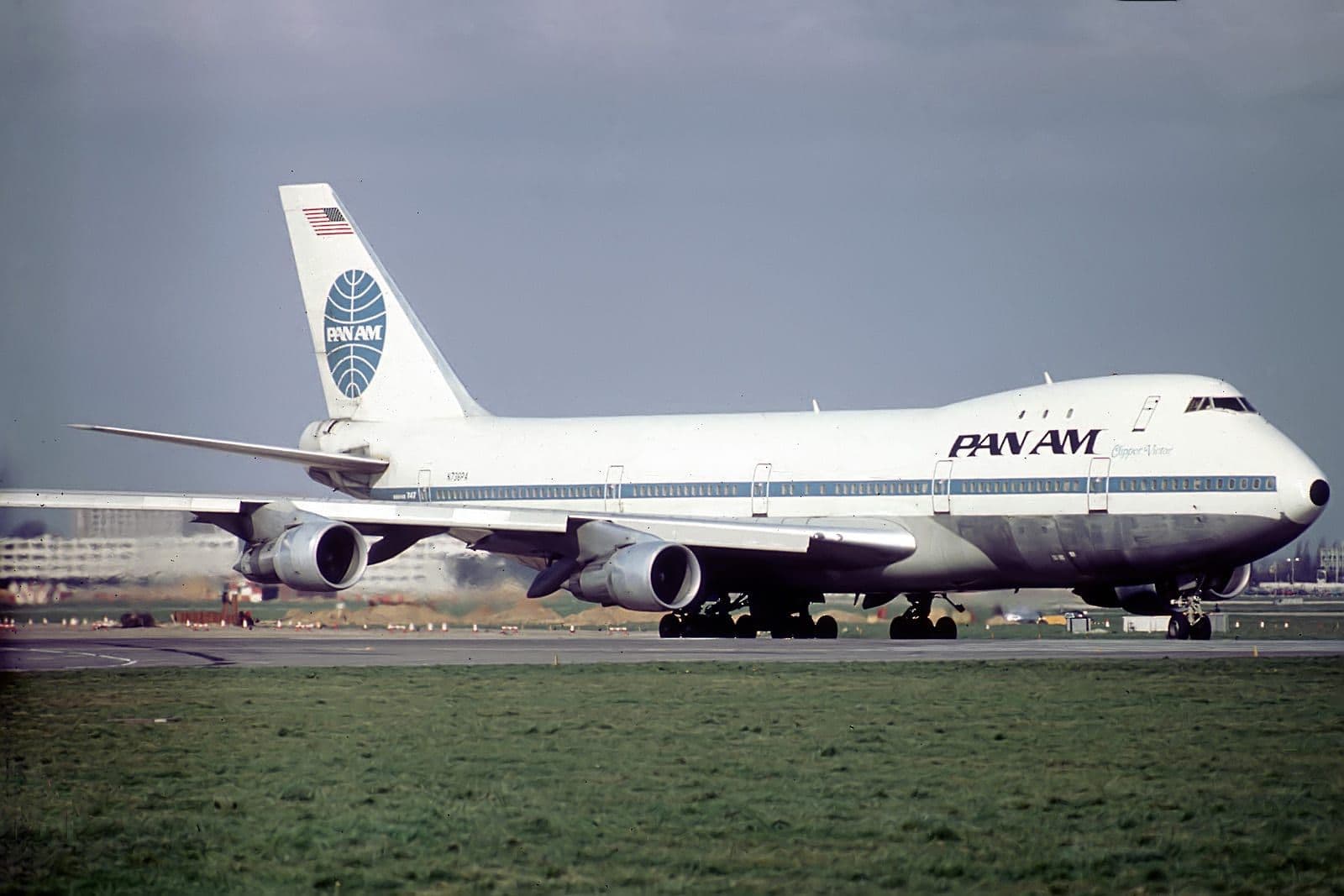
The 747 did what the 707 had begun and the supersonic transports never managed: it made long-distance flight cheap. Doubling the number of seats on an aeroplane without doubling its crew or its fuel burn per seat changes the arithmetic of a fare, and the fares fell. Within a decade of 22 January 1970 the transatlantic crossing had stopped being a thing that certain kinds of people did. That is the 747's legacy, and it is larger than anything in its specification.
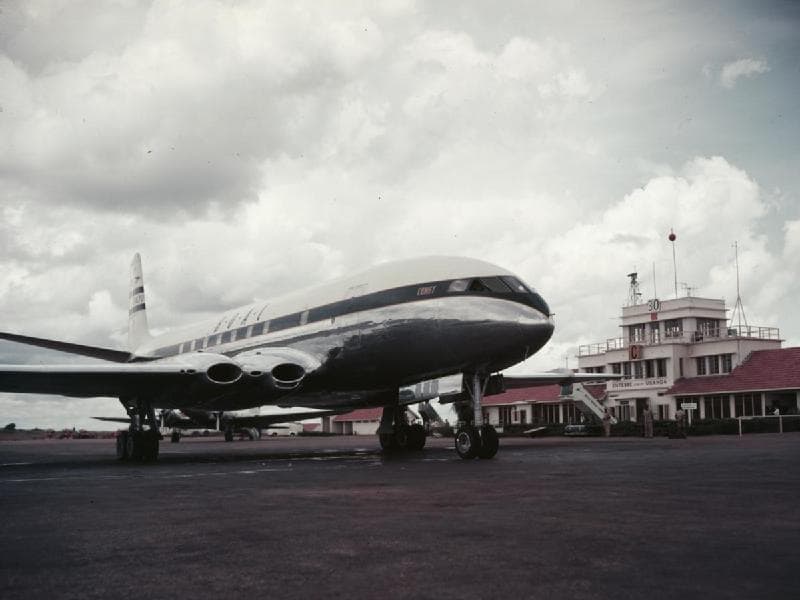
It also outlasted its own premise entirely. Boeing built the aeroplane expecting supersonic airliners to take its passengers and expecting the 747 to end up as a freighter. The Boeing 2707 was cancelled in 1971. Concorde flew for twenty-seven years in tiny numbers. The 747 stayed in production until 2023, 1,574 aircraft in total, with the last one delivered to Atlas Air: as a freighter, which is the one part of the original prediction that came true, fifty-five years late.
Along the way the type became the aeroplane governments and space agencies used when they needed something absurdly large: the VC-25 that serves as Air Force One, developed with the help of the prototype; the Shuttle Carrier Aircraft that flew orbiters across the United States; airborne command posts, airborne telescopes and firefighting tankers.
And the aircraft that flew the first commercial service has a darker place in the record. N736PA, delivered in 1970 and used as the substitute for the inaugural New York to London flight, was the first 747 to be hijacked, diverted to Havana on 2 August 1970. On 27 March 1977, at Tenerife, it collided on the runway with KLM's Boeing 747 PH-BUF Rijn. Of the 396 people aboard N736PA, 335 died; all 248 aboard the KLM aircraft died; 583 people were killed in total, and it remains the deadliest accident in aviation history. A photograph taken at Heathrow on 5 March 1977 shows the aeroplane three weeks before it happened. The 747 made mass air travel possible, and the scale that made it possible is also the scale that made that day what it was.
The family that grew from the prototype is the measure of how right the aeroplane was. 167 aircraft in the 747-100 series, including 29 short-range -100SRs built for the extraordinary domestic traffic of Japan; then 393 of the -200 from 1971, 45 of the short-bodied long-range 747SP from 1976, 81 of the stretched-upper-deck -300 from 1983, 694 of the -400 from 1989, the most successful single variant, and 155 of the 747-8, launched in 2005. The type was still being ordered as a freighter forty years after Boeing had expected freight to be all it was good for.
From a lost competition to scheduled service
The 747 began as the runner-up in a military contest and reached the public eleven months after it first flew.
March 1964
The USAF issues the CX-HLS requirement
Requirements for an extremely large strategic transport that would load vehicles through a hinged nose.
May 1964
Five companies bid
Boeing, Douglas, General Dynamics, Lockheed and Martin Marietta submit designs.
1965
Lockheed wins; Boeing keeps two ideas
Lockheed's airframe becomes the C-5 Galaxy. Boeing carries the nose cargo door and the raised cockpit into the 747.
1965
Joe Sutter becomes chief engineer
Transferred from the 737 programme, he builds a team from the engineers the supersonic transport did not take.
c. 1966
The full-length double deck is abandoned
Dropped in early 1966 over evacuation limits and poor freight capacity. The wide single deck replaces it.
April 1966
Pan Am orders twenty-five 747-100s
The launch order, for 525 million dollars, from an airline that would shape the aircraft to an unprecedented degree.
- Aircraft
- 25
- Value
- 525 million dollars
June 1966
Boeing buys land at Everett
There is no building anywhere large enough, so the factory and the aeroplane are built at the same time.
December 1966
The first JT9D runs
The first high-bypass turbofan intended for a wide-body airliner, developed alongside the airframe.
September 30, 1968
Roll-out at Everett
Christened by twenty-six stewardesses, one from each airline that had ordered the type.
February 9, 1969
First flight from Paine Field
Waddell, Wygle and Wallick fly for about an hour and a quarter and return early with a loose flap.
- Altitude
- 15,500 ft
December 13, 1969
The second test aircraft undershoots at Renton
Ralph C. Cokely undershoots the runway; the right outer landing gear is torn off and two nacelles damaged. Nobody is hurt.
December 30, 1969
The FAA certifies the 747
After more than 1,400 hours of flying in 1,013 flights by five aircraft.
January 22, 1970
Pan Am's first commercial service
New York to London, nearly seven hours late after an engine overheated, with 332 passengers aboard a substitute aircraft.
- Passengers
- 332
- Flight time
- 6 h 14 min
Who was there
- Jack Waddell
- Pilot in command of the first flightBoeing's chief test pilot, born in 1923. His verdict on the apron, that the 747 was "a pilot's dream" and "a two-finger airplane", became the most quoted sentence of the programme, and the training rig Boeing built to teach crews the 747's height, a mock cockpit on a truck roof, was named Waddell's Wagon after him.
- Brien Wygle1924 to 2020
- Co-pilot on the first flightAn engineering test pilot who later became Boeing's vice-president of flight operations, and who spent his last decades as the surviving voice of 9 February 1969.
- Jesse Wallick1934 to 2016
- Flight engineer on the first flightIt was Wallick who went to look at the right wing when the aircraft began to vibrate on flap extension, and who found that a section of trailing-edge flap had worked loose.
- Joe Sutter1921 to 2016
- Chief engineer of the 747Moved off the 737 in 1965 and given the largest airliner ever attempted on a schedule of under four years, with the engineers the supersonic transport programme had not wanted. Medal of Technology 1985, Guggenheim Medal 1990, National Aviation Hall of Fame 2024. The last 747 delivered, in January 2023, carried a sticker with his picture and the words "Forever Incredible".
- Malcolm Stamper
- Head of the 747 projectRan the programme, which meant delivering the Everett factory and the aeroplane at the same time.
- Jack Steiner
- Vice-president of product developmentOversaw the planning of the 747 within Boeing's commercial division.
- Juan Trippe1899 to 1981
- Chairman of Pan American, launch customerOrdered twenty-five aircraft in April 1966 and called the 747 "a great weapon for peace, competing with intercontinental missiles for mankind's destiny". During a mock-up walkthrough he asked what the empty space behind the flight deck was for, and got the upstairs lounge instead of a crew rest area.
- William M. Allen1900 to 1985
- President of BoeingAuthorised a programme that took Boeing's debt past two billion dollars, and said of it afterwards: "It was really too large a project for us."
- Paul Bennett
- Chase pilot on the first flightFlew the Canadair CL-13B Sabre Mk.6, N8686F, alongside the prototype as observer.
- Wiveca Ankarcrona
- Chief hostess, SAS, at the roll-outPhotographed sitting inside the fan of a JT9D at the roll-out on 30 September 1968, the image that conveyed the engine's size better than any figure.
- Robert M. Weeks
- Captain of the first 747 commercial serviceFlew N736PA from New York to London on 22 January 1970 with 332 passengers, after the original aircraft returned to the gate with an overheating engine.
Airports
Related entries

- Boeing 747-121 — City of Everett, The Museum of Flight
- Boeing 747 takes maiden flight on February 9, 1969, HistoryLink.org
- Boeing 747 Jumbo Jet, HistoryLink.org
- 9 February 1969, This Day in Aviation
- 22 January 1970, This Day in Aviation
- Boeing 747 roll-out photographs, 30 September 1968, SAS Scandinavian Airlines, via Wikimedia Commons
- The story of the Boeing 747's first test flight, Simple Flying
- Boeing 747, Wikipedia
- City of Everett (aircraft), Wikipedia
- Pratt & Whitney JT9D, Wikipedia
Checked September 25, 2026