Airline
Pan American World Airways
PA · PAA · CLIPPERUnited States
Pan American World Airways, Inc.
155
Aircraft
In service in March 1990
29.4M
Passengers
in 1989
Identity
- IATA
- PA
- ICAO
- PAA
- Callsign
- CLIPPER
- Founded
- March 14, 1927
- First service
- October 19, 1927
Company
- Legal name
- Pan American World Airways, Inc.
- Headquarters
- Pan Am Building, 200 Park Avenue, New York (to 1991); Miami, Florida, from October 1991
- Country
- United States
- Status
- Ceased operations
- Ceased operations
- December 4, 1991
Hubs and bases
New York to John F. KennedyJFK
Hub · until 1991
MiamiMIA
Hub · until 1991
FrankfurtFRA
Secondary hub · until 1991
Berlin TegelTXL
Base · 1950–1990
Tokyo to NaritaNRT
Secondary hub · until 1986

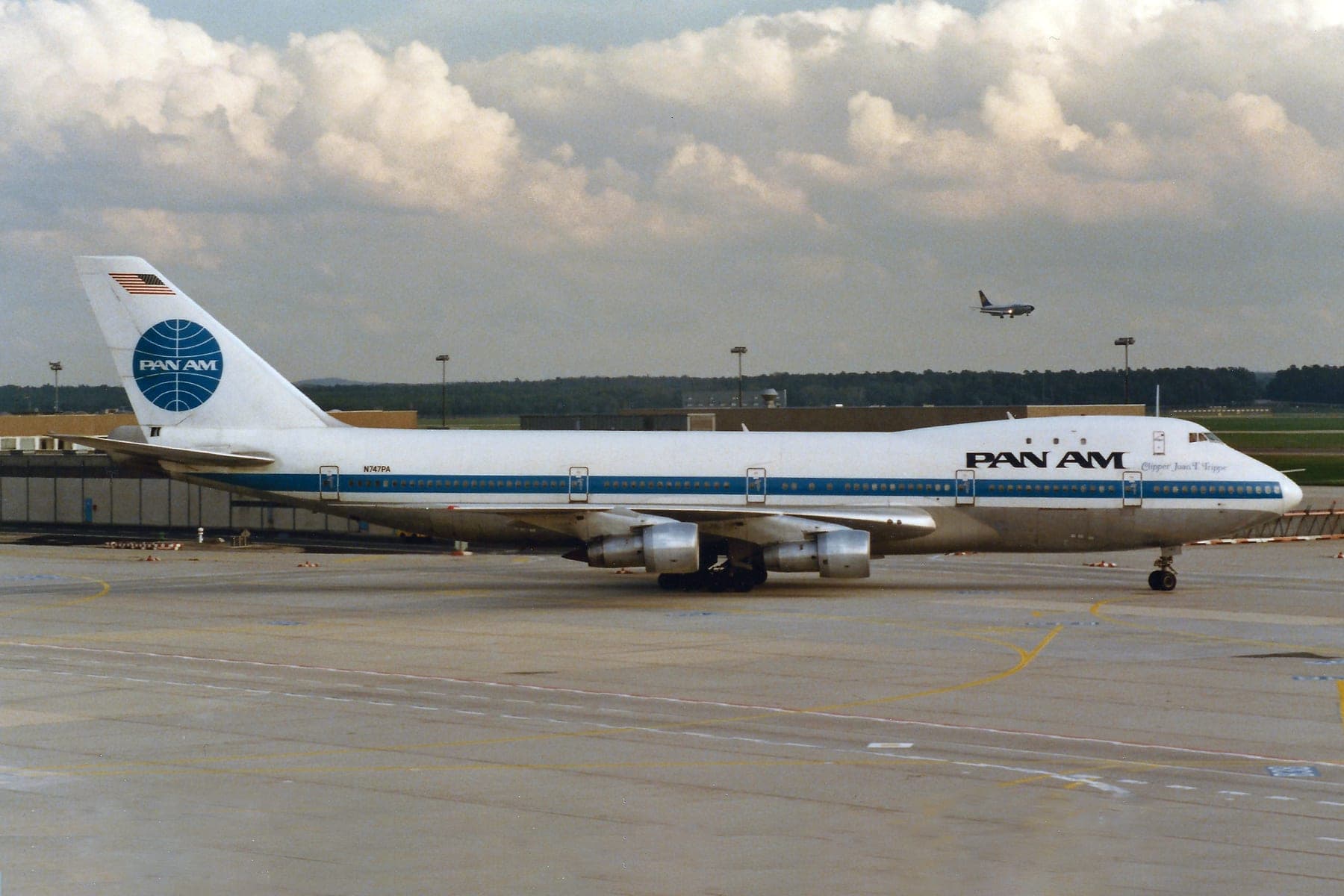
Pan American World Airways was the principal international airline of the United States for most of the twentieth century, and for much of it the most famous airline in the world. It flew as PA, answered to CLIPPER on the radio, and never held a domestic route network worth the name until it was far too late: a foreign carrier at home, built by the American government as the "chosen instrument" of US aviation abroad and left to compete without that protection once the world had changed.
It began on 19 October 1927 with a chartered floatplane carrying mail ninety miles from Key West to Havana, and ended at nine o'clock on the morning of 4 December 1991, when the airline opened for business and shut down within the hour. In between it flew the first scheduled service across the Pacific, the first passenger service across the Atlantic, the first Boeing 707 and the first Boeing 747; it built a terminal at Idlewild and an office tower over Grand Central; and it put its blue globe on aircraft, hotels, timetables and, in one film, a spaceplane.
Nothing on this page is current. The fleet listed below is the fleet of March 1990, the traffic figure is for 1989, and the hubs are places the airline no longer flies from because the airline no longer exists. Pan Am is here as an institution that ran for sixty-four years, not as a carrier a reader can buy a ticket on.
Formation
Pan American Airways was incorporated on 14 March 1927 as a shell company with no aircraft, by three United States Army Air Corps officers (Henry "Hap" Arnold, Carl Spaatz and John Jouett) who were worried about something other than air travel. SCADTA, a Colombian airline with German capital and German management, had been flying since 1920 and was lobbying for landing rights in the Panama Canal Zone. To the Air Corps that looked like reconnaissance, and the answer was an American carrier in the same skies.
That spring the Post Office invited bids to carry mail from Key West to Havana. Three companies chased it: the officers' Pan American, which won the contract and had neither aeroplanes nor Cuban landing rights; Juan Trippe's Aviation Corporation of the Americas, which had the Havana rights and the money of Cornelius Vanderbilt Whitney and Averell Harriman; and a third assembled by the banker Richard Hoyt. Days before the deadline they combined. A Fairchild floatplane chartered from a Dominican operator flew the mail to Havana on 19 October 1927, and the three merged formally on 23 June 1928.
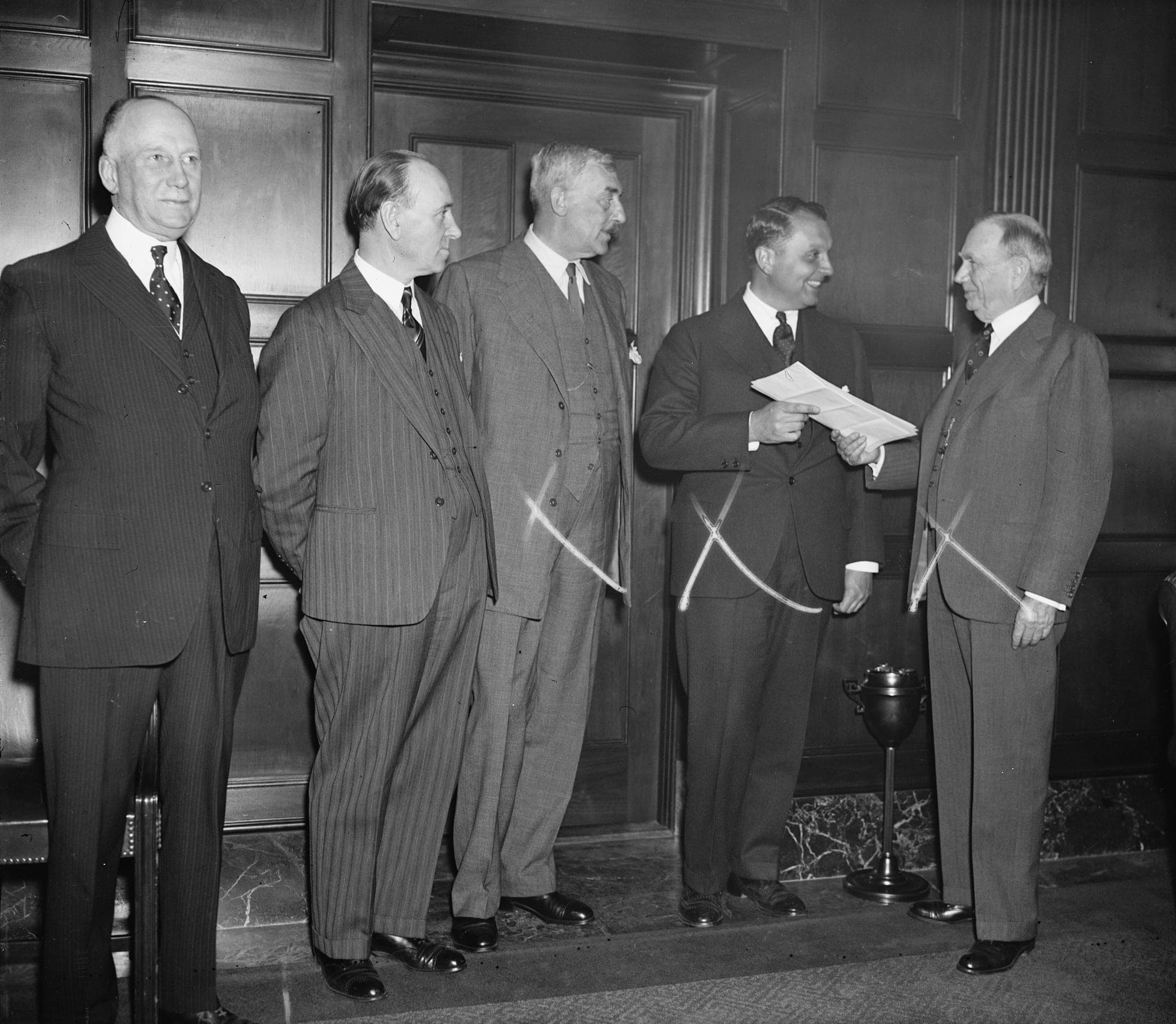
Trippe took operational control, and what followed was less an airline than a foreign policy. Through the late 1920s and early 1930s Pan Am bought failing Latin American carriers, took the mail contracts that kept them alive, and negotiated landing rights country by country, Trippe touring the continent with Charles Lindbergh in 1929 to do it. It absorbed the New York, Rio and Buenos Aires Line, took a controlling stake in Mexicana, and formed Panagra with the Grace shipping interests to work the Pacific coast of South America.
The government helped, deliberately and continuously. Washington saw a single strong American flag carrier abroad as an asset and shielded Pan Am from domestic rivals on international routes: the "chosen instrument" doctrine. It gave the airline a monopoly for two decades. It also left it, when the doctrine was abandoned after 1945, with no home network at all: the single structural weakness that would still be killing it forty years later.
The war years
The Second World War took the Clippers before the United States entered it. From 1940 Pan Am was flying military charters and ferrying aircraft to Africa under contract; after Pearl Harbor the fleet was requisitioned outright, and the airline's crews found themselves flying supply routes across the South Atlantic to Africa and the Middle East in aeroplanes painted grey.
The company also built airfields. Under contract to the US government, Pan Am's Airport Development Program laid out and equipped bases across Latin America and West Africa: the chain that later carried Allied aircraft to the Mediterranean theatre. It was an odd sort of airline work, and it left the airline with survey knowledge and ground infrastructure over half the world.
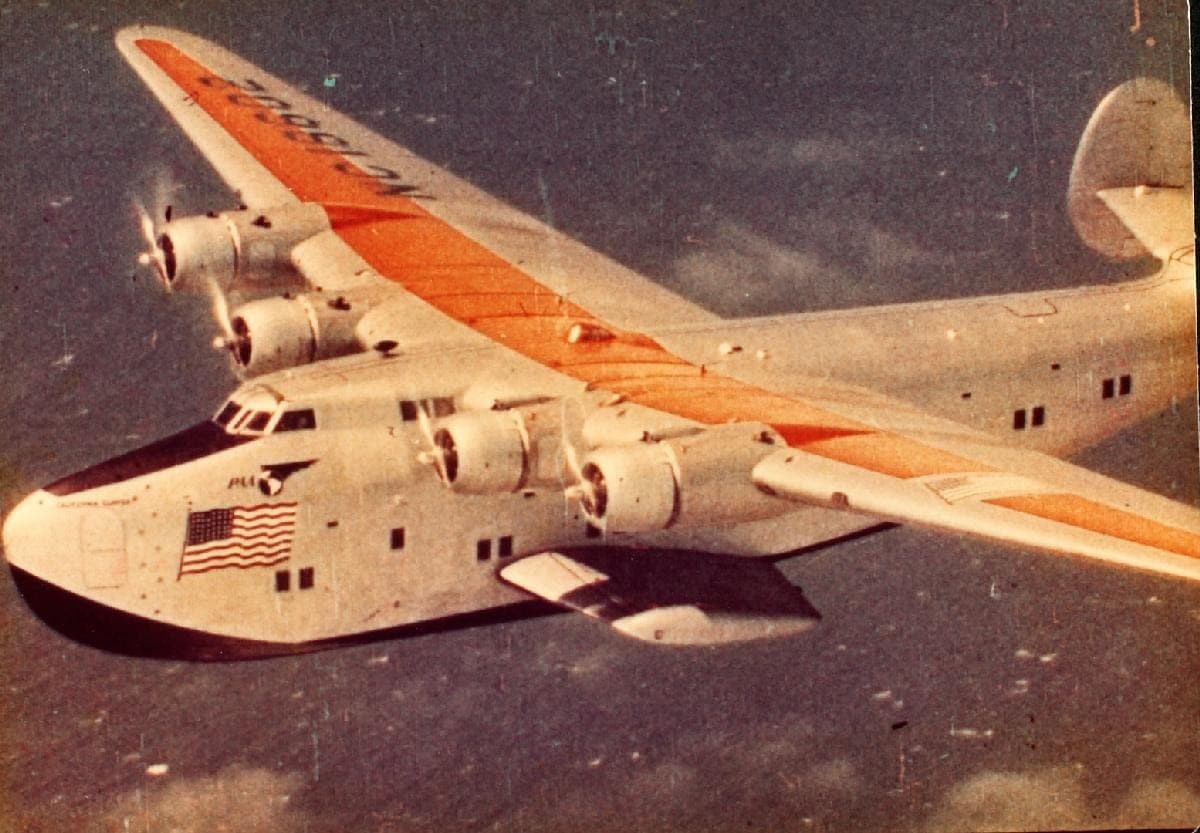
Two flights of the period became famous. In January 1943 the Dixie Clipper carried President Roosevelt to Casablanca, the first flight by a serving American president. A year earlier the Pacific Clipper, caught at Auckland by the attack on Pearl Harbor and unable to go back the way it came, had flown west instead, across Asia, Africa and the South Atlantic to New York, the first circumnavigation of the world by a commercial aircraft, completed largely without charts.
Growth and expansion
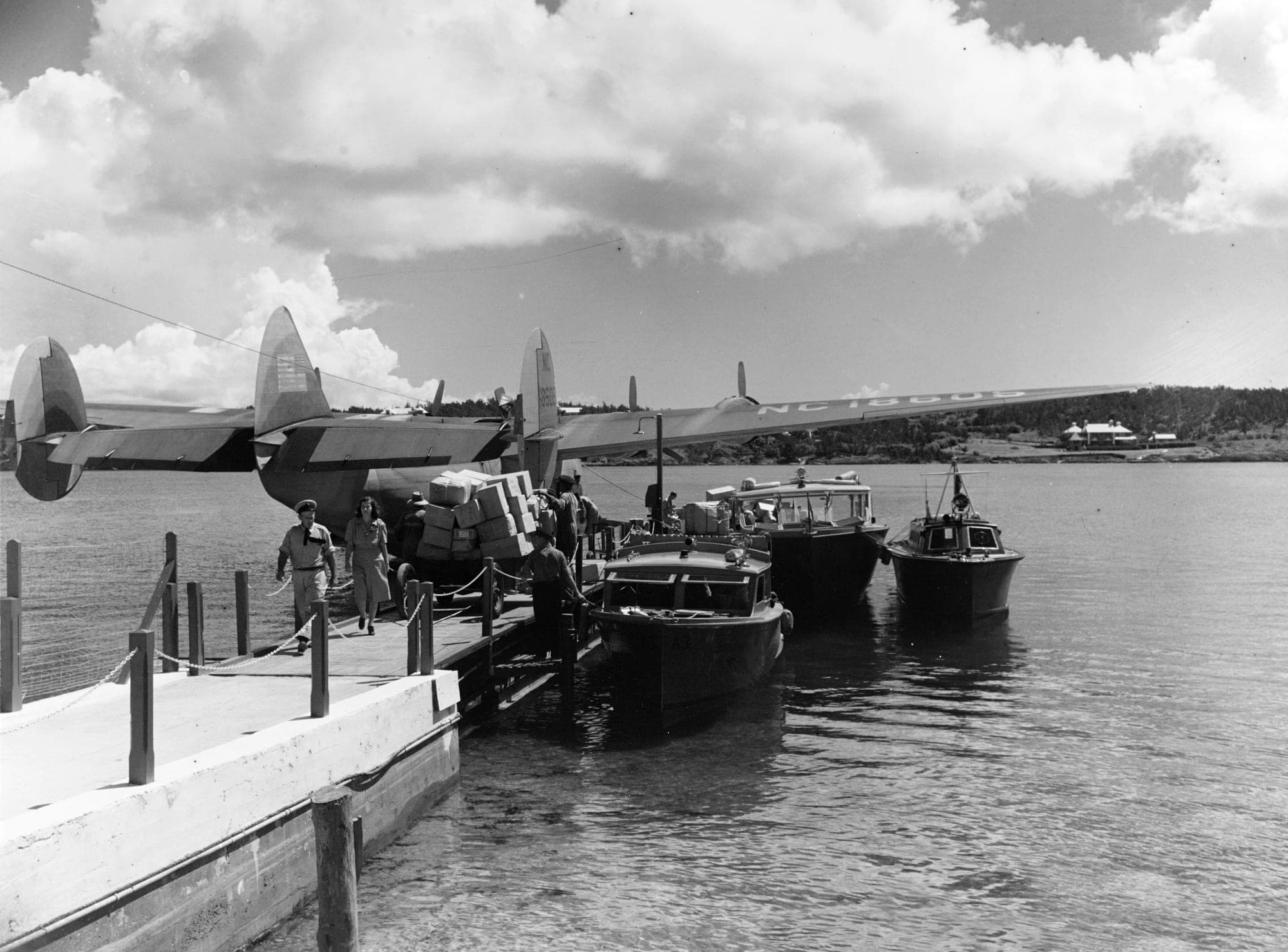
The aircraft that made Pan Am famous were boats. Land runways long enough for a loaded airliner barely existed outside North America and Europe, and a flying boat could put down in any sheltered water, so the airline's route map was drawn along coastlines and island chains. The Sikorsky S-38s and Consolidated Commodores of the Caribbean gave way in 1931 to the Sikorsky S-40, the first aircraft Trippe called a Clipper, after the sailing ships, and with the maritime vocabulary that came with the name: captains, first officers, pursers, a ship's bell.
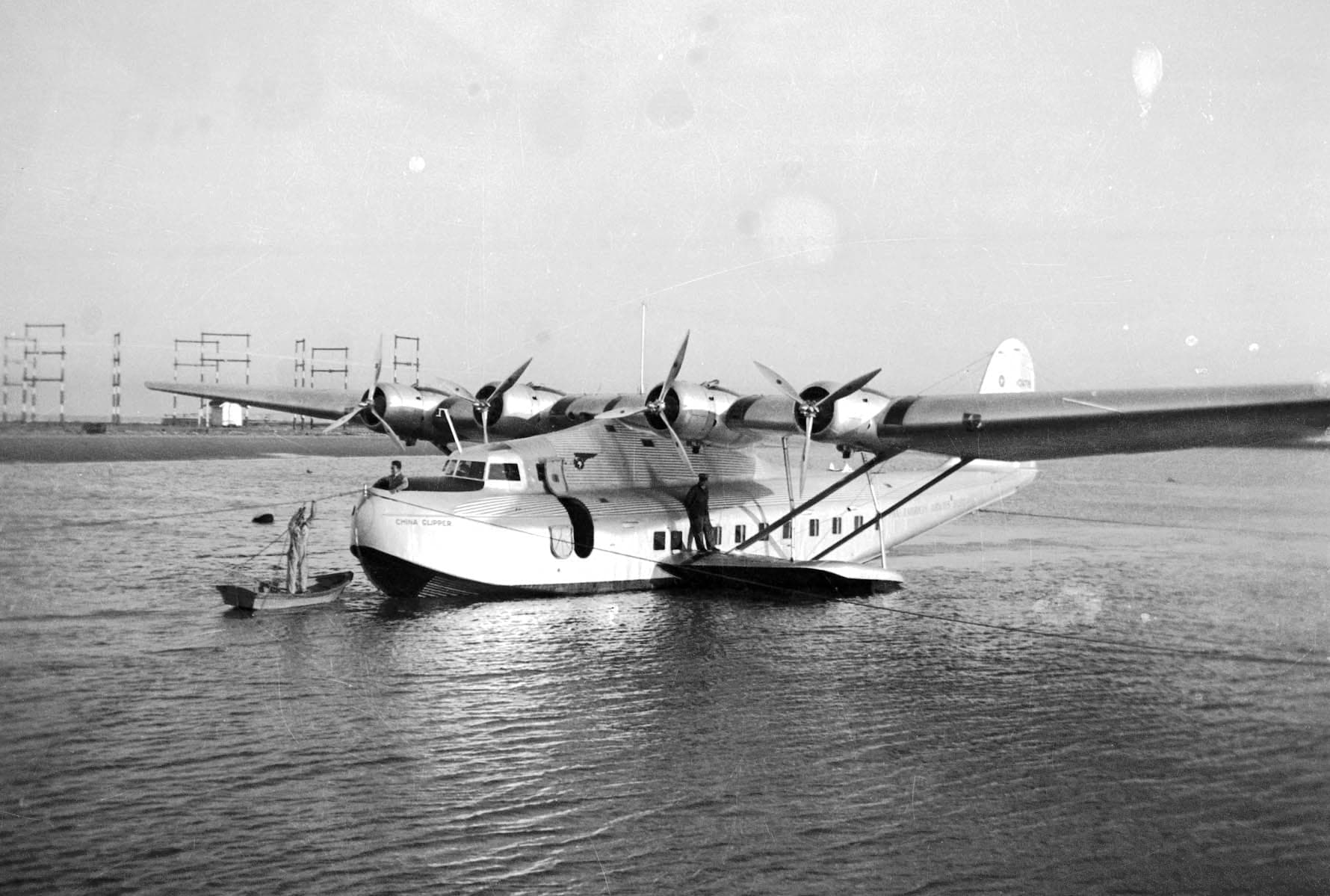
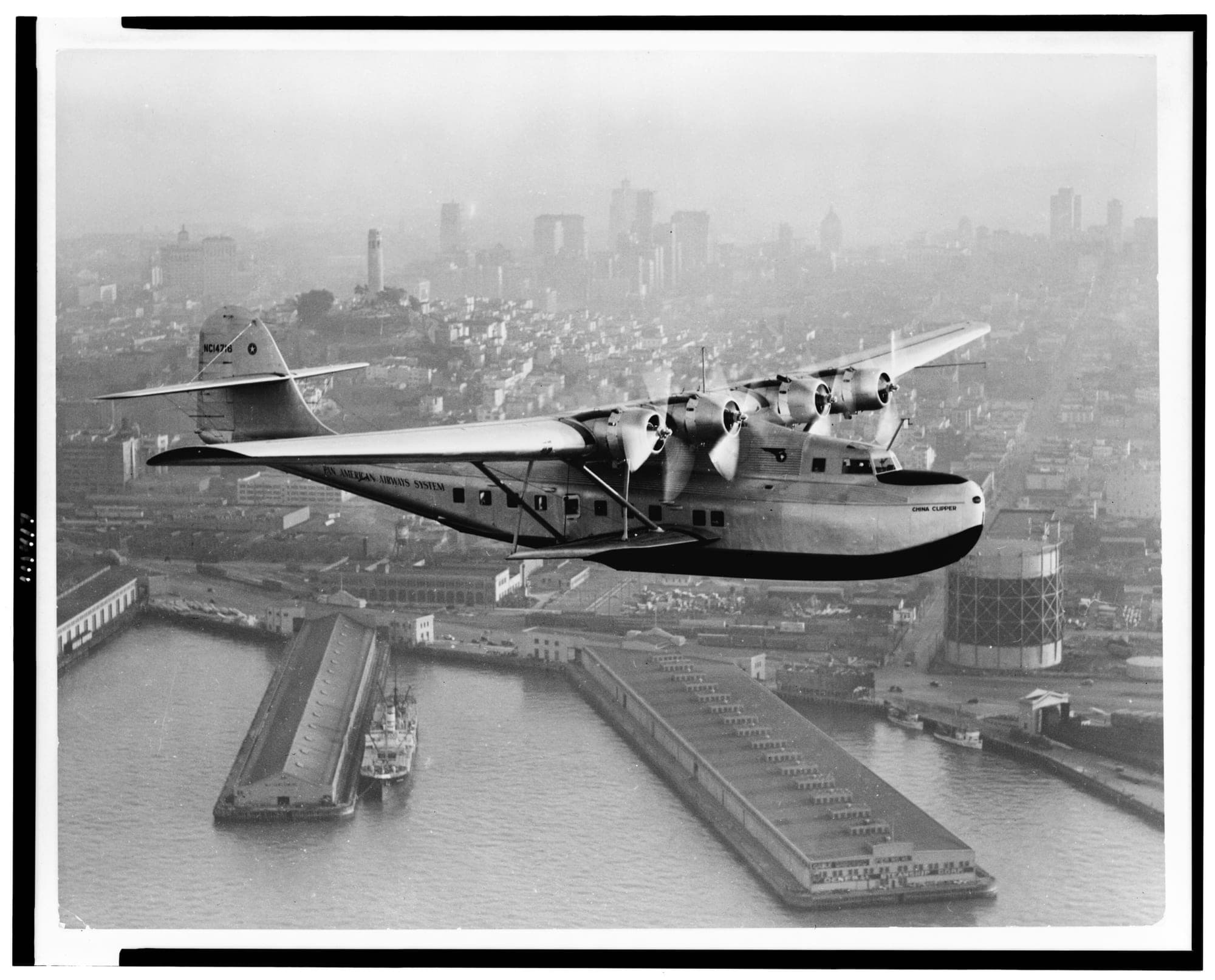
The Pacific was the demonstration. There was no route to buy, so Pan Am built one: in March 1935 it chartered the freighter North Haven and shipped construction crews, radio equipment, fuel and hotel fittings to Midway, Wake, Guam and Manila, blasting coral out of lagoons to make harbours. On 22 November 1935 the Martin M-130 China Clipper left Alameda with mail and reached Manila on the 29th, cutting a crossing that took a fast steamship three weeks to five days of flying. Passengers followed on 21 October 1936, at $950 one way, several years of a working wage.
The Atlantic took longer, because it needed British and French agreement rather than coral. Survey flights ran through 1937 between Port Washington, Botwood in Newfoundland and Foynes in Ireland. What made a scheduled service possible was a bigger aeroplane: six Boeing 314s, delivered in early 1939, with a range that could carry passengers rather than only fuel.
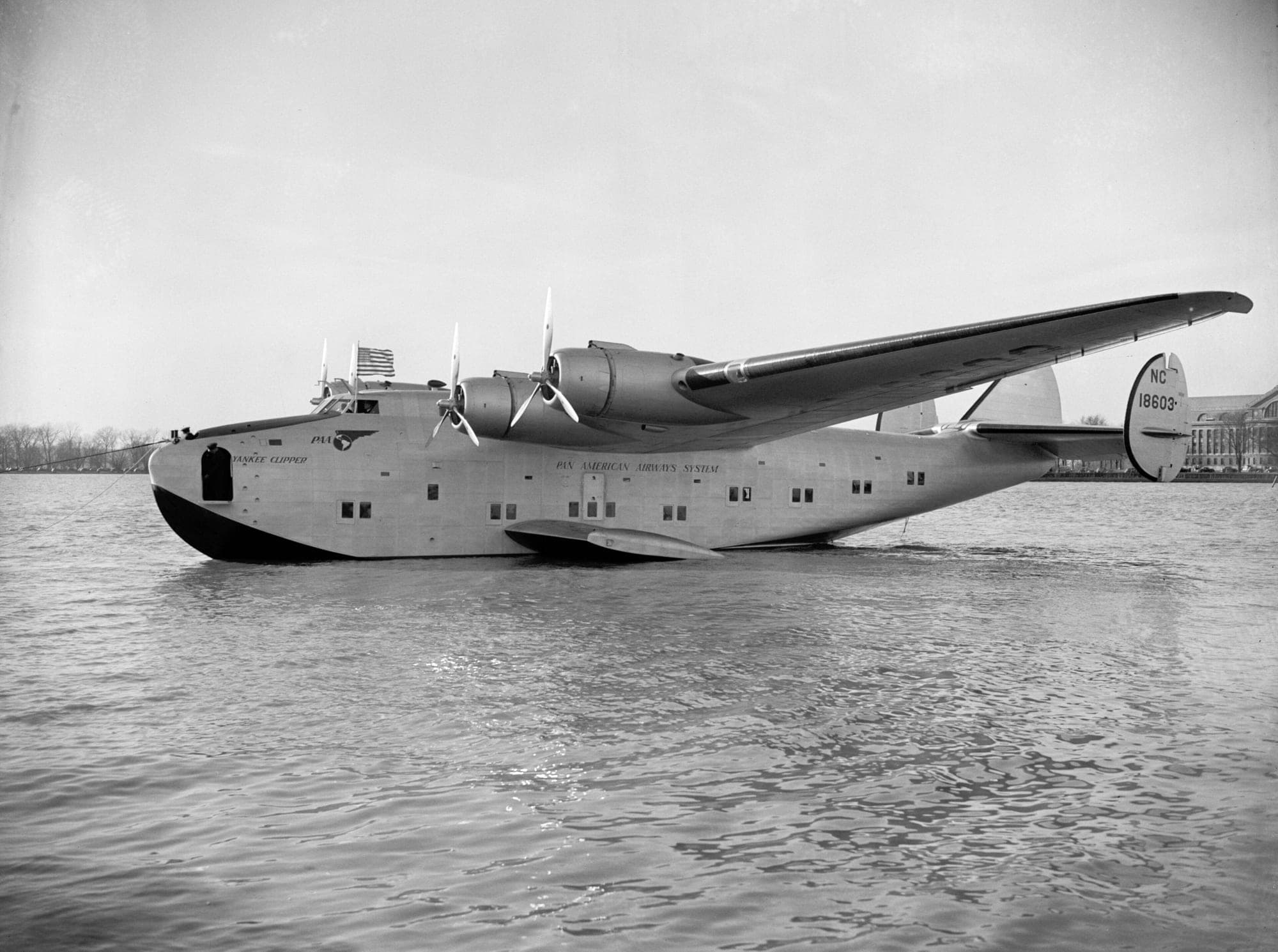
On 30 March 1939 the Yankee Clipper made the first transatlantic passenger crossing. Scheduled mail followed in May on the southern route to Marseille, and on 28 June the Dixie Clipper carried the first fare-paying passengers over the same course, by way of the Azores and Lisbon. The northern route to Southampton opened three days later.
At its pre-war height this was the most glamorous transport in the world and among the least practical: a Boeing 314 carried perhaps 36 passengers sleeping in bunks, took twenty-nine hours to Lisbon, and cost what a car cost. It was also the only way to fly the ocean at all, and for four years Pan Am was the only airline that could do it.
The flying boat era ended almost the moment it was perfected. Wartime airfields left the world covered in concrete runways, and by 1946 a Douglas DC-4 could fly the Atlantic faster, cheaper and in worse weather than any boat. Pan Am's last scheduled Boeing 314 service ran in 1946; the type had lasted seven years.
The jet age
Pan Am looked hard at the de Havilland Comet, the world's first jet airliner, and did not buy it. In 1955 it ordered twenty Boeing 707s instead, and twenty-five Douglas DC-8s alongside them: a combined order of $269 million placed before either aircraft had flown a passenger, and large enough to settle the shape of the industry. Boeing widened the 707's fuselage to six-abreast to match the DC-8; Trippe's order is the reason the aircraft is the width it is.
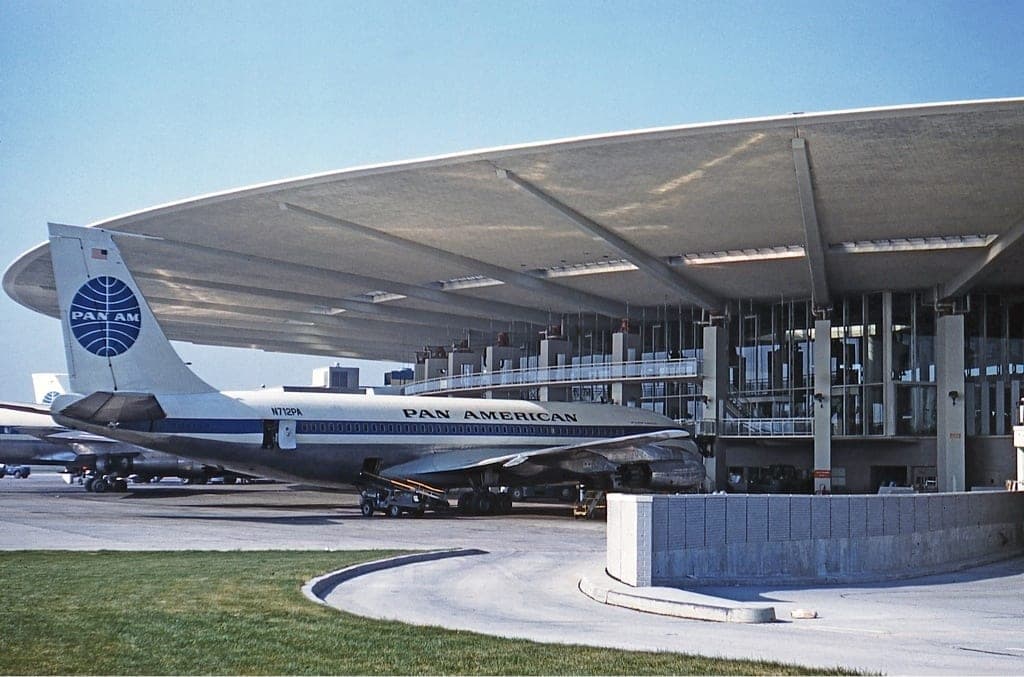
The first scheduled 707 service left New York Idlewild for Paris on 26 October 1958, Clipper America carrying 111 passengers with a refuelling stop at Gander. The 707-320 Intercontinental followed in 1959 to 60 and made the crossing non-stop in both directions. What that did to the economics was brutal and permanent: the ocean liner business ended inside a decade, and a transatlantic seat came within reach of ordinary people for the first time. Pan Am eventually flew 120 Intercontinentals, the backbone of the airline for twenty years.
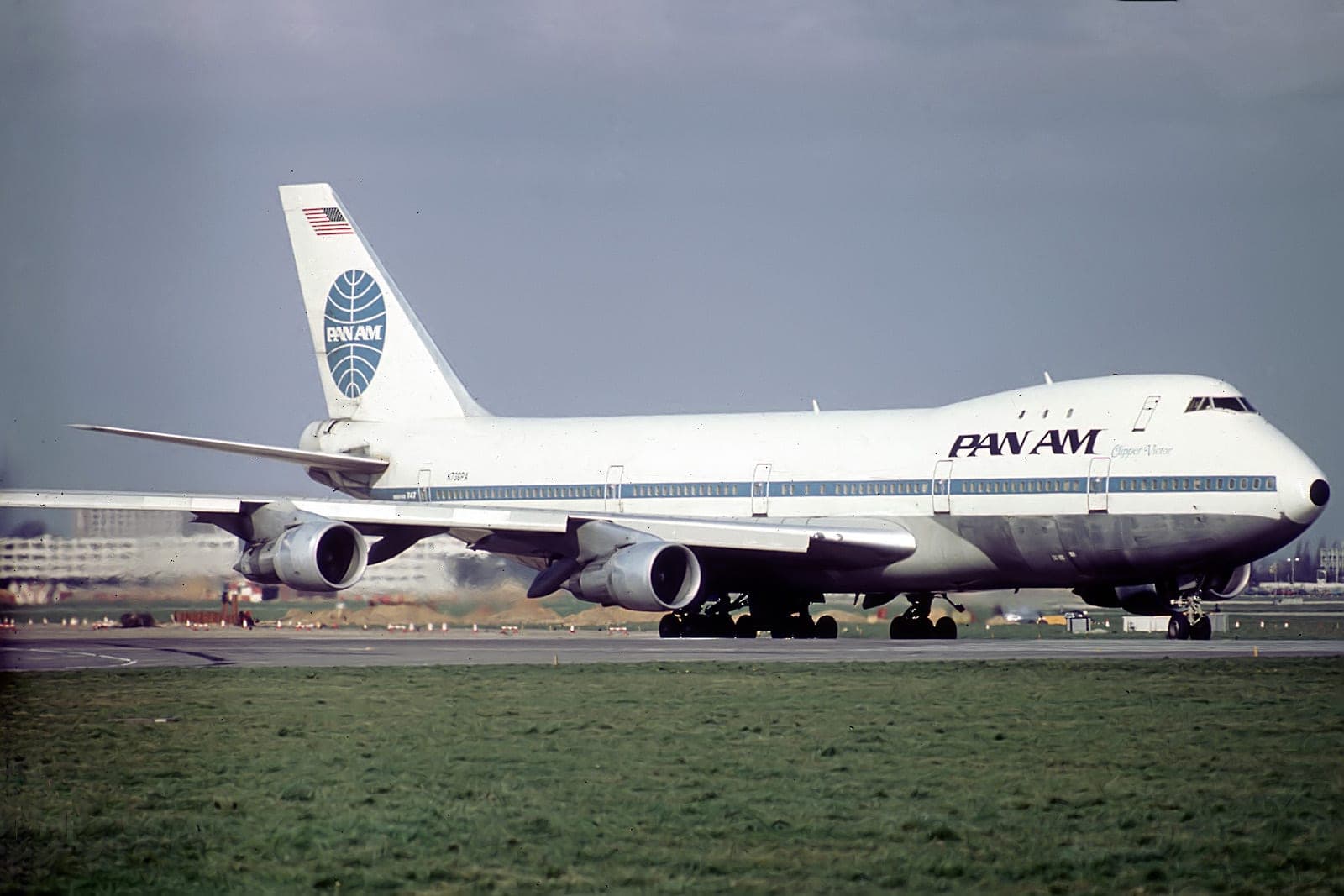
Then Trippe did it again, and this time it broke him. In April 1966 Pan Am ordered twenty-five Boeing 747s for $525 million, an aircraft that did not exist, from a company that had to build a factory to make it. The order launched the programme. Pat Nixon christened Clipper Young America at Dulles on 15 January 1970, and the first commercial service left New York for London on the evening of 21 January, flown, after an engine failure on the scheduled aircraft, by Clipper Victor.
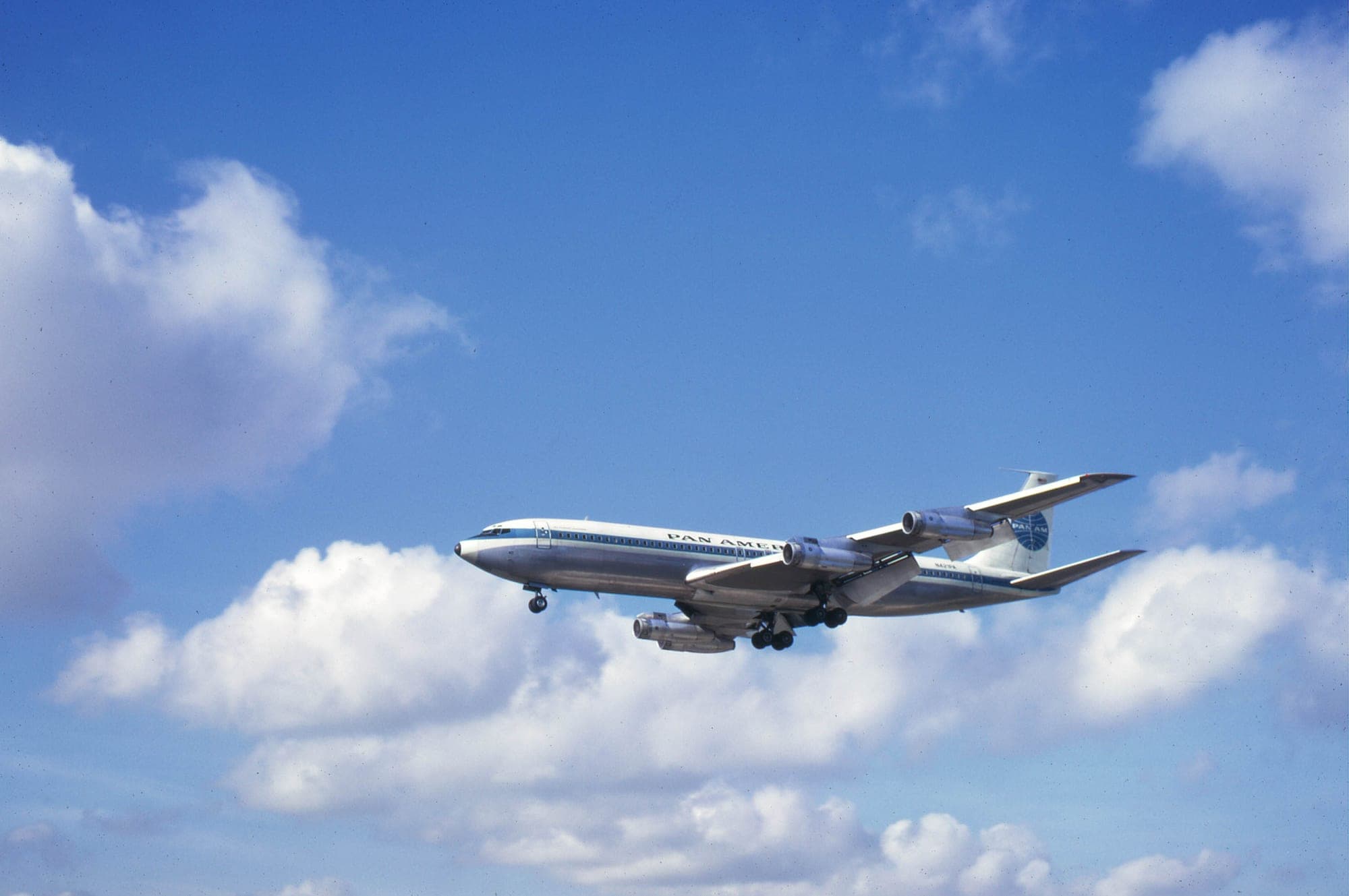
The 747 doubled the seats on every route it touched, and it arrived in the same season as the 1970 recession and, three years later, the oil crisis. Pan Am carried eleven million passengers in 1970 and lost money doing it. The aircraft that confirmed the airline's technical leadership was also the one that filled its network with capacity it could not sell, at a moment when the government was starting to license competitors onto the routes it had once protected.
Pan Am was among the first airlines to take options on Concorde, and never exercised them. It had studied the economics of supersonic flight closely enough to conclude that the aeroplane could not pay, which is exactly what happened; only two airlines ever flew it, and neither made money from it.
Its jet fleet at the end of the 1960s ran to 150 aircraft serving 86 countries on every continent except Antarctica, over a route network of 81,410 unduplicated miles. The advertising line was "The World's Most Experienced Airline", and for that decade it was simply a statement of fact.
Deregulation and decline
Three things arrived within five years of each other and Pan Am survived none of them well. The 747 fleet was delivered into the 1970 recession. The 1973 oil crisis quadrupled the price of fuel for an airline flying the longest sectors in the industry. And the Airline Deregulation Act of 1978 removed the route protections that had substituted for a domestic network, leaving a carrier with the best international map in the world and no way of filling it.
The answer chosen was to buy a domestic airline. Pan Am won National Airlines in a bidding war against Frank Lorenzo's Texas International, paying a price the auction had inflated, and completed the purchase on 7 January 1980. It was a bad fit in every dimension: National's north-south routes fed the wrong gateways, the fleets shared only the 727, the two cultures did not mix, and harmonising National's pay scales upward raised costs across the combined airline. Revenues rose 62 per cent; fuel costs rose 157 per cent.
What followed was a decade of selling things. The InterContinental hotel chain went in 1981. The Pan Am Building was sold to Metropolitan Life in 1980 for what was then the highest price ever paid for a building, though the name stayed on the roof until 1992. In April 1985 the whole Pacific Division (a quarter of the route system, the Tokyo hub, and the aircraft that flew them) went to United Airlines for $750 million. Pan Am was selling the routes it had invented in order to fund the losses on the ones it had left.
Then Lockerbie. A bomb destroyed Flight 103 on 21 December 1988, killing 270 people, and the commercial effect on an airline whose brand was the transatlantic crossing was immediate and permanent: bookings fell and did not recover. The 1990 to 91 Gulf War, which emptied transatlantic aircraft across the industry, arrived while the airline was already failing. A bid for Northwest had come to nothing; a plan to sell the remaining transatlantic routes to United was overtaken by events.
Pan Am filed for Chapter 11 on 8 January 1991. Delta bought the European routes, the Frankfurt operation, the Shuttle, 45 aircraft and the Worldport for $416 million, injected $100 million and took 45 per cent of a smaller Pan Am reorganised around Miami and Latin America. That airline relaunched on 1 November 1991 with about 60 aircraft and 7,500 staff, and lost money from the first week. On 3 December Delta declined to make the next payment; the creditors' committee failed to persuade Carl Icahn's TWA to step in. Pan Am opened for business at nine the next morning and closed within the hour. The last scheduled flight, PA436, left Barbados that afternoon in Clipper Goodwill and landed at Miami: a Boeing 727, on a Caribbean sector, for an airline that had crossed the Pacific by flying boat.
Afterlife
The trademarks were sold at a bankruptcy auction on 2 to 3 December 1993, and the name has been used by four unrelated airlines since. The first, from 1996 to 1998, flew low-cost long-haul services from the United States to the Caribbean under the code PN. A second operated from 1998 to 2004; a third and fourth followed, each smaller, none connected to the original beyond a purchased mark.
The name also went to things that do not fly. Pan Am Railways ran freight in New England until 2022 under the globe. The Pan Am International Flight Academy, which trains airline crews, is a direct descendant of the airline's own training operation and still carries the name. And a clothing and luggage business has sold Pan Am bags, more or less continuously, to people who like the mark.
None of these is Pan American World Airways, and the encyclopedia records the airline as ending on 4 December 1991. What survived was the trademark, which is a different kind of object: an asset that can be bought, and a memory that cannot.
Network and hubs
Pan Am's network was the inverse of every other American airline's. It had the Atlantic, the Pacific, Latin America, Africa and a round-the-world service, flights 1 and 2, eastbound and westbound, which circled the globe on a single flight number for thirty-five years, and almost nothing inside the United States. Passengers were delivered to its international gates by other carriers, which was tolerable while the government kept those carriers off its routes and ruinous the moment it stopped.
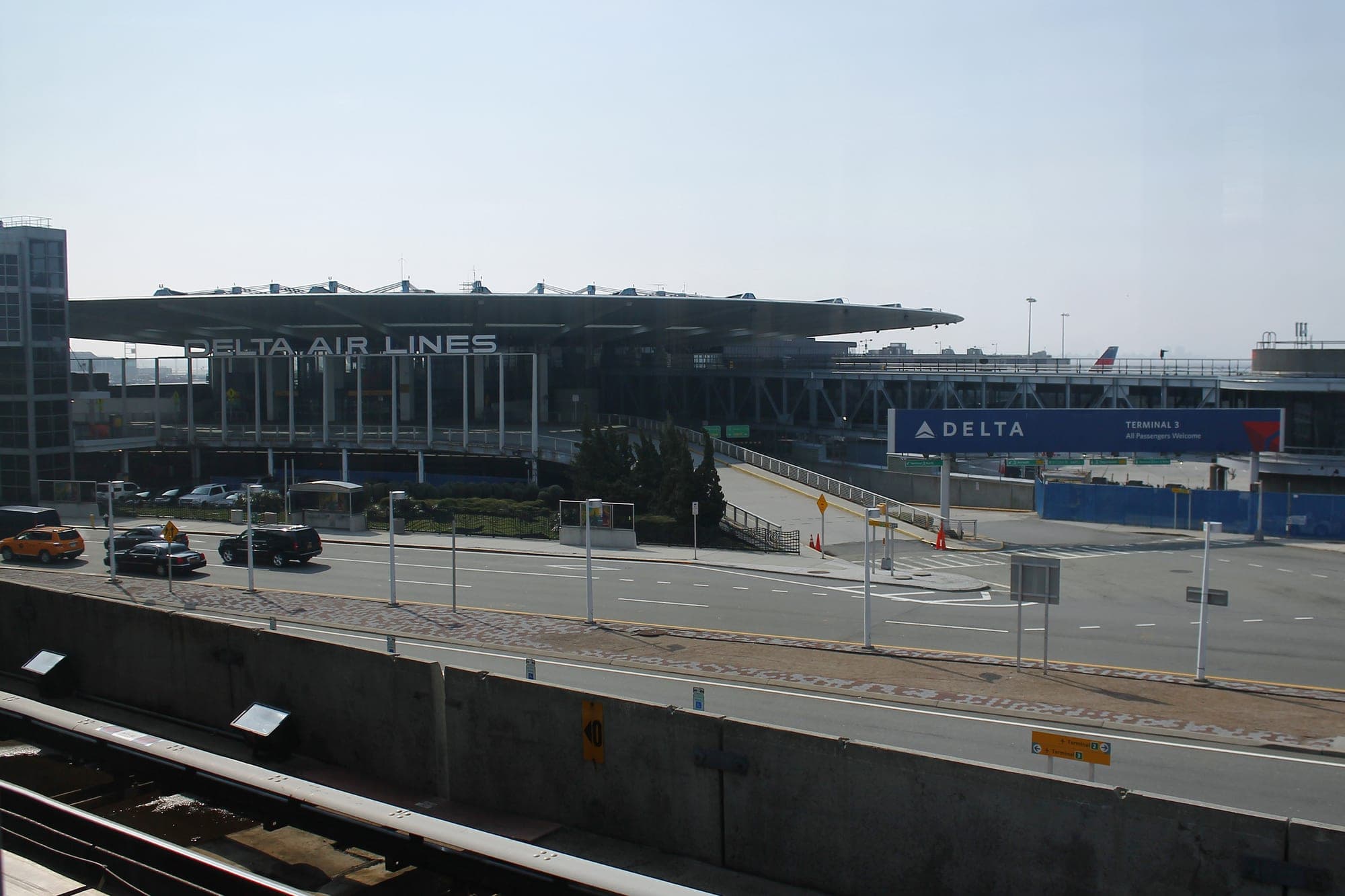
Its front door was the Worldport at New York Idlewild, later Kennedy: a terminal whose four-acre elliptical roof was suspended on cables from thirty-two sets of posts and cantilevered out over the aircraft stands, so passengers could board down airstairs without getting wet. The jet bridge made the idea obsolete almost immediately; the roof stayed, and the building remained the most recognisable airline terminal in America until Delta demolished it in 2013.
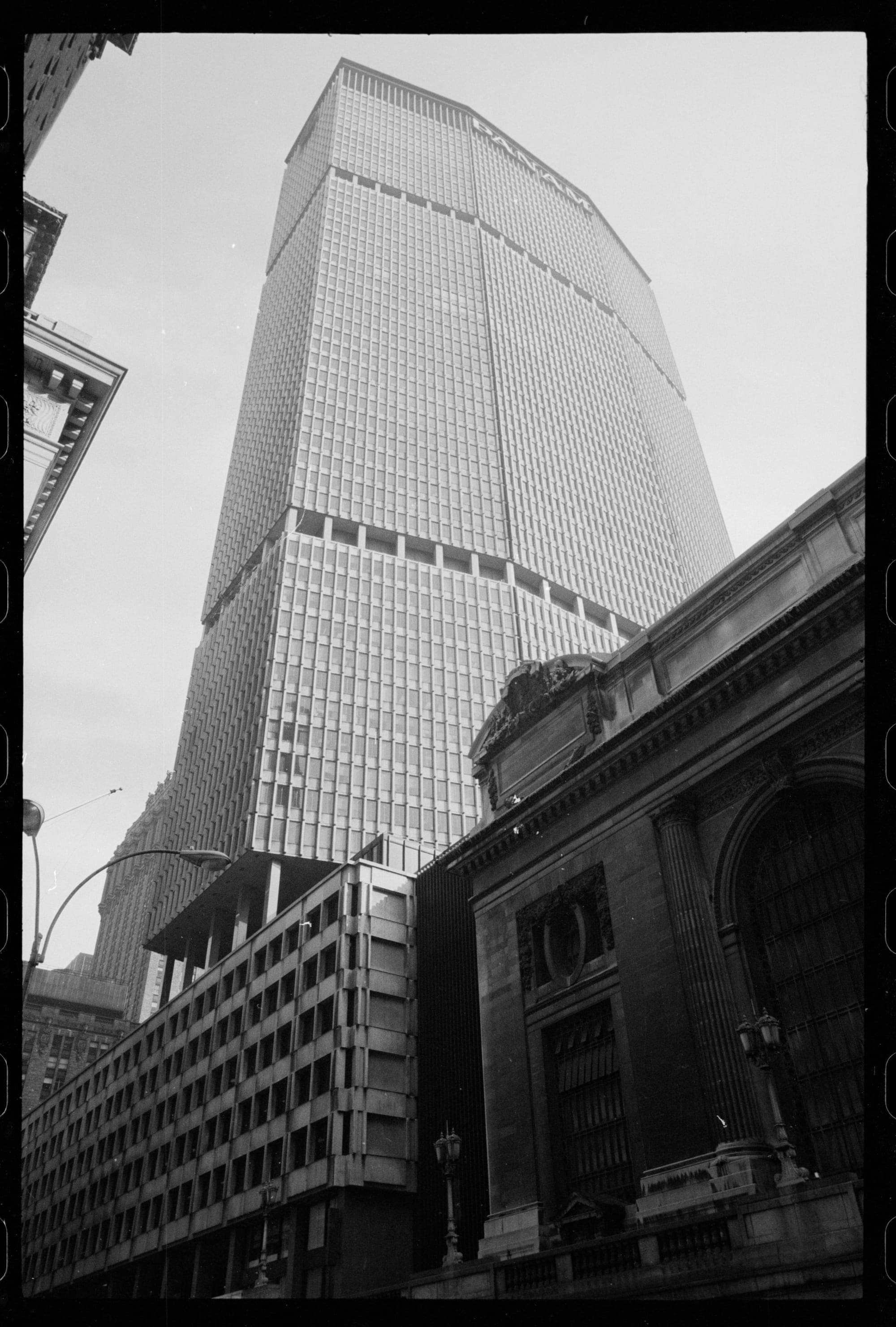
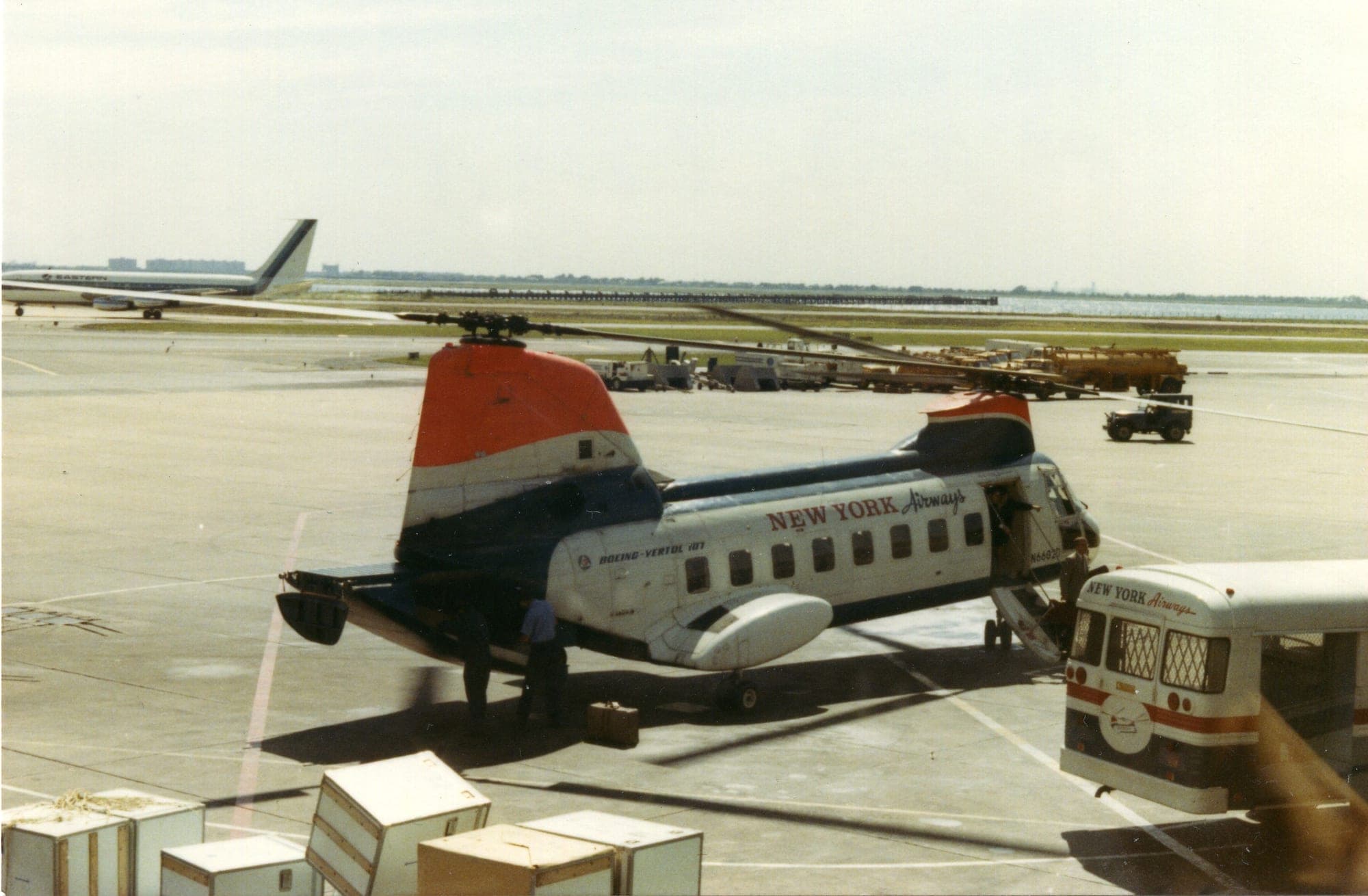
Its head office was the Pan Am Building on Park Avenue, opened in 1963, fifty-nine storeys straddling Grand Central Terminal, for some years the largest commercial office building in the world, with the airline's name and globe visible the length of the avenue. Between 1965 and 1977 New York Airways ran helicopters from its roof to the airports, until a landing gear collapse killed five people and ended the service.
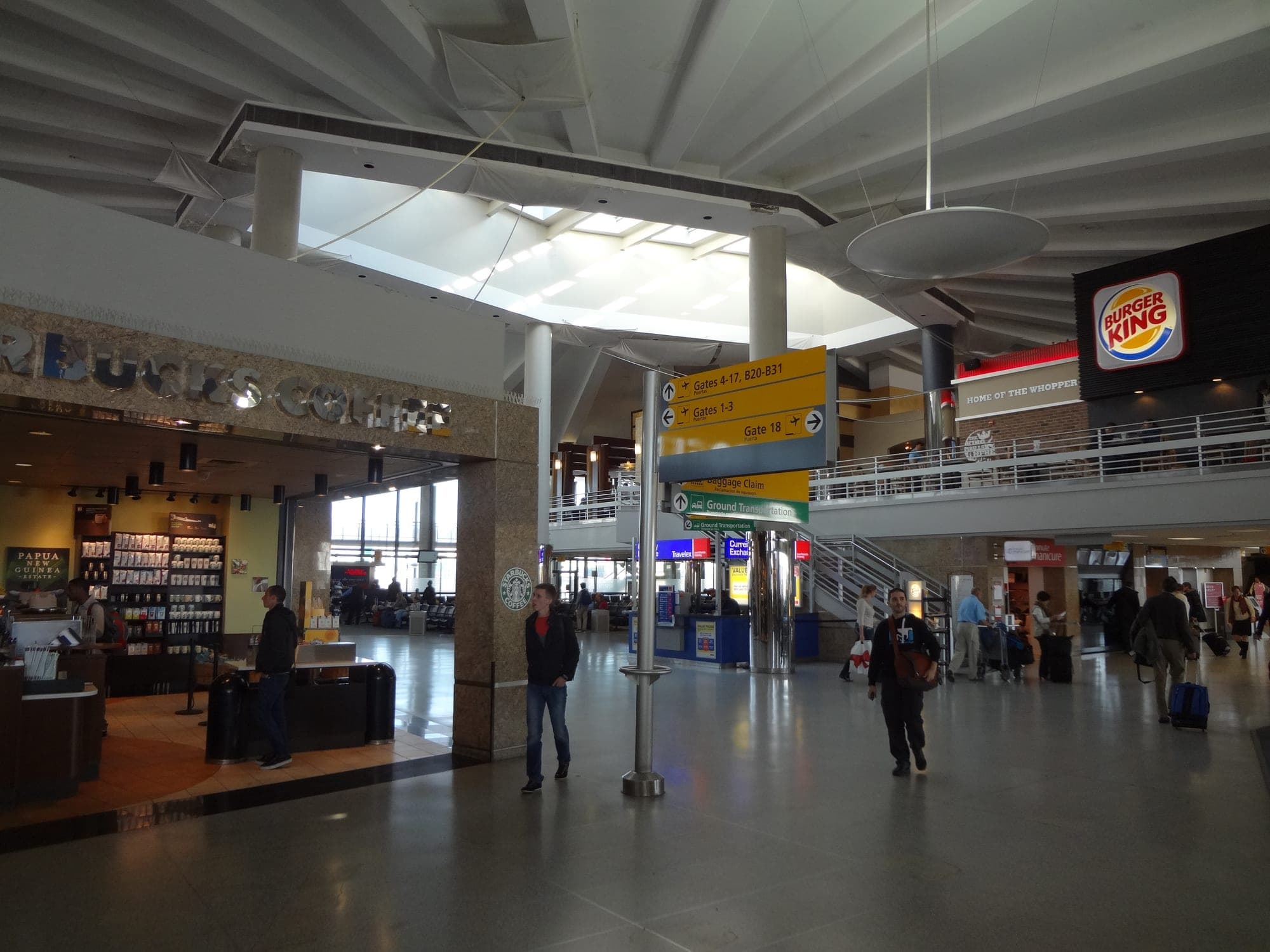
Two operations sat oddly inside all this. Because of the post-war status of Berlin, only airlines of the occupying powers could fly into the divided city, so from 1950 Pan Am operated the Internal German Services, an American carrier running domestic German routes from Tempelhof and later Tegel, with Boeing 727s and later Airbus A310s, for four decades. And after 1986 the airline ran the hourly Boston to New York to Washington Shuttle, bought from New York Air: a domestic operation acquired thirty years too late to matter.
In 1989, its last full year of anything like scale, Pan Am flew 29.4 billion revenue passenger-miles. In November 1991 it was scheduled into 46 airports; in May 1968 the figure had been 122.
Fleet
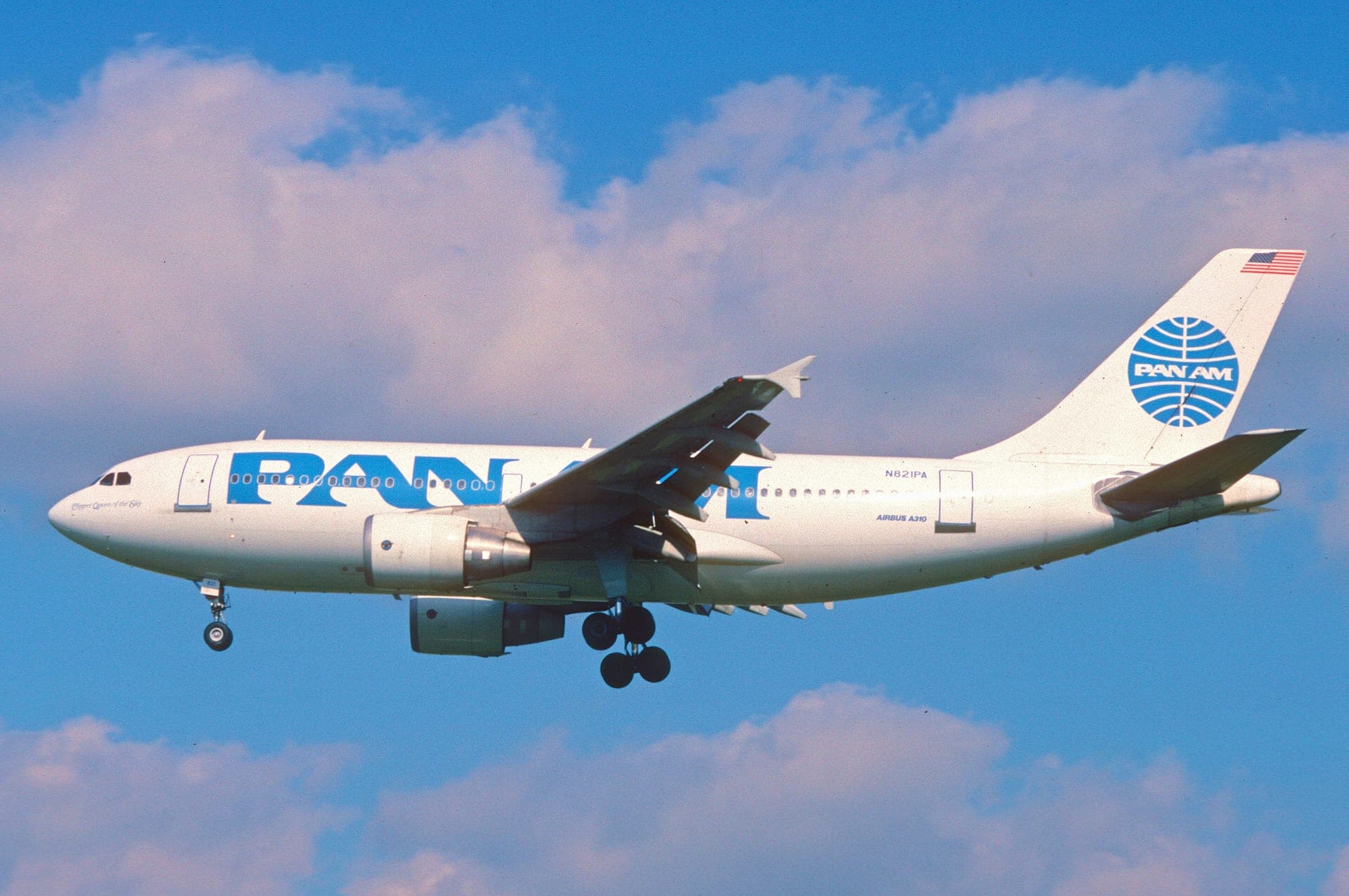
Pan Am's fleet history is close to a history of the airliner itself. Fokker and Ford trimotors, then Sikorsky, Consolidated and Martin flying boats; Douglas DC-3s and DC-4s; Lockheed Constellations from 1946 and Boeing 377 Stratocruisers with their downstairs lounge; then the 707 and the DC-8, the 720B, the 727, the 737, the 747 and the long-legged 747SP built to Pan Am's requirement for New York to Tokyo non-stop; the L-1011 and the DC-10 that came with National Airlines; and finally the Airbus A300 and A310 that ended its days.
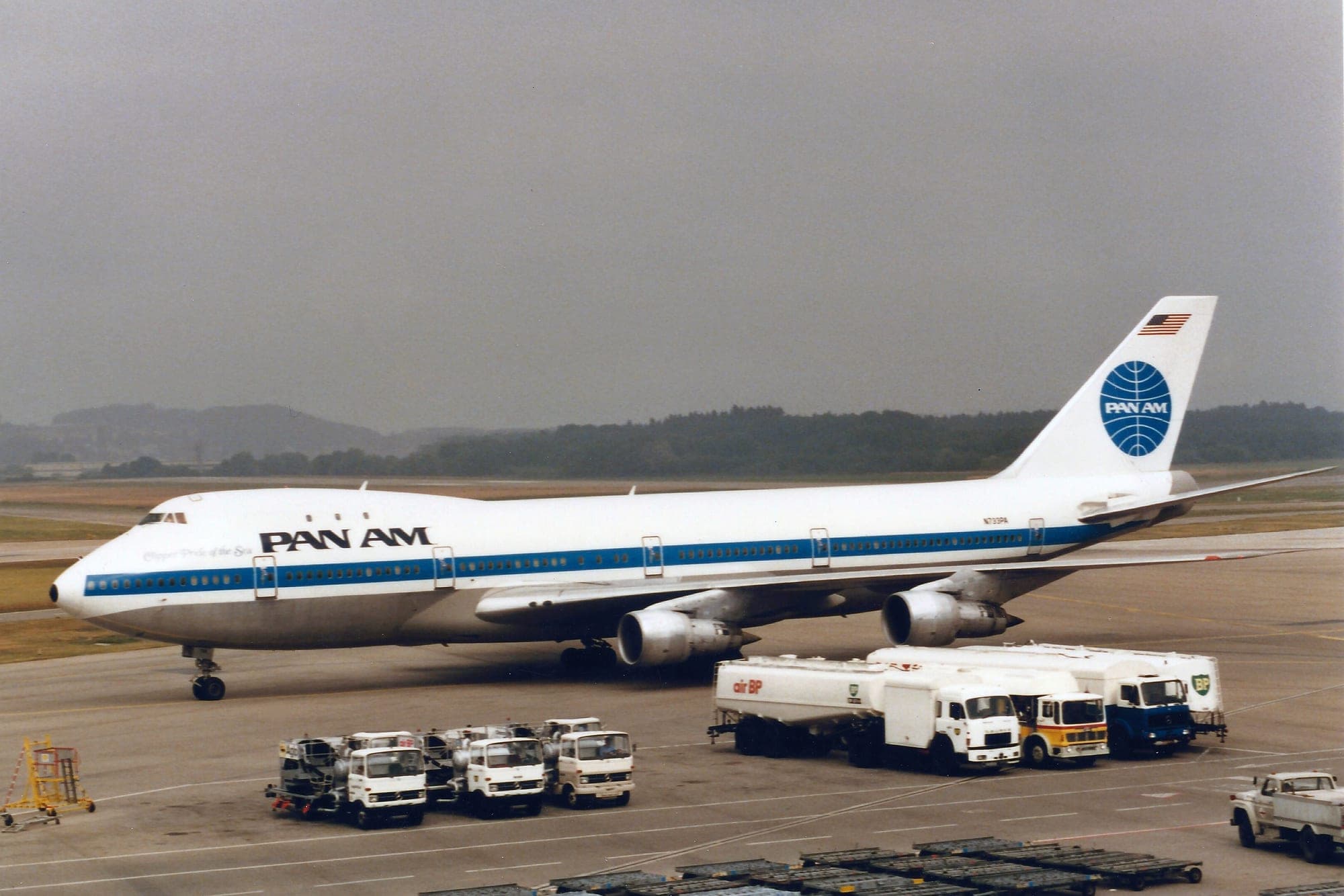
The table below is the fleet as it stood in March 1990, twenty-one months before the airline stopped: 155 aircraft, and a shape that tells the whole story of the decline. Ninety-one of them are Boeing 727s: a 1960s domestic trijet, most of them inherited from National, flying short sectors the airline had never been built for. Twenty-five are 747s, the long-haul fleet that was once fifty. There are no freighters left and no 747SPs; the SPs went to United with the Pacific routes in 1985.
Categorising that fleet the way this encyclopedia categorises a living airline's is slightly false, and worth saying: an A310 crossing the Atlantic and an A310 flying Frankfurt to Berlin were the same aeroplane doing different jobs, and Pan Am's last years were spent using long-haul equipment on whatever routes it still held.
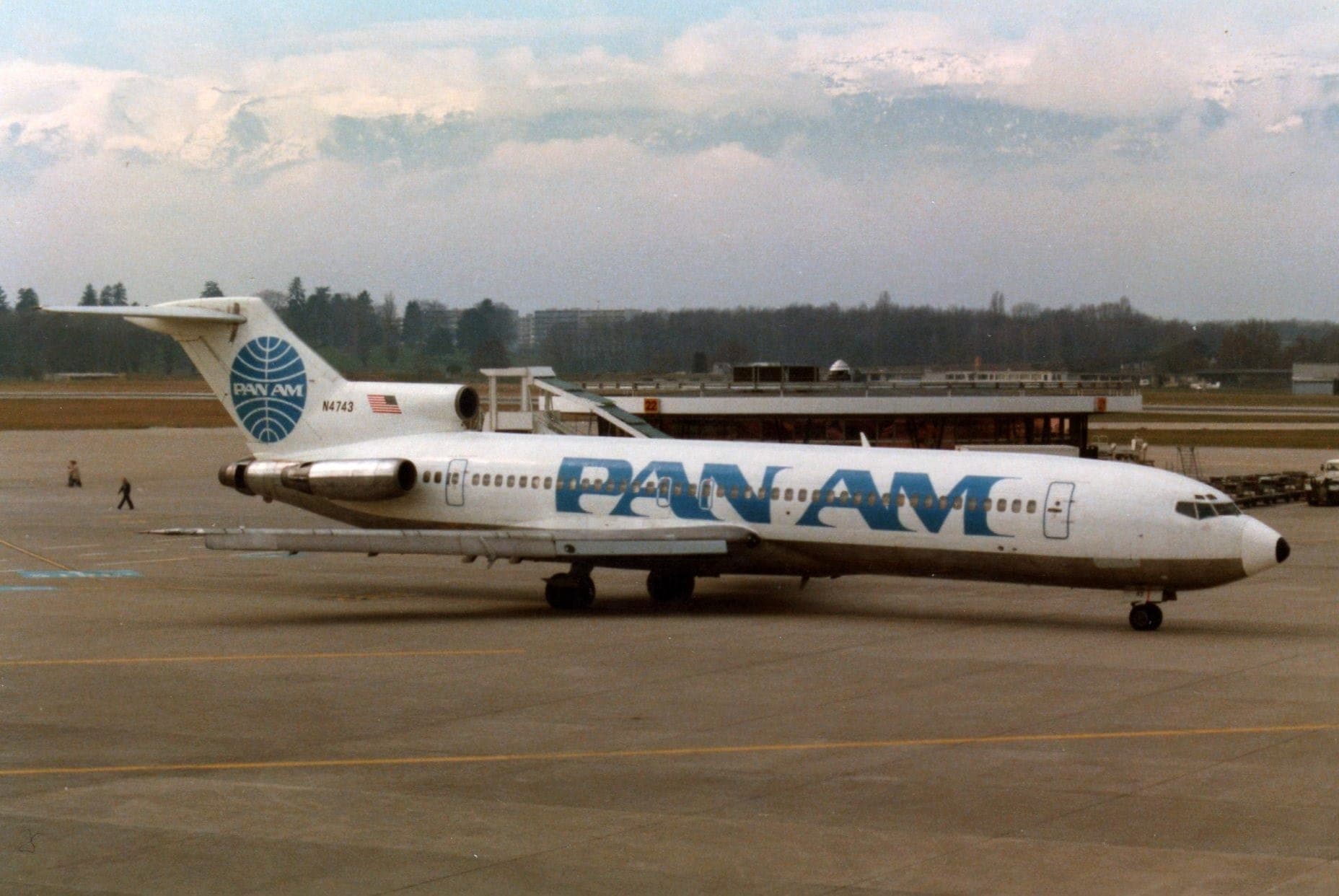
The airline named individual aircraft throughout its life, in the maritime convention it adopted with the first Clipper in 1931, Clipper America, Clipper Victor, Clipper Maid of the Seas, Clipper Juan T. Trippe. The names are the reason so many of these aircraft are remembered individually, and the reason two of them are remembered for the wrong thing.
Cabins and service
For thirty years Pan Am's service was the standard other airlines were measured against, and it was built on people rather than equipment. Cabin crew were hired internationally, usually held a degree, often had nursing training, and were required to speak at least one language besides English: a practical necessity on a network where a single flight might carry passengers of a dozen nationalities, and a marketing asset the airline used relentlessly. Uniforms were designed by Don Loper and later by Edith Head, and the airline's onboard food took its cues from Maxim's de Paris.
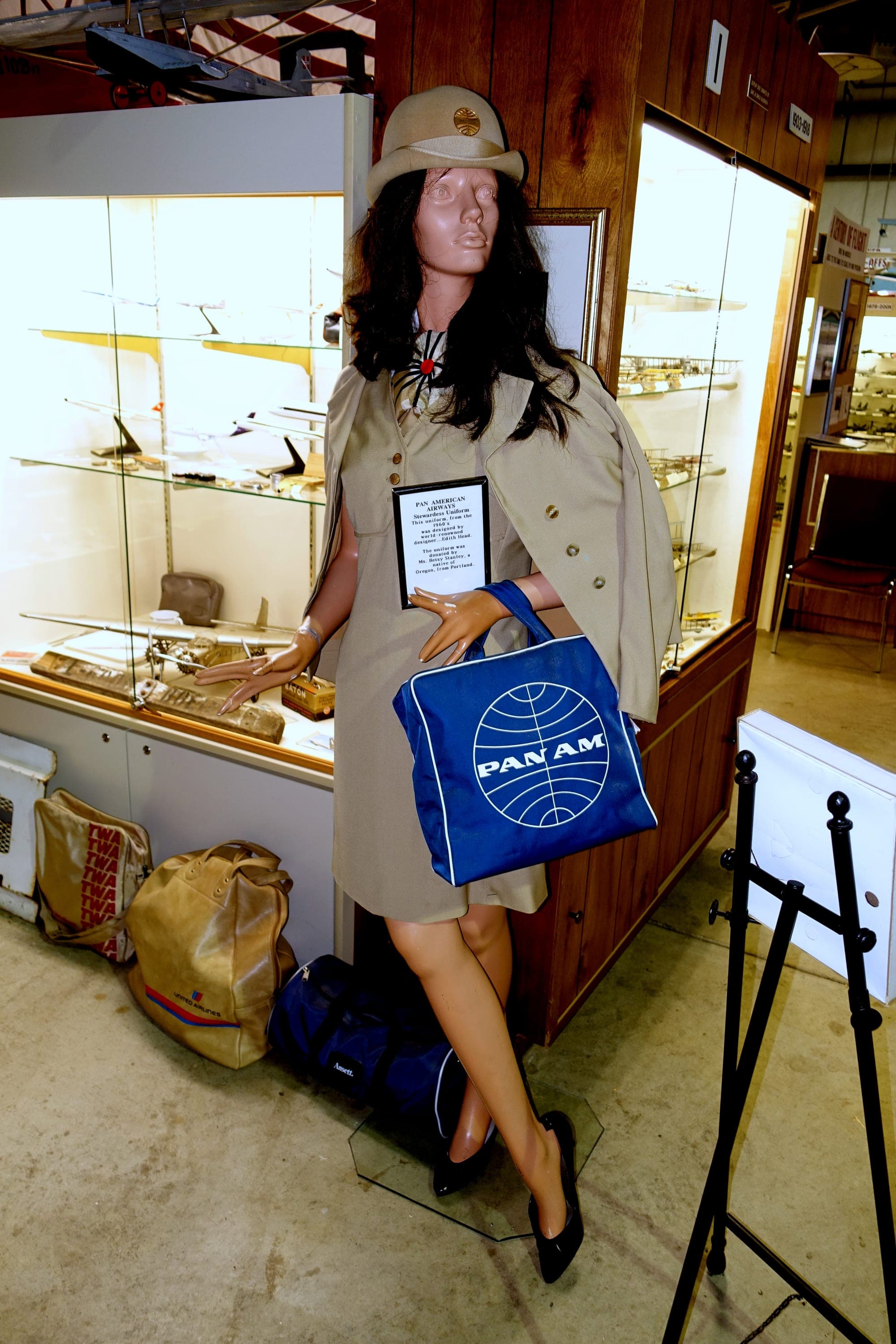
The cabins themselves changed with the aircraft. The flying boats had bunks, a dining saloon and a bridal suite. The Stratocruiser had a downstairs lounge reached by a spiral staircase. The 747 revived the idea upstairs, and the first-class lounge in the hump (armchairs, a bar, sometimes a piano) became the single most recognisable interior in commercial aviation.
Behind the glamour the airline was also an inventor of the ordinary. Economy class on the 707 was what made mass transatlantic travel possible at all, and in 1978 Pan Am introduced Clipper Class, one of the first true business cabins, at a moment when the industry was discovering that the passenger between first and coach was the one worth having.
The service outlived the money. Through the 1980s, as the airline sold its hotels, its building and a quarter of its routes, the cabin product remained genuinely good: which is part of why the collapse, when it came, surprised passengers who had assumed that an airline this well run could not simply stop.
Livery and identity
The blue globe is one of the most durable pieces of corporate design of the twentieth century. Introduced in 1957 and refined by Edward Larrabee Barnes's office, it reduced the airline's whole proposition, a company that flew everywhere, to a sphere ruled with meridians and parallels, with the words PAN AM set across the equator in white. It replaced an earlier winged-globe mark and survived, essentially unchanged, until the airline stopped.
The livery it sat on was equally restrained: a white upper fuselage, a blue cheatline through the windows, bare metal below and the globe alone on a white fin, with PAN AM in a custom sans-serif along the fuselage. Aeroplanes carried individual names below the cockpit windows in the maritime tradition, every one a Clipper.
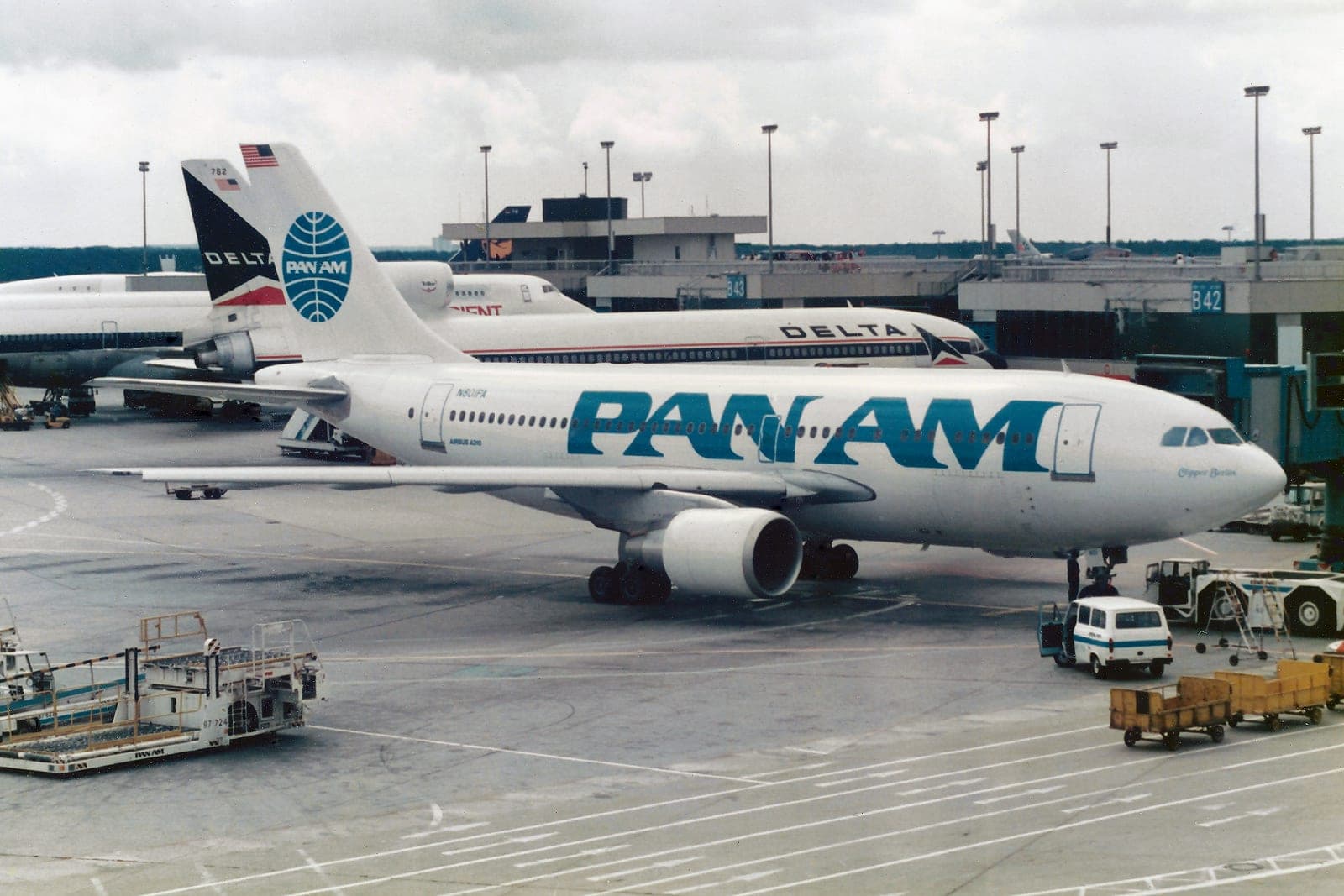
The mark travelled well beyond the aircraft. It went on the InterContinental hotels, on the Pan Am Building where it was visible for a mile down Park Avenue, on ticket wallets and flight bags that people kept, and: in 2001: A Space Odyssey, on the spaceplane taking passengers to an orbiting station, in the confident assumption that the airline would still be there in 2001. It is the reason the brand is instantly legible today to people who never flew on it, and the reason it has been bought and resold repeatedly since 1991.
Safety record
Pan Am recorded 95 accidents and incidents over sixty-four years, the first in 1928. Two of them are among the defining events of civil aviation, and both involved Boeing 747s.
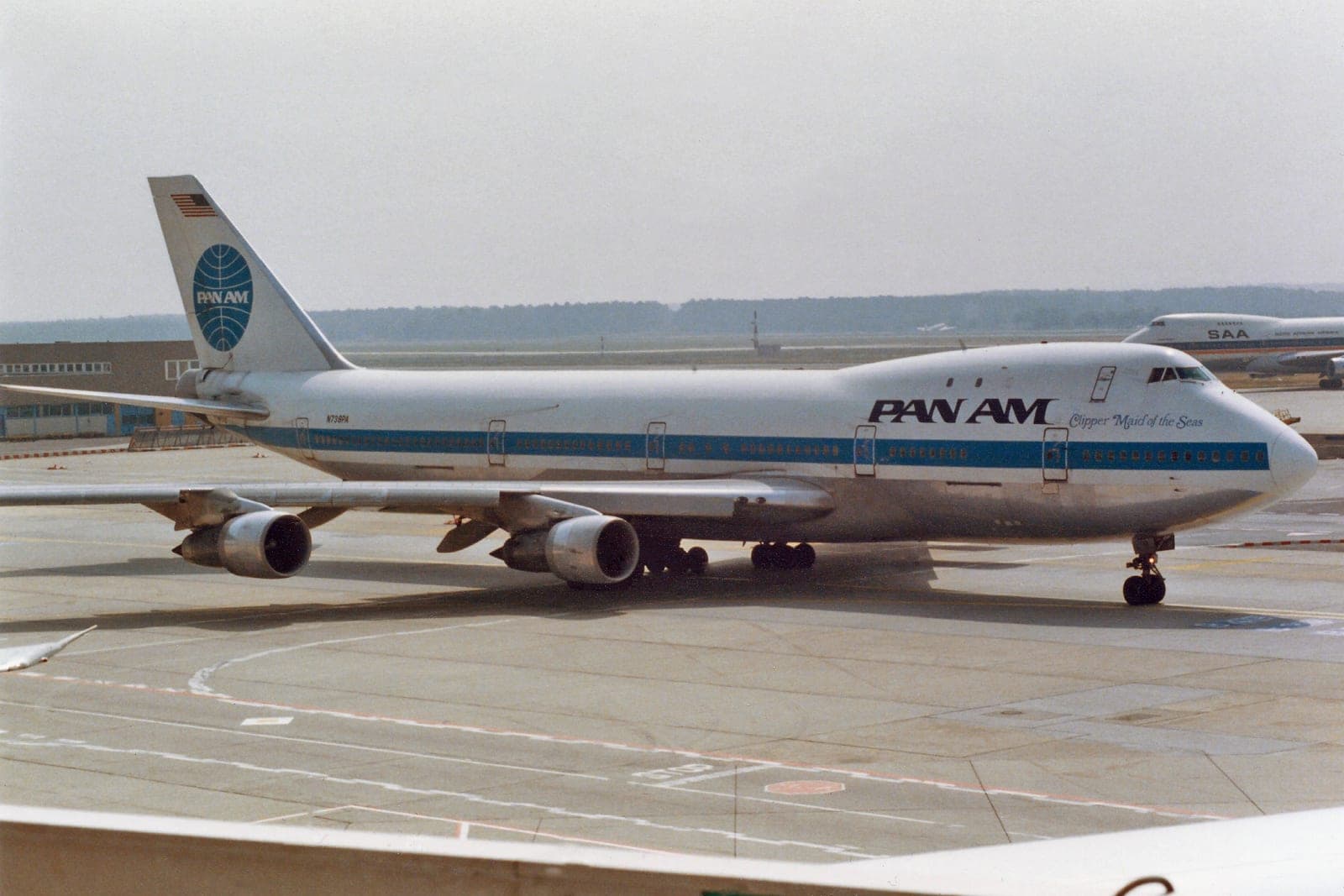
On 27 March 1977 a bomb at Las Palmas diverted a crowd of aircraft to Los Rodeos on Tenerife, an airport not built for them. In dense fog, with the tower and both crews working on a congested single runway, a KLM 747 began its take-off run without clearance while Pan Am's Clipper Victor was still taxiing towards its exit. The two collided. All 248 people on the KLM aircraft and 335 of the 396 aboard the Pan Am aircraft were killed: 583 deaths, still the worst accident in aviation history. Its legacy is the standardised phraseology every controller and crew in the world now uses, and the explicit rule that a take-off clearance is a clearance and nothing else is.
On 5 September 1986, Flight 73 was seized on the ground at Karachi by four gunmen. The flight crew escaped through the cockpit hatch, leaving the cabin crew to manage 379 passengers for sixteen hours; when the aircraft's power failed and the hijackers opened fire in the dark, twenty people were killed. The senior purser, Neerja Bhanot, opened an emergency exit and was shot shielding passengers from gunfire; she was posthumously awarded India's Ashoka Chakra.
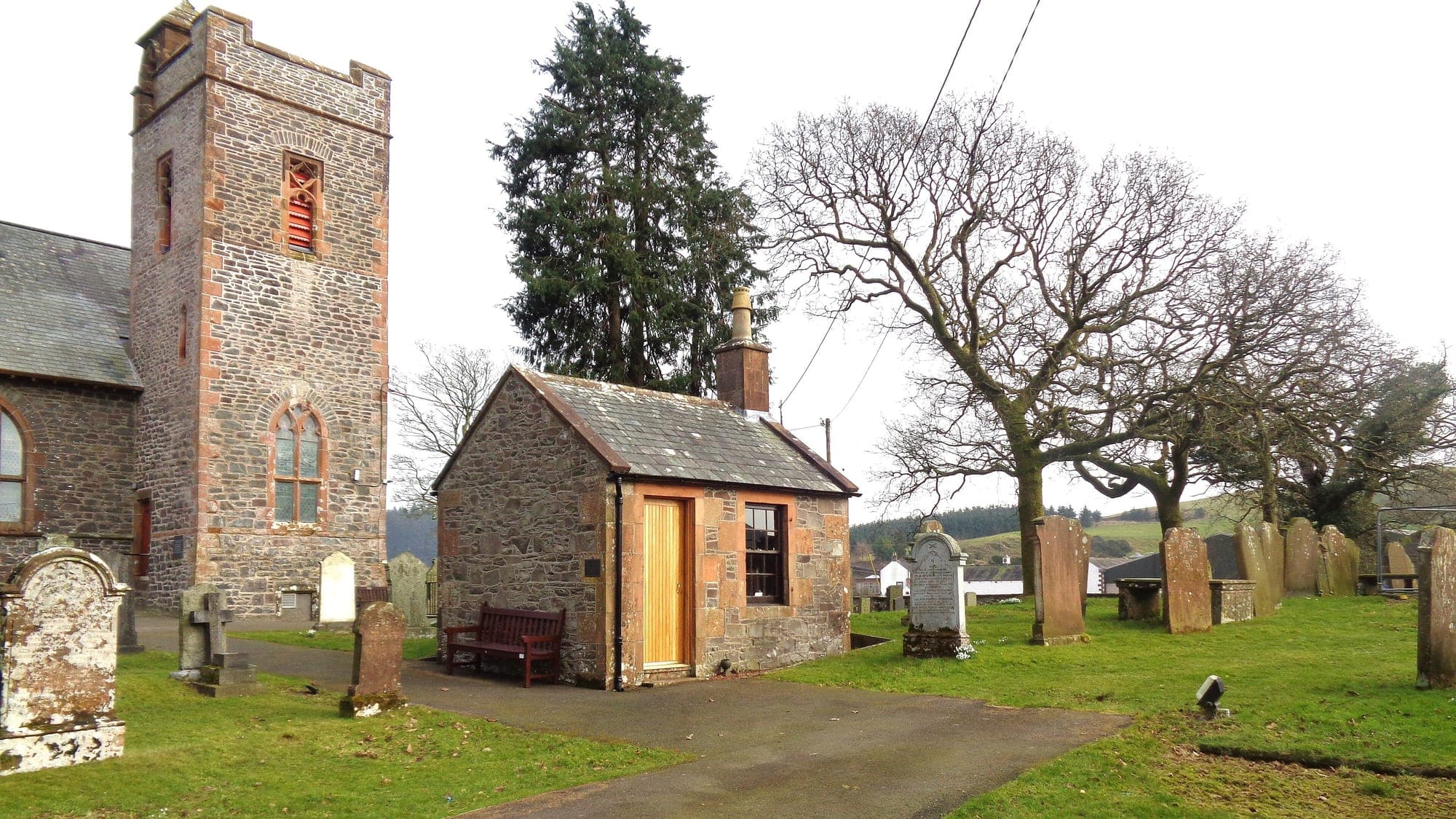
On 21 December 1988, Flight 103 left London Heathrow for New York. Thirty-eight minutes later, at 31,000 ft over southern Scotland, an improvised explosive device in a suitcase in the forward hold detonated. The aircraft broke up within seconds; the nose section came down at Tundergarth and a wing section fell on Sherwood Crescent in Lockerbie, where burning fuel destroyed houses and killed eleven residents. All 259 people on board died. The United Kingdom's Air Accidents Investigation Branch established the cause with unusual completeness by reconstructing the fuselage from recovered fragments.
The criminal case ran for decades. Two Libyan nationals were indicted in 1991; a trial under Scots law sitting at Camp Zeist in the Netherlands convicted Abdelbaset al-Megrahi in 2001 and acquitted his co-accused. Libya accepted responsibility and paid compensation in 2003. Megrahi was released on compassionate grounds in 2009 and died in 2012, and a further suspect was brought to the United States in 2022. The proceedings have never been free of dispute, and the Scottish courts have twice reviewed the conviction.
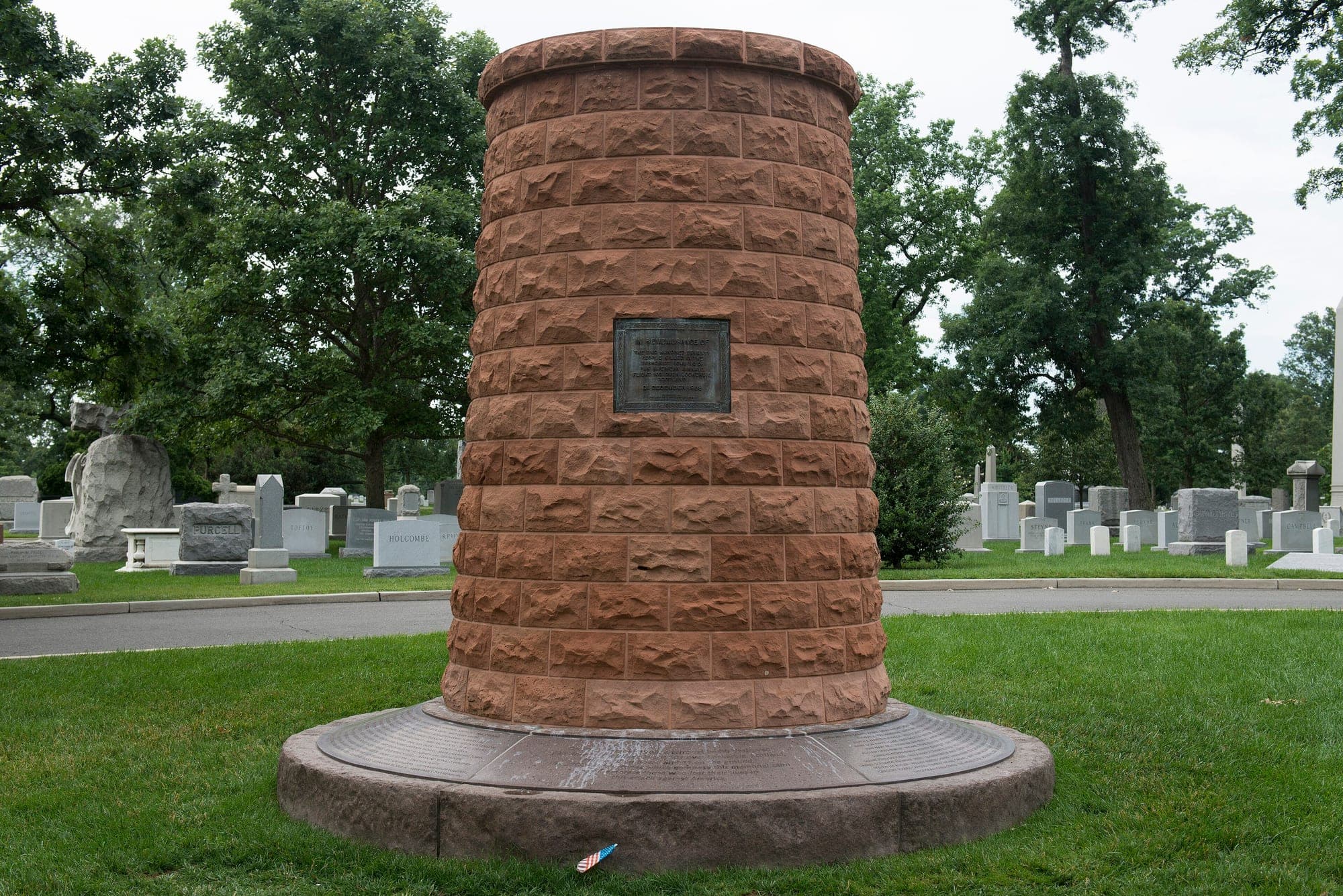
The airline itself did not survive the consequences. A US President's Commission found Pan Am's security screening at Frankfurt to have been inadequate, and a jury later found the airline liable for wilful misconduct. The reputational damage on precisely the routes the brand depended on was the immediate cause of the collapse three years later, the one case in this encyclopedia where an accident section and a bankruptcy section describe the same event.
Legacy
Pan Am's practical legacy is the shape of long-haul flying. It launched the 707 and the 747, and in doing so chose the aircraft two generations of every other airline would fly; it commissioned the 747SP to reach Tokyo non-stop; it invented the ocean-crossing route structures, the overwater navigation procedures and much of the ground infrastructure that made intercontinental service routine. The mass transatlantic market that exists today was built by an airline that no longer does.
Its institutional legacy is a warning that airline executives still cite. A carrier can hold the best routes, the best fleet, the best brand and the best service and still fail, if its cost base is wrong and its network has no foundation underneath it. Pan Am was killed by the absence of the one thing it had never been allowed to build, a domestic system, and by a decade of selling assets to cover losses, which is a way of shortening a decline rather than reversing one.
And the name has outlived all of it. The globe is on jackets, luggage and bags sold to people born after the last flight; the Worldport is gone but the Pan Am Building still stands under another name; and the 1927 airmail terminal at Key West is a restaurant that advertises itself as the birthplace of the airline. Very few dead companies remain this legible.
The fleet
In service in March 1990
Long-haul
Total46
Medium-haul
Boeing 727-200
91
Airbus A300B4
13
Boeing 737-200
5
Total109
Cabins
First Class
The forward cabin, and on the 747 the upper deck lounge that became the airline's signature: a spiral staircase to a room with armchairs and a bar, served by crews hired for their languages.
Clipper Class
The business cabin, introduced in 1978 as one of the first of its kind, named after the flying boats and sold on the transatlantic routes where the airline still led.
Economy
The main cabin, and after 1958 the one that changed aviation: the 707 made a transatlantic seat affordable to people who had never expected to cross the ocean at all.
Subsidiaries
- Pan Am Express
- The regional feeder operation, flying ATR 42s, Dash 7s and Jetstreams from New York and Berlin.
- Pan American-Grace Airways (Panagra)
- The joint venture with the Grace Shipping Company that flew the west coast of South America from 1929.
- InterContinental Hotels
- The hotel chain the airline founded in 1946 to give its passengers somewhere to stay, and sold in 1981 to raise cash.
- Pan Am Shuttle
- The hourly Boston to New York to Washington service bought from New York Air in 1986 and sold to Delta in 1991.
Genealogy
Pan Am's line. Juan Trippe's Aviation Corporation of America took over the newly founded Pan American Airways in 1928, absorbed NYRBA's South American network in 1930 and, as Pan American World Airways from 1950, American Overseas Airlines' Atlantic routes. National Airlines followed in 1980. Pan Am stopped flying on 4 December 1991; its Pacific division had already gone to United in 1986, and its Atlantic network went to Delta in 1991.
Scroll to see the full diagram
Timeline
March 14, 1927
Pan American Airways is incorporated
A shell company set up by US Army Air Corps officers to keep a German-backed Colombian carrier out of the Panama Canal Zone.
October 19, 1927
First flight: Key West to Havana
A chartered Fairchild floatplane carries the mail across ninety miles of water, days before the contract deadline expires.
June 23, 1928
The three rival companies merge
Juan Trippe becomes operational head of the combined airline and begins buying up Latin America.
November 22, 1935
The China Clipper crosses the Pacific
A Martin M-130 leaves Alameda for Manila with mail, island-hopping bases built from a chartered freighter.
June 28, 1939
Transatlantic passenger service
The Boeing 314 Dixie Clipper carries fare-paying passengers from Port Washington to Marseille by way of the Azores and Lisbon.
October 26, 1958
The jet age begins
Boeing 707-121 Clipper America flies New York Idlewild to Paris with 111 passengers, refuelling at Gander.
1960
The Worldport opens at Idlewild
Pan Am's terminal, a four-acre elliptical roof cantilevered over the aircraft stands, becomes the airline's front door in New York.
1963
The Pan Am Building opens
Fifty-nine storeys astride Grand Central Terminal, for a time the largest commercial office building in the world, with the airline's name on the skyline.
January 21, 1970
The first Boeing 747 service
Pan Am, the launch customer, flies Clipper Victor from New York to London after the scheduled aircraft suffers an engine failure.
October 24, 1978
Airline deregulation
The Airline Deregulation Act opens the US market. Pan Am, an international carrier with no domestic network to feed it, is the most exposed of the majors.
January 7, 1980
National Airlines is absorbed
Bought for its domestic routes at a price inflated by a bidding war, and integrated badly: incompatible fleets, incompatible cultures, and a north-south network that fed nothing.
April 1985
The Pacific Division is sold
A quarter of the route system, and the Tokyo hub, go to United Airlines for $750 million: the routes Pan Am had invented in 1935.
December 21, 1988
Flight 103 is destroyed over Lockerbie
A bomb brings down a 747 over southern Scotland, killing 259 people on board and 11 on the ground. Bookings collapse.
January 8, 1991
Chapter 11
Pan Am files for bankruptcy protection. Delta buys the transatlantic routes, the Shuttle, 45 aircraft and the Worldport, and funds a smaller airline flying from Miami.
December 4, 1991
The last flight
Delta withholds the final payment; the airline shuts down the same morning. Flight 436, a 727 named Clipper Goodwill, lands at Miami from Barbados that afternoon.
Accidents and defining events
Recorded as the investigators recorded them: what happened, where, and how many people died. Fatal accidents and the events that changed the airline, in date order.
March 27, 1977
PA1736
Boeing 747-121Los Rodeos Airport, Tenerife, Canary Islands, Spain
Both aircraft had been diverted to Tenerife by a bomb at Las Palmas. In dense fog, a KLM 747 began its take-off run without clearance while the Pan Am 747 was still taxiing on the same runway, and the two collided. Of the 396 people aboard the Pan Am aircraft, 335 were killed and 61 survived; all 248 on the KLM aircraft died. With 583 deaths it remains the deadliest accident in aviation history, and it led directly to standardised radio phraseology worldwide.
335 deaths396 people on board
September 5, 1986
PA73
Boeing 747-121Karachi, Pakistan
Four gunmen seized the aircraft on the ground at Karachi during a stop on the Bombay to Frankfurt to New York service. The flight crew left through the cockpit hatch, and the cabin crew kept the 379 passengers calm for sixteen hours before the hijackers opened fire in the dark; twenty people were killed. Purser Neerja Bhanot, who opened an emergency exit and was shot shielding passengers, was posthumously decorated by India.
20 deaths394 people on board
December 21, 1988
PA103
Boeing 747-121Lockerbie, Dumfriesshire, Scotland
An improvised explosive device in a suitcase in the forward cargo hold detonated 38 minutes after take-off from London Heathrow, at 31,000 ft. The aircraft broke up in seconds and fell on the town of Lockerbie, where burning fuel destroyed houses in Sherwood Crescent. All 243 passengers and 16 crew were killed, along with 11 people on the ground: 270 in total. It remains the deadliest terrorist attack in British history, and the fallout, a collapse in bookings on the airline's core transatlantic routes, was a direct cause of Pan Am's failure three years later.
270 deaths (including 11 on the ground)259 people on board
In the catalogue
Aircraft central to this airline's story, as the encyclopedia records them.
- Report on the accident to Boeing 747-121, N739PA, at Lockerbie, Dumfriesshire, Scotland on 21 December 1988 (Aircraft Accident Report 2/90), Air Accidents Investigation Branch, United Kingdom
- Pan American World Airways records, 1902–2005 — finding aid, University of Miami Libraries, Special Collections
- Pan Am Flight 103 / Lockerbie Air Disaster Archives, Syracuse University Libraries
- Boeing 747 — Historical Snapshot, Boeing
- Pan American World Airways, Wikipedia
- Pan Am Flight 103, Wikipedia
- Tenerife airport disaster, Wikipedia
- Worldport (Pan Am), Wikipedia
- Boeing 314 Clipper, Wikipedia
Checked September 9, 2026